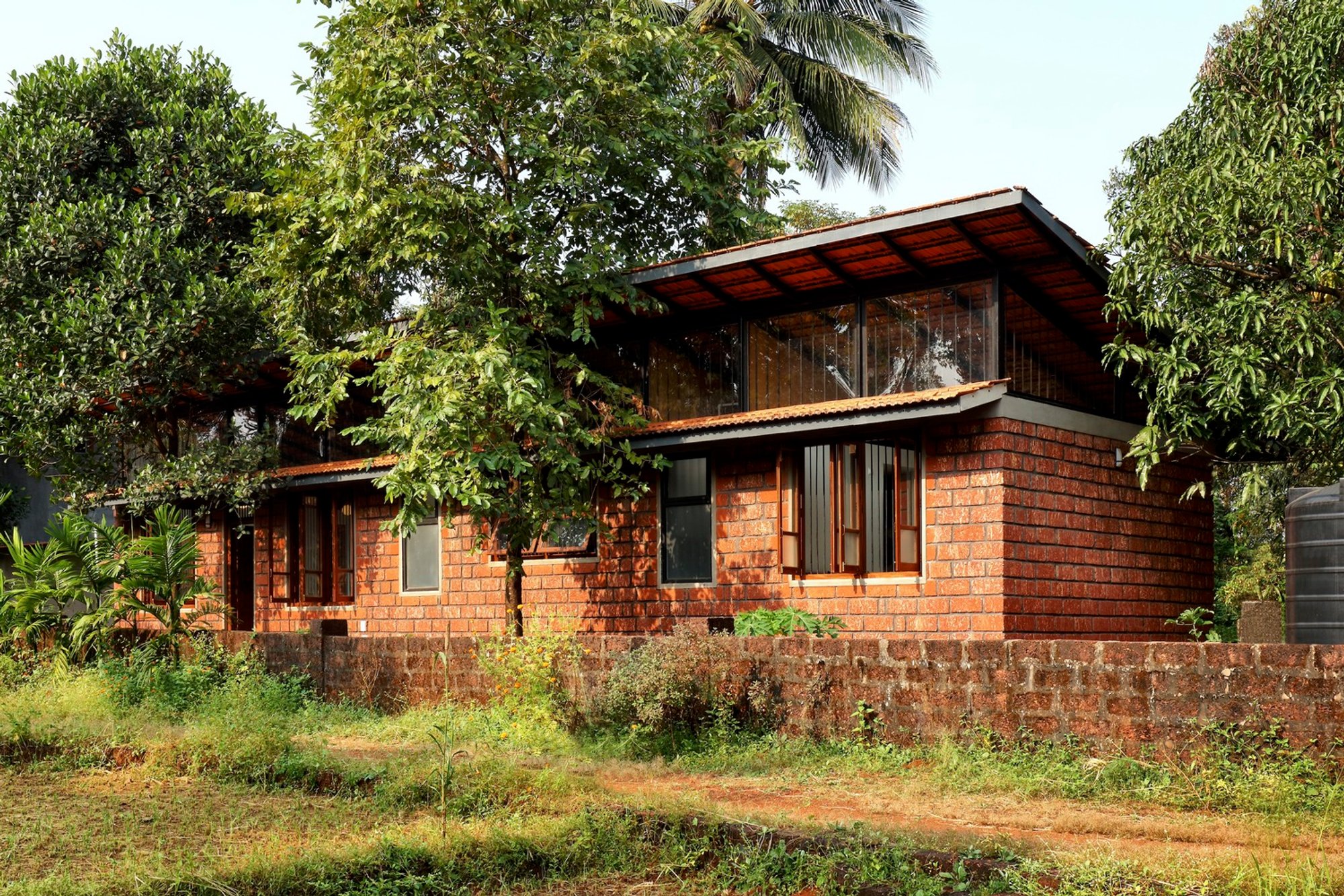
Lanja House by Articulated Design Initiative (ADI): A Vernacular Retreat Rooted in Rural Maharashtra
Lanja House blends vernacular architecture with sustainable materials, creating a low-cost rural retreat rooted in nostalgia and environmental sensitivity.


Located in the lush farmlands of Lanja, India, Lanja House by Articulated Design Initiative (ADI) offers a soulful interpretation of ancestral living. Designed as a nostalgic rural retreat, this 110-square-meter residence blends seamlessly with the tropical landscape of the Ratnagiri district. Built on a modest budget of under INR 30 lakhs, the project thoughtfully integrates local materials, passive design strategies, and a deep cultural sensitivity to its site.
A Home That Revives Childhood Memories
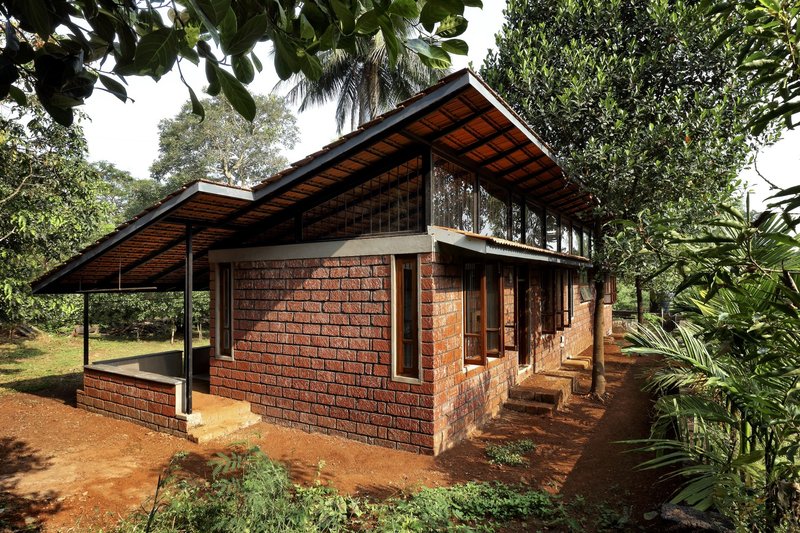
Set amidst the serene natural landscape of Lanja’s countryside, the brief was simple yet emotionally complex: to create a home that would evoke memories of ancestral houses while staying grounded in cost efficiency and sustainability. Elevated slightly above ground, the house captures panoramic views of the surrounding forested terrain, establishing a dialogue between built form and nature.
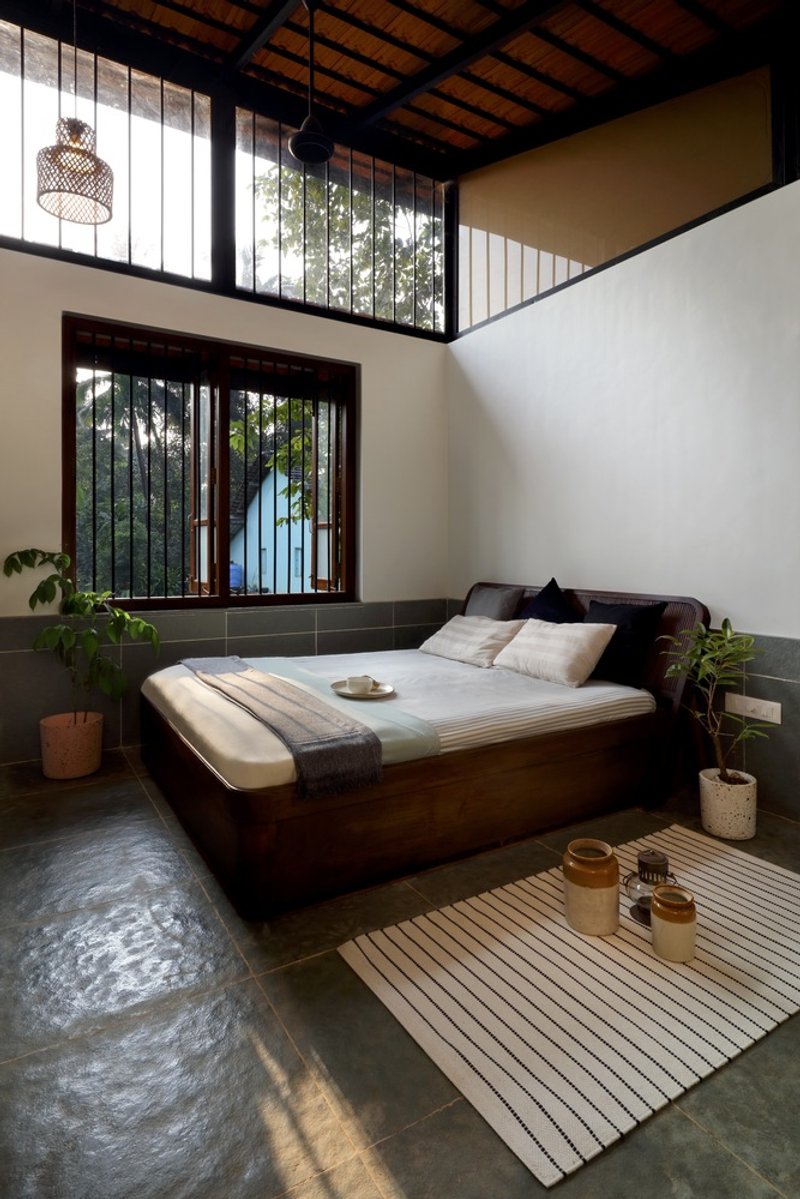
Sustainable Construction Rooted in Local Materials
The architectural strategy employed a composite load-bearing construction method resting on a laterite stone foundation, which preserved the fertile red soil and minimized ecological disturbance. Laterite stone—sourced within a 10-kilometer radius—forms the primary wall structure, ensuring thermal efficiency and regional resonance.
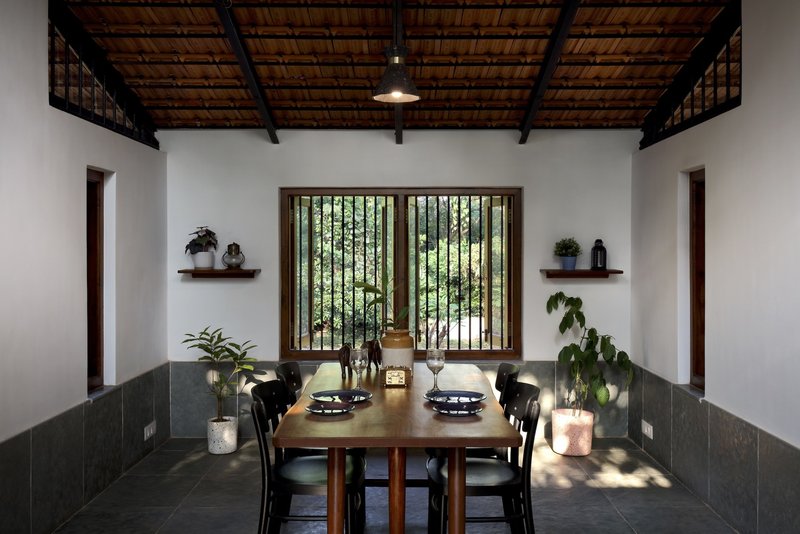
Above, RCC lintel beams support a mild steel (MS) roof framework topped with classic Mangalore tiles, merging traditional forms with modern durability. These material choices not only reduce the carbon footprint but also ensure compatibility with the local climatic conditions, which include heavy monsoons and high humidity.
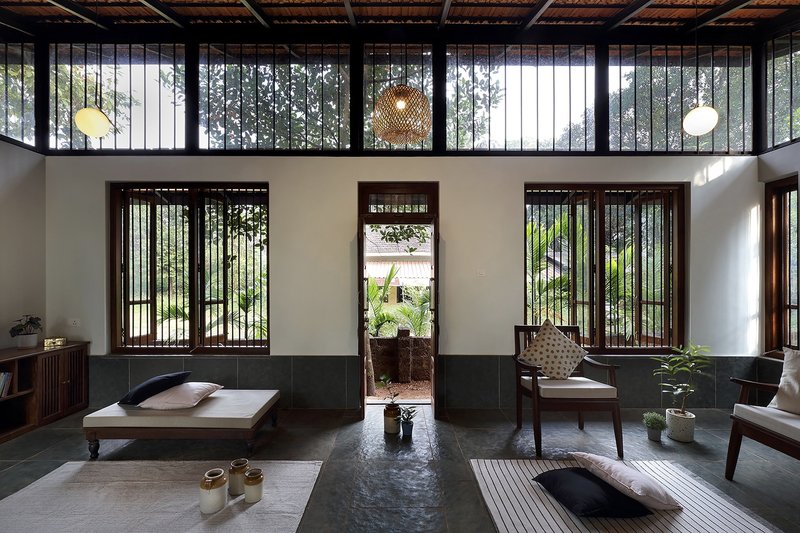
Spatial Planning and Climatic Responsiveness
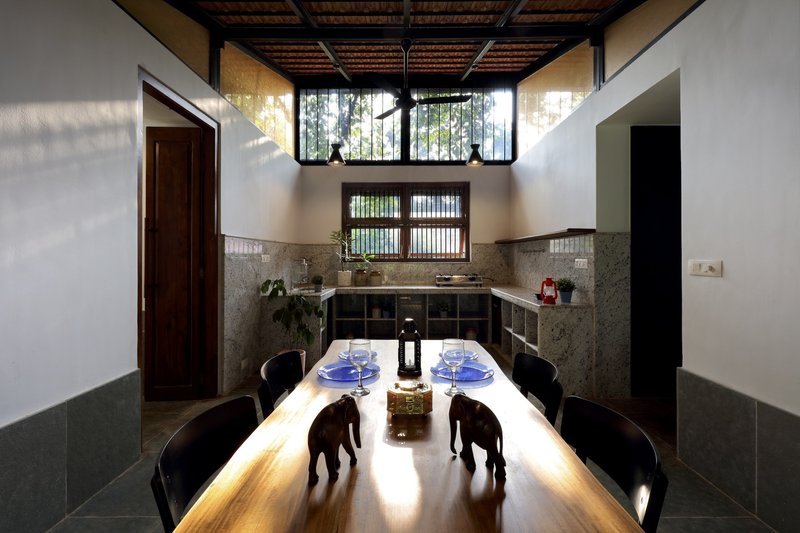
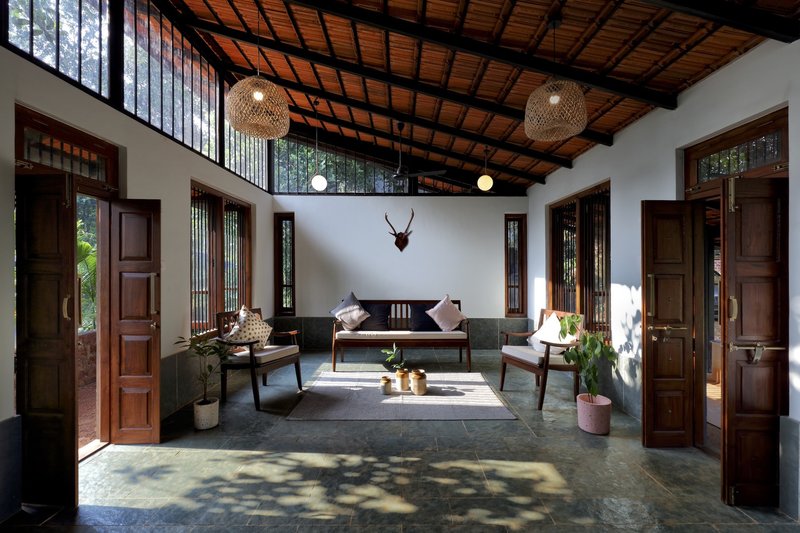
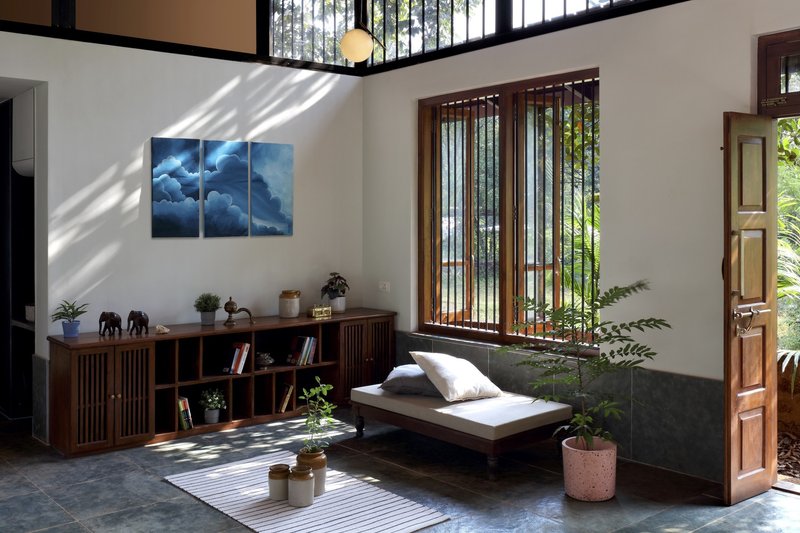
The east-west orientation of the house was carefully chosen to maximize daylight and passive ventilation. Entering through the main door, one is greeted by an airy and open-plan living area. Clerestory windows on the eastern wall allow warm morning sunlight to wash through the interior, while generous window openings and double-height ceilings foster effective cross-ventilation.
The interiors are modest yet refined. Exposed laterite finishes give the home an earthy texture, anchoring the design in its regional context. Not a single tree was removed from the site, emphasizing the architects’ commitment to environmental preservation.
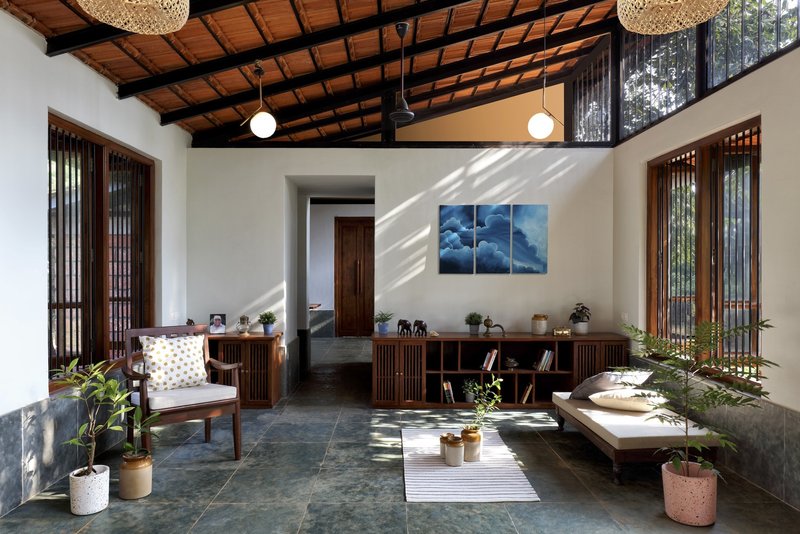
Minimal Interiors with a Vernacular Soul
Inside, the house balances modern furniture with locally sourced teak wood pieces and custom artwork, creating a curated, lived-in ambiance. The natural palette—stone, wood, and tile—extends into every room, maintaining material continuity while ensuring durability and comfort.
Throughout, the architectural detailing celebrates the local building craft while offering a clean, contemporary lifestyle. This fusion of vernacular techniques and modern spatial sensibilities is what truly defines Lanja House.
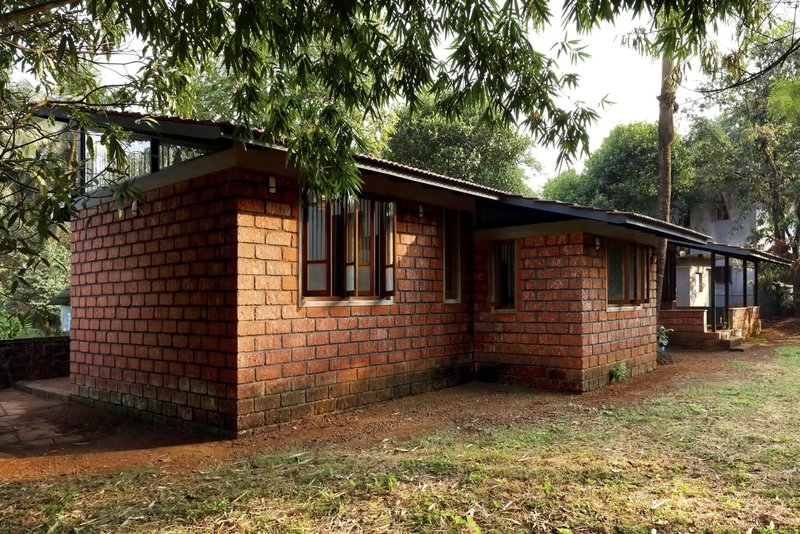
A Model for Low-Cost, Sustainable Rural Housing
Lanja House stands as a model for sustainable, low-budget rural architecture that does not compromise on aesthetics, comfort, or environmental responsibility. By reinterpreting traditional materials and construction techniques through a modern lens, Articulated Design Initiative (ADI) has delivered a meaningful, context-sensitive home that harmonizes with its natural surroundings and honors ancestral memories.
Project Details
- Project Name: Lanja House
- Architects: Articulated Design Initiative (ADI)
- Location: Lanja, Ratnagiri District, Maharashtra, India
- Built Area: 110 m² (Approx. 1,100 sq. ft.)
- Completion Year: 2021
- Photographer: Vaibhav Kapdi Photography
- Materials: Laterite stone, RCC, Mangalore tiles, Teak wood
- Construction Budget: Under INR 30 lakhs

Share your ideas with the world
Write about your design process, research, or opinions. Your voice matters in the architecture community.