Maringá Urban Intermodal Terminal by Borelli&Merigo: A Modern Transportation Hub Redefining Urban Mobility in Brazil
A sustainable intermodal terminal uniting bus and future rail transit, enhancing urban mobility and revitalizing Maringá’s Monumental Axis with symbolic architecture.


Architects: Borelli&Merigo Arquitetura e Urbanismo
A New Landmark for Urban Mobility in Maringá
The Maringá Urban Intermodal Terminal, designed by Borelli&Merigo Arquitetura e Urbanismo, represents a transformative leap in sustainable urban mobility infrastructure in southern Brazil. Conceived as a multimodal transportation hub, the terminal brings together various modes of public transport under a single, cohesive architectural expression while contributing to the broader urban revitalization strategy of Maringá’s city center.
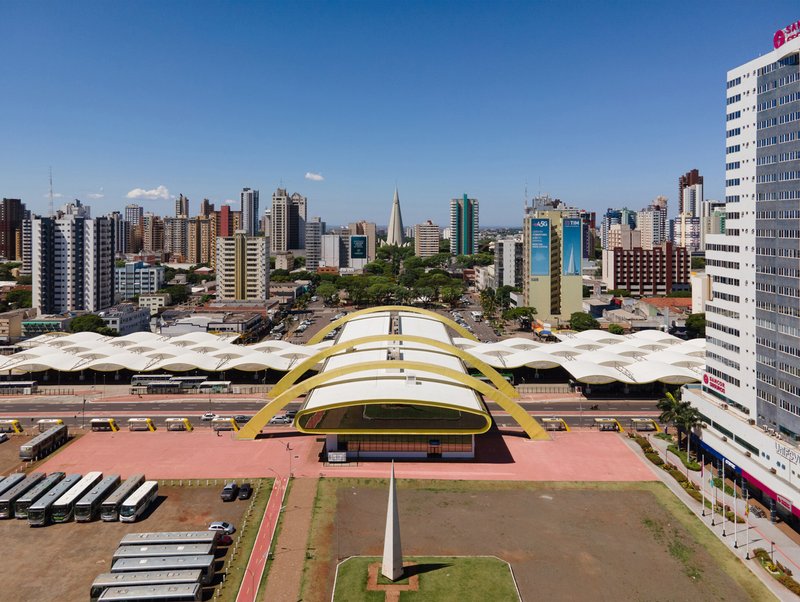
Strategically situated along the Monumental Axis—a key urban spine outlined in Maringá’s Master Plan—the terminal is more than just a transit facility; it is a civic infrastructure designed to enhance connectivity, comfort, and sustainability.
Functional Organization: Layered Connectivity Across Three Levels
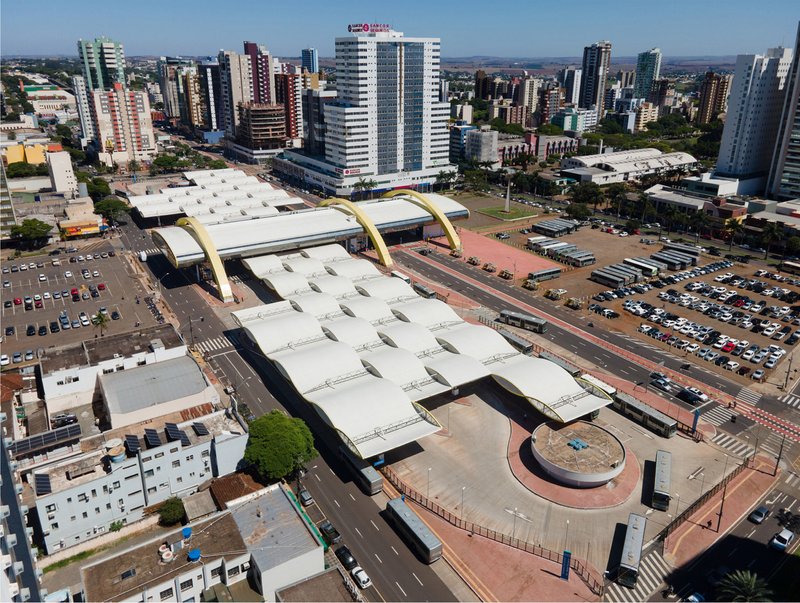
Spanning over 23,500 square meters, the terminal is organized across three interconnected levels:
1. Basement Level – Future Rail Integration
A forward-looking vision for regional integration is embedded in the basement level, which is designed to accommodate a passenger rail station connecting Maringá and Londrina. This adaptive reuse of an existing freight line positions the terminal as a pivotal node in future intercity travel.
2. Ground Floor – Urban Bus Network
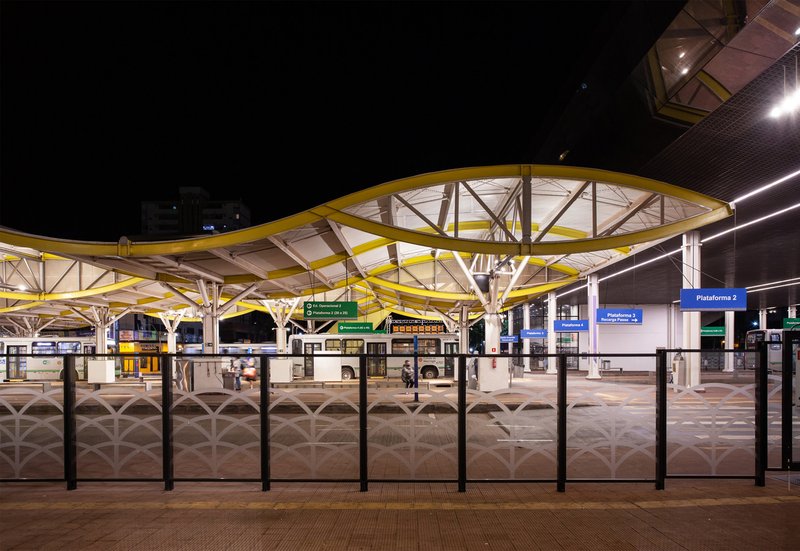
The ground level houses boarding platforms for 70 municipal bus lines, efficiently linking numerous neighborhoods throughout the city. Its vast and clearly organized layout ensures intuitive navigation and seamless boarding, enabling efficient, high-capacity passenger flow.
3. Mezzanine – Commercial and Pedestrian Integration
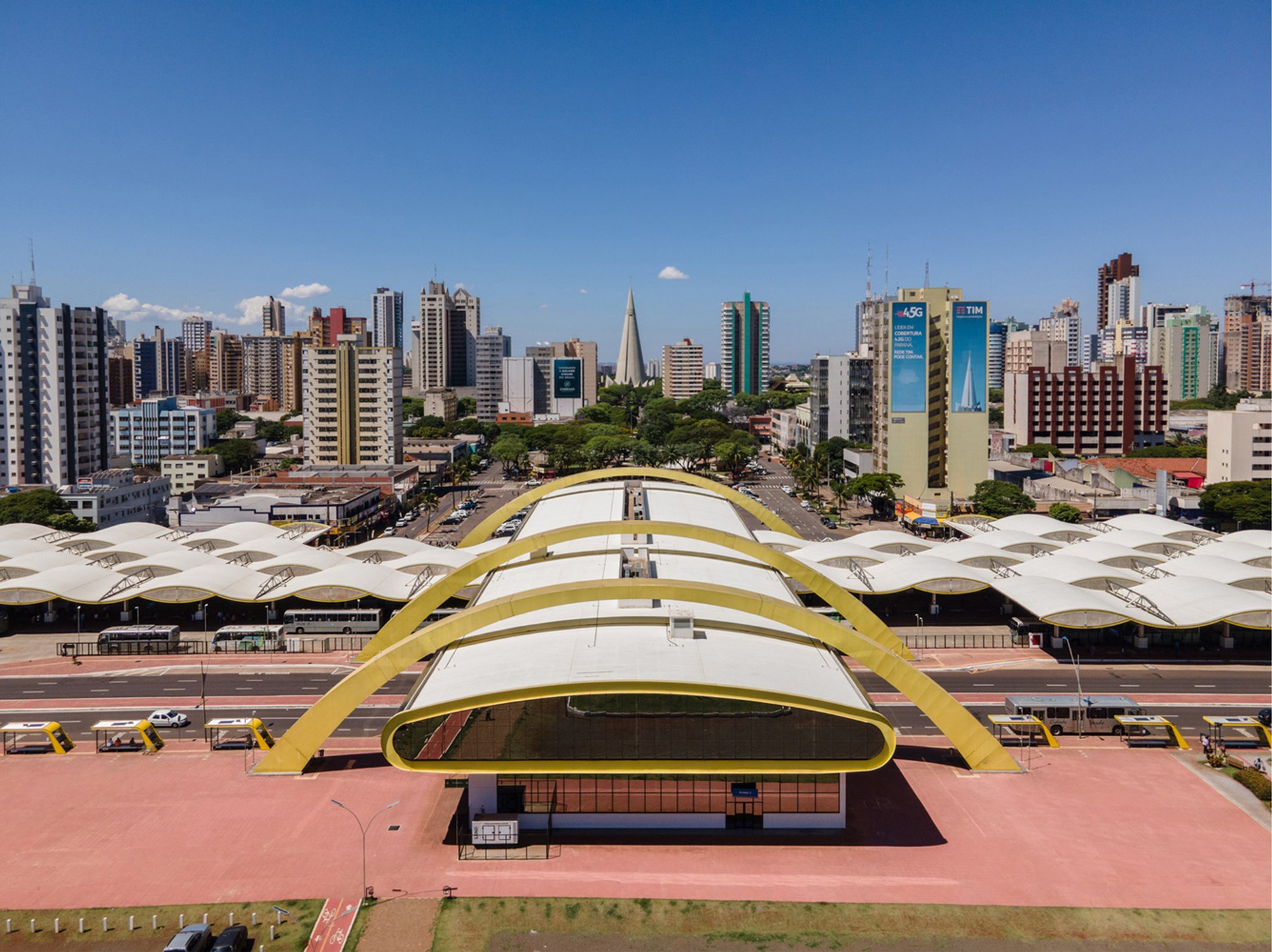
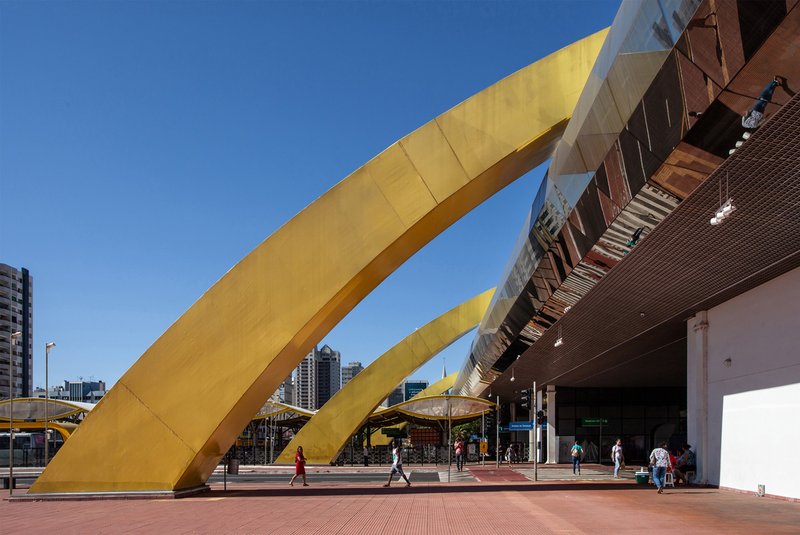
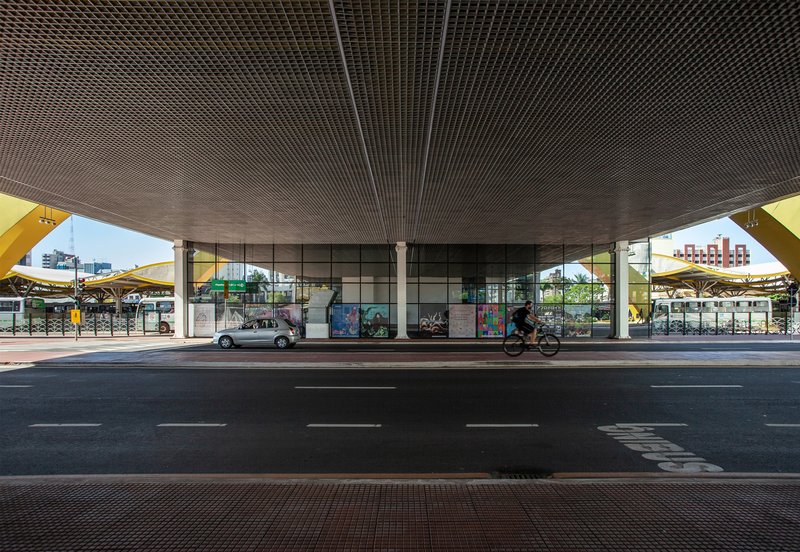
Above the transport-focused areas, the mezzanine functions as both a commercial gallery and a pedestrian bridge. It connects the terminal to the opposite side of Horacio Racanello Avenue, prioritizing pedestrian safety and promoting walkability. The structure’s orientation follows the city's monumental axis and is visually defined by three structural arches—a symbolic nod to the historic arches of Maringá’s former bus terminal.
Architectural Language: Lightness, Heritage, and Environmental Performance
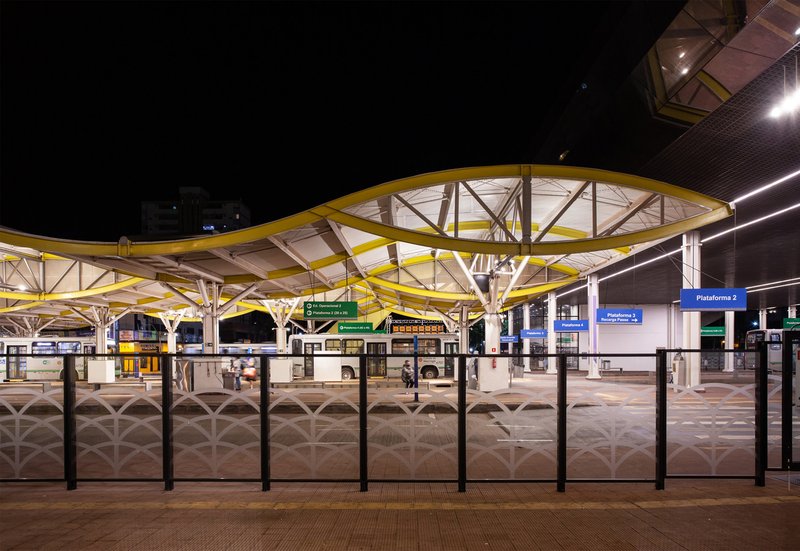
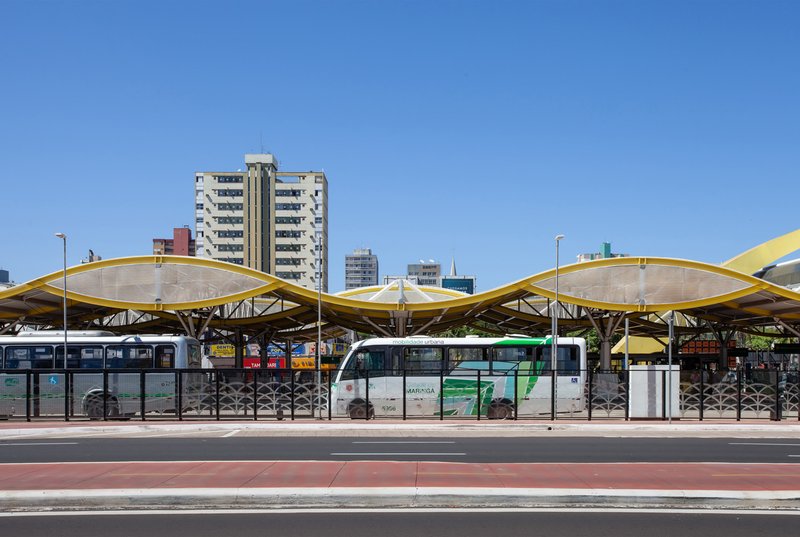
One of the terminal’s defining features is its metal structural system, supported by precast concrete columns, allowing for expansive spans and a flexible interior program. The secondary roof structures, which undulate in forms reminiscent of “mismatched waves” or “open eyes,” create dynamic volumes while enhancing natural lighting and cross-ventilation.
These architectural gestures are not merely aesthetic—they contribute to the terminal’s low environmental impact. The integration of sustainable building technologies, such as high-performance laminated glazing with acoustic insulation and solar control, ensures thermal comfort and noise reduction, even in high-traffic zones.
A careful choice of colors also deepens the building’s connection to its urban context. Yellow accents reference the ipê trees, a defining feature of Maringá’s famously verdant landscape, reinforcing the dialogue between architecture and local ecology.
Urban Symbolism and Regeneration
The project is both a functional node and an urban symbol. The arch structures on the mezzanine recall the city's mid-20th-century modernist identity and serve as a memory marker for local residents. At the same time, the terminal acts as a prototype for future urban regeneration along the Monumental Axis, which stretches from Maringá Cathedral to Vila Olímpica.
Inaugurated on February 28, 2020, the terminal has since become an emblem of progressive infrastructure, combining mobility, sustainability, and cultural memory.
Redefining Infrastructure as Civic Architecture
The Maringá Urban Intermodal Terminal transcends the traditional definition of a transit hub. It repositions infrastructure as a civic architecture project that reinforces social cohesion, urban identity, and environmental responsibility. Through its layered functionality, symbolic design, and sustainable performance, Borelli&Merigo have crafted a benchmark for integrated public transport architecture in Brazil.