Mass Timber Pavilion at Rice University by Jesús Vassallo
Mass Timber Pavilion blends sustainable CLT design with nature, serving as an ecological observation platform on Rice University's biodiverse campus.


An Eco-Conscious Landmark Bridging Architecture and Biodiversity in Houston
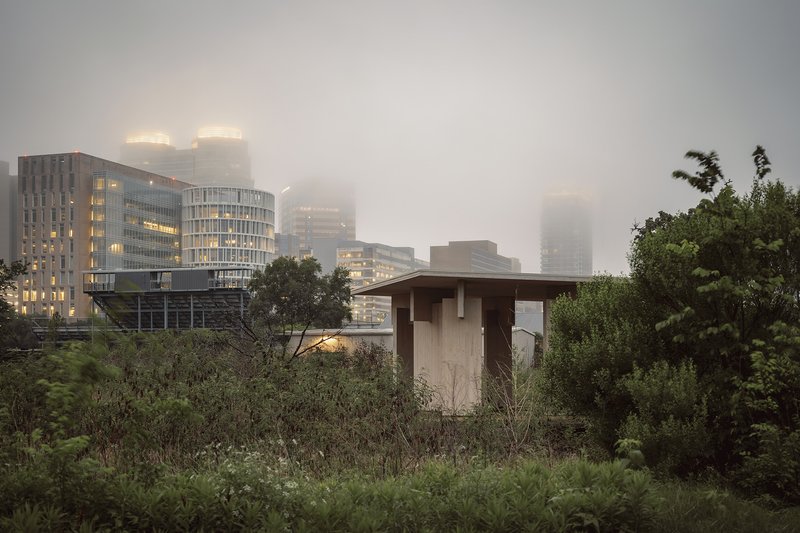
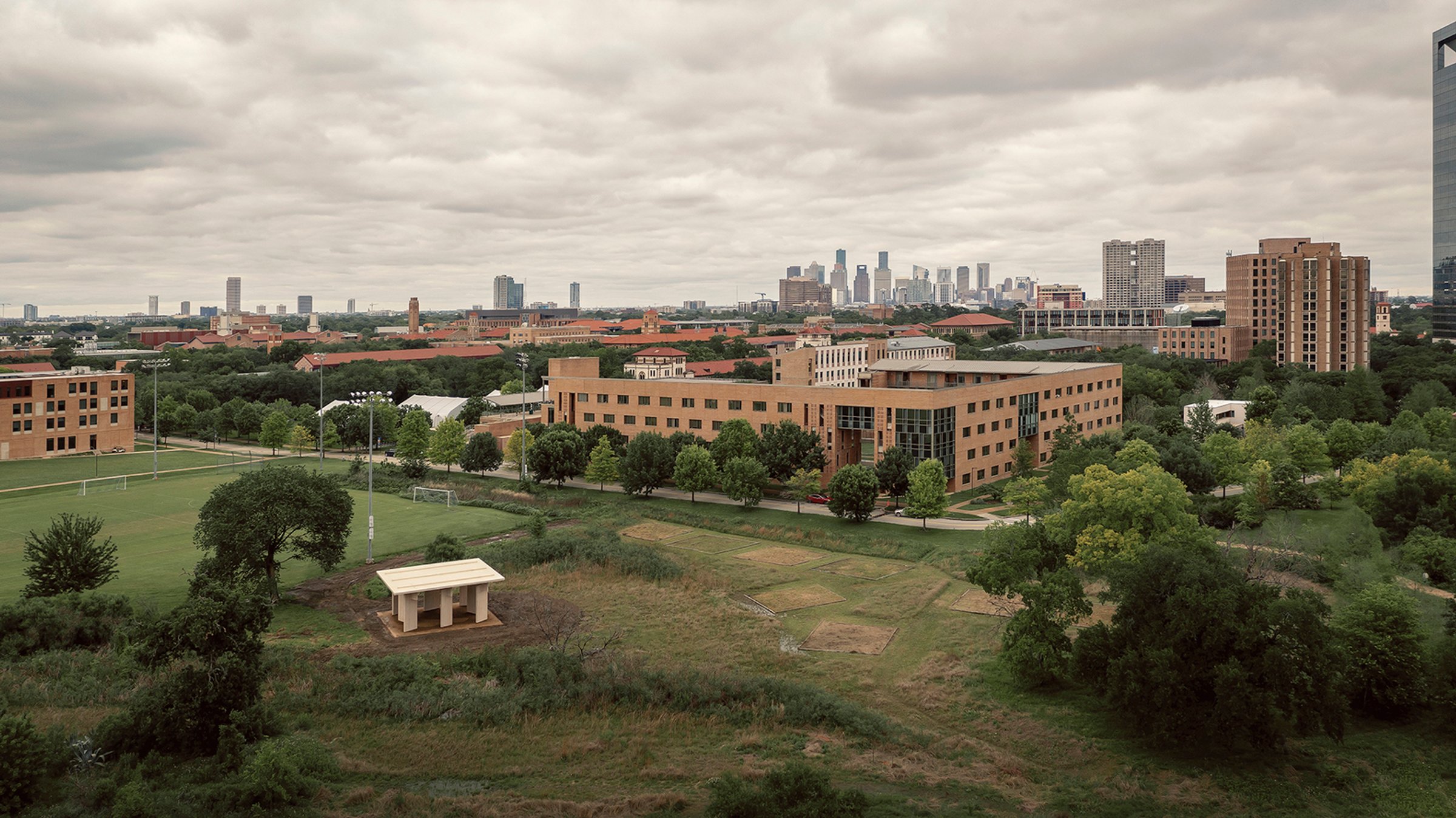
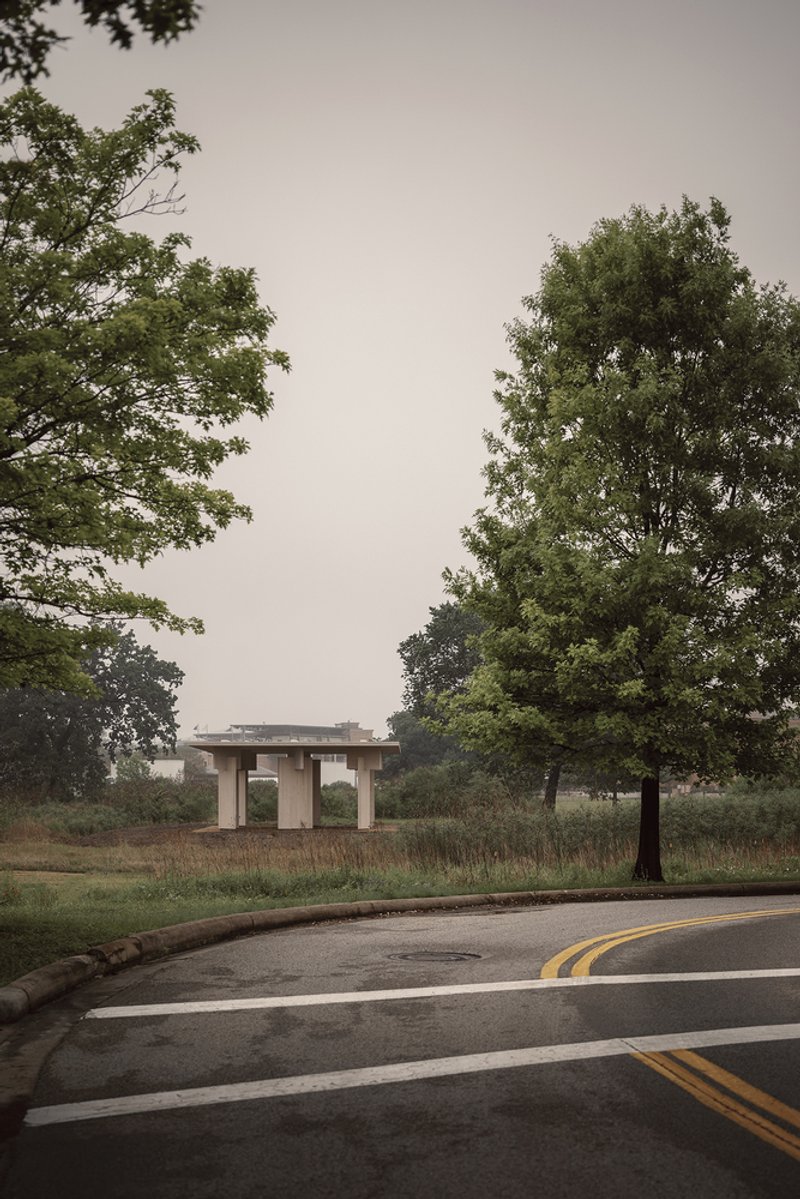
Nestled within the Harris Gully Natural Area on the Rice University campus in Houston, Texas, the Mass Timber Pavilion by architect Jesús Vassallo is a minimalist structure with a powerful ecological message. Envisioned as both an architectural installation and an educational platform, the pavilion sits within one of the most biodiverse university ecosystems in North America—home to the highest recorded number of bird species on any campus across the continent.
A Pavilion Rooted in Ecological Stewardship
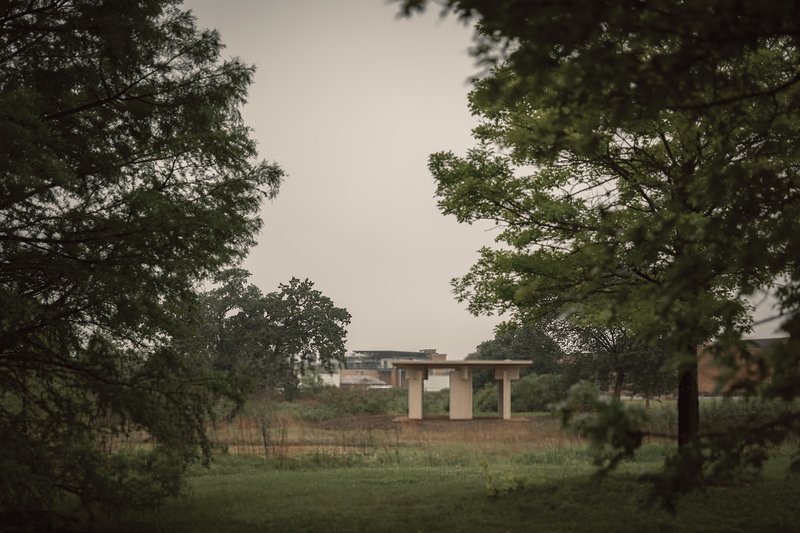
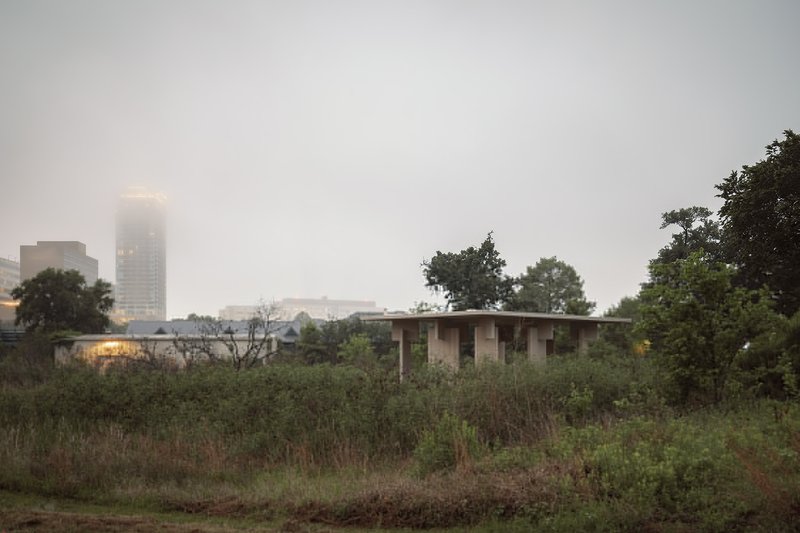
The Harris Gully Natural Area is a meticulously restored watershed featuring diverse microhabitats, including wetlands, savannahs, dense forests, and shrublands. The Mass Timber Pavilion acts as a contemplative and functional observation platform within this natural mosaic, initiating a long-term plan to manage and engage with the evolving ecosystem through architecture.
Crafted from Cross-Laminated Timber (CLT) sourced from sustainably harvested southern pine forests, the structure is a carbon-negative installation, showcasing a responsible model of low-impact construction. It exemplifies the use of mass timber in architecture not only as a sustainable material but also as an expressive, structural, and educational tool.
Architectural Expression of Lightness and Openness
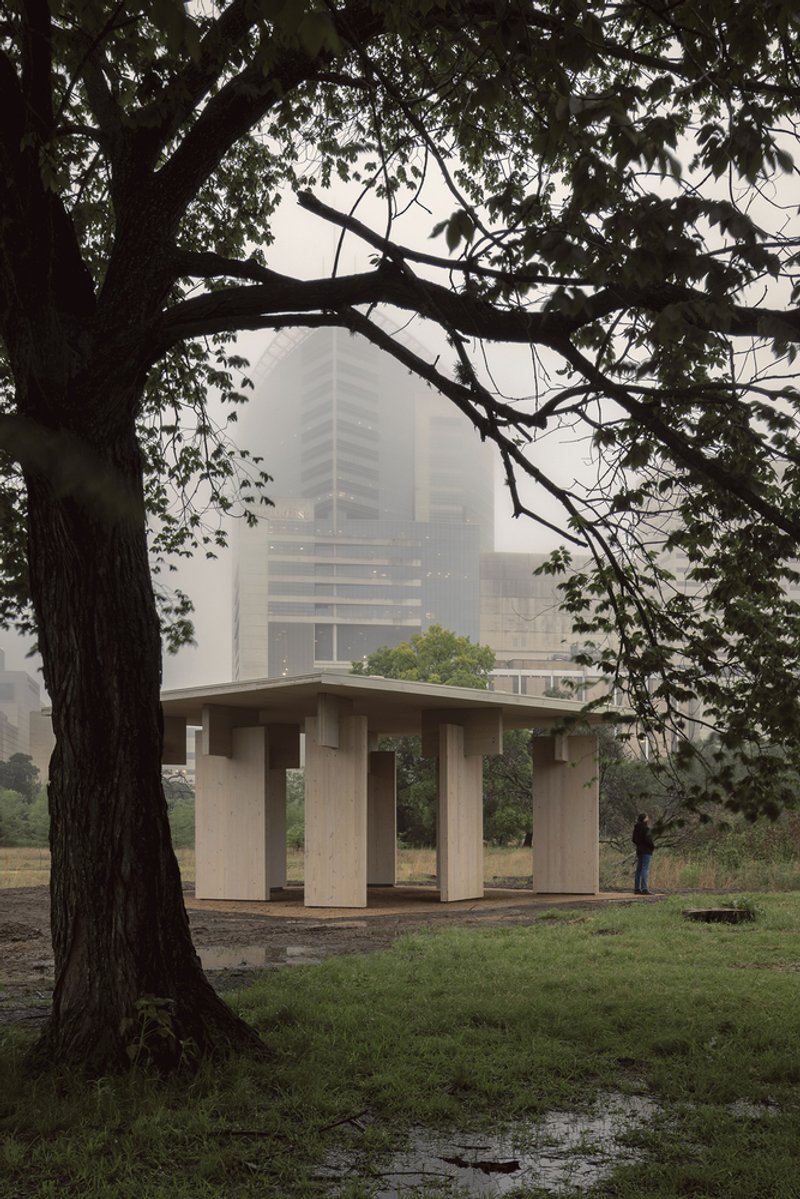
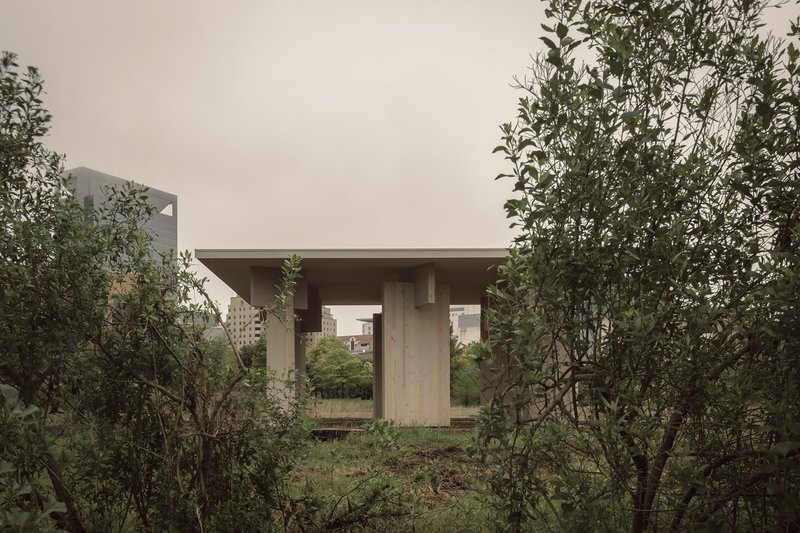
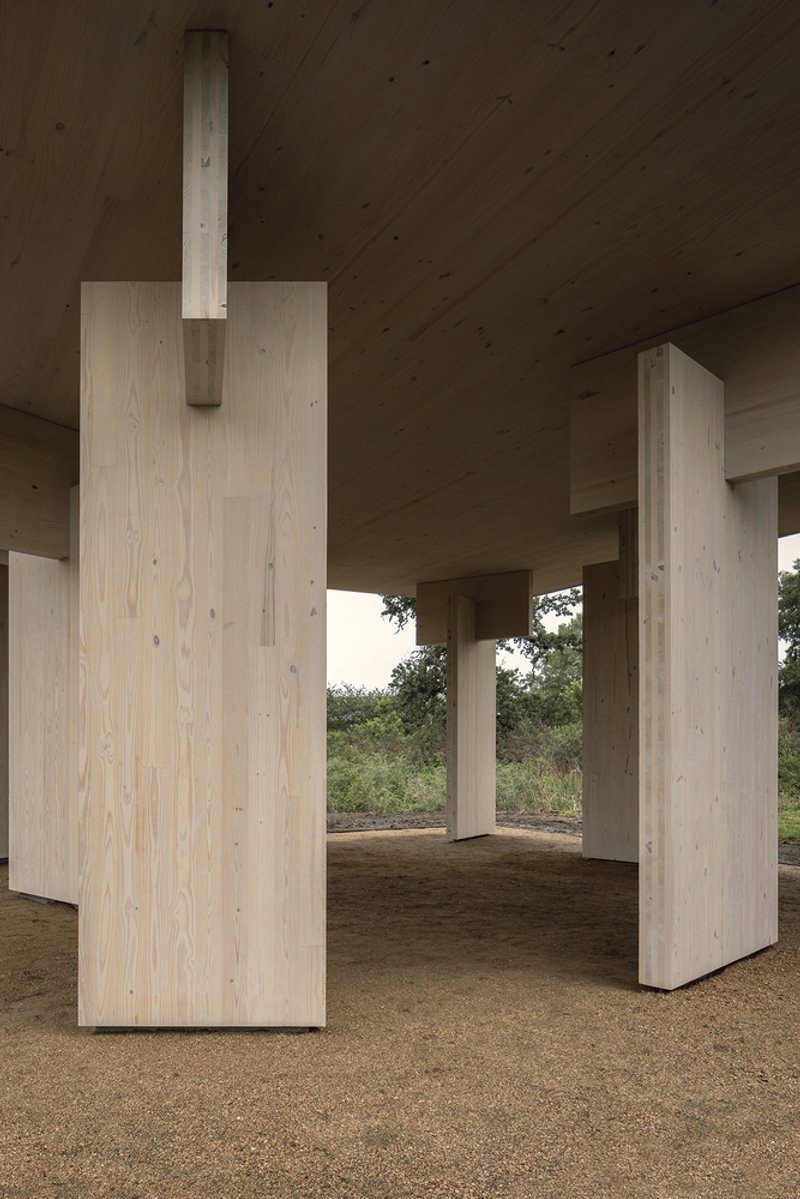
Drawing inspiration from the picturesque tradition, the pavilion emerges like the romantic remnants of a temple ruin. Its design is intentionally abstract, allowing the surrounding landscape to become the main protagonist. With its open frame, exposed joints, and unadorned finish, the building quietly blends into the forest while inviting reflection and exploration. In its simplicity and indeterminacy, the pavilion offers a model for how architectural intervention can coexist with and even enhance natural systems.
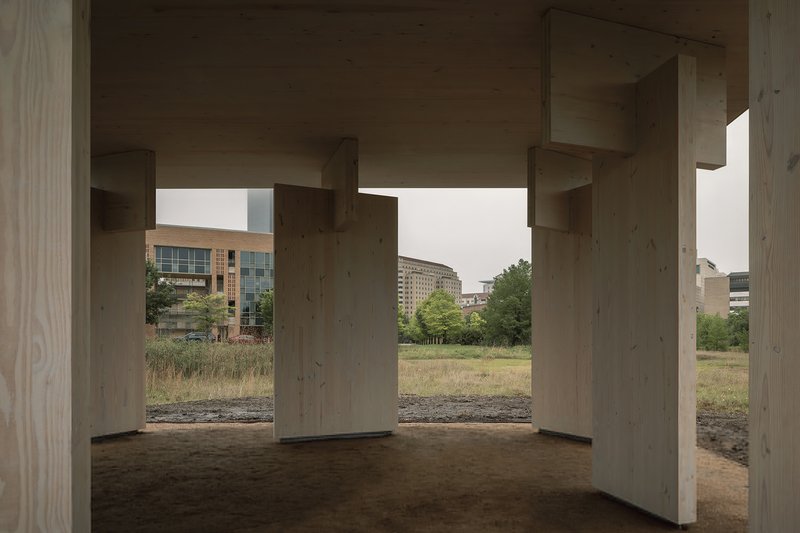
The CLT components are intentionally left visible, functioning almost like an oversized piece of crafted furniture. Structural elements—columns, beams, and capitals—are expressed in their raw, essential form, demonstrating the didactic and tectonic potential of laminated wood. The architectural language emphasizes modularity, clarity of assembly, and the beauty of engineered timber construction.
A Collaborative Learning Process
This built work is not only a piece of architecture but also a pedagogical experiment. It was designed through a collaborative process led by Professor Jesús Vassallo as part of a wood construction seminar at Rice University. Graduate students Pouya Khadem and Lene Sollie contributed to the design development alongside structural engineer Tracy Huynh, turning the project into a real-world learning laboratory. The initiative reflects how academia can directly contribute to sustainable design practices through hands-on research and construction.
Sustainable Funding and Community Support
The project was made possible by a federal grant from the United States Forest Service, supplemented by philanthropic support directed toward the Rice University School of Natural Sciences and the Lynn R. Lowrey Arboretum. These contributions underscore the importance of cross-sector support in enabling innovative, sustainable architecture that serves both academic and ecological goals.