
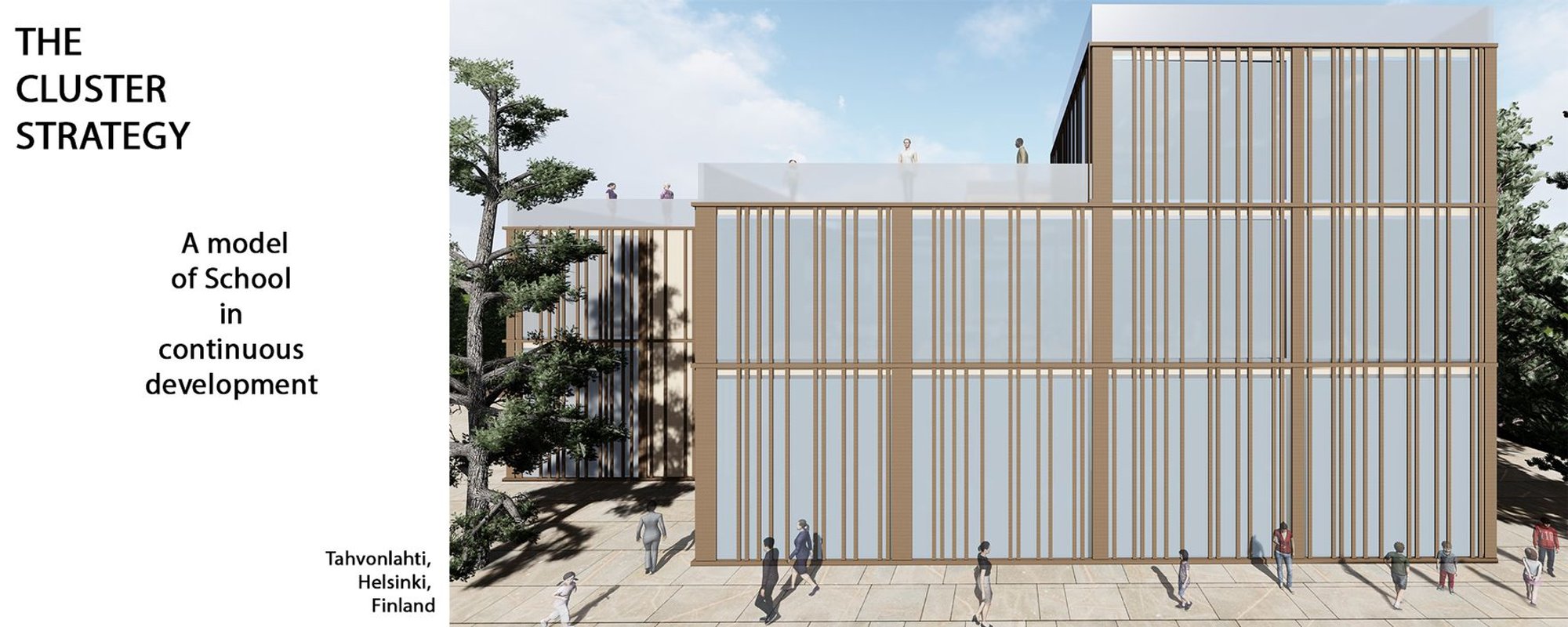
The Cluster Strategy: Modular School Architecture as Urban Memory in Tarhoviklit
A grid of 10x10 meter cubes, derived from former industrial silos, becomes a child-centered school and a catalyst for post-industrial renewal.

What if the ghost of an oil silo could become a classroom? In Tarhoviklit, a former industrial zone that spent over a decade shedding its infrastructure of silos and storage tanks, Carolina Migliaccio and Fulvia Petriello propose exactly that. Their project, The Cluster Strategy, maps the location and footprint of demolished silos onto a new educational campus, translating cylindrical industrial remnants into a grid of 10x10 meter modular cubes. The result is a school that carries the spatial DNA of the site's past while serving a radically different future.
Shortlisted in the Learn Better competition, the project stakes its claim on a precise thesis: modular school architecture can do more than organize classrooms efficiently. It can act as an instrument of urban renewal, weaving pedagogical ambition into the fabric of a neighborhood still finding its identity. Between 2006 and 2018, Tarhoviklit transitioned from abandoned oil infrastructure to residential development and new roads. Migliaccio and Petriello insert education into that evolving narrative, treating the school not as a freestanding object but as a piece of the city's ongoing transformation.
A Grid of Cubes Shaped by Sunlight and Program
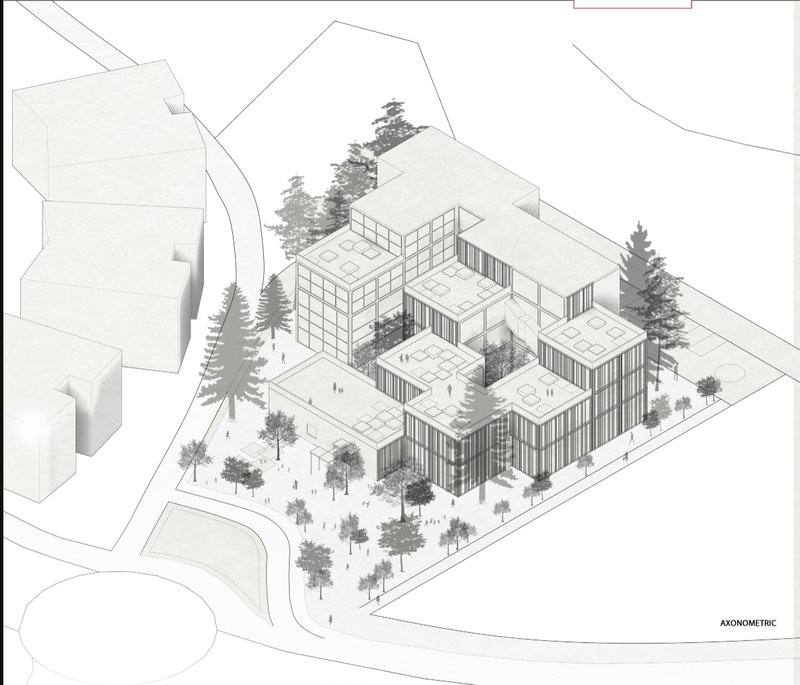
The axonometric drawing reveals the project's organizational logic at a glance. Modular cubes, each 10x10 meters in plan, are arranged in a cluster formation that varies in height according to the activity housed within. Public functions like the theater, lunchroom, and library occupy the lower, more visible volumes near ground level, while classrooms, art studios, and break rooms rise to the upper floors in quieter, more enclosed positions. Solar orientation drives much of this arrangement: a brise-soleil system wraps the sun-facing facades, and skylights punctuate the terraces to pull daylight deep into interior zones. The cluster system ensures each cube benefits from cross-ventilation and optimal light, embedding passive design principles into the project's DNA rather than treating them as afterthoughts.
Programmatically, the building stacks four distinct layers. An underground level houses the gym, kitchen, and service spaces alongside sunken patios. The ground floor integrates a central hall, classrooms, a computer lab, and a large theater. The first floor wraps a music room and break spaces around the theater's upper volume and the patios. The second and third floors are devoted to a library, reading room, art room, and painting studios, supporting project-based and exploratory learning. Each layer reads clearly in the section, giving the building a legible vertical hierarchy that students and visitors can navigate intuitively.
Timber Screens and Rooftop Social Space
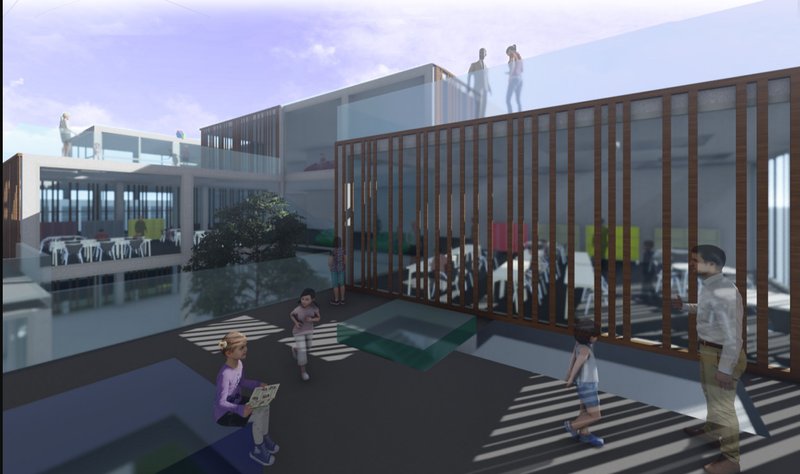
The rooftop terrace is not leftover space. It is a deliberate social platform framed by vertical timber batten screens that filter light and wind while defining edges without enclosing them. The perspective shows figures gathering in the open air under a clear sky, suggesting this is territory claimed for students and community alike, not mechanical equipment. The timber battens recur throughout the project as a unifying material language, softening the cubic volumes and giving the facades a tactile warmth that distances the school from its industrial predecessors.
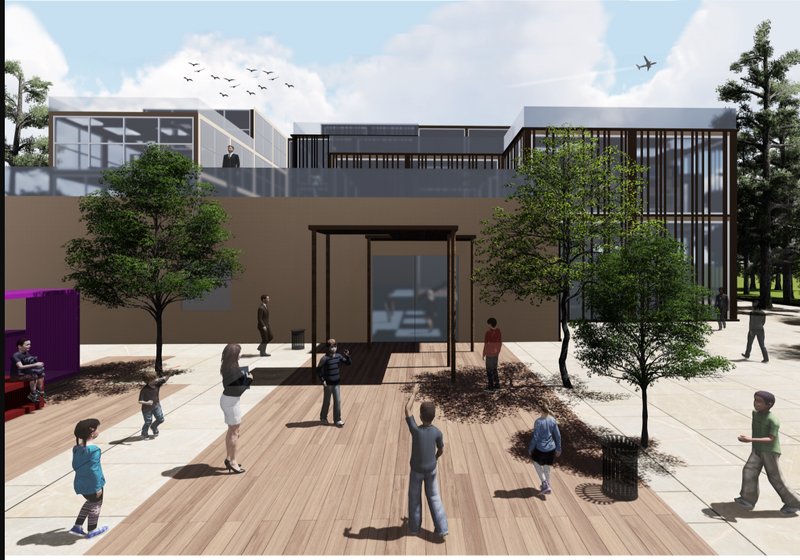
At ground level, the courtyard operates as one of two key social anchors in the plan. Timber decking and planted trees flank a recessed glass entry pavilion, creating a threshold that is both welcoming and spatially defined. The designers position one patio near the lunchroom and music room to foster vibrancy, while the other supports reading and relaxation with the library and classrooms overlooking it. These are not decorative gestures; they are programmed landscapes that shape how children move between activity and rest throughout the school day.
Atmosphere at the Edge of Day
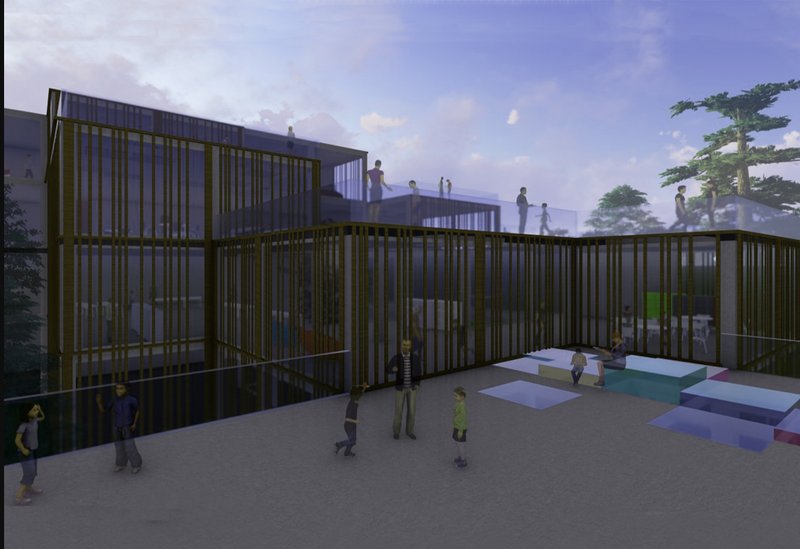
The dusk rendering of the exterior terrace is the project's most evocative image. Vertical timber slats glow with warm interior light, and silhouetted figures move through the space as if the school has already become part of the neighborhood's daily rhythm. It is a quiet argument for architecture that extends its usefulness beyond the school bell, offering the community a cultural and social resource that operates at multiple scales and times of day. The glazed facades behind the screens hint at the library and studio spaces within, reinforcing the idea that learning is not something to be hidden behind opaque walls.
Why This Project Matters
The Cluster Strategy succeeds because it refuses to treat site history and educational innovation as separate problems. By literally tracing the footprint of demolished silos to generate a modular grid, Migliaccio and Petriello give the school a formal logic that is both site-specific and infinitely adaptable. Future extensions or reconfigurations can plug into the cluster without disrupting the spatial hierarchy, making the design resilient against the unpredictable shifts in enrollment, pedagogy, and community needs that every school eventually faces.
More broadly, the project demonstrates that a school does not need to be a neutral container dropped onto a vacant lot. It can be an active agent of urban memory, a social condenser for a neighborhood in transition, and a testing ground for passive environmental strategies, all at once. For a post-industrial district still writing its next chapter, that kind of architectural ambition is exactly what is needed.
View the Full Project
About the Designers
Designers: Carolina Migliaccio, Fulvia Petriello
Enter a Design Competition on uni.xyz
uni.xyz runs architecture and design competitions year-round that reward proposals with spatial conviction and real site intelligence.
Project credits: The Cluster Strategy by Carolina Migliaccio, Fulvia Petriello Learn Better (uni.xyz).




Popular Articles
Popular articles from the community

R/URBAN DESIGN OFFICE Carves a Communal Living Room from a Tokyo Corporate Dormitory
In Shinagawa's Oi district, a 35-year-old reinforced concrete tower becomes a 49-unit rental residence with shared spaces that redefine cohabitation.
ONA Threads Four Board-Formed Concrete Cabins Along a 260-Meter-Deep Site in Mendoza
At the edge of Argentina's wine country, a set of curved concrete lodges negotiate a razor-thin parcel between city and mountain.
Cro&Co Architecture Builds a 150-Meter Tower on Top of a Seven-Lane Highway in La Défense
Trinity Tower reimagines the office high-rise as a bioclimatic organism threaded with terraces, trees, and public ground in Paris's business district.
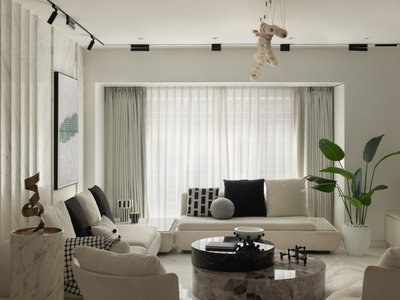
Inside a Timeless Mumbai Residence by Aether Studio
Aether Studio's 2,250 sq ft apartment in Malad, Mumbai uses marble, brass, boucle, and disciplined restraint to build a quiet retreat from the city.


Similar Reads
You might also enjoy these articles
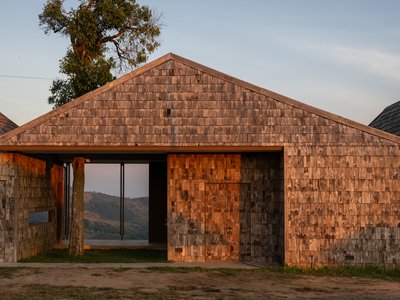
S.O.S Architects Scatters a Cluster of Timber Pavilions Across a Chiang Rai Hillside
The Wood Cabin arranges shingled gabled volumes along the slopes of Doi Chang, framing mountain vistas from every room and courtyard.
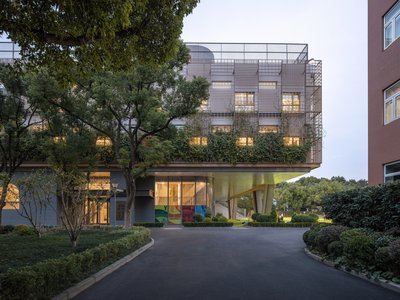
Scenic Architecture Office Lifts an Entire Sports Complex Above a Shanghai School's Playing Field
The Anna Pao Sohmen Centre at YK Pao School stacks six levels of athletics, making, and gathering on a tight campus site.
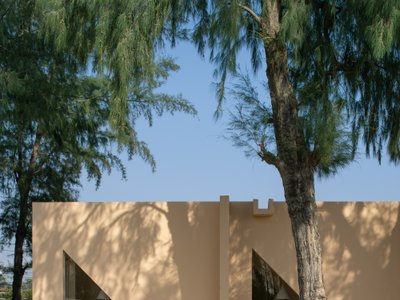
Pinto Builds a Faceless Pavilion Beneath Casuarina Trees on Thailand's Rayong Coast
SON Restaurant refuses a front door or a back wall, treating all four facades equally in a 260-square-meter brick and stucco grid.
Five Collaborators Build a Culture Center with a Community Kitchen in Rural Oaxaca
In Santa Catarina Quiané, low-tech timber construction and rammed earth anchor a communal space born from land tenure struggle.


Explore Educational Building Competitions
Discover active competitions in this discipline




The International Standard for Design Portfolios


The Global Benchmark for Architecture Dissertation Awards


The Global Benchmark for Graduation Excellence


Challenge to design public laboratory
Comments (0)
Please login or sign up to add comments
No comments yet. Be the first to comment!