MS House by Studio Saransh: Harmonizing Brutalism with Nature in Ahmedabad
MS House by Studio Saransh in Ahmedabad blends Brutalist concrete with lush neem trees, sustainable design, and seamless indoor-outdoor living.


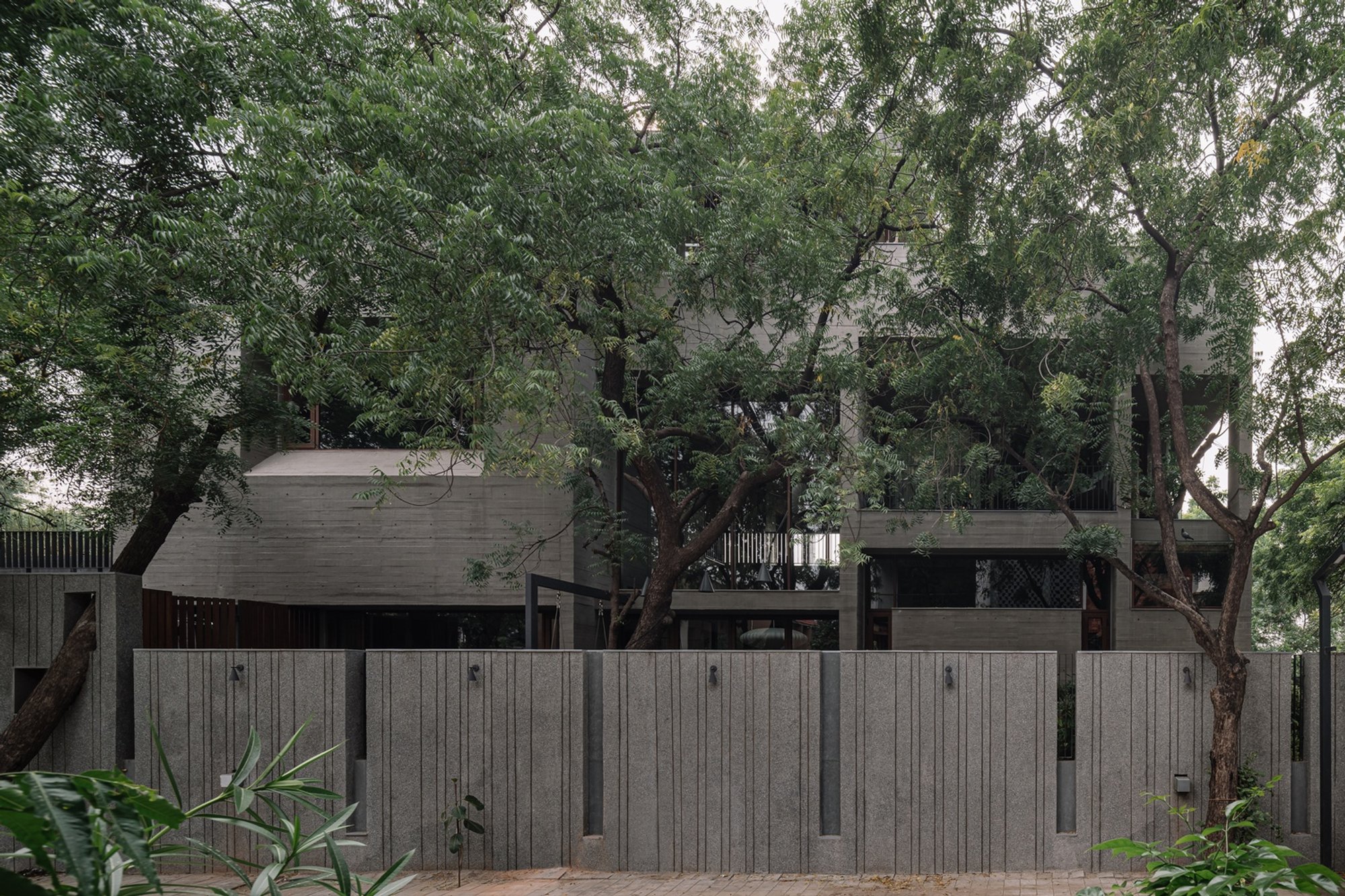
MS House in Ahmedabad, designed by Studio Saransh, is a striking exploration of how Brutalist architecture can coexist seamlessly with nature. The design responds to a singular promise: to preserve the site’s nine mature neem trees at all costs. This ecological commitment shaped every aspect of the home—from its spatial planning and architectural form to the material palette—demonstrating the studio’s belief in context-sensitive design and functional elegance.
Nature as the Guiding Force
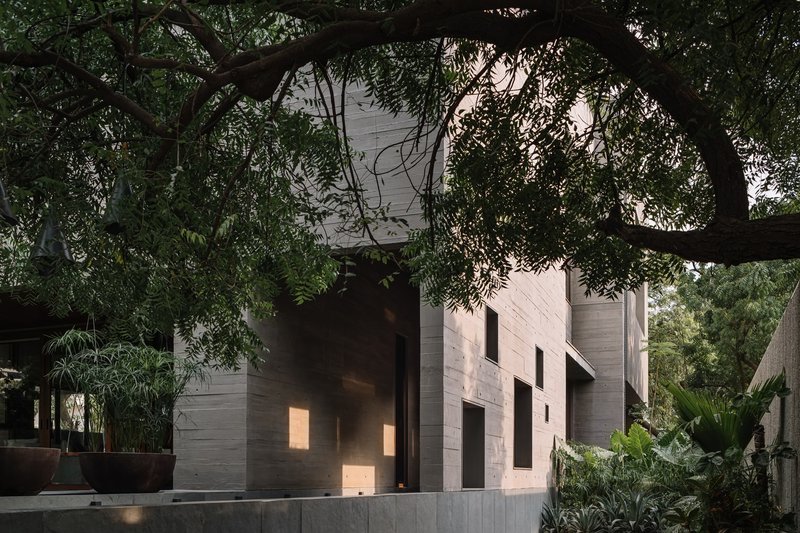
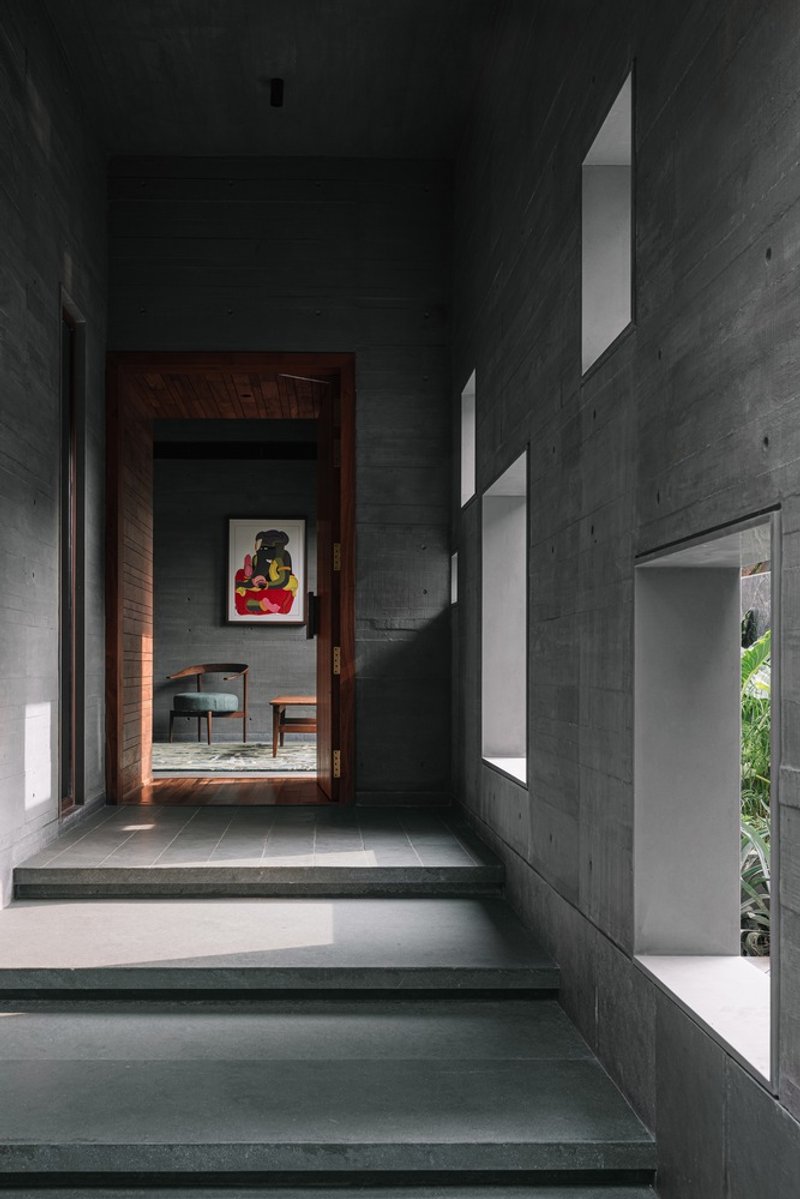
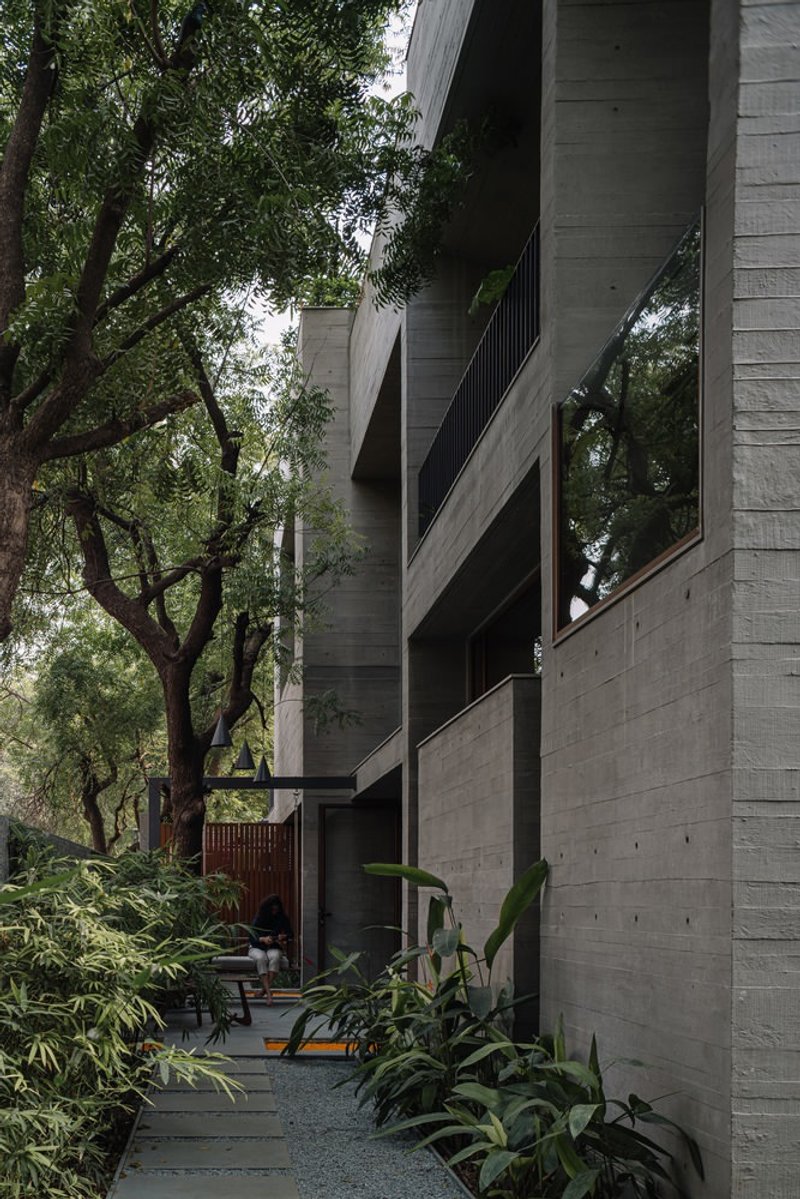
From the boundary wall that curves around a tree trunk to the entrance lobby framed by a downward-curving branch, the relationship between architecture and nature is evident immediately. The dramatic entrance corridor, punctuated by square openings, transforms a typically austere passage into a dynamic space where dappled sunlight dances across the walls and floors. These openings also offer glimpses of the surrounding greenery, reinforcing the home’s connection to its natural environment.
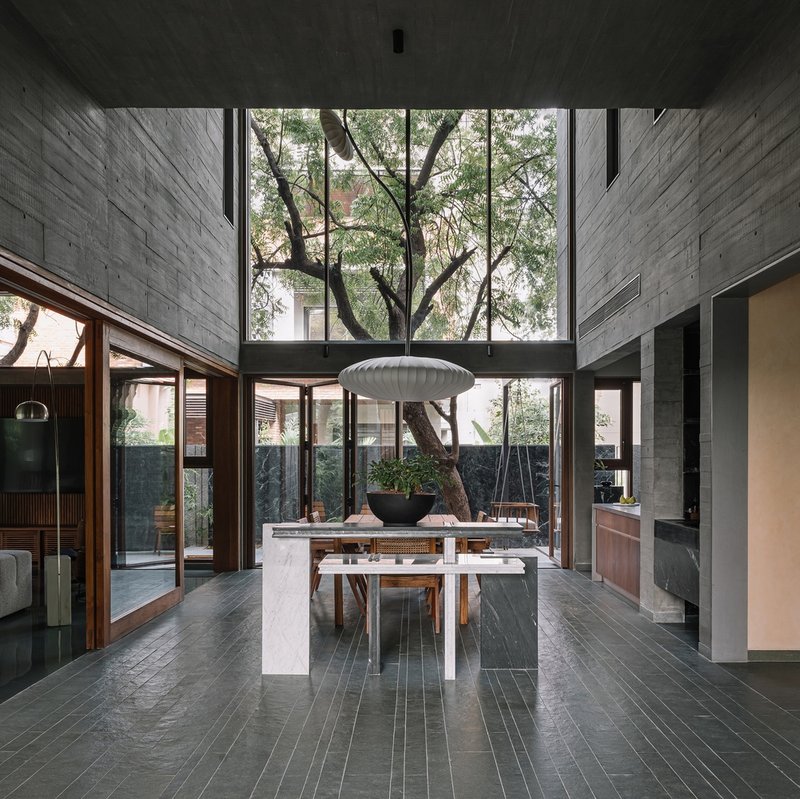
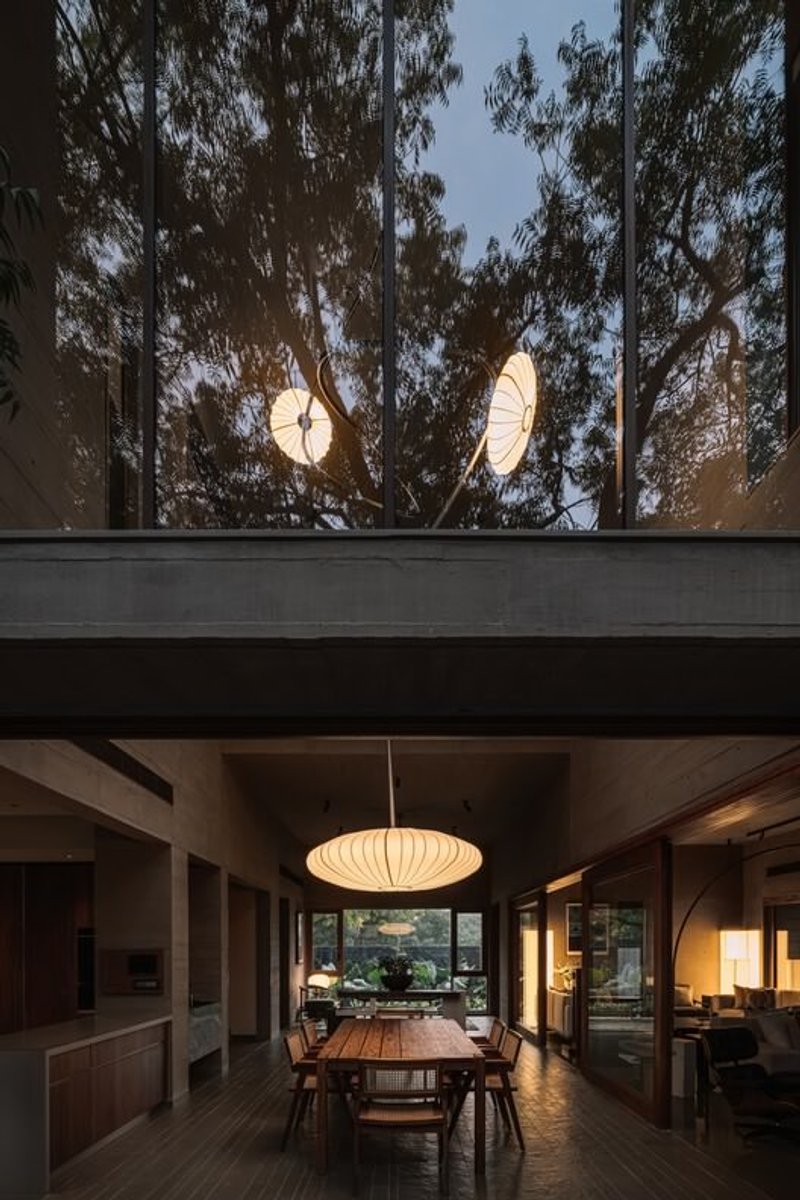
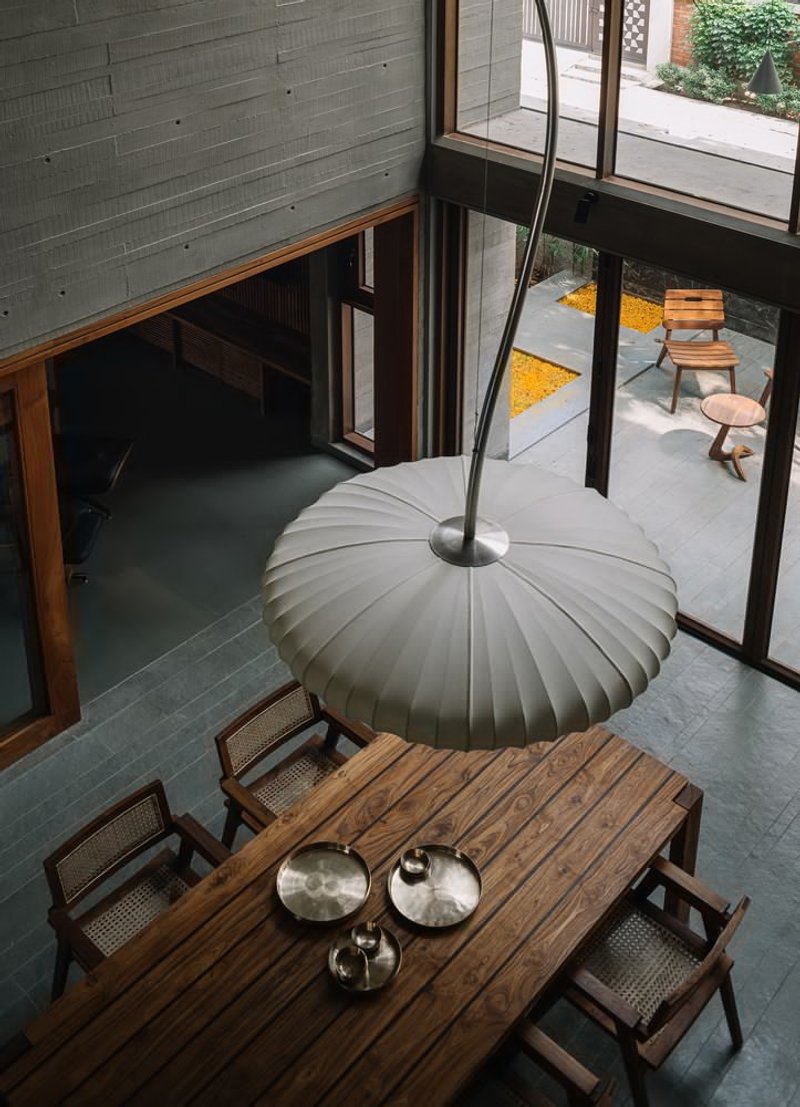
At the heart of the house lies a double-height central bay, oriented east-west, which serves as a gathering space for morning tea and family meals beneath the neem canopy. “The central bay is more than just a design element—it is the soul of the house,” explains Malay Doshi, principal architect at Studio Saransh. This bay anchors two wings: one containing the living room, verandah, and garden, and the other housing the kitchen, guest room, and ancillary spaces. Every design decision reflects the site’s natural context and the family’s lifestyle, marrying functionality, individuality, and environmental sensitivity.
Thoughtful Spatial Organization
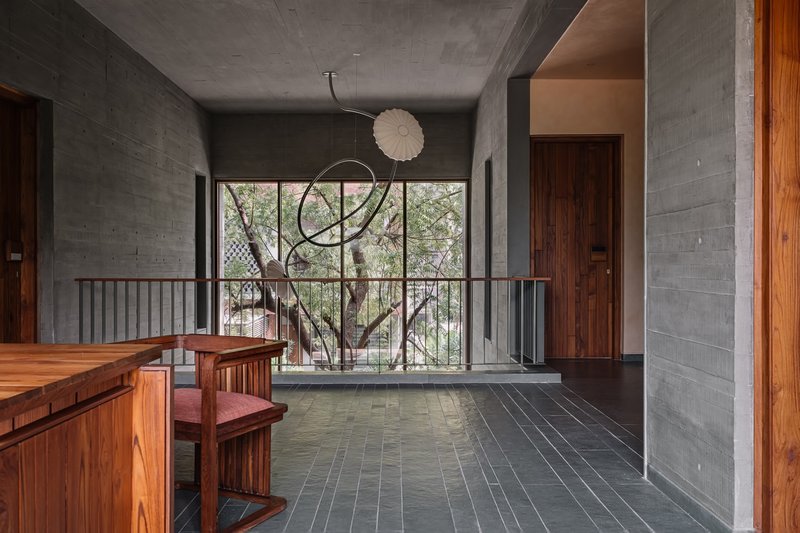
On the upper floor, the central bay transitions into a study area overlooking the dining space below, while the master bedroom opens to a shaded balcony with views of the trees. The daughters’ bedrooms, located in the quieter rear wing, provide privacy and tranquil backyard vistas. A social terrace on the second floor includes a family lounge, bar, and powder room, creating a relaxed gathering area above the neem canopies.
Landscape Integration
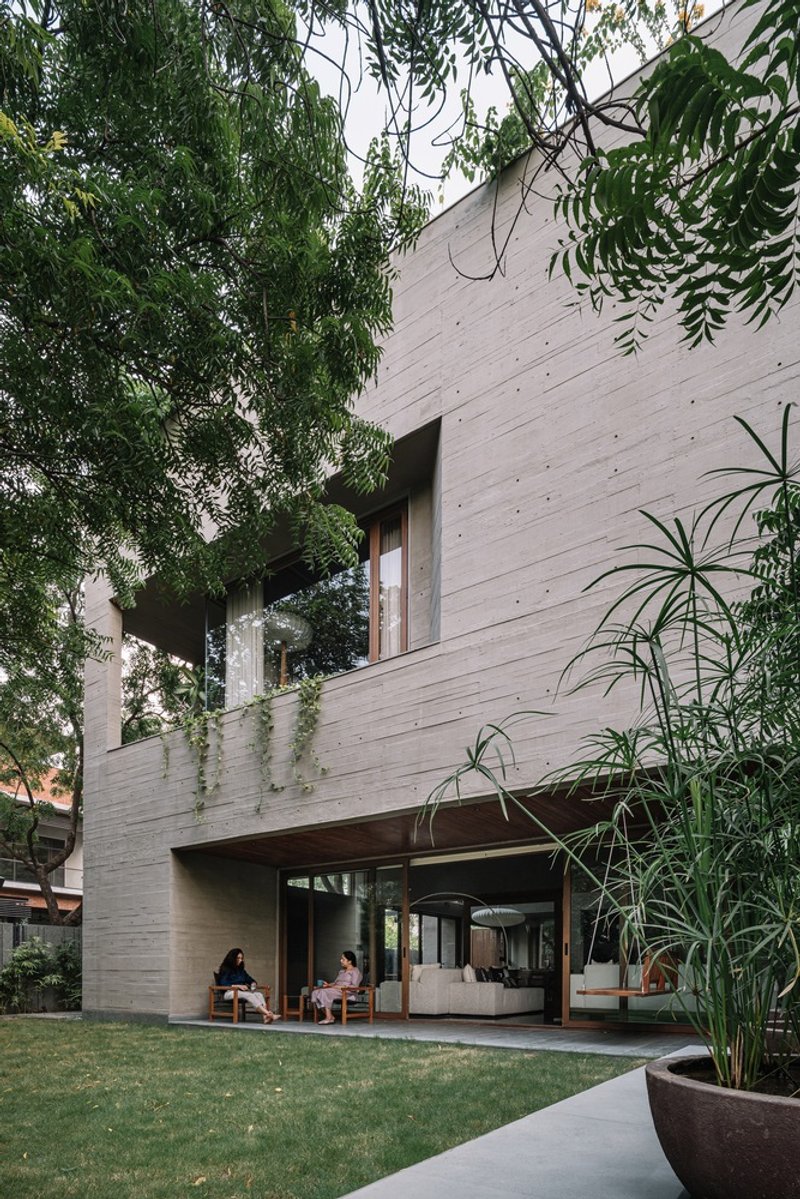
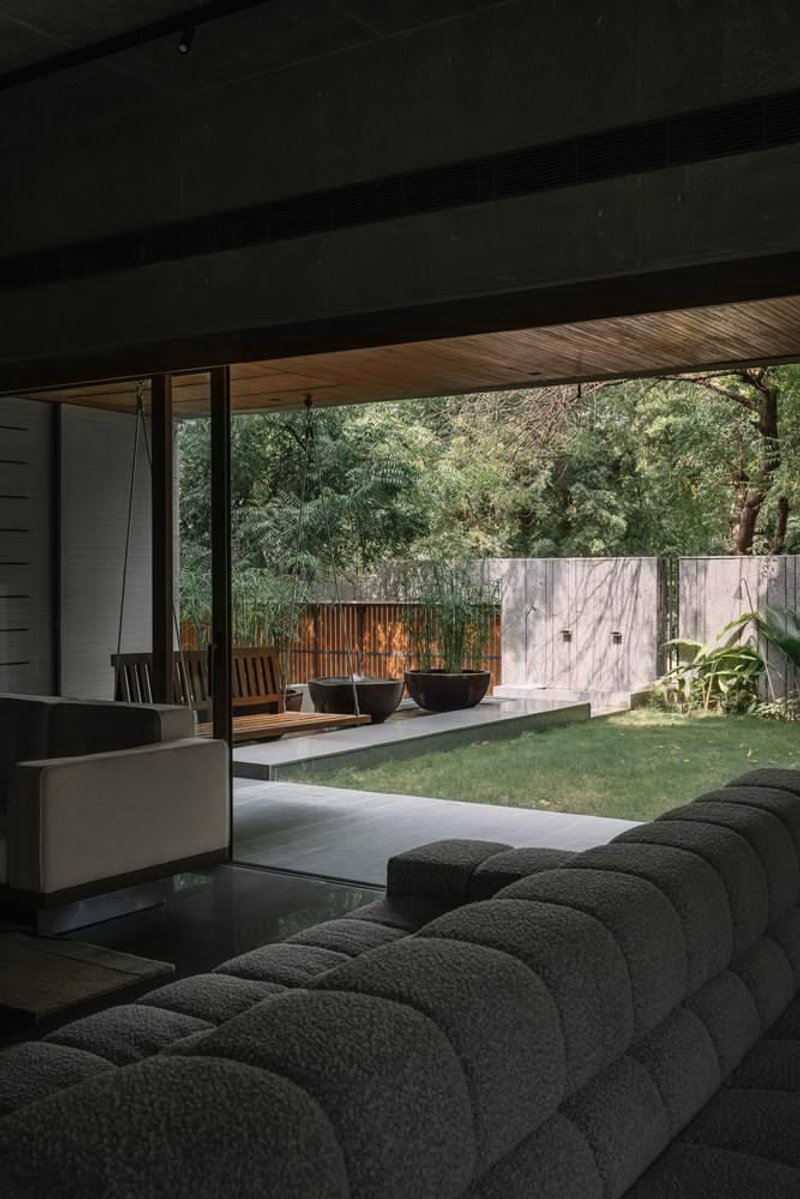
The landscape design blurs the boundaries between indoors and outdoors. Beyond the preserved neem trees, local and tropical plant species add layered greenery. A serene water feature near the entrance enhances sensory experience with gentle acoustics while reflecting glimpses of sky and foliage. On the terrace, strategically planted creepers will eventually cascade over the concrete parapets, softening the building’s sharp Brutalist geometry.
Brutalist Aesthetics with a Natural Touch
The house’s exterior showcases bold Brutalist forms softened by lush foliage. Deep chamfered window sills and square perforations filter diffused light, casting playful shadows while offering glimpses of nature. Wooden-strip textured concrete mirrors tree textures, blending the structure with its surroundings and enhancing tactile appeal. Beneath the raw concrete exterior lies a home carefully crafted for livability and human experience.
Interior Design: Materiality and Craft
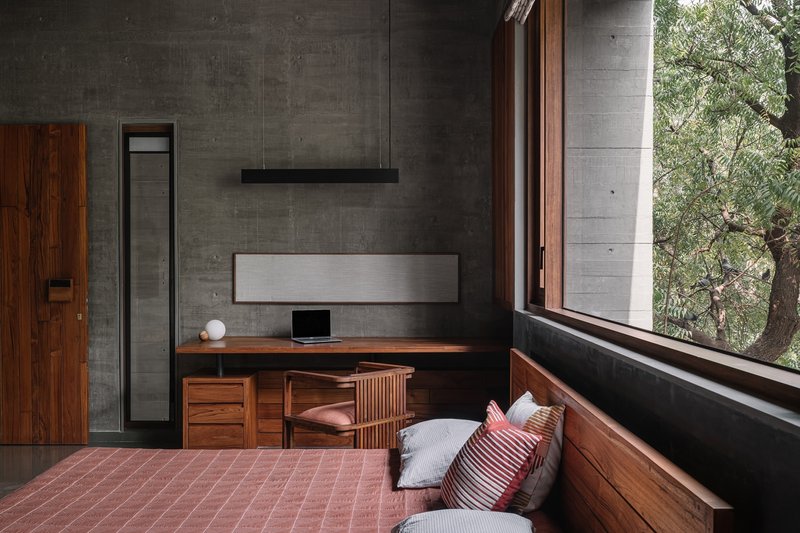
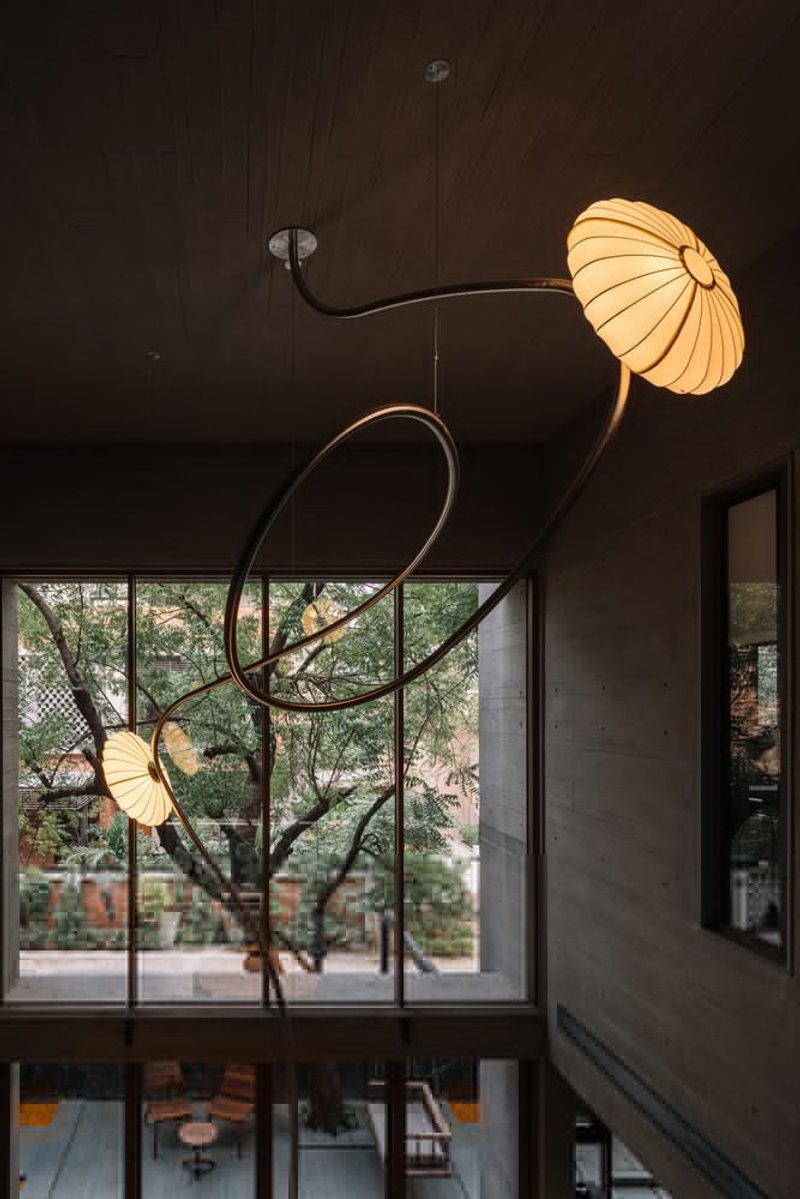
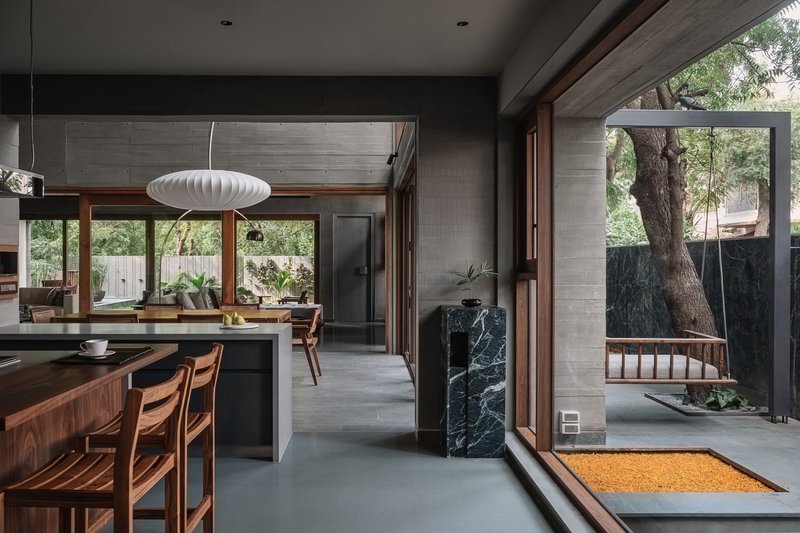
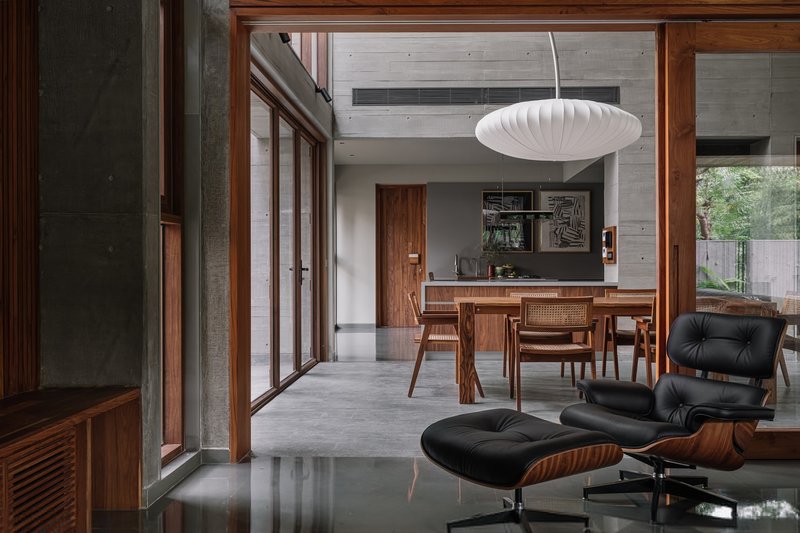
MS House’s interior palette is restrained yet deliberate, combining concrete, lime plaster, and Kota stone flooring for a cohesive indoor-outdoor connection. The central bay features Kota flooring in a leather finish, seamlessly continuing the concrete plank motif and creating a sense of the outdoors inside.
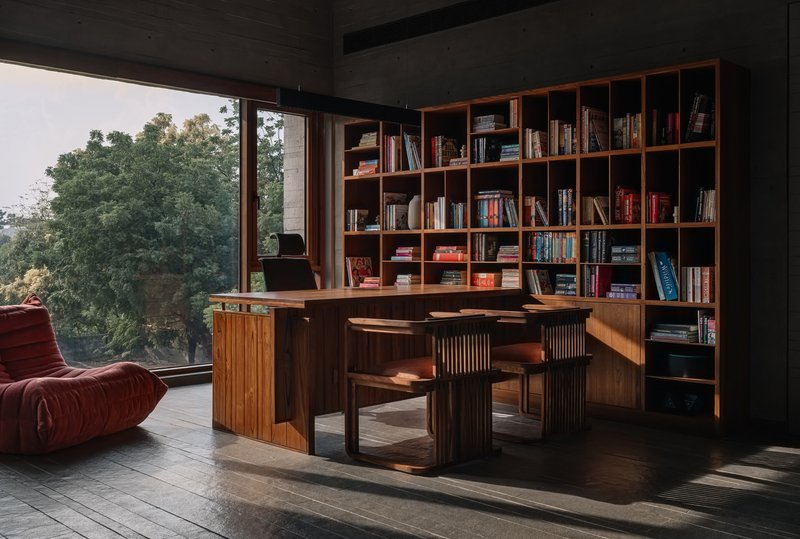
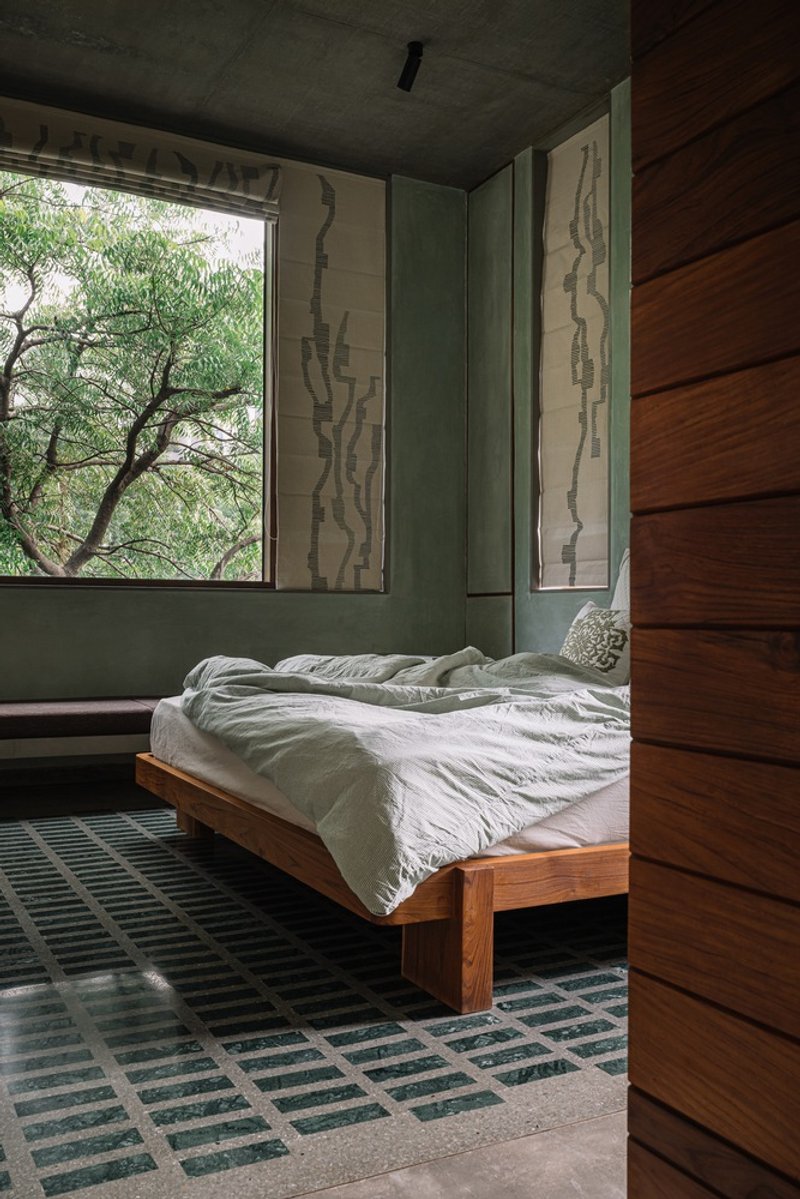
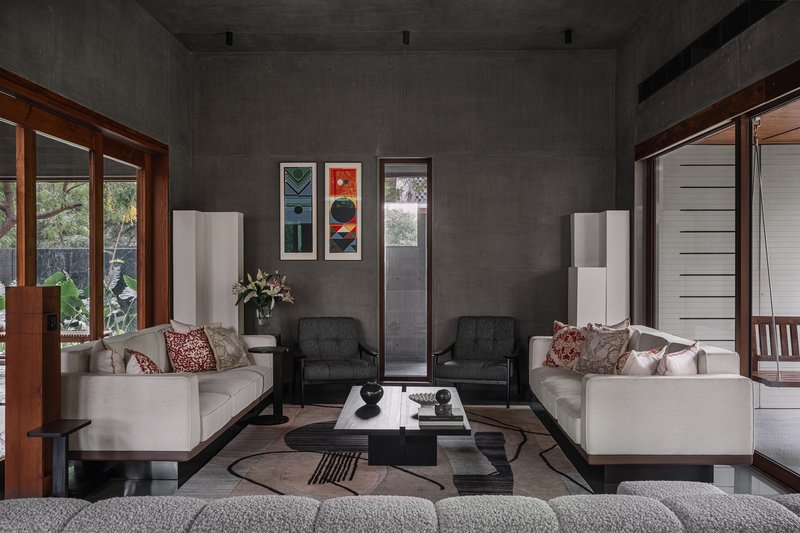
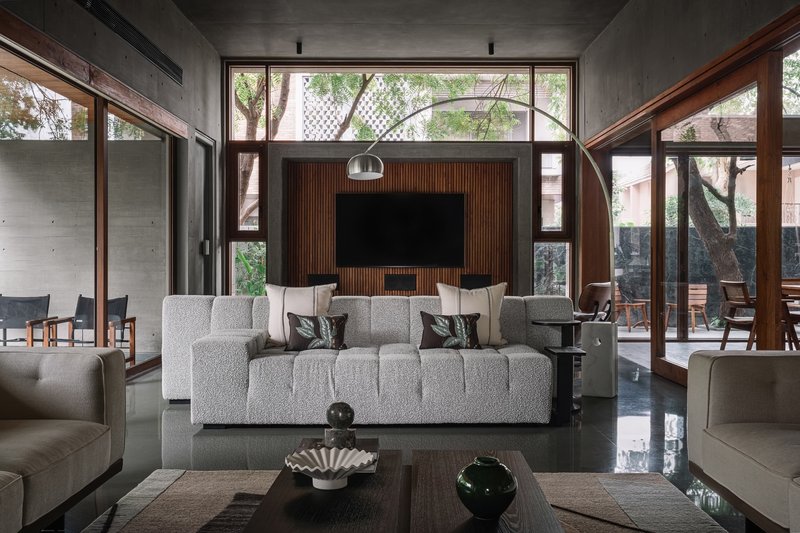
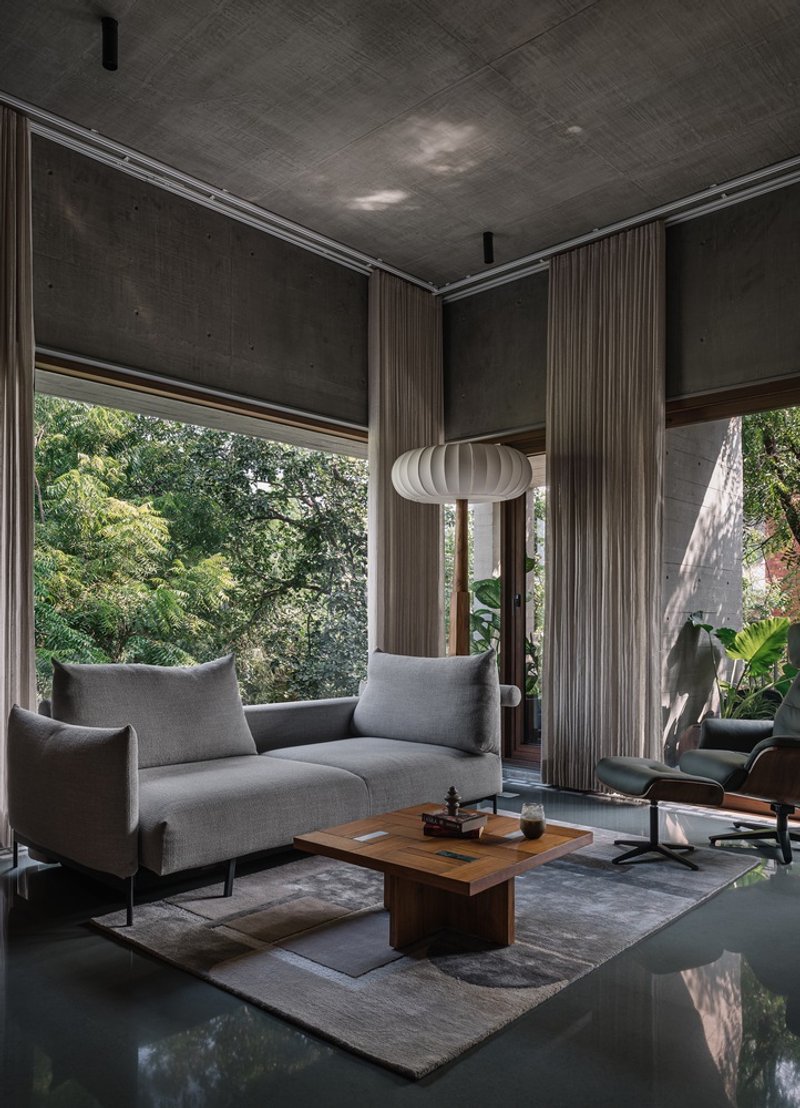
The dining ensemble includes a custom wooden table with rosewood detailing, paired with teak and wicker chairs, while the living room features polished plywood surfaces, ethically sourced teak panelling, ribbon windows, and iconic furniture pieces like an Eames chair with an Arco lamp. Bedrooms reflect the occupants’ personalities while maintaining strong ties to nature. The master bedroom incorporates a custom four-poster bed with stone pedestals, while the daughters’ rooms use distinctive color palettes and terrazzo flooring.
Bathrooms are thoughtfully curated, with natural skylights, full-height glazing, and custom concrete basins creating intimate connections to the surrounding landscape.
Sustainability at the Core
MS House is a model of sustainable design. Passive strategies maximize natural light and ventilation, while laminated double glazing, deep shaded openings, and cavity walls reduce heat gain. The solar-powered gazebo roof supplies 70–80% of the home’s energy needs, and lime plaster walls eliminate the need for plastic-based paints. Materials are repurposed creatively: leftover timber becomes custom furniture, and marble remnants are used for consoles, minimizing construction waste.
A Modern Brutalist Home
MS House exemplifies how Ahmedabad’s architectural traditions can evolve while embracing nature. Its bold concrete forms softened by foliage demonstrate that Brutalism can be both imposing and empathetic. “Every element, every detail—from landscape to interiors—reflects a seamless collaboration between architects and interior designers,” notes Kaveesha Shah, principal interior designer at Studio Saransh. Malay Doshi adds, “MS House shows how to transform a Brutalist house into a home, balancing tradition, functionality, and the rhythms of nature.”
All photographs are works of Ishita Sitwala | The Fishy Project