Piazza De Nava and Piazza Alvaro Redevelopment: A Contemporary Urban Transformation
The redevelopment of Piazza De Nava and Piazza Alvaro transforms Reggio Calabria’s urban core, integrating history, sustainability, and contemporary public space design.


Revitalizing the Heart of Reggio Calabria
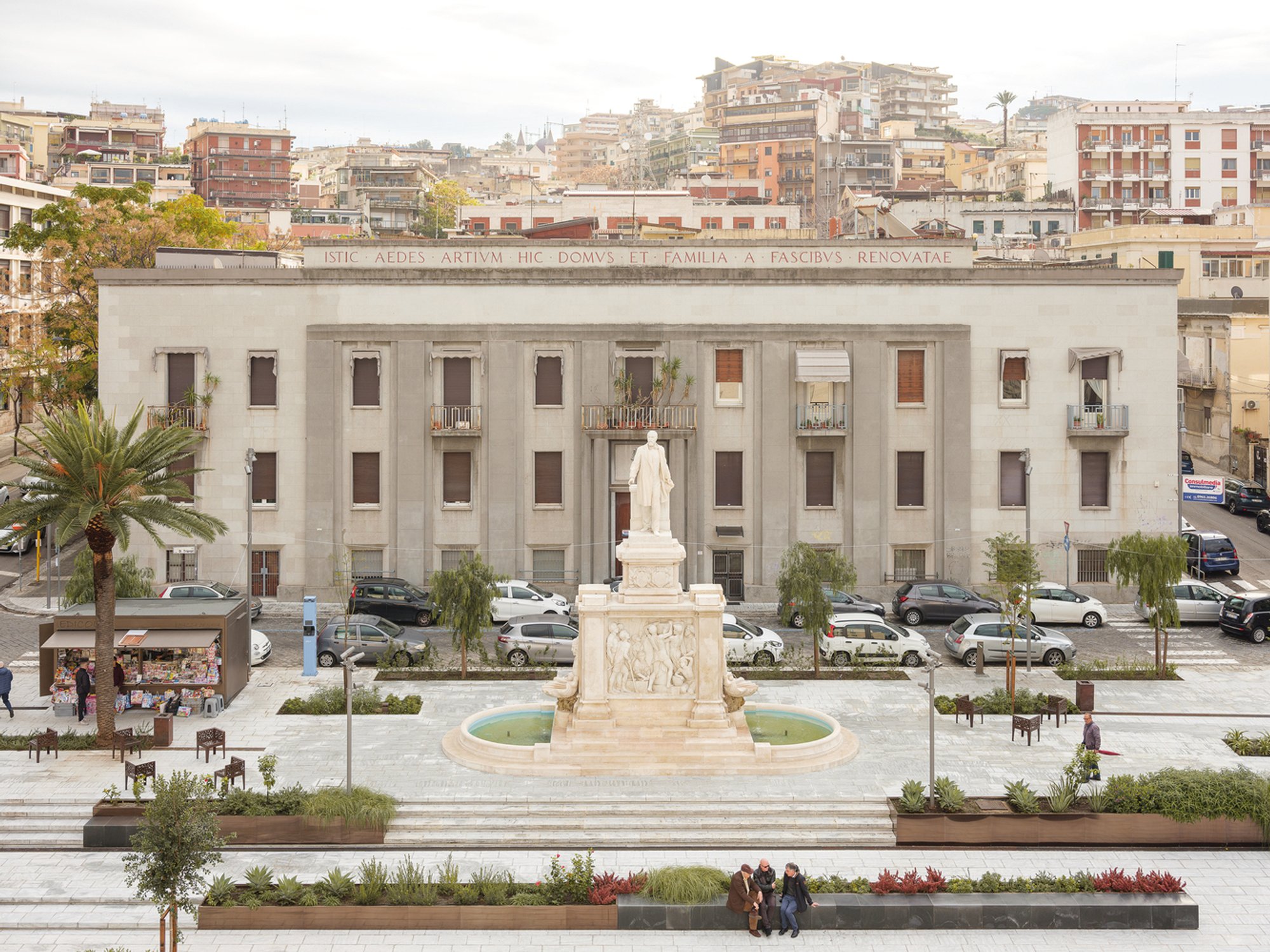
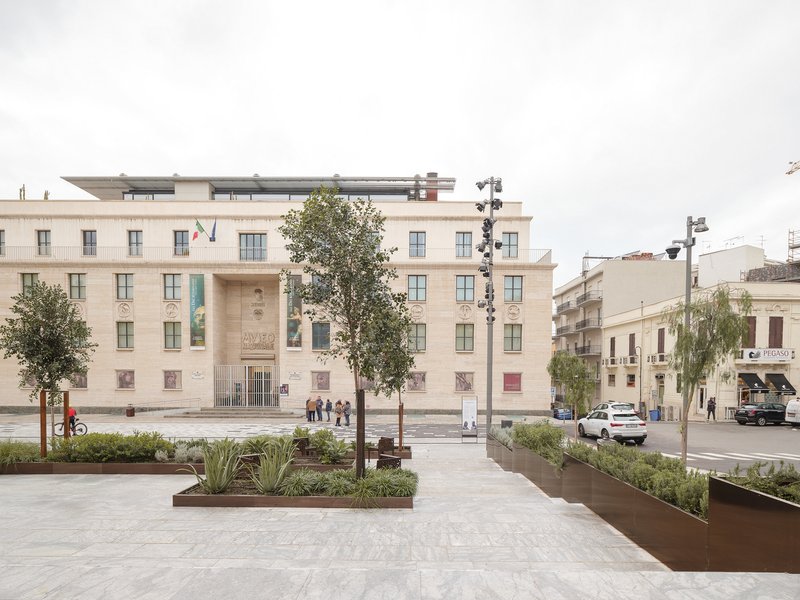
The redevelopment and restoration of Piazza De Nava and Piazza Alvaro mark a significant transformation in the urban landscape of Reggio Calabria, Italy. Designed by MICROSCAPE architecture urban design AA in collaboration with nuvolaB architetti associati, the project seamlessly integrates the historic urban fabric with contemporary interventions. Covering 6,300 square meters, the revitalized square enhances the connection between the National Archaeological Museum, home to the Riace Bronzes, and the surrounding cityscape.
A New Urban Center Rooted in History
The redevelopment respects the dual urban systems of Reggio Calabria—the historic core and the twentieth-century expansion, both oriented parallel to the coastline. The architectural approach emphasizes connectivity by aligning the new square with the city’s structural elements. The layout serves as an urban focal point, reinforcing its role as a vibrant public space.
A Dynamic Space Inspired by Theater
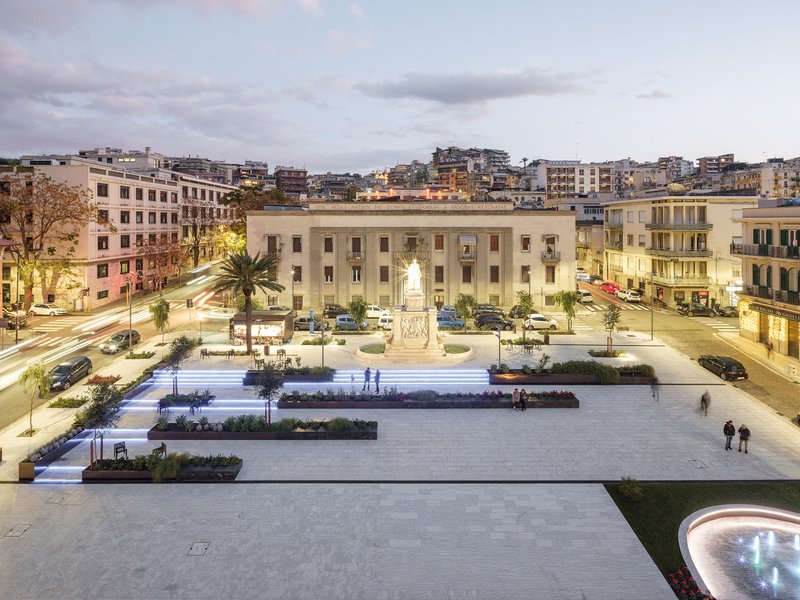
The redesigned Piazza De Nava functions as an urban theater, naturally guiding pedestrian movement and framing views of the city. A diagonal axis, inspired by the expansion of the twentieth century, defines the space, while a gentle slope enhances accessibility. The transformation of the area in front of the National Archaeological Museum—once a vehicular road—now integrates seamlessly with the pedestrian-friendly plaza, fostering a stronger connection between the city’s cultural and architectural heritage.
Sustainable and Ecologically Responsible Design
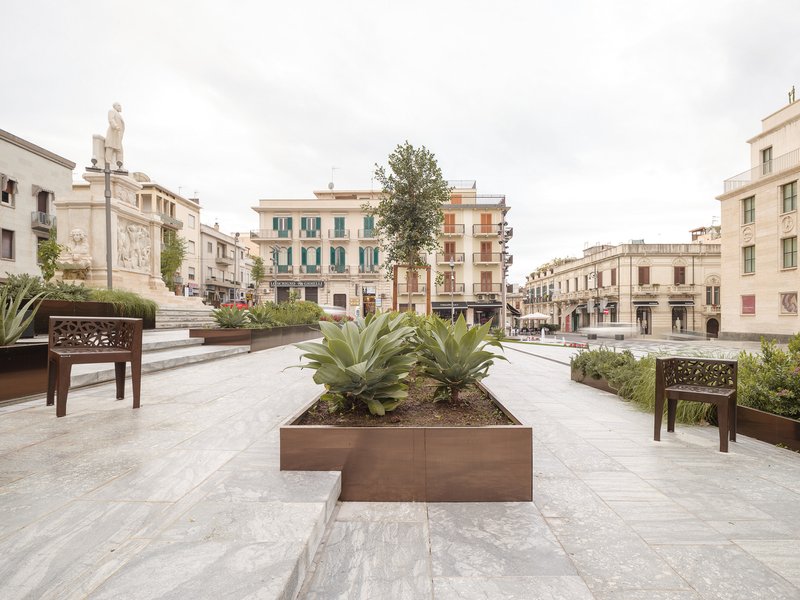
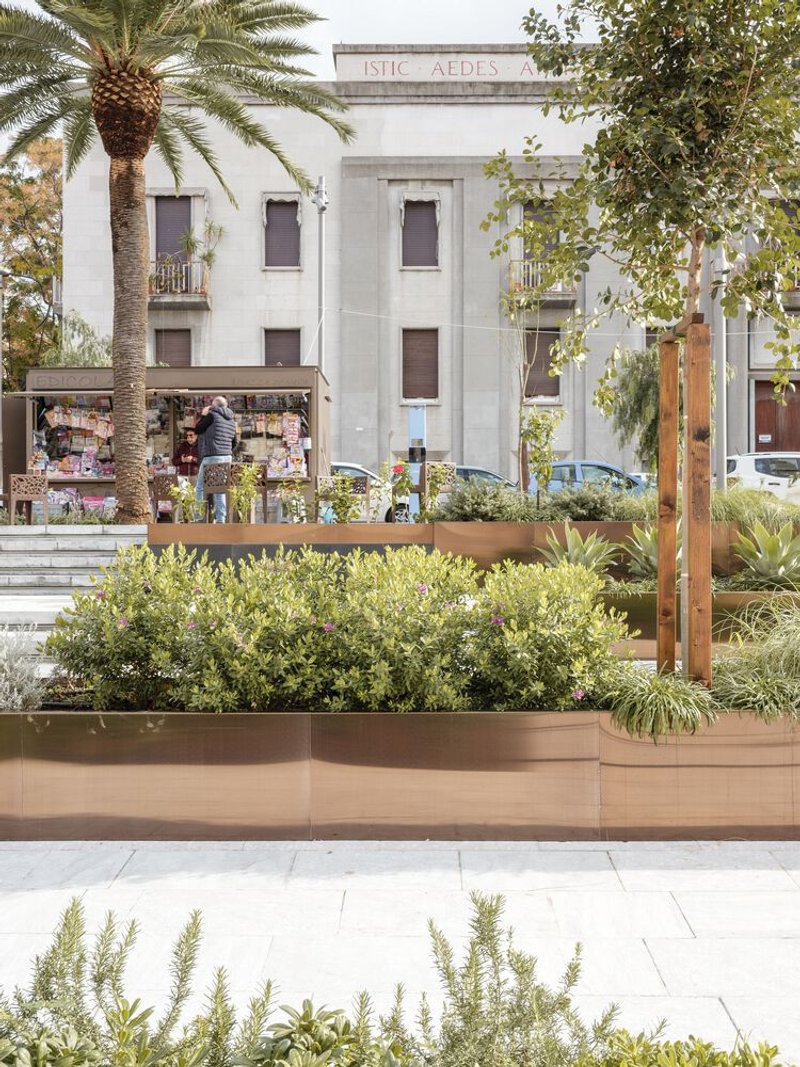
One of the key aspects of the redevelopment is its commitment to sustainability and low environmental impact. The project incorporates rainwater recycling, LED-based RGB+W lighting, and the planting of native Mediterranean vegetation, including new trees and shrubs.
Material choices reflect a balance between tradition and innovation:
- Reclaimed paving stones from nearby streets reduce waste and preserve historical continuity.
- Stainless steel sheets with an innovative PVD coating create iridescent surfaces for planters.
- Restoration of the G. De Nava monument fountain enhances the square’s aesthetic and historical value.
- Curbstones and stones from the historic staircase have been repurposed, maintaining a strong link to the past.
Smart Lighting Enhancing Urban Experience
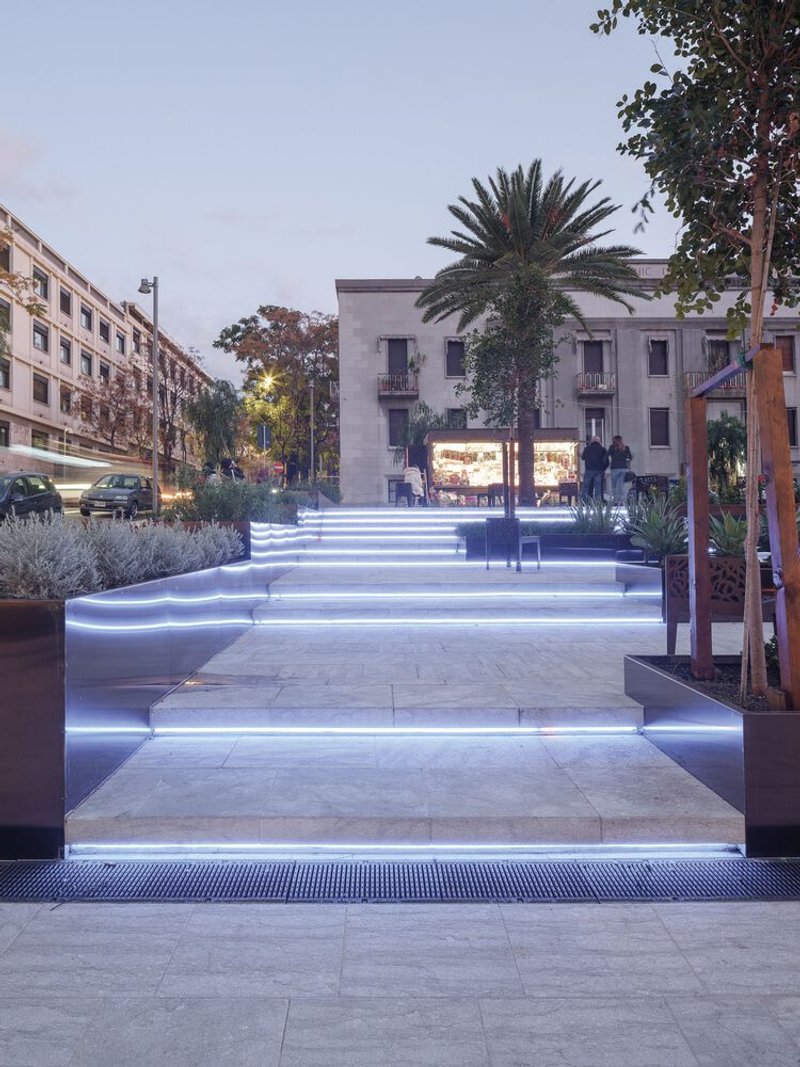
Artificial lighting plays a crucial role in shaping the ambiance of Piazza De Nava at night. The introduction of tall lighting poles, reminiscent of the square’s historic elements, provides a strategic illumination of the Piacentini façade of the National Archaeological Museum and the entire urban space. The dynamic LED strip system embedded within the steps enhances the square’s emotional character, offering different visual effects:
- Blue lighting mimics the movement of sea waves, reflecting Reggio Calabria’s coastal identity.
- Green hues recreate the impression of the Aspromonte mountains descending into the urban space.
A Fully Pedestrianized and Accessible Space
Designed as a fully pedestrianized square, the redevelopment ensures accessibility for all users, reinforcing its role as an inclusive public space. By eliminating the previous vehicular barrier, the project has successfully transformed a disconnected urban fragment into a cohesive, inviting, and multifunctional hub.
The redevelopment of Piazza De Nava and Piazza Alvaro is a landmark project in Reggio Calabria’s urban regeneration efforts. By merging historical continuity, sustainable solutions, and modern design strategies, the intervention creates a harmonious, multifunctional urban space that strengthens the city’s architectural identity. With a renewed sense of place and purpose, the square stands as a model of contemporary urban design, celebrating the rich history and evolving future of Reggio Calabria.
All Photographs are works of Filippo Poli