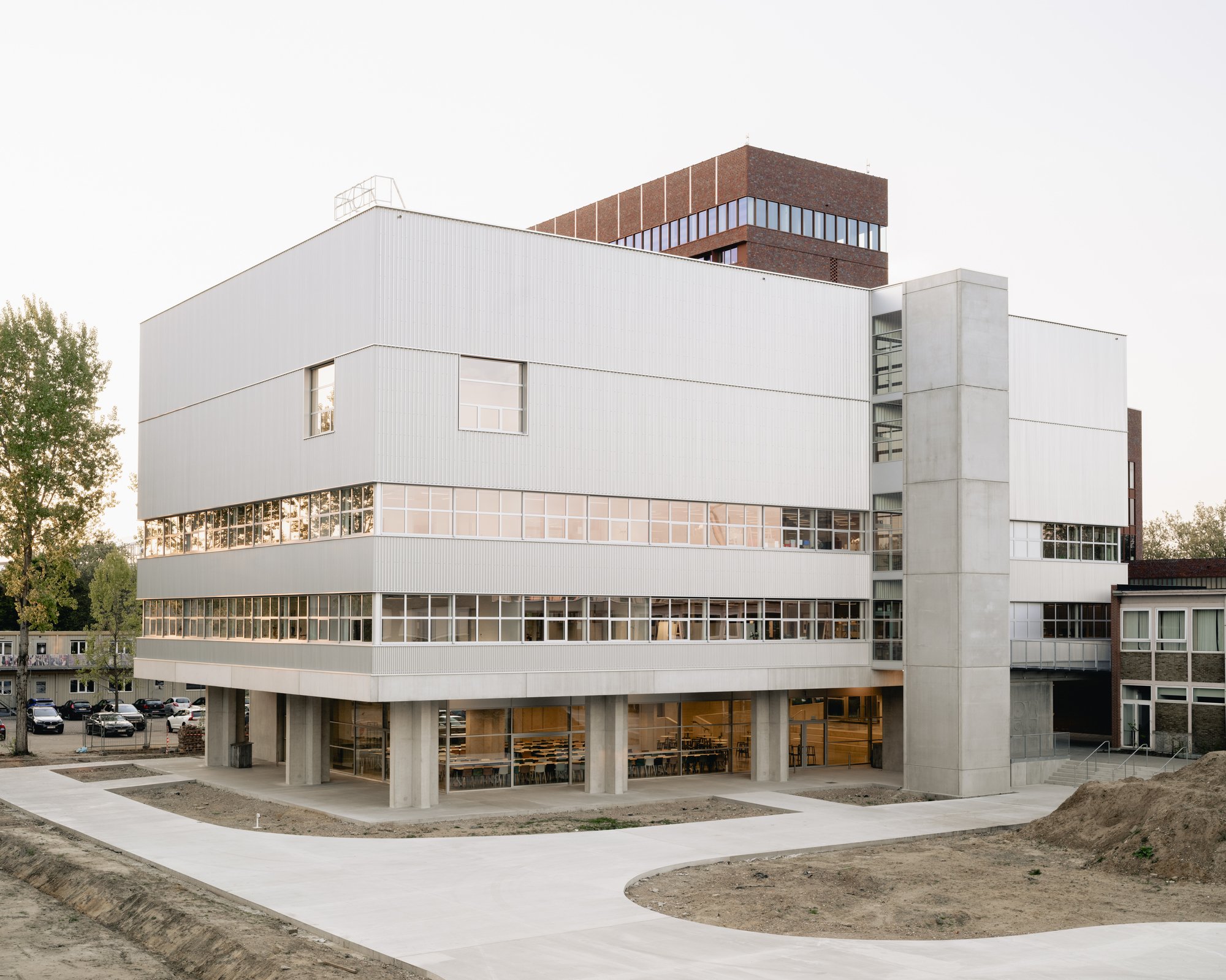
PIKOH School of Arts by BOT architektuurcollectief + Import Export Architecture
PIKOH School of Arts in Hasselt blends open learning spaces, daylight, and flexible design to inspire creativity and collaboration in education.


Located in Hasselt, Belgium, the PIKOH School of Arts by BOT architektuurcollectief and Import Export Architecture redefines the educational experience through a hybrid, daylight-filled learning environment. The 5,000 m² project accommodates secondary education in visual, media, and performing arts, offering a new architectural identity within the evolving “Elfde-Linie” city campus—a development inspired by the American Campus Model.
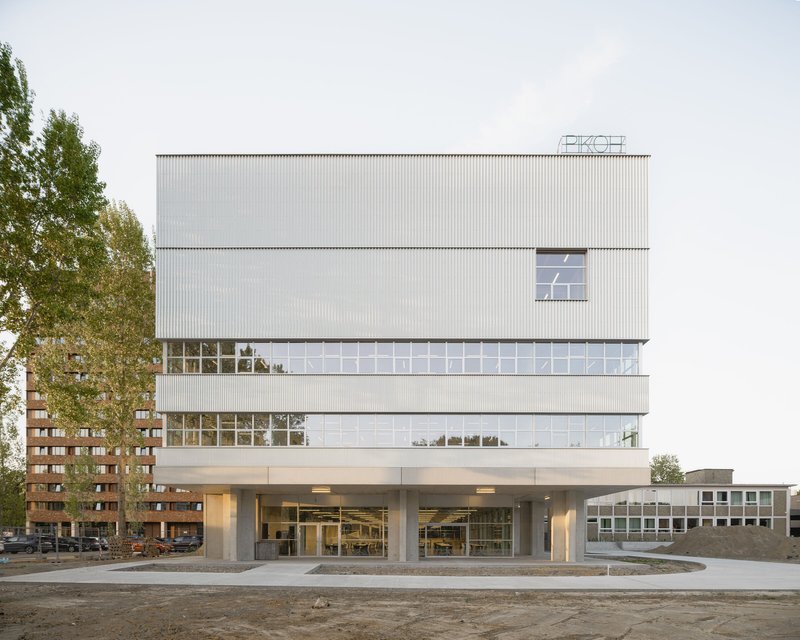
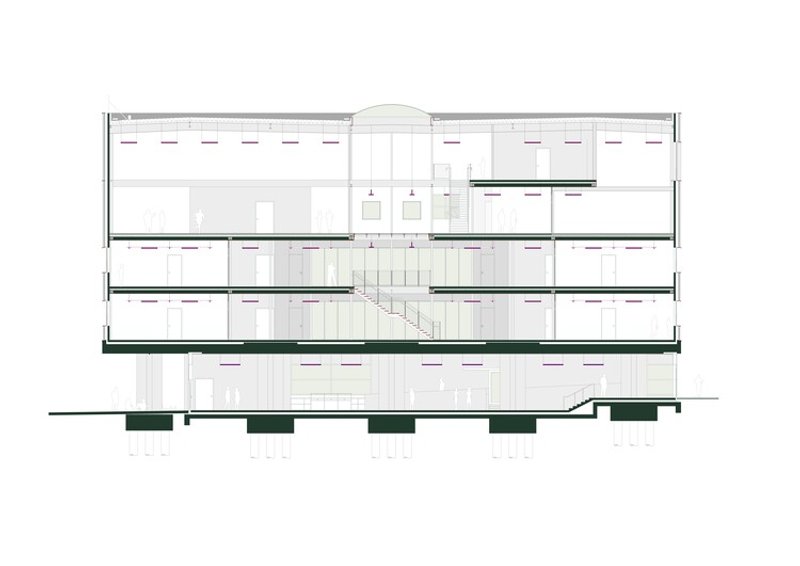
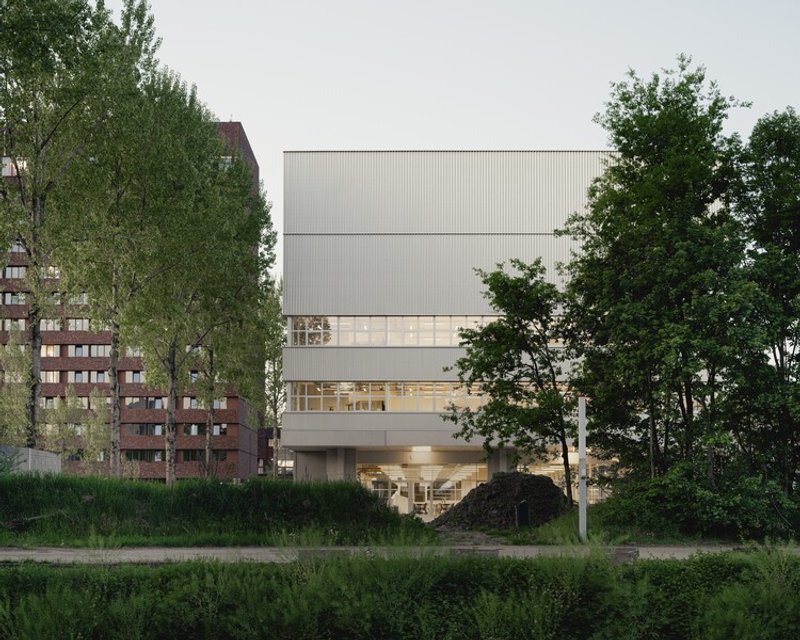
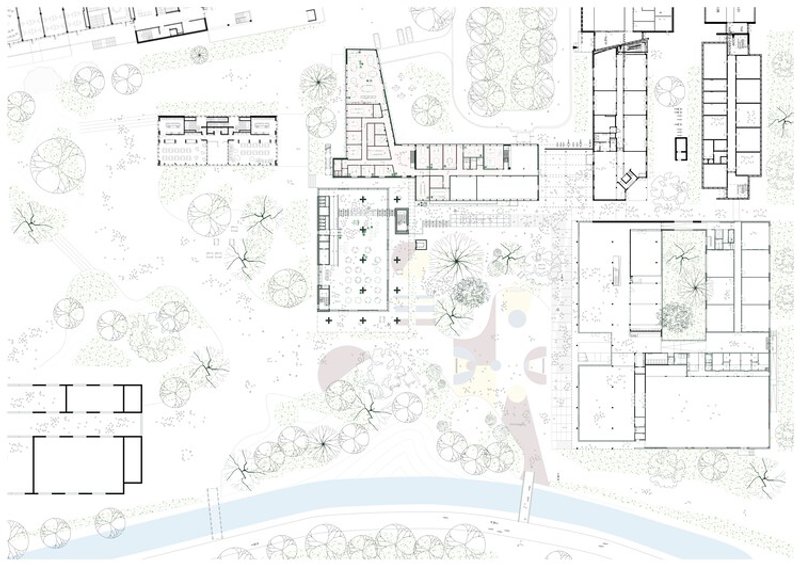
Responding to the school’s rapid growth, the new building brings together classrooms, art studios, workshops, a multipurpose hall, a sports hall, and administration spaces under one cohesive form. Positioned strategically along the Demer River, the compact five-storey structure creates a balance between urban density and natural openness, leaving ample space for a lush green playground adjacent to Kapermolenpark.
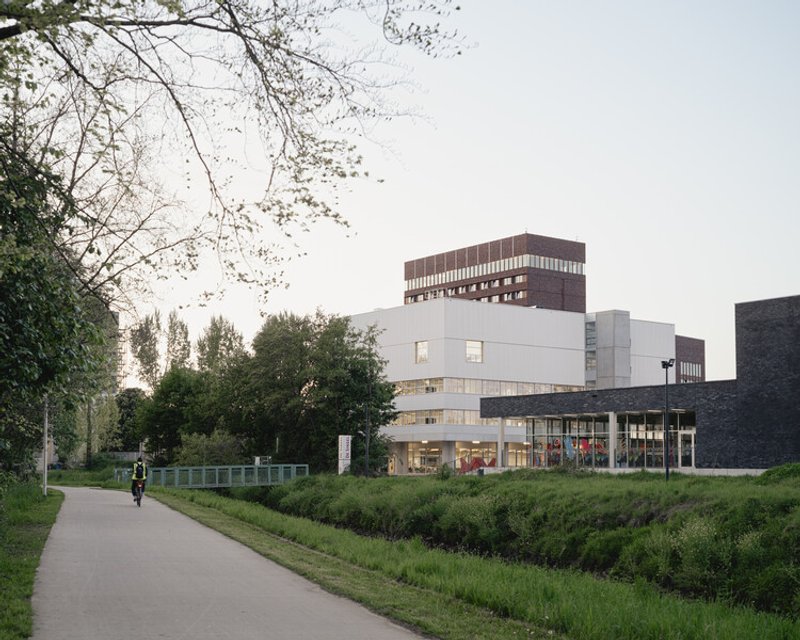
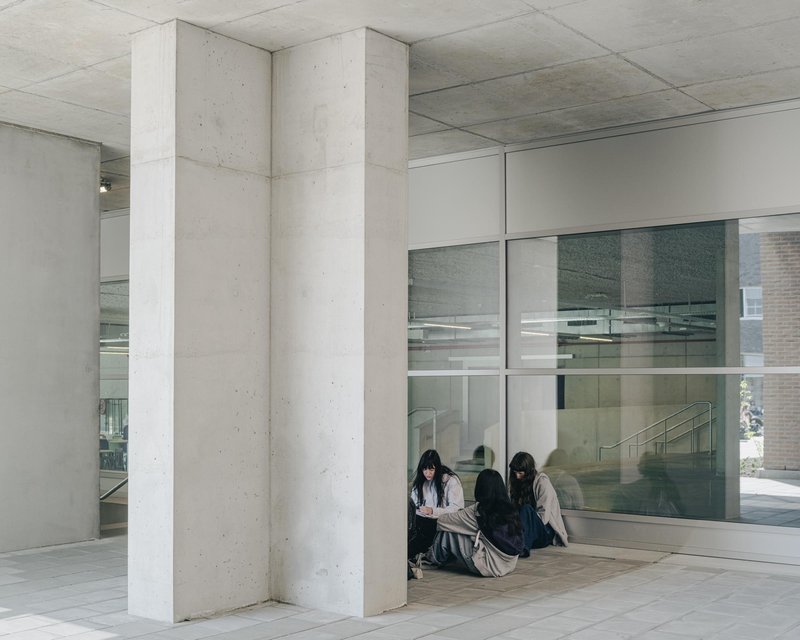
The design embraces the site's natural topography with a series of interconnected staircases, blurring boundaries between indoors and outdoors while encouraging informal social interactions. Reflecting PIKOH’s pedagogical philosophy, the building avoids traditional corridors in favor of an open-plan layout, fostering creativity and collaboration.
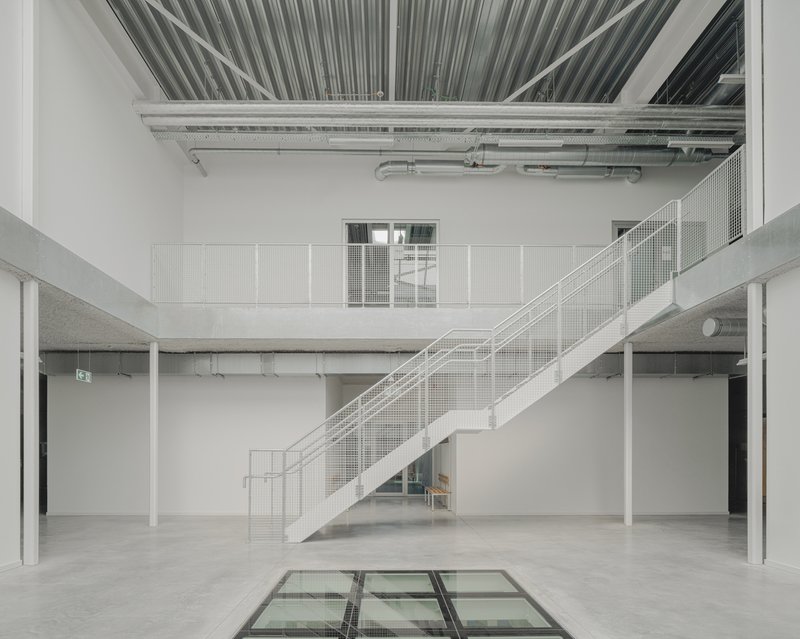
Inside, classrooms and studios are organized into “learning nests”—clusters of three classrooms positioned at the building’s ends. On the southern side, innovation clusters enable co-teaching and interdisciplinary learning, while the northern wing supports focused study spaces. The longitudinal façades feature glazed workshops and art studios, promoting transparency and visual connectivity across disciplines.
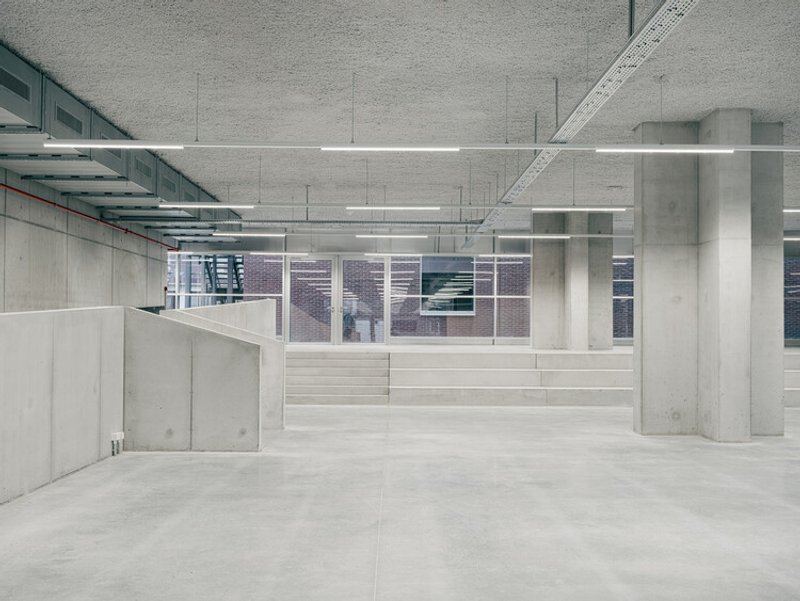
At the heart of the school lies the forum, a multifunctional core acting as a gathering space, exhibition hall, or debate arena. This flexible “plan libre” encourages fluid transitions between learning, making, and performance, embodying a dynamic architectural landscape where students move freely through zones of creation and reflection.
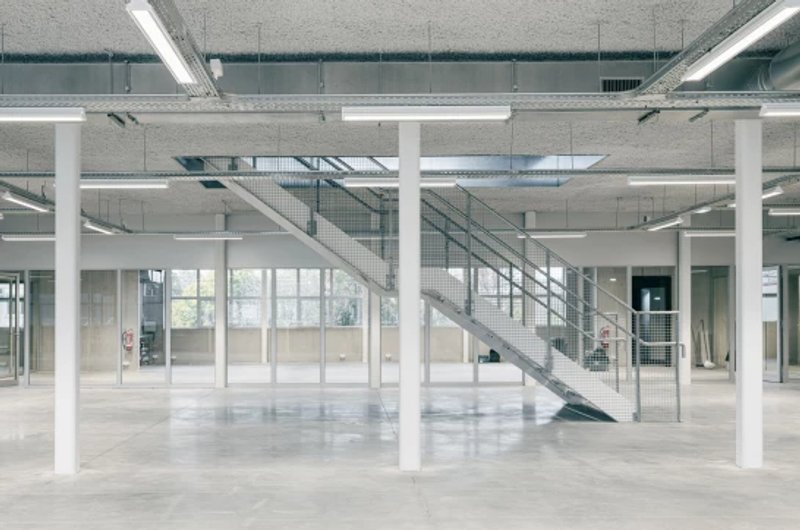
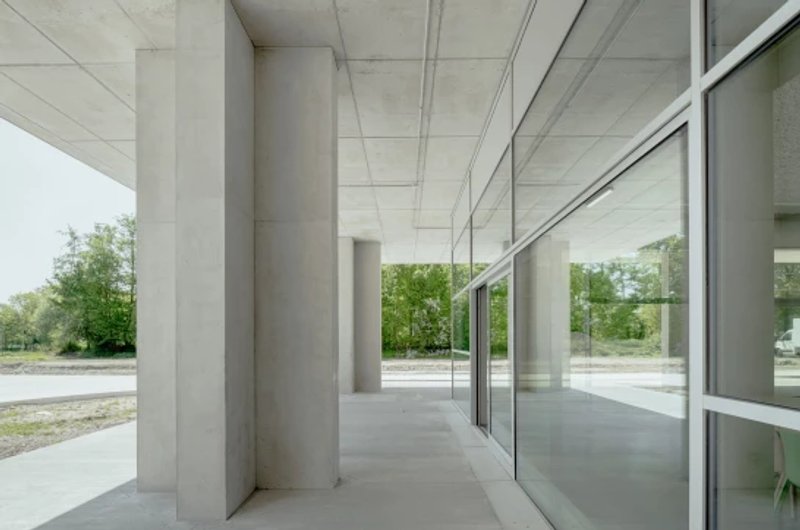
The upper levels host spaces for sports, dance, and theater, arranged around a central agora that enhances social engagement. Inspired by the industrial artist’s studio, the architecture is both robust and adaptable, combining concrete cross-columns, aluminium façades, and 1x1m grid windows that frame panoramic views of the surrounding park. The shimmering metallic cladding subtly reflects its green environment, blending art, education, and context into one cohesive architectural expression.
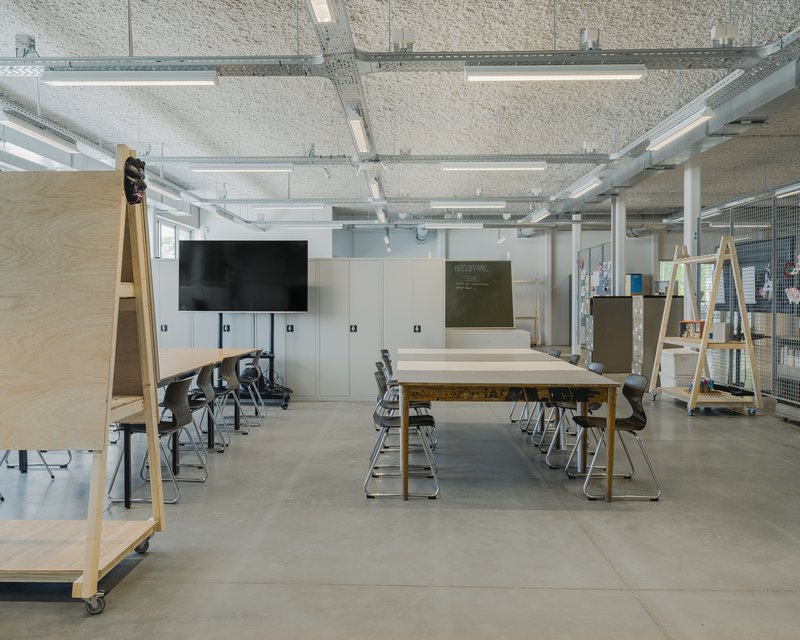
This project stands as a model for contemporary educational architecture, where sustainability, flexibility, and transparency converge to support the evolving needs of art education in a modern urban campus.
All Photographs are works of Jeroen Verrecht