

Pomegranate Garden Micro Building by Tumu + Meaningless Arch — A Harmony of Tradition, Nature, and Structure
Pomegranate Garden Micro Building blends rammed earth, bamboo, and concrete into a poetic, sustainable pavilion celebrating nature, craftsmanship, and cultural harmony.


Blending Tradition with Modern Architecture
Nestled in the heart of Nanping, China, the Pomegranate Garden Micro Building by Tumu + Meaningless Arch is a poetic architectural experiment that redefines the relationship between material, structure, and environment. Designed as a small yet powerful architectural statement, the project celebrates local craftsmanship, material honesty, and spatial simplicity.
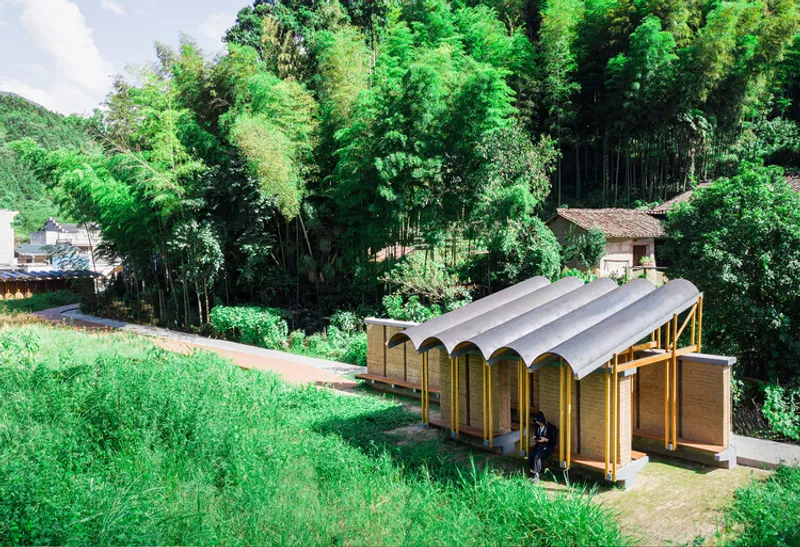
This 75-square-meter pavilion is part of a larger rural revitalization effort in a village known for its rammed earth houses, bamboo craftsmanship, and earthy landscape. The architects sought to reinterpret traditional rural construction techniques through a modern structural vocabulary, blending rammed earth, bamboo, concrete, steel, and wood into one harmonious form.
Material Dialogue: A Symbiosis of Weight and Lightness
The Pomegranate Garden Micro Building stands as a prototype where every material carries both aesthetic and structural responsibility.
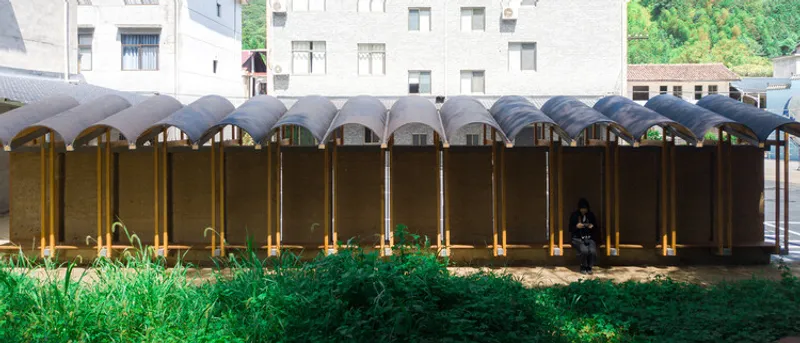
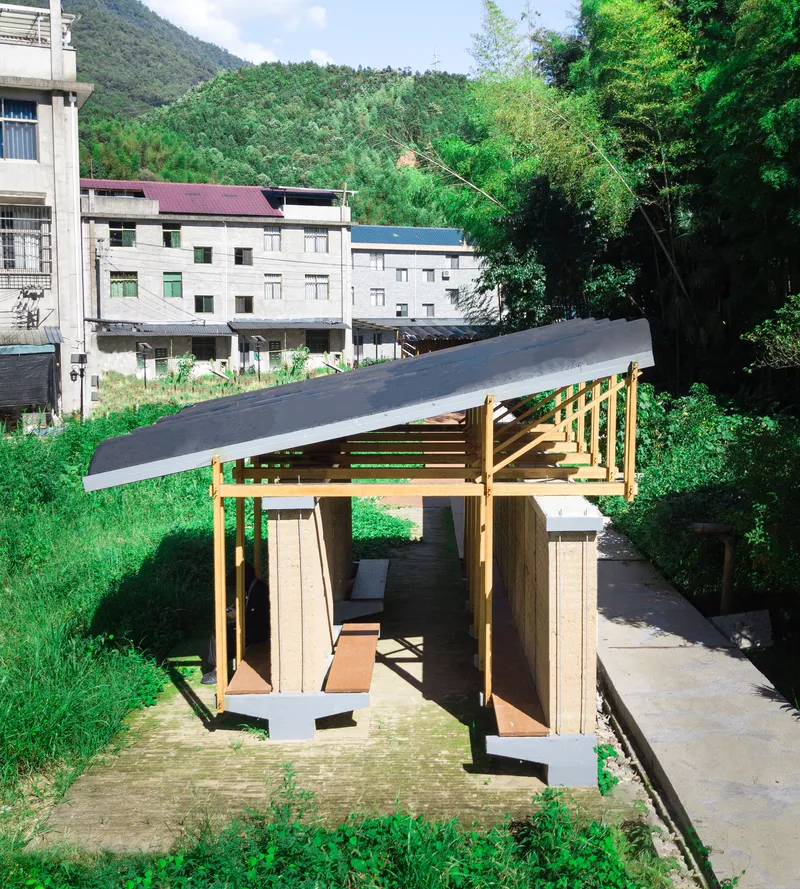
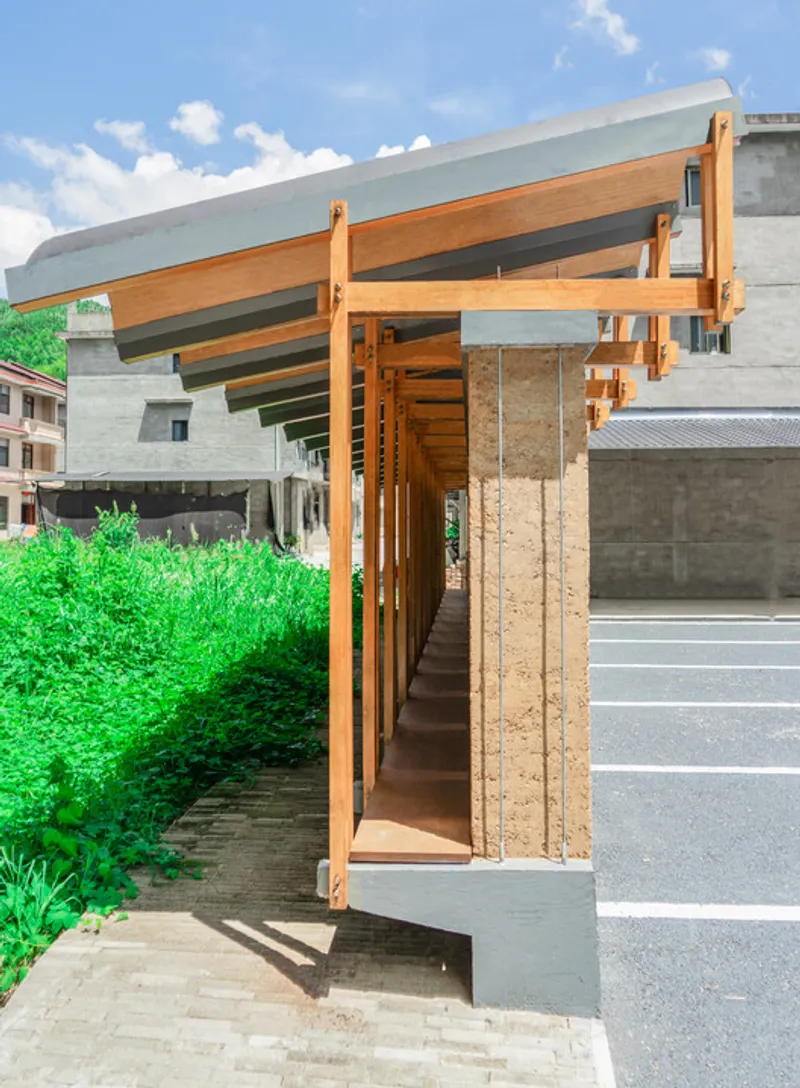
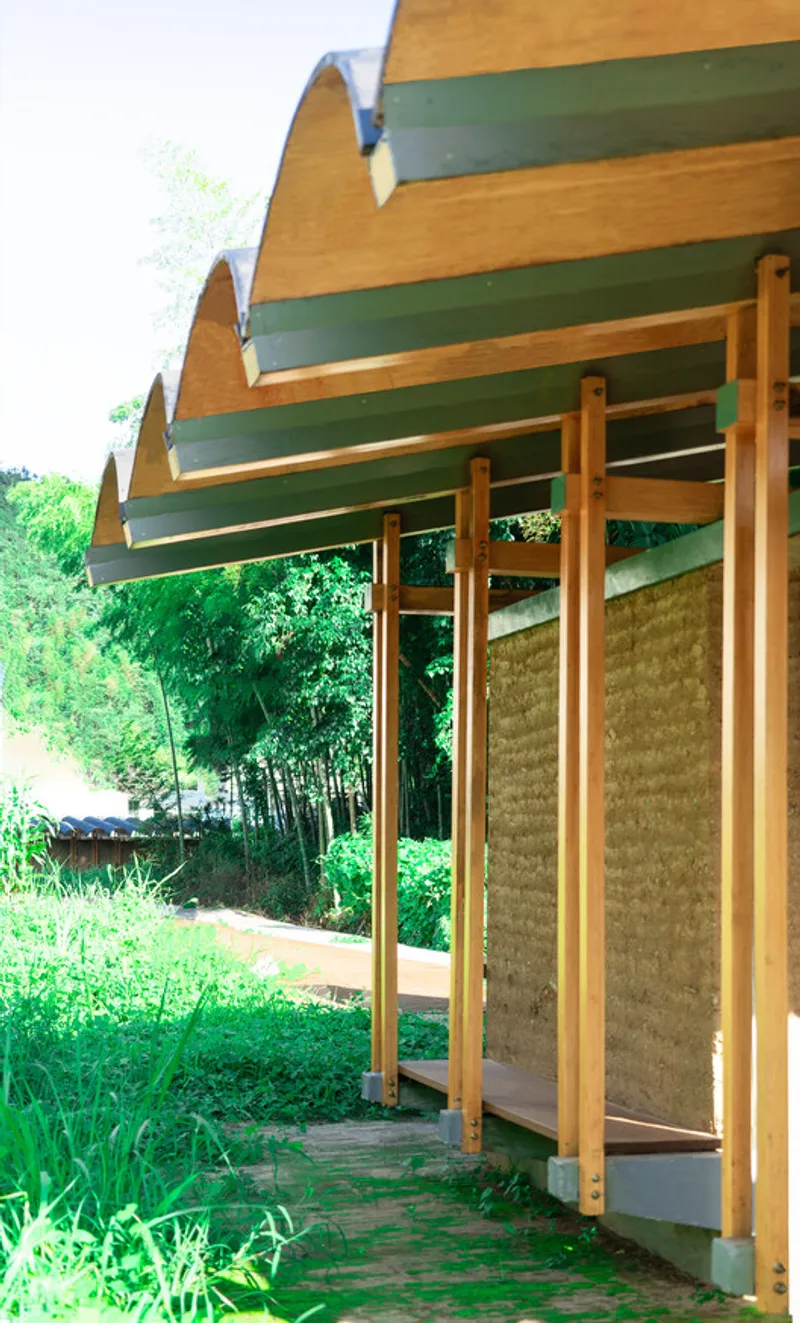
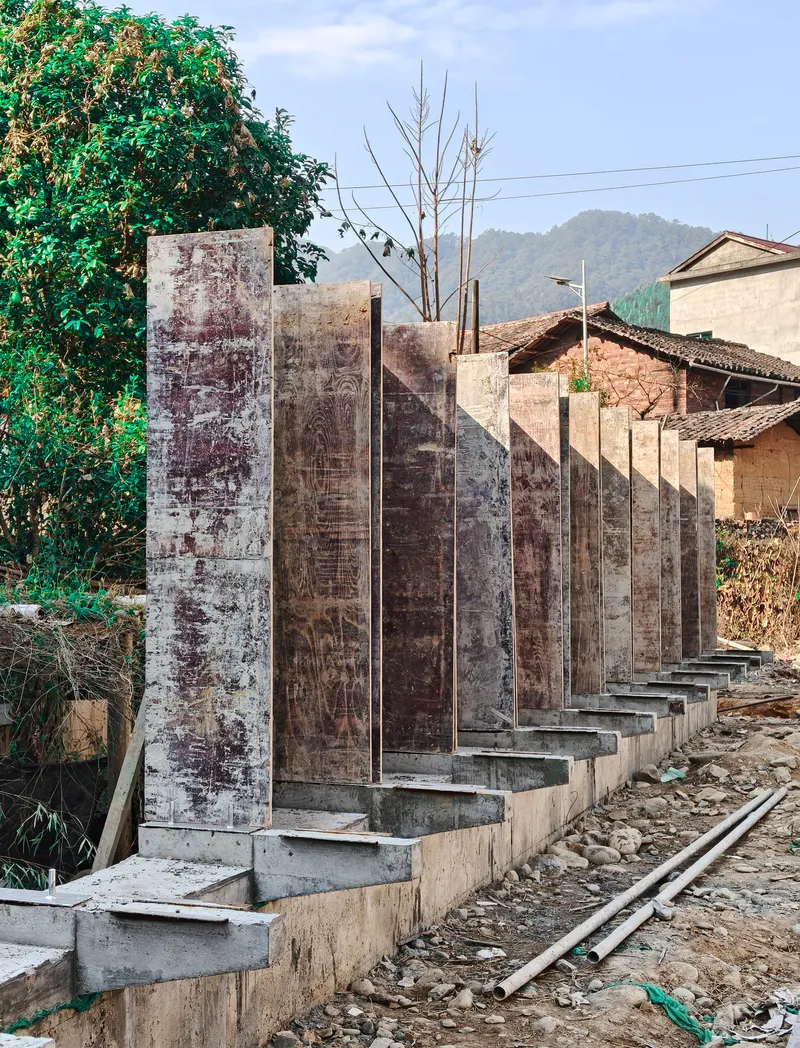
- Concrete piers anchor the structure to the ground, lifting the rammed earth walls above the soil line to prevent moisture damage.
- Rammed earth walls, mixed with new and old soil from local sources, offer texture, insulation, and visual warmth.
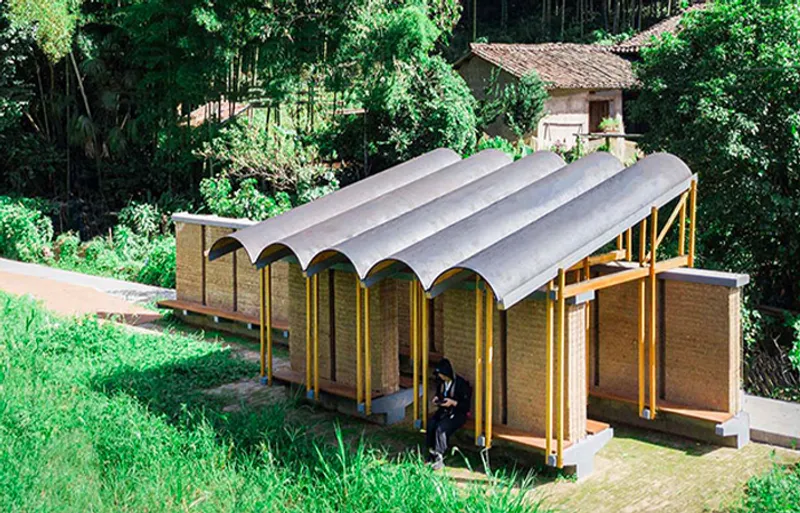
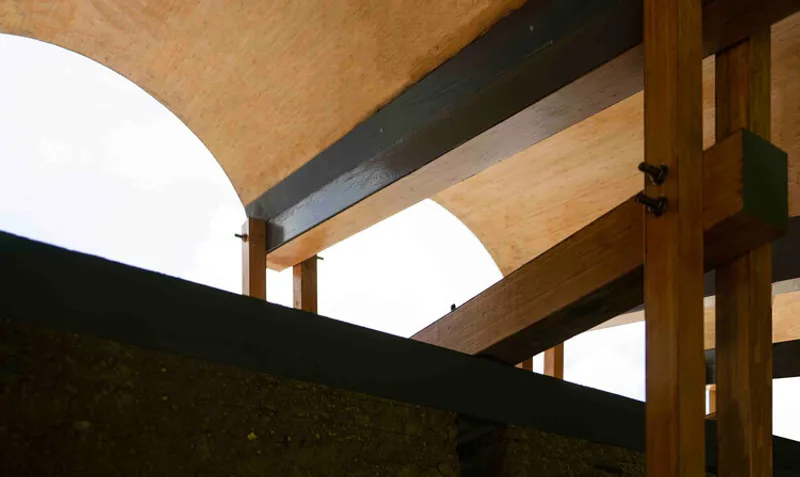
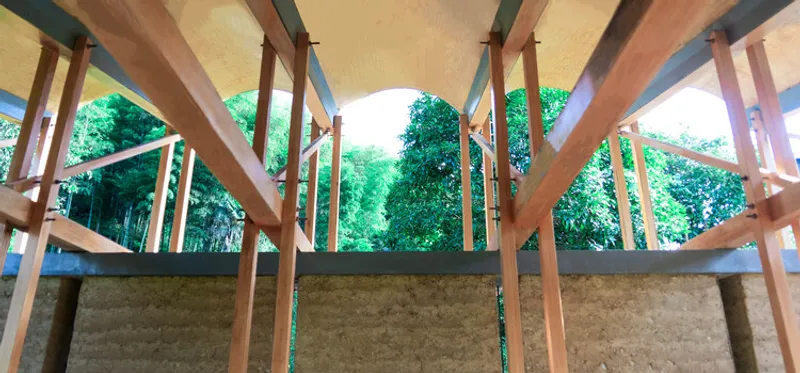
- Bamboo beams and columns, steel poles, and wooden arches rise gracefully above the earthen walls, showcasing the region’s most abundant and sustainable resource—bamboo.
- Steel and concrete beams provide strength and precision, balancing the natural irregularity of the earth and bamboo.
The combination of heavy and light materials—the solidity of concrete and earth, contrasted with the airiness of bamboo and wood—creates a visual and structural balance. Every joint, beam, and surface expresses the philosophy of “force and form in equilibrium.”
Spatial Composition: Corridor, Pavilion, and Tower
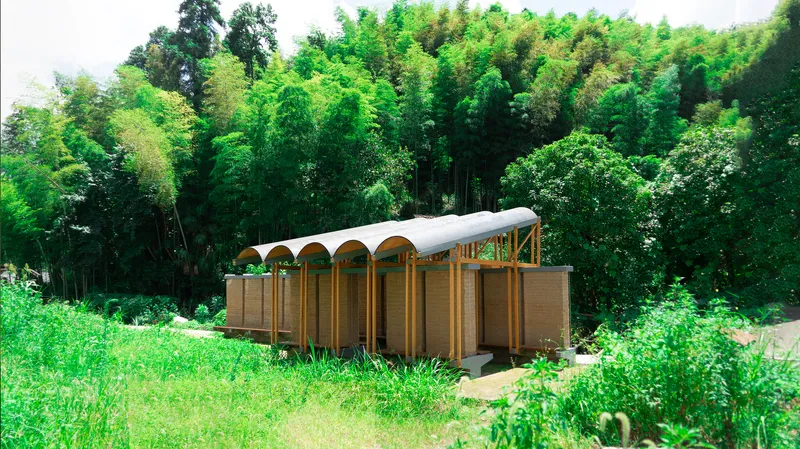
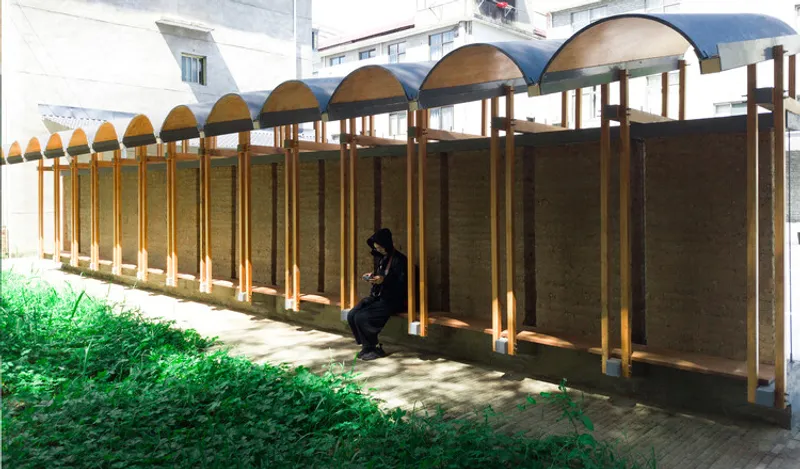
The architectural layout unfolds through a horizontal corridor, a vertical pavilion, and a planned miniature tower in the next phase. Each typology represents a different spatial dimension:
- The corridor connects and defines boundaries between inner and outer spaces.
- The pavilion acts as a node of rest and social interaction.
- The tower (to be built) symbolizes spiritual ascent, adding vertical rhythm to the garden.
Together, they frame the Pomegranate Garden, where paths, benches, bamboo groves, and canals weave a peaceful environment for villagers and visitors alike. The architecture encourages movement, contemplation, and community gathering, turning the garden into both a physical and emotional landscape.
Craftsmanship and Local Identity
Construction techniques reflect local intelligence and modern precision. The project was built using a mix of on-site wet-work (for rammed earth and concrete) and prefabrication (for bamboo, steel, and wooden components).
Despite limited rural resources and basic facilities, the architects prioritized accuracy and adaptability. Prefabricated bamboo and steel elements were assembled manually on-site, allowing for fine adjustments to accommodate natural material behavior—like the shrinkage of rammed earth or expansion of bamboo.
Innovative details include:
- Adjustable steel rods and spring systems to handle structural movement.
- Sliding joints at bamboo connections to absorb deformation.
- Protective coatings: waterproof paint on rammed earth, fluorocarbon on metal, and asphalt on wooden arches for durability.
These technical innovations ensure longevity and sustainability while preserving the aesthetic rawness of local materials.
Atmosphere and Experience
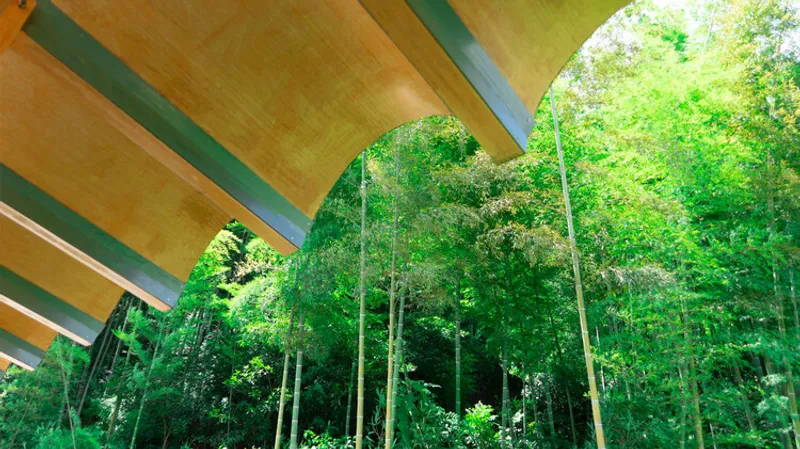
Inside, light and shadow perform a subtle choreography. The arched wooden roof, coated with dark gray asphalt outside and lined with bamboo membranes inside, appears heavy yet floats delicately above the walls.
A gentle breeze flows through the cracks in the rammed earth walls, carrying the scent of bamboo and earth. The blue brick flooring reflects shifting daylight, while the arched openings frame the distant bamboo forest like paintings.
This immersive environment turns the micro building into a space of quiet reflection, where nature, architecture, and craft intertwine seamlessly.
Sustainability and Cultural Continuity
Sustainability in the Pomegranate Garden Micro Building extends beyond energy efficiency—it embodies cultural sustainability. By using locally sourced materials and traditional techniques, the architects preserve regional identity while introducing modern structural clarity.
The project minimizes carbon footprint through:
- Locally extracted earth and bamboo, reducing transportation.
- Prefabrication, cutting waste and assembly time.
- Natural ventilation and daylighting, reducing energy dependence.
This synthesis of ecology, economy, and tradition positions the project as a model for sustainable rural architecture in China.
The Pomegranate Garden Micro Building is more than a pavilion—it’s a manifesto of balance. Balance between weight and lightness, tradition and innovation, nature and structure. Through careful craftsmanship, material intelligence, and cultural respect, Tumu + Meaningless Arch transform a modest structure into a spatial poem—an architectural metaphor for harmony between humans and their environment.
All the photographs are works of Jiaojiao Miao




Popular Articles
Popular articles from the community


The Musturak Paradise: Senior Living Architecture for a Connected Future in Temara, Morocco
The Musturak Paradise reimagines senior living architecture in Temara via private homes, social spaces, culture, community, and shared care.

Lunar Spiral: Space Architecture Shaped by the Mathematics of the Universe
Lunar Spiral reimagines space architecture through Fibonacci geometry, lunar regolith, levitating habitats, and self-sustaining Moon living.

Play: Fragments of Their World
Familiar architecture becomes modular playground design, creating safe spaces where displaced children can learn, connect, imagine and play.

Co-life: Sustainable Architecture for Age-Friendly Community Living
Co-life reimagines sustainable architecture for seniors through courtyards, rammed earth, shared gardens, and spaces designed for belonging.

Similar Reads
You might also enjoy these articles


Hodi-Mandai Geram
Project Function: Preservation and revitalization of the Intangible heritage and socio-spatial identity of the Hodi by Housing, Cultural Memory Center, Sacred Grove, landscape, local tourism economy


Olio Towers: A Mid-Rise for Performers That Fuses Housing, Rehearsal, and Stage
Located blocks from Houston's Theater District, this modular tower stacks living units around a central performance atrium.

Oasis: Modular Green Housing Carved into Dhaka's Urban Fabric
A shortlisted Plugin Housing entry reclaims unauthorized settlements in Dhaka with stepped concrete volumes, green roofs, and ventilation-driven design.

Black Hole: A Floating Megastructure for the Post-Physical Era
Emiliano Mazzarotto envisions a spherical, self-scaling arena where e-sports, digital hotels, and holographic stadiums replace traditional public space.


Explore Poetic Architecture Competitions
Discover active competitions in this discipline



Challenge to reimagine the Iron Throne


Photograph architecture without architects


Illustrate the lost glory of Angkor Wat - Render Challenge


Design challenge to reuse E-waste
Comments (0)
Please login or sign up to add comments
No comments yet. Be the first to comment!