

Regional Science Centre Architecture: A Fusion of Innovation and Cultural Heritage in Rajkot
Explore the innovative Regional Science Centre Architecture in Rajkot, blending cultural heritage, sustainability, and interactive science education.


The Regional Science Centre Architecture in Rajkot, India, designed by INI Design Studio, stands as a testament to the perfect blend of cultural influences and cutting-edge architectural techniques. Spanning 85,000 square feet and completed in 2022, the center offers a dynamic educational experience that combines science, technology, and sustainability within an architecturally striking framework. This article explores the distinctive elements of the architecture, highlighting how it addresses both local needs and global aspirations in educational design.

Conceptual Foundation of the Regional Science Centre Architecture
The design of the Regional Science Centre in Rajkot draws deeply from the rich cultural fabric of the region. Inspired by the annual religious fairs held on elevated mounds, the architectural form is a direct reflection of the community’s values, aspirations, and connection to the cosmos. The building symbolizes the continuum of life, where the central space embodies the concept of the void from which all creation emanates. This spiritual and metaphysical vision informs the spatial design, creating a structure that symbolizes infinite possibilities and the boundless scope of scientific exploration.
Key Features of the Architecture
1. Central Plaza and Tensile Canopy
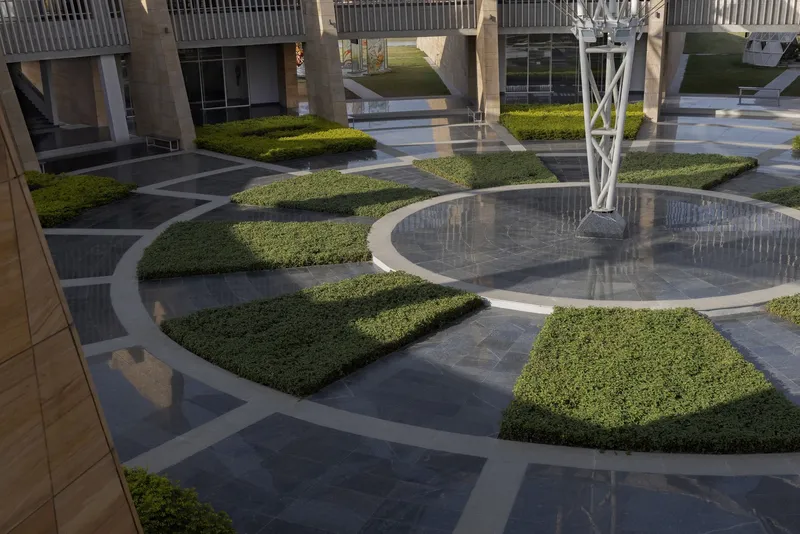
One of the most striking features of the Regional Science Centre Architecture is the central plaza, designed to serve as a versatile public space. The plaza, designed to host events and social gatherings, is sheltered by an ethereal tensile canopy. This canopy, designed with precision, creates a stunning visual effect, transforming the central void into a celestial tapestry. As sunlight filters through, it casts intricate patterns on the ground, resembling cosmic constellations that metaphorically chart the journey of the universe. This imaginative feature enhances both the functional and aesthetic aspects of the center.
2. Radial and Pyramid-like Structure
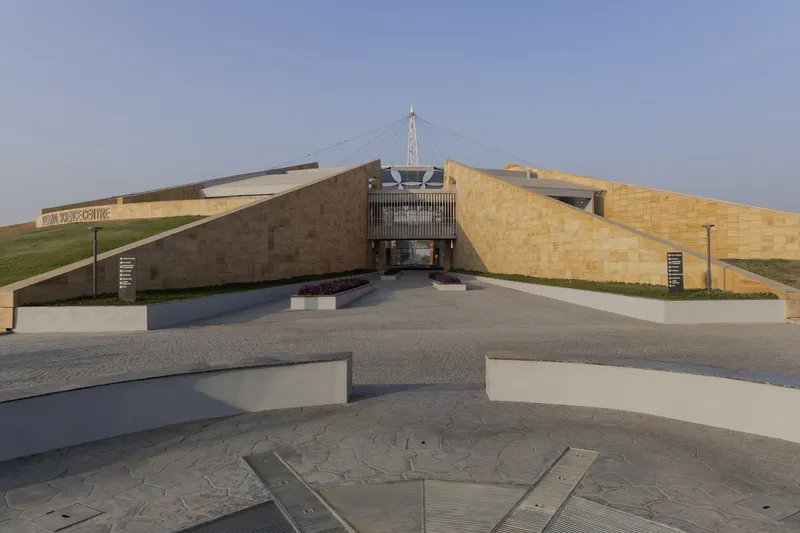
The architecture of the science centre adopts a radial form, where walls are projected outward in a dial formation, creating a pyramid-like structure. This segmentation fosters a sense of inclusivity, symbolizing an embrace of infinite knowledge and potential. The design also forms courts with open-air, theme-based exhibits that invite visitors to engage with the various aspects of science.

3. Interactive Exhibits and Learning Spaces
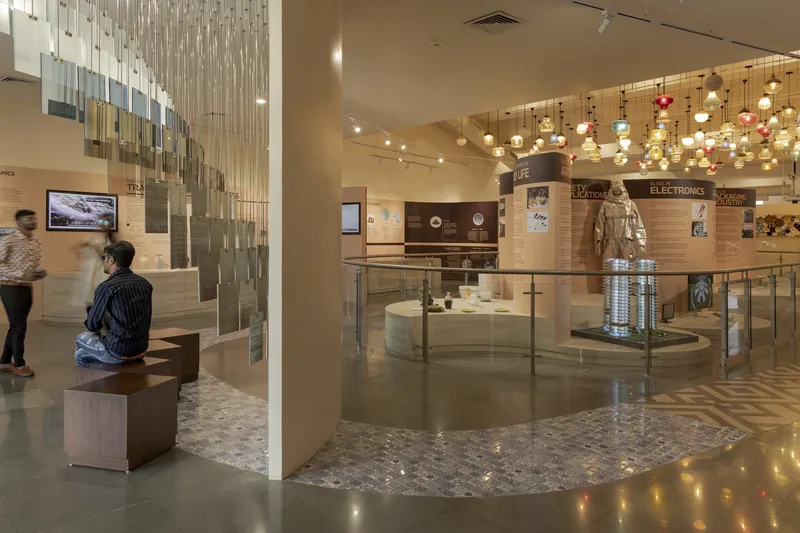
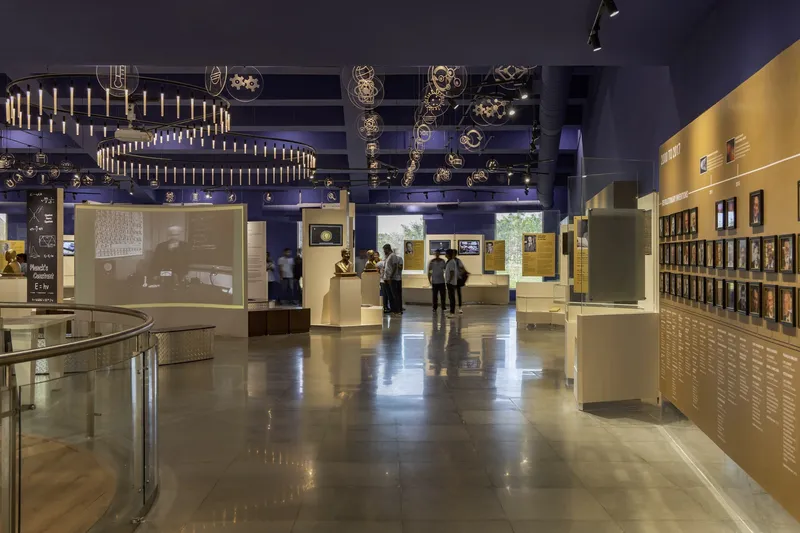
The Regional Science Centre Architecture is also characterized by its innovative approach to science education. Galleries on the ground floor feature interactive exhibits, encouraging visitors to explore various scientific fields such as robotics, life sciences, and the local ceramic industry. Mezzanine floors overlook these galleries, providing spaces for workshops and science outreach programs that foster hands-on learning and scientific exploration.

4. Sustainable Design Strategies
Incorporating sustainability as a core principle, the Regional Science Centre in Rajkot integrates various passive and active environmental strategies to address the region’s hot climate. Vertical fins are used for shading, while the design also incorporates cross ventilation and tensile canopies that allow natural light to illuminate the space. These elements minimize energy consumption while maximizing comfort within the building.
Rainwater harvesting systems are integrated throughout the complex, ensuring that the building is self-sufficient in managing water resources. The use of recycled materials further aligns with the center’s commitment to minimizing its environmental impact.

The Role of Architecture in Science Education
The architecture of the Regional Science Centre goes beyond aesthetic appeal and functionality. It is an embodiment of the idea that science and architecture can coexist to create an environment where learning is not only educational but also inspirational. The spaces within the center are designed for visitors of all ages, offering engaging exhibits, workshops, and hands-on activities. This makes the centre a perfect venue for families, schools, and communities to explore scientific concepts in an accessible and enjoyable way.
The building’s design also emphasizes open-air spaces, allowing for relaxation, contemplation, and group discussions. These areas encourage interaction between visitors, fostering a collaborative environment that mirrors the spirit of scientific discovery.

Cultural Influence and Regional Context
Rajkot, as a major industrial hub in Gujarat, required a science center that would not only serve as a space for education but also connect with the local culture and ethos. The architecture of the Regional Science Centre is inspired by the annual religious fairs and the landscape around Rajkot, particularly the elevated mounds that have become a part of the local identity. This integration of local elements into the design makes the building not just a science hub, but also a cultural landmark.

A New Era for Science Education and Architecture
The Regional Science Centre in Rajkot represents a forward-thinking approach to both architecture and science education. By merging local cultural traditions with modern design, the center stands as a symbol of infinite possibilities for scientific and educational advancement. The building not only provides an interactive learning environment for its visitors but also sets a new standard for how architecture can be used to promote sustainable practices and social development.
As we move forward into a future where science and technology drive societal change, the Regional Science Centre Architecture offers an inspiring model of how the built environment can foster innovation, inspire curiosity, and contribute to the cultural fabric of a region.

All Photographs are work of The Space Tracing Company


Popular Articles
Popular articles from the community


Aquadapt: An Underwater Habitat That Rewrites Its Rooms by the Hour
Curved modules ring the seabed while one shell shifts from breakfast room to cinema, farm and football pitch as residents' needs change.


Juan García Correa, John González and Claudia Rueda Sink a Circular Amphitheater into a Manizales Engineering Building
On the La Nubia campus in Manizales, Colombia, the S1 Building folds labs and offices into a hillside of ramped lawns that double as a campus route.

Singing Woman: An Opera House That Performs Before the Curtain Rises
Ovidiu Cristian Pavel's conceptual opera house translates Estonia's choral identity into a sculpted waterfront landmark facing the Baltic Sea.

graciastudio Turns a Viewless Tijuana Lot Inward Around a Courtyard of Concrete, Timber and Trees
In Tijuana, Jorge Gracia's GA2 House stacks a timber-clad private floor over exposed concrete and replaces a missing view with a planted interior patio.

Similar Reads
You might also enjoy these articles


Hodi-Mandai Geram
Project Function: Preservation and revitalization of the Intangible heritage and socio-spatial identity of the Hodi by Housing, Cultural Memory Center, Sacred Grove, landscape, local tourism economy


Olio Towers: A Mid-Rise for Performers That Fuses Housing, Rehearsal, and Stage
Located blocks from Houston's Theater District, this modular tower stacks living units around a central performance atrium.

Oasis: Modular Green Housing Carved into Dhaka's Urban Fabric
A shortlisted Plugin Housing entry reclaims unauthorized settlements in Dhaka with stepped concrete volumes, green roofs, and ventilation-driven design.

Black Hole: A Floating Megastructure for the Post-Physical Era
Emiliano Mazzarotto envisions a spherical, self-scaling arena where e-sports, digital hotels, and holographic stadiums replace traditional public space.

Explore Educational Building Competitions
Discover active competitions in this discipline

Challenge to design public laboratory

Challenge to reimagine the Iron Throne

Photograph architecture without architects

Illustrate the lost glory of Angkor Wat - Render Challenge
Comments (0)
Please login or sign up to add comments
No comments yet. Be the first to comment!