Reimagining Intergenerational Space Through Sustainable Architecture
Blending generations and nature, this project explores sustainable architecture as a medium for social connection and ecological care.


Back to Earth – a shortlisted entry of the Huddle competition – is a visionary project "be in Void" by Furkan Şanlı that embraces the transformative power of sustainable architecture to address social and ecological challenges.
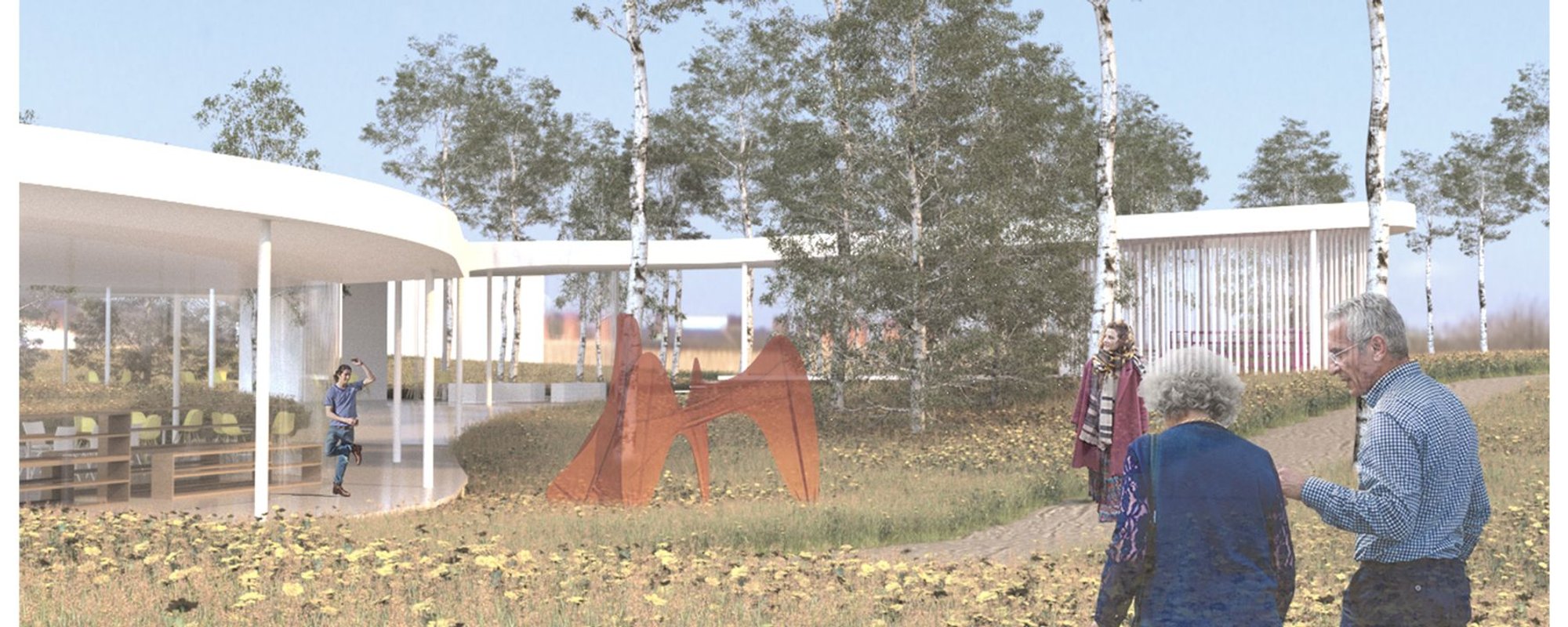
In Germany, elders want to actively participate in everyday life and be part of communal experiences. However, many contemporary urban environments fail to support inclusive, intergenerational engagement. Back to Earth responds to this need by creating a multifunctional space where people of all ages – elders, middle-aged individuals, and younger generations – can gather, interact, and co-create. It fosters an environment where production and art serve as unifying forces, encouraging storytelling, collaboration, and social reflection. In this space, art functions not only as an aesthetic experience but as a vital social tool that enables intergenerational communication.
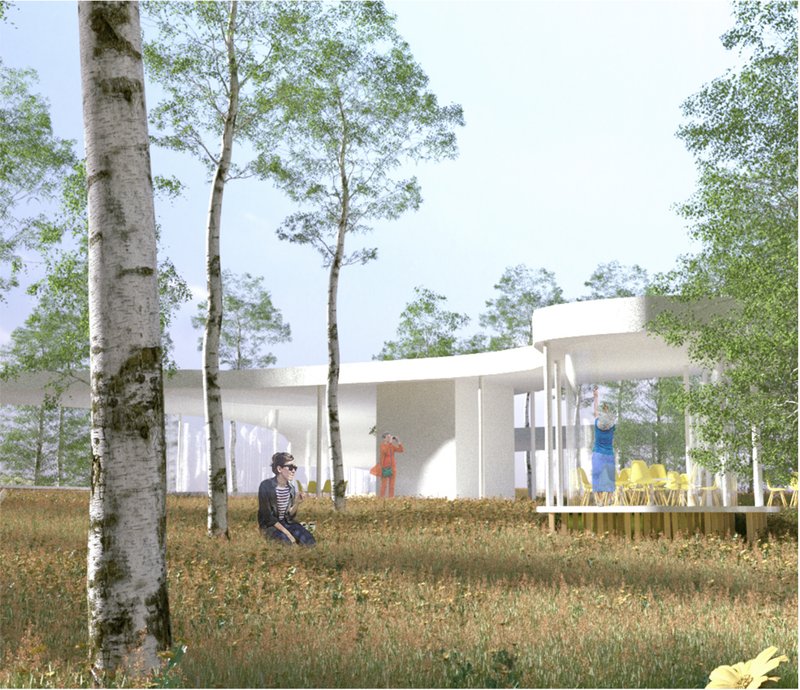
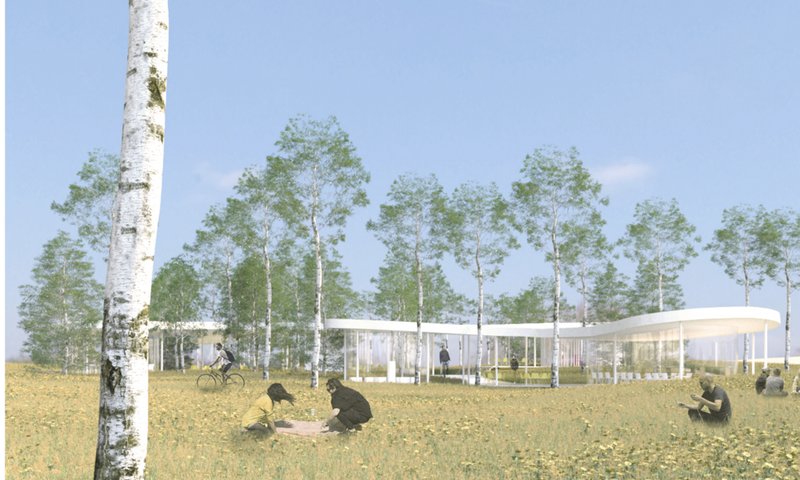
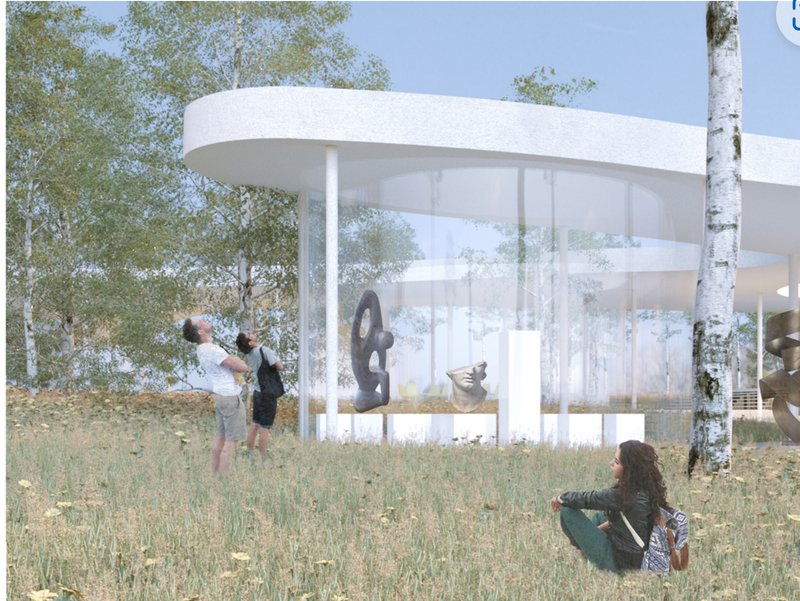
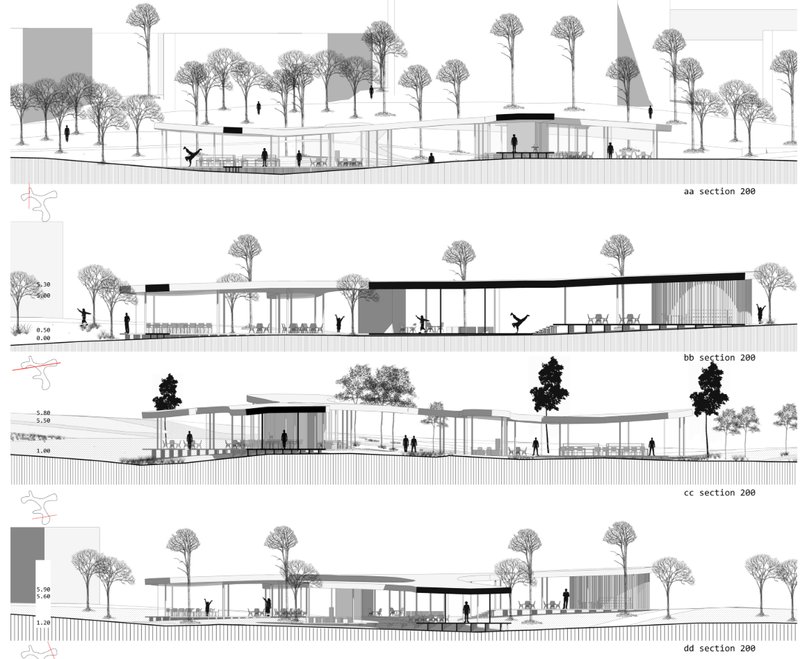
The project’s architectural language is deeply informed by ecological consciousness. Floating above the ground on slender wooden and steel supports, the structure minimizes its environmental footprint while visually maintaining a sense of lightness. Its design comprises a series of modular canopy forms that respond to the contours of the land and the placement of existing trees. These elevated canopy elements twist and curve organically, creating soft transitions between built form and open landscape. By staying elevated, the design avoids disrupting the soil and allows flora and fauna to flourish undisturbed underneath
The program is spread across multiple nodes throughout the park. These include flexible workshops, curated exhibition areas, and a community café – each designed to engage different age groups and spark creative participation. The buildings themselves are composed of a material palette of glass, concrete, steel, and wood, chosen for their durability, aesthetic clarity, and sustainability. The transparency of glass promotes openness and a continuous dialogue between indoor activities and the surrounding nature, while concrete and wood offer structural grounding and warmth.
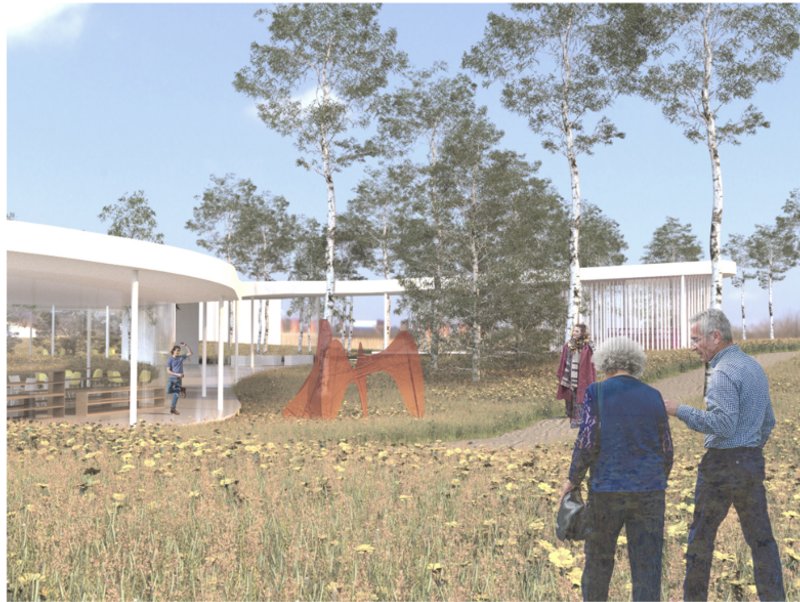
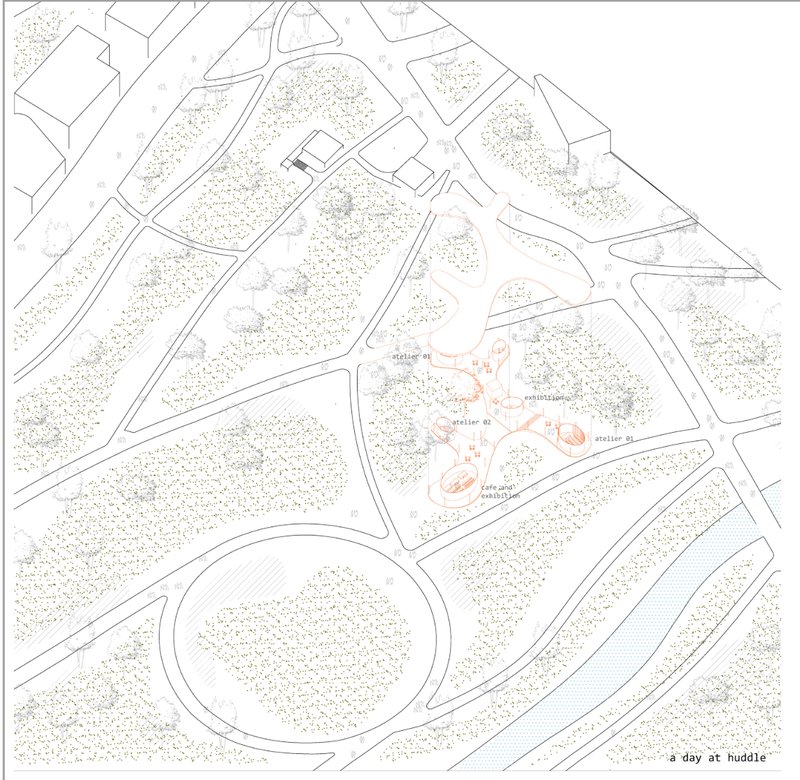
The use of a floating roof system is central to the project’s spatial strategy. It not only creates shade and shelter but also reinforces the illusion that the building hovers gently above the natural ground. This architectural gesture reinforces the project's philosophy of light intervention and environmental stewardship.
In this way, Back to Earth becomes more than an architectural proposal—it’s a statement about how built environments can cultivate a deeper sense of community, inclusion, and ecological balance. It encourages us to imagine spaces that go beyond function, spaces that actively nurture human relationships while protecting the planet.