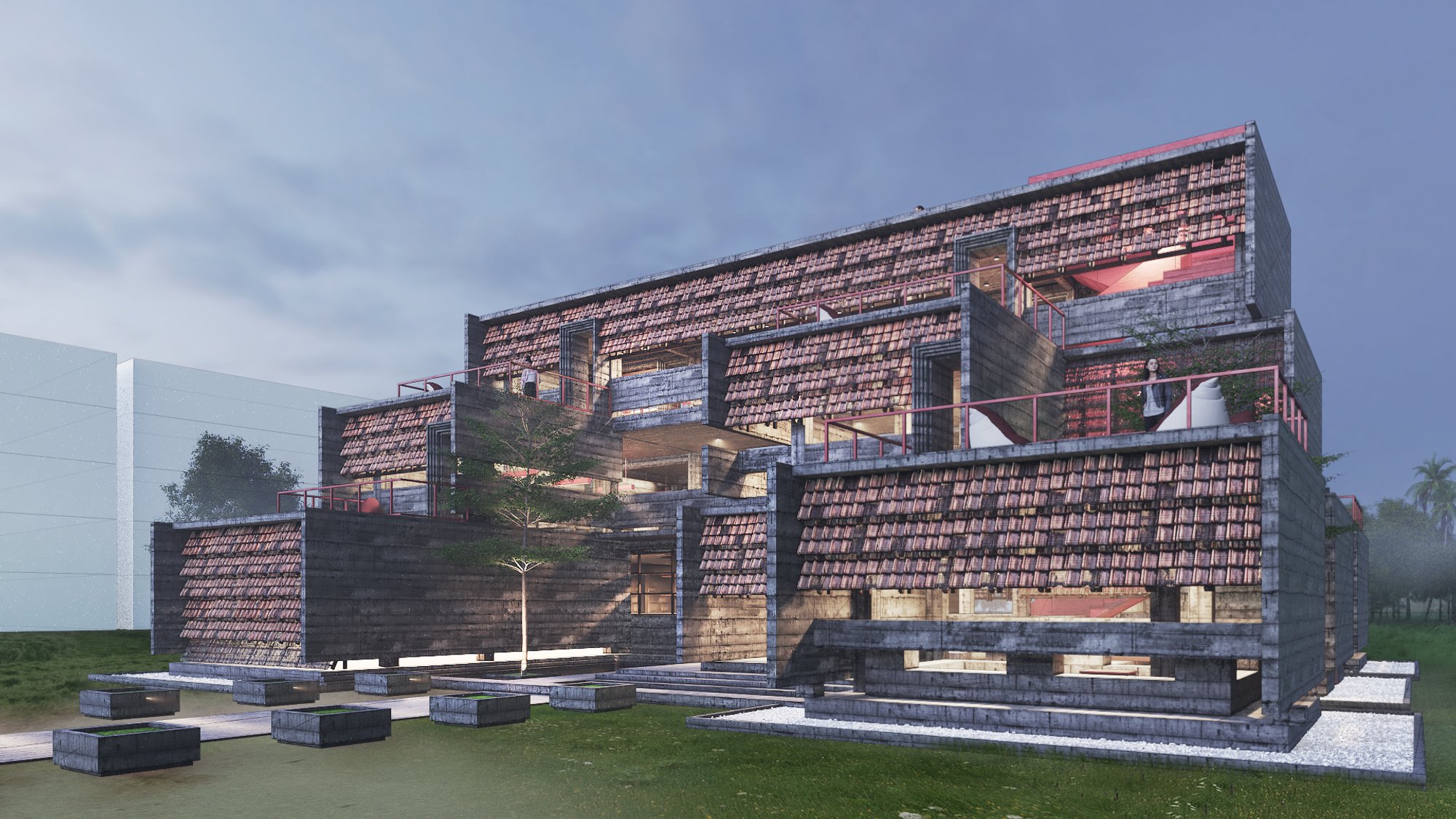
SOLEMNITY REVISITED
A solemn space to enjoy nowness.


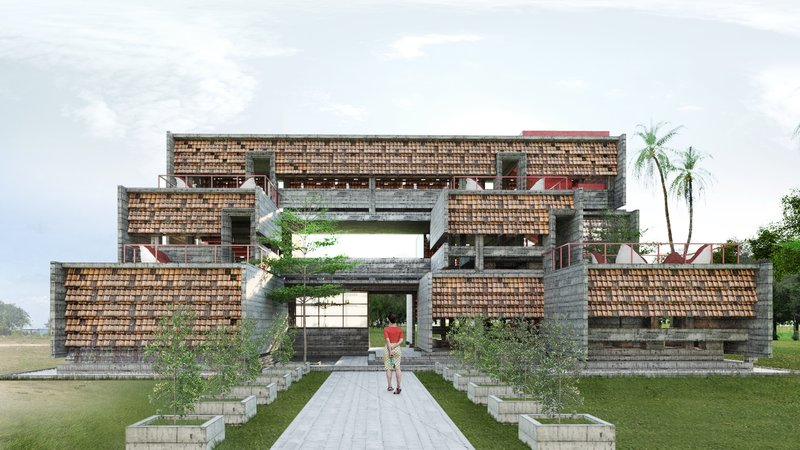 Human Eye Perspective: Main EntranceCoffee drinking has meditative quality: the complexity of its taste stimulates its drinker to focus solemnly on their gustatory and olfactory sense, winding down another sense. With this quality, it can be enjoyed alone or functions as social catalyst at intimate social circle event, which makes the interaction more fluent. A coffee shop is a place where this ritual of coffee drinking can be done solemnly. A seaside coffee shop in Bali can bring this spirit due to its intense atmosphere of nature and social culture. By strategically absorbs the spirit of place into architecture, a moment sensitive space can be created. An ideal place for coffee drinker to enjoy nowness.
Design Strategy
To achieve that vision we employed some design strategies, which are:
Social - Natural Axis
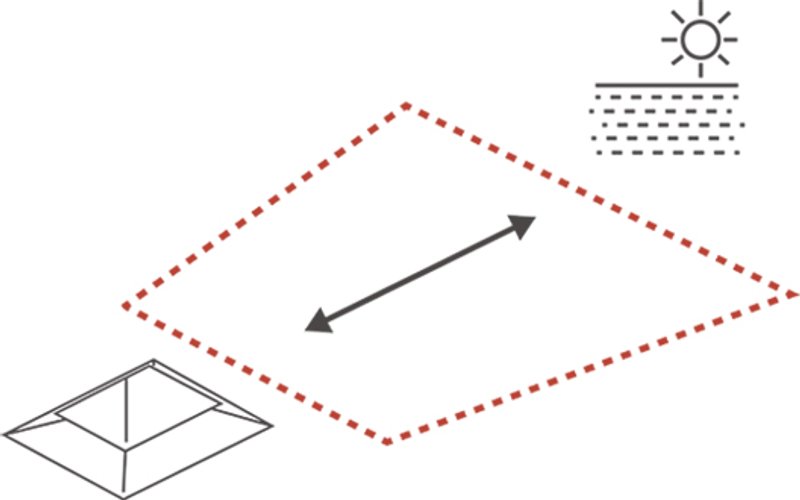 Social-Natural Axis
The site is located between seaside area and Bale Banjar, a local building functions as gathering place for social event. The coffee shop is designed through consideration of strong axis created by social and nature node.
Fragmented Space: Proxemic Study
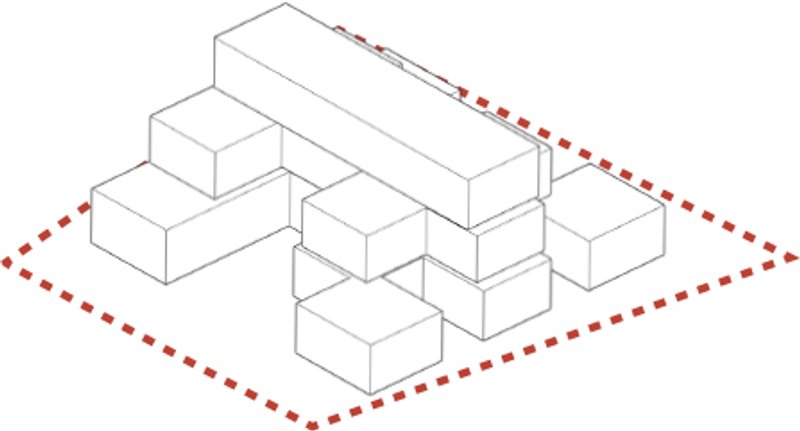 Fragmented Space
Based on proxemic study, social event happens at 4-12 feet. Fragmented mass is employed as design vocabulary to achive articulated space in response to that study.
Inclusivity
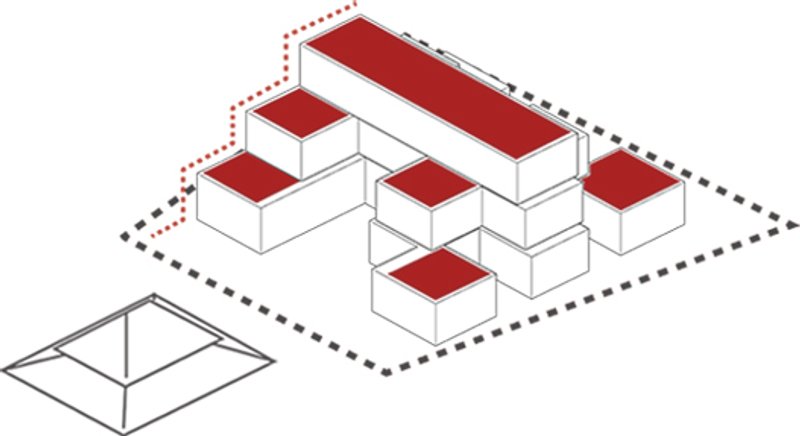 InclusivityResonating spirit of Bale Banjar across the site, a three storeys mass with stepped pyramid silhouette is employed to create sense of inclusiveness where social gathering activity could happen at each steps, creating welcoming and inclusive impression to its urban context.
Framing the Essence of Site
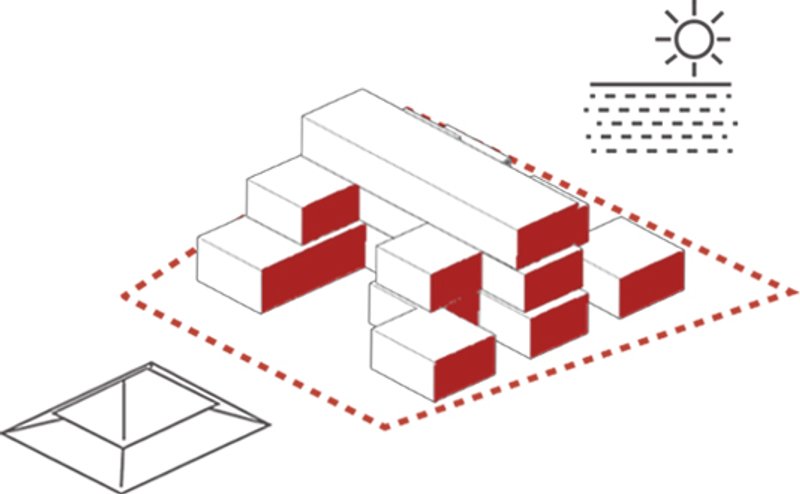 Framing the Essence of Site
The design intended to frame essence of the site: seaside phenomenon and social activity across the street, this idea is translated through usage of solid surface exclusively on the north and south sides of the building thus leaving the other sides relatively open to surroundings.
Zoning: Social Circle and Furniture Design
Zoning is principally arranged based on user social circle size. Range from relatively larger social group to individual user. Several furniture typology are used as response to this different social group size. With this idea we try to create inclusive space where different type of user can enjoy the solemn space with sufficient proxemic comfort.
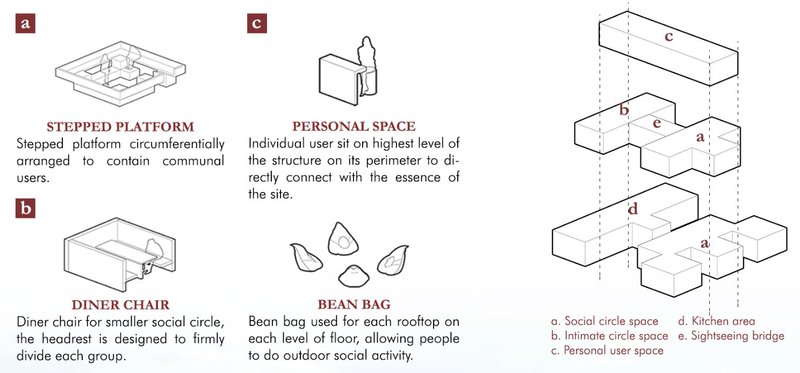 Zoning and Furniture Design
Materiality
In this project the materials are conceptually divided into two categories: (1) Concrete material specifically placed on north and south facade acting as frame device for east and west vista. (2) The east and west facade are later covered using terracotta tile roof with randomly placed glass tile roof. This combination act as one porous facade, which absorbs surroundings atmosphere. These three materials are commonly found in Balinese architecture as they are easy to find and crafted by locals.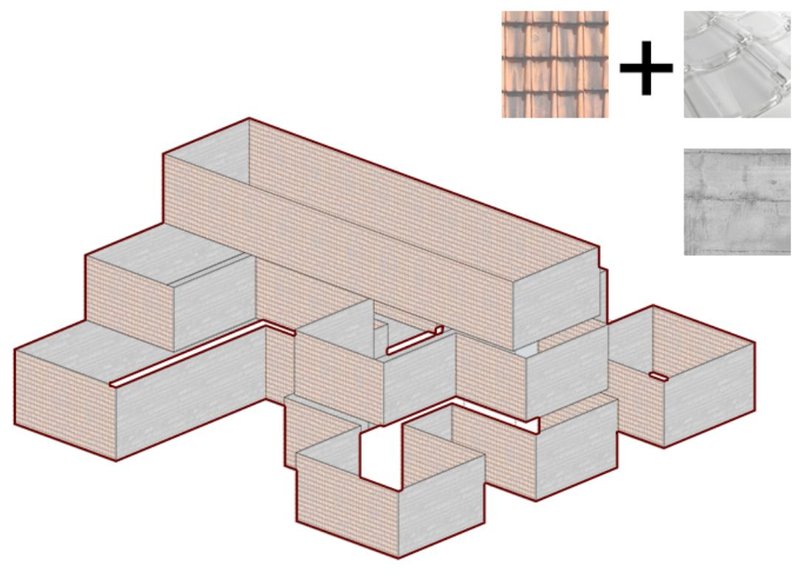 Material Concept Diagram
Programming: Plans, Sections, and Details
In the programming phase the concrete structural element is arranged based on fragmented space idea, which variously spanned between 3-4.2 meters. The program are then fitted to this structural frame. It was iterative process between module alteration and formal creation of the programme before we finally jump to this final product. With this idea the the columns also act as the fragmented space boundaries. To its urban context the main entrance manifest itself as void that keep the continuity between the streets and seaside area. On the southern side of building perimeter, inner courtyard created as continuation of site feature which full of vegetation.
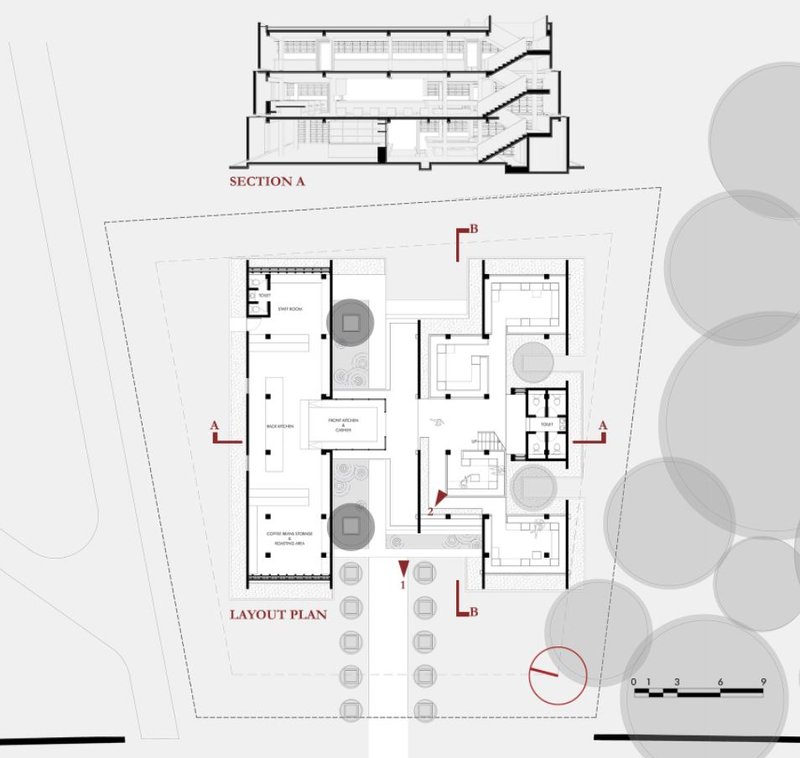 Layout Plan (below) and Section A (above)
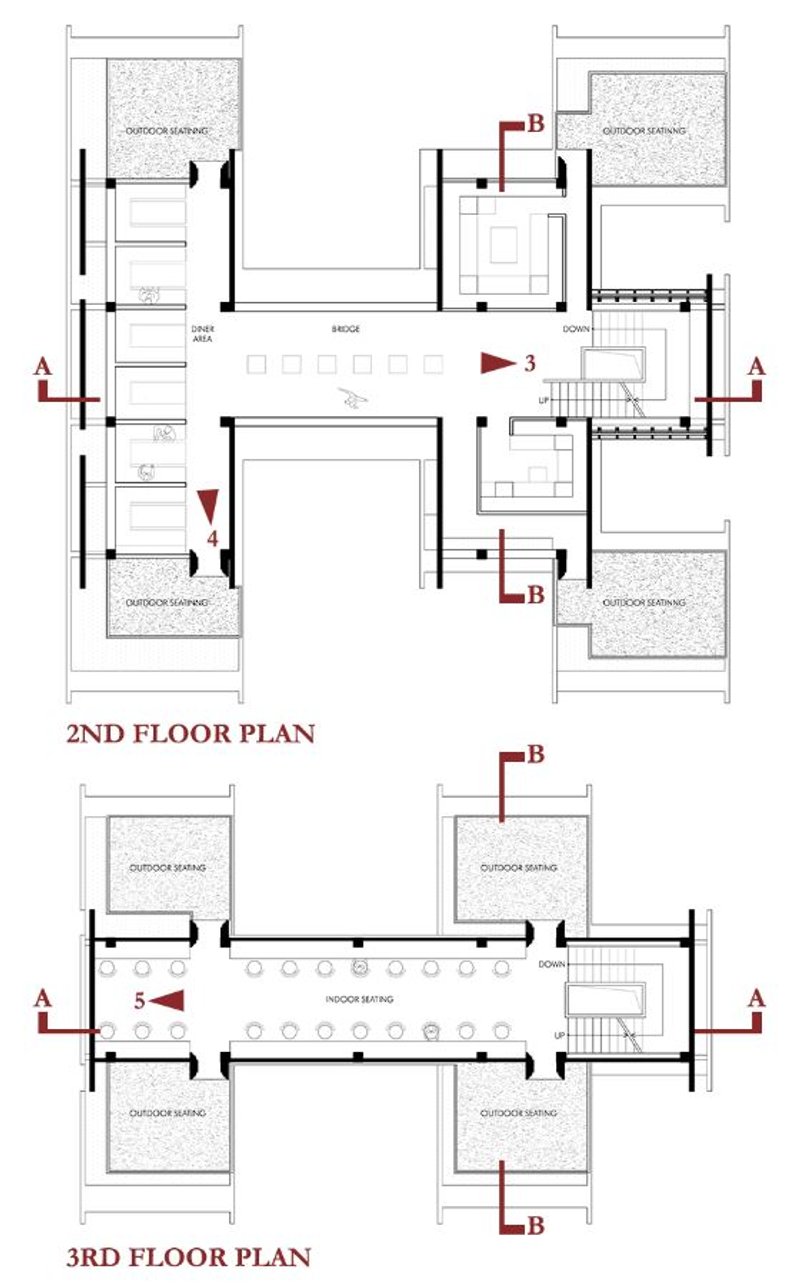 2nd and 3rd Floor Plan
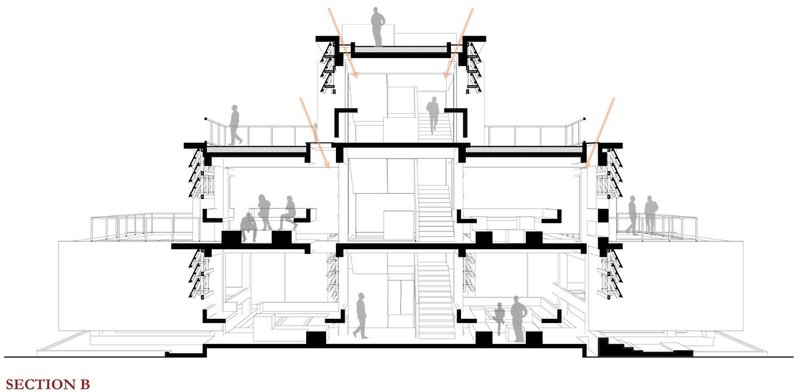 Section BStepped pyramid silhouette creates green terrace on each floor level, which allows the users to stay connected with the nature and site surroundings. The skylight brings in more natural light to interior and located strategically to accentuate fragmentation of the space.
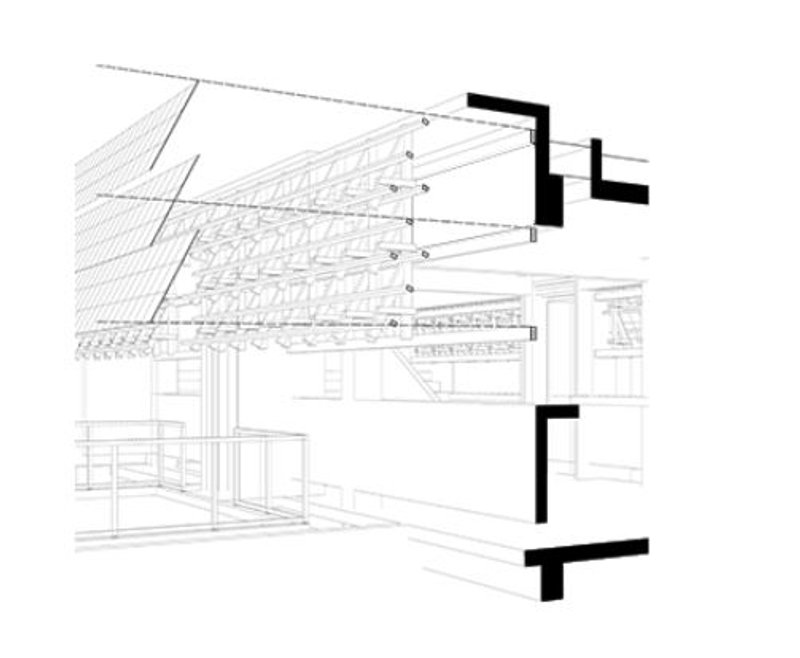 Terracotta Roof Facade Construction
Wooden frame is attached on the main concrete structure functioning as structural frame that holds and shapes terracotta and glass tile facade.
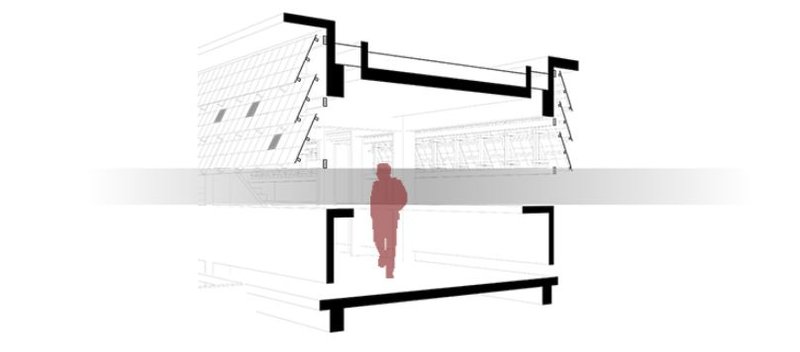 Eye Level Fenestration
Opening on the facade are designed to be fit to human eye level, thus creating a strong framed scene of surroundings from interior space.
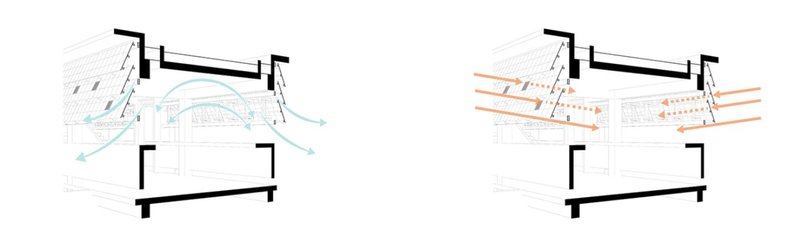 Climate Response: Cross Ventilation (left) and Sun Movement Response (right)
Fin shaped facade allows wind to penetrate the cavity in between them. This logic (commonly found in Balinese vernacular architecture) helps to eliminates dust brought by the wind.
Low fenestration only permits low coming west and east sun to enter the space, while randomly placed glass roof filter the rays and at the same time accentuates them.
Interior and Lighting Design
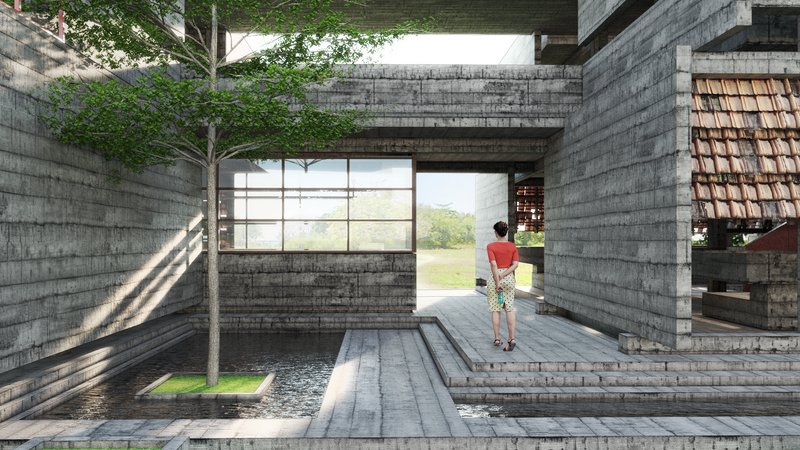 (1) Main Entrance
Porous facade made from combination of opaque and translucent tile roof specifically on east and west side of building accentuates diurnal sun movement on interior, creating time sensitive space.
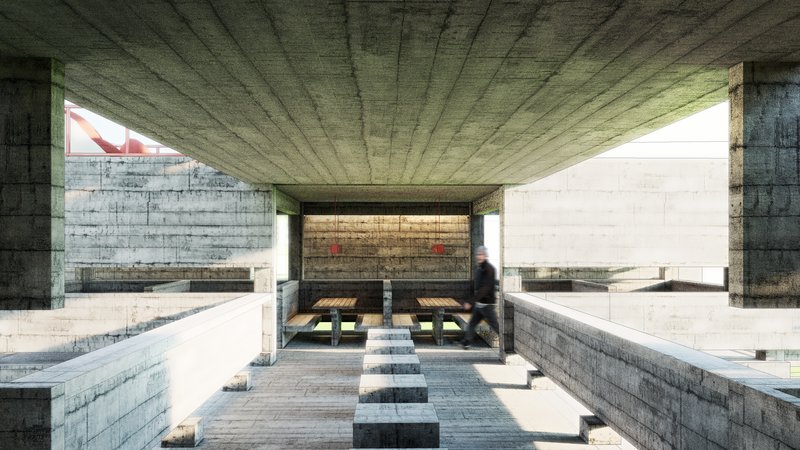
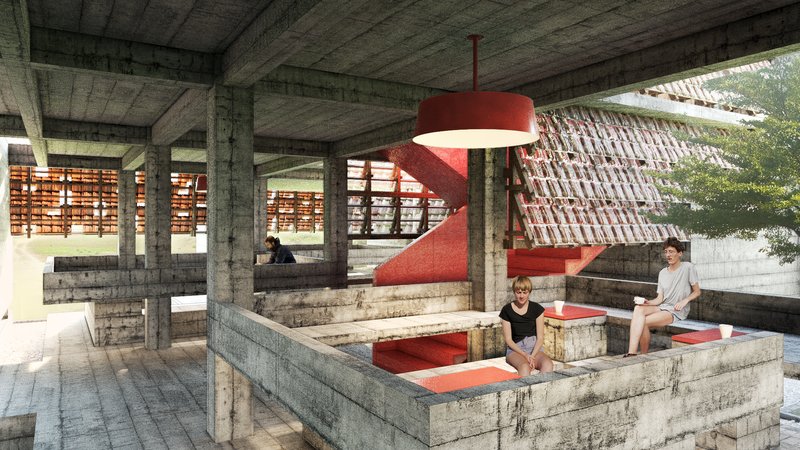 (2) 1st Floor Interior: Communal Stepped Platform Spot
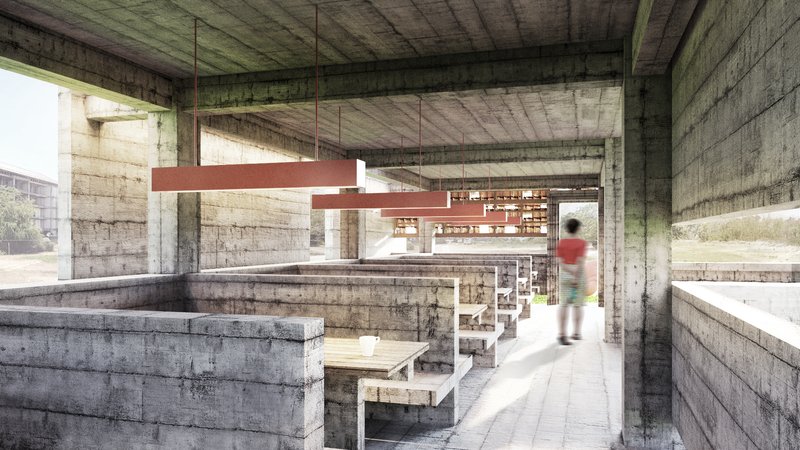
 (3) 2nd Floor Interior: Bridge to Diner Chair Spot
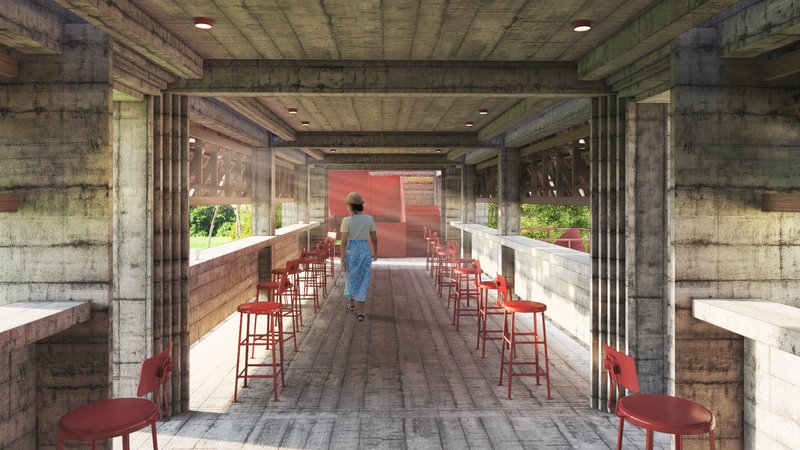
 (4) 2nd Floor Interior: Diner Chair Spot
 (5) 3rd Floor Interior: Personal Spot Area
Artificial lighting fixture choice was born to amplify the design of each social zoning: Circular pendant as centerpiece on stepped platform for larger social group spot. Linear shaped hanging fixture as localized light on each diner table spot. Series of point shaped fixture close to building perimeter for evenly distributed lighting on personal sitting area to create same level of hierarchy on each sitting spot.
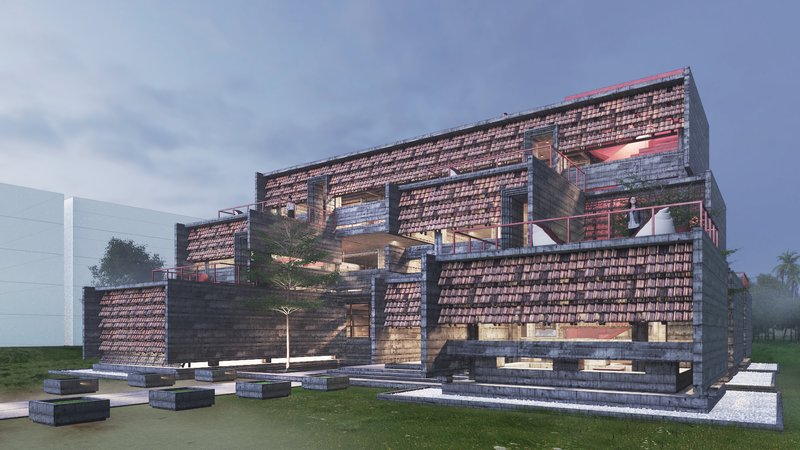 Human View Night Perspective
The artificial lighting will also bleed through the porous facade, further amplifying the inclusive nature of the design at the night time.
Several red painted design elements are employed as way finding devices functioning as nodes inside concrete dominated interior. The choice of painted material further accentuates the beauty of main raw material by acting as its element of juxtaposition. Red is chosen because of its nature as complementary color to green surroundings.
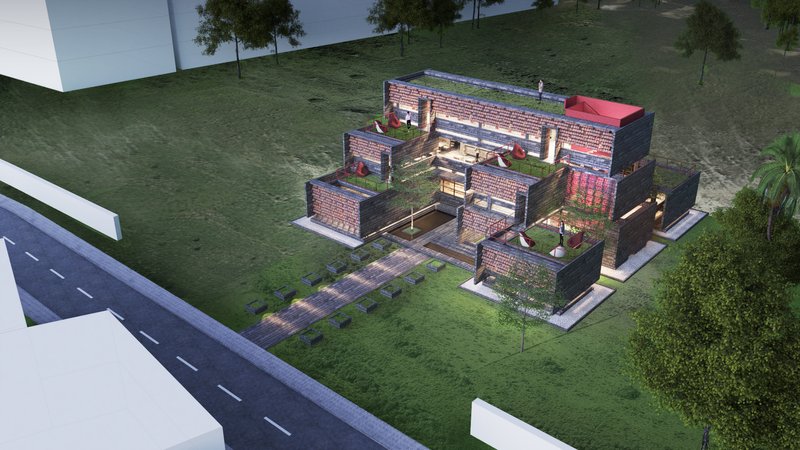 Aerial Night View
With the passing time this project will be new alternative approach of coffee shop typology in Bali, where its atmosphere can touch not only their visual sense but the other senses as well. We vision a space where different kind of users (group or individual) can enjoy seaside coffee ritual with the intense atmosphere and spirit of inclusivity.