
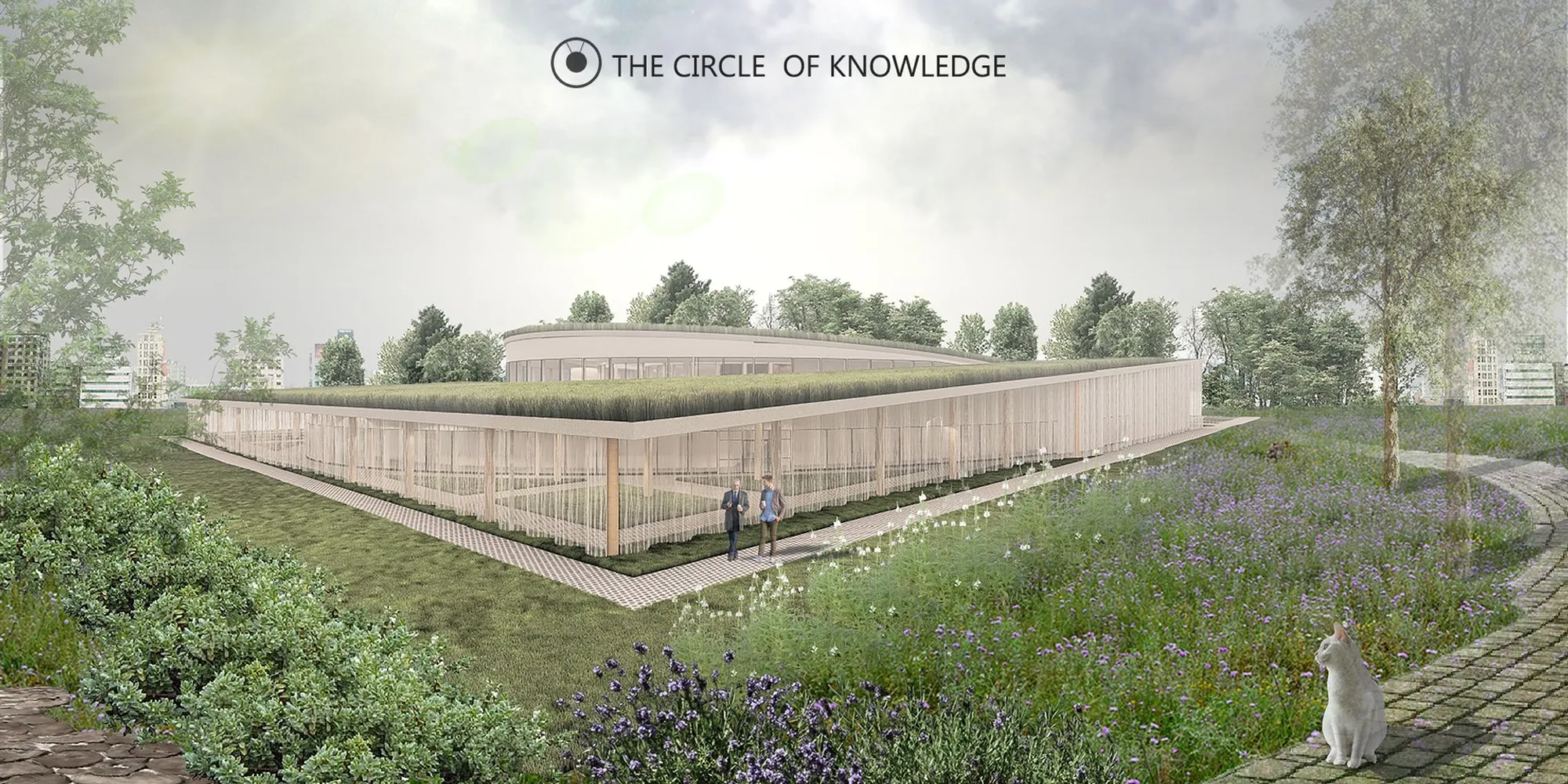
Sustainable Library Design: The Circle of Knowledge Revolutionizes Public Space
The Circle of Knowledge: A sustainable library design blending community, innovation, and ecological harmony.


Sustainable library design is at the forefront of architectural innovation, a quest to harmonize knowledge with the environment. The Circle of Knowledge, an architectural marvel by Aleksandra Stępniowska, Editor's Choice entry of Libgen, stands as a testament to this pursuit. This competition proposal for a public library synthesizes traditional repositories of wisdom with cutting-edge educational spaces tailored to contemporary learning methods.
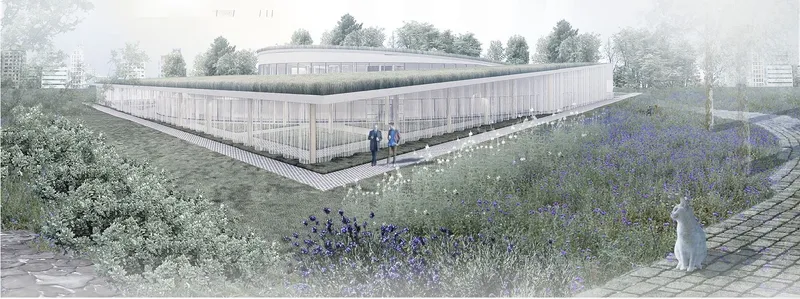
Building More Than a Library: The Circle of Knowledge
At the heart of this project lies a commitment to fostering community within an urban retreat. The Circle of Knowledge emerges as a sanctuary from the rapid tempo of city life, with its circular form enveloping visitors in a cocoon of calm. Through the integration of abundant greenery and natural light, the structure provides an optimal environment for education and leisure.

A New Urban Landmark
The vision for The Circle of Knowledge transcends the concept of a library as merely a book repository. It reimagines it as a vibrant hub for communal engagement, offering an array of events and initiatives. This transformative space not only serves its patrons but also stands as a prominent and recognizable figure within the urban landscape.
Designing with Intent: A Drop of Water
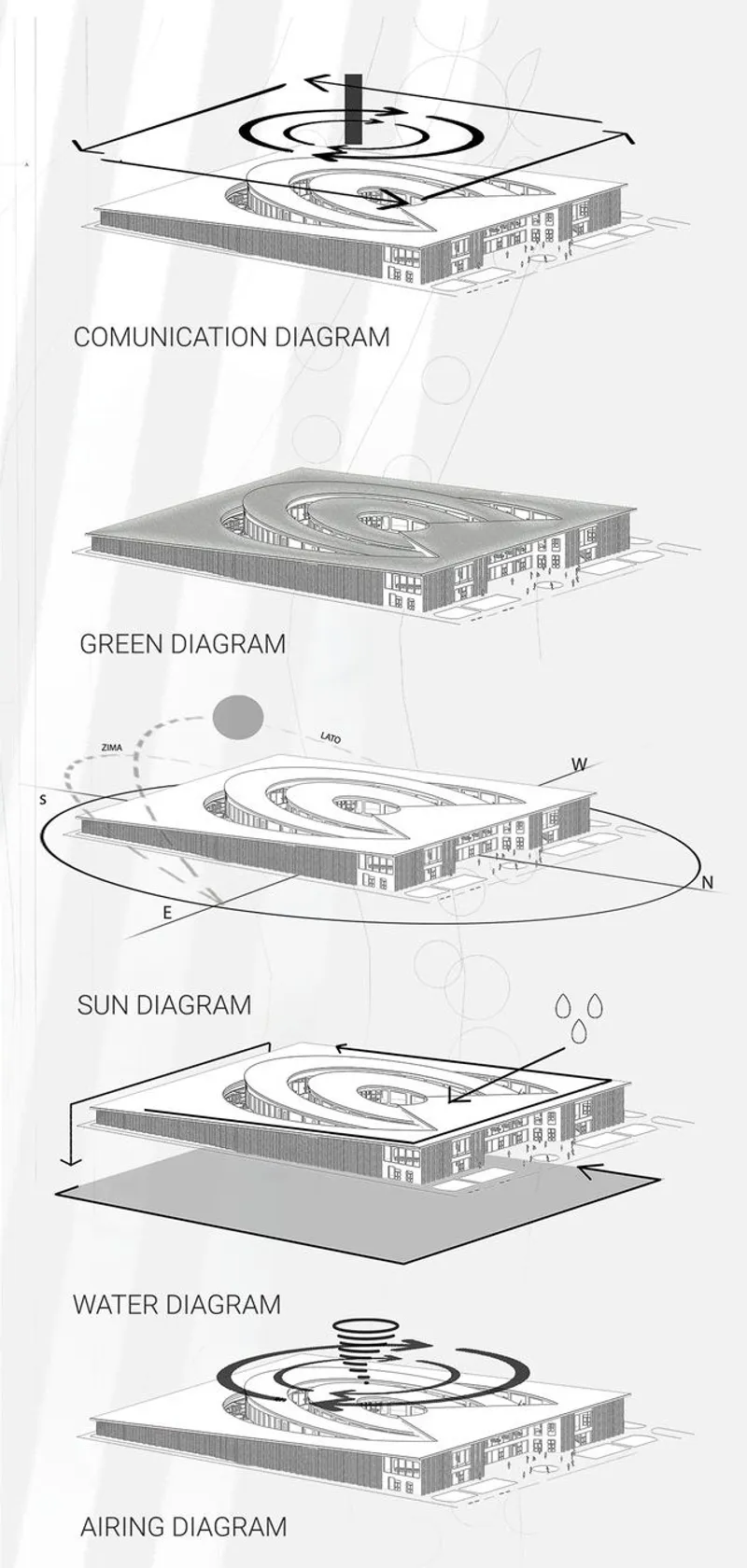
The Circle of Knowledge draws inspiration from the elemental idea of a water droplet, signifying purity and the fluidity of knowledge. The architectural form addresses common library grievances by orienting itself according to the cardinal directions, ensuring multifaceted illumination and aeration. It departs from the traditional large hall, opting instead for intimate, subject-specific rooms that foster community and dialogue.

Digitalization Meets Tradition
In the era of digital information, The Circle of Knowledge bridges the gap between the physical and virtual realms. While respecting the rich legacy of libraries, it boldly reassigns space from books to people, equipping the environment with modern technologies essential for today’s learners.
The Compass of Community
This project's layout resembles a city compass, guiding users through the maze of knowledge. The concentric circles divide the library into quadrants reflecting the world's corners, and as one traverses from the core to the periphery, the design's ingenuity unfolds, mirroring the complexity of learning and discovery.
Sustainability at the Core
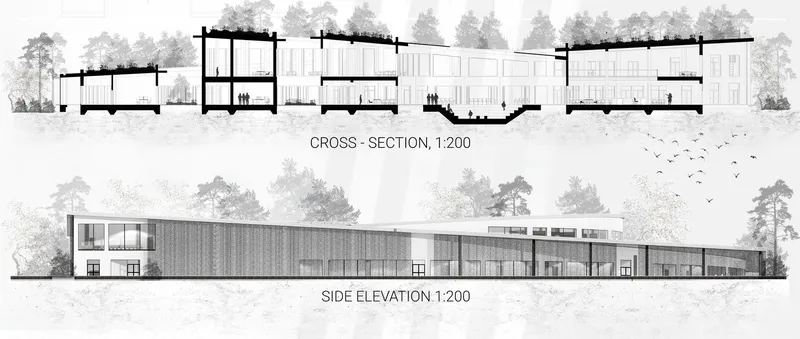
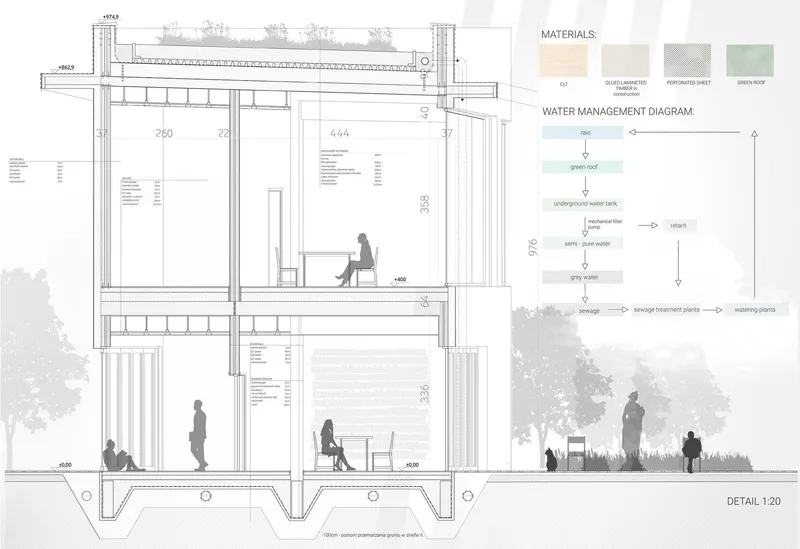
The structure's sustainable library design is evident in every aspect. The choice of materials like glued laminated timber and Cross-Laminated Timber (CLT) aligns with the ecological ethos. The building's volume and "second skin" minimize heat loss, while the green courtyards and roof integrate the building into its natural setting without disrupting local biodiversity.
Interactivity and Flexibility: A Space for All Seasons
The library's corridors offer an interactive journey, flanked by green vistas on one side and bookcases on the other, leading to educational spaces that open onto verdant plazas. The design's flexibility caters to various activities, from literary evenings to educational workshops, adapting to the community's evolving needs.

Aleksandra Stępniowska's Circle of Knowledge is not just a building; it's a bold reimagination of public space. It stands as a beacon of sustainable library design, advocating for an architecture that is as much about people as it is about the environment. The Circle of Knowledge encapsulates the essence of a future where learning, community, and sustainability coalesce into a singular, harmonious design.
As we witness the evolution of public libraries, the Circle of Knowledge serves as a reminder of the potential that innovative design holds to redefine our spaces for generations to come. This is more than a library; it's a blueprint for a sustainable, informed, and interconnected world.



Popular Articles
Popular articles from the community


The Earth Pod: 3D Printed Homes for Resilient Refugee Communities
The Earth Pod reimagines refugee housing through 3D printed homes made from clay, combining resilience, self-sufficiency, and rapid shelter.

Co-life: Sustainable Architecture for Age-Friendly Community Living
Co-life reimagines sustainable architecture for seniors through courtyards, rammed earth, shared gardens, and spaces designed for belonging.

Play: Fragments of Their World
Familiar architecture becomes modular playground design, creating safe spaces where displaced children can learn, connect, imagine and play.

Hill & Cross Opera: Sculptural Opera House Architecture Shaped by Tallinn’s Landscape and Identity
Hill & Cross Opera reimagines opera house architecture in Tallinn through its sculptural hill, civic plaza, glass wave and a luminous cross.


Similar Reads
You might also enjoy these articles

Day and Night Park: A Time-Based Urban Newsstand in Beijing
A temporary urban newsstand in Beijing blending travel, light, and reading through poetic colors, compact form, and community-focused design.

Modernist Patio Renovation in El Masnou, Barcelona by Oliver Segura Arquitectura + Cebrià Arquitectura
Modernist patio renovation blending tradition and innovation with a movable pool, leveled floors, and Catalan materials in El Masnou.

Alto Residencial Coop: Cooperative Housing Development in Santiago de Compostela by Carbajo Barrios Arquitectos
A linear cooperative housing complex blending white volumes and perforated metal façades, enhancing community living, natural light, privacy, and urban integration.

Vil Genis School by BPA ARCHITECTURE – Massy, France
Vil Genis School in Massy, France, features sustainable design, south-facing classrooms, community integration, accessible spaces, and modern educational architecture.


Explore Educational Building Competitions
Discover active competitions in this discipline



Challenge to design public laboratory


Challenge to reimagine the Iron Throne


Photograph architecture without architects


Illustrate the lost glory of Angkor Wat - Render Challenge
Comments (0)
Please login or sign up to add comments
No comments yet. Be the first to comment!