
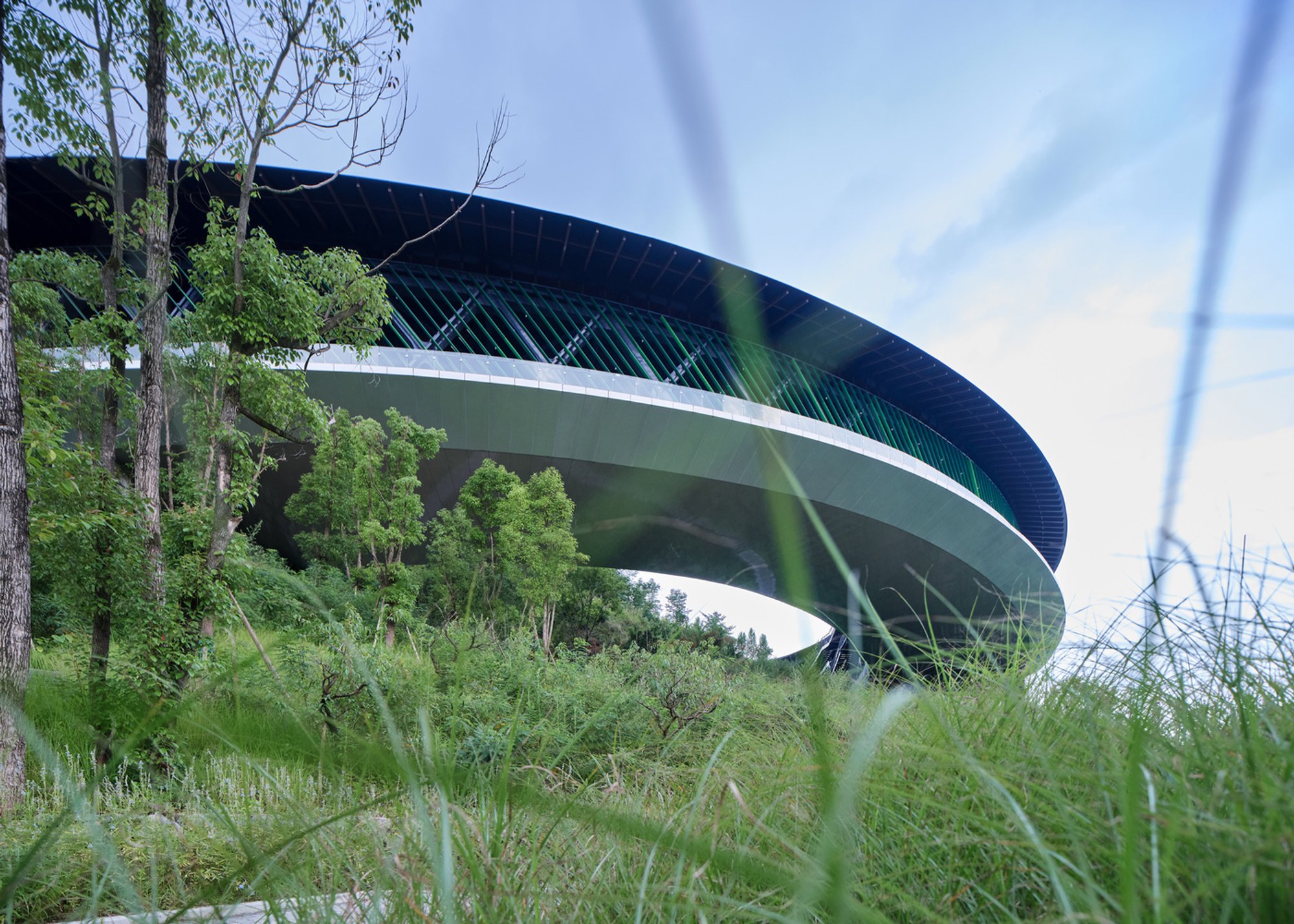
Sustainable Rural Tourism Architecture: Daguan Integrated Service Center by CADG
The Daguan Integrated Service Center by CADG showcases sustainable rural tourism architecture, merging nature, culture, and eco-friendly design in China.

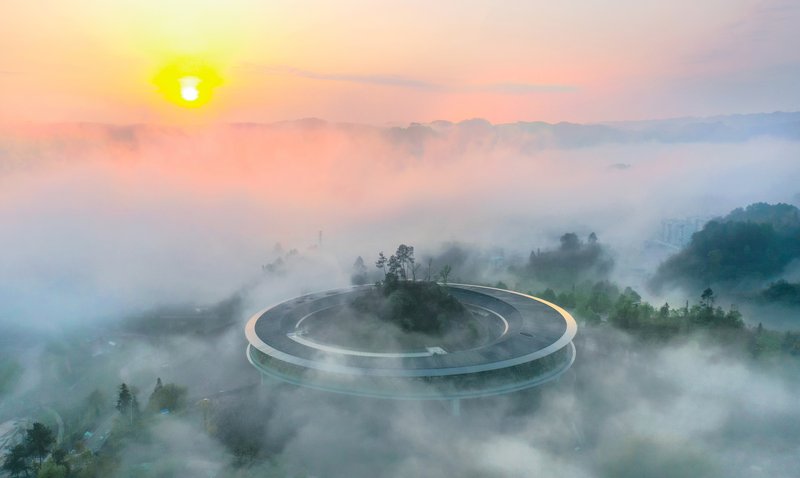
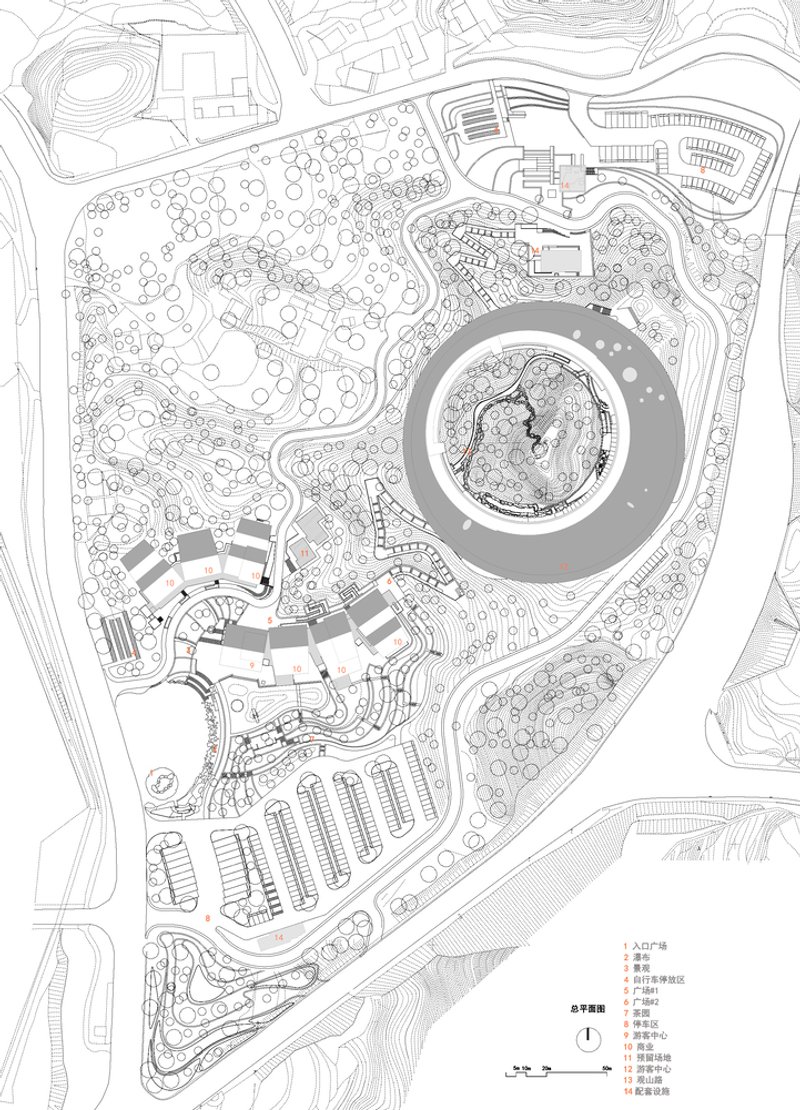
The Daguan Integrated Service Center for Rural Tourism, designed by CADG, is an architectural masterpiece that seamlessly integrates sustainable rural tourism architecture with the natural landscape of Daguan Town, China. Spanning 23,500 m², this innovative development preserves the site’s existing topography while enhancing local cultural and economic engagement. Featuring public markets, dining spaces, exhibition areas, a hotel, and a library, the project acts as both a tourism hub and a rural development initiative, creating a bridge between urban visitors and local communities.
A Design Rooted in Nature and Local Identity
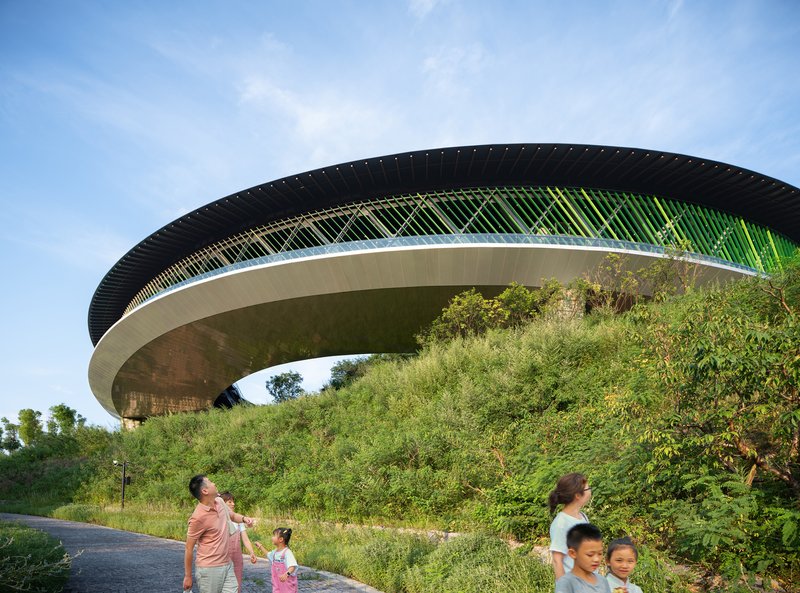
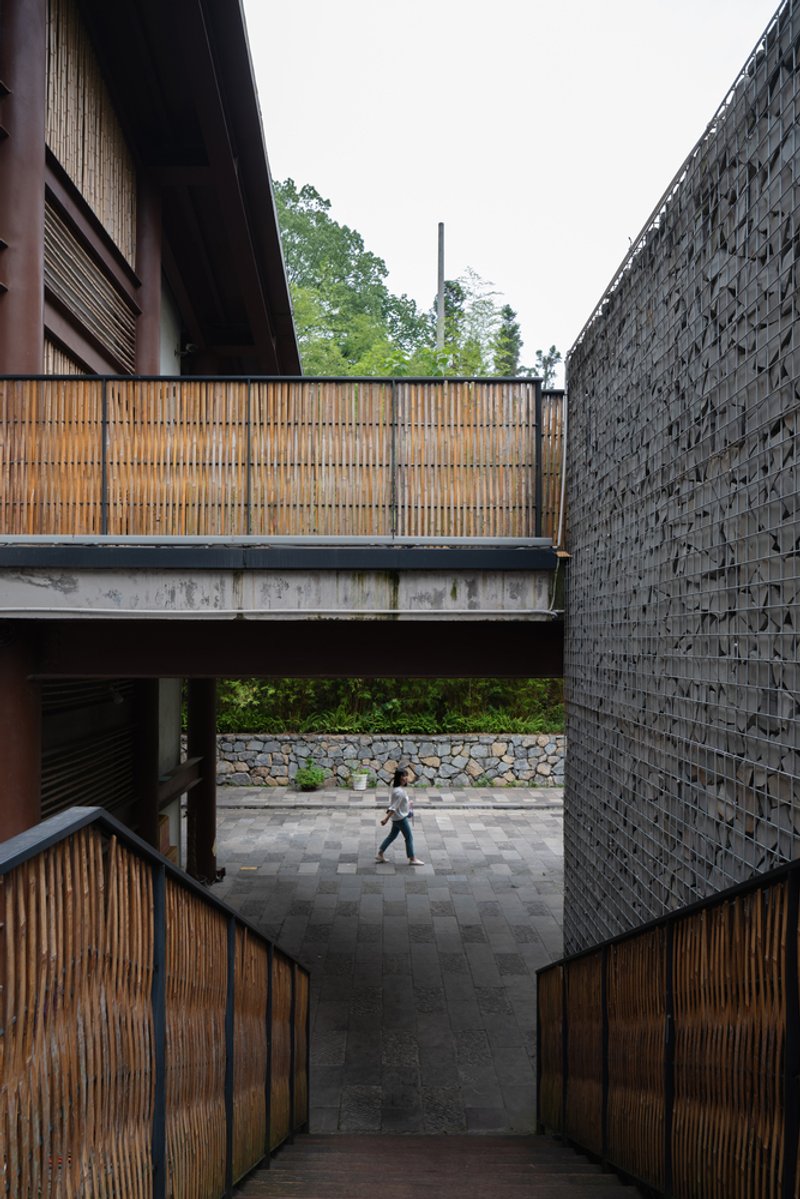
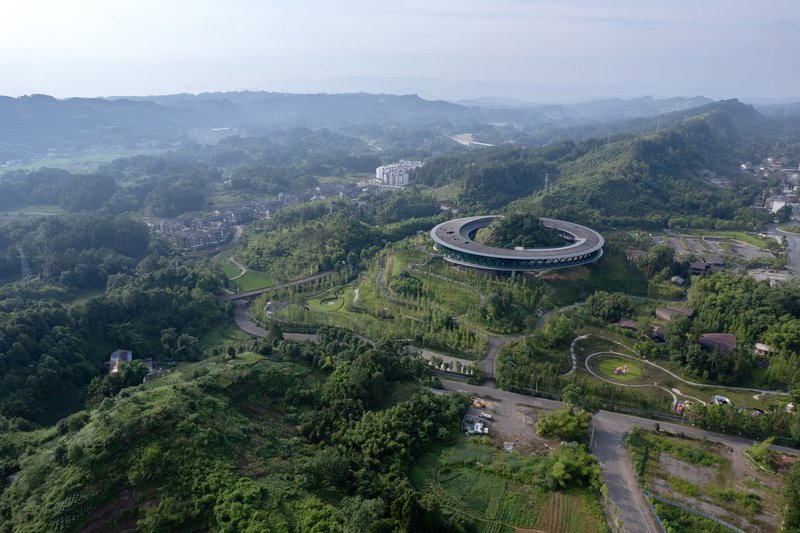
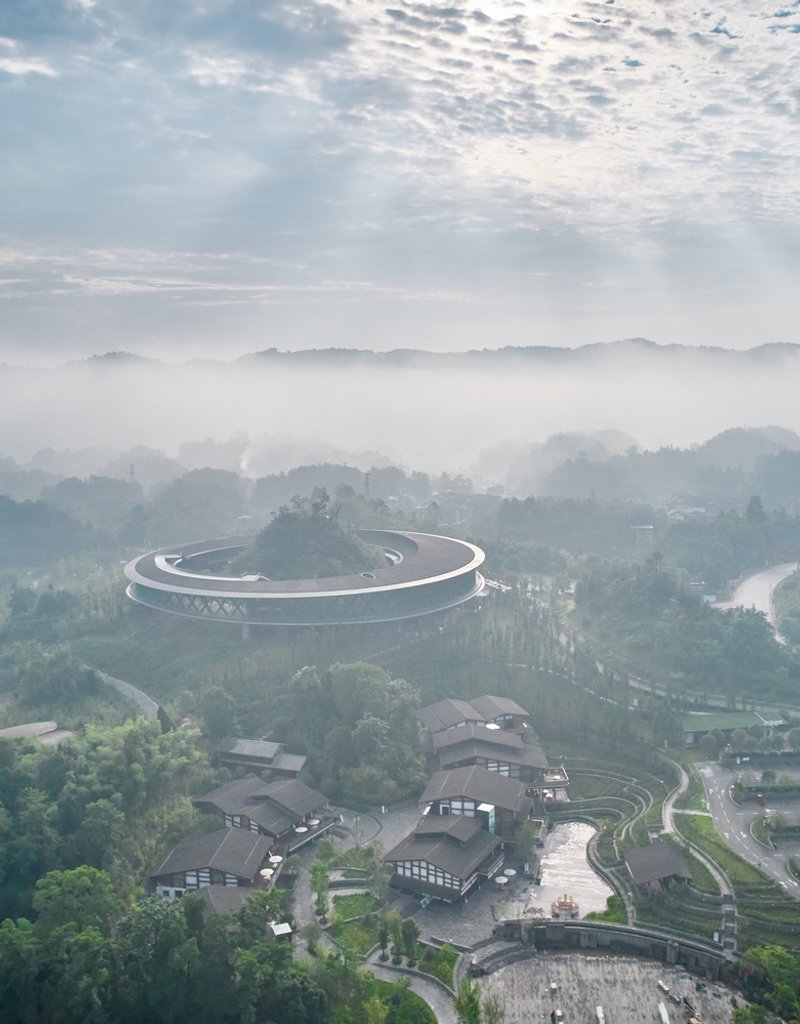
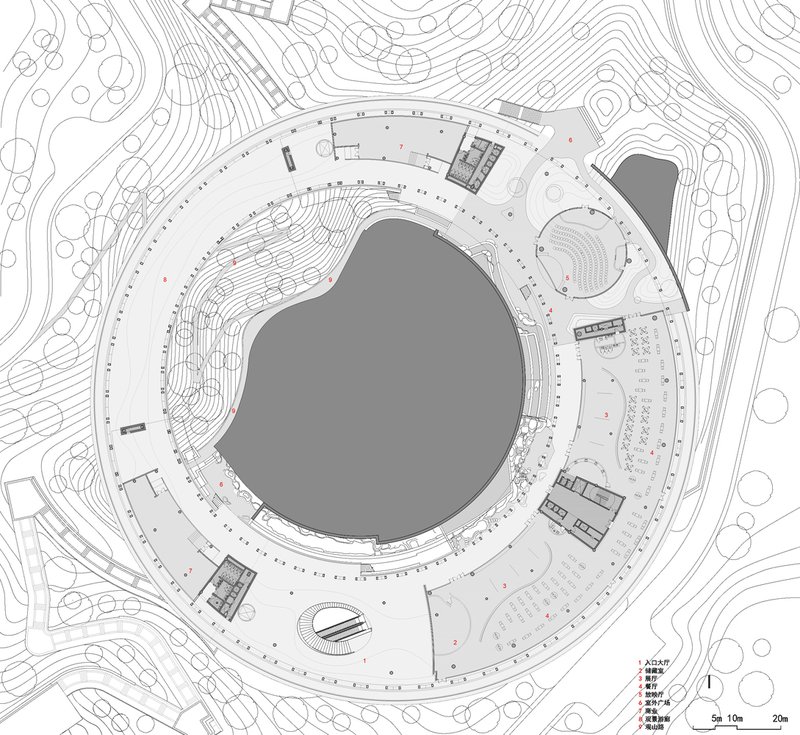
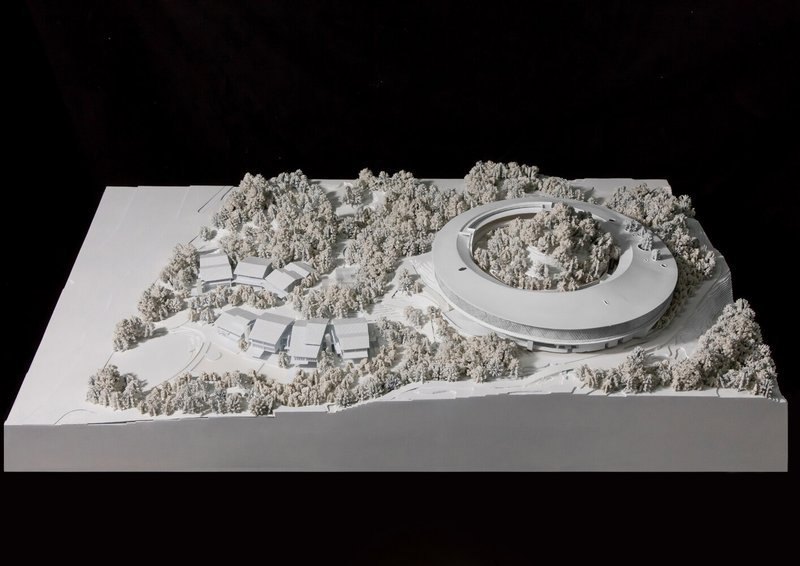
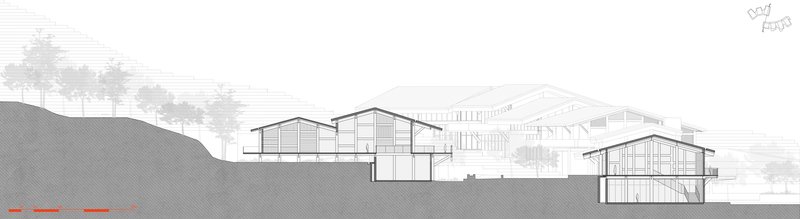
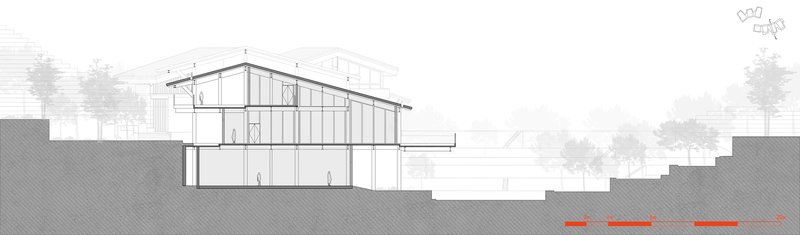
The service center is built on a hilly terrain with an elevation difference of 60 meters, originally planned for high-rise residential development. Instead of altering the landscape, the architects chose to preserve the natural topography and vegetation, ensuring that the site remains a part of the local Bayu mountain experience. The result is a harmonious blend of architecture and nature, where buildings adapt to the land rather than reshape it.
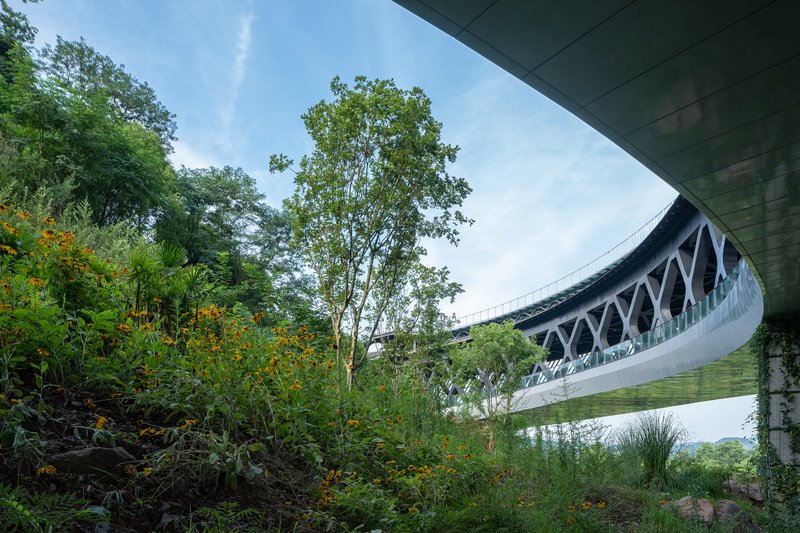
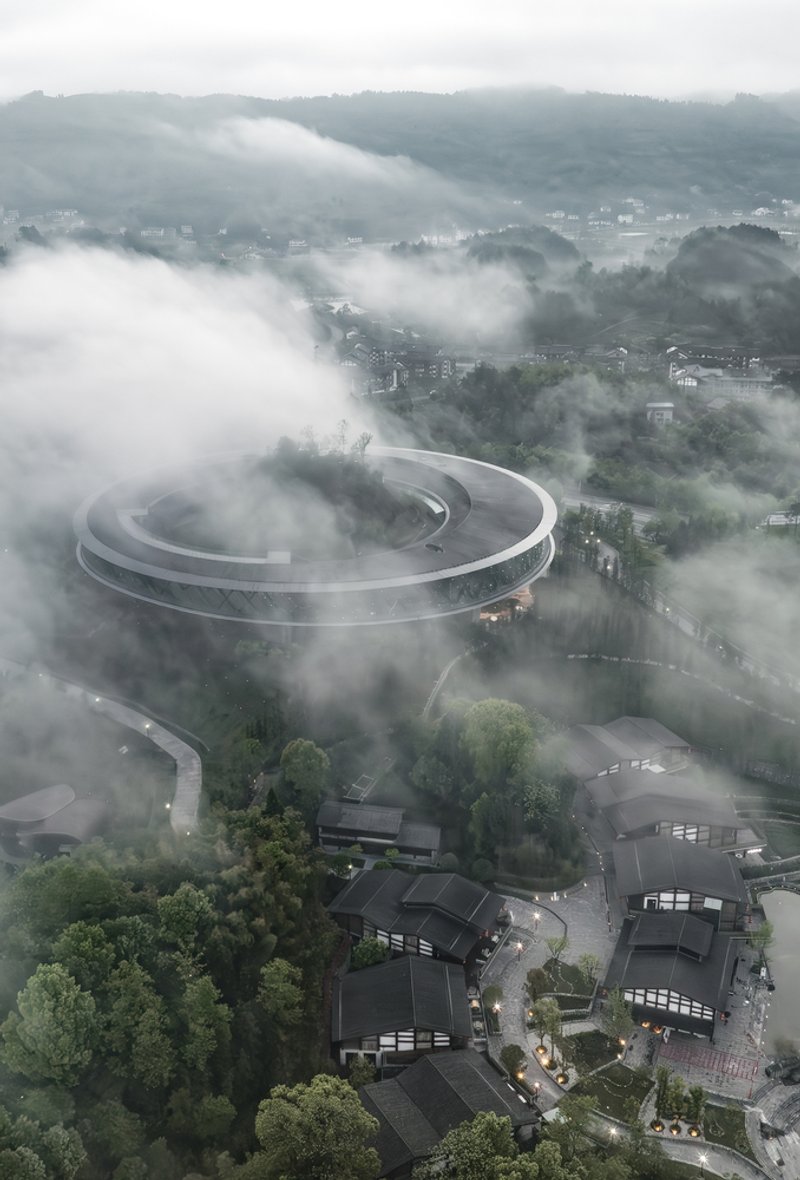
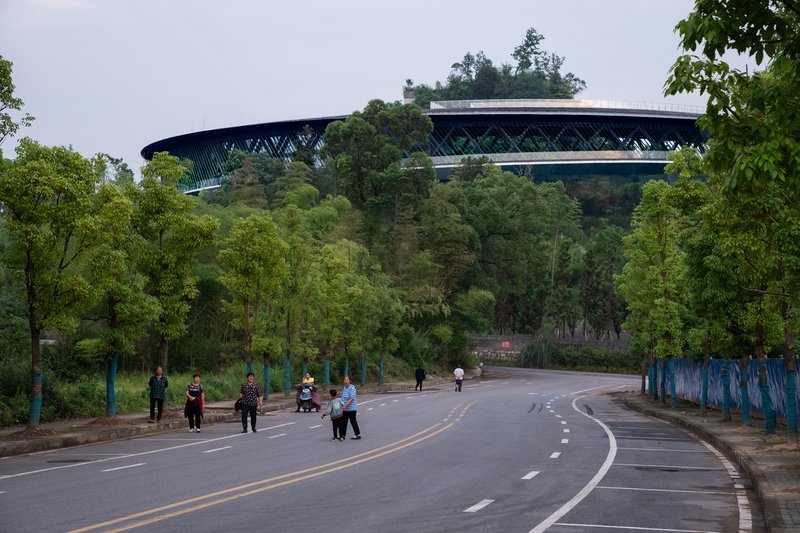
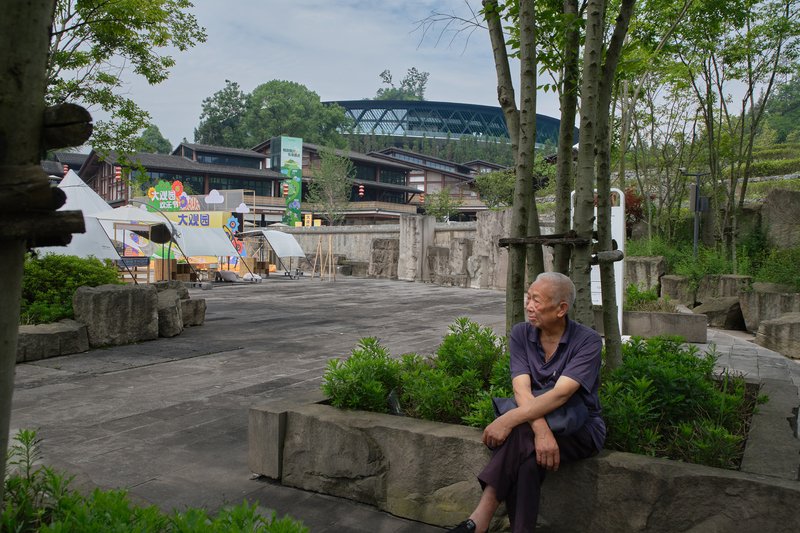
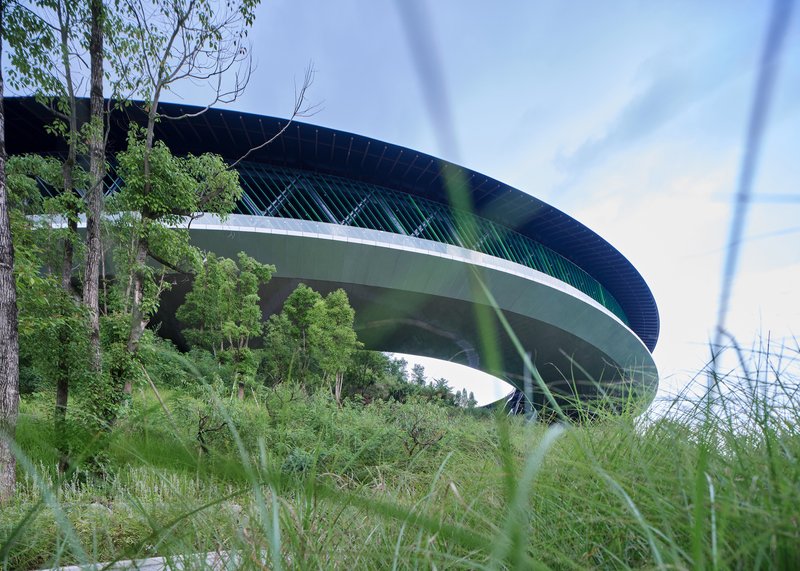
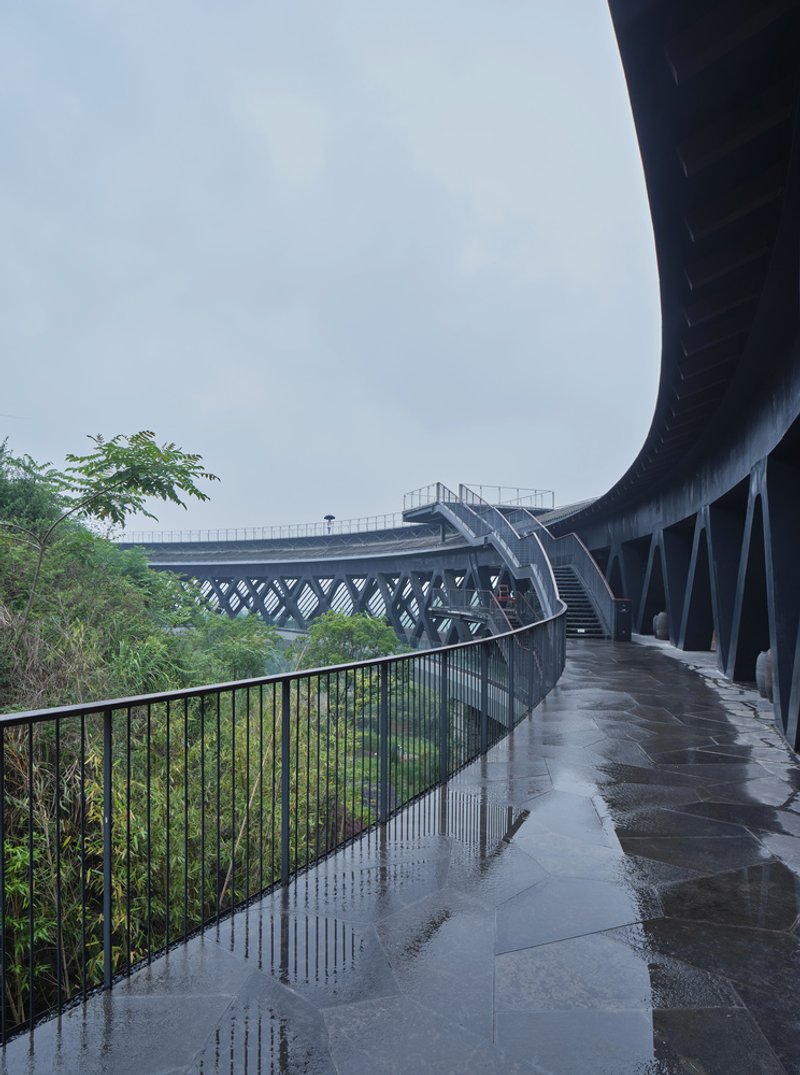
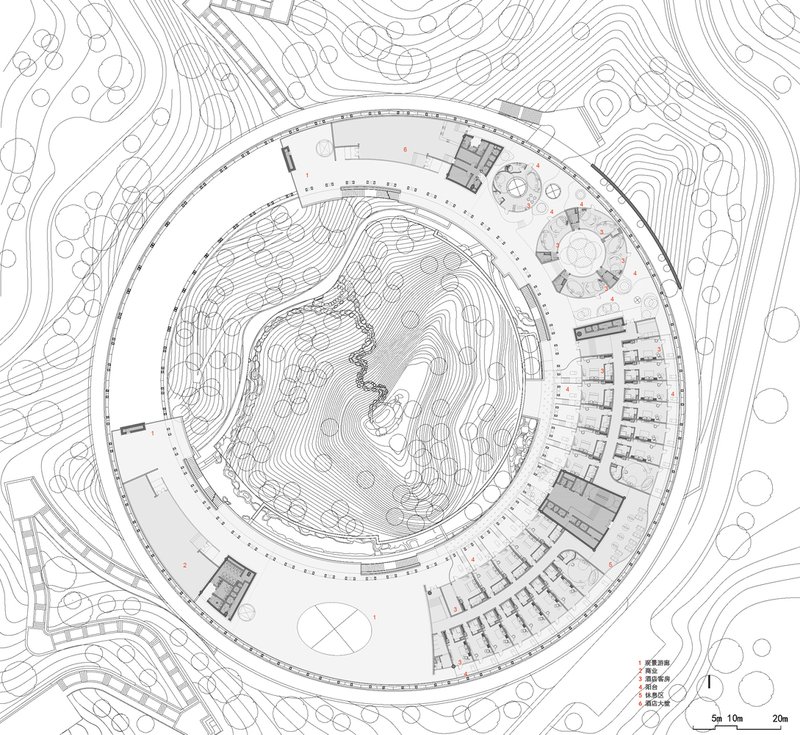
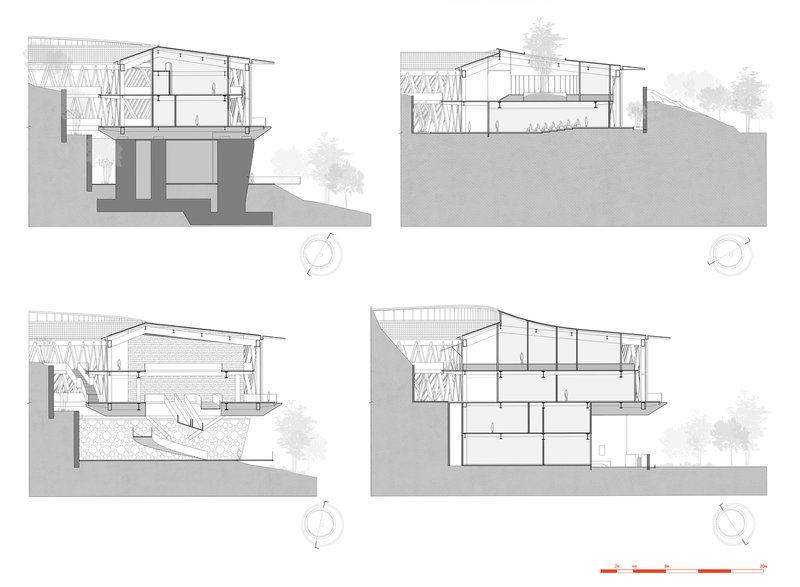
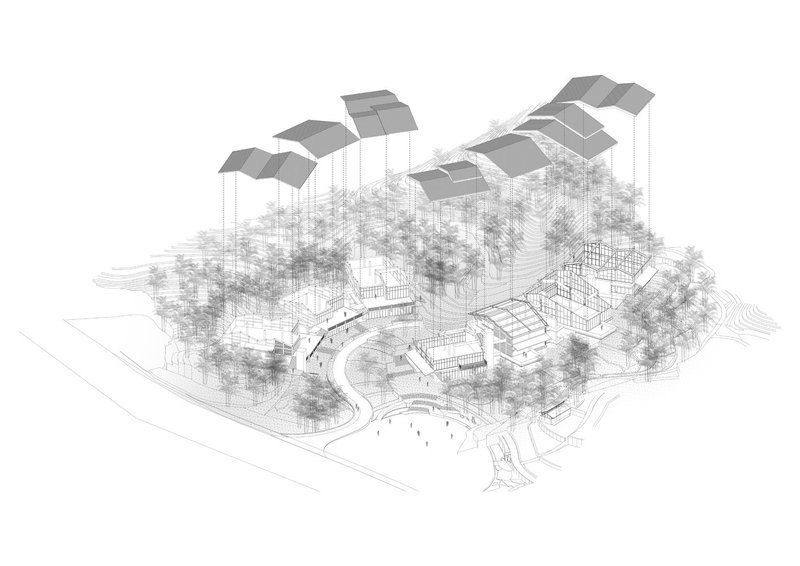
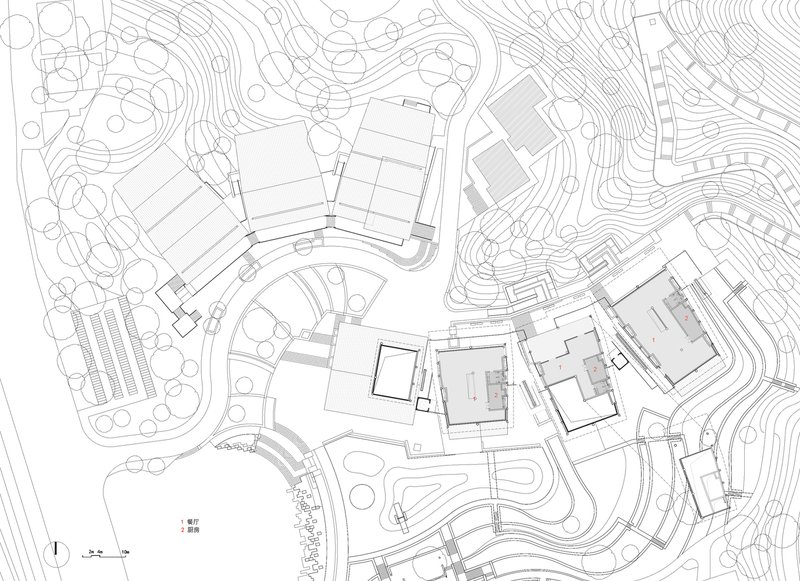
Two distinct architectural forms define the space. At the base of the hill, the market area consists of smaller units arranged along the natural slope. Elevated structures are used to minimize environmental impact, allowing the terrain to remain largely untouched. At the hilltop, a circular structure embraces the central hill, reinforcing the spiritual and ecological significance of the natural landscape.
Sustainability and Passive Design Strategies
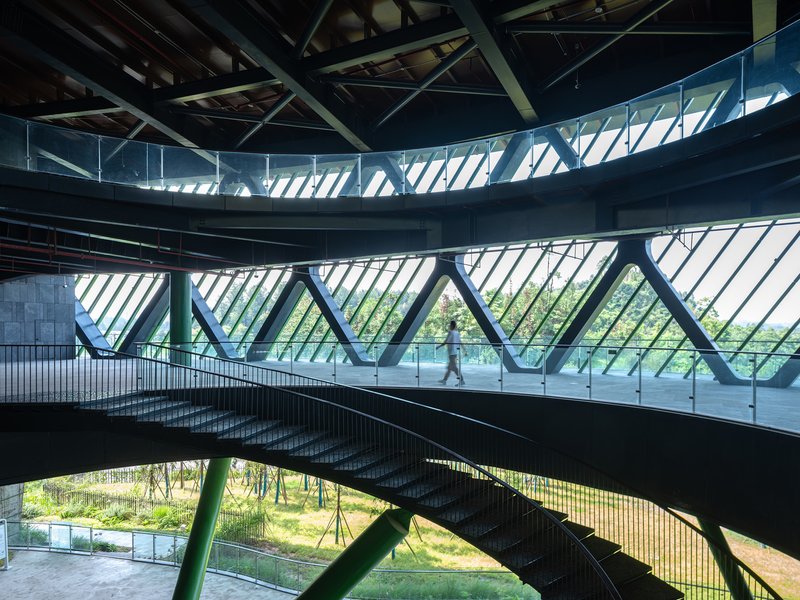
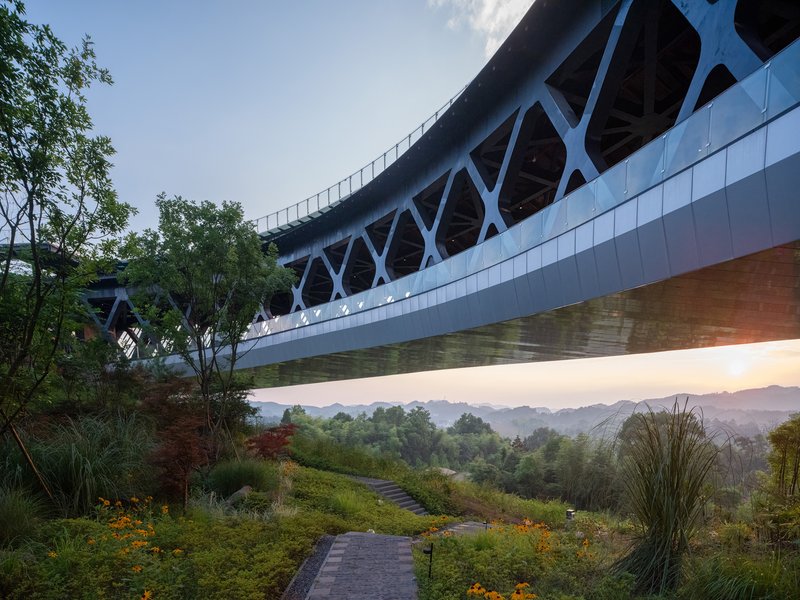
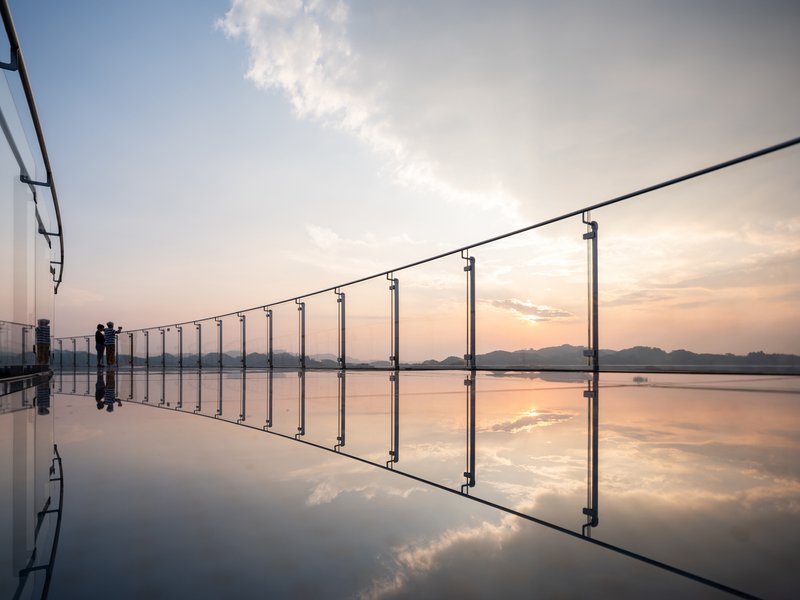
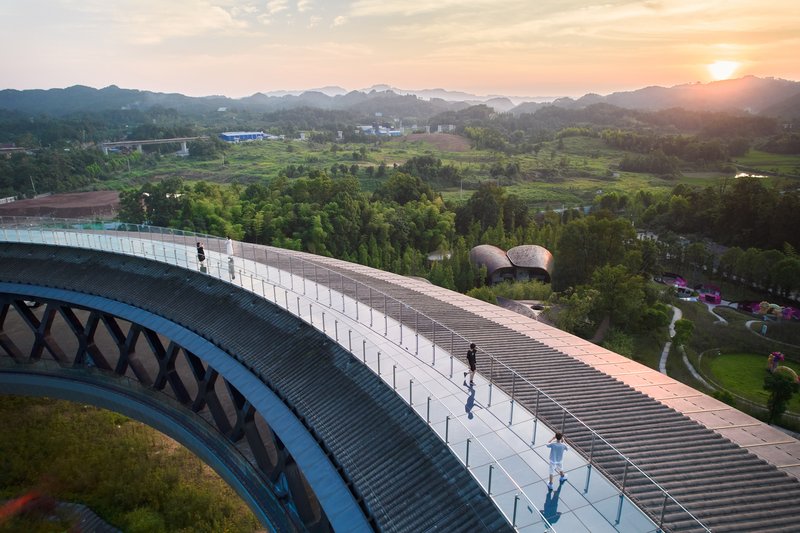
A key feature of this sustainable rural tourism architecture project is its commitment to environmental harmony. The site maintains its native vegetation, ensuring that local ecosystems thrive. The floating bridge, extending 85 meters around the hill, serves as both a functional walkway and a scenic landmark, offering panoramic views of the surrounding countryside.
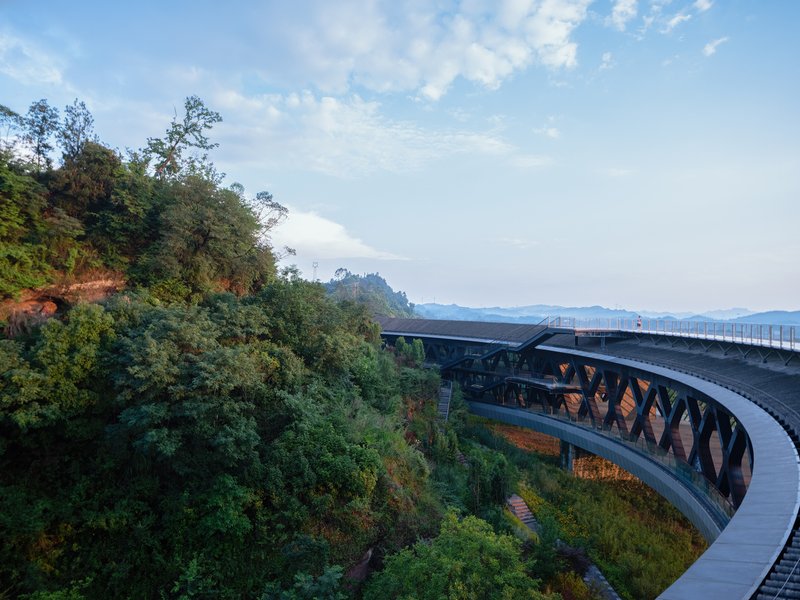
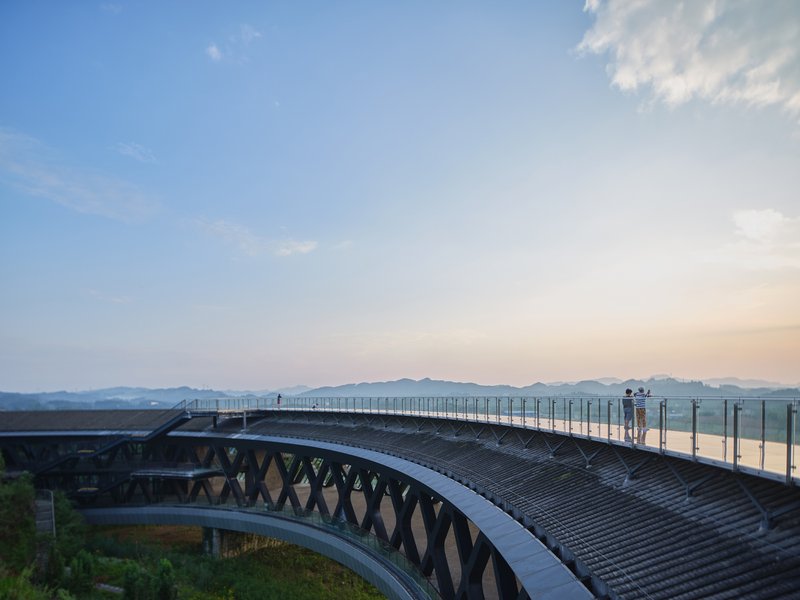
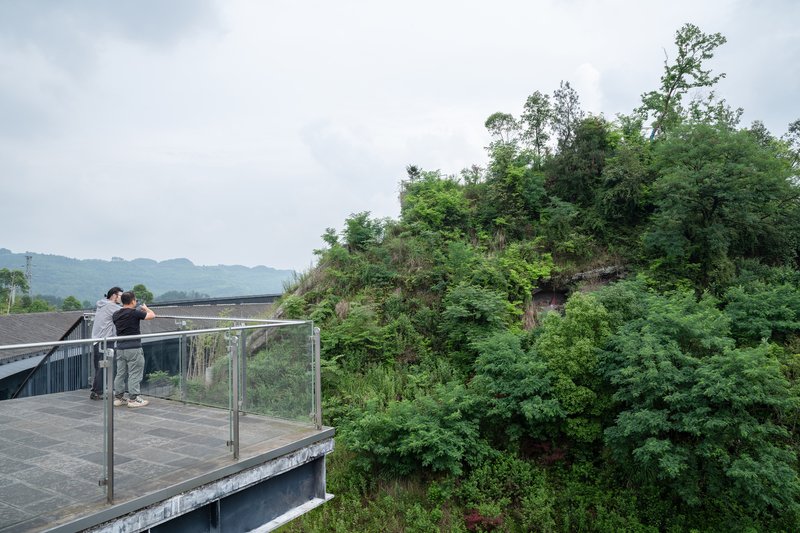
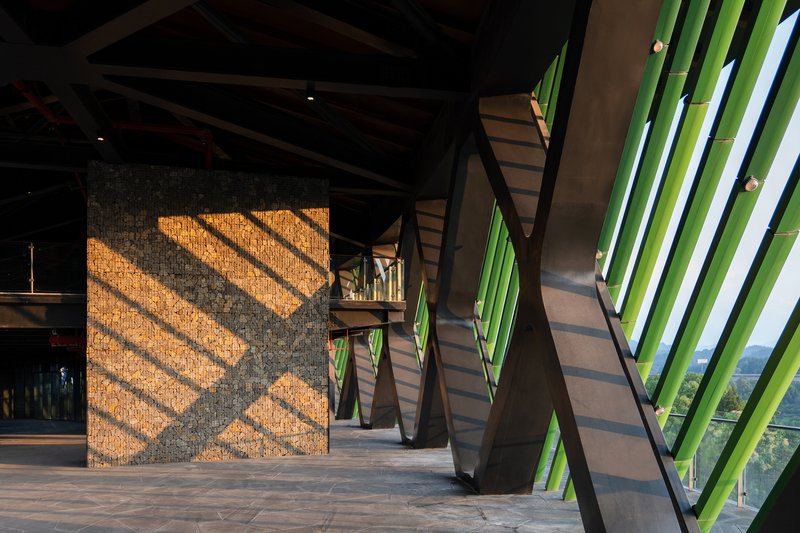
The design incorporates photovoltaic glass walkways, which provide renewable energy while enhancing visitor experiences. By integrating semi-outdoor platforms, shaded walkways, and climate-responsive structures, the architecture reduces the need for artificial climate control, making the project inherently energy-efficient.
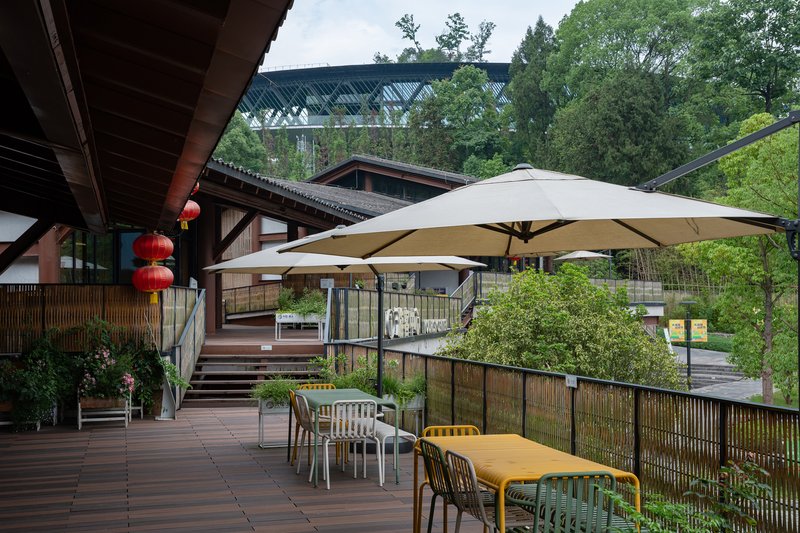
Rural Tourism as a Tool for Economic and Cultural Revitalization
Beyond its architectural ingenuity, the Daguan Integrated Service Center serves as a catalyst for rural development. The project provides local artisans, farmers, and businesses with a platform to showcase and sell products, boosting the regional economy. Public spaces encourage cultural exchanges between urban visitors and rural communities, fostering a deeper appreciation for traditional crafts, cuisine, and heritage.
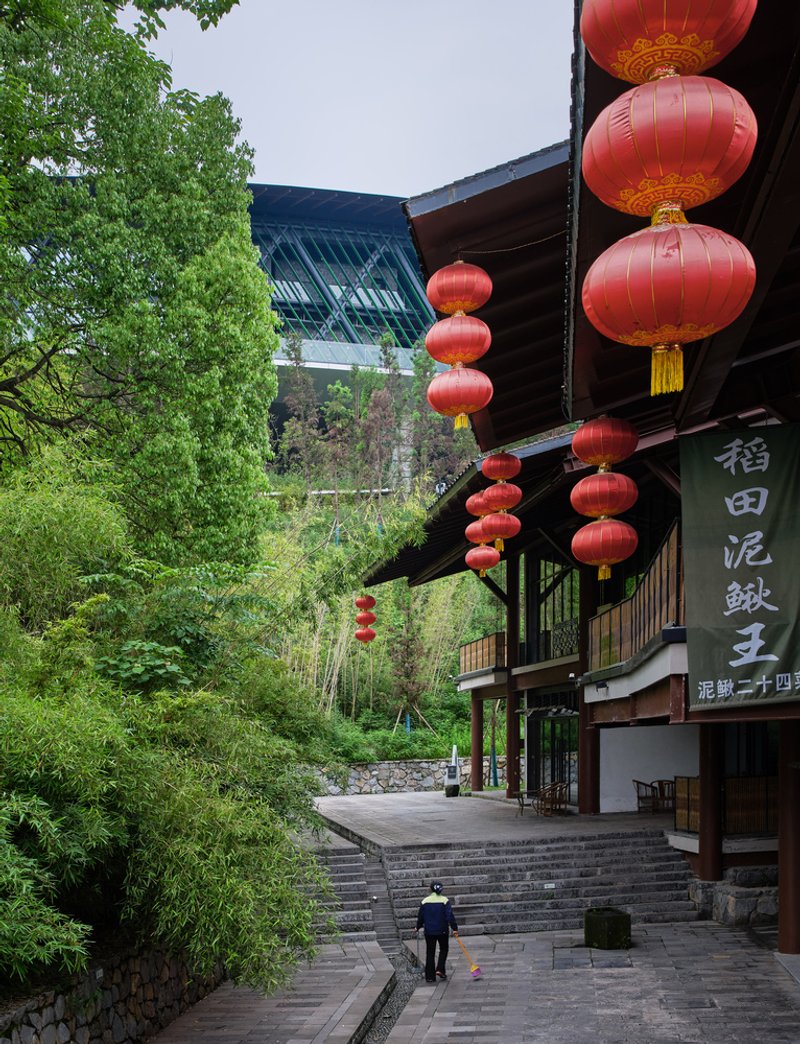
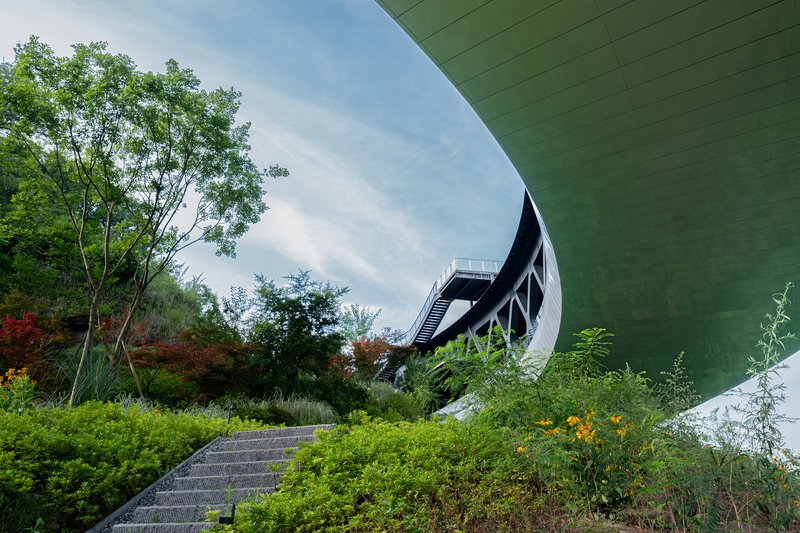
The design philosophy prioritizes inclusivity, offering accessible public areas that serve both tourists and residents. By integrating libraries, exhibition halls, and community gathering spaces, the center strengthens social engagement and supports sustainable rural tourism development.
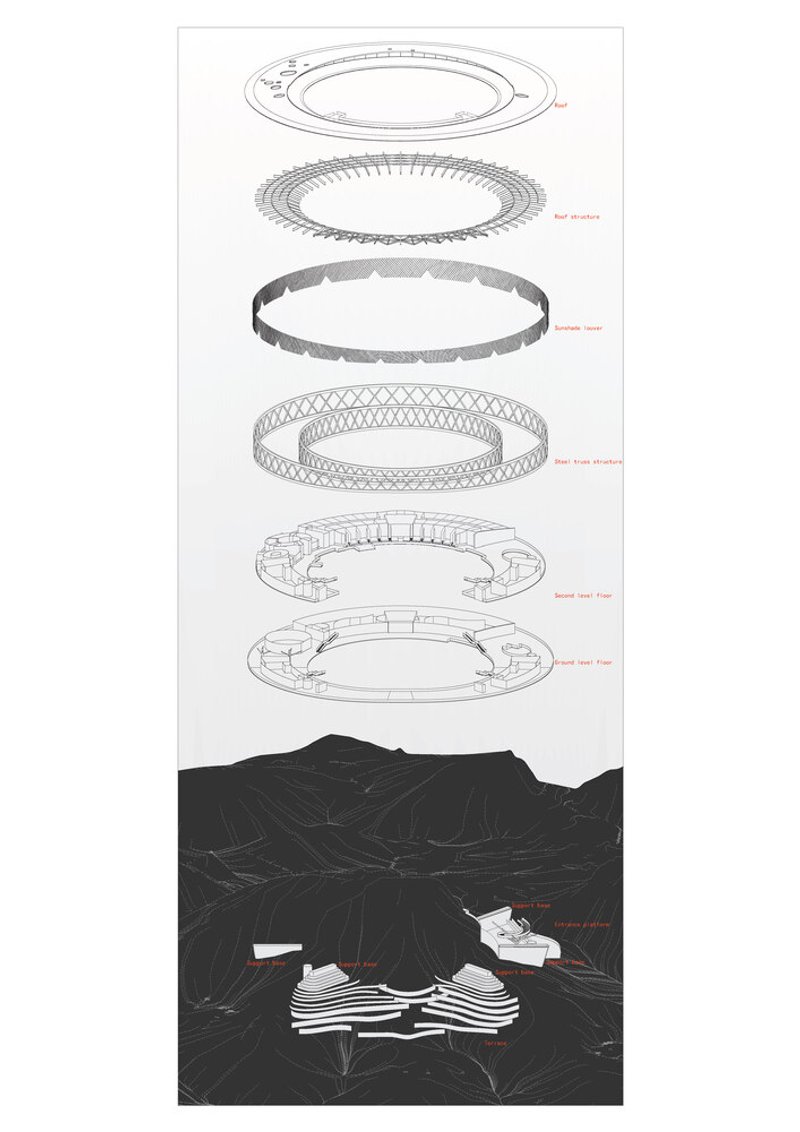
Blurring Boundaries Between Architecture and Nature
One of the defining aspects of this sustainable rural tourism architecture project is its seamless integration with the environment. The structures are designed to be an extension of the landscape rather than an imposition on it. Walkways, bridges, and open courtyards maintain a continuous dialogue with the natural surroundings, ensuring that visitors remain connected to the land at all times.
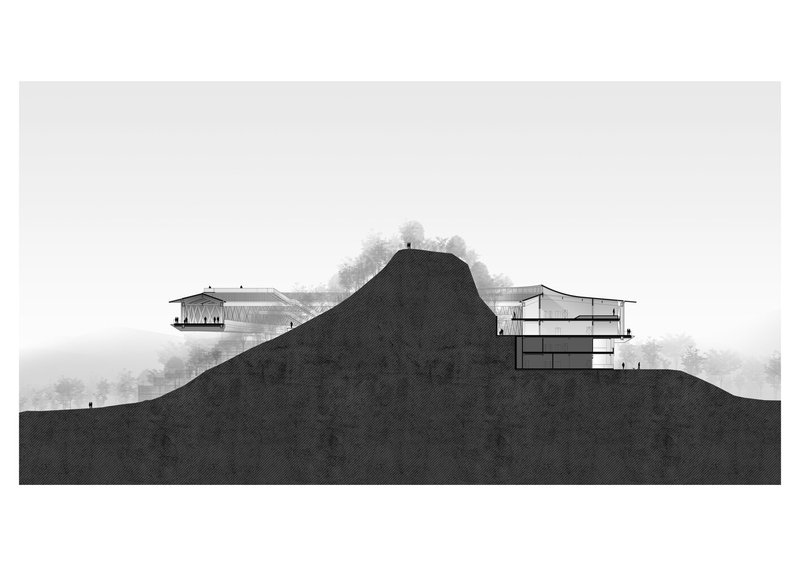
The preserved mountain temple within the site stands as a symbol of spiritual continuity, reinforcing the relationship between architecture, nature, and cultural identity. This connection allows visitors to experience rural China in an immersive and authentic way, redefining the future of rural tourism architecture.
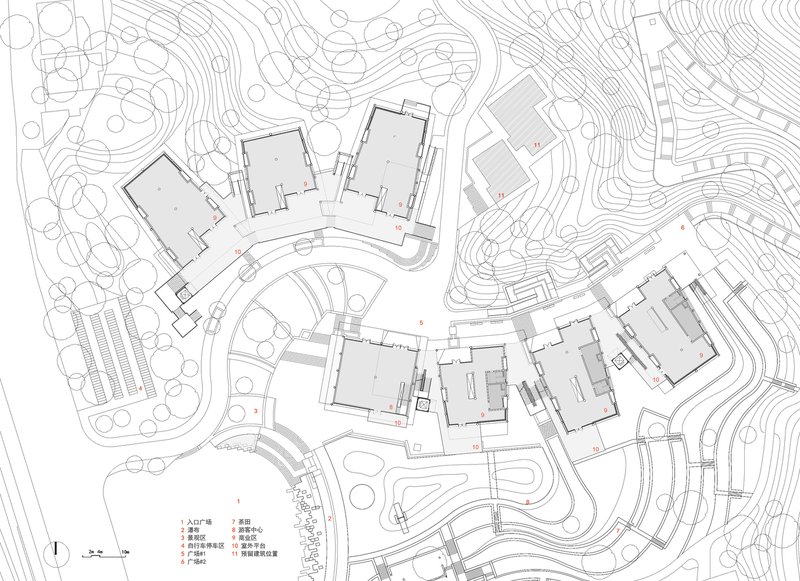
The Daguan Integrated Service Center for Rural Tourism by CADG exemplifies sustainable rural tourism architecture, setting a new standard for ecologically and culturally responsive design. By prioritizing natural preservation, passive sustainability strategies, and economic revitalization, the project fosters a deeper connection between urban visitors and rural landscapes. Through its thoughtful integration with the terrain, energy-efficient features, and focus on community development, this project serves as a model for sustainable rural architecture, ensuring that nature and culture remain at the heart of modern tourism development.
All photographs are works of Kejia Mei, Xin Wang




Popular Articles
Popular articles from the community

On the Brooks House by Monsoon Collective – A Contemporary Kerala Home Rooted in Tradition
Kerala home blending tradition and modernity with water-inspired design, brick architecture, courtyard planning, and sustainable rainwater harvesting strategies.
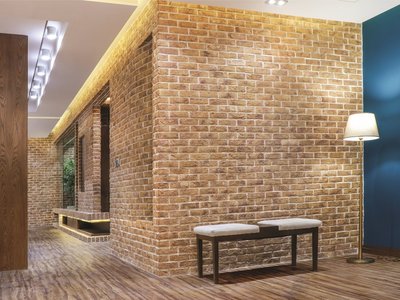
A Contemporary Take on Iranian Residential Architecture
A modern interior design in Mashhad that reinterprets brick, light, and spatial flow to create a warm, contemporary residential architecture.
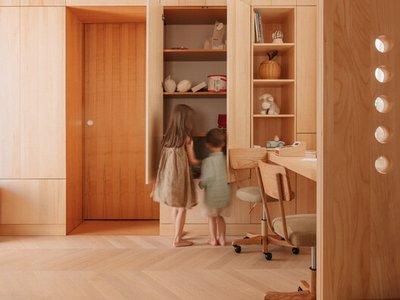
Treehouse Apartment: A Warm Timber Interior Blending Craft, Play, and Contemporary Living
Warm timber apartment with integrated treehouse, combining natural materials, craftsmanship, and playful design to create a flexible, family-oriented living environment.
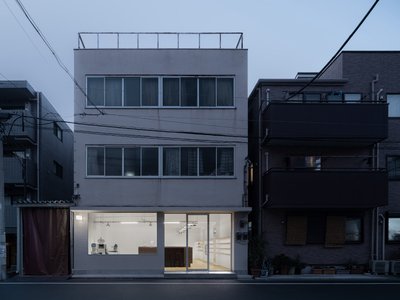
Atelier Macri Concept Store Interior Design by CASE-REAL
Atelier Macri store features a "ko" counter, walnut wood details, cork displays, blending retail, gallery, and seamless customer experiences.


Similar Reads
You might also enjoy these articles

Top 15 Architecture Competitions to Enter in 2026
From student-friendly idea competitions to prestigious international awards, here are the best architecture competitions open for entries in 2026. Updated regularly.

DIY & Engineering in Computational Design : Enter the BeeGraphy Design Awards
Showcase Your Creativity with Computational Design and Open Source Projects
Innovative Design Solutions: Award-Winning Projects from Recent Architecture Competitions
Exploring award-winning architectural projects shaping the future of design, sustainability, and community.



Explore Architecture Competitions
Discover active competitions in this discipline




The International Standard for Design Portfolios


The Global Benchmark for Architecture Dissertation Awards


The Global Benchmark for Graduation Excellence


Challenge to reimagine the Iron Throne
Comments (0)
Please login or sign up to add comments
No comments yet. Be the first to comment!