The Mountain – A New Landmark in Sustainable Public Architecture
A topographic library that bridges people, knowledge, and nature through flexible design and sustainable public architecture.


The Mountain Libgen Library is a groundbreaking example of sustainable public architecture, conceived as a space that fosters meaningful interaction, collective learning, and community engagement. This visionary project was designed by Juan Pablo Henao Gallego, Santiago R, and Juan Jose Vargas Castillo, and it earned a place as a shortlisted entry in the Libgen 2019 competition. Their design embraces both innovation and ecological responsibility, proposing a model for future public institutions.
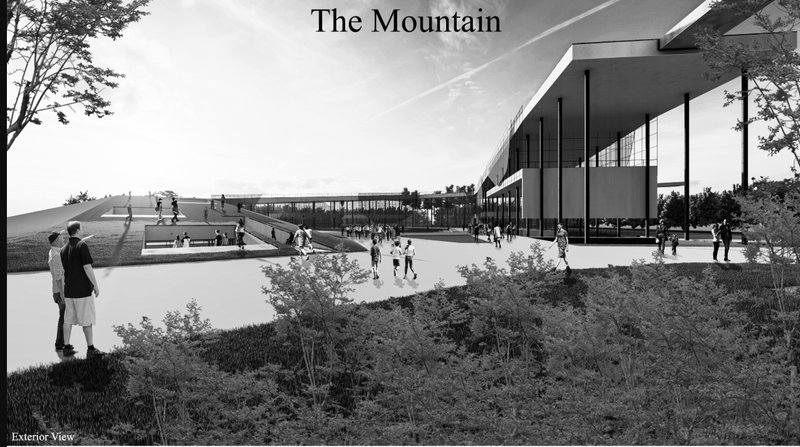
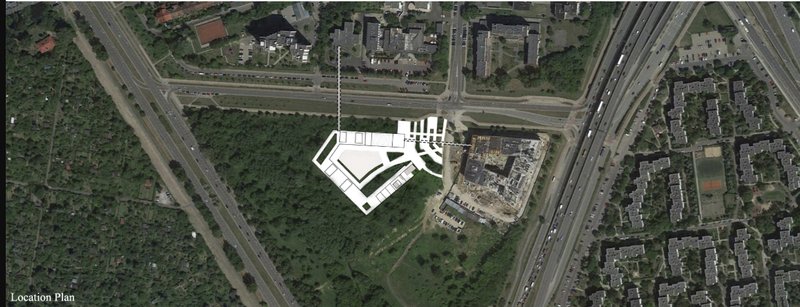
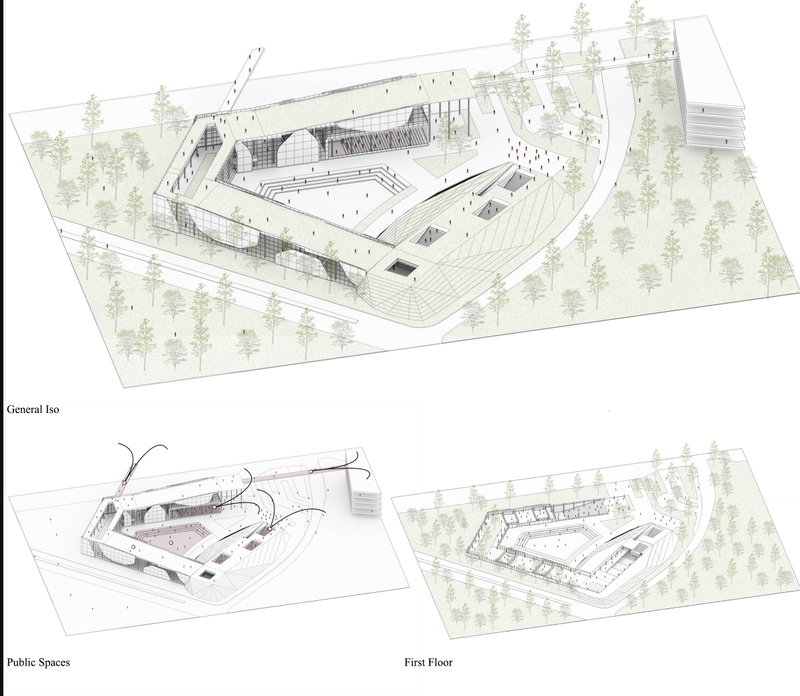
Taking its name from the mountain-like morphology of its sloped form, The Mountain envelopes the site and creates a central courtyard that serves as a gathering space for civic activities, cultural events, and spontaneous community encounters. The project merges built form with landscape strategy, emphasizing fluidity and openness while inviting urban participation. It goes beyond traditional library typologies, offering a new way to experience and navigate public architecture.
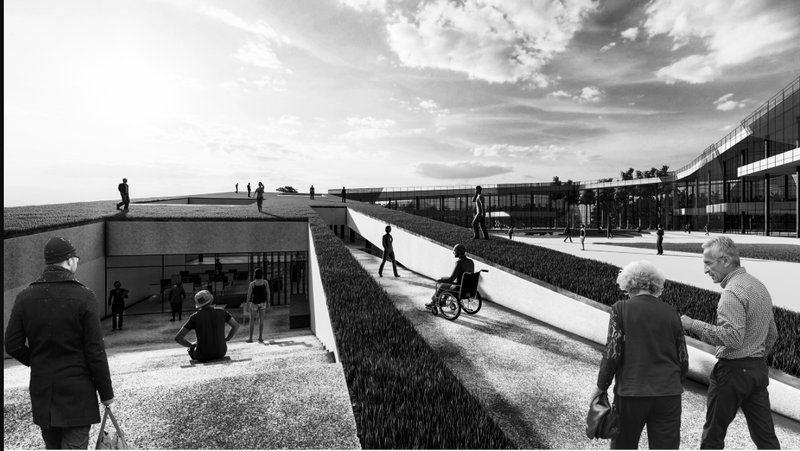
A central element of the design is the continuous sloping roof that acts as a connective topographical feature. This roof is not merely aesthetic—it functions as a public promenade, offering users the opportunity to ascend the structure, cross over it, and access adjacent buildings through integrated pedestrian bridges. This design gesture encourages exploration, offering visual and physical connections across the site, and introduces a new layer of mobility that is inclusive, accessible, and deeply integrated with the cityscape.
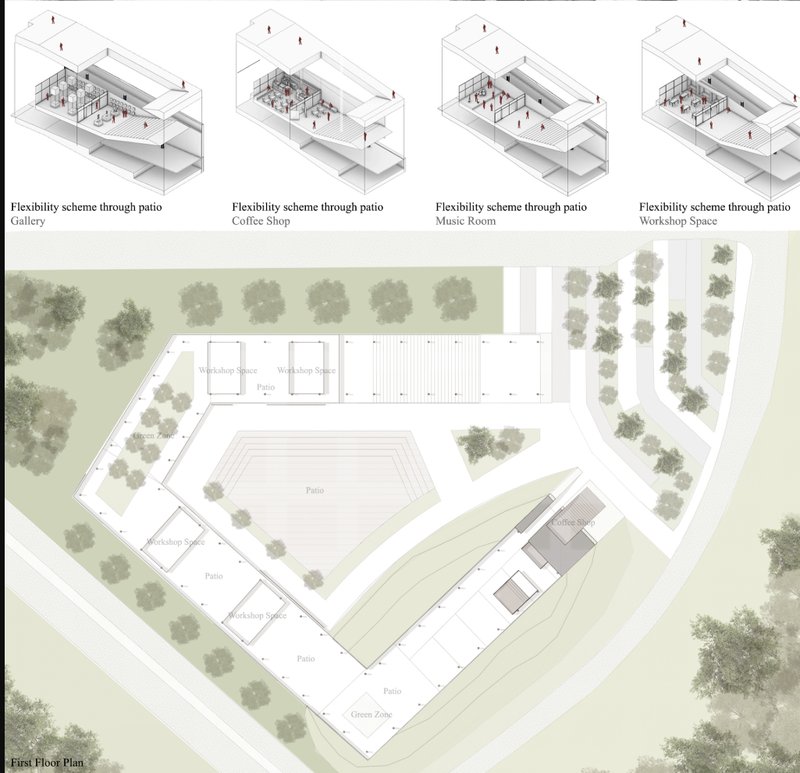
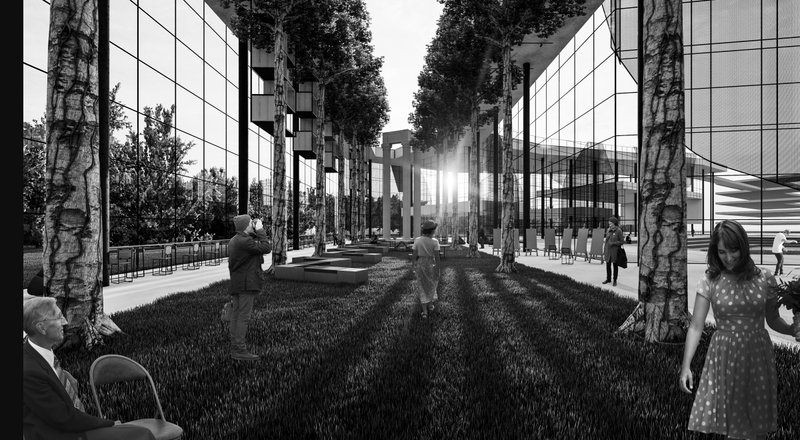
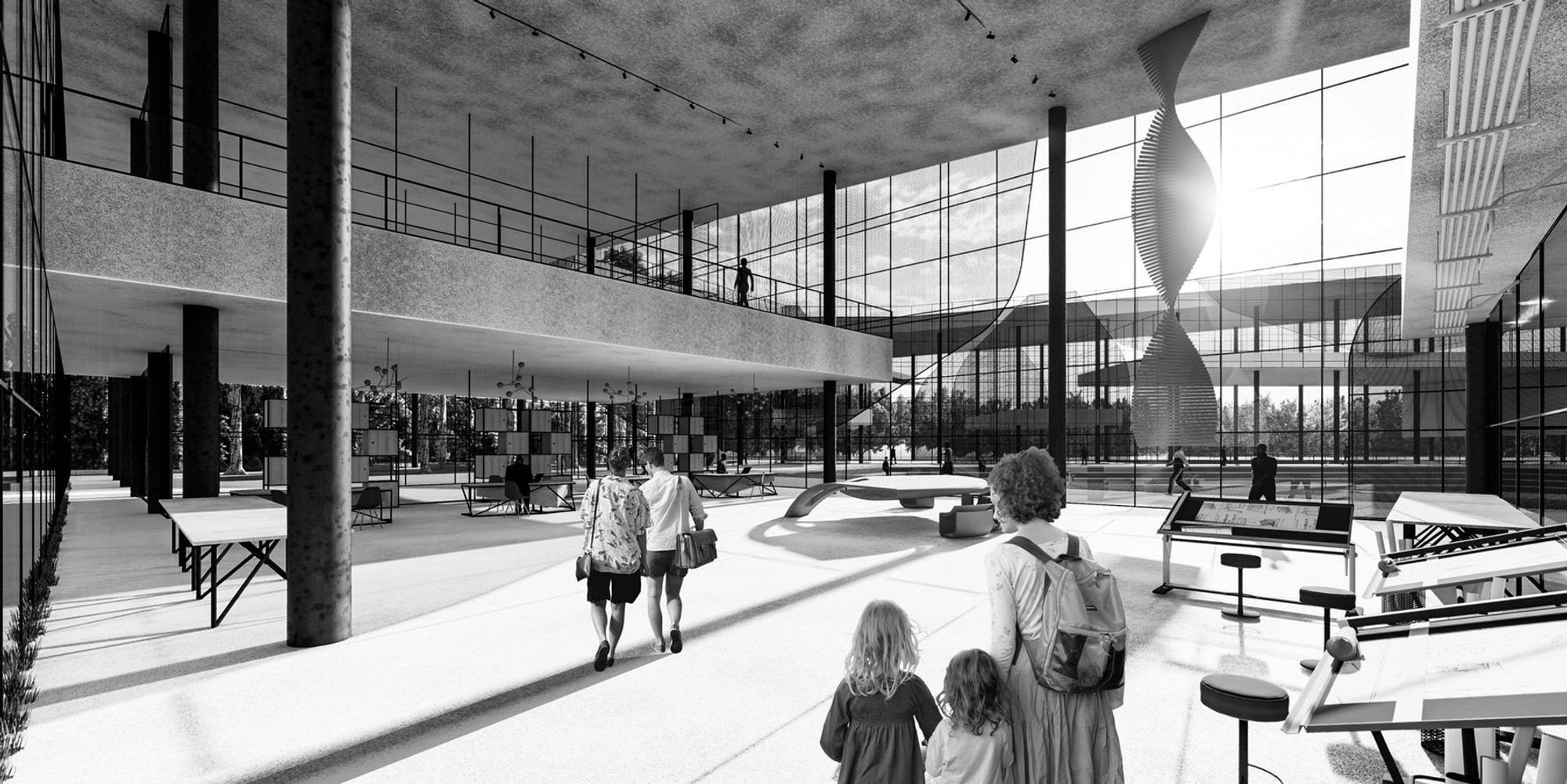
The building's core principle of adaptability is further realized through its network of patios and modular interior spaces. These flexible areas serve multiple purposes: galleries, music rooms, coffee shops, and workshop zones, all organized around open courtyards. The patios extend the spatial rhythm of the building and break down barriers between indoor and outdoor space, allowing for seasonal adaptability and diverse programming. They also serve as catalysts for social exchange, education, and artistic collaboration.
This flexibility stems from a deep understanding of how architecture can support evolving public needs. Rather than fixed, mono-functional spaces, the design enables fluid transitions between uses, accommodating a wide demographic of users—from families and students to artists and researchers. In doing so, it reinforces the library’s identity not just as a repository of books, but as a living social infrastructure.
Landscape integration plays a vital role in reinforcing the project’s ecological consciousness. Green zones are interspersed throughout the site and on various levels of the building, contributing to local biodiversity and improving microclimatic conditions. These green areas, combined with open-air walkways and shaded terraces, reduce the building’s heat island effect and provide peaceful areas for rest, reflection, and study. The natural elements become part of the architectural language, underlining the project's harmony with the environment.
Ultimately, The Mountain reimagines what a civic space can be. It challenges conventional norms of institutional architecture and places human experience and sustainability at the forefront. By merging topography, public space, and flexible programming, it becomes a landmark of sustainable public architecture, a symbol of how design can meaningfully shape community life.