Tiem Tra Cua Trang Coffee by son.studio – A Light-Filled Café Renovation Inspired by Hue Lanterns
A warm, lantern-inspired café renovation in Hue featuring curved stairs, natural ventilation, reclaimed wood, and a climate-responsive protective exterior shell.


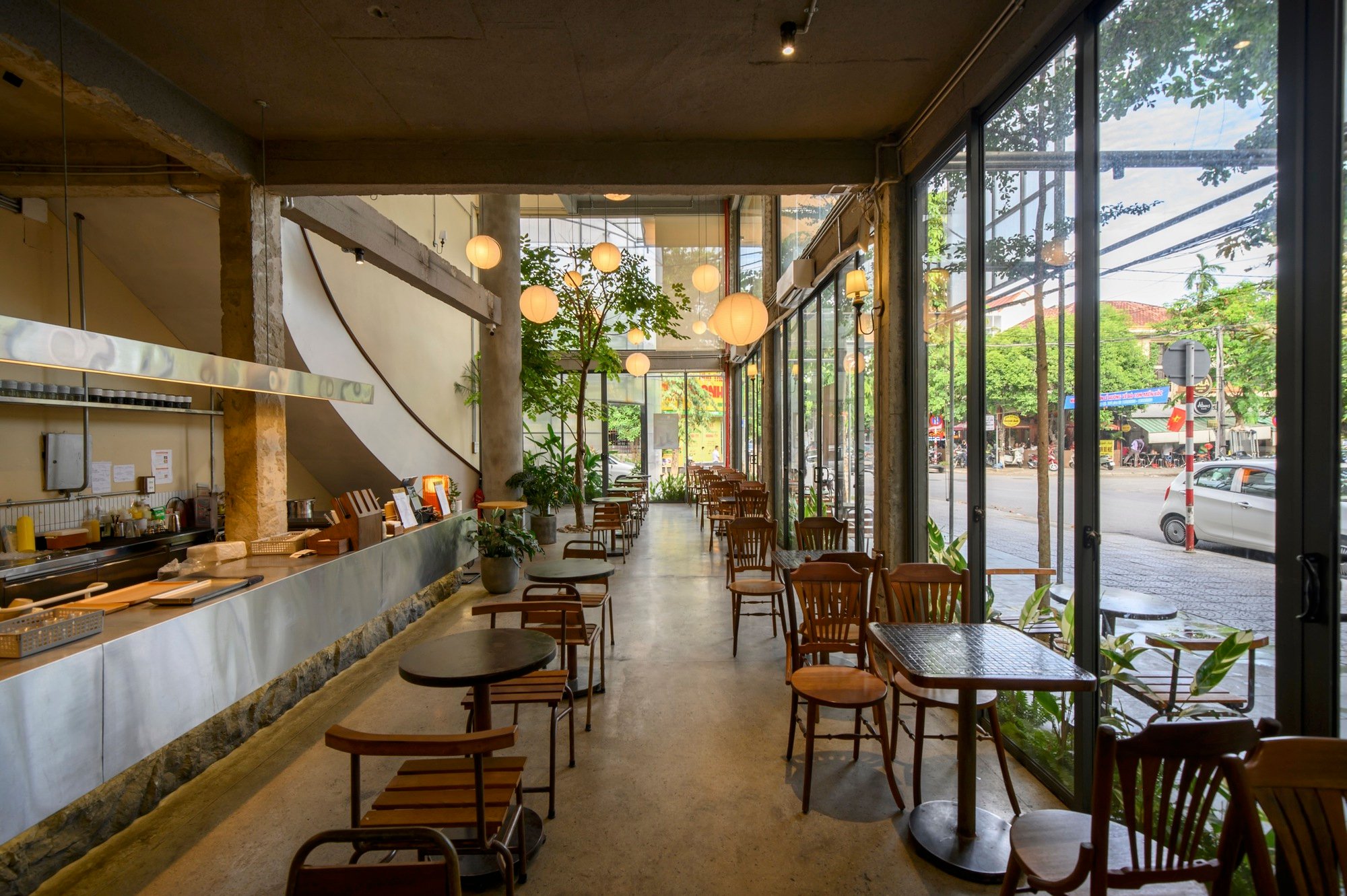
Tiem Tra Cua Trang Coffee, designed by son.studio in Hue, Vietnam, transforms an ordinary existing house into a warm, welcoming café infused with regional identity and sustainable design strategies. Completed in 2023 across a 301 m² footprint, the renovation highlights the atmospheric beauty of Hue lanterns, daylight-driven spaces, natural ventilation, and reclaimed materials—all contributing to a refined, culturally rooted café experience.
A Concept Born in Minutes: The Hue Lantern Inspiration
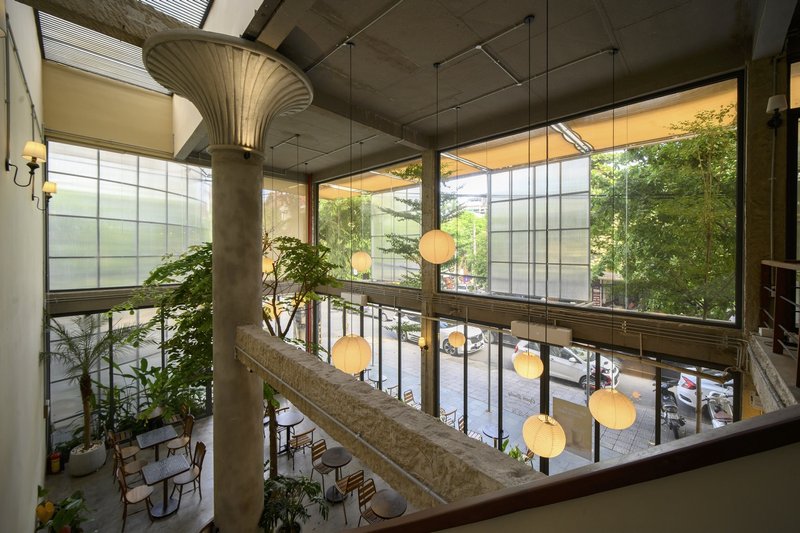
The project began with an unusually spontaneous design process. During the team’s first meeting with Trang and her husband, the owners shared their vision for an inviting community café. Instantly, the designers were reminded of the iconic Hue lanterns, known for their soft glow, delicate structure, and elegant forms. This instant association became the foundation for the entire architectural concept—guiding spatial ambiance, material palette, and lighting expressions throughout the project.
Transforming the Existing House: A Climate-Responsive Approach
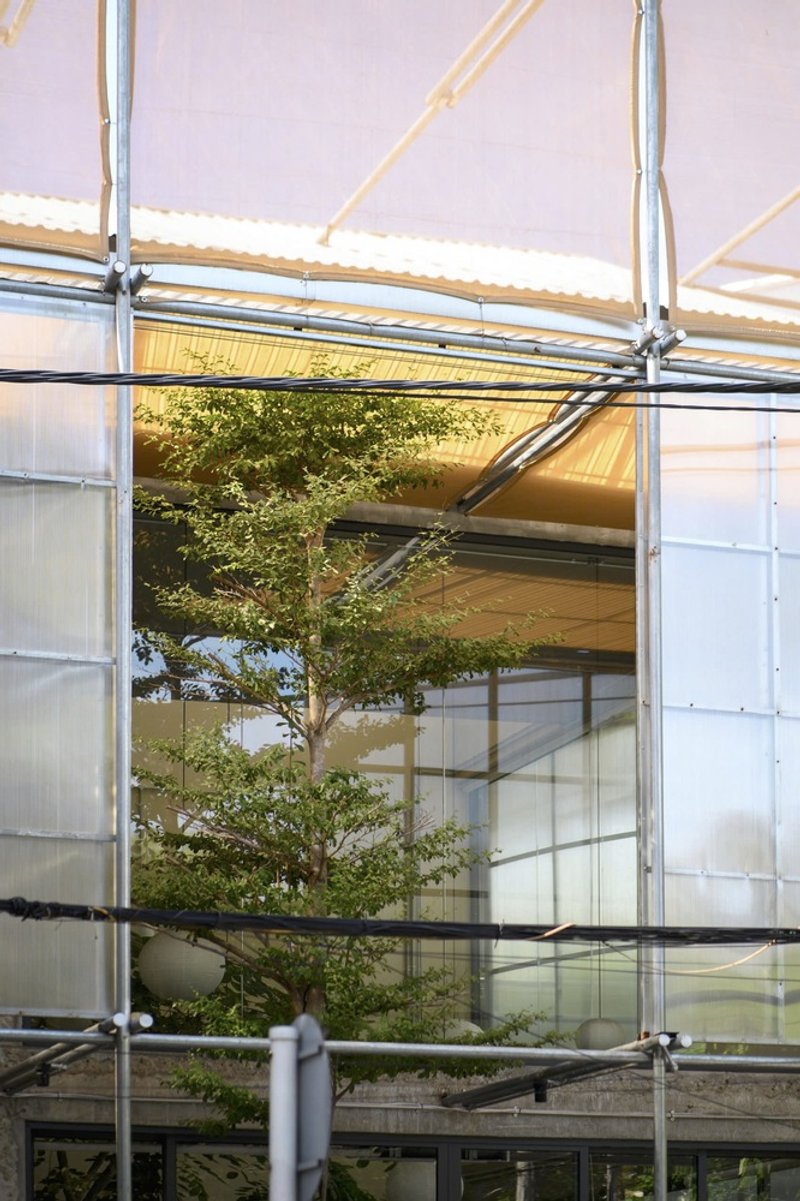
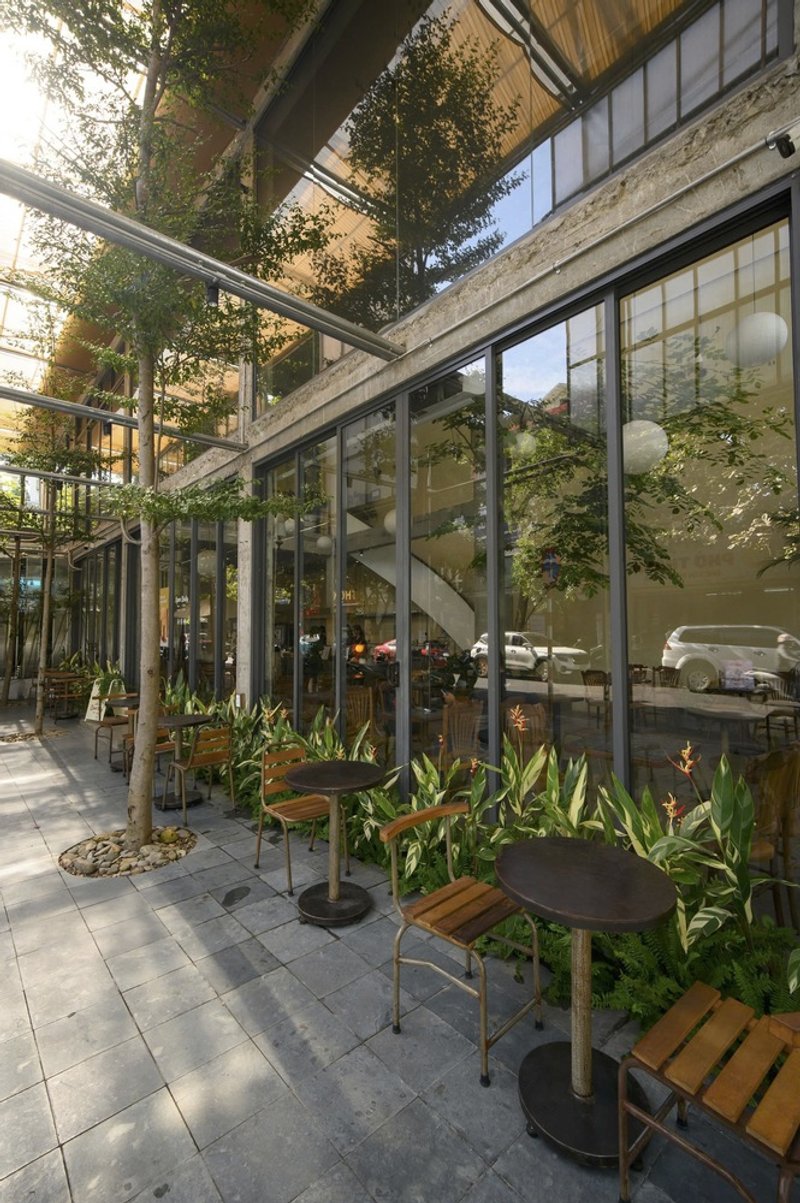
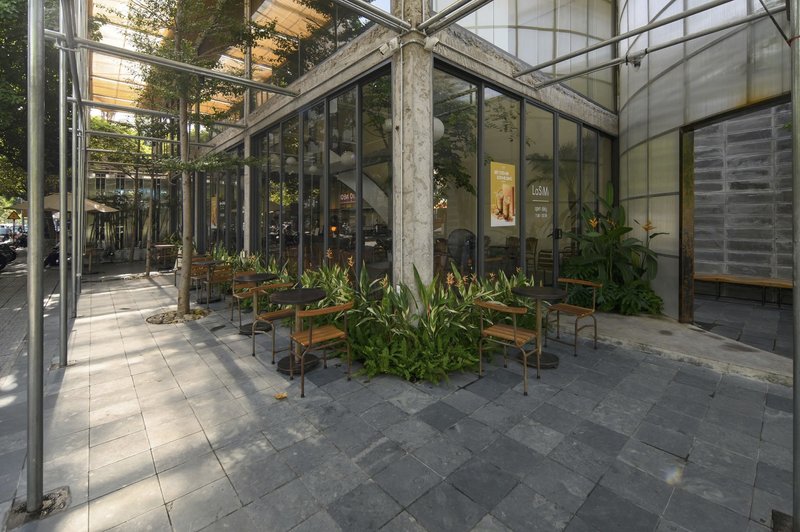
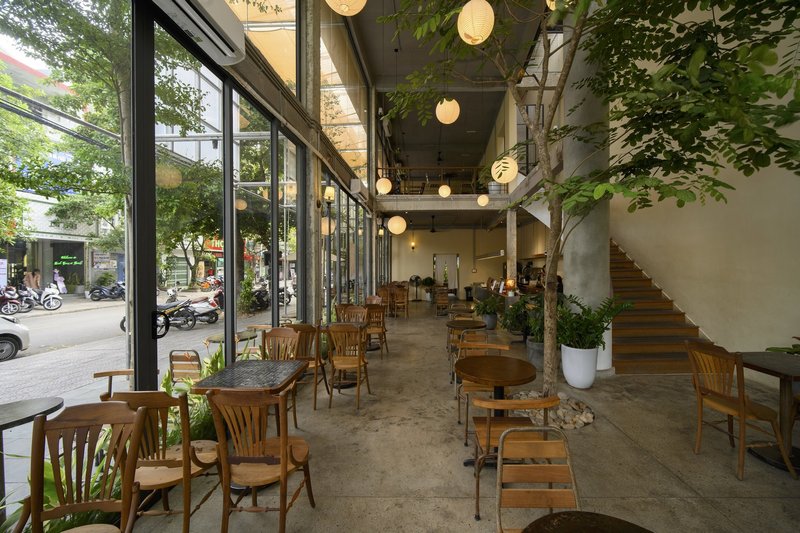
The renovation required significant modifications to the old house. The design team dismantled the original fence and introduced a slender structural frame system planted with tall green trees and topped with external plastic roofing. This addition functions as a protective buffer, reducing direct sun exposure and minimizing rain impact on the extensive glass façade.
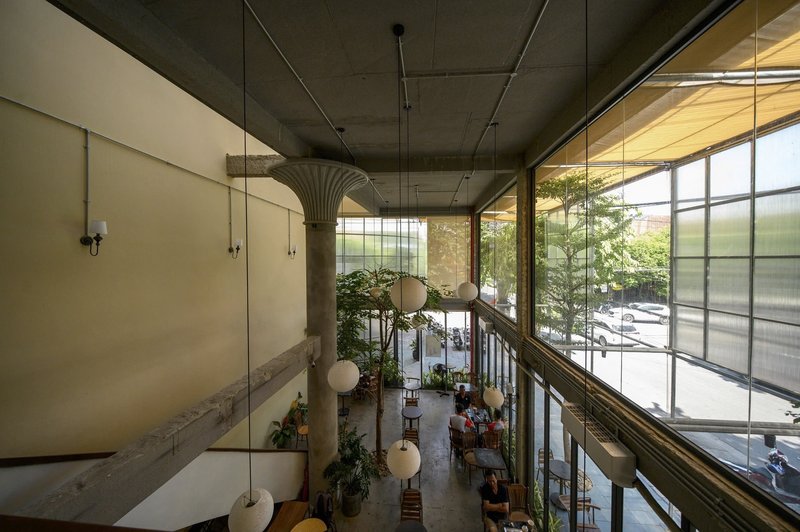
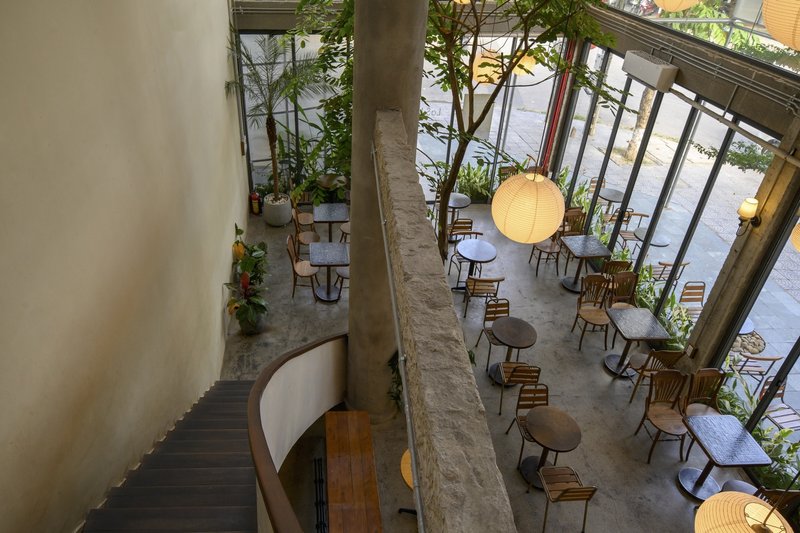
To enhance natural airflow, the second floor was strategically halved, allowing ventilation to flow deep into the first-floor interior. This climate-sensitive gesture reduces heat gain and mitigates the greenhouse effect—a crucial consideration in the hot and humid climate of Hue.
Interior Revitalization Through Curves, Proportions, and Industrial Tones
Inside the café, son.studio introduced several key upgrades that balance comfort, circulation, and visual identity:
Curved Staircase Intervention
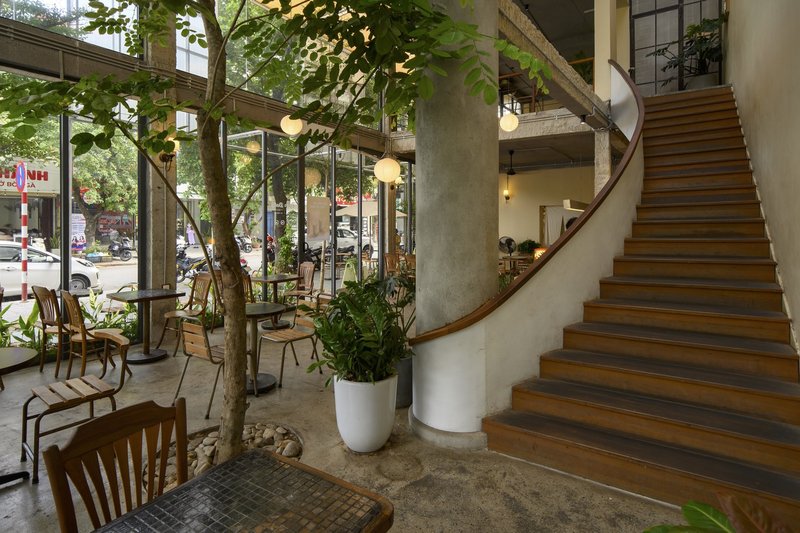
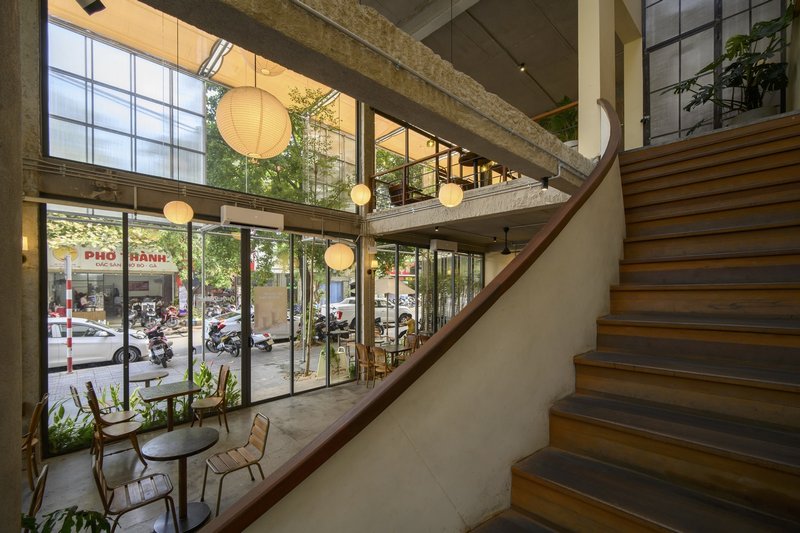
The original staircase was reimagined as a curved sculptural element, wrapping gently around the existing structural pillars. This soft geometry creates a more inviting spatial flow while adding a distinctive architectural feature that anchors the interior.
Extended Bar Counter and Proportion Harmony
The bar counter—central to the café's operations—was elongated to harmonize better with the overall proportions of the house. Its new form contributes to a more cohesive layout and creates a functional, visually grounding presence.
Industrial-Inspired Ceiling and Floor
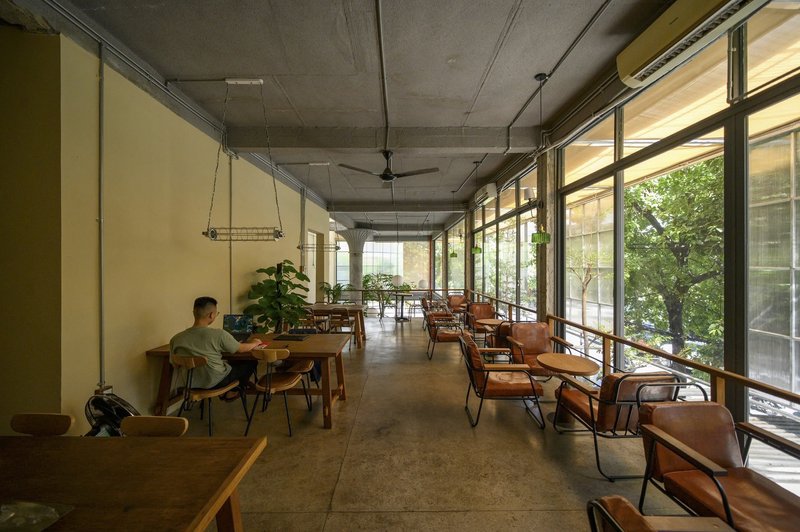
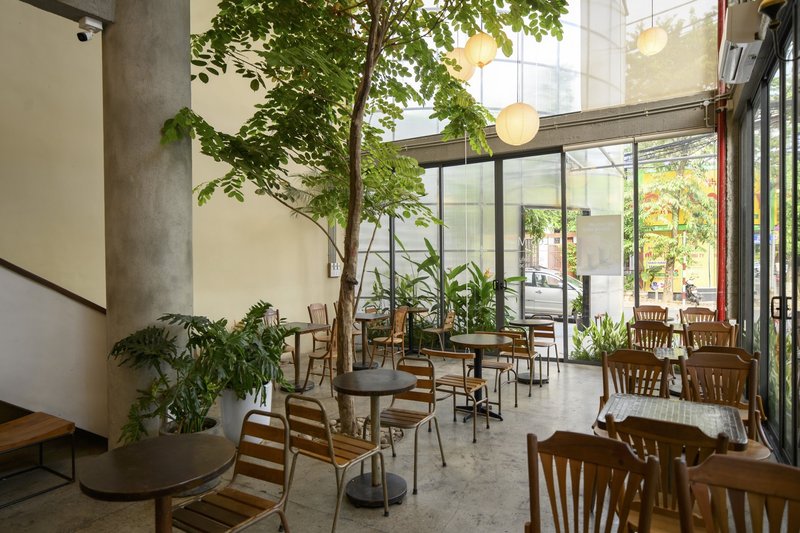
The ceiling and floor surfaces were refreshed with industrial textures, adding a contemporary contrast to the warm lantern-inspired ambiance. The combination creates a balanced aesthetic: raw yet cozy, modern yet handcrafted.
Preservation of Key Architectural Elements
The designers retained the original glass doors and skylight, allowing natural light to remain a defining feature of the space. These preserved elements enhance the café’s openness and pay homage to the building’s original character.
Exterior Envelope as a Protective Shell
One of the project’s most distinctive features is the outer covering system, which wraps the building like a protective shell. Its layered effect not only shields the structure from harsh climate conditions but also gives the café a recognizable identity. The ever-evolving appearance of this façade has even inspired friendly jokes among the team about the project being “never finished,” reflecting its dynamic, organic character.
Sustainable Material Choices: Reclaimed Wood and Urban Responsibility
Sustainability plays a vital role in the café’s design. Much of the interior relies on reclaimed wood salvaged from old urban residential buildings, supporting the studio’s commitment to material reuse and environmental conservation. This recycled timber brings warmth, texture, and authenticity to the interior, strengthening the project’s grounding in local craftsmanship and eco-friendly values.
All photographs are works of Hieu Nguyen Dang