Trees Sliced Through Residence by Matharoo Associates: Living Architecture Rooted in Nature
A sustainable Ahmedabad residence by Matharoo Associates, seamlessly integrating 23 Neem trees with concrete textures, natural ventilation, and biophilic design.


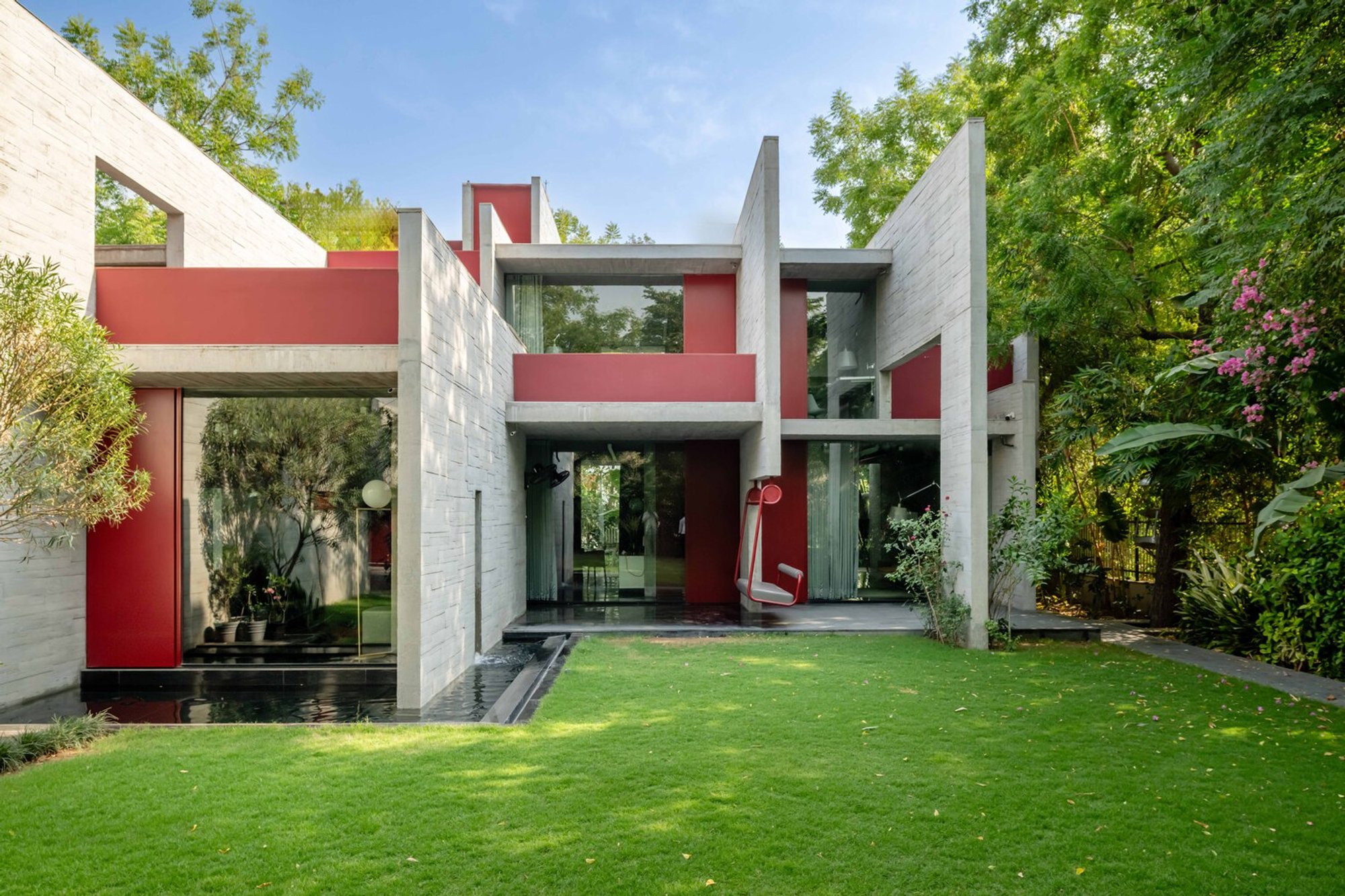
In the arid landscape of Ahmedabad, India, Trees Sliced Through Residence by Matharoo Associates redefines the relationship between architecture and nature. Designed on a 1,000-square-meter site densely populated with 23 mature Neem trees, this 7,190-square-foot home stands as a profound statement of ecological respect and sustainable urban living.
Context: Building Amidst Urban Desertification
Ahmedabad, located in Gujarat’s hot semi-arid region, faces an alarming rate of deforestation and desertification. Temperatures soar up to 48°C, and droughts are frequent outside of the monsoon season. Between 2015 and 2017, the city added over 900,000 vehicles and lost 20 square kilometers of green cover. With only 11 trees per 100 people, Ahmedabad’s urban landscape is rapidly depleting.
Against this backdrop, the clients — a multi-generational family — approached Matharoo Associates with a radical brief: preserve every existing tree on site. This rare and courageous decision shaped every aspect of the home’s design and construction.
Design Philosophy: Architecture That Embraces Trees
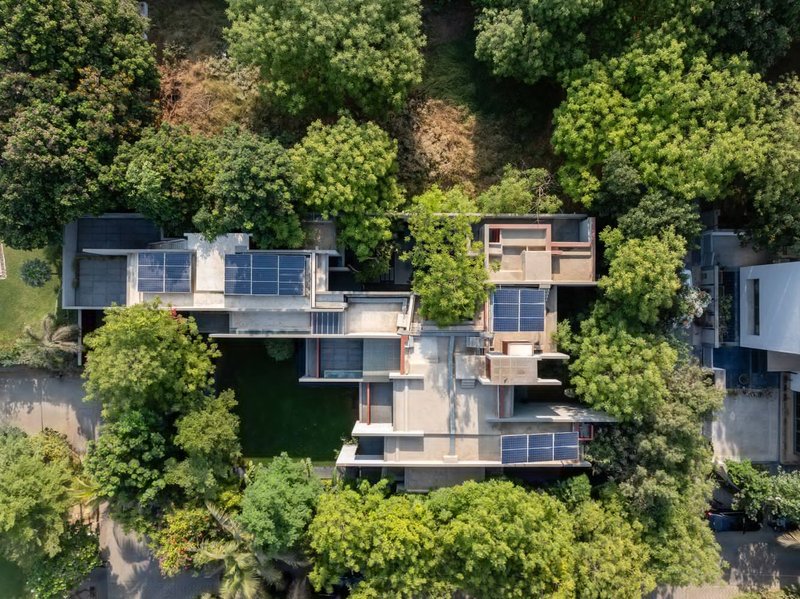
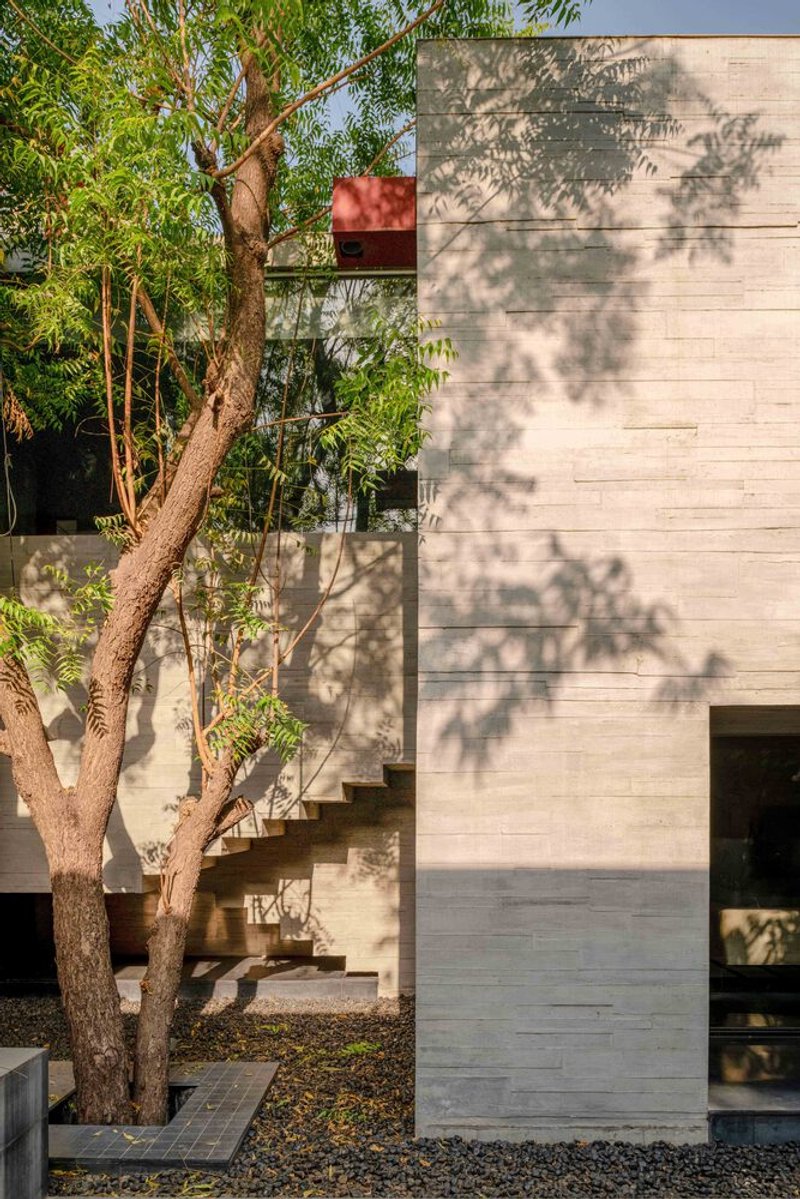
The architects began by protecting each Neem tree with brickwork barriers during construction, ensuring stability and health throughout the process. A 10-foot exclusion zone was drawn around each tree, defining the limits of construction and shaping the organic geometry of the house.
A pile foundation system was adopted to minimize soil displacement and protect the root networks, allowing the trees to continue thriving beneath and around the home.
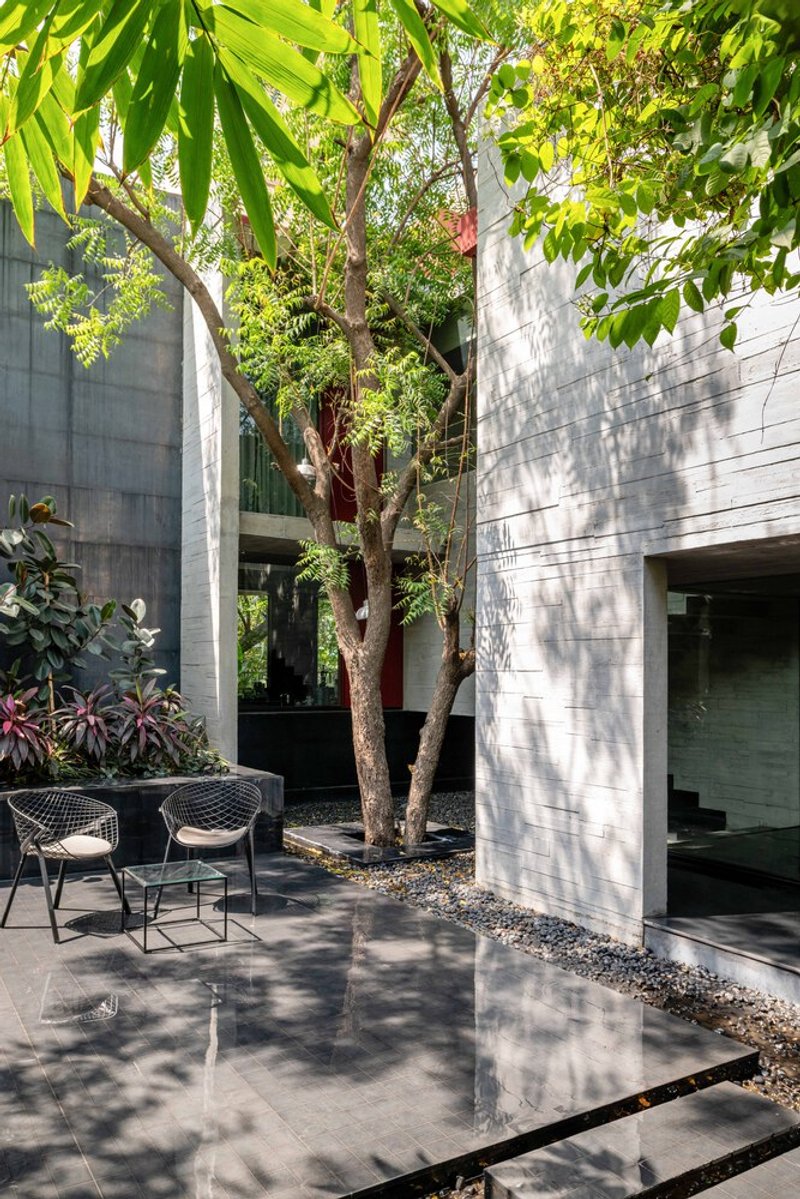
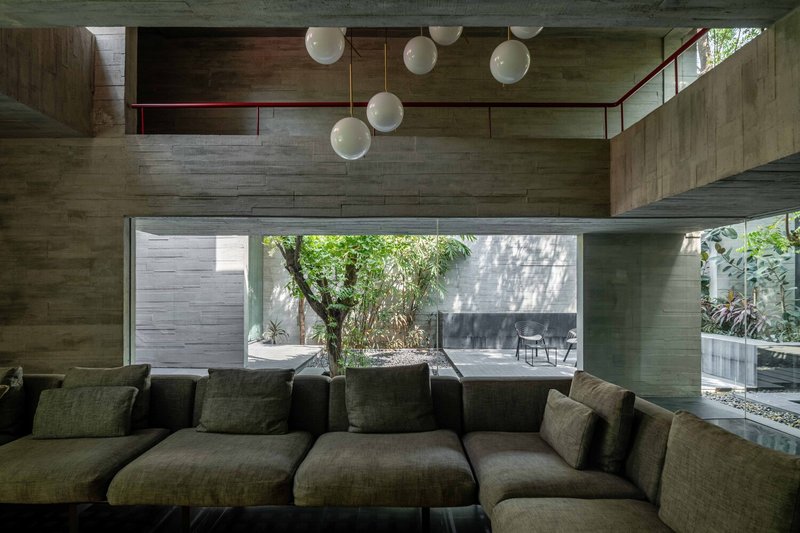
The result is a residence that doesn’t simply accommodate trees — it grows around them. The architecture literally weaves through the natural canopy, allowing branches and trunks to pierce courtyards, patios, and internal spaces.
Spatial Composition: Fluid Boundaries Between Indoors and Outdoors
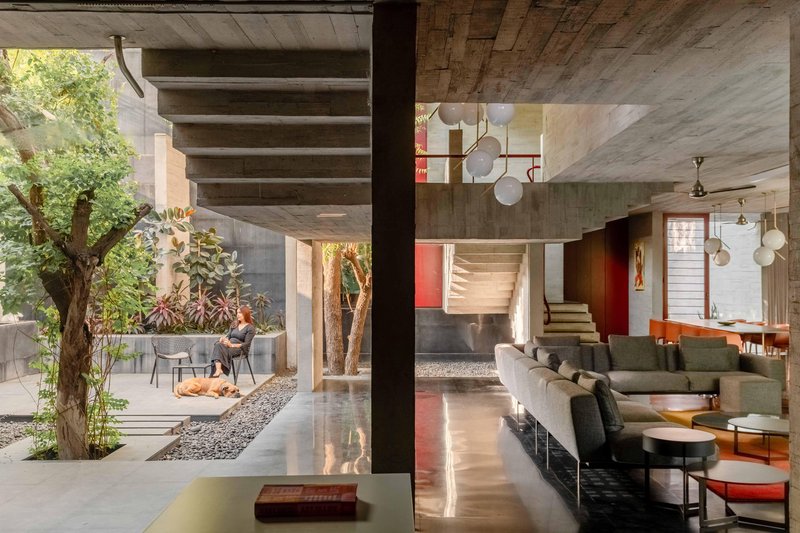
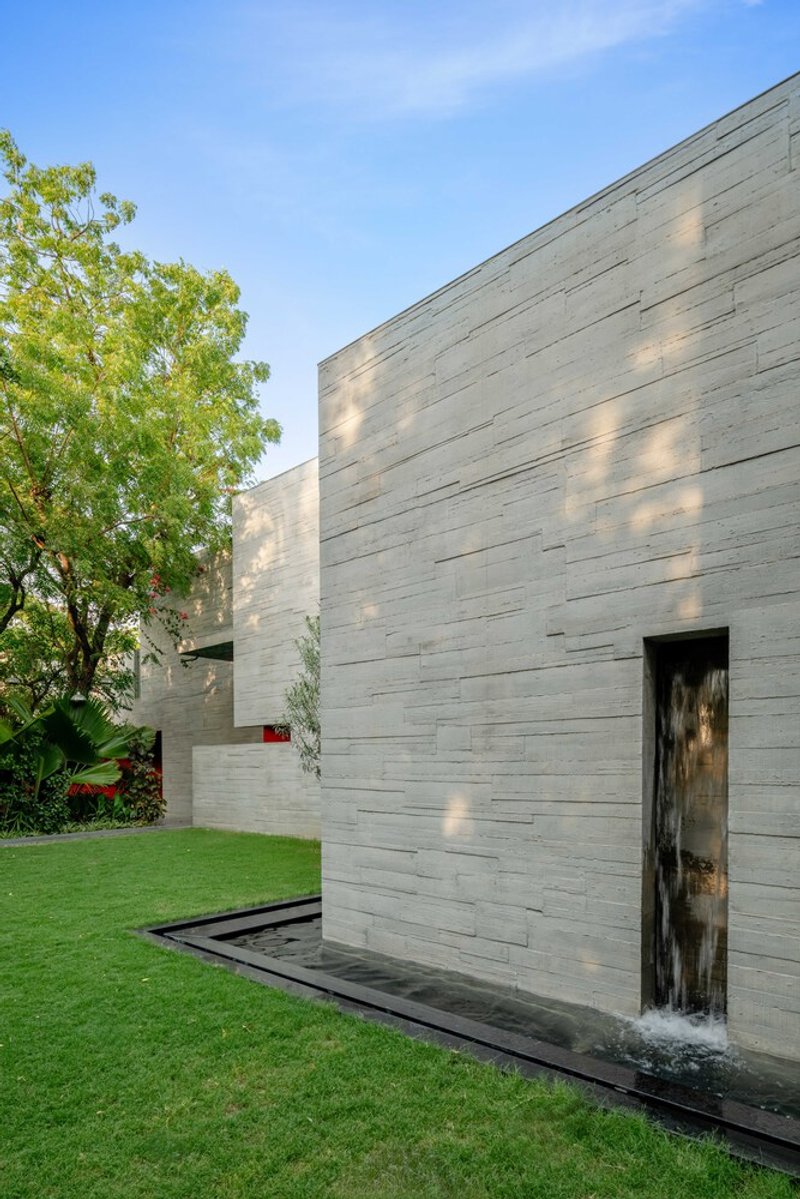
Following Vastu Shastra principles, the layout organizes spaces according to cardinal directions while maintaining openness and cross-ventilation. The house serves three generations — young parents, aging grandparents, and their pets — with a plan that encourages both privacy and interaction.
Rooms are oriented along the north-south axis, capturing extended views of the site and the neighboring community garden. The home’s diagonal spatial arrangement mimics the natural rhythm of walking beneath trees, creating a seamless transition between indoor and outdoor zones.
Materiality and Craft: Raw, Textured, and Tactile
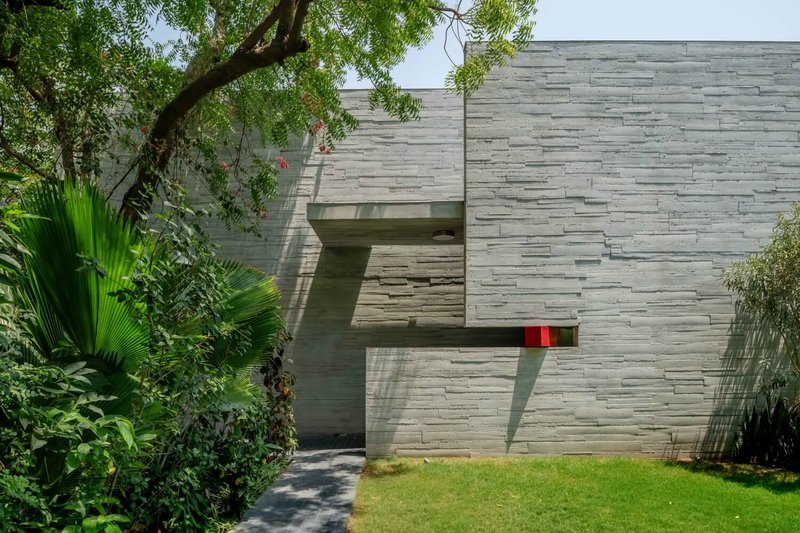
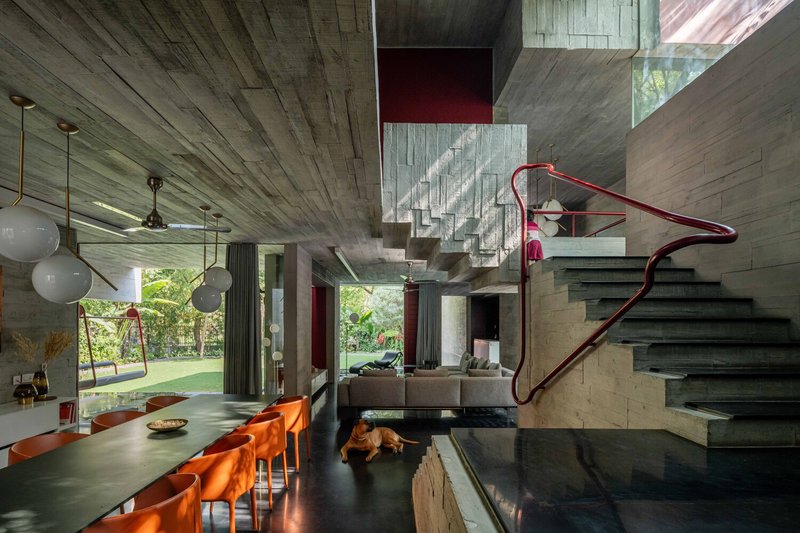
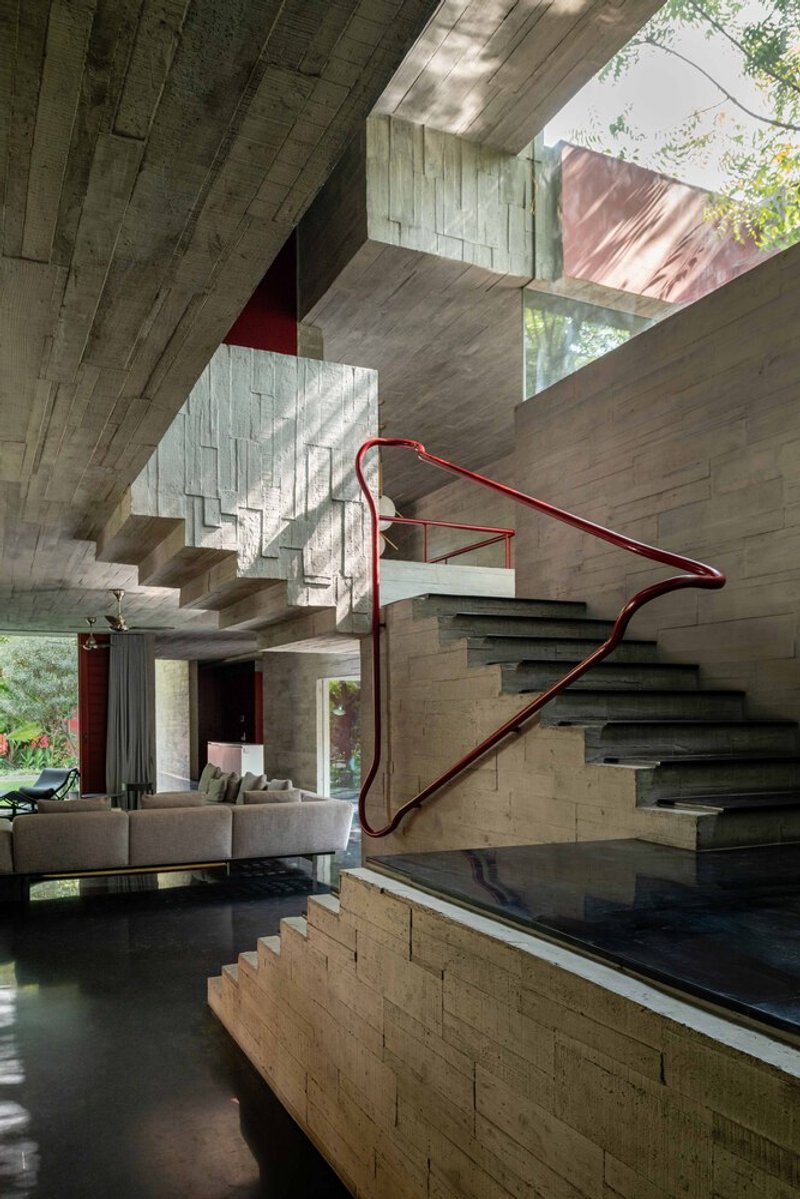
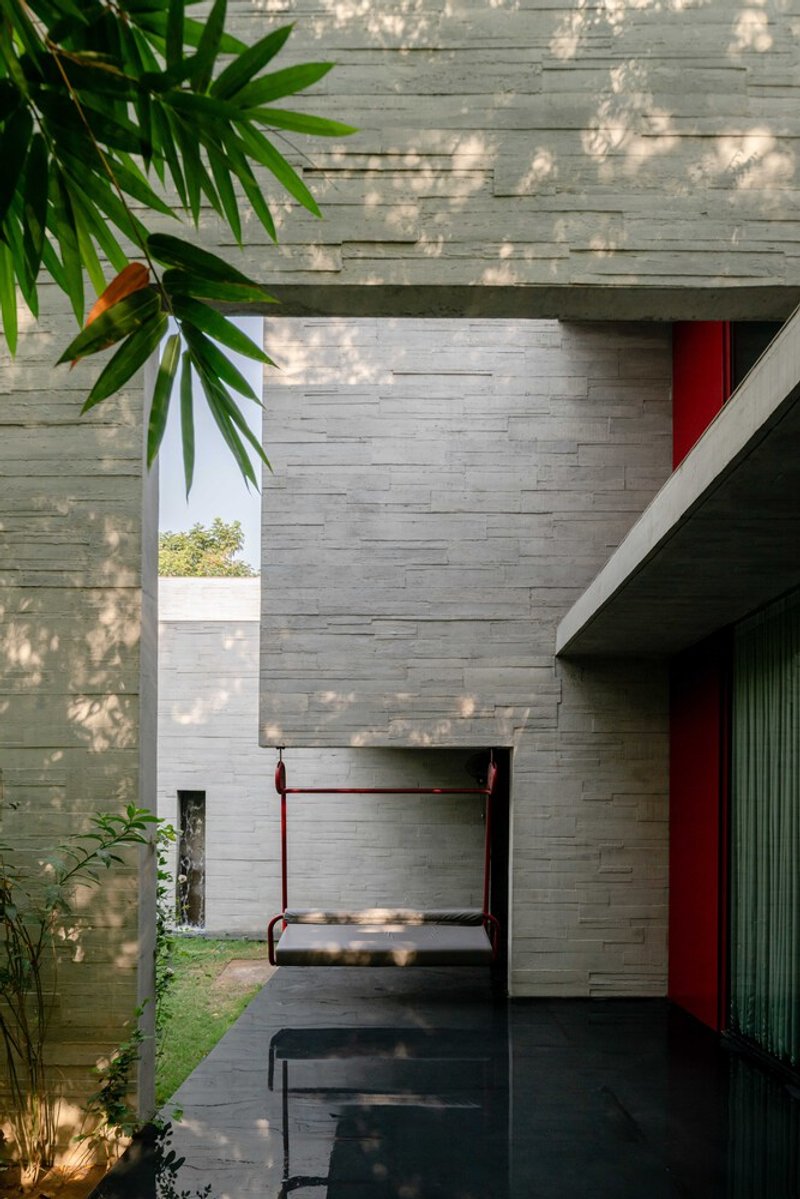
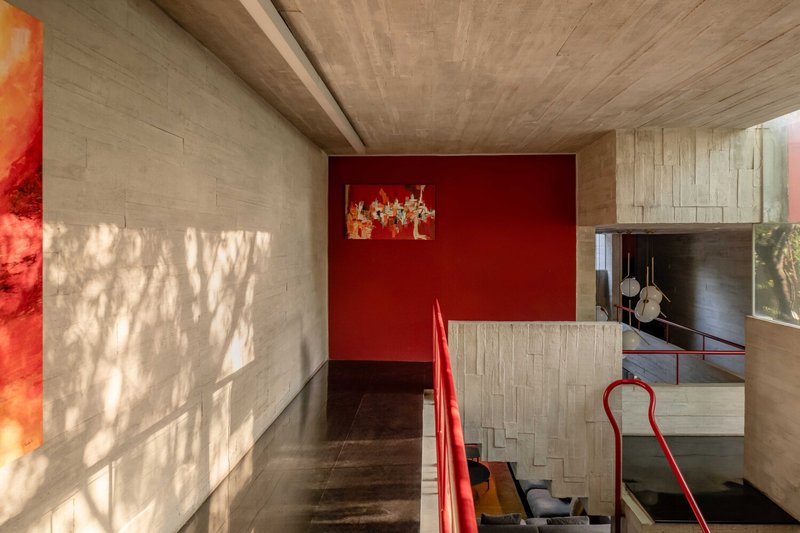
The structure is cast in exposed concrete using waste wood shuttering, a distinctive technique developed and patented by Matharoo Associates. The process leaves behind rich horizontal striations that echo the texture of tree bark and the rhythm of light filtering through foliage.
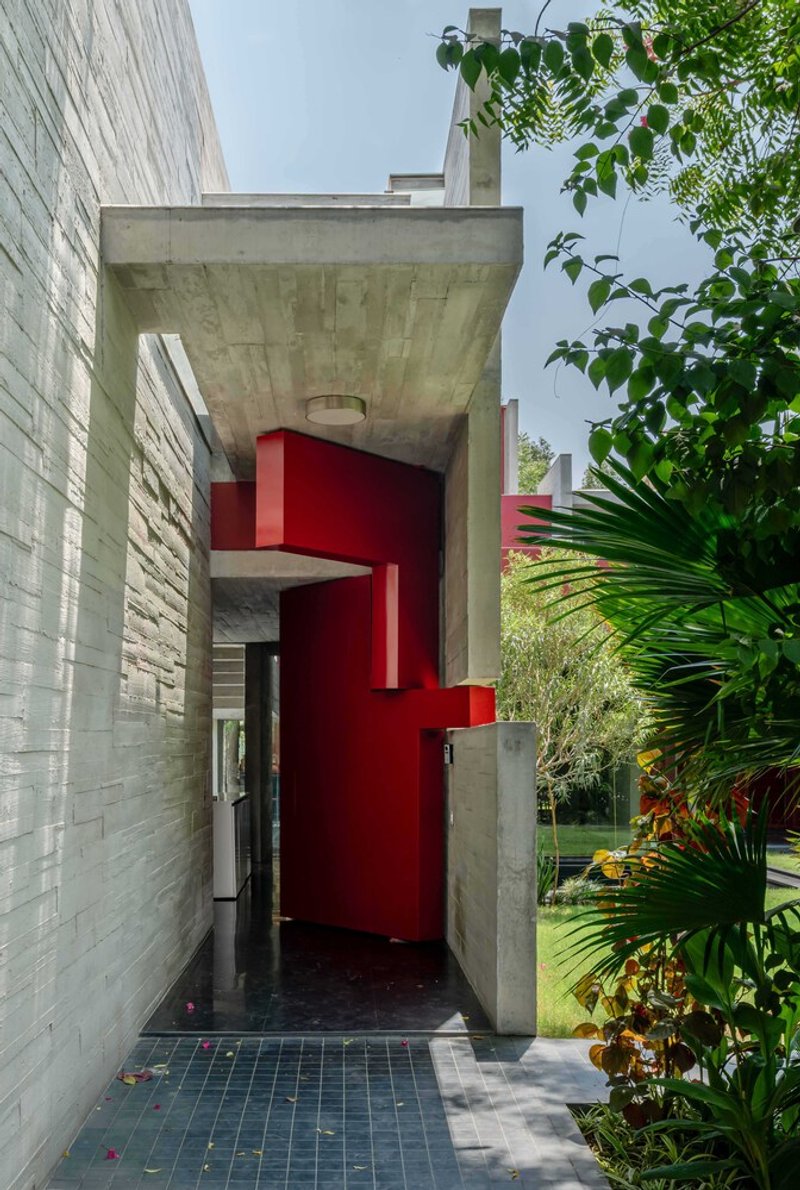
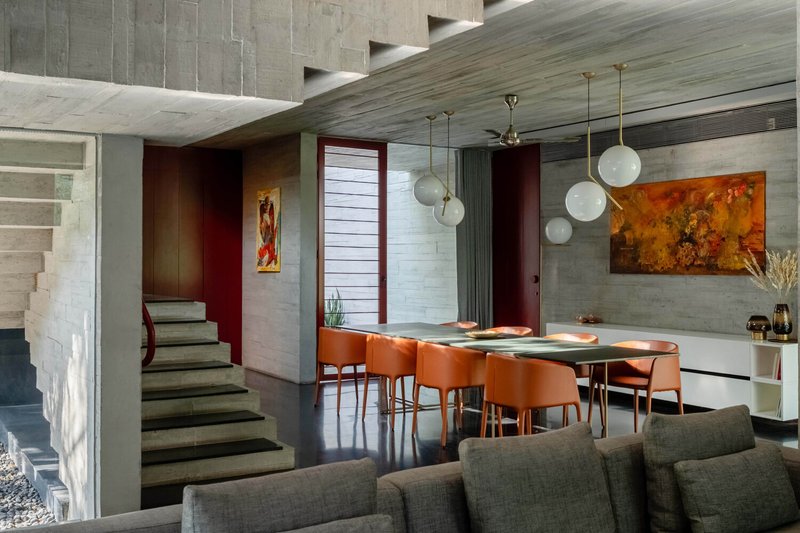
The interior palette continues this tactile narrative — cool Kudapah sandstone floors, terracotta-accented doors, and custom wood joinery bring warmth and sensory balance to the robust concrete shell. The main door, engineered with counter-rotating panels, becomes a kinetic sculpture that transforms functionality into delight.
Living Architecture: Nature as the Core Structure
The trees dictate the design, not vice versa. They anchor the home both physically and spiritually, forming shaded courtyards, visual screens, and natural cooling systems. Over time, these trees will continue to evolve with the family — growing, flowering, and casting ever-changing patterns of light and shadow across the living spaces.
In a city where vegetation is often sacrificed for development, Trees Sliced Through Residence is an architectural manifesto for coexistence — proving that luxury, comfort, and sustainability can flourish together when design begins with respect for nature.
Project Details
Architects: Matharoo Associates Location: Ahmedabad, India Area: 7,190 ft² (668 m²) Year: 2022 Photography: Vinay Panjwani Client: Private Residence Typology: Residential / Sustainable / Biophilic Design
All photographs are works of Vinay Panjwani