University Children’s Hospital Zurich by Herzog & de Meuron – A Healing Campus Blending Architecture, Landscape & Innovation
The hospital combines healing-focused design, nature integration, flexible care spaces, and a research hub to create a sustainable, child-centered medical campus.


H1. Introduction to the New University Children’s Hospital Zurich
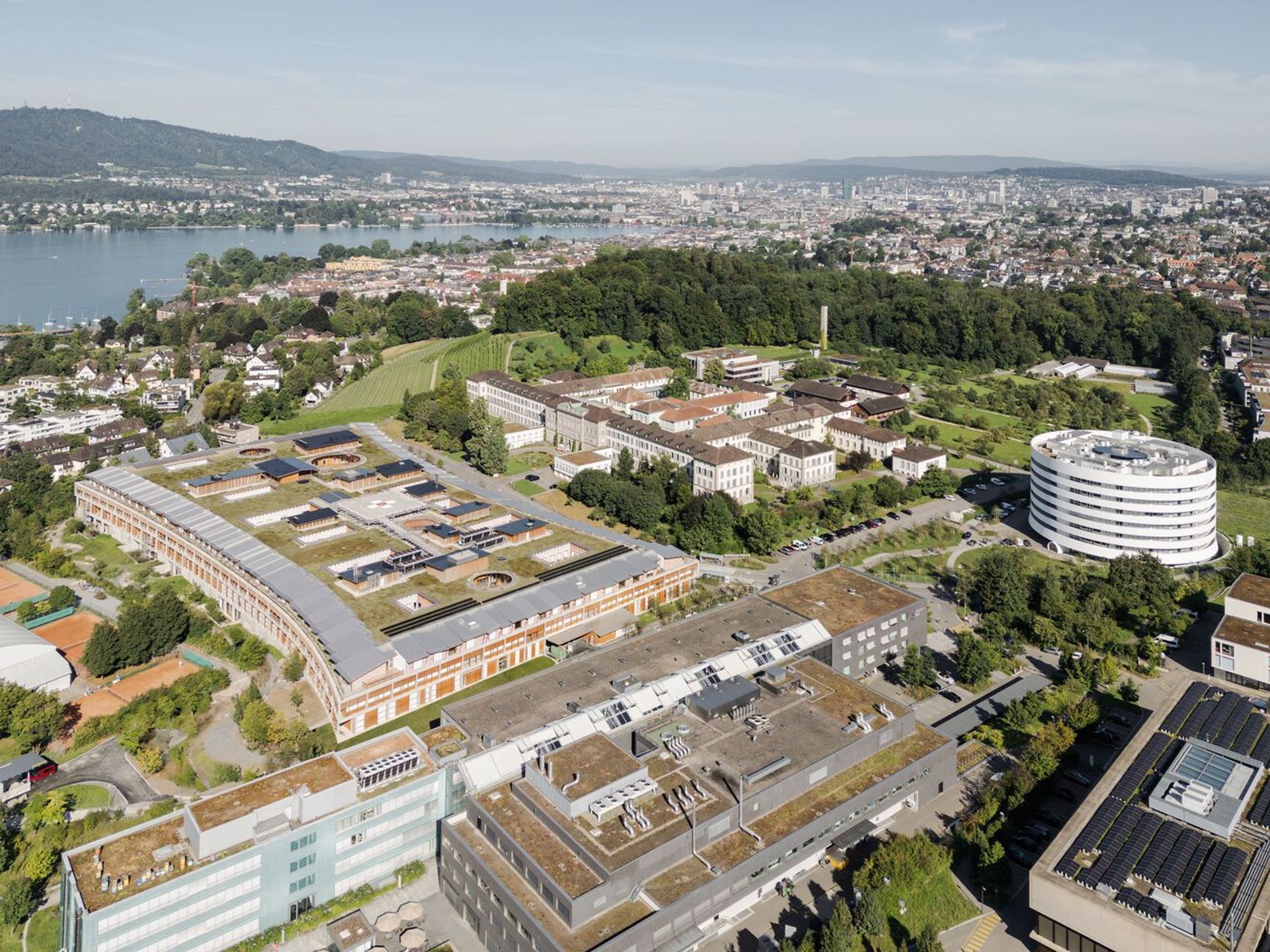
The new University Children’s Hospital Zurich, designed by Herzog & de Meuron, redefines the architectural language of pediatric healthcare in Switzerland. Located in the serene Zürich-Lengg district at the foot of the Burghölzli hillside, the hospital stands as the nation’s largest medical facility for children and adolescents. This ambitious project integrates acute-care facilities, research environments, and teaching spaces into a cohesive, healing-centered campus rooted in nature, flexibility, and well-being.
H2. Site Context and Architectural Vision
Set within a landscape historically shaped by orchards and adjacent to hospital buildings from multiple eras, the new complex demonstrates a sensitive response to its surroundings. The architecture frames a dialogue between heritage and innovation, with the acute-care hospital positioned to the south and the research and teaching facility forming a complementary northern anchor.
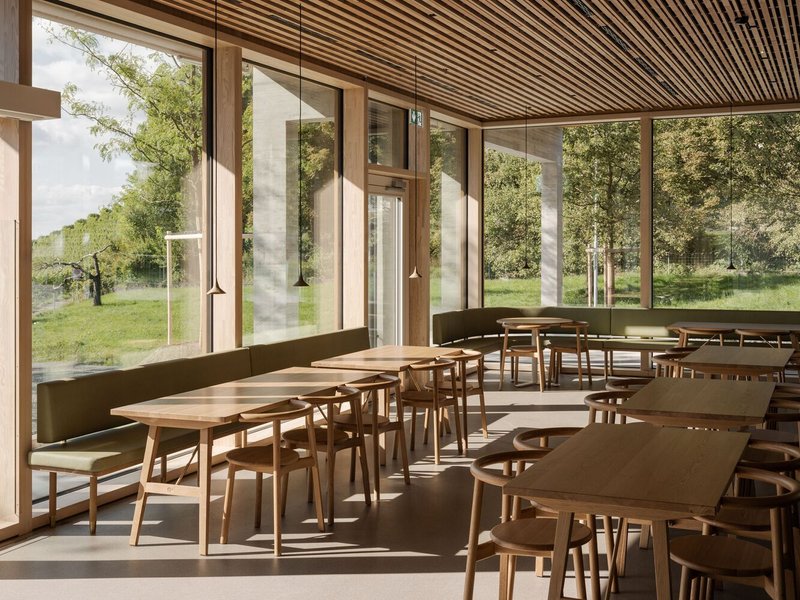
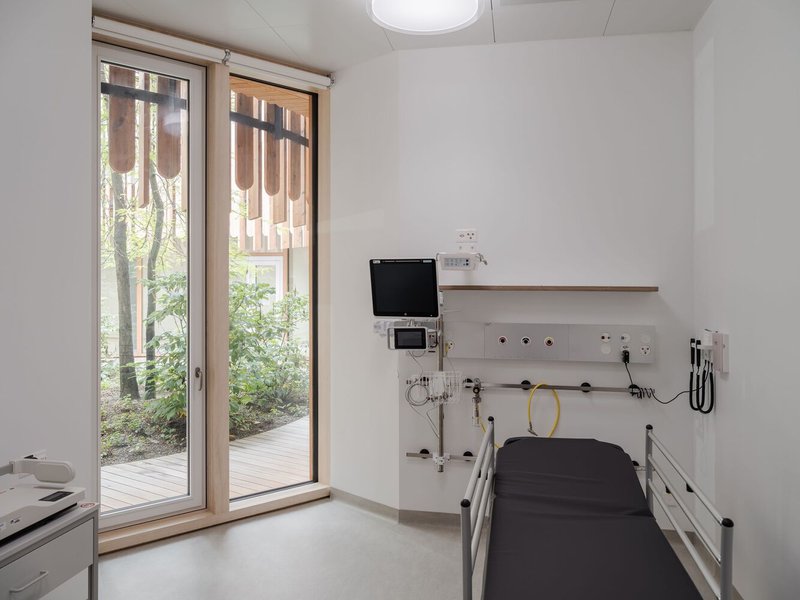
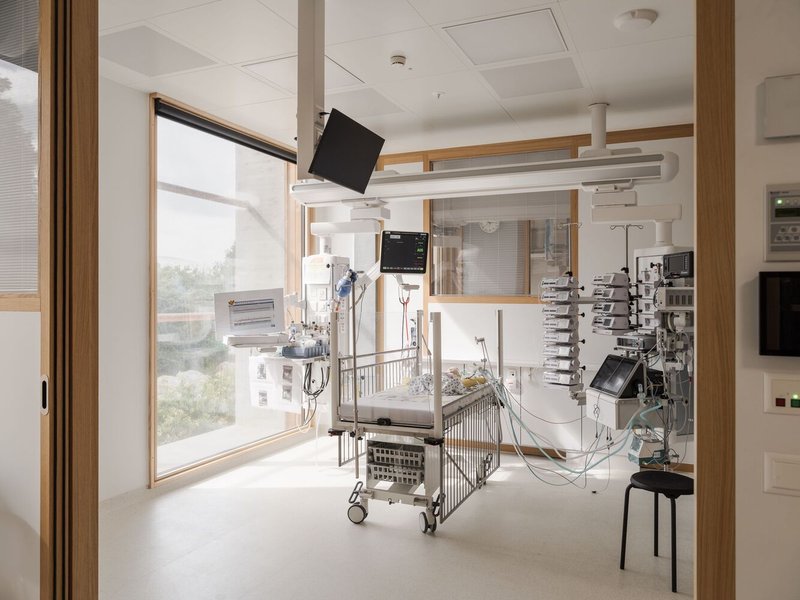
The design prioritizes human-centered healthcare, using clarity, daylight, and greenery as architectural tools to reduce stress, enhance comfort, and support emotional recovery for young patients and their families.
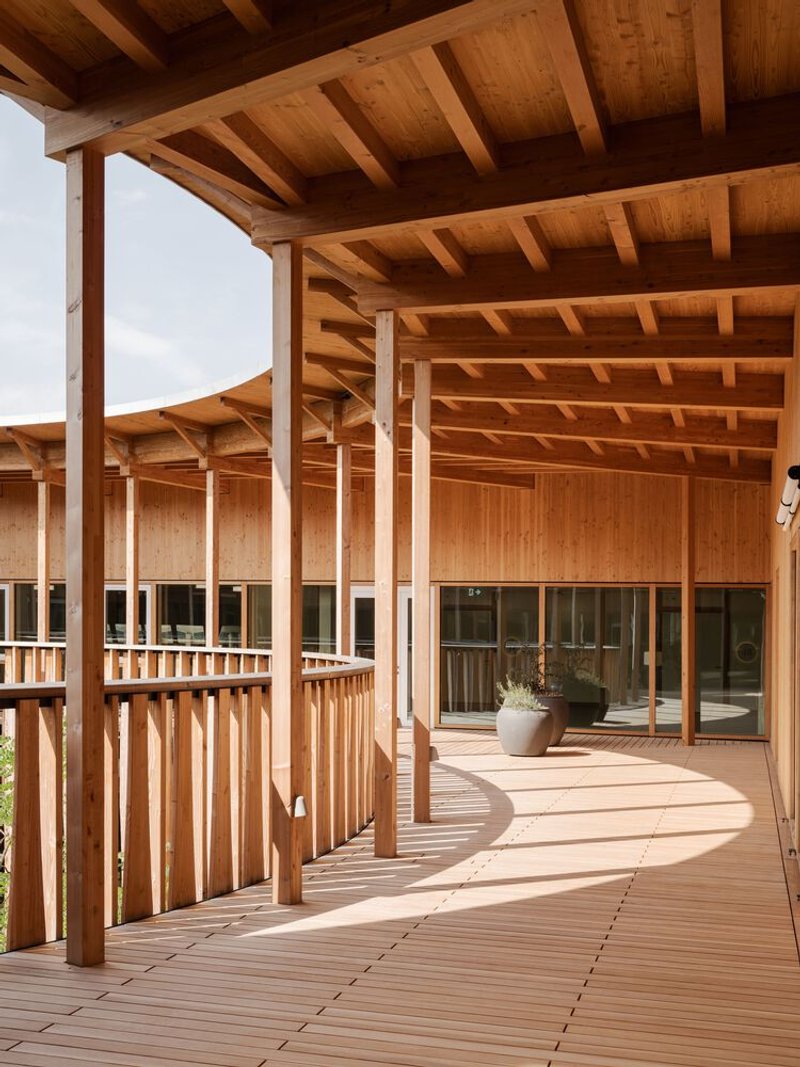
H2. Acute-Care Hospital: A Healing Town Within a Building
H3. A Low-Rise Structure Embedded in Nature
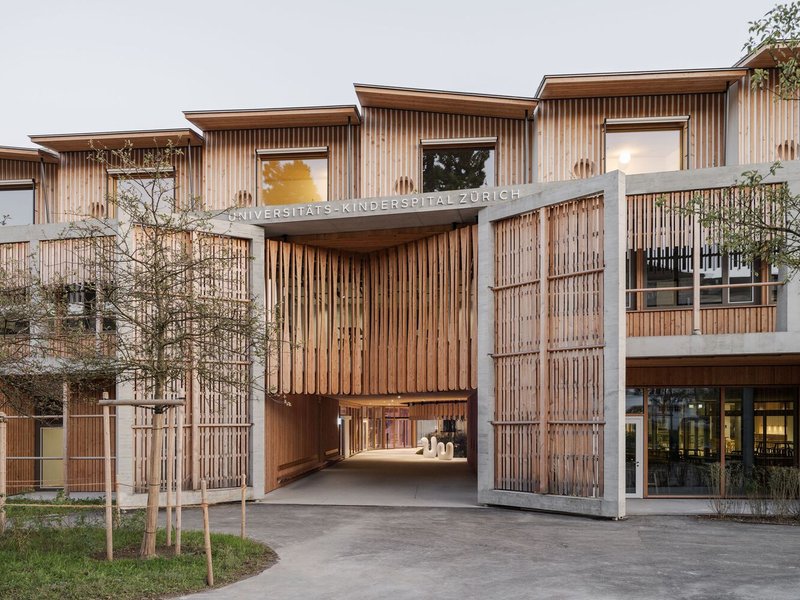
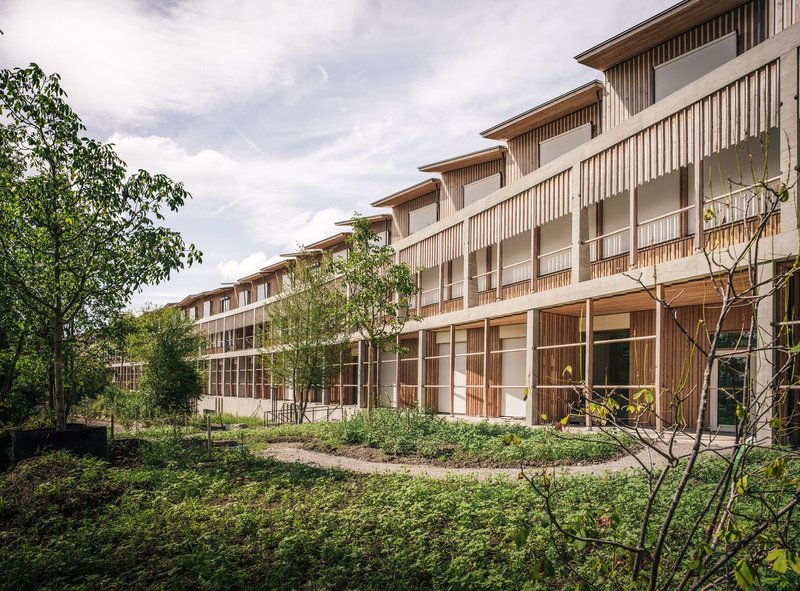
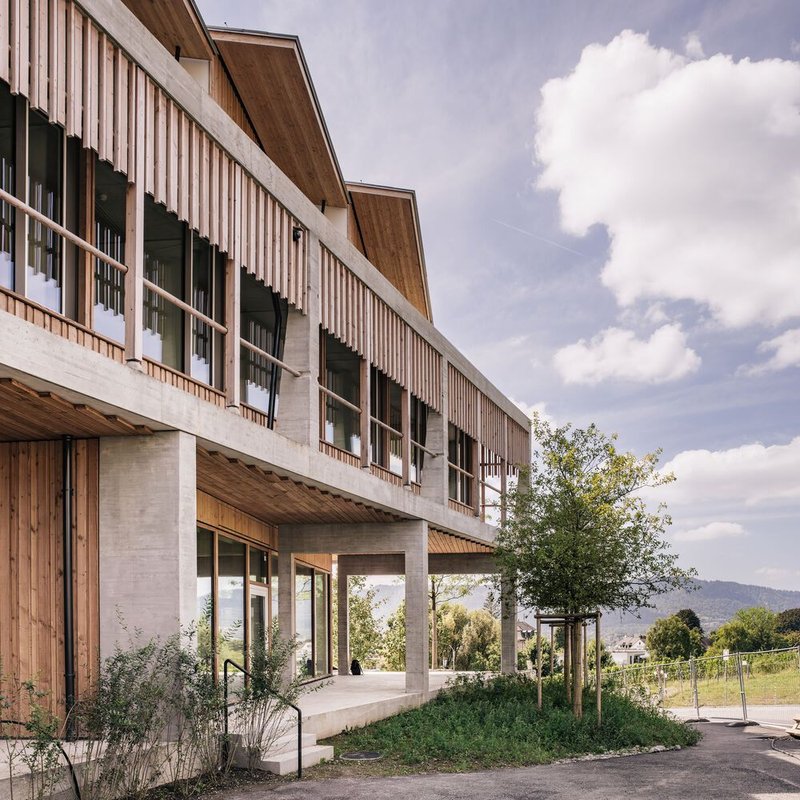
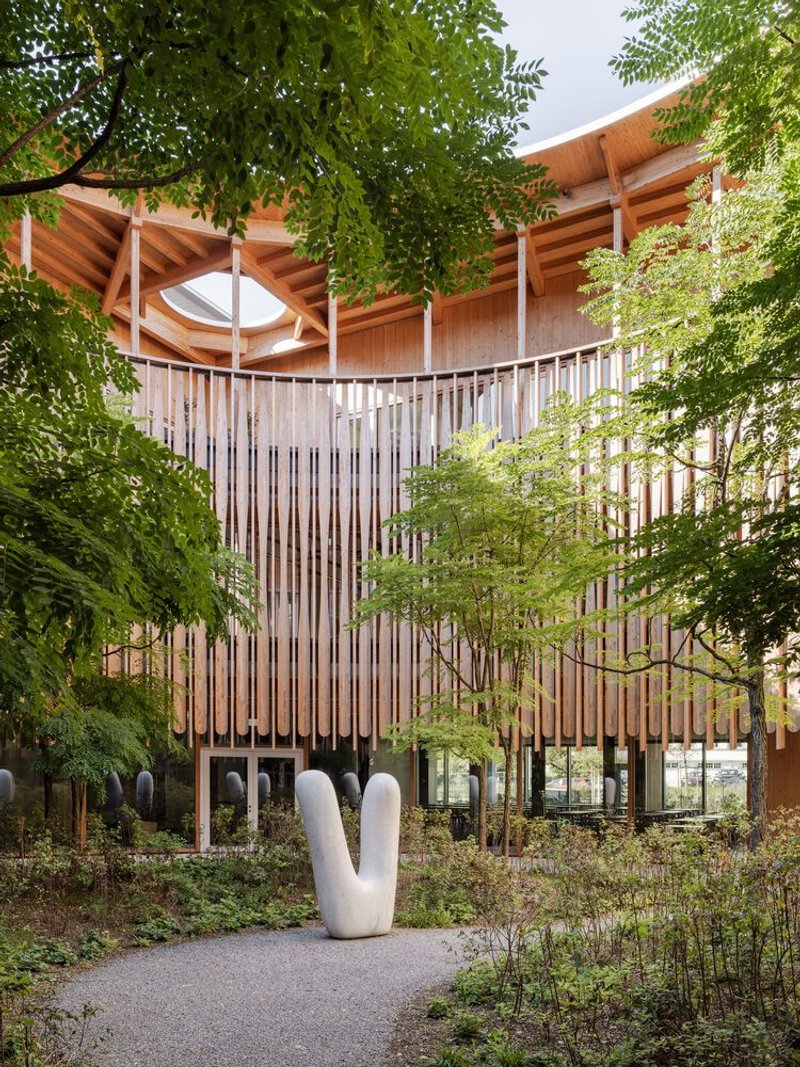
The acute-care hospital unfolds as a three-story concrete frame softened with intricate timber infills. Its concave façade forms a welcoming entrance court, aligned with the historic gate of the nearby University Psychiatric Clinic. This gesture establishes a shared public threshold that merges contemporary pediatric care with the area’s architectural heritage.
H3. A “Town-Like” Interior for Orientation and Comfort
Herzog & de Meuron conceptualize the building’s interior as a miniature town, where:
- Medical departments function as neighborhoods
- Courtyards become public squares
- Circulation paths act as main streets
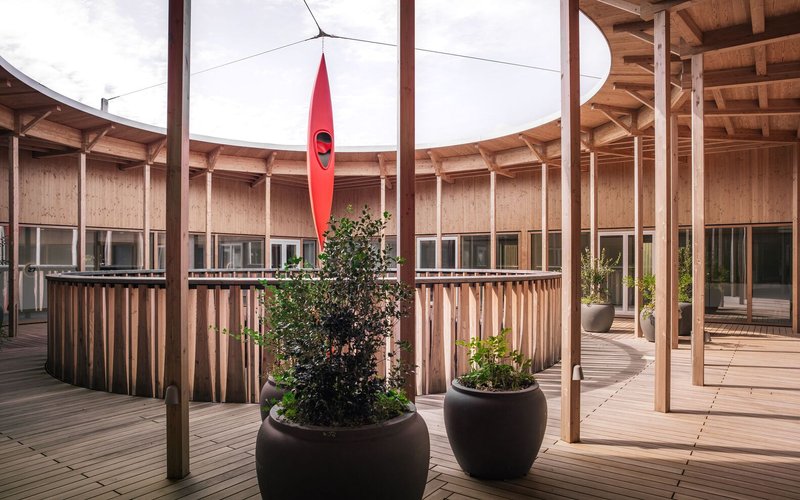
Each floor is organized around a continuous central spine illuminated by multiple internal gardens that bring daylight deep into the building.
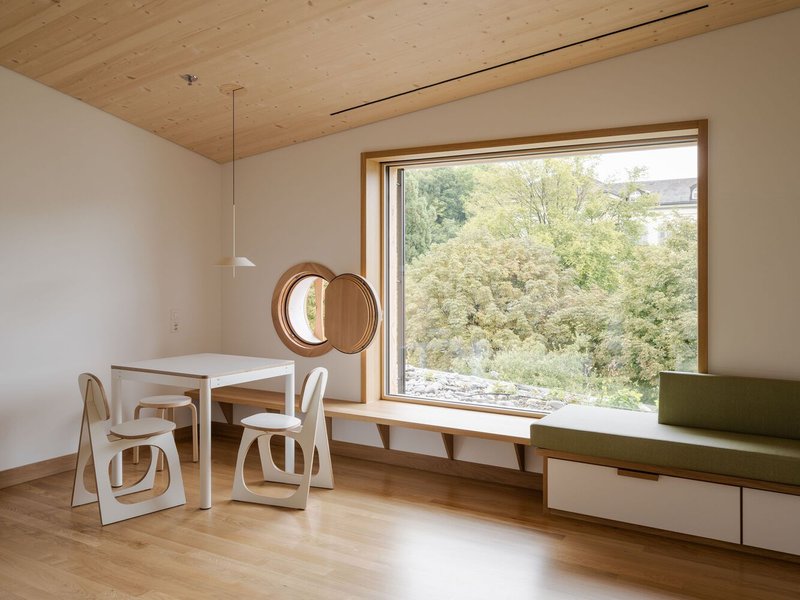
H3. Rooftop Patient Rooms as Individual Cottages
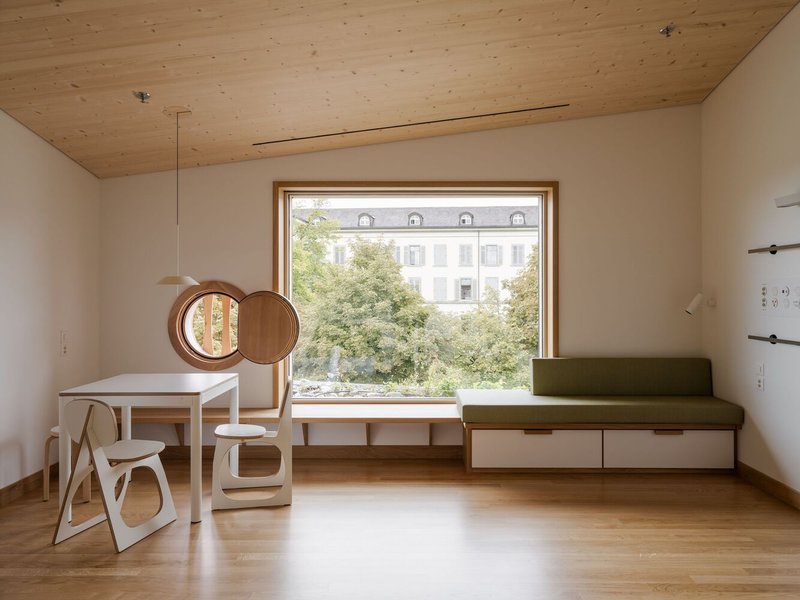
The hospital’s top floor features 114 wooden “cottages”, each designed with:
- Private roof geometry
- Expansive views toward green outdoor spaces
- Comfortable accommodation for parents staying overnight
This domestic-scale architectural language emphasizes personalization, dignity, and emotional well-being—hallmarks of contemporary pediatric design.
H3. Flexible, Future-Proof Structure
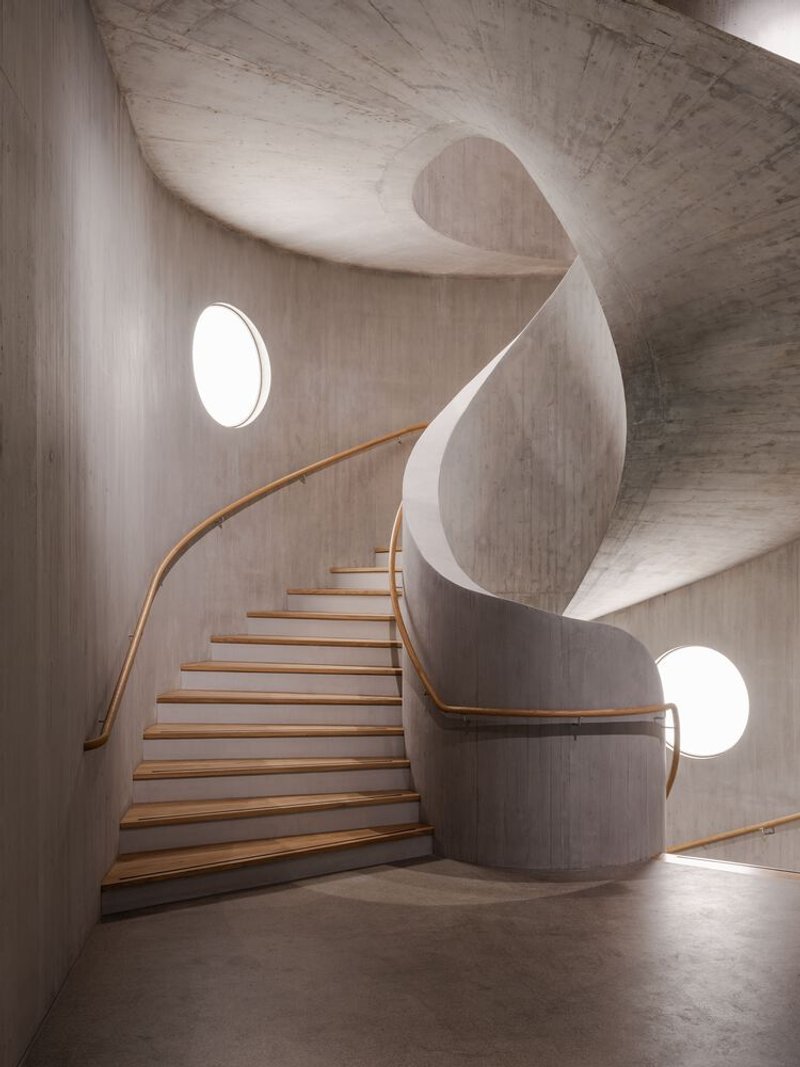
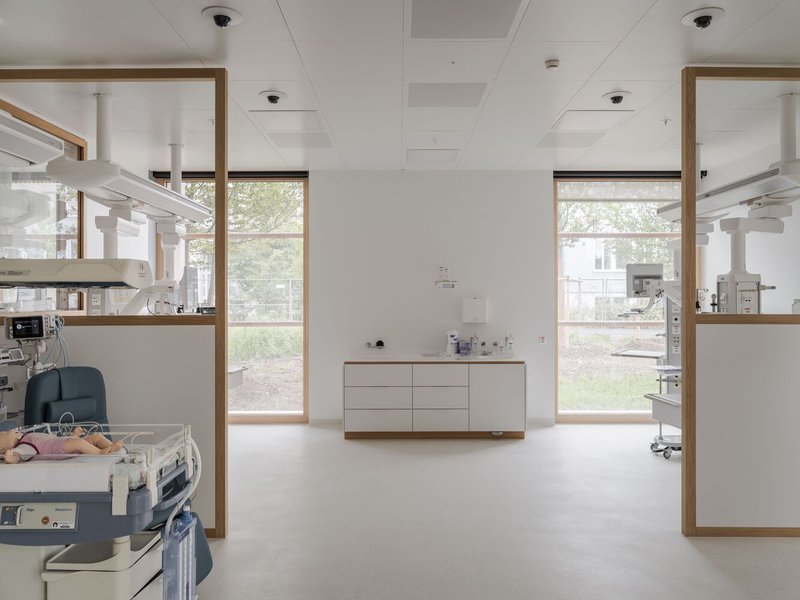
A three-dimensional concrete façade supports highly adaptable internal departments. Lightweight construction materials—paired with modular design principles—ensure that spaces can evolve with medical advancements. The building’s layered depth, composed of wood, glass, fabric, or vegetation, responds to orientation, privacy, and programmatic needs.
H2. Research and Teaching Facility: A Cylindrical Beacon of Knowledge
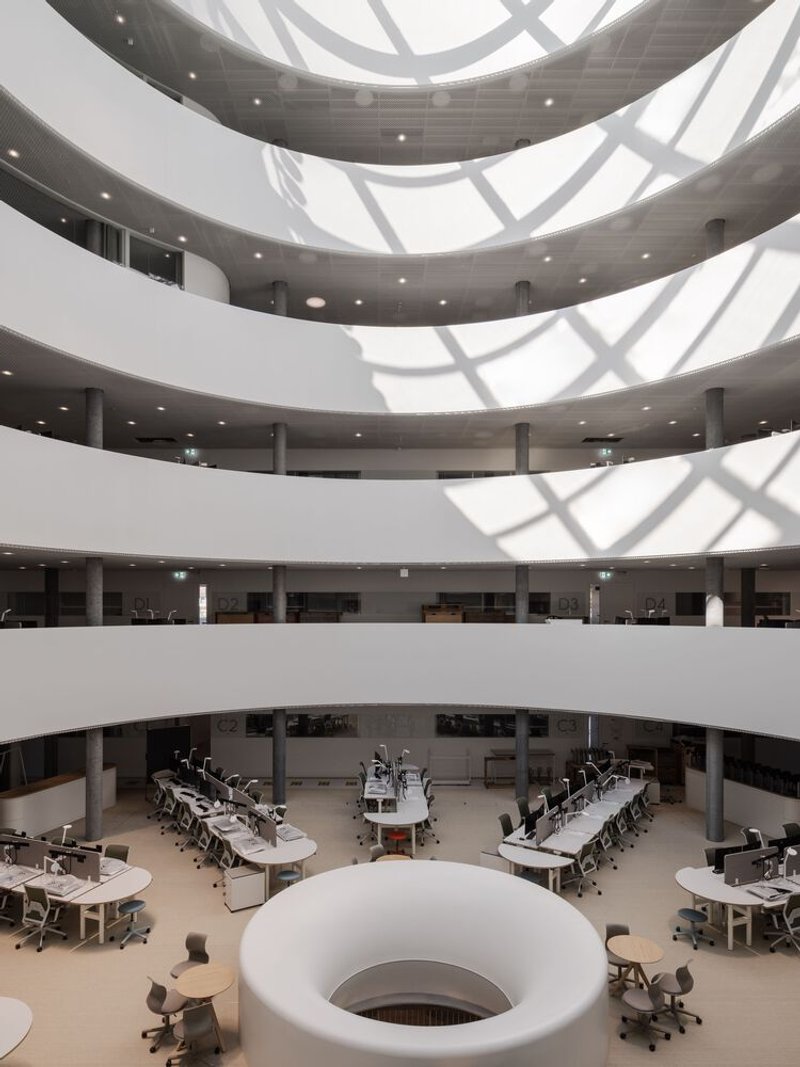
H3. A Sculptural White Cylinder Organized Around an Atrium
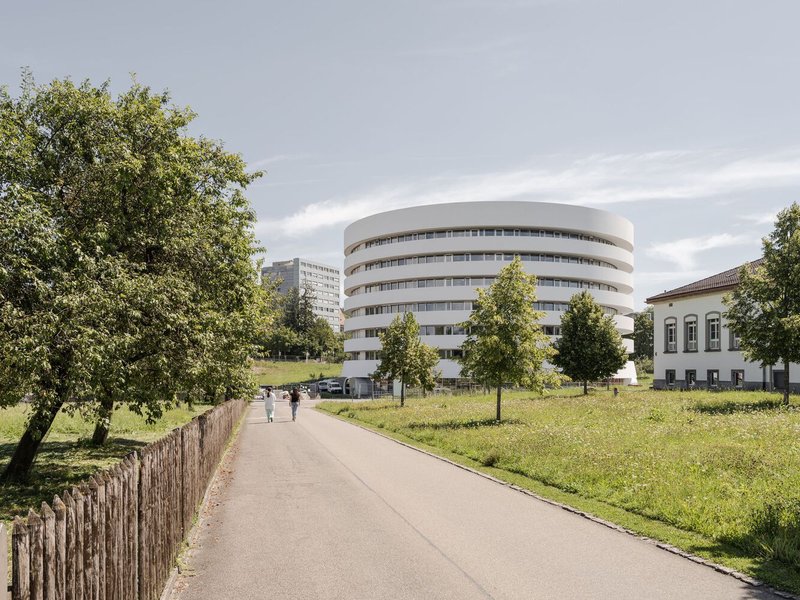
The research and teaching facility takes the form of a white cylindrical tower, its architecture defined by:
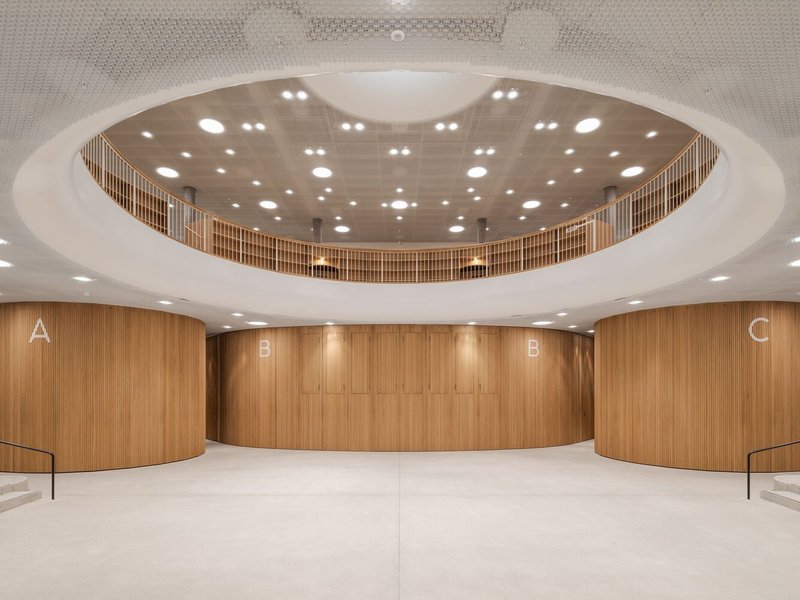
- A five-story central atrium encouraging collaboration
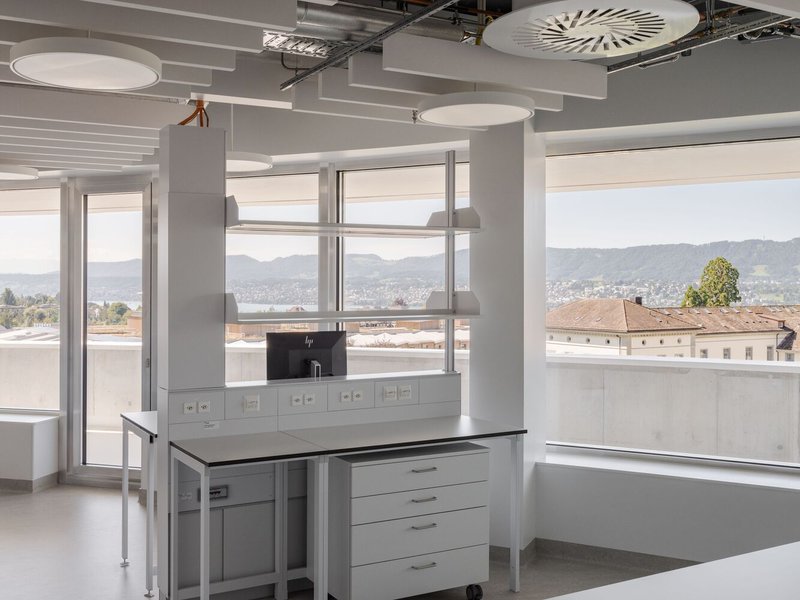
- Open research floors with panoramic landscape views
- Logical circulation that supports interdisciplinary interaction
This spatial strategy anchors the building as a hub for cutting-edge pediatric research.
H3. A Sunlit Agora Embedded in the Landscape
At the base of the building, an agora-like teaching environment steps into the natural slope. Three lecture halls, surrounded by seminar rooms and student workspaces, use sliding partitions to transform into a unified venue accommodating 670 people. This flexibility supports educational events, research presentations, and community engagement.
H3. Environmental Integration and Architectural Elegance
The building’s cantilevered balconies, tall white railings, and minimalist material palette create a sculptural yet grounded presence. The structure stands amid newly planted orchards, echoing the landscape character of Zürich-Lengg and reinforcing the theme of nature as a partner in healing.
H2. Landscape Design and Sustainability Achievements
H3. A Nature-Driven Masterplan
Over 250 freshly planted trees, reintroduced orchards, and carefully positioned boulders excavated during construction reconnect the site with its geological and ecological past. These elements enrich outdoor spaces, reinforce biodiversity, and shape a restorative environment for patients, families, researchers, and staff.
H3. SGNI Platinum Certification
Both buildings achieved SGNI Platinum, recognizing:
- High-efficiency mechanical and electrical systems
- Low-impact materials
- Ecological restoration
- Long-term energy performance
- Human-centered wellness strategies
This positions the hospital as one of Switzerland’s most sustainable healthcare developments.
H2. A Unified Campus for Care, Research & Education
Although different in form—one horizontal and nature-integrated, the other vertical and sculptural—the two buildings work together to create a holistic medical campus. The acute-care hospital prioritizes individualized healing and family-centered comfort, while the research and teaching facility fosters innovation, academic growth, and scientific collaboration.
All photographs are works of Herzog & de Meuron