Warehouse Renovation Architecture: Transforming Industrial Spaces with "Warehouse within a Warehouse" Media Center
Transforming an abandoned military warehouse into a dynamic media center, blending historical preservation with innovative architectural design.


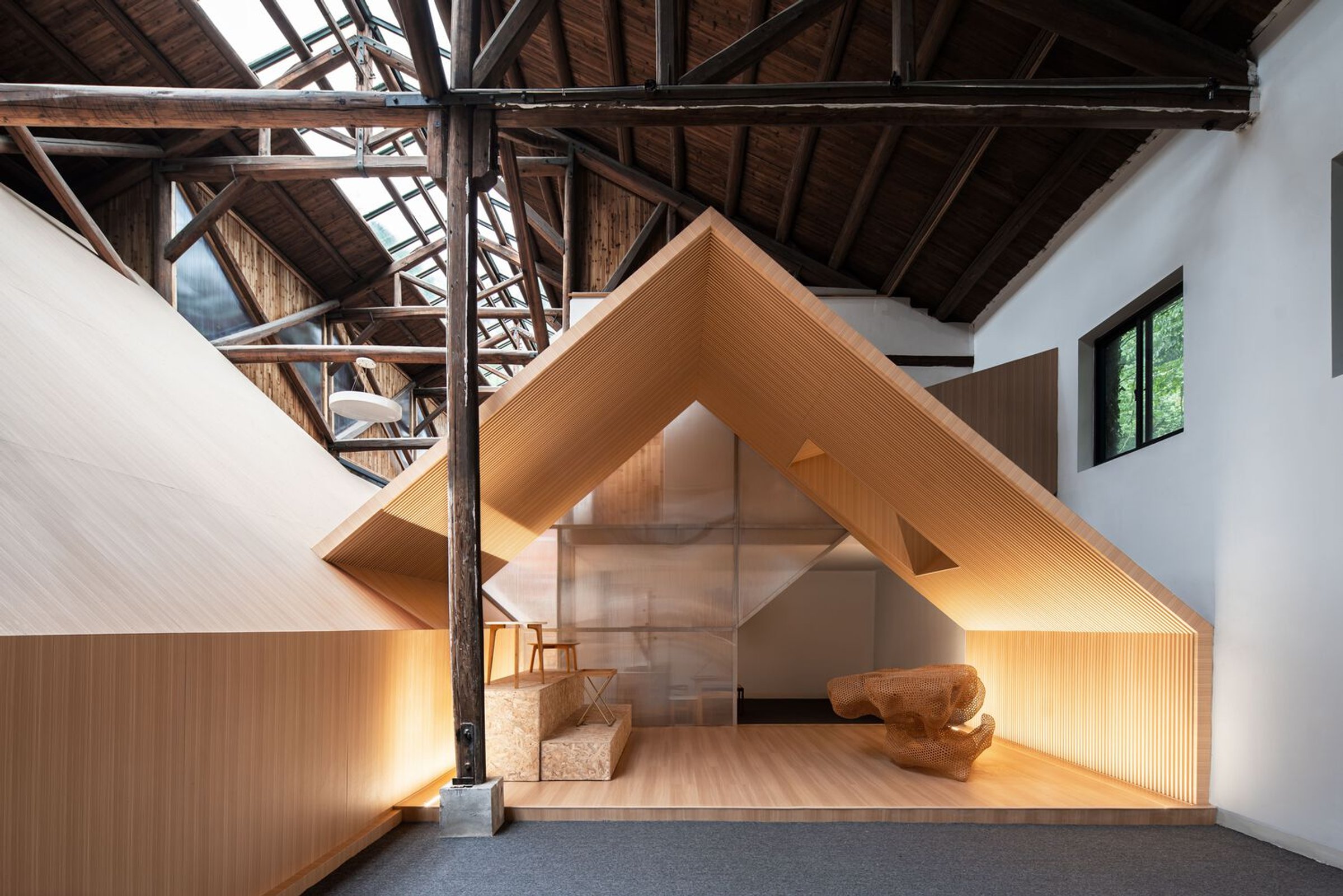
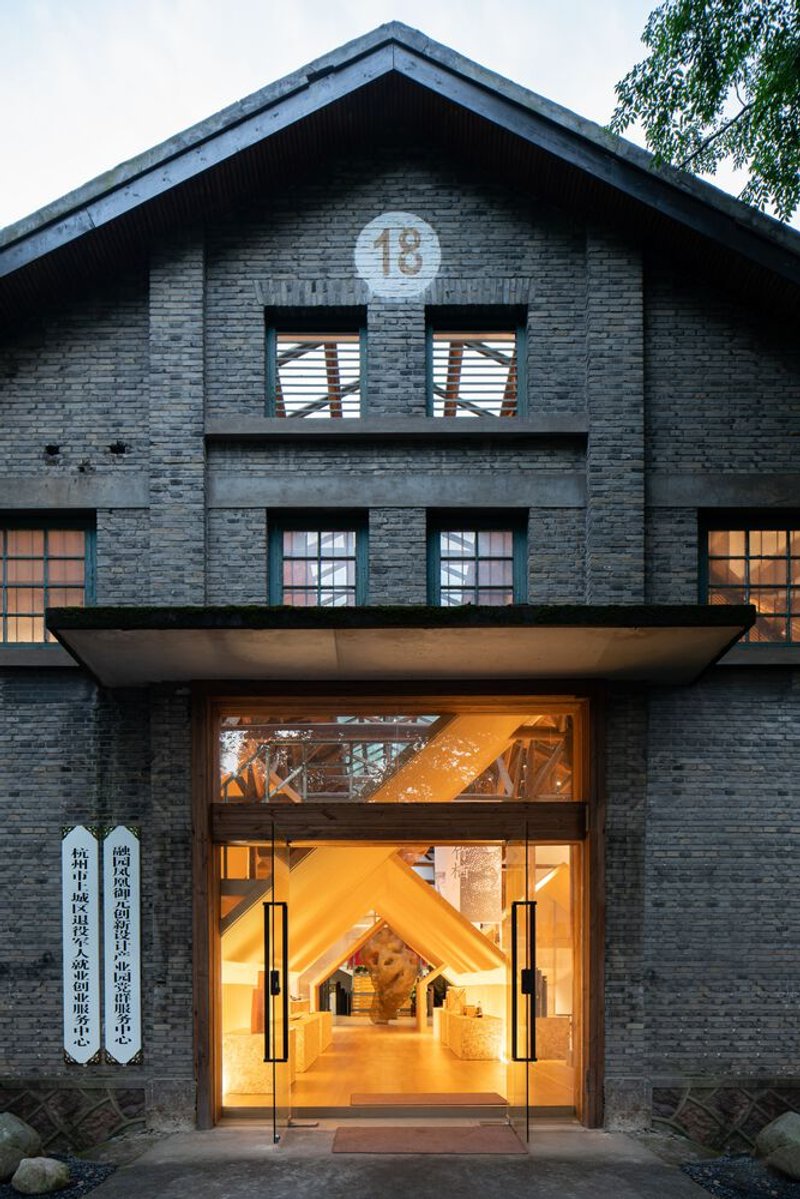
The "Warehouse within a Warehouse" Media Center, designed by Ray&Emilio Studio, is a remarkable example of warehouse renovation architecture. Located in Mantoushan, the historic district of Hangzhou, China, this project transforms an abandoned No. 18 military supply warehouse into a contemporary exhibition hall and media release center. This innovative reuse project encapsulates the architectural philosophy of preserving historical identity while introducing modern functionality.
The Site: A Historical Context
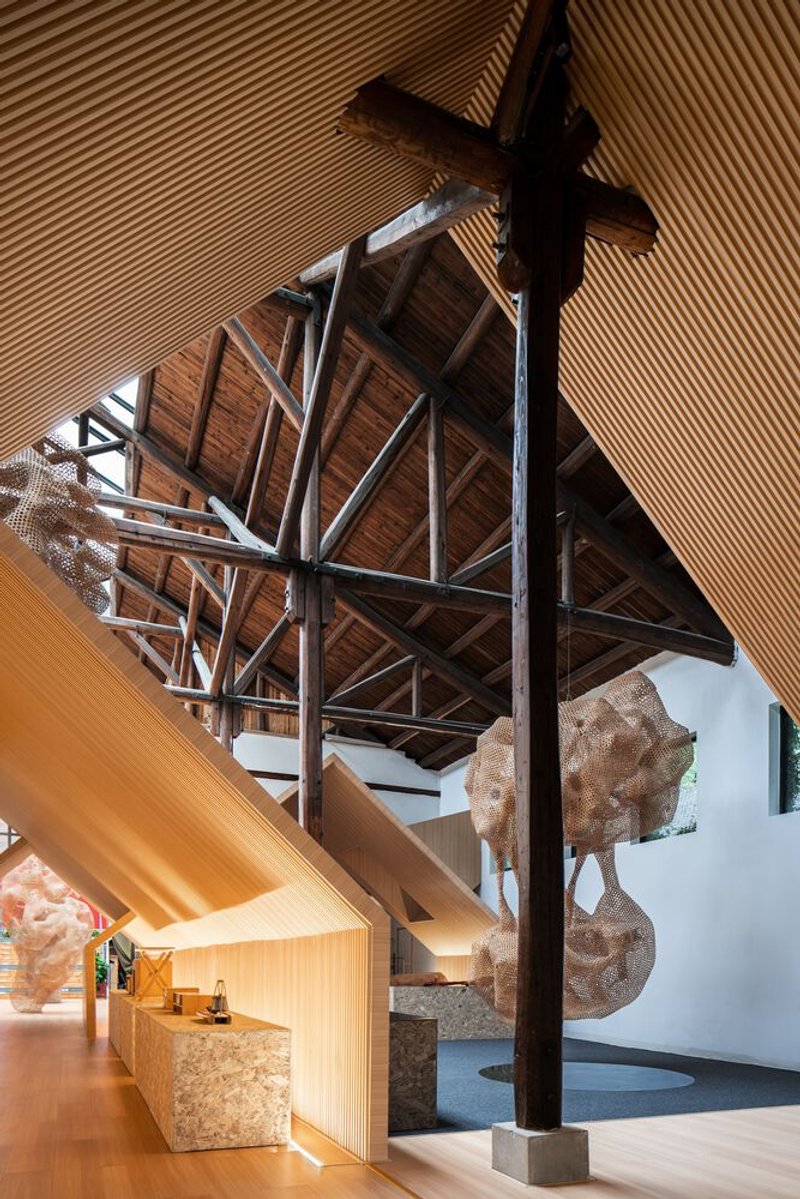
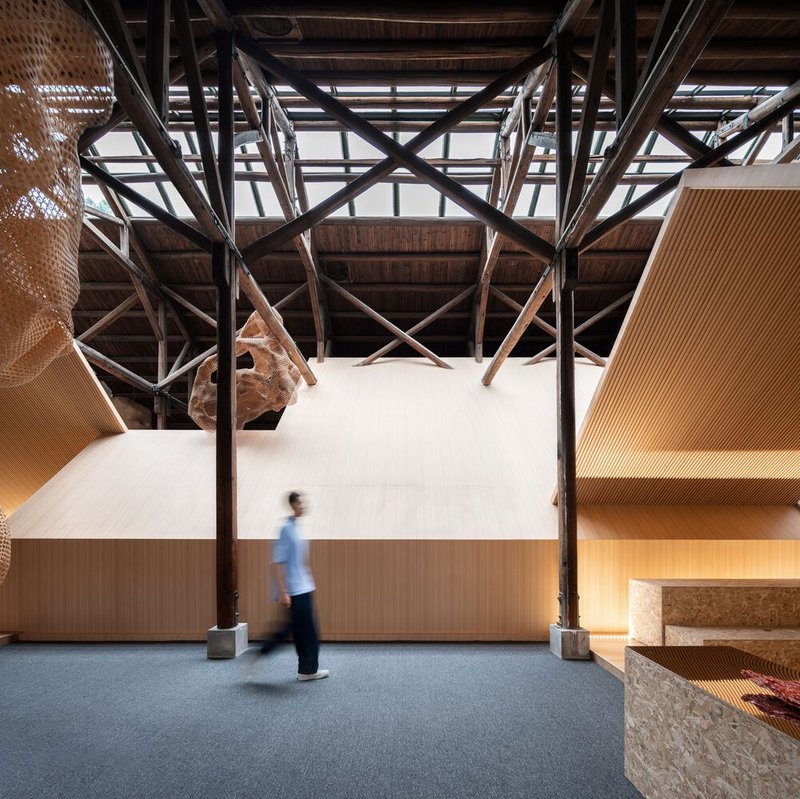
Nestled in the old city area of Hangzhou, the original warehouse bore the weight of history as a former military supply depot. Its wooden trusses and sloping roofs, reminiscent of classical industrial architecture, provided the design team with a foundation rich in structural and historical value. The pre-existing glass roof ridge, which floods the interior with natural light, became a critical feature to amplify during the renovation.
Design Philosophy: A Warehouse within a Warehouse
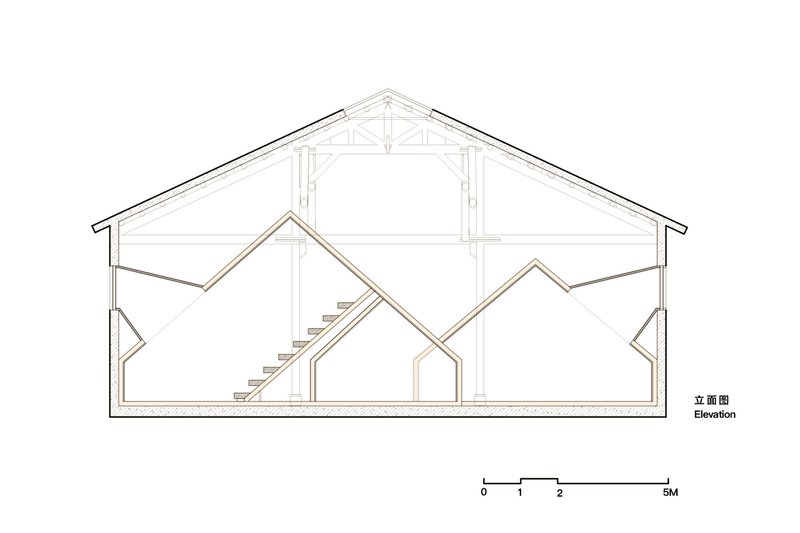
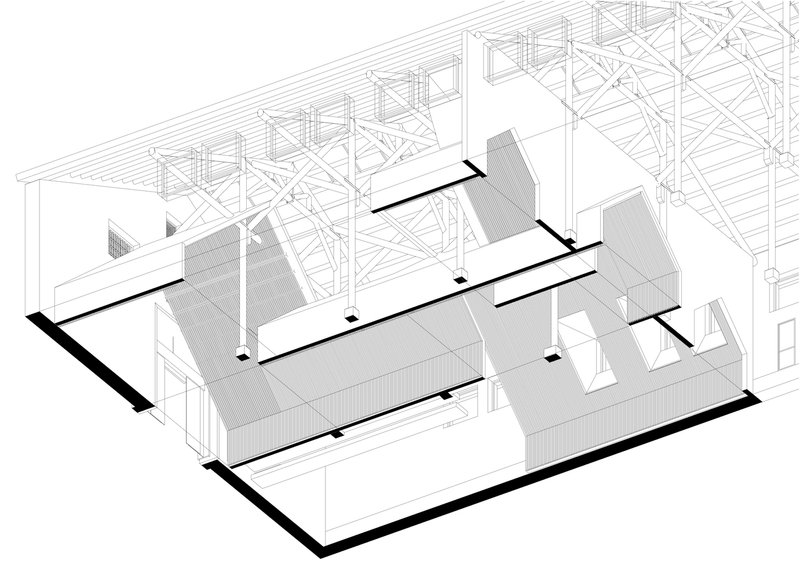
Ray&Emilio Studio approached the renovation with the intent to merge the old and the new. The concept of a "warehouse within a warehouse" reflects the layering of structures, where a contemporary intervention inhabits and interacts with the existing framework. This interplay creates a dialogue between historical and modern architectural elements, emphasizing depth, layering, and structural contrast.
Preserving Historical Integrity
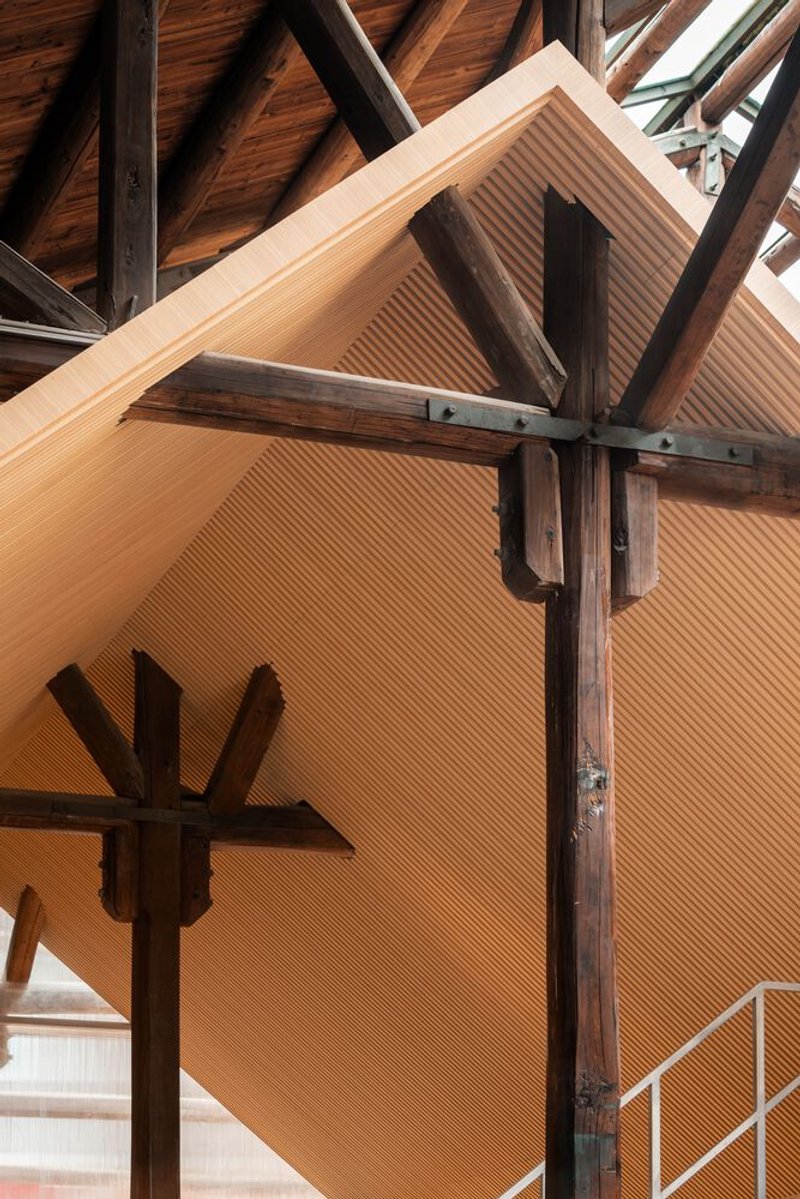
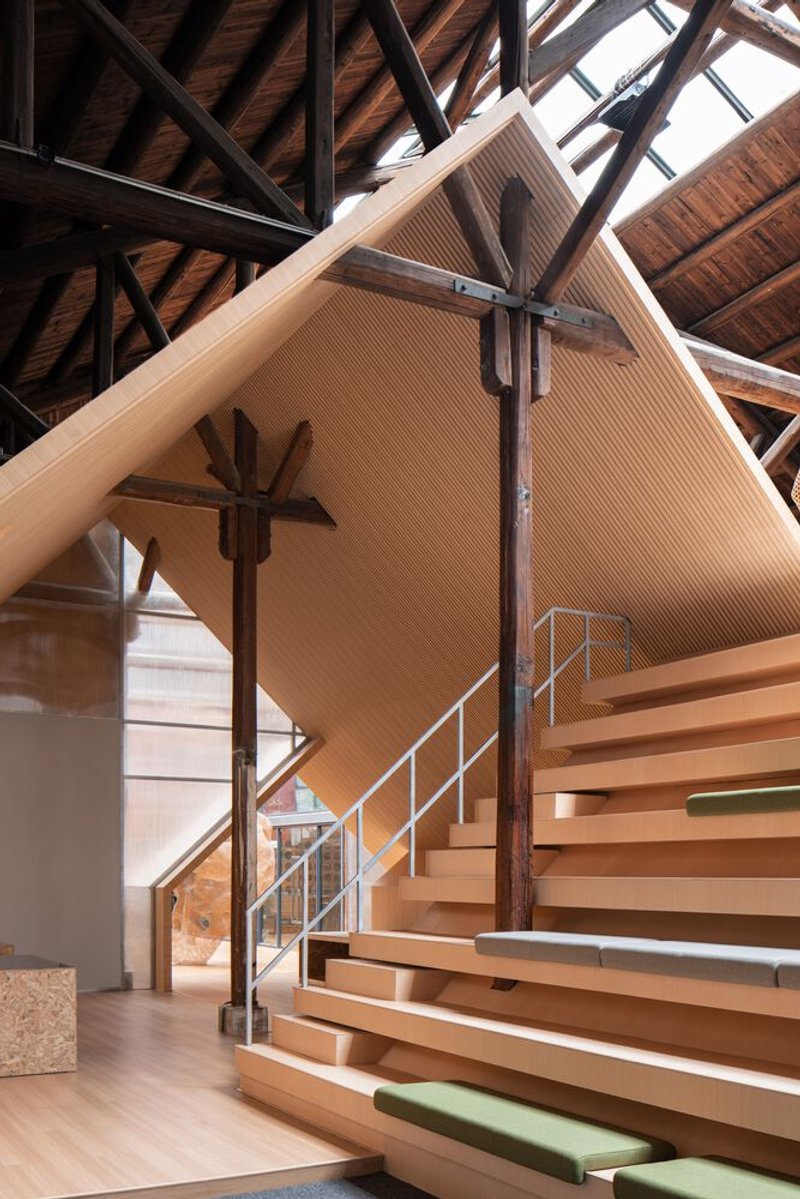
One of the primary objectives of this warehouse renovation architecture was to maintain the authenticity of the original space. The architects chose to enhance the wooden structural elements, highlighting their robust triangular connections. By preserving these features and amplifying the natural light through strategically placed skylights, the design celebrates the warehouse's industrial past.
Key Features Preserved:
- Wooden Trusses: Reinforced for structural integrity while maintaining their visual charm.
- Sloping Roofs: Enhanced with a new glass ridge for additional light.
- Historical Traces: Visible wear and modifications from its military past were retained as part of the narrative.
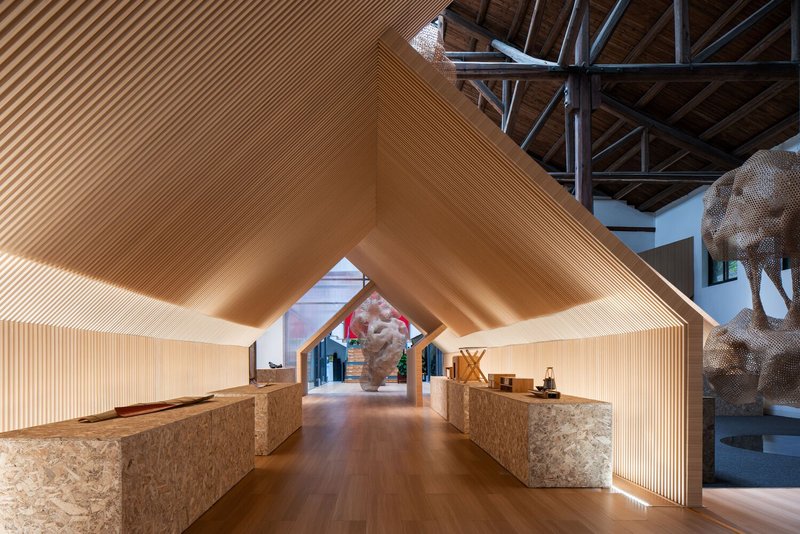
New Interventions: A Modern Media Center
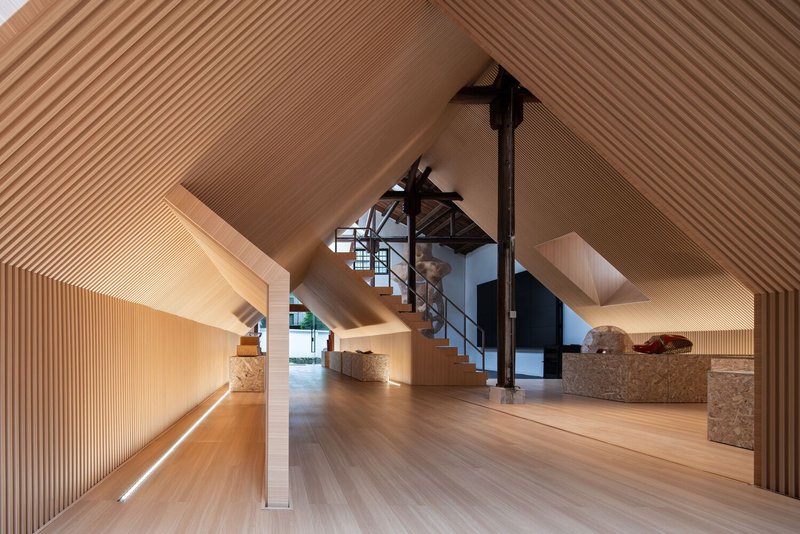
The contemporary additions to the structure focus on creating a flexible, functional space suitable for multiple uses, including:
- Industrial product exhibitions.
- Seasonal launches of design innovations.
- Small-scale art exhibitions and lectures.
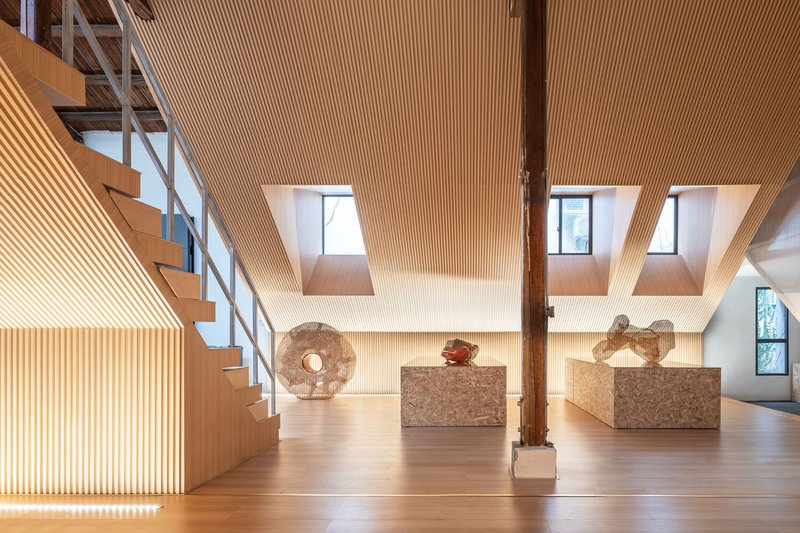
Architectural Innovations:
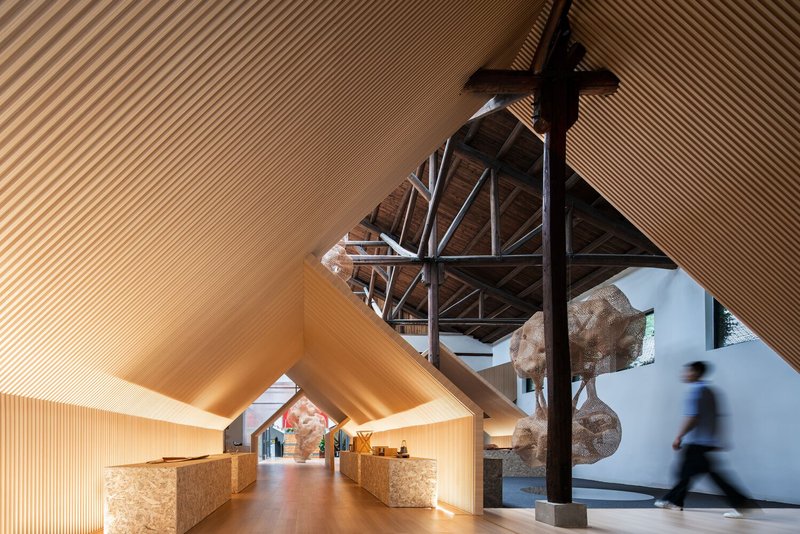
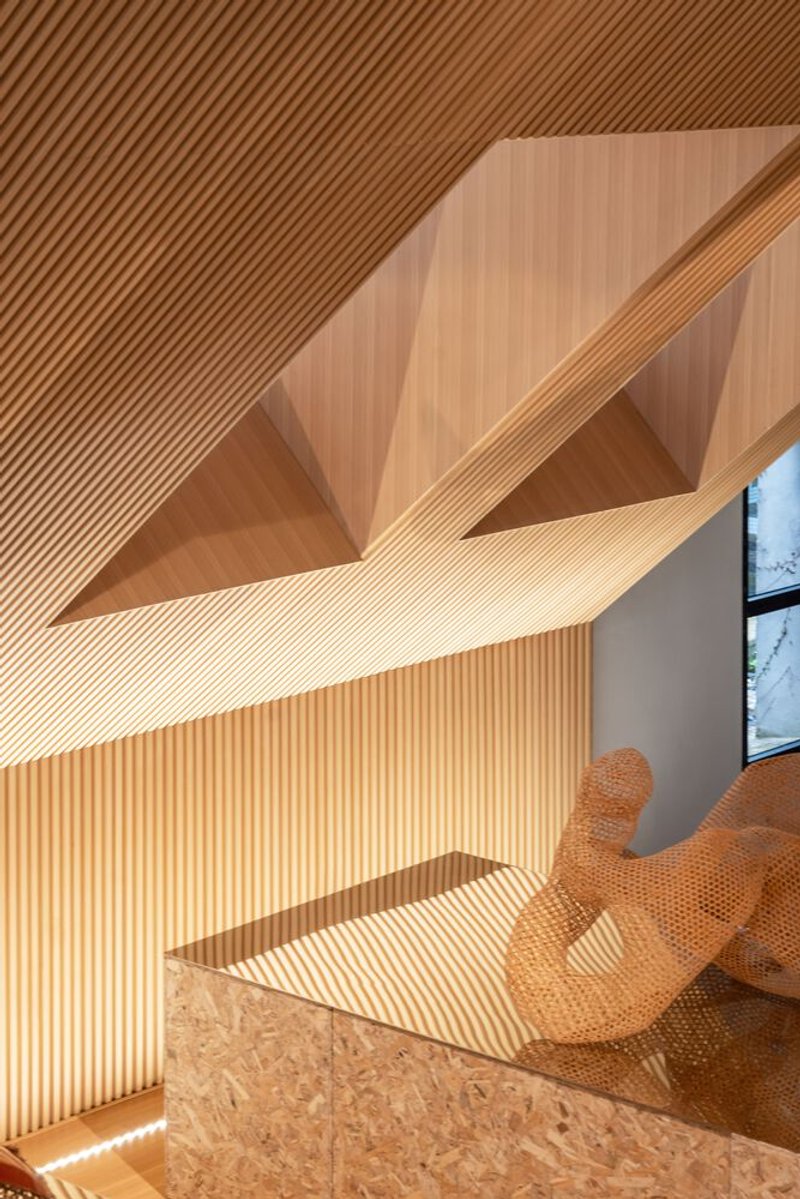
- Segmental Displacement Techniques: The new structure interacts with the old through intersecting planes, creating a layered and visually engaging spatial composition.
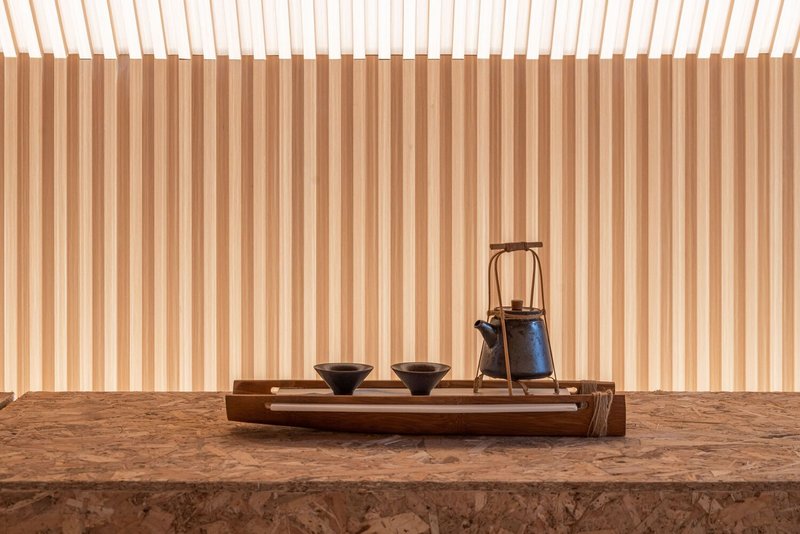
- Dynamic Lighting: A combination of natural and artificial light accentuates the contrast between the old and new structures.
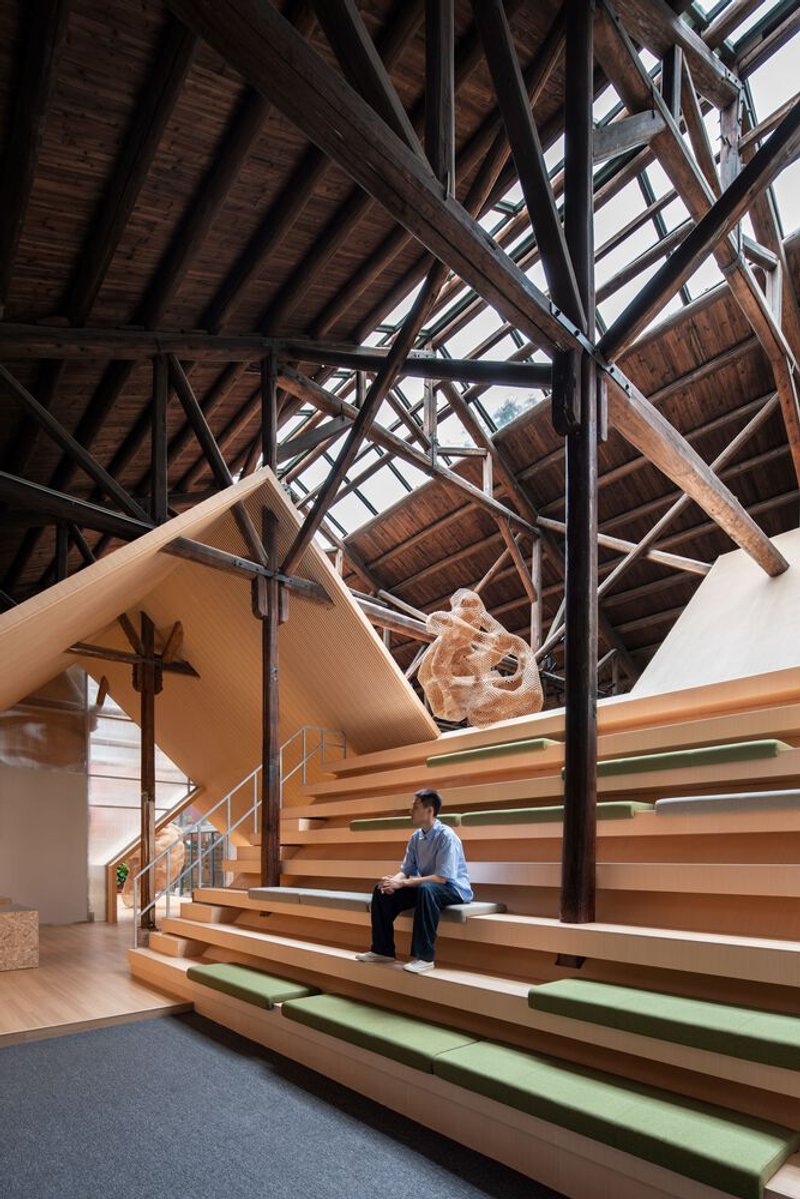
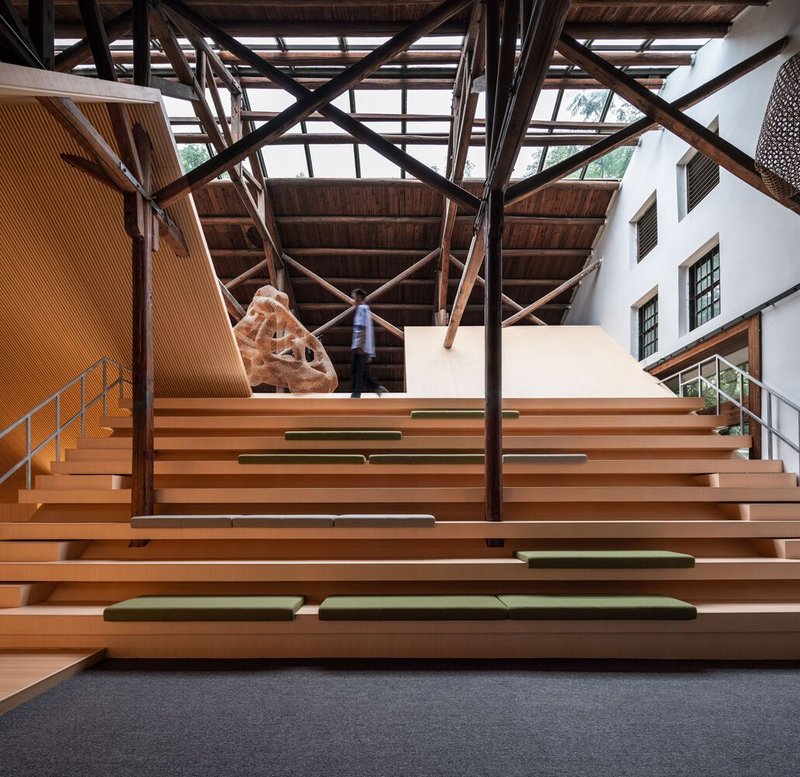
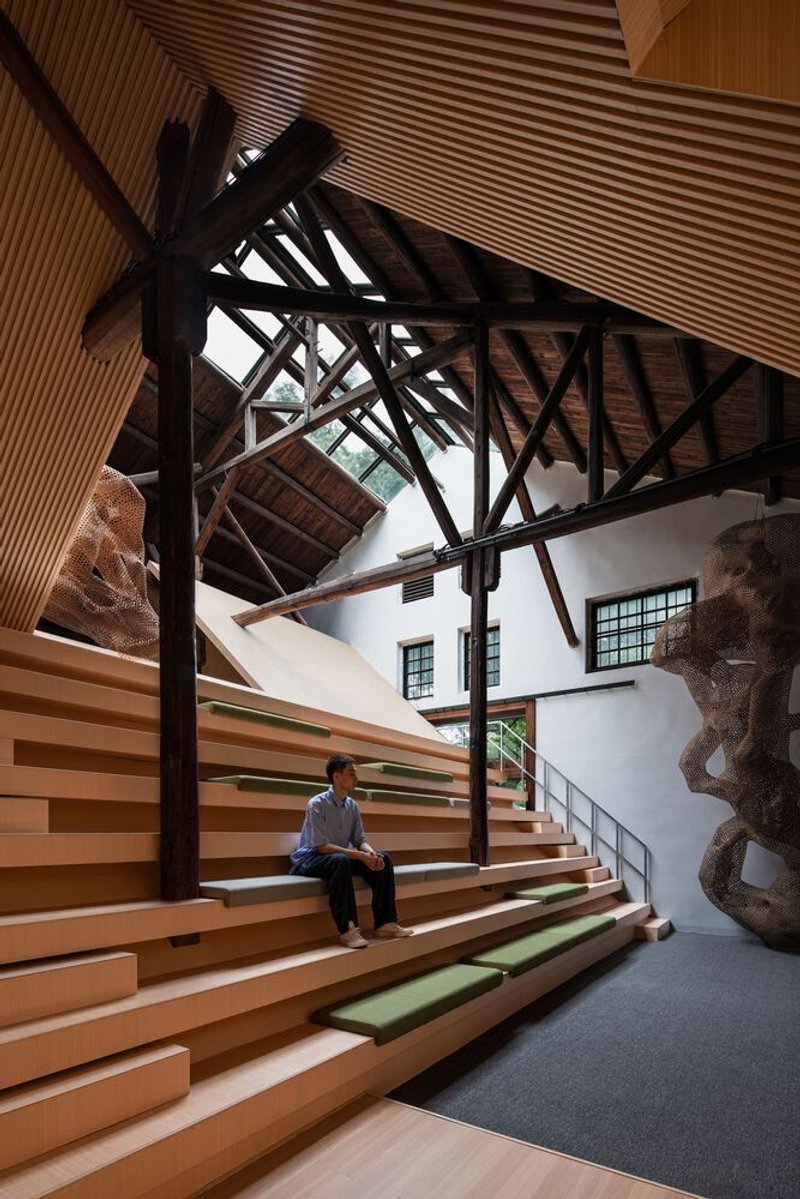
- Modern Forms: Sloping roofs inspired by the Chinese character "仓" form a natural theater space for events, reinforcing functionality while paying homage to the warehouse's cultural roots.
Spatial Experience: A Dialogue Between Old and New
Visitors to the "Warehouse within a Warehouse" Media Center are immersed in a dynamic spatial experience. The design creates layered depth, where visual and tactile cues guide exploration.
- Natural Light: Skylights and strategically placed openings direct light into different zones, creating a gradient of illumination.
- Theater-Like Spaces: Gradients formed by the sloping roof allow for seating arrangements ideal for product launches or intimate gatherings.
- Structural Entanglement: The "new warehouse" rises upward, meeting the descending elements of the "old warehouse," fostering a continuous dialogue.
Functional and Aesthetic Harmony
The warehouse renovation architecture exemplified by this project achieves a balance between functionality and aesthetics. By retaining the authenticity of the industrial space while incorporating modern features, the Media Center serves as both a historical artifact and a forward-thinking exhibition space.
A New Benchmark in Warehouse Renovation
The "Warehouse within a Warehouse" Media Center by Ray&Emilio Studio sets a precedent for warehouse renovation architecture. It demonstrates how adaptive reuse can breathe new life into abandoned industrial spaces while respecting their historical context. This project is a testament to the power of thoughtful design in creating spaces that are both functional and inspiring.
All the photographs are work of Zhou Fang