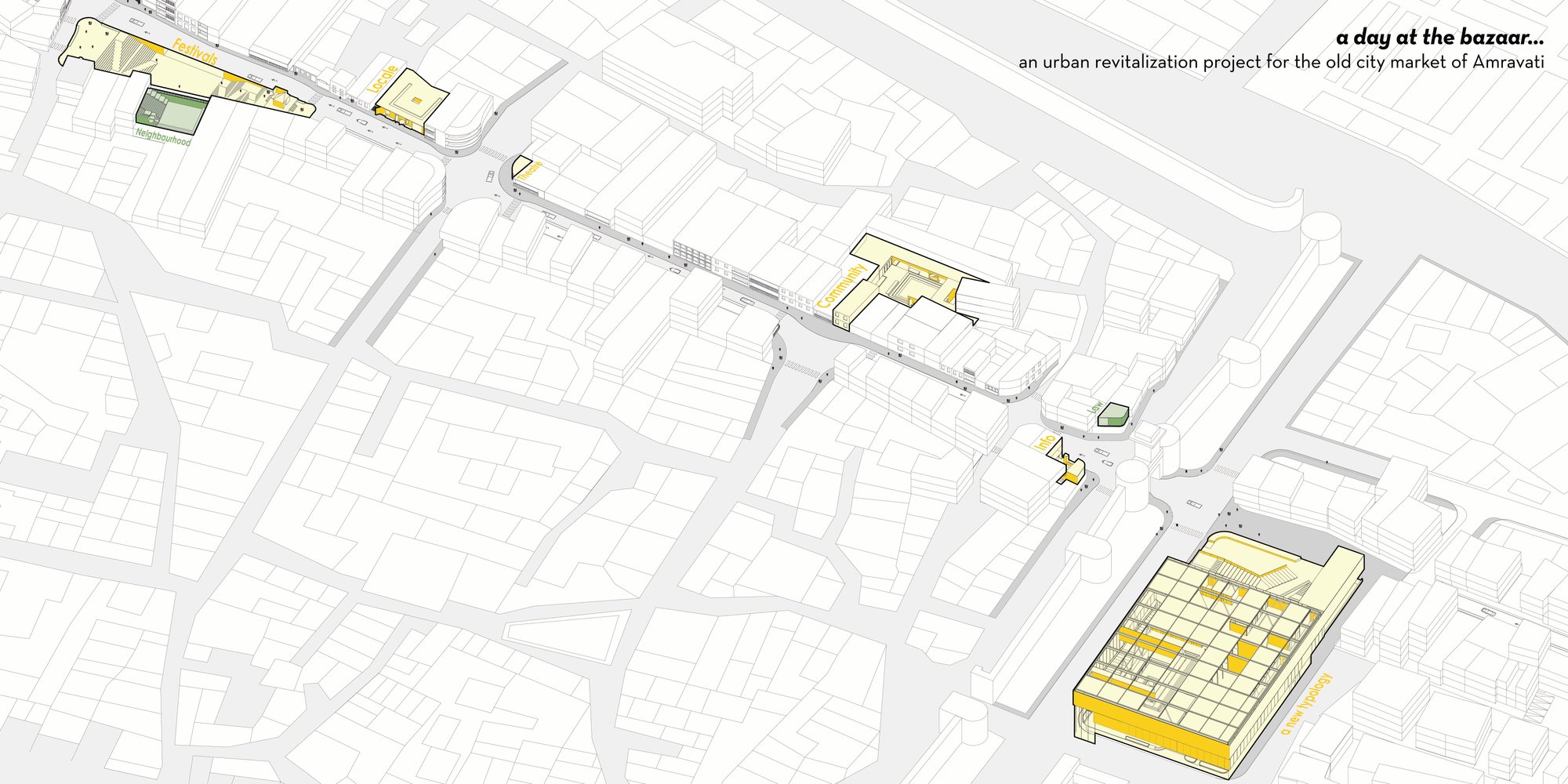
a day at the bazaar...
Urban Revitalization for the Old City Market of Amravati

Introduction
We have been constantly evolving, and so have our towns and cities. This evolution often leads us to move out of our traditional habitats or adapt them to modern needs. In this process, it is crucial to balance adaptation with the preservation of our historical roots. As cities expand, there is a noticeable shift from traditional living patterns to more urbanized ones, and older city areas bear witness to this transformation. The Old City Market precincts, once vibrant spaces where people lived and worked simultaneously, are prime examples of this shift.
Historical Significance of Market Precincts
Historically, old city market precincts have been the vibrant cores of both urban and rural communities. These markets shaped the way people lived and connected them to the broader world through trade. Serving as economic hubs, they eliminated the need for extensive commutes and played pivotal roles in daily life, acting as living corridors and sources of community news that rejuvenated mental well-being.
Challenges of Urbanization
The rise of suburban retail outlets, shopping centers, local convenience stores, and the influence of online commerce have gradually eroded the commercial vitality of our cities. Population growth has led to housing challenges, and the expansion of businesses beyond city centers has promoted economic growth while causing the gradual disintegration of the urban fabric. This disintegration leaves behind abandoned spaces and plots in dispute, raising pertinent questions about the decline of our city centers and the depletion of green pockets that traditional markets once embodied.
Need for Revitalization
The demise of traditional public market precincts would lead to numerous issues. These precincts promote local commerce, foster walkability, and reduce vehicular emissions, offering significant economic and environmental benefits. They also function as communal living rooms, nurturing community life and safety for residents of all age groups. To prevent the abandonment of these invaluable spaces, comprehensive solutions are essential to rejuvenate and make them socially and economically viable.
Urban Revitalization Strategy
Through the lens of public spaces, market precincts serve as important public spaces for the city. "Architecture as a mechanism to revitalize them as everyday spaces" is an inquiry to promote human interactions and community life, bringing the city's economic core back to life and creating a concept of an Urban Twilight. This thesis seeks to understand the formation of Amravati, driven by trade and commerce, its expansion through business growth, and the subsequent impact of urbanization on the deteriorating core of the old city fabric and providing and providing a revitalization solution to preserve its organic fabric by proposing interventions at an Urban Planning level which defines a masterplan for the precinct and an Architectural Level which defines a new built typology to help the market sustain the near future.
Scope of the Project
The scope of this thesis project emphasizes the significance of an urban renaissance for markets globally. It centers on creating a 10-minute walkable radius of revitalized defunct plots around the traditional market precinct of Amravati, serving as a model for broader market revitalization. The project outlines the stages of development for this 10-minute walkable zone, with a detailed focus on one stage, aiming to establish a template for market revitalization efforts worldwide.
Identification and Intervention
In the 10-minute walking trail, numerous defunct plots have been identified, and architectural interventions have been implemented. A novel strategy has been devised at an urban masterplan level to declutter the street, while a new typology has been introduced for the market for its sustainability. This innovative approach aids in relocating activities from the third space of the market ( third space is any place in the market other than the shop and the houses, place where activities of the market precinct happen), effectively decluttering the area and transforming it into a vibrant space for everyday use.
Architectural Solutions
An extensive survey of defunct pockets along the street was conducted, and through rigorous legal measures, various plots were meticulously selected for intervention keeping in mind the context that every plot belonged to, each serving a distinct purpose. Tailored designs were proposed for these plots, envisioning them as vibrant public entities such as the local eatery, public plaza, women’s community center, green pockets, visitors center, street furniture, and a new market typology ( an anti-mall and an anti-market ). Complementing these interventions, a range of public facilities and amenities including restrooms, lounges, eateries, and police chowkis were strategically integrated into the market area. All of these were designed to provide relief from sun and heat, with features like plazas dug into the ground, courtyards, and narrow alleys to keep the microclimate cooler. Each pocket created its own microclimate.
Maintaining the Organic Nature
The project, while preserving the organic essence of the street, embarked on a transformative journey by reimagining the diverse needs of different shopper categories and allocating spaces accordingly. This comprehensive approach also entailed the widening of roads and footpaths, along with the creation of designated respite zones within street furniture ( the street furniture being a responsibility of the shop which is adjacent to it so that it is maintained and clean), catering to pedestrians, residents, hawkers, and shopkeepers alike. The chosen plots, often mired in disputes or left abandoned, presented an opportunity for revitalization and reuse, aligning with the overarching goal of breathing new life into the market and similar urban typologies, thereby reinstating them as vibrant everyday public spaces.
Street Transformation
The proposal suggests transforming the street into a one-way route in compliance with local traffic regulations, while rerouting two roads to connect with main roads. Encroachments by shopkeepers and residents are planned for removal, reallocating the space for road widening and potentially expanding footpaths, with residents offered incentives under the Maharashtra TDR Policy 2016. Parking is relocated to the new typology ( which lies across the street outside the fortified wall ), with residents able to purchase parking slots. The street is segmented based on time periods and usage to optimize space allocation for shopkeepers, residents, shoppers, and vehicles.
Complete Pedestrianization
During a designated time frame, the entire street will undergo complete pedestrianization, with one lane reserved for residents' vehicles. This comprehensive pedestrianization is facilitated by the new typology introduced in the project, which offers parking facilities to street traffic. Acting as a starting point, users can enter, park their vehicles, and freely explore the market on foot. This innovative approach ensures a unique and hassle-free shopping experience for both shoppers and shopkeepers, promoting a more pedestrian-friendly and vibrant atmosphere along the street.
Loading and Unloading Strategy
To alleviate the clutter caused by simultaneous loading and unloading of shops, residential activities, and vehicle movements, the proposal suggests dividing the timings of usage. Specifically, from 3 to 4:30 pm, loading and unloading of shops on the street would be compulsory, with weekdays alternating between shops along the street. This time frame was selected based on site studies, indicating reduced shopper traffic and limited residential activities during this period.
Zone Allocation
As per the proposal, the widened street allocates zones for vehicular traffic and two tiers of shoppers: one for those who know their destination and the other for explorers who can freely roam the streets. This arrangement is implemented during the designated pedestrianized time. The street furniture module offers pedestrian respite zones, hawker zones, charging points, emergency dials, working pods, enhanced entry to shops, and inbuilt dustbins. Placed strategically at intervals, they establish a cohesive and inviting ambiance along the street.
New Typology for the Market ( an anti-mall and an anti-market )
Other than the revitalized pockets, a completely new typology helps relocate activities like smaller shops, hawkers, vendors, and other activities of the third place of the market. This new typology serves as an entry to the market precinct, providing shops of various types, segregated by time periods and frequency of use, such as producers' stalls, permanent retail traders' stalls, and seasonal markets like the Assembly sales market. Additionally, there are provisions for daycare centers for parents to leave their children while they shop, lounges and guest houses for shopkeepers and shoppers to rest, and spaces along courtyards for respite, celebration, hawking, and street performances, all with a temporal nature. It acts as an entry to the market and also provides parking facilities, aiding in pedestrianizing the market. Locally sourced materials were used for construction, utilizing RCC with advanced, sustainable technology. The facade is designed to adapt to the climate, staying ventilated when possible and closing off to use mechanical ventilation when necessary, saving energy. These sustainable, eco-friendly materials have a lower carbon footprint and help generate energy. ( details of which are provided in the report )
Conclusion
This architectural proposal operates at both master plan and architectural design levels, emphasizing sustainability, the use of appropriate materials, and a futuristic approach for the market. By addressing the challenges and opportunities within the Old City Market of Amravati, the project aims to create a vibrant, functional, and sustainable urban space that honors the past while embracing the future.
Please Note - Attached is the report on Environmental Studies, Advanced Technology, and site studies and inferences. This report details how architectural interventions are based on climatic conditions, materiality, sustainability, and the use of advanced technology, with specific details explained.