A Floating Community – Using Innovative design strategies
Creating a sustainable residential block in Semarang

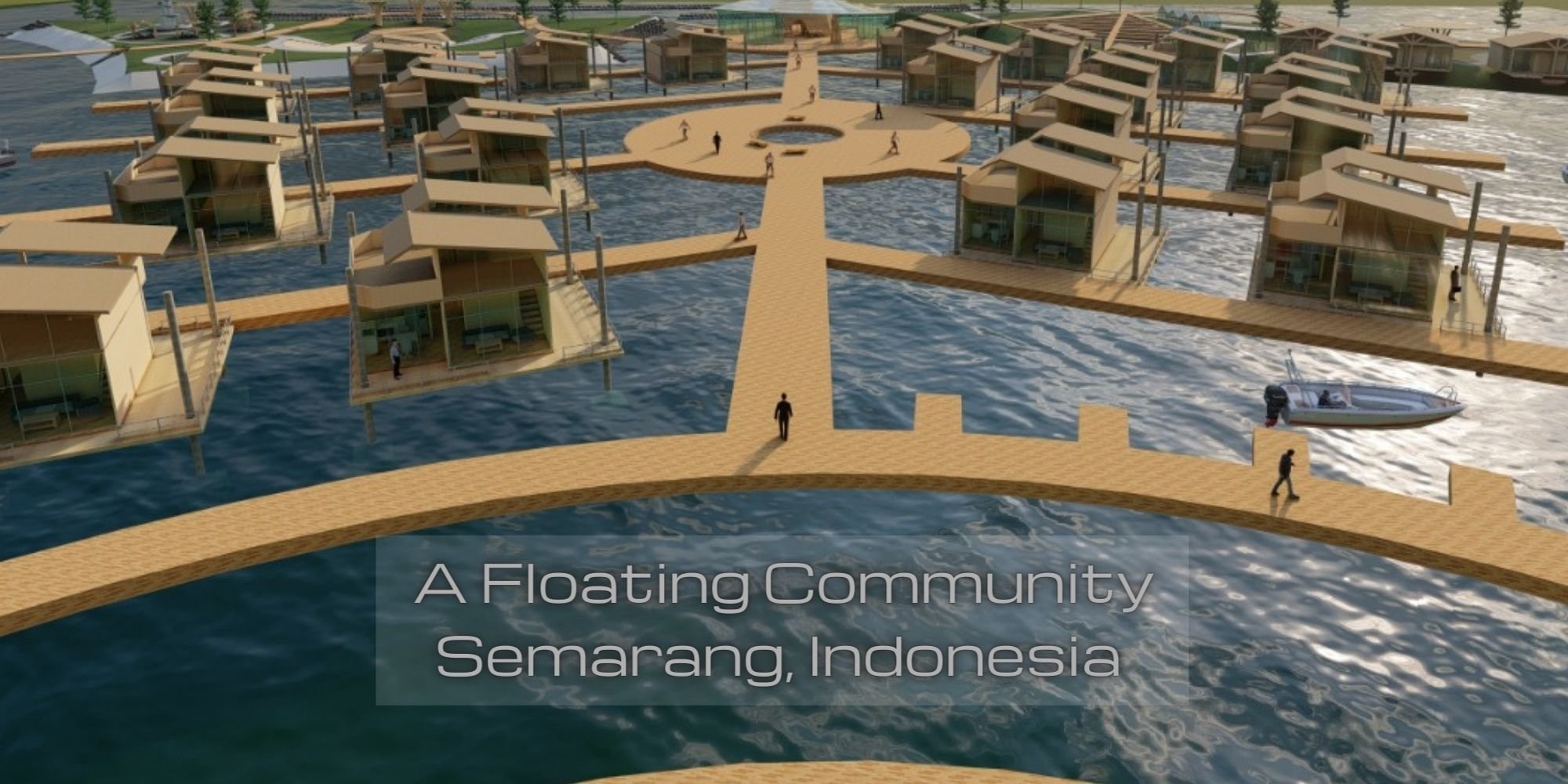
The site in Tambakharjo, West Semarang is vulnerable to disasters due to the recurring flooding in the area. It is in the city of Semarang, which faces a severe housing shortage due to the overpopulation in the area. The concept aims to tackle these challenges by creating a residential area that adopts sustainable anti-flooding solutions in the building construction of single-unit housing, apartments, and mixed-use housing unit. Using locally sourced materials, the project with designed with the intent to create a sustainable and resilient community that can adapt to the challenges of flooding caused by climate change and seasonal rainfall while involving the local community in the design and construction process.
To improve the quality of life, the plan creates well-designed urban spaces that foster a sense of community and provide access to resources and services. This includes creating public spaces that can be used for community events and gatherings. By involving the local community in the design and construction process and creating well-designed urban spaces, the project seeks to build a sense of community and foster a culture of sustainability and resilience. Overall, the main intention is to create a livable and sustainable settlement that can adapt to the challenges of climate change and provide a model for sustainable and resilient community development.
Before finalizing the site plan, the project underwent approximately four iterations. Each iteration explored different building arrangements, flooding solutions, and design strategies. The iterative design process allowed the project team to refine the design and ensure that it met the needs and aspirations of the local community. After studying all possible factors for the design, the most suitable concept with all the desired considerations was selected to be submitted as the final design. For design investigation, the team created an analysis of all aspects which could aid in creating the concept. Firstly, the site conditions were studied including the topography of the site and its surroundings, as well as analyzing relevant climate data such as sun orientation, wind direction, and sea-level and rainfall data. The team also conducted interviews and surveys with members of the local community to gain insights into their needs and aspirations for the project. To add on, all neighboring structures and spaces were studied to create connections between the studied site to the rest of the city.
The program was condensed into the final concept by combining several anti-flooding measures to address both sea-level rise and seasonal rainfall floodings. Some of the measures undertaken include the construction of an artificial island, adding breakwater systems, implementing anti-flooding structures, and adjusting the topography to ease rainwater collection. As for the building units themselves, the houses in the submerged region use a mixture of pontoon structures and platform framing structures. All building units on land were lifted by 2 meters to account for any floodings. The design team also prioritized creating public spaces and community amenities to promote social interaction and well-being.
The materials chosen for the site were chosen after carefully researching what are the locally available materials in the context of the project that are both sustainable and affordable. These materials include bamboo wood, oak and pine wood, and in-situ concrete. In addition, it was studied whether these materials are structurally sound and resistant to erosion. The materials were also chosen to be low-maintenance and to have a long lifespan to reduce the environmental impact of the project.