
Adaptive Reuse Architecture: Reviving Urban Railways into Vibrant Public Spaces
Transforming abandoned railways into adaptive reuse architecture that fosters community, culture, and flexible urban public life.

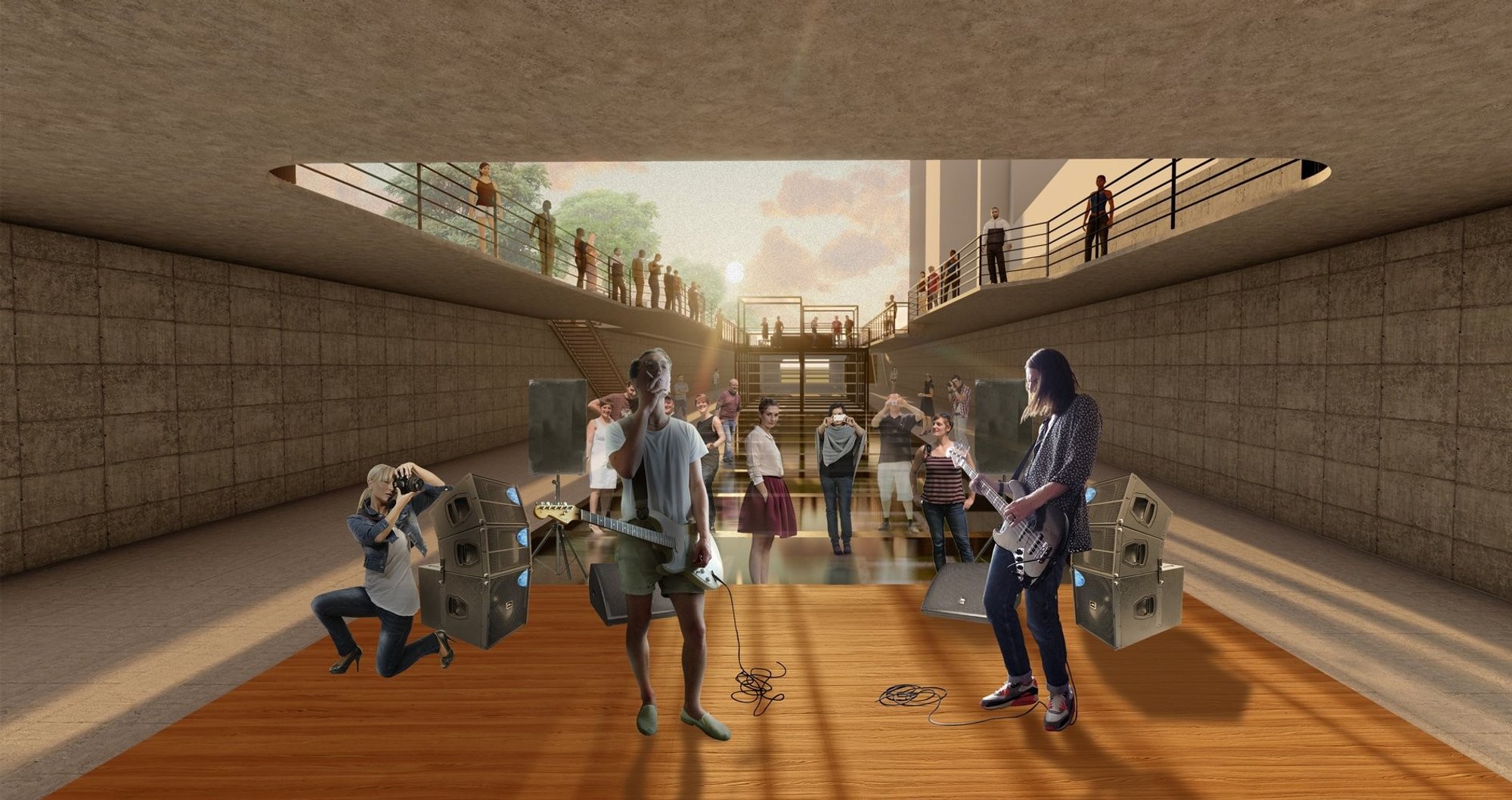
In contemporary urban discourse, adaptive reuse architecture has emerged as a critical strategy for revitalizing obsolete infrastructure. The project Orbital Community, developed by Northwest A&F University and 俊羽 钱, exemplifies this approach by transforming an abandoned railway corridor into a dynamic, multi-functional public space. Rather than erasing the past, the design reinterprets the historical railway as a living framework for social, cultural, and economic interaction.
Situated within a dense urban fabric, the proposal leverages the linearity of the railway to establish a continuous civic spine. This intervention is not merely architectural but urbanistic, addressing issues of connectivity, community fragmentation, and underutilized land.
Context: From Industrial Relic to Urban Catalyst
The site originates from a historic railway network that once supported freight and passenger movement. With the evolution of transportation systems, the railway lost its relevance and was gradually abandoned, leaving behind fragmented urban voids.
This project positions adaptive reuse architecture as a tool to reclaim these voids. By integrating commercial, social, and cultural functions, the design reactivates the site as a productive urban landscape. The railway, once a symbol of industrial mobility, is reimagined as a platform for human interaction and community life.
Design Strategy: Linear Infrastructure as Social Framework
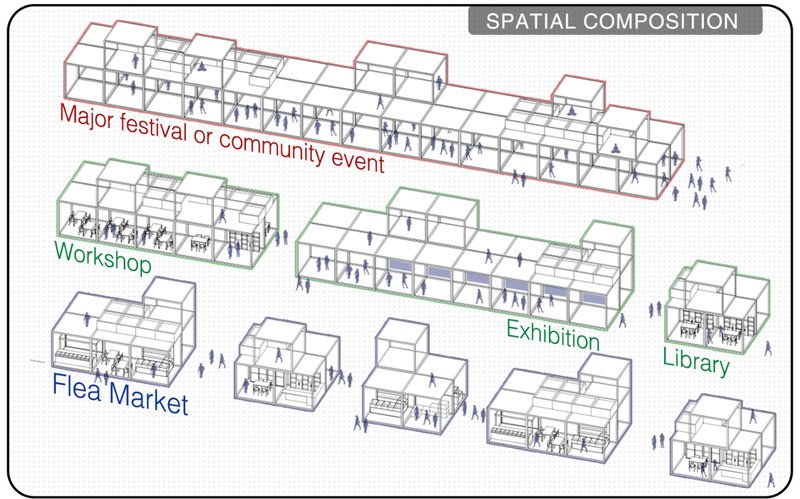
A key challenge addressed in the project is the inherent linearity of railway infrastructure. Instead of resisting this condition, the design amplifies it by introducing a layered spatial system composed of two primary strata:
- Platform Layer: A stable, programmatic layer accommodating fixed functions such as workshops, exhibitions, libraries, and markets.
- Track Layer: A dynamic, adaptable layer featuring movable structures that can shift, expand, or contract based on user needs.
This dual-layered system allows the architecture to respond to temporal variations in activity, ensuring flexibility and long-term relevance.
Modular Flexibility: Architecture That Adapts to People
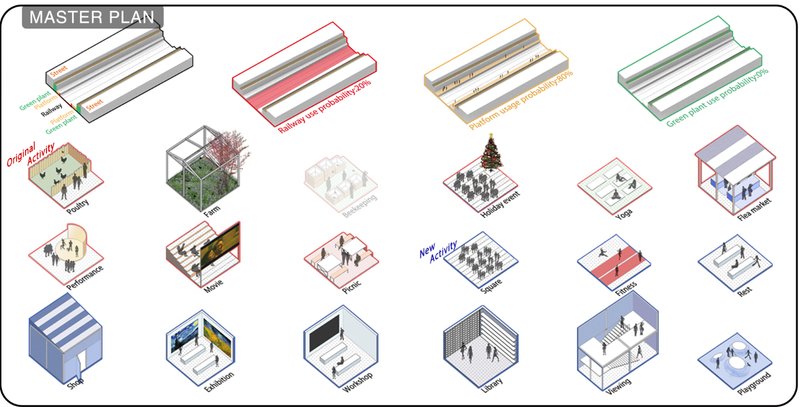
At the core of the proposal is a modular design system. Movable glass platforms and lightweight metal frame structures enable spatial reconfiguration. These modules can host a variety of activities including:
- Flea markets and temporary retail
- Community workshops and exhibitions
- Performance spaces and festivals
- Recreational and wellness zones
The adaptability ensures that the space remains inclusive and responsive to diverse user groups, including residents, tourists, and transient populations.
Social Infrastructure: Designing for Community Interaction
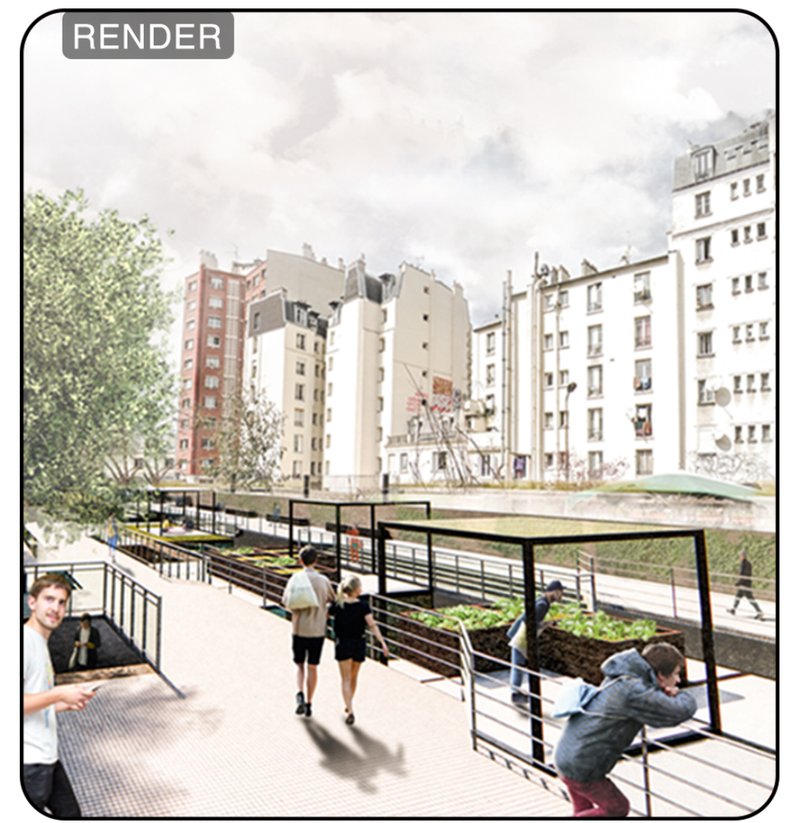
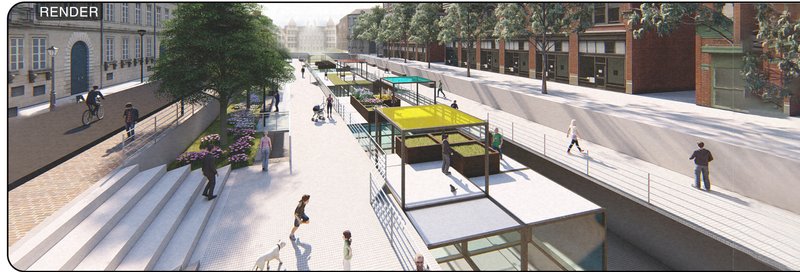
The project prioritizes social cohesion by embedding participatory spaces throughout the site. Small-scale interventions such as urban farms, plazas, and seating clusters encourage interaction among users.
The design recognizes that successful public space is not defined solely by form, but by the intensity of human engagement it facilitates. By enabling activities like markets, performances, and exhibitions, the architecture becomes a catalyst for community building.
Spatial Experience: Sectional Depth and Visual Connectivity
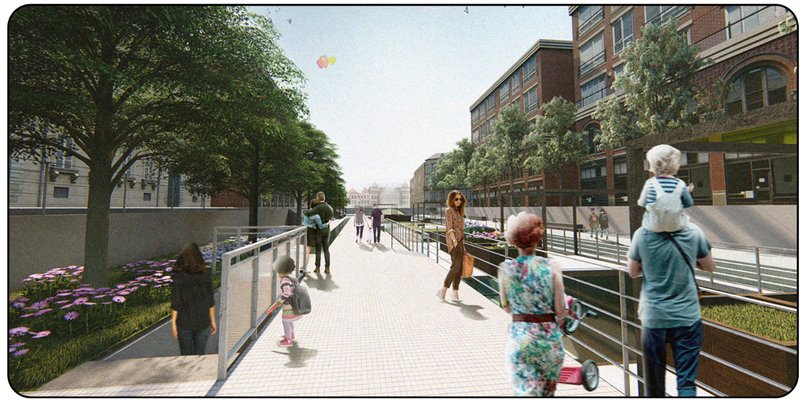
Sectionally, the project introduces a two-level spatial experience. Sunken plazas and elevated walkways create a layered environment that enhances visual connectivity while maintaining functional separation.
The use of transparent materials, particularly glass platforms, allows users to visually engage with the original railway tracks below. This gesture preserves the historical memory of the site while integrating it into the contemporary experience.
Environmental and Economic Considerations
The project adopts a cost-effective construction strategy using metal frame systems and modular components. This not only reduces initial costs but also supports phased development and future adaptability.
Green interventions such as tree pools, vertical planting, and landscaped corridors contribute to environmental performance while improving user comfort. These elements transform the linear corridor into an ecological as well as social asset.
Programmatic Diversity: A Continuous Urban Event Space
The Orbital Community is conceived as a continuously evolving urban platform. Its programmatic diversity ensures activity throughout the day and across seasons. Key functions include:
- Exhibition and cultural spaces n- Workshop and educational zones
- Retail and flea markets
- Performance and event areas
- Recreational and leisure spaces
This multiplicity of uses transforms the site into an "orbital" system of activity, where different programs intersect and reinforce each other.
Orbital Community demonstrates how adaptive reuse architecture can redefine the role of obsolete infrastructure in contemporary cities. By combining flexibility, community engagement, and historical continuity, the project offers a scalable model for similar urban conditions worldwide.
Rather than viewing abandoned railways as liabilities, this approach repositions them as opportunities for innovation. The project not only restores physical space but also reactivates social and cultural life, making it a compelling example of architecture as an agent of urban transformation.




Popular Articles
Popular articles from the community

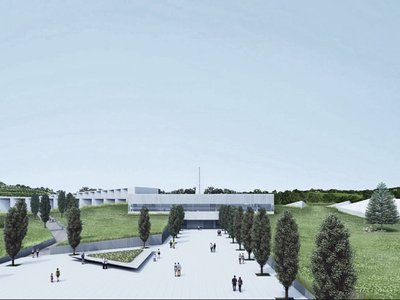
CRACK: Winery Architecture Carved Into the Landscape
CRACK reimagines winery architecture as a buried path through vineyard terrain, linking production, tasting, lodging, landscape and culture.

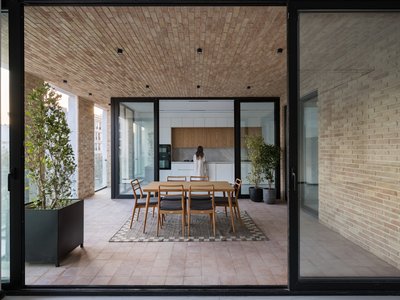
DIM Architecture Studio Revives the Iranian Courtyard Inside a Mashhad Apartment Building
A 2,500-square-meter mid-rise infill project reinterprets the traditional hashti and central courtyard within the dense urban fabric of Mashhad, Iran.
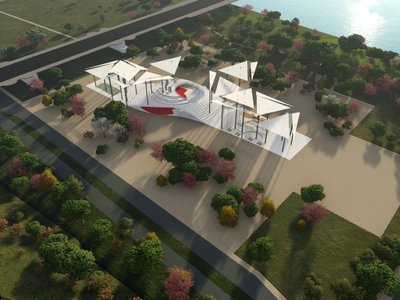
Shinkō Komyuniti: Public Space Architecture Reimagining Sport, Culture and Community in Tokyo
Shinkō Komyuniti transforms sports spectatorship into public space architecture that reconnects play, culture, community and Tokyo life now.
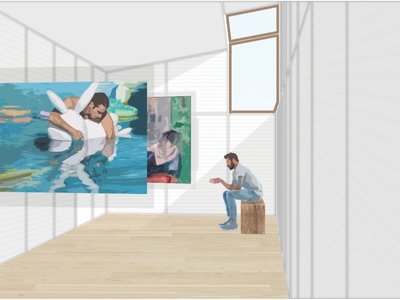
POP ART: Adaptive Reuse Architecture as a Cultural Intervention in Sydney
POP ART reimagines an unused Sydney warehouse through adaptive reuse architecture, creating a bold cultural landmark above the city streets.
Similar Reads
You might also enjoy these articles
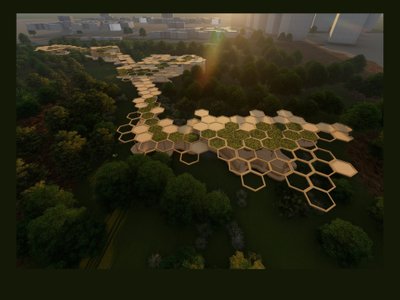
Eco Chapel: A Green Architecture Pavilion Designed in Symbiosis with the Forest
Eco Chapel uses green architecture to weave prayer, learning and reuse into a forest pavilion shaped by modular hexagonal canopies for life.
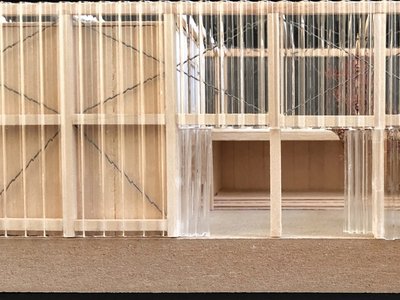
Kaffeebühnen: Coffee Shop Architecture Designed as a Civic Stage Between Vienna’s City and Park
Kaffeebühnen turns coffee shop architecture into a civic stage, linking Vienna’s park edge, urban life, warm timber yards, and coffee craft.
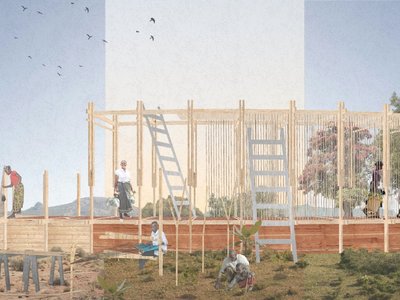
Healing Façade: Sustainable Architecture for Reforestation, Community, and Sacred Ecology in Ethiopia
Healing Façade reimagines sustainable architecture as a living wall that restores soil, catches water and renews Ethiopia's forest churches.


Urban Forest: A Vertical Ecosystem for 5,000 Workers in Singapore's Changi Business Park
Radially stacked pods and layered green decks turn a 7-acre plot into 47 acres of ecological workspace projected for 2040.

Explore Sustainable Design Competitions
Discover active competitions in this discipline




The Global Benchmark for Architecture Dissertation Awards

Design challenge to reuse E-waste
Comments (0)
Please login or sign up to add comments
No comments yet. Be the first to comment!