
AIKO Educational Institution by TAISEI DESIGN: A Nature-Integrated Learning Campus in Matsuyama
Nature-integrated school in Matsuyama featuring ring layout, courtyards, and flexible learning spaces fostering community, daylight, interaction, and holistic education.


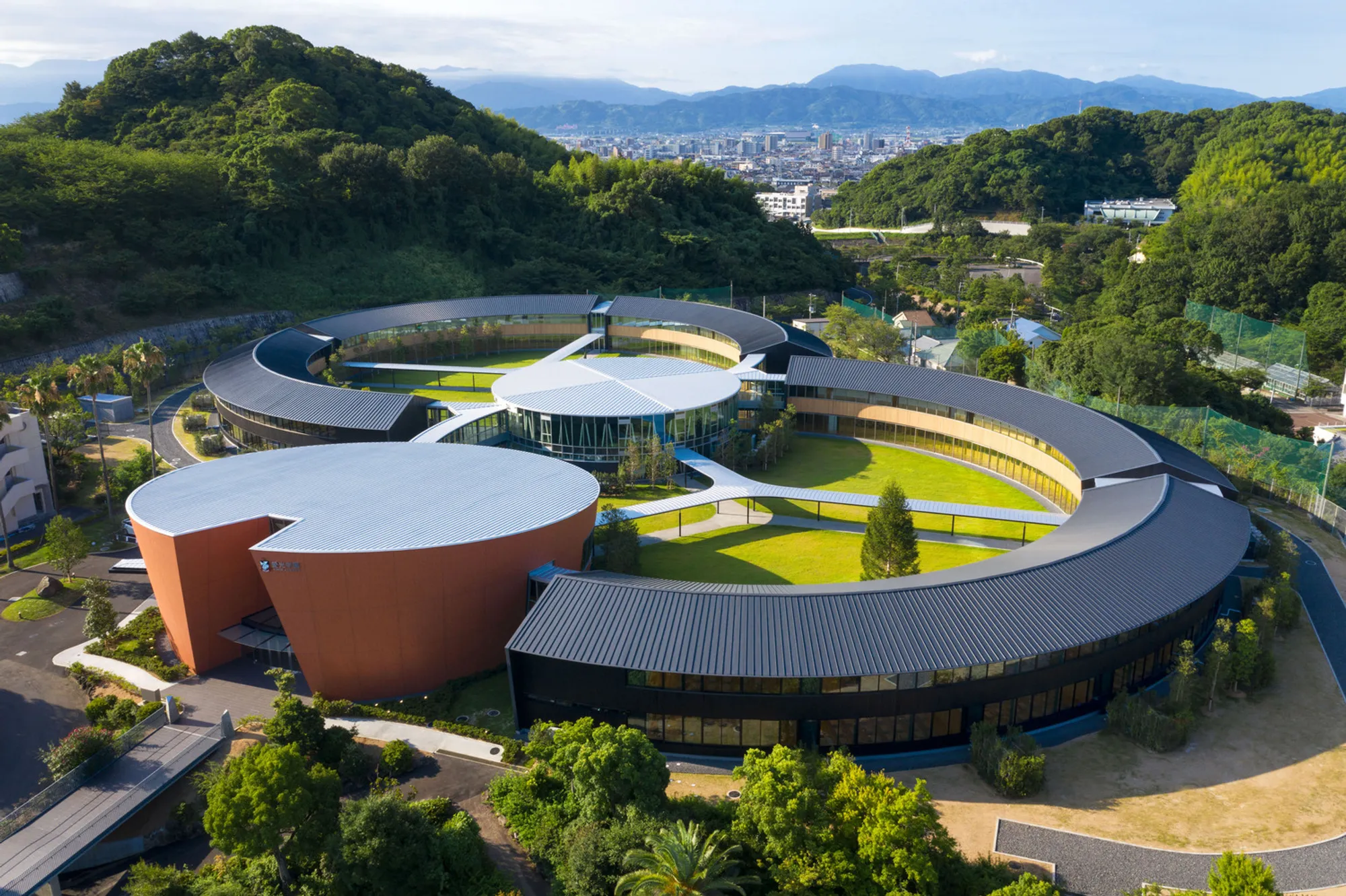
The AIKO Educational Institution, designed by TAISEI DESIGN Planners Architects & Engineers, represents a forward-thinking approach to educational architecture in Matsuyama. Completed in 2021, this 9,515 m² campus redefines the relationship between learning environments, nature, and community, offering a holistic and immersive educational experience.
A Vision Rooted in Philosophy and Global Education
Operated by the Catholic Order of Preachers, the institution is guided by its founding philosophy, “We Believe.” This vision encourages students to grow into globally aware individuals and compassionate contributors to society. The architectural design translates this philosophy into physical space: creating an inspiring campus that nurtures intellectual growth, emotional well-being, and social interaction.
Site-Sensitive Design Surrounded by Nature
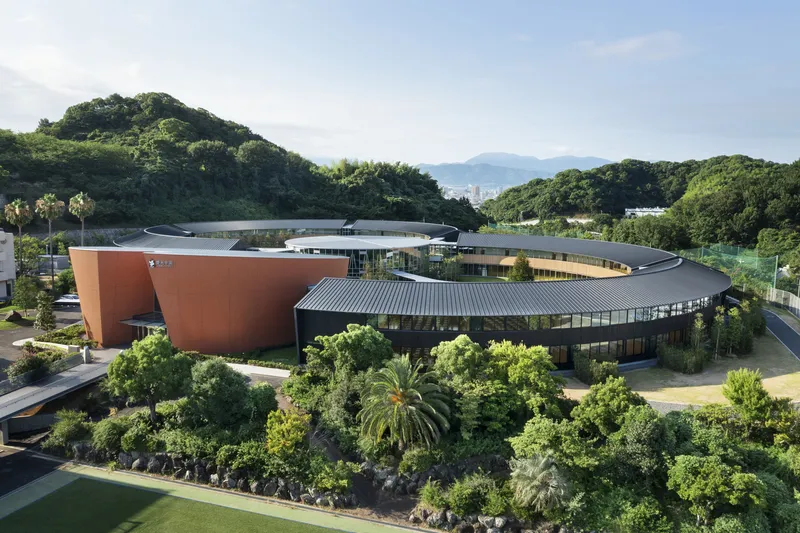
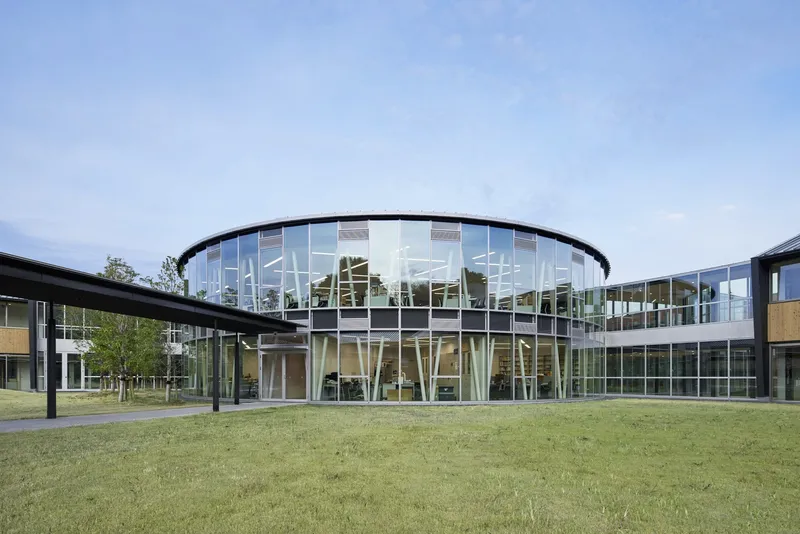
Set against a lush mountainous backdrop, the campus embraces its natural surroundings. The architects strategically positioned the school at a location closest to the mountains, maximizing visual and environmental connectivity. The design prioritizes biophilic architecture, integrating greenery, daylight, and open space into everyday learning.
Ring-Shaped Layout for Light, Views, and Connectivity
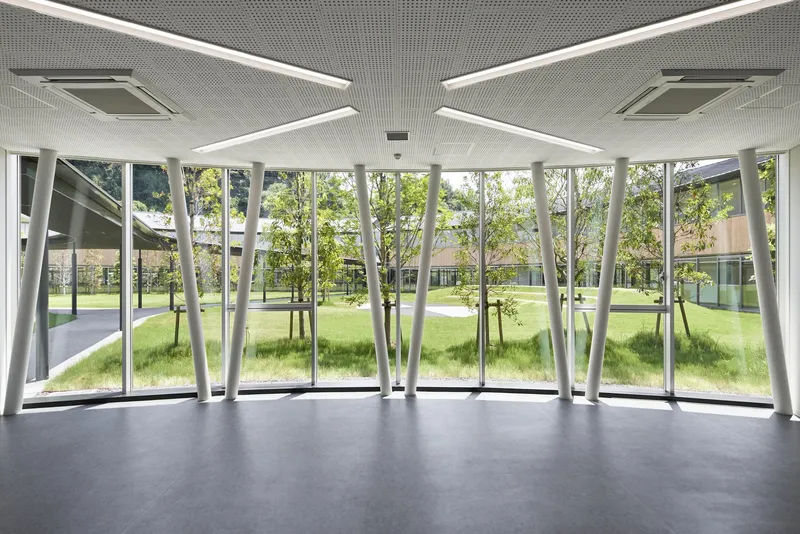
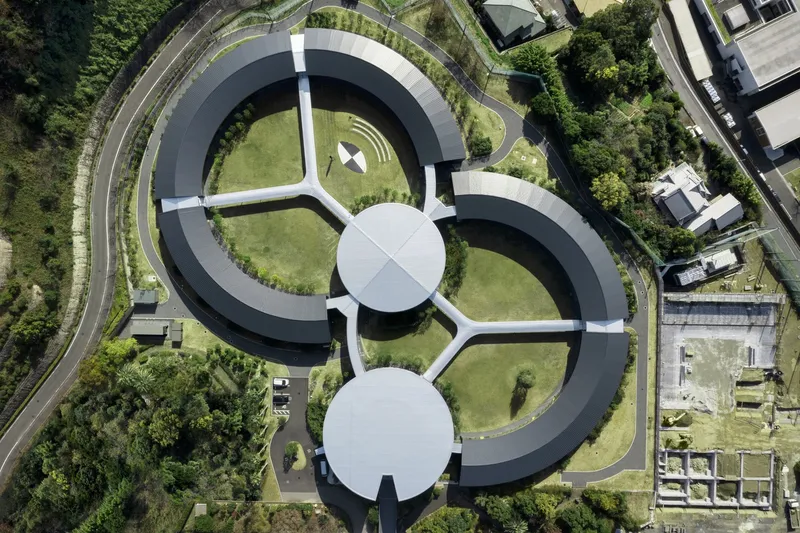
A defining feature of the campus is its innovative ring-shaped floor plan, which ensures that the majority of classrooms benefit from expansive views of the surrounding landscape. This circular configuration encloses verdant courtyards, allowing nature to permeate both the interior and exterior environments.
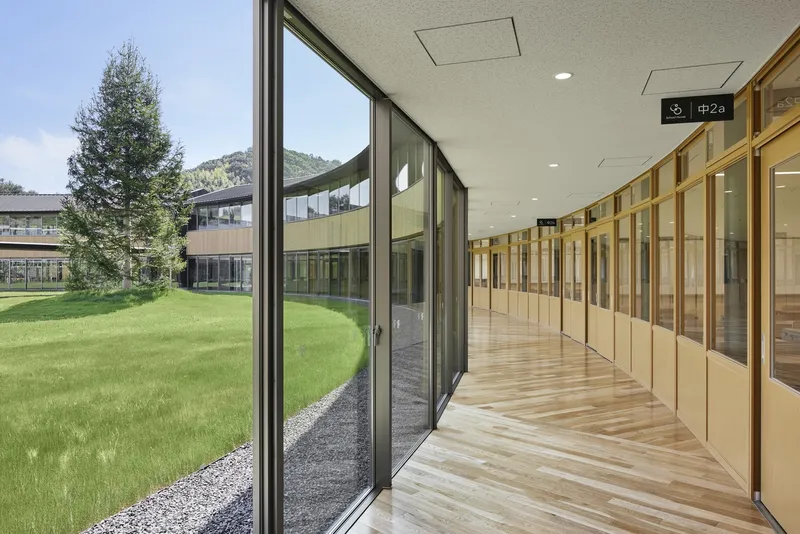
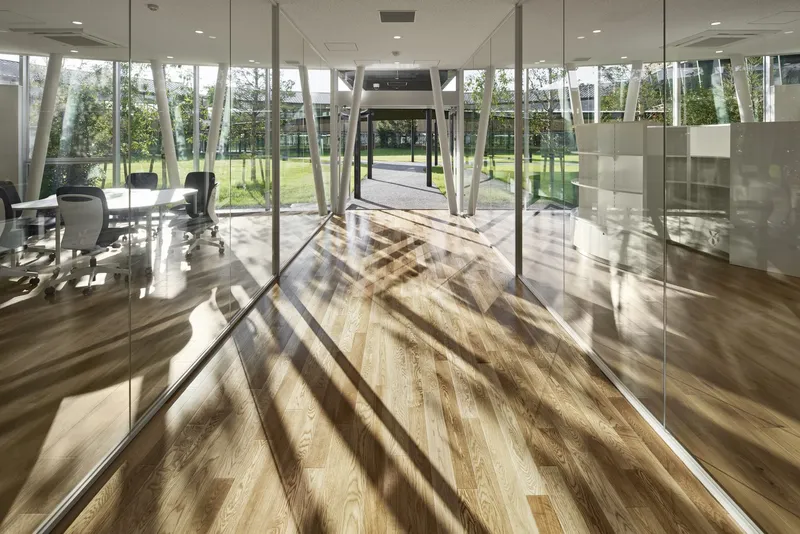
The continuous loop of corridors symbolizes infinity and unity, promoting fluid movement, visual openness, and spontaneous interaction among students and faculty. This layout enhances communication while fostering a strong sense of community and belonging.
“School Village” Concept for Functional Diversity
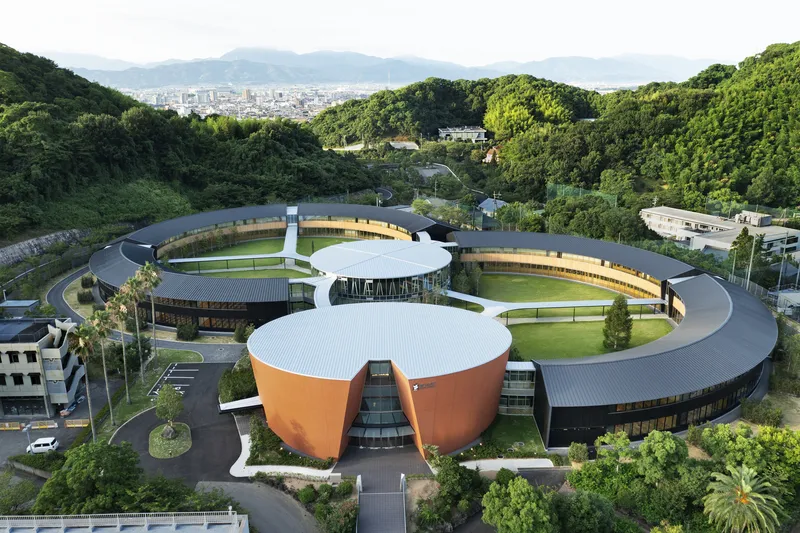
The campus is organized as a School Village, where distinct buildings serve specific functions while remaining interconnected. This includes:
- Classroom wings for junior high and high school students
- A conical administration building acting as a symbolic entrance gate
- A centrally located, glass-enclosed Teacher’s Room offering panoramic campus views
This decentralized arrangement allows each function to operate independently while contributing to a cohesive educational ecosystem.
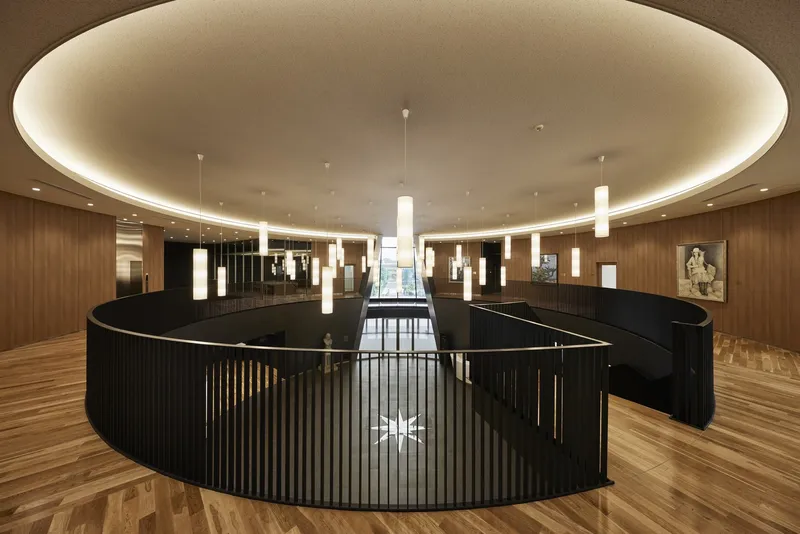
Personalized Learning Environments: The School House Model
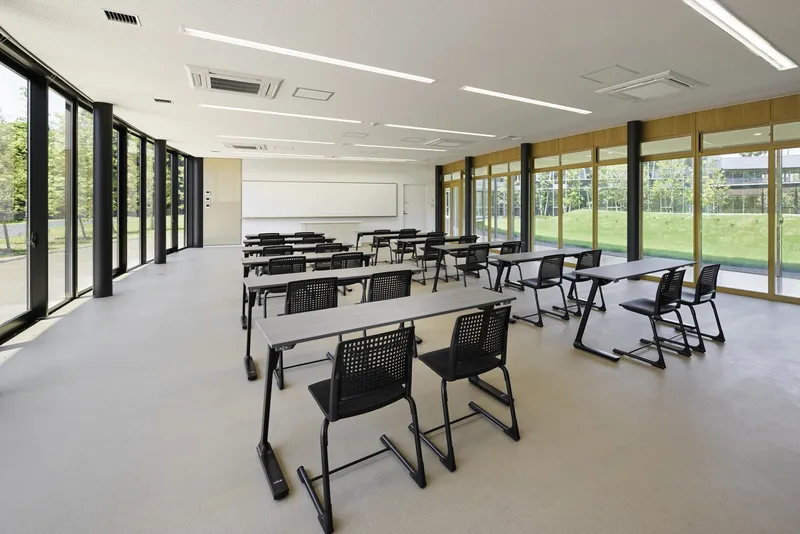
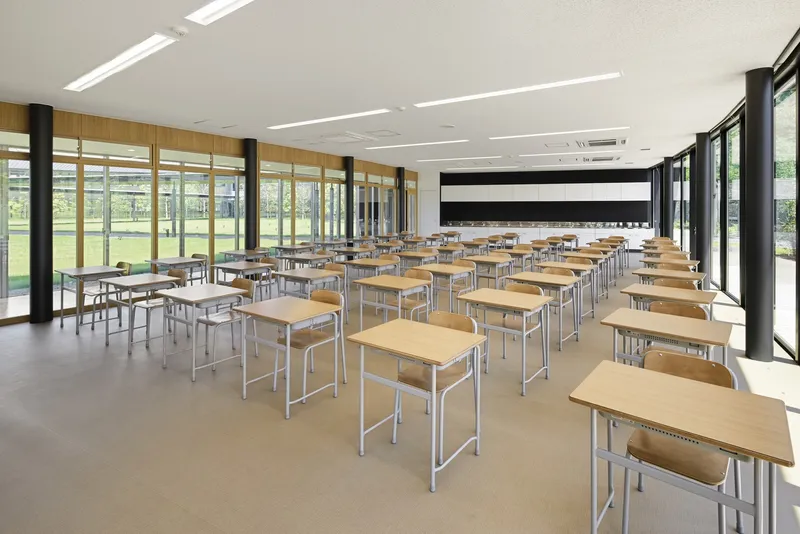
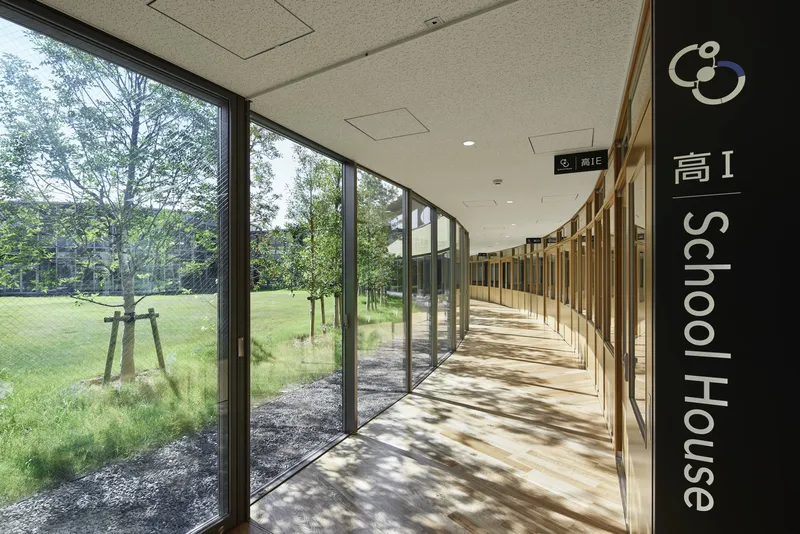
Each academic year is housed within its own School House, designed to create a sense of identity and comfort. These units include classrooms, restrooms, and flexible Innovative Lounges that support collaborative learning, relaxation, and creative activities.
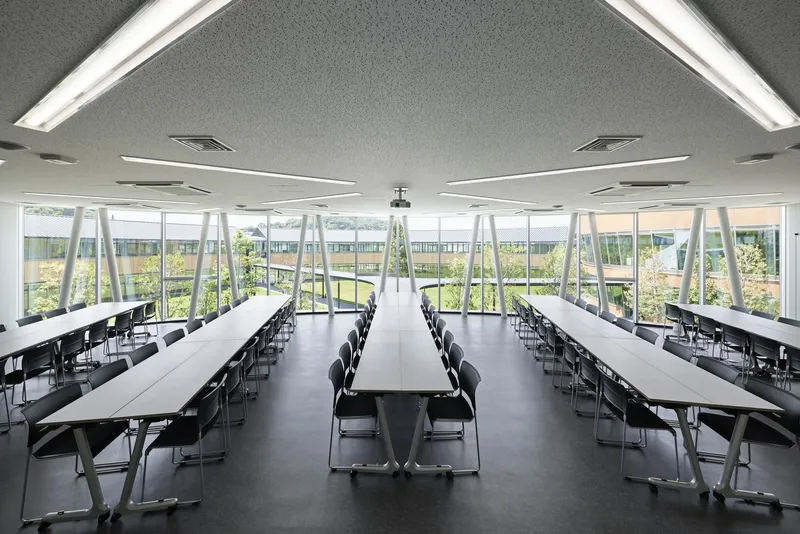
The design fosters a “home-like” atmosphere, enhancing student well-being and encouraging deeper engagement. Classrooms are bathed in natural light from both sides, with views of trees and greenery reinforcing a strong connection to nature.
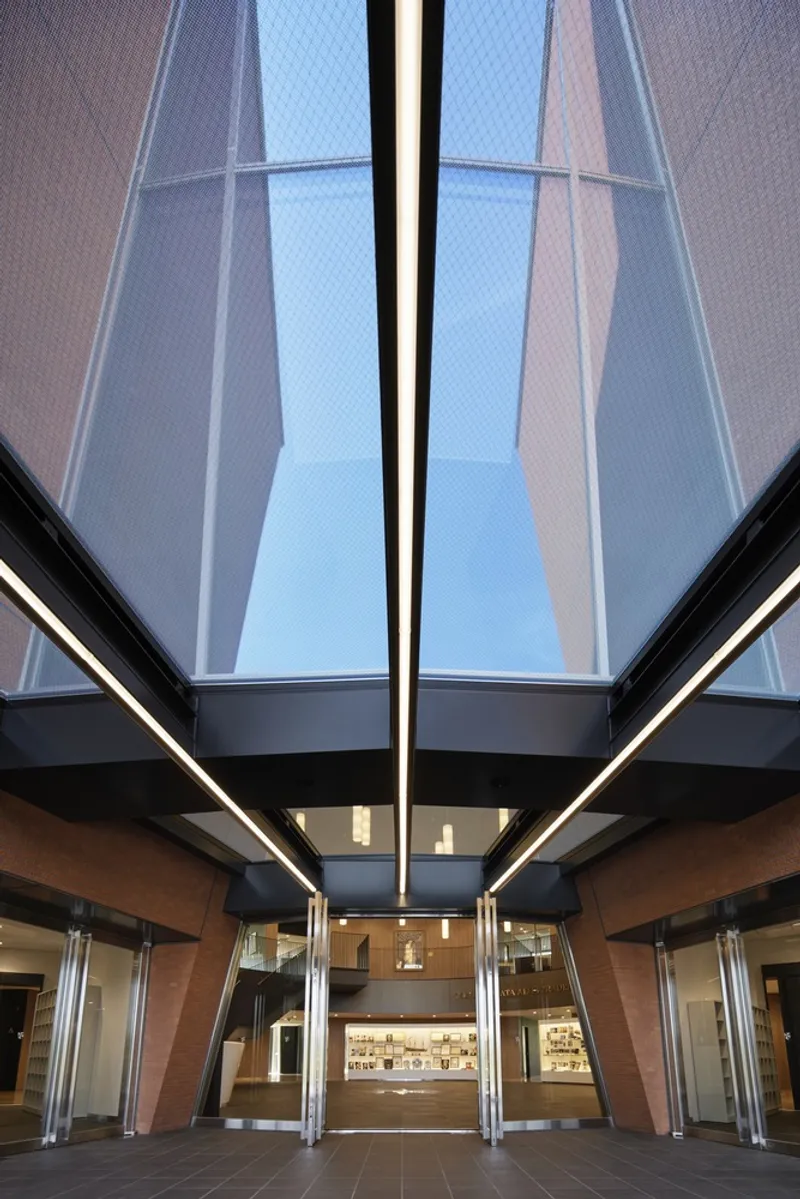
Courtyards and Social Interaction Spaces
The central courtyards act as vibrant social hubs where students from different grades can interact freely. These green spaces serve multiple purposes, from active play areas to शांत zones for relaxation and reflection.
Glass-walled intersections, known as Cross Points, further enhance spatial transparency and bring daylight deep into circulation areas. These nodes create refreshing transitions between spaces while maintaining constant visual contact with nature.
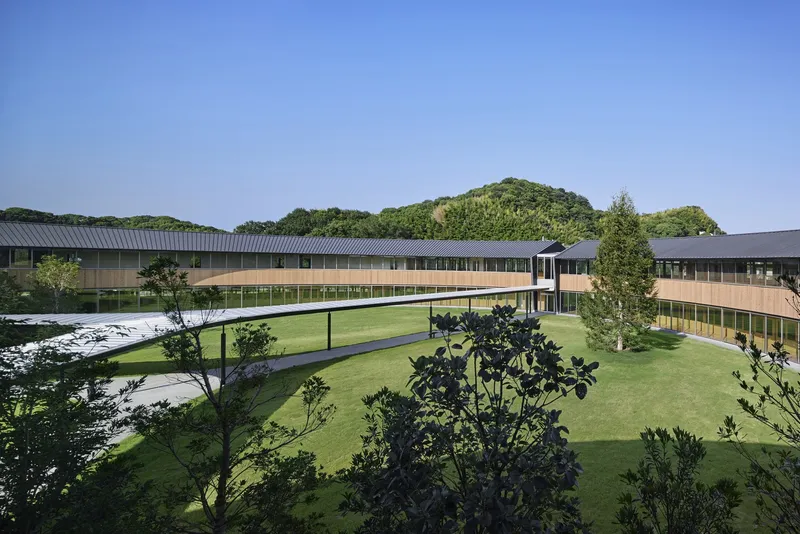
Sustainable and Human-Centered Educational Architecture
The AIKO Educational Institution exemplifies sustainable design principles by maximizing daylight, natural ventilation, and landscape integration. The project demonstrates how architecture can shape behavior, promote well-being, and support progressive educational models.
By blending functionality with emotional and environmental sensitivity, the campus becomes more than just a school: it transforms into a dynamic learning landscape that inspires curiosity, creativity, and connection.
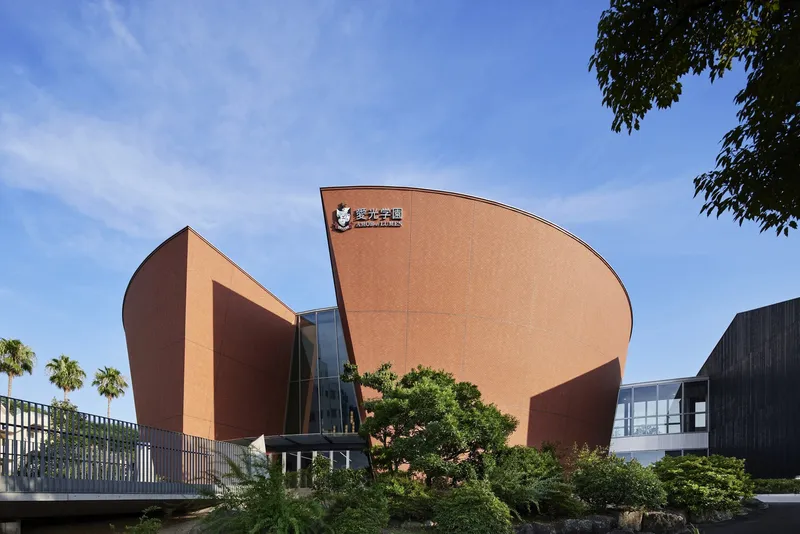
All photographs are works of
Nacasa & Partners




Popular Articles
Popular articles from the community


Hill & Cross Opera: Sculptural Opera House Architecture Shaped by Tallinn’s Landscape and Identity
Hill & Cross Opera reimagines opera house architecture in Tallinn through its sculptural hill, civic plaza, glass wave and a luminous cross.

Lunar Spiral: Space Architecture Shaped by the Mathematics of the Universe
Lunar Spiral reimagines space architecture through Fibonacci geometry, lunar regolith, levitating habitats, and self-sustaining Moon living.

The Musturak Paradise: Senior Living Architecture for a Connected Future in Temara, Morocco
The Musturak Paradise reimagines senior living architecture in Temara via private homes, social spaces, culture, community, and shared care.

Co-Life: Senior Housing Design That Reconnects Older Adults With the City
Co-Life reimagines senior housing design through healing gardens, shared streets, workshops, and a sustainable community across generations.


Similar Reads
You might also enjoy these articles

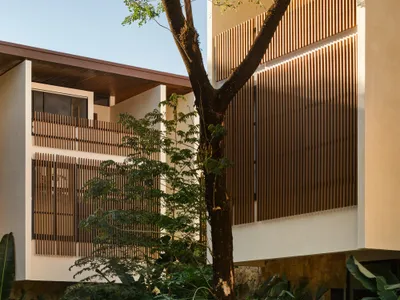
FAMM Arquitectura Organizes Ten Villas Around Courtyards and Jungle in Nosara, Costa Rica
El Molino pairs two elongated volumes with deep overhangs and timber louvers to build a compact coastal community five minutes from the beach.
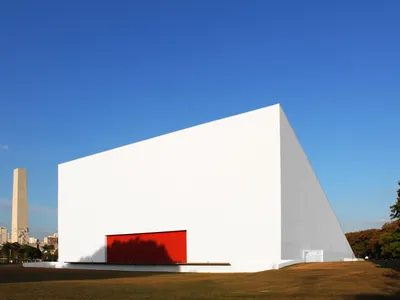
Oscar Niemeyer's Ibirapuera Park Pavilions Define São Paulo's Cultural Identity in Concrete and Curve
A constellation of modernist volumes set within São Paulo's most important urban park, conceived for the city's 400th anniversary in 1954.
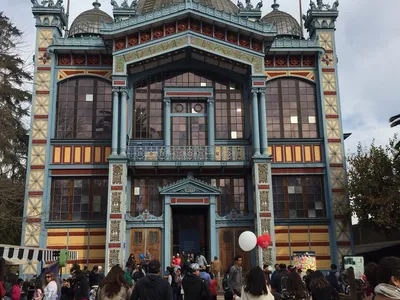
How Henri Picq's 1889 Paris Pavilion Traveled 11,000 Kilometers to Become Santiago's Artequín Museum
A prefabricated iron and glass pavilion built for the Paris Universal Exposition found a second life as a children's art museum in Chile.
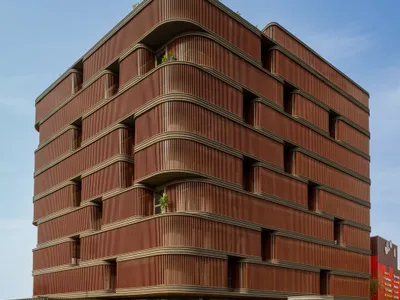
Sanjay Puri Architects Wraps a Jaipur Office Tower in Capsule-Shaped Green Buffers
A nine-level climate-responsive workplace near Jaipur Airport uses stacked planter terraces and aluminium screens to fight 40°C heat.


Explore Architecture Competitions
Discover active competitions in this discipline



Challenge to design public laboratory


Challenge to reimagine the Iron Throne


Photograph architecture without architects


Illustrate the lost glory of Angkor Wat - Render Challenge
Comments (0)
Please login or sign up to add comments
No comments yet. Be the first to comment!