
Development of Andretta Artist’s Village, Palampur, Himachal Pradesh, India
Reimagining Andretta as a living cultural landscape where art, architecture, and community converge to shape a global creative village.


Nestled within the rolling foothills of the Dhauladhar range, Andretta has long held a unique identity as an artist-led settlement: an organic colony shaped by craft, performance, and collective cultural life. This proposal for the Development of Andretta Artist’s Village Palampur, Himachal Pradesh, India reinterprets the settlement through the lens of cultural landscape architecture, positioning the village not as a static heritage site but as a dynamic, evolving ecosystem for artistic production, learning, and exchange.
Rather than imposing an external masterplan, the project grows from Andretta’s existing social, cultural, and topographic conditions. It amplifies the village’s legacy as an artist colony by creating a globally relevant platform where artists, visitors, and local communities intersect: learning from one another through shared spaces, practices, and everyday rituals.
Reading the Site as a Cultural Landscape
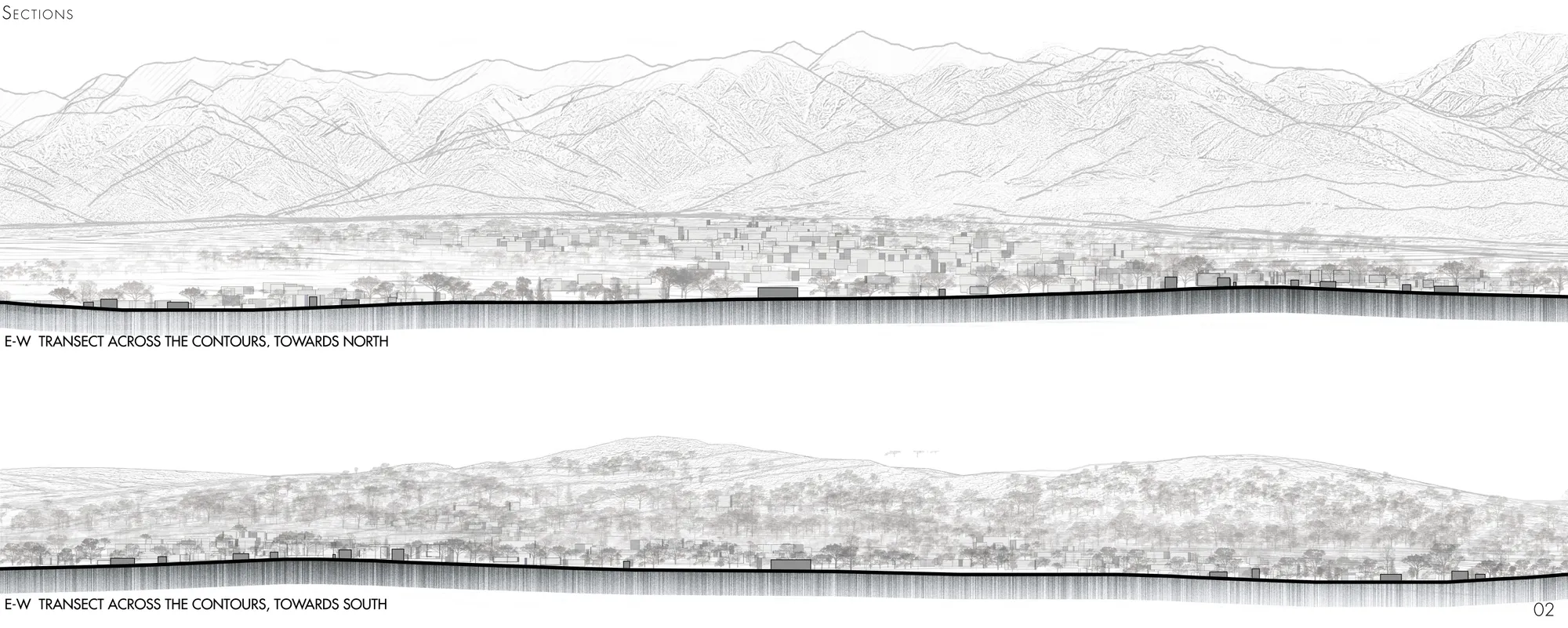
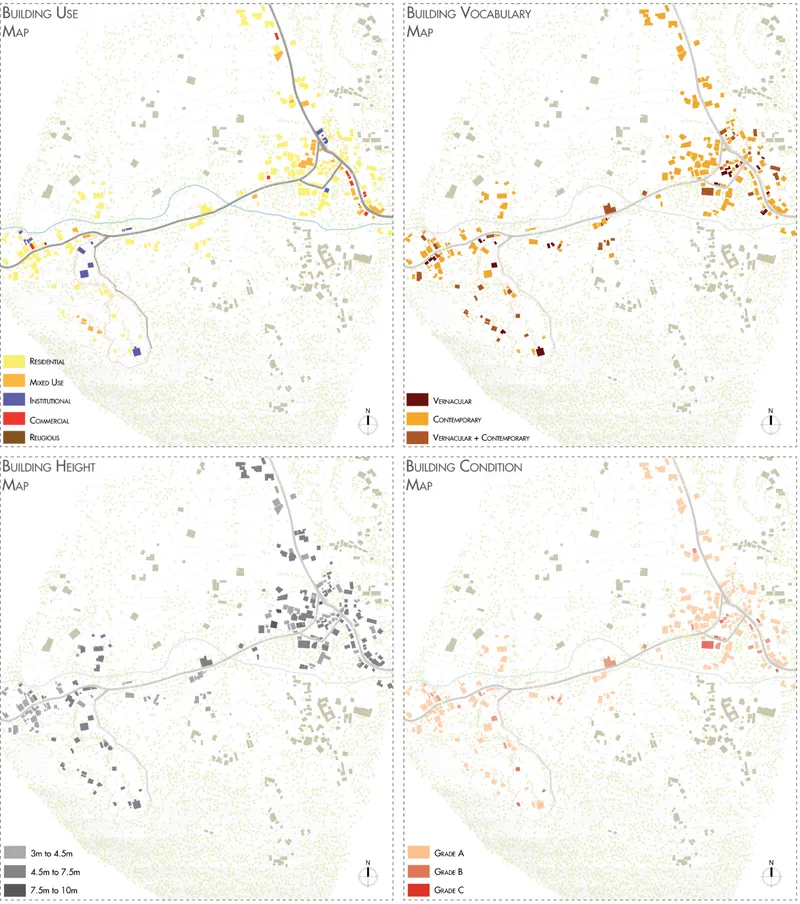
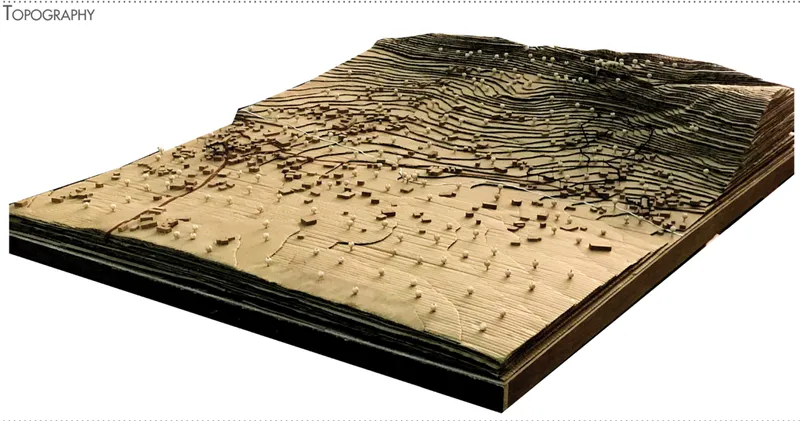
The project begins with an in-depth understanding of Andretta’s terrain, settlement patterns, and cultural anchors. Baseline studies map building use, height, condition, and vocabulary, revealing a dispersed rural fabric shaped by winding roads, water channels, and gentle contours. Key cultural nodes: such as the Sobha Singh Art Gallery & Museum, Andretta Pottery & Craft Society, and The Woodland Estate, form an existing spine of artistic activity.
By treating the site as a cultural landscape, the design integrates natural systems, movement patterns, and built form into a single spatial narrative. The topography is not flattened or overridden; instead, it guides circulation, cluster placement, and program distribution, allowing architecture to sit lightly within the land.
Design Vision: From Artist Colony to Global Creative Village
The vision extends beyond physical redevelopment. At its core, the proposal seeks to:
- Reinforce Andretta’s identity as a living artist colony
- Create spaces for teaching, learning, and showcasing creative work
- Enable informal social interaction between artists, locals, and visitors
- Support cultural tourism without commodifying local practices
This transformation is driven by three intertwined objectives:
Social Enhancement
Open and semi-open spaces are woven throughout the village to encourage informal interaction, discussion, and collaboration. Amphitheatres, seminar halls, galleries, and community spaces act as shared platforms where art becomes a social act rather than a secluded practice.
Cultural Viability
Dedicated facilities for pottery, painting, theatre, and craft training ensure the continuity of Andretta’s artistic traditions. Artist communes and residences support long-term stays, allowing cultural knowledge to be passed through lived experience rather than short-term exhibitions alone.
Economic Empowerment
Retail studios, cafés, food courts, skill development centres, and tourist accommodation introduce sustainable economic activity. These spaces enable artists to showcase and sell their work while ensuring that tourism benefits the local community directly.
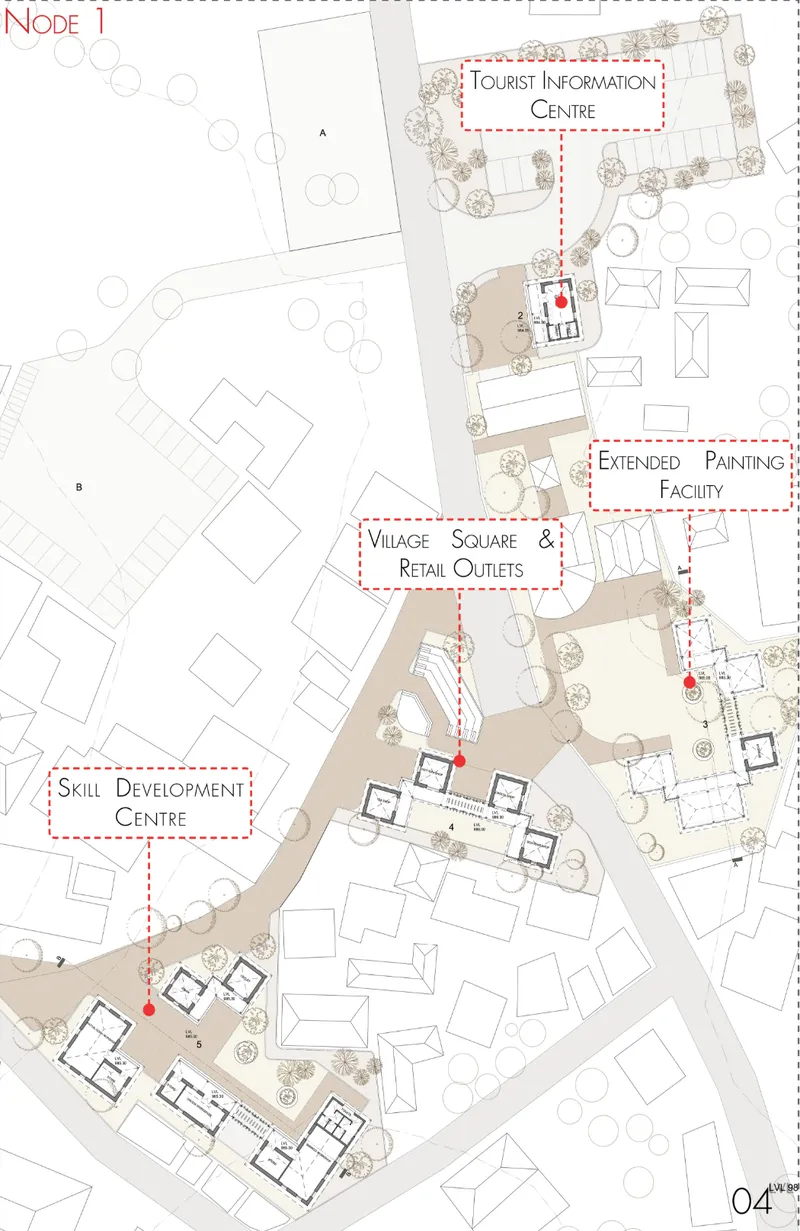
Spatial Strategy and Node-Based Development
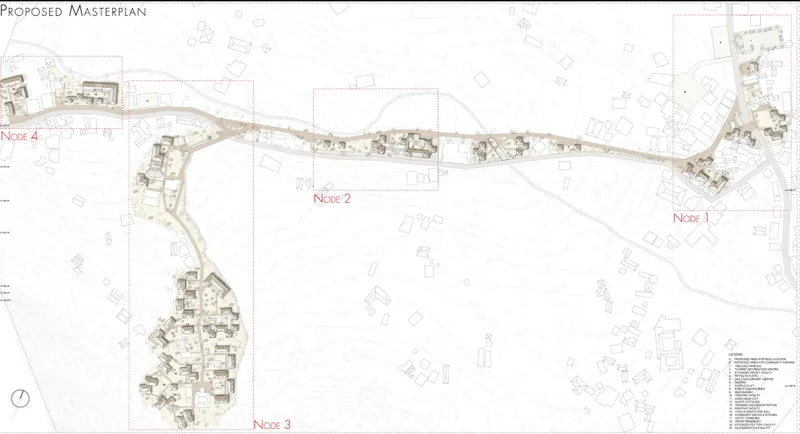
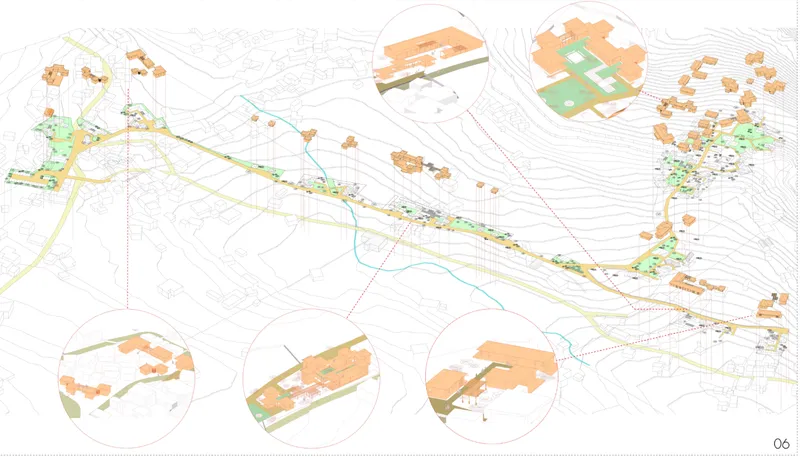
The masterplan is structured as a sequence of interconnected nodes along a primary movement spine. This linear yet porous framework allows visitors to gradually experience the village, discovering programs through movement rather than spectacle.
Each node responds to its immediate context:
- Exhibition and public utility clusters anchor entry points
- Training, painting, and demonstration facilities form learning hubs
- Artist residences and communes create quieter zones for reflection
- Theatre, dining, and communal spaces foster collective life
This decentralized approach ensures that no single structure dominates the landscape. Instead, architecture operates as a series of clusters embedded within vegetation, contours, and existing pathways, reinforcing the idea of a village rather than an institution.
Architecture Rooted in Material and Making
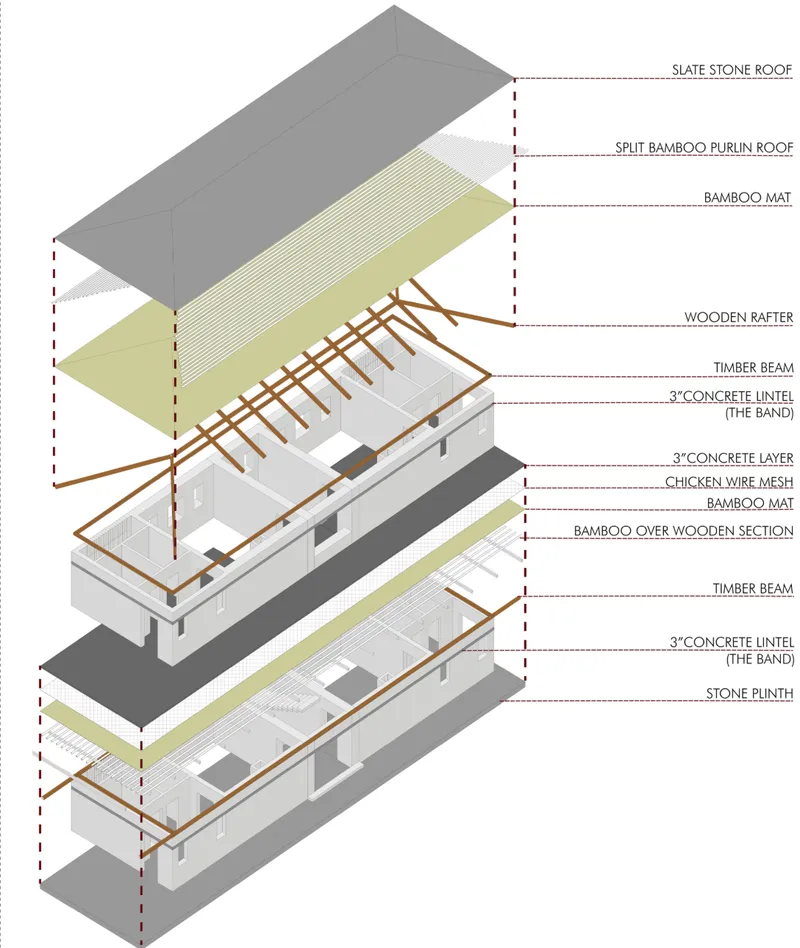
The architectural language draws from local construction practices and material intelligence. Exploded axonometric studies reveal a layered system using slate stone roofs, bamboo mat infill, split bamboo purlins, timber beams, and stone plinths. These elements reflect both climatic responsiveness and craft-based construction.
By combining vernacular materials with contemporary detailing, the project positions architecture itself as an act of making, aligned with the artistic ethos of Andretta. Buildings remain low-rise and human-scaled, allowing rooflines and courtyards to mediate between indoor and outdoor life.
Living, Learning, and Performing Together
Cluster layouts demonstrate how diverse programs coexist without rigid separation. Guest cottages, artist residencies, dining spaces, and studios are interlinked through shaded pathways and shared courtyards. Performance spaces such as extended theatre facilities are placed strategically to serve both the village and visiting audiences.
This spatial overlap dissolves boundaries between living, learning, and performing. Visitors do not merely observe art, they encounter it as part of everyday village life.
Cultural Landscape Architecture as a Future Model
The Development of Andretta Artist’s Village proposes a replicable model for rural cultural settlements across India and beyond. By framing architecture as part of a broader cultural landscape, the project demonstrates how heritage, ecology, economy, and community can evolve together.
Rather than freezing Andretta in time, the design allows it to grow, welcoming global creative exchange while remaining deeply rooted in its local identity. It is a village shaped not by monumentality, but by relationships: between land and building, artist and visitor, tradition and future.
Project by Yash Siroliya



Popular Articles
Popular articles from the community


Co-Life: Senior Housing Design That Reconnects Older Adults With the City
Co-Life reimagines senior housing design through healing gardens, shared streets, workshops, and a sustainable community across generations.

Co-life: Sustainable Architecture for Age-Friendly Community Living
Co-life reimagines sustainable architecture for seniors through courtyards, rammed earth, shared gardens, and spaces designed for belonging.

Hill & Cross Opera: Sculptural Opera House Architecture Shaped by Tallinn’s Landscape and Identity
Hill & Cross Opera reimagines opera house architecture in Tallinn through its sculptural hill, civic plaza, glass wave and a luminous cross.

The Ocean Hive: Sustainable Architecture for a Self-Sufficient Civilization at Sea
The Ocean Hive imagines sustainable architecture at sea, where modular habitats, algae, wave power and ocean waste sustain a growing colony.
Similar Reads
You might also enjoy these articles

Maya Harvest: A Cacao Resort Village Rooted in Mayan Tradition and Local Craft
Situated within a Tabasco cacao plantation, this shortlisted resort proposal merges vernacular materials with hands-on cultural immersion.
Harmonia: A River-Shaped Community That Grows Over Decades in Boa Vista
Curved pathways and modular grid structures along the Branco River create a phased settlement designed to evolve from 2030 to 2050.
The Architecture of Bathing: A Mughal Hammam Reimagined Across the Yamuna
Charlotte May's honorable mention entry for The Black Taj reinterprets Agra's bathing rituals through red sandstone, water, and framed views of the Taj Mah
Om-1: A Wall-Hung System That Moves Your Workspace Off the Desk
Modular plywood boards, magnetic pegs, and utility elements migrate clutter from the horizontal surface to the vertical plane.

Comments (0)
Please login or sign up to add comments
No comments yet. Be the first to comment!