


Low Cost Design
Design solutions that prioritize affordability, accessibility, and resourcefulness across architecture and community spaces.
Low Cost Design is a concept that deals with effective costing and sustainable technologies that help reduce construction costs by using widely available materials. There is a big misunderstanding that low cost buildings are usually only suitable for the following tasks and are built using cheap and low-quality building materials. In fact, low cost design comes from proper resource management and contributes to healthy construction practices. Low - Cost design also encourages architects and designers to innovate with available resources and provide comfortable spaces in the most extreme conditions.
This branch of architecture also helps to form an understanding of interventions and design like temporary shelters, refugee/migrant housing and disaster-resilient architecture/design.

As the world's population grows, authorities around the world are envisioning architecture differently for everyone. Low-cost design is designed to provide permanent/temporary and affordable interventions for housing and other typologies that are available to all groups and backgrounds. For example, in developing countries such as India, housing demand in low-income, economically disadvantaged areas peaks at 96%.
Therefore, projects carried out by various organizations and architecture firms offering low-cost designs improve living conditions and curb the growth of informal settlements. Efficient design, locally sustainable building materials, and simple construction techniques can have a dramatic impact on construction costs.

Img 1: Low-cost design Friendship Hospital Satkhira by Kashef Chowdhury/URBANA (Credits: Asif Salman)
What are the advantages of low cost buildings?
Low-cost buildings can be achieved through efficient planning and project management, cheap materials, economical construction techniques, and the use of available alternative construction methods. A few advantages of low-cost building materials are
• Manufacturing materials
-Environmental friendly low-cost materials
-Improve technologies for production
• Reduction in waste generation
-Waste produced can be used as a production of a material cheaper in cost
• Use of Natural Low-Cost Building Materials
-Natural materials are sustainable and environmentally friendly
-Materials like stone, lime, bamboo, sand have low embodied energy
• Use of Recycled Waste as Building Materials
-Reduces transportation dependence
-Suitable for the local environment
• Use of non-toxic building materials
-Materials to be free from any kind of toxins
-Higher air cycling is required if any highly organic volatile compounds are used
• Longevity, Durability and Maintenance
-The use of durable construction materials decreases the maintenance cost
-Low maintenance costs save a lot of building operating costs
• Recyclability and Reusability
-In a form so that it can be recycled or reused. Eg. Plastic
• Biodegradability
-Decompose naturally when discarded
-Not produce toxic gases while decomposition
What are some materials used for low-cost design?
Inexpensive construction requires adequate foundations and structures. The five groups of building materials that are usually used in the most low-cost designs are given below.
• Bamboo and Timber
• Compressed earth bricks and blocks

Img 2: Exposed bamboo used in Hotel the Tiiing (Credits: Ben Hosking)
• Adobe blocks
• Interlocking blocks of recycled materials (plastic, waste)
• Improved concrete panels

Img 3: Structure built from adobe blocks (Credits: http://debarroarquitectura.com/susurrosdelvientocasa/)
These sustainable materials have a lot of potential as building materials for low-cost construction. Although materials can differ by the topography and requirements of the project, most of these materials are easily and locally available in the market.
Architecture Competitions
Competitions are a great way to try out new things, make mistakes and learn from them. They're also a great opportunity for portfolio building because everything you submit gets contextualized based on where it ranks against everyone else's work. And perhaps most importantly, they give you extra insight into what the judges see in your submitted work as well as how they don't see it - which is yet another fantastic way to improve your designs in unexpected ways.

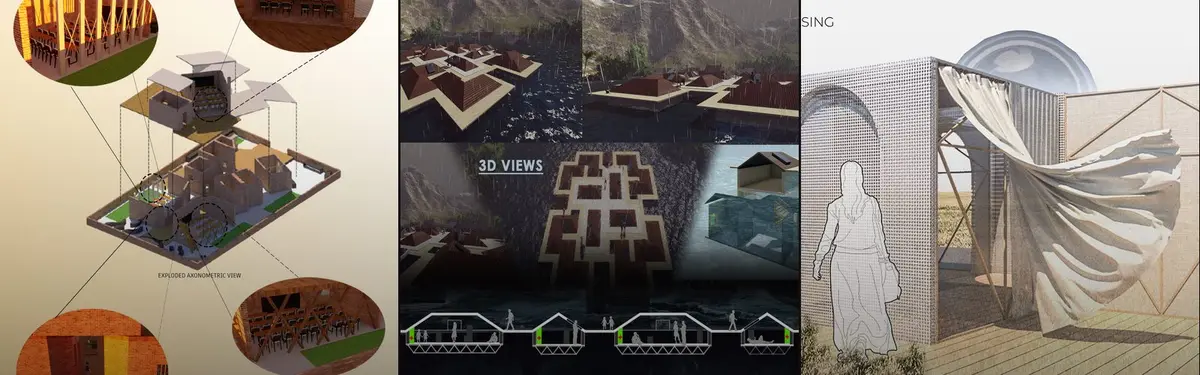
Img 4: ‘MATRIOSKHOUSE’ competition entry for Safe harbour: Designing temporary shelters
An optimum low-cost design not only offers cheaper and more accessible alternatives but also reduces the excessive use of natural resources during manufacturing and construction. Accessing the demands of today’s society/earth and the need for low-cost designs, architecture and design challenges offer numerous issues across the globe for both students and professionals. These competitions collect, showcase, and discuss ideas that have the potential to turn into built projects.
Explore more of those ideas on UNI:

UNI Design Competitions
UNI is a global network of architects and designers who are solving some of the most challenging problems around the globe. UNI brings together the world's largest pool of design challenges that are curated by the finest architecture academicians and professionals globally. With over 200,000+ registered members, UNI brings academia and the professional spheres of architecture together through a unique knowledge-sharing web platform.
Since 2017, UNI has hosted more than 200+ architecture competitions for various idea level to realization level briefs. In the past, UNI has helped 50+ organizations, universities, and government bodies to use our platform to generate architecture and design solutions through competitions.
Few competitions held by UNI in low-cost design are Build-Up, Asylum, Collapse, Go Medic, Living-hub, Re-Shelter, Safe Harbour
Discover other competitions: https://uni.xyz/competitions






Open competitions in Low Cost Design
See all Low Cost Design competitions

Popular projects
View all 248 projects












Latest journals
View all 89 journals

The Earth Pod: 3D Printed Clay Dwellings That Treat Refugee Shelter as Long-Term Habitat
Florian Mouafo Zambou's Strata 2020 entry prints clay pods inspired by earthen cooling vessels, shaded by solar canopies built for years, not weeks.
P-A-R-A-S-I-T-E: A Bamboo Bridge That Lets Hong Kong's Night Market Breathe From Above
A lightweight bamboo and timber parasite clings to a Yau Ma Tei facade, lifting circulation above Ning Po Street's crowded night market stalls.
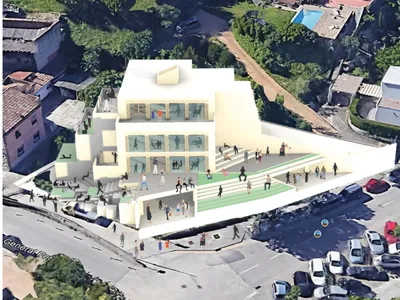
Community Library in Girona: A Section That Climbs From Public Forum to Private Study
A shortlisted BookMark 2020 entry that stacks a library from public exchange at ground level to quiet study above, around a central information core.
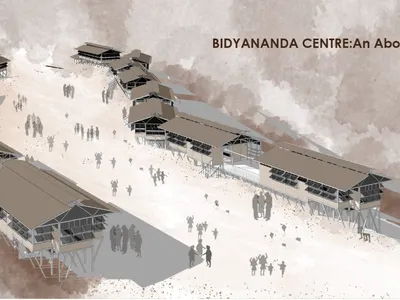
Education 20: Murong Settlement Patterns as a Framework for Parallel Learning and Family Care
Sagorika Zannat folds orphan care, local schooling and Murong communal life into one terrain-responsive village of bamboo, thatch and shared pathways.


