Art therapy
Therapy through architecture, art, and integration

In today's times, there is an increase in mental health disorders in societies, especially among young people. A significant portion of the population in the United Kingdom's cities suffers from mental illnesses, depression, and mood swings. In the capital of Scotland, Edinburgh, there is a shortage of facilities and opportunities for treating these disorders, which poses a serious issue in society.
It is also evident that community gathering centers play a role in fostering integration and neighborhood development. They form the basis of one's identity and attachment to a particular space, which is a positive and desirable aspect for a place. This contributes to forming bonds and building relationships with others, thereby positively impacting human psychology. In the analyzed area, there is a lack of local meeting places, which is another problem in this society.
In Edinburgh, there is a need for a healthcare facility for individuals with mental disorders and a cultural space that serves as a local arts center, allowing these individuals to learn and integrate with the local community.
Properly designed and equipped spaces, combined with therapy, art, and integration, can meet the needs of the area by improving health, integrating the community, and fostering creativity.
Project Objective:
The objective of this project is to create a multifunctional/multi-use space that, on the one hand, improves the mental and physical health of patients (mainly those with symptoms of depression and mood swings) through art therapy and, on the other hand, contributes to the integration of the local community by combining the following characteristics:
- Public: The facility will be open for social purposes as a public space.
- Equal Access: All individuals will have the opportunity to use the facility.
- Art Therapy: Combining space for artistic activities (art/music/dance, etc.).
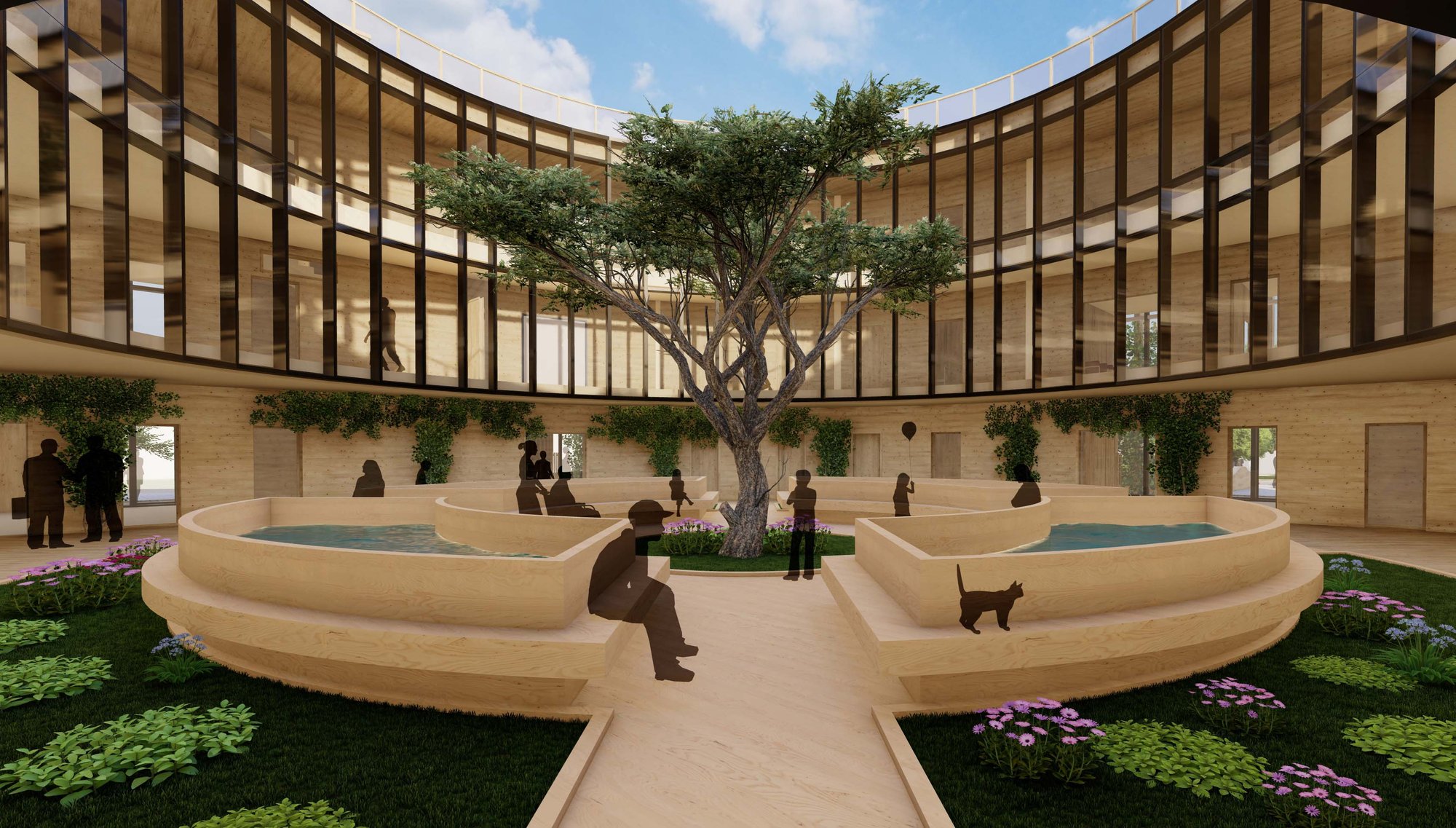
- Connection to Nature: Incorporating nature into the interior of the facility and allowing for an outdoor nature experience.
Assumptions arising from the analysis of the site:
1. Assumptions for Site Development:
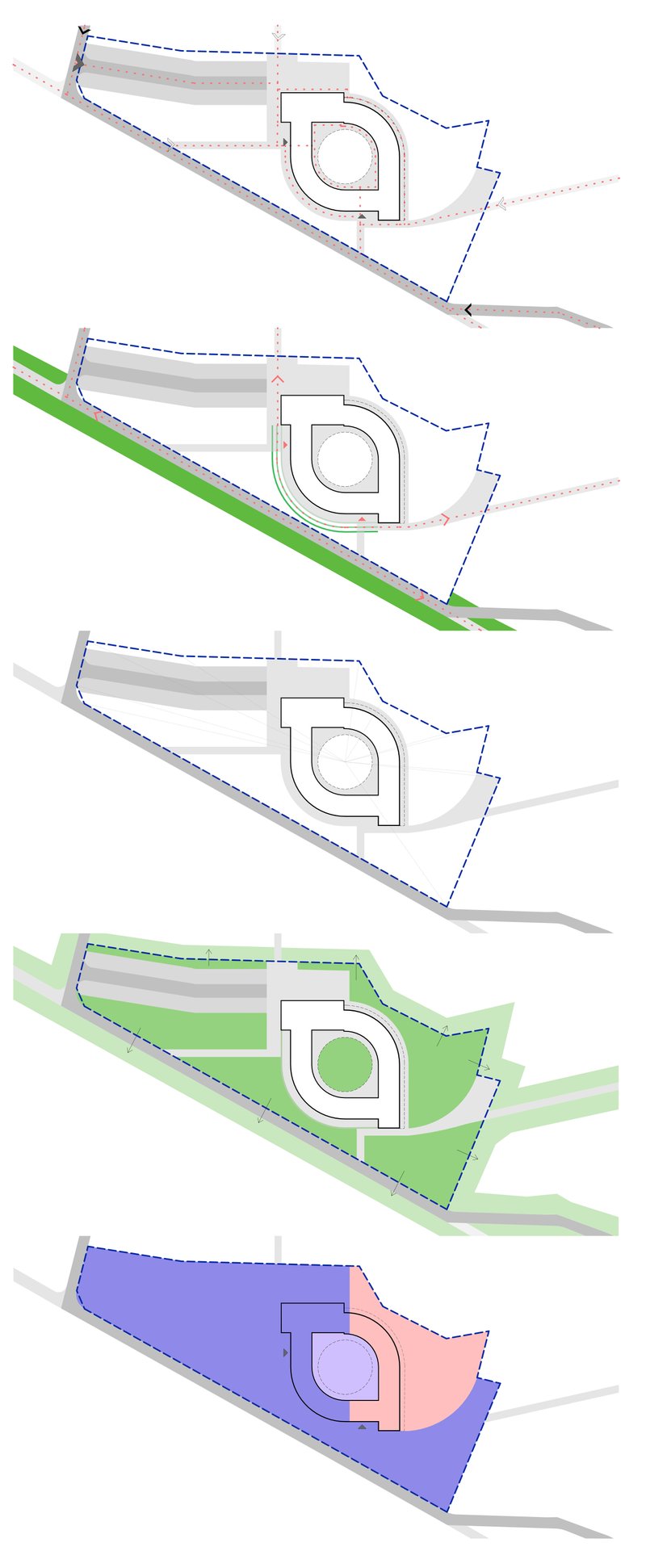
- Create an entrance from the main road (in the location of a previous entrance) to connect to a pedestrian pathway adjacent to the site.
- Transform the pedestrian pathway into a 3.6m wide access road, hardened to serve as a fire lane.
- Design an adequate number of parking spaces for cars on the site.
- Extend the green pedestrian pathway through a portion of the site, incorporating water reservoirs and gardens.
- Design the site in an open manner, allowing unrestricted access to the portion adjacent to the pedestrian pathway.
- Implement zoning on the site: two separate entrances to the building - one main entrance from the parking area and another semi-private entrance from the green area; divide into a zone accessible to external individuals and a private zone enclosed by fencing.
- Introduce water reservoirs and recreational areas on the site to extend the recreational area.
2. Assumptions for Building/Complex Design:
- Incorporate low-rise buildings with a height of 10 meters.
- Adjust the width of corridors (7/7.5 meters), facade divisions, and the number of above-ground floors (3) of the proposed development to match neighboring buildings.
- Use Scottish oak as an exterior and interior material to provide warmth, comfort, and safety for users.
- Introduce a geometric and symmetrical building design (rectangular shape with rounded corners - eye-shaped) with an atrium in the center.
- Position the building in the center of the irregularly shaped plot.
3. Assumptions for Interior Space Design and Preferred Functional Features:
- Introduce an Art Therapy facility - a therapeutic center that activates individuals with mental disorders through art, also serving as a local integration center for the community.
- Create a separation between the public and private areas in the building with separate entrances and circulation, but connected through a common atrium functioning as a connecting, recreational, and exhibition space.
- Allocate the facility for patients of the art therapy program, staff (therapists, administration, custodians), visitors, and the local community.
- Implement eco-friendly solutions: green roofs, photovoltaics on the roof and glazed surfaces, rain gardens, and rainwater reservoirs, with building ventilation through the central atrium.
Detailed design assumptions and solutions:
1. Formal Relationships with the Surroundings:
- Avalability: Connection of existing accessories to the plot, which together with te designed approaches create one communication route.
- Exposure: Exposition of the green south facade from main entrances, communication route and walking route.
- Middle: Location of the building body body in the centre of gravity of the plot
- Greenery: Connecting the designed greenery with existing greenery sourrounding the plot
- Zoning: Division of the plot into private and public parts with two separate entrances to the building, connected by common parts
2. Architectural form ofthe building:
The building takes the form of a three-storey (with a maximum height of 10 meters) structure with a square plan featuring two opposite rounded corners and two protruding rectangular corners. The building has a flat roof over most of its area, while a green roof is applied to the southern part.
The building's volume is divided vertically by a wooden facade, which varies depending on the function of the covered part of the building. In the residential section, there are glass elements and balconies that create horizontal divisions within the building's volume.
This architectural solution gives the building a unique character by combining functionality with aesthetics while also incorporating ecological elements, such as the green roof.
The volume is divided vertically by a wooden façade, differentiated based on the functions of the surrounding parts of the building, and horizontally by glass elements and balconies in the residential section.
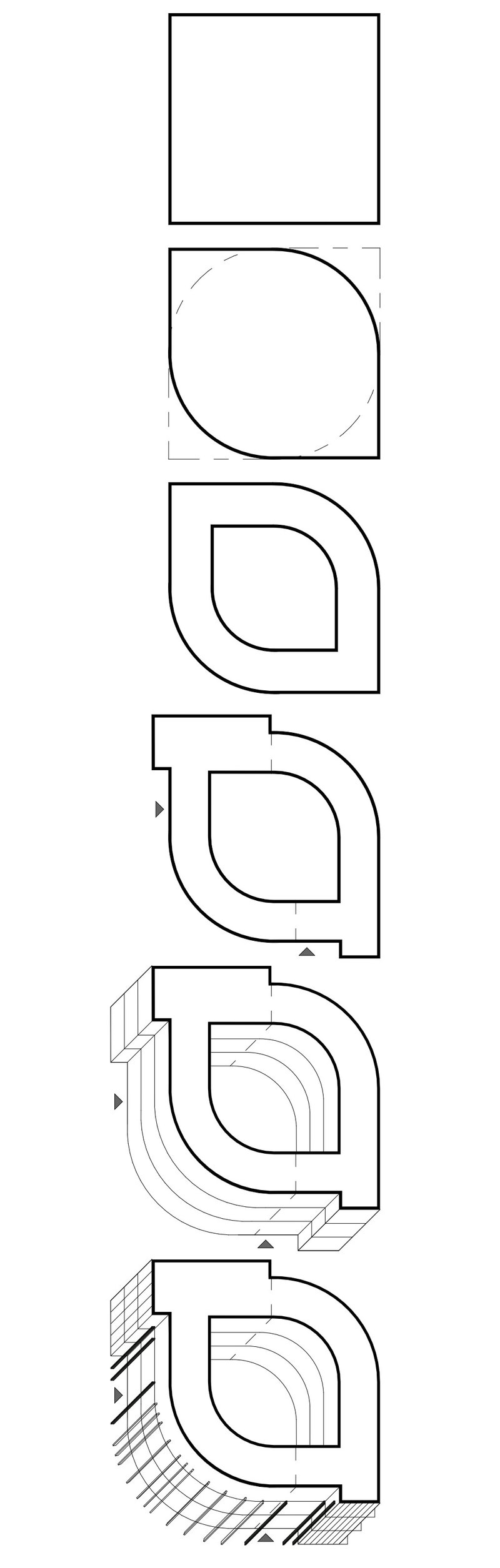
• I The initial shape of the building's footprint was derived from a square with a side length of 36 meters.
• II The building was elliptically rounded at two opposite corners by inscribing a circle within the square.
• III In the rounded building, an atrium was carved out with the same proportions as the perimeter of the building, creating a corridor with a width of 7.5 meters.
• IV Functional considerations led to the extension of corners in the building, and it was divided into two parts: public and private, with separate entrances and circulation, connected by a common atrium on the ground floor.
• V The building's volume was extended to a height of 10 meters and divided into three stories, covered by a flat roof.
• VI The building's volume was articulated with vertical divisions on the façade, and balconies were introduced in the residential section.
3. Facade Solutions:
The facades have been designed using Scottish oak wood with varying treatments based on the functions they envelop within the building.
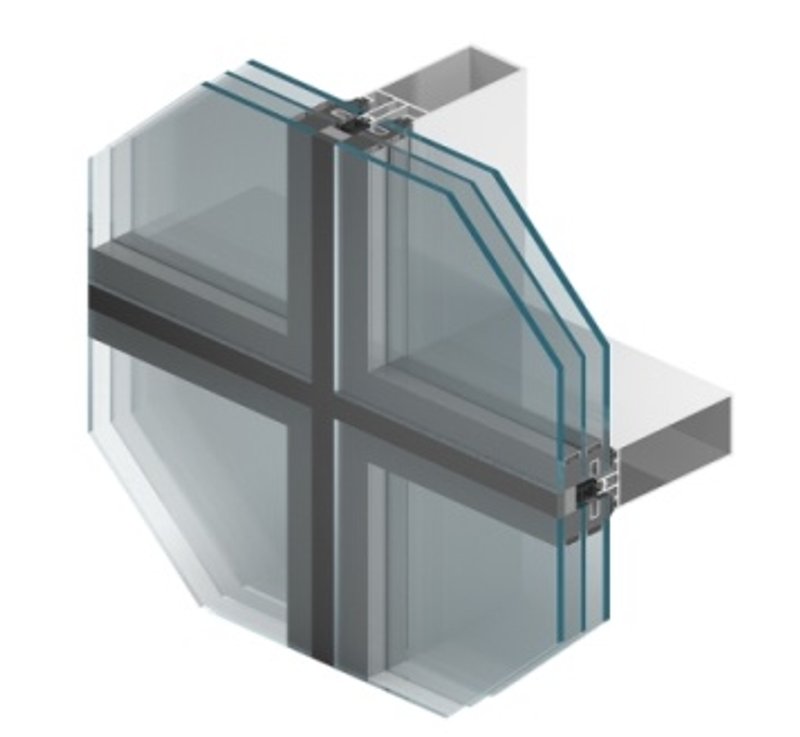
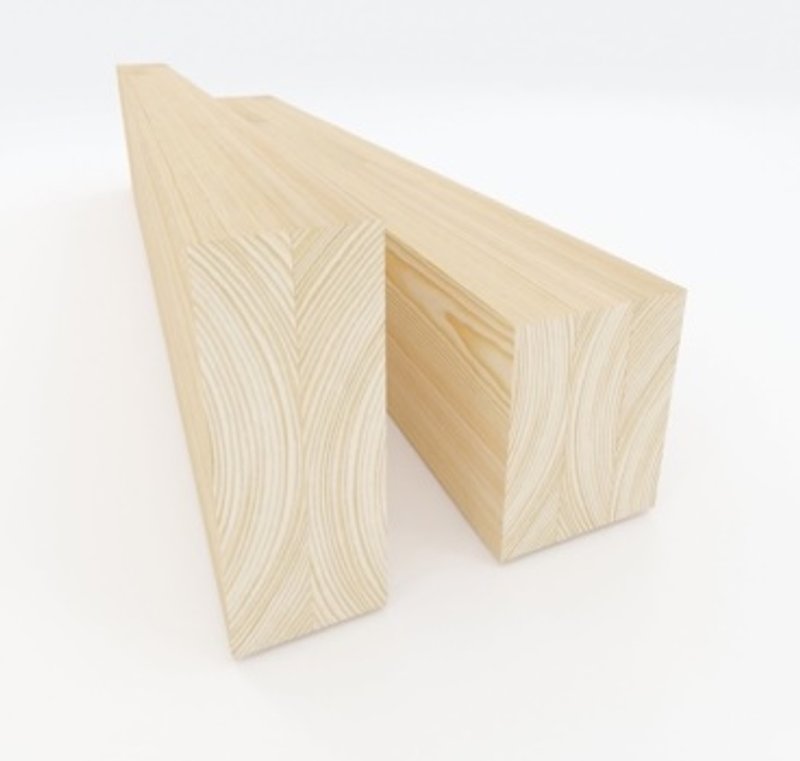
The main facade (western and southern parts) is designed as a fully glazed curtain wall with reflective glass that mirrors the surroundings. This facade is equipped with wooden columns, each measuring 20cm x 50cm, made from laminated wood. These columns are spaced at the width of the circulation corridor (1.5m) and attached to the facade with metal rods. Between these columns, trees are planted, extending vertically up the facade.
The gymnasium facade (eastern and northern parts) is designed as a wooden facade with wooden slats spaced at 1m intervals, each measuring 10cm x 30cm. There are tall glass sections between these slats.
The residential section's facade (northern and eastern parts) is designed as wooden cladding with irregularly spaced wooden slats, set back to create space for balconies.
The residential section's facade (southern part) is designed as a wall with regular spacing of wooden slats.
These facade solutions not only provide aesthetic variation but also serve functional and environmental purposes, contributing to the overall design and sustainability of the building.
4. Materials Used and Color Scheme:
· Column and Beam Façade, Semi-structural, Mirrored Glass Finish
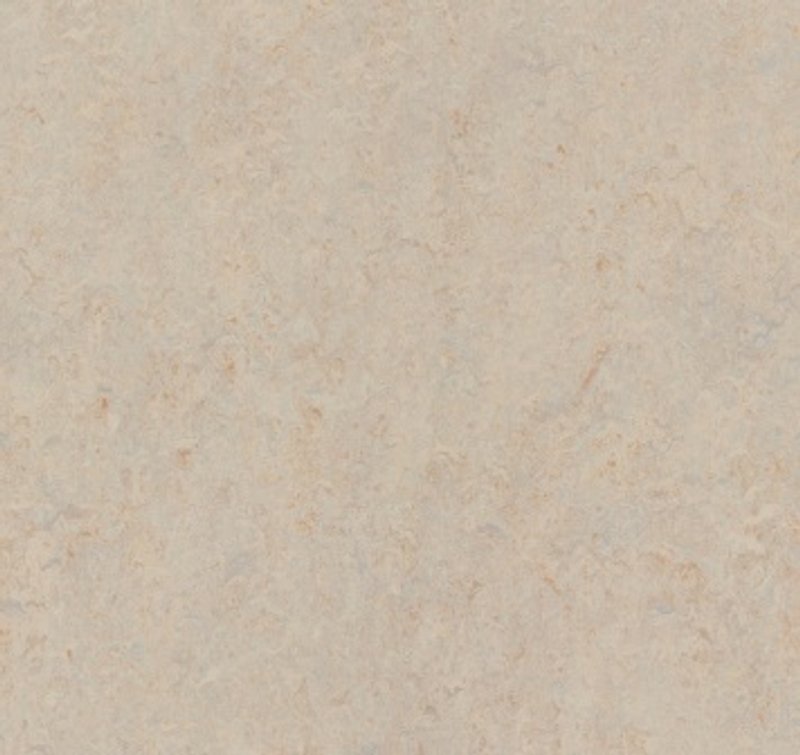
· Marmoleum Sport 4.0mm Sports Flooring
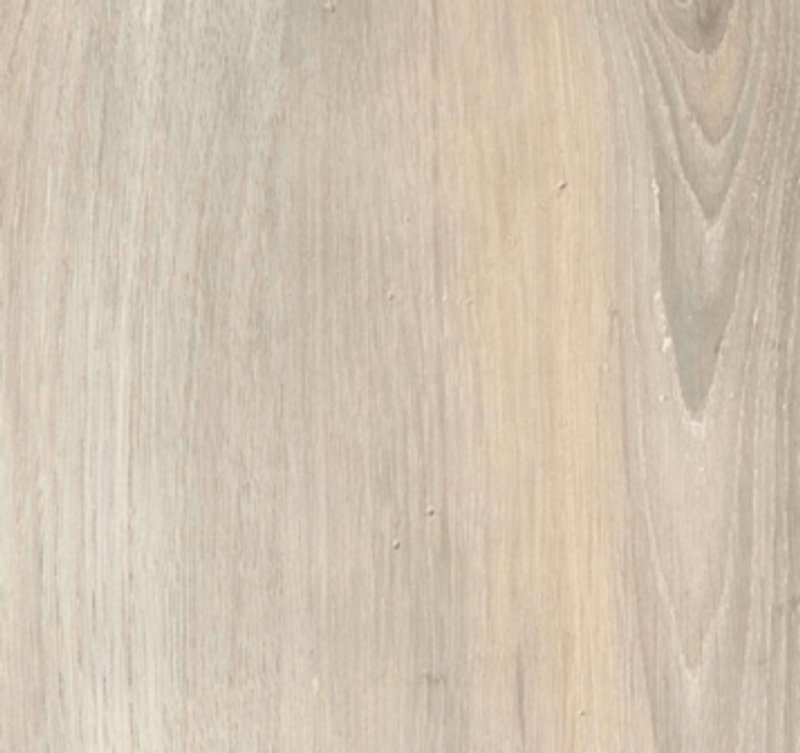
· Alsafloor Solid Model 12mm AC6 Laminate Flooring
· Fronto Oak Lamella Exterior Panels
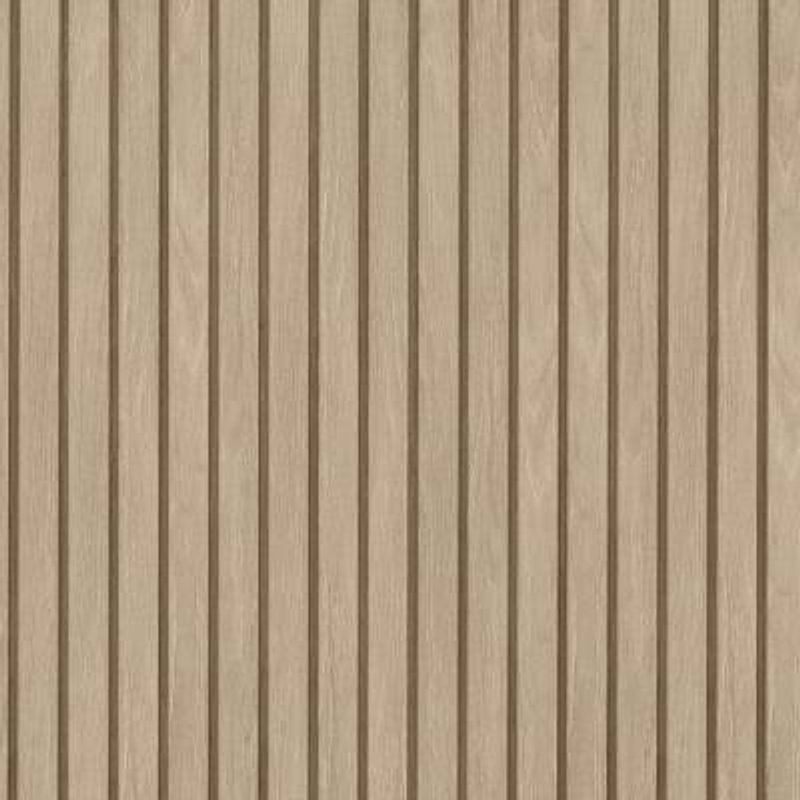
· 3D Wall Slats in Village Oak
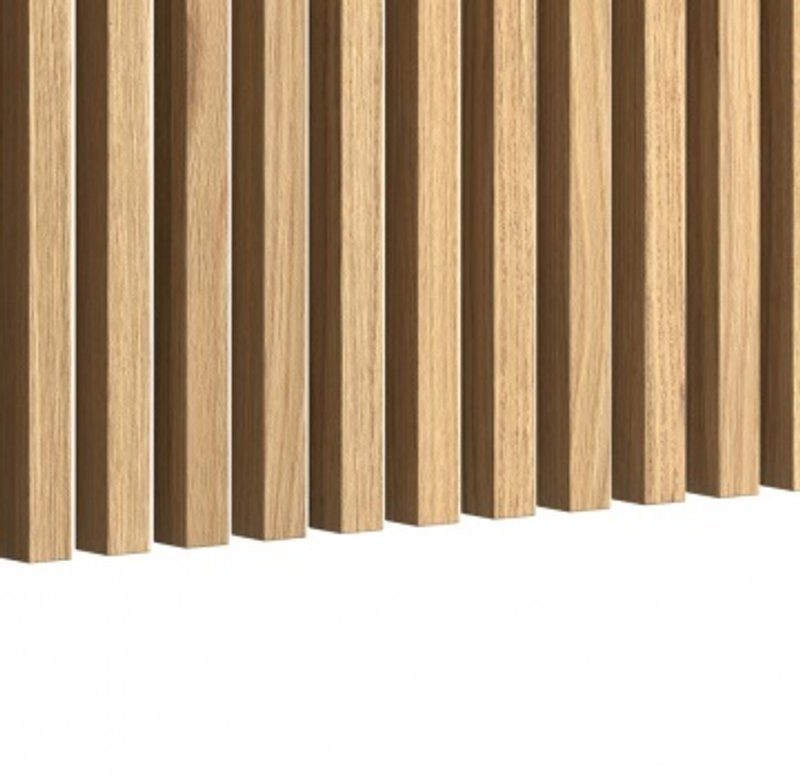
· Structural Glued-Laminated Oak Wood Posts (BSH)
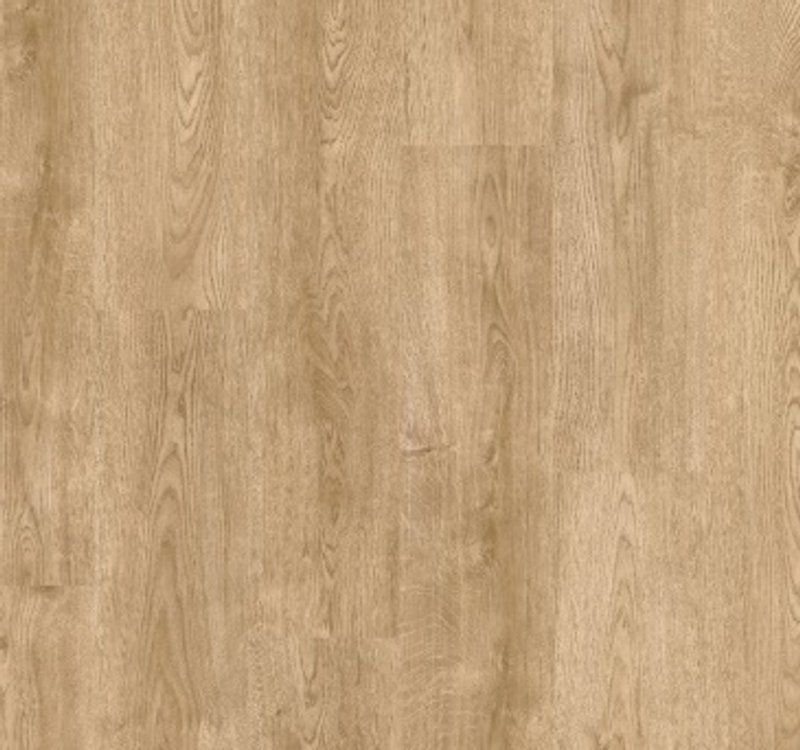
· Color Palette for Wooden Elements - Warm Scottish Oak
5. Functional Solution of the Building:
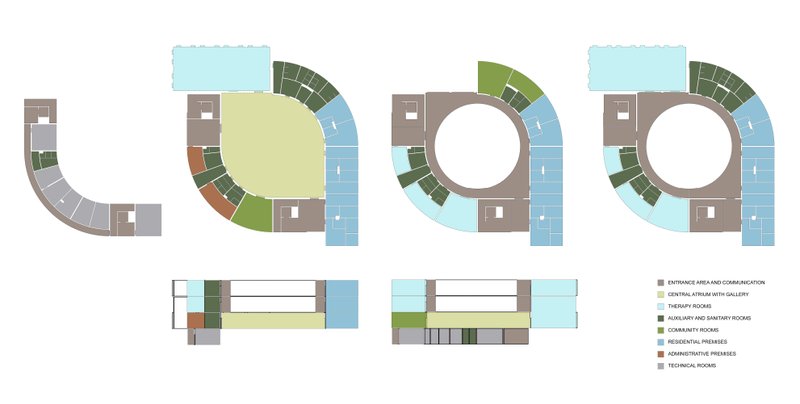
The building serves as a combination of public, semi-public, and private functions and is divided into two communication blocks:
Main Communication Block: Located on the western side, it forms the main entrance to the building and allows access to therapeutic and artistic functions (for patients/visitors) as well as administrative functions (for staff).
Private Communication Block: Positioned on the southern side, it provides access and communication within the residential areas (for patients and therapists), common and social spaces (kitchen, dining area, common room), as well as therapeutic and workshop rooms in the second part of the facility.
The central atrium connects these two parts of the public and private sections. The functional program includes the following categories of rooms:
6. Building Purpose:
· Users of the facility:
- Patients
Staff: (therapists, administrative staff, technical staff)
External individuals: (patients' families, participants in evening and weekend activities)
· Building purpose:
- 70 permanent occupants: 30 patients receiving therapy with hospitalization, 20 commuting patients, 20 staff members (4 psychologists/psychotherapists, 4 art therapists/environmental therapists, 2 caregivers, 1 manager, 4 administrative staff, 2 social workers/caretakers, 1 kitchen staff, 1 receptionist, 1 security personnel, 2 live-in caregivers)
- Approximately 50 variable occupants: visitors (patients' families), individuals participating in workshops and artistic activities.
· Accessibility:
- Fully able-bodied individuals can use the facility without any issues, including as staff, family members of patients, or users during therapy hours (evenings and weekends).
- Individuals with intellectual or physical disabilities: The facility is designed to accommodate these individuals, both in terms of therapy programs and technical adaptations. It features low-rise construction with suitable vertical communication, rounded room shapes, contact with nature, dimensions of common areas, residential areas, and therapeutic spaces.
· Age groups:
- Children
- Adults
- Seniors
The therapy and activity program is divided into appropriate age groups.
7. Accessibility Solutions for Persons with Disabilities:
The facility is fully adapted for use by people with disabilities.
The pathways leading to the building are hardened.
Parking spaces for disabled persons are provided on the premises, located closest to the building entrance.
Access to the building is provided at ground level, and all door widths, passages, and resting areas allow for unrestricted wheelchair movement.
Vertical communication is provided through communication blocks with elevators.
The facility is equipped with accessible toilets (equipped with showers) for disabled persons on each usable floor.
On the ground floor in the residential area, apartments have been designed with the possibility of adaptation for the needs of physically disabled individuals.
8. Energy-Efficient and Eco-Friendly Solutions:
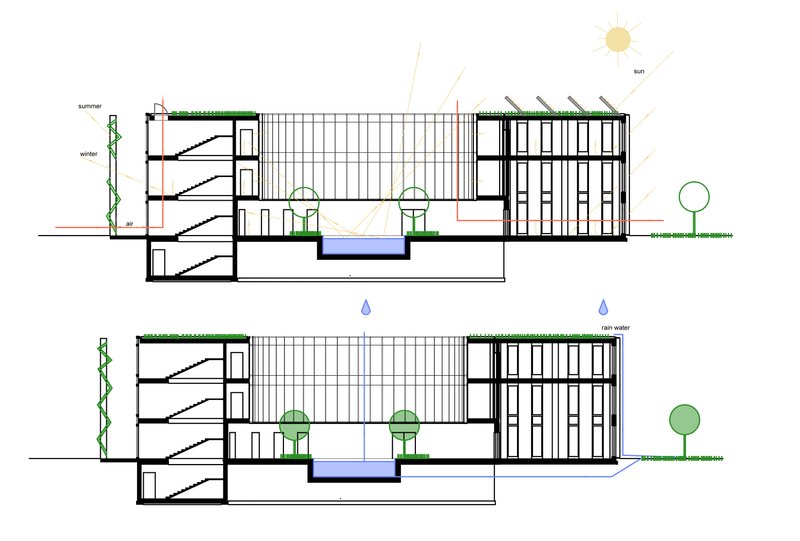
The building is equipped with photovoltaics installed on the roof in the form of photovoltaic panels and as photovoltaic coatings on the building's glazing. Solar energy is collected in an energy storage system in the underground part of the building in a technical room and is used for lighting and electricity in the building.
Rooms are ventilated thanks to the central atrium.
The building has a system for storing rainwater, which is used in rain gardens for watering vegetation and, after purification, as sanitary water for laundry and toilets.
Green facades, green roofs, green atrium, and green areas surrounding the building create a microclimate inside and outside the building, dispersing sunlight and ventilating in summer, and retaining and storing heat in winter.
Final Conclusions:
The project introduces new and missing functions to the area, fitting seamlessly into the undeveloped recreational green space. Rather than depleting it, the project preserves and enhances the green area. The facility has the potential to contribute to the improvement of the mental and physical health of its users and promote the integration of the local community.