
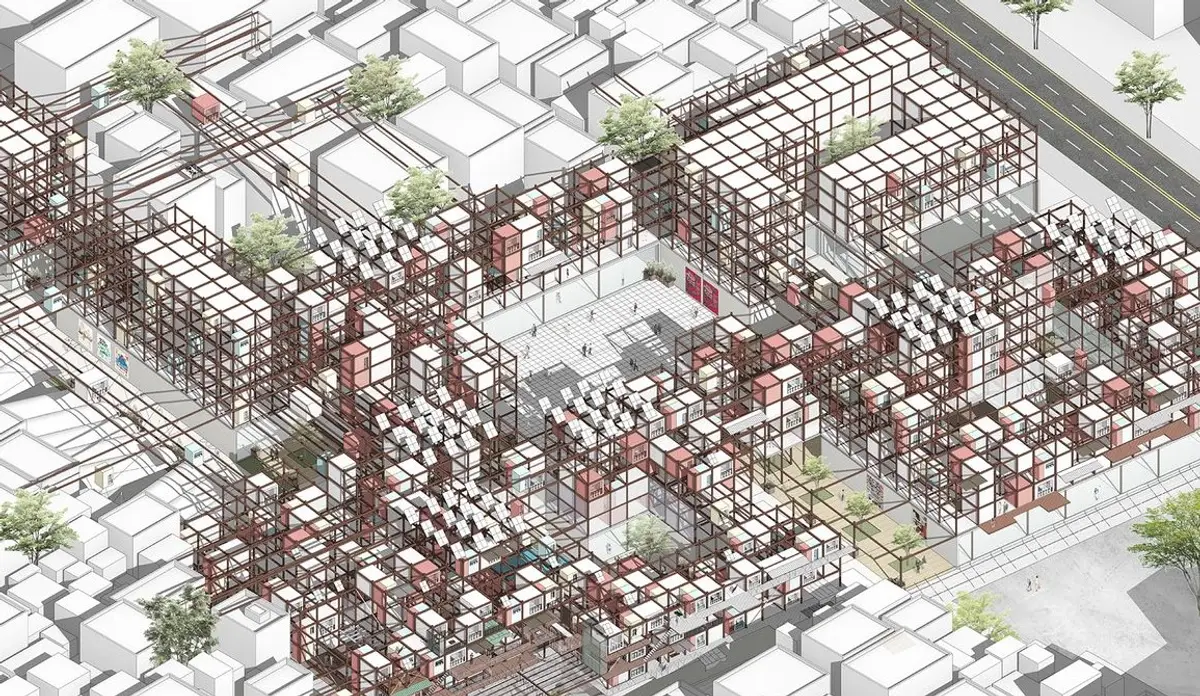
Considering architecture from the standpoint of sustainable development
As society and economies continue to develop, people are increasingly demanding Architecture which requires an integrated design approach.

The success of sustainable architecture depends on the partnership between ecologists and architects. This collaboration started with both groups suggesting a change to the way buildings are used, moving from a linear approach to a closed circulation plan. From an ecological perspective, this new way of planning building functions has become the standard. In a linear pattern, the building is treated as a “place of processing natural resources into waste”. For example, energy is “converted” into heat losses, clean water into sewage, fresh air is converted into used air, and materials and consumer goods into classical waste. In a closed circulation plan, a building may change from a voracious consumer of energy and all other resources, into a more self-sufficient unit. It will be possible to use much less energy for heating in winter, and cooling and ventilation in the summer. Part of the water can not only be saved but also reused. Closed circulation systems allow for buildings to be more eco-friendly and sustainable in the long run. Generally, a large amount of waste can be avoided altogether or used again. The transition from one plan to another is evolutionary.
The first step in this design trend was passive, low-energy buildings. The next step was friendly buildings — friendly not only for people but also for the environment. Today, we are talking about almost zero-energy buildings, autonomous buildings, and IQ architecture. There are numerous examples of such buildings, including The Edge in Amsterdam, Bloomberg's new European headquarters in London, and the Geelen Counterflow Office in Haelen.
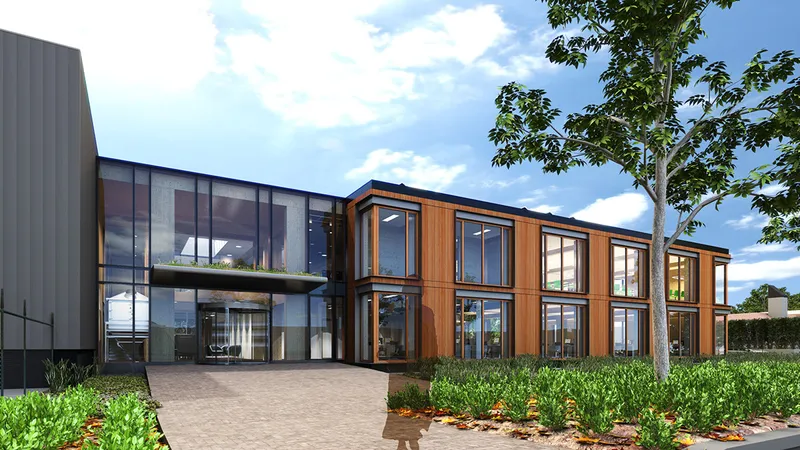 Geelen Counterflow Office in Haelen
Achieving success in sustainable city design is possible and there are already many examples that prove this to be true - one such example is the city of Masdar in Abu Dhabi which is autonomous when it comes to energy. Not only that but it meets all other criteria for sustainable development too. This success didn't happen overnight though, it's the result of a continuous process that saw a change in attitude from architects when it came to designing paradigms - something that became especially apparent during the intellectual and ecological revolutions.
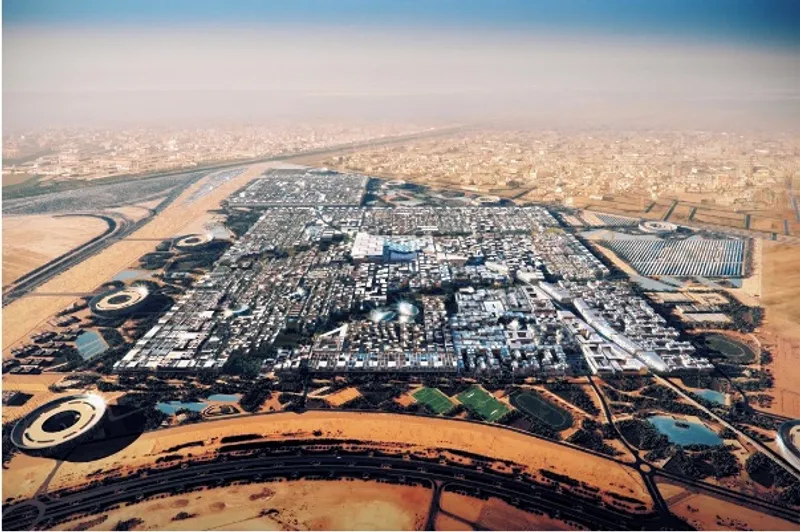 Masdar City in Abu Dhabi
Society has seen three major revolutions which have had a profound impact on architecture. The industrial revolution in the late 1800s (which saw the replacement of manual labor with machines) laid the groundwork for two other revolutions: the information and administration revolution (from the mid-1900s, involving information processing and enhancing mental abilities) and the sustainable development type revolution, which incorporates aspects of ecology, economics, and social/cultural values. This latter revolution has been accompanied by significant progress in the field of digitization.
Many of these revolutions are developmental, which means they bring about new changes and progress. For example, the derivative of these revolutions is a new term called architectural IQ. This refers to the amazing ability of new designs to be put into practical use. Even though we may not always understand the full extent of a revolution, especially one that focuses on sustainable development, we still have to follow the applicable laws when it comes to design. Unfortunately, the understanding of the paradigms of sustainable development and design paradigms in some social groups, including some architects, still produces some difficulties — dilemmas arise; there are contradictions in the interpretation of rules.
Many architects who are now renowned first began their education and professional careers under the influence of modernism. This significantly impacted how they approached architectural and urban design in the 1980s. The level of knowledge necessary to understand and implement sustainable development principles is much greater now than it was then.
The integration of architectural design takes many forms, but the one overarching goal is to create a cohesive, functional whole.
The concept of integrated architectural design was originally created when architects with different backgrounds worked together on a small project in Canada. They took into account all aspects of the technical requirements to come up with the best design for the project. [1] This concept of integrated construction is widely used in architectural design, and it is continuously improved and perfected in practice. The concept of sustainable development is an important factor to consider when planning for future trends in development, design, and function. By taking a strict yet effective approach to design and resource utilization, sustainable development can be achieved through less investment while still obtaining maximum economic benefits. [2] Designing a building that integrates multiple professional disciplines requires close coordination and a green design approach that considers form, function, and cost. This comprehensive design method runs through the entire building design process and provides a database of information for sustainable design. BIM is an important part of the integrated design standard because it is software that helps with the design process by bringing all the information related to the construction project into one place.
Sustainable development is achievable through integrated architectural design.
The modular design concept is an important one to adhere to in production.
With the current rapid economic development, the requirements for buildings are also rising. The quality of buildings and aesthetics have greatly improved, but the traditional building model also has great drawbacks. With the increasing use of energy resources and environmental awareness, energy saving and environmental protection have begun to be applied in architectural design. How to improve the quality and utilization of buildings has become a new topic. [3] An integrated house-building system is a combination of doors, windows, and equipment that work together to create a standardized and modular production mode.
Make sure to focus on resource recycling when designing your project.
Large-scale demolitions often result in mountains of construction waste and debris, causing significant environmental pollution in our cities. Furthermore, many of the construction metals involved cannot be reused. Therefore, the focus of architectural design in the new era will be the recycling of building materials. This concept must be kept in mind when designing future architecture, as it is a sustainable and eco-friendly way of living. Additionally, recycling building materials including light steel can help contribute to the development of new housing constructions. It is also an important principle to keep in mind when developing buildings and integrated communities.[4]
Focus on Saving Design
The goal of sustainable development is to conserve resources throughout the design process so that we can protect our environment. To achieve this, we need to focus on resource conservation and low consumption of resources. We can do this by switching to a new mode of production and management that is more efficient and uses fewer resources. Integrated building design is not only an effective way to utilize space and construction resources but also a key to developing high-efficiency and low-energy consumption buildings.
The practice of BIM technology helps in the integrated design process.
Sustainable development is an important concept in the architecture and construction industry. BIM technology is often used in the design of sustainable buildings. This technology helps to optimize the construction process and the maintenance of buildings. It can also help to achieve the sustainable development of the architectural design. BIM technology helps to quantify the design ideas of different professionals and to store data in a computer information system. This helps to meet the needs of the building design process. BIM technology has become widely used in the construction industry.
Designing a building program can be compared to baking a cake.
In the early stages of building design, the use of BIM technology to create a three-dimensional model can be extremely useful. The model contains information about the building, which can be used to establish an information model. This allows building designers to consider the requirements of the building program, and to make adjustments to their designs as needed. By comparing different design schemes using a 3D building model, designers can identify differences and make changes to improve the design. This can help ensure that the final design is the most effective and efficient solution, taking into account factors such as energy consumption and the placement of windows and doors. BIM technology provides a wealth of information and data resources for building design, including information about geometry, materials, and performance. This can be used for simulation and analysis to further refine the design.
The operational phase of the building is when everything is up and running smoothly.
BIM technology enables the creation of a building model that contains engineering and technical data necessary for the construction of a building, such as structural design and cost accounting information. This data can be used in the process of establishing a model to inform various aspects of the design. For example, architects can use the information in the model to calculate the length of wall beams and the strength of materials during the design process. Contractors can use the data to choose the materials that will be used in construction and to import this information into simulation software for analysis. This can help ensure the safety and compliance of the construction and can improve the quality of the project. In addition, the data in the model can be used to analyze the construction cost budget, helping to minimize costs and avoid waste. After construction is complete, the model can be used for post-construction maintenance, allowing for the selection of appropriate maintenance methods and effective management of the building. Overall, the use of BIM technology in the building design process can reduce errors, improve the quality of the design, and enhance the sustainability of the project.
Applying BIM technology to buildings can save energy and resources while protecting the environment.
Integrated architectural design is an approach that considers the entire life cycle of a building, from design to maintenance. It involves the creation of an information model, which can be used to optimize the design of the building and identify the best solution. In today's world, with its rapid social and economic development, buildings are increasingly being designed with an emphasis on sustainability and energy efficiency. This requires the use of advanced technologies and clean energy sources, such as solar power, in the design process.
To achieve the best possible results, integrated design methods require the collaboration of professionals from multiple disciplines. By working together, designers from different fields can share ideas and methods, and can ensure that the design of the building is optimized for its intended use and environment. For example, the use of BIM design software can provide a common platform for communication and collaboration between designers, and can help to ensure that the design process is efficient and effective.
Overall, integrated architectural design is an important approach that can help to create buildings that are sustainable, efficient, and effective. By considering the entire life cycle of a building, and by leveraging the power of technology and collaboration, architects can create designs that are truly optimized for the future.
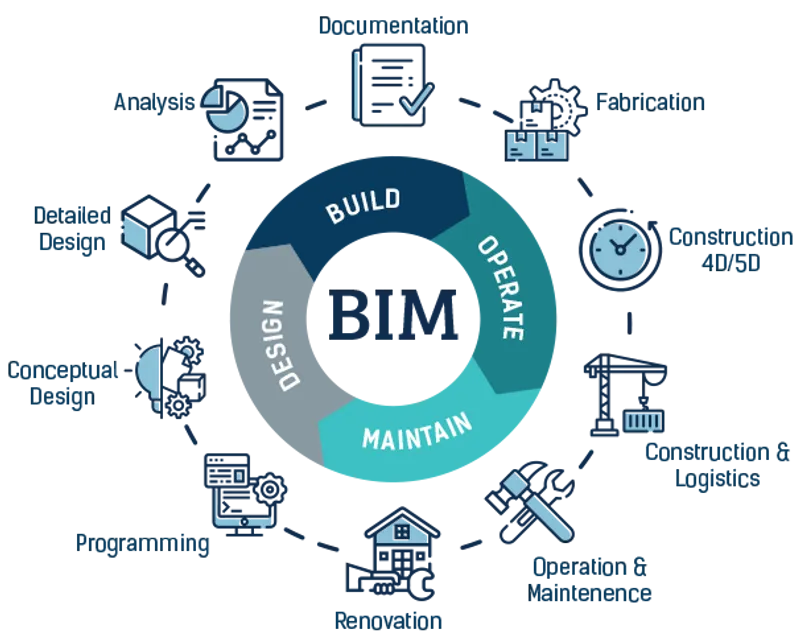 Visual from Bimmade.com
 Construction maintenance work is often late, which can be frustrating for everyone involved.
After the completion of a building's design, it is important to perform a simulation analysis to assess the building's energy consumption and sustainability during its lifecycle. This can be done using data and information from BIM technology to create a model of the building and its components. By analyzing this model, it is possible to assess the energy consumption of the building at various stages of its design, taking into account factors such as the design of the surrounding environment and the choice of materials.
Overall, in today's sustainable social environment, there is a strong emphasis on the design of buildings that are energy-efficient, environmentally friendly, and sustainable. BIM technology can play a crucial role in achieving this goal, by providing a platform for the evaluation of building designs and the identification of opportunities for improvement. By incorporating sustainable design principles into the design process, we can create buildings that are better suited to the needs and challenges of the 21st century.
References (4)
Building integrated design ideas
Publisher: Science and Technology Economic Guide
Vol. 2017 (01)
On sustainable development of integrated buildings
Publisher: Tianjin Fine Arts Institute
Vol. 2015 (10)
An Integrated Design Method and Process Targeting Building Energy Efficiency
Publisher: Journal of Architecture, Journal of Shenyang Jianzhu University (Social Science Edition)
Vol. 2013 (11)-03
Integrated Design of Buildings under the Concept of Sustainable Development
Publisher: Discussion
Vol. 01

Popular Articles
Popular articles from the community


ETEH Reworks the Shared Spaces of São Domingos School in Brazil Around Timber, Color and Hanging Plants
At São Domingos School in Brazil, 436 m² of hall, refectory and library are recast with timber joinery, a yellow and blue code and trailing greenery.

David Ortega Stacks a Two-Story Mexico City Penthouse Around a Steel Stair and a Pergola-Shaded Roof Terrace
In Colonia Roma, a 300 m² penthouse uses oak joinery, a planted steel stair and a slatted roof pergola to make a new-build apartment feel like a house.

FCC Arquitectura Expands a Portuguese Granite House with a Board-Marked Concrete Wing
In Portugal, JV House pairs a cleaned-up whitewashed and granite dwelling with a timber-shuttered concrete extension, courtyards and a garden pool.


The Amber Palace Opera: A Geological Fiction Surfaces on Tallinn's Baltic Waterfront
Pierre Brillard reimagines a Baltic legend as a public landscape, opera house, and waterfront promenade rooted in Tallinn's coastal identity.

Similar Reads
You might also enjoy these articles

Juan García Correa, John González and Claudia Rueda Sink a Circular Amphitheater into a Manizales Engineering Building
On the La Nubia campus in Manizales, Colombia, the S1 Building folds labs and offices into a hillside of ramped lawns that double as a campus route.

Arealis Brasil Wraps a São Paulo Office for Everis's Creative Arm Around a Glowing Curved Counter
In Brooklin Paulista, a 300 m² office for the creative agency Chazz uses timber, metal mesh and ribbed green glass to blur workspace and pub.

LT2A and OPEN Architectes Thread a Brick and Glass High School Through a Wooded Belgian Campus
In Braine-l'Alleud, a 3,000 m² wing for Collège Cardinal Mercier pairs pale brick with a glazed colonnade, deferring to a small chapel and a dense wood.

Atelier Diving Bell Stitches a Hangzhou Food Court Together with a Louvered Steel Canopy
In Hangzhou's Liangzhu Culture Village, a 1,400 m² food court renewal uses canopies, tree benches and props to turn a passage into a place.

Comments (1)
Please login or sign up to add comments
Nice blog. Visit my Website :