Cultural Architecture Design: The Harmony of Movement and Space in FLOW-ER Dance Cultural Centre
A fusion of dance and design, FLOW-ER embodies Buenos Aires' spirit through innovative architectural elegance.


In the heart of Buenos Aires, a city that pulses with the rhythm of tango, a new architectural landmark is taking shape. The FLOW-ER Dance Cultural Centre, conceived by visionary architects Yiting Sun and Siyi Liu, Editor's Choice entry of Grace stands as a testament to cultural architecture design that bridges the traditional with the contemporary. Here, we delve into the essence of the project, exploring how it epitomizes the integration of culture within modern architectural design.
Tradition Meets Modernity: The Concept Behind FLOW-ER
The FLOW-ER project is more than a building; it's a living, breathing entity that echoes the flowing silk of tango dancers' attire. It's a place where the dynamic nature of dance and the static element of structure meld to create a cultural architecture design that captivates both tango aficionados and architecture enthusiasts alike.
The Inspiration
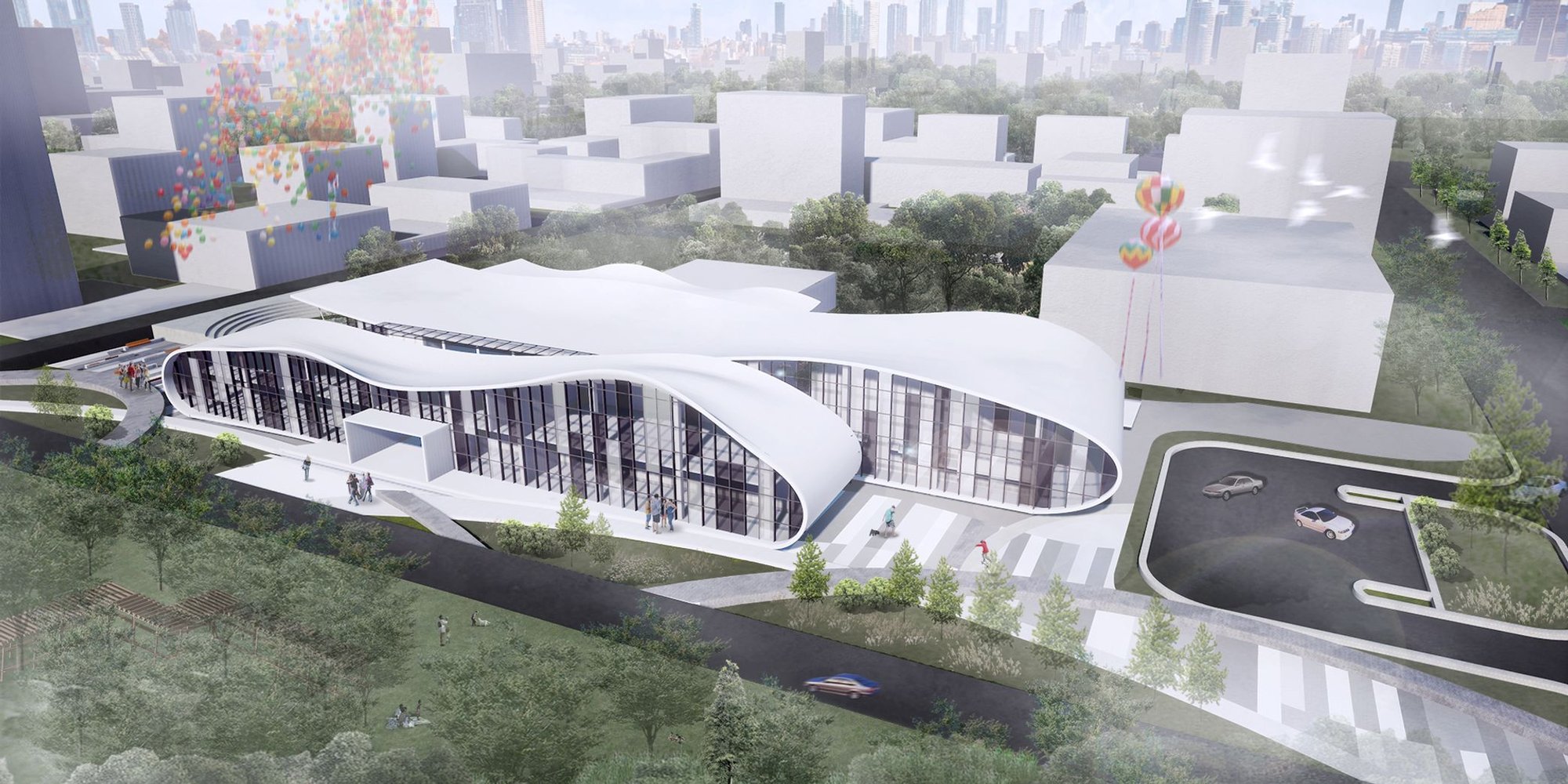
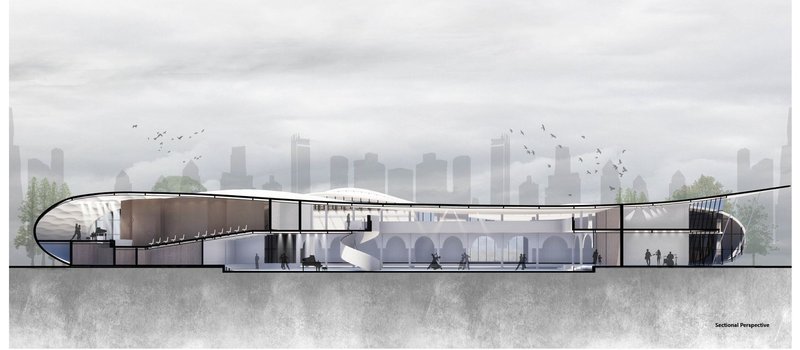
Drawing inspiration from the fluid movements and the soft curves of tango dancers, the architects envisioned a structure that emulates the lightness and grace of a dancer's fluttering skirt. The purest white forms the base palette of the building, while its elevated structure harmonizes with the local topography to create an illusion of floating just above the ground.
The Design
The FLOW-ER is an architectural marvel where form follows function, and beauty intertwines with utility. The building's silhouette is a dance of two-dimensional curves rising to meet three-dimensional challenges, encapsulating diverse functionalities while maintaining an aesthetic appeal that speaks to cultural architecture design.
A Dance of Spaces: The Functional Layout
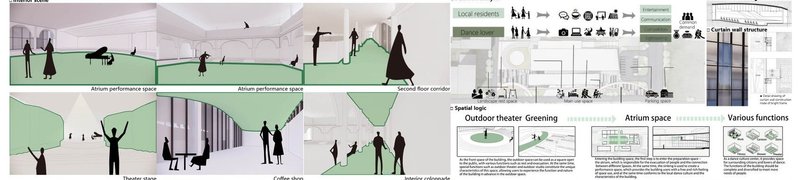
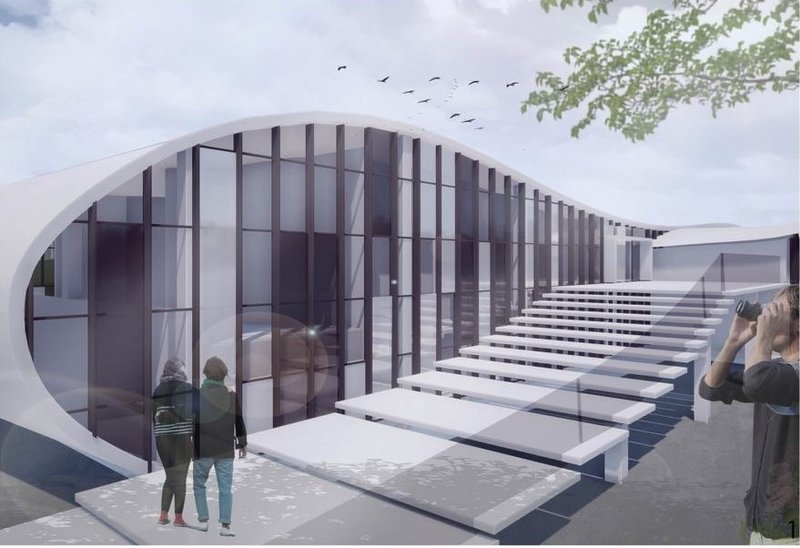
The Centre’s design is a complex tapestry of spaces woven together to facilitate a multitude of cultural and dance-related activities. From the high-ceiling theatre to the intimate studio spaces and the sunken atrium, every corner of FLOW-ER is a stage set for interaction, learning, and performance.
The Ground Floor
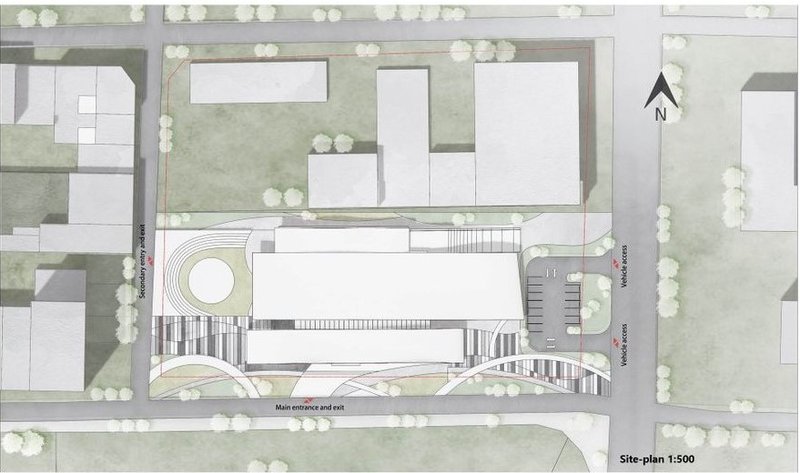
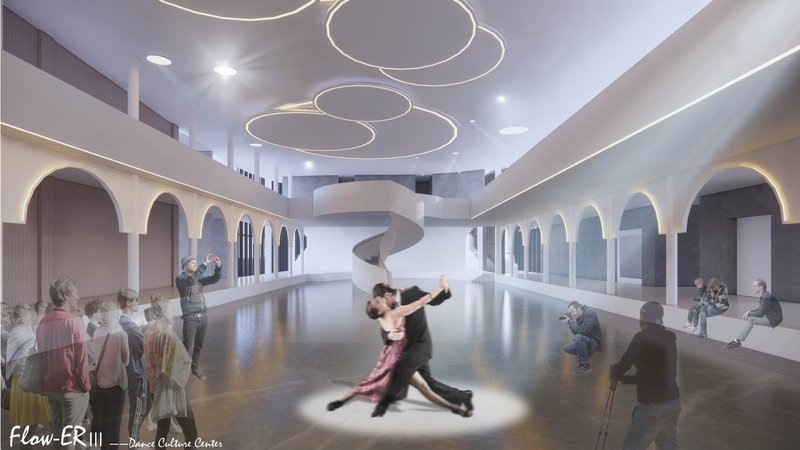
On the ground floor, visitors are welcomed into a sunken atrium— a versatile space bordered by colonnades and arches, allowing for impromptu performances and gatherings. This is the heartbeat of the Centre, a place where the indoors and outdoors merge seamlessly, creating a natural stage that stands as a beacon of cultural architecture design.
The Upper Floors
Ascending to the upper floors, one finds a careful orchestration of spaces. The theatre commands attention with its volume, the studios open up to the outdoor theatre, and the residential areas offer tranquility. The south-facing boutiques, cafeterias, and cafes engage with the city park, affording stunning vistas that invite the outside in.
Rendering the Tango Spirit in Architecture
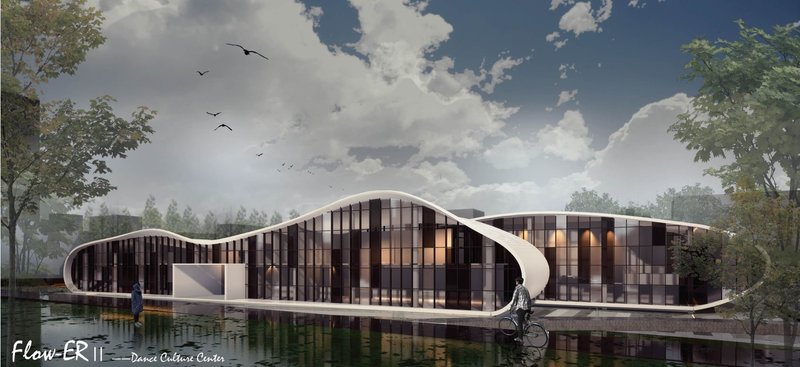
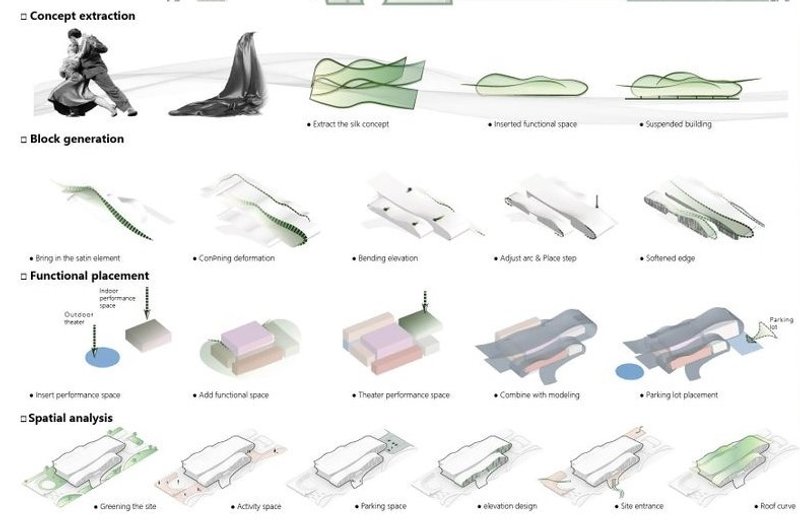
The exterior of FLOW-ER is a ballet of clean lines and sinuous forms. The streamlined roof pays homage to the city's urban culture while symbolizing the flow inherent in tango. The south façade features a vast glass curtain wall interspersed with floating black and white elements, reminiscent of piano keys in mid-melody.
The FLOW-ER Dance Cultural Centre stands as a paragon of cultural architecture design, embodying the essence of Buenos Aires—its culture, its dance, and its spirit. This architectural masterpiece invites the world to experience the harmony of movement and space, beckoning tango lovers and cultural connoisseurs to its embrace. As it nears completion, FLOW-ER is poised to become an icon of cultural architecture design, resonating with the vibrancy of the city that hosts it.