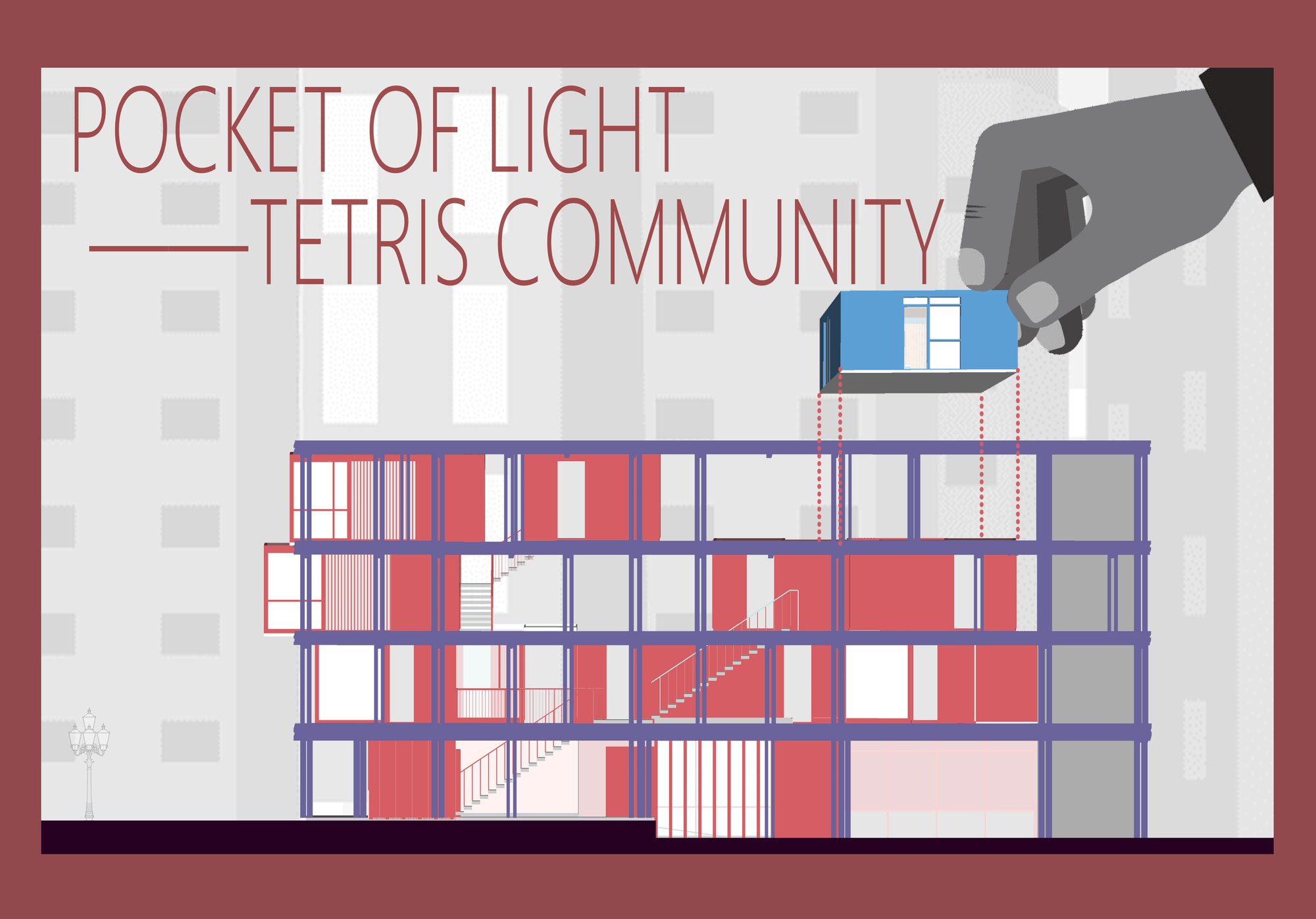
Revitalising the in-between leftover space of 271 Bowery
In all my works, light is an important controlling factor ---Tadao Ando

Due to the continuous reduction of exploitable land area and rising land price, it has become a goal of architects to make the best use of the constructale base area. While the city is rapidly evolving, planning errors and ongoing regeneration has produced numbers of leftover gap space in the city. Our site, 271 Bowery St reflects a typical example. The site breaks the street elevation forming a dark and unventilated corner space that raises security and hygiene concern of the neighboring community. This study aims to investigate a full-life scale methodology in flexibly handling the issues of the leftover in Bowery.
Urban Analysis
Bowery is the most historic area in Manhattan. Dated back to the colonist period, its development can be generalized to four strategies. The context exhibits diverse architectural styles and provides the starter-home for most immigrants in that region.
As a popular destination for international immigrants, New York challenged by the issue of rising vagrant population. Latest study evidences that the outbreak of Covid-19 dramatically increased the homeless number. We subsequently researched their background and unexpectedly realized that financial troubles and family violence (for women) are the primary reasons behind . Therefore, we targeted the future residents as these vulnerable groups.
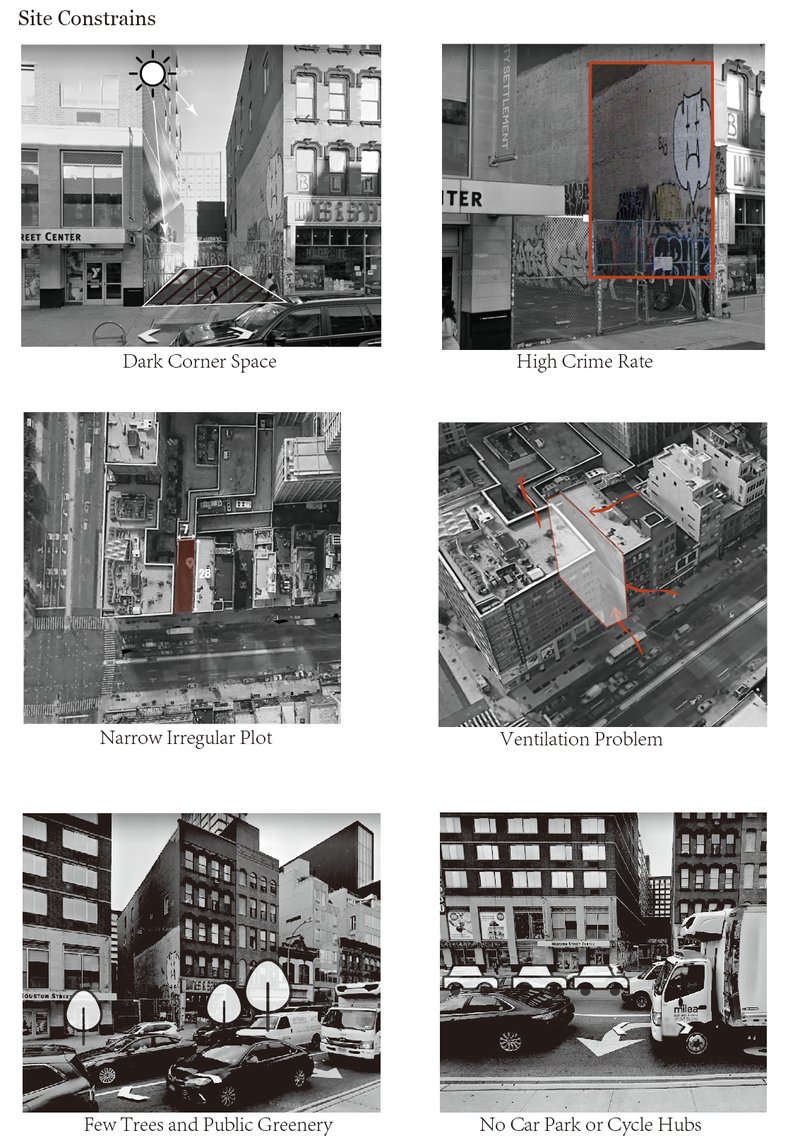
We summarized the site issues as below.
While considering the solutions to the issues mentioned above, we launched case studies on compact sites. The first precedent from the brief, OPod Tube house (Fig.1)presents a widely accepted solutions of vicinity space and is inspiring for its modular design. However, our team criticized if the same methodology of stacking the units is acceptable for our design context. The microclimate constrains urge us to optimize the building performance at the back of the site. Therefore we subsequently analysed House NA (Fig.2) and Tetris hotel (Fig.3). Their design similarly maximized the use of vertical space fulfilling the basic functional needs as well as introducing voids for environmental strategies and co-living interactions.
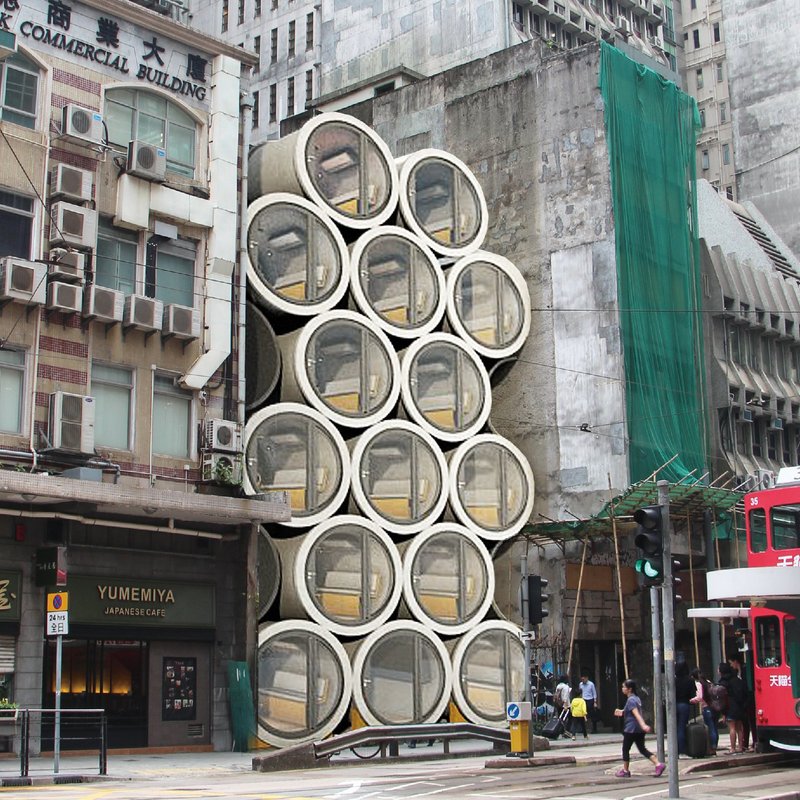
Fig.1 Opod Tube House, James Law Cybertecture, 2017
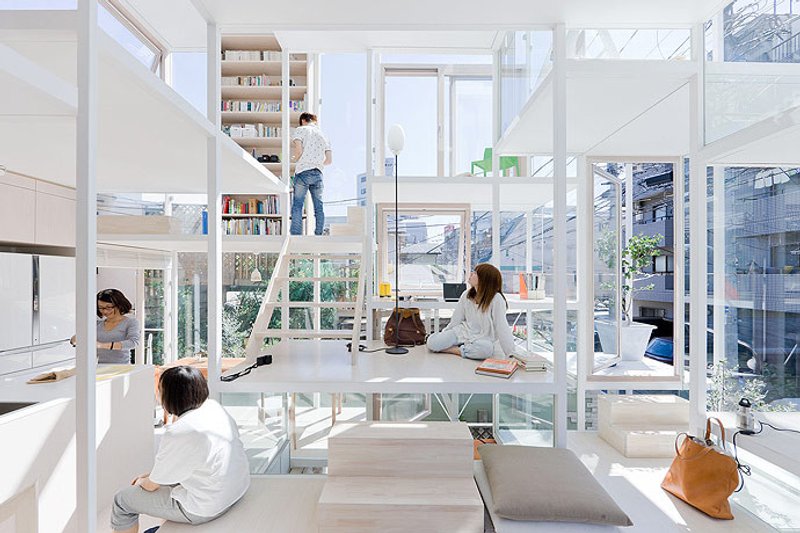 Fig.2 House NA, Sou Fujimoto, 2012
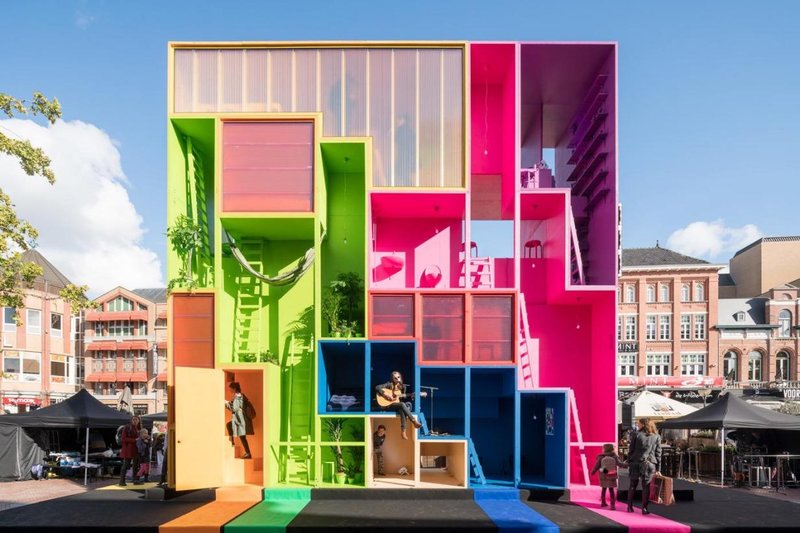
Fig.3 Tetris Hotel, MVRDV, 2017
Concept Development
To better optimize the unit layout, an accurate energy consumption simulation model is essential to arrange the combination rule and help later maintenance. Therefore, our workflow is primarily based on grasshopper and puts forward the research model of massing generation, performance simulation and algorithm optimization.
In the first stage we visualized the ecological performance simulation in grasshopper as the key indicator for scheme progression.
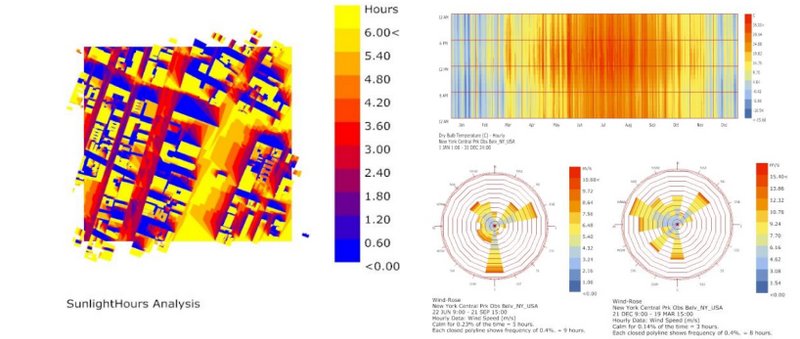
According to the site dimensions and ergonomics, it is first determined that 2 is the basic construction modulus. Then we introduce parametric approach to specify basic combination rules, including structural principals and other basic functional needs. The microclimate data mentioned above tends to arrange residential units in locations with better daylight and ventilation. To provide more opportunities for community interaction and ease afterwards managements, the rules of Tetris game is introduced into the subsequent layout guidance (Fig.4). Elimination of over dense modules applied in place to increase community space for better performance and interactions.
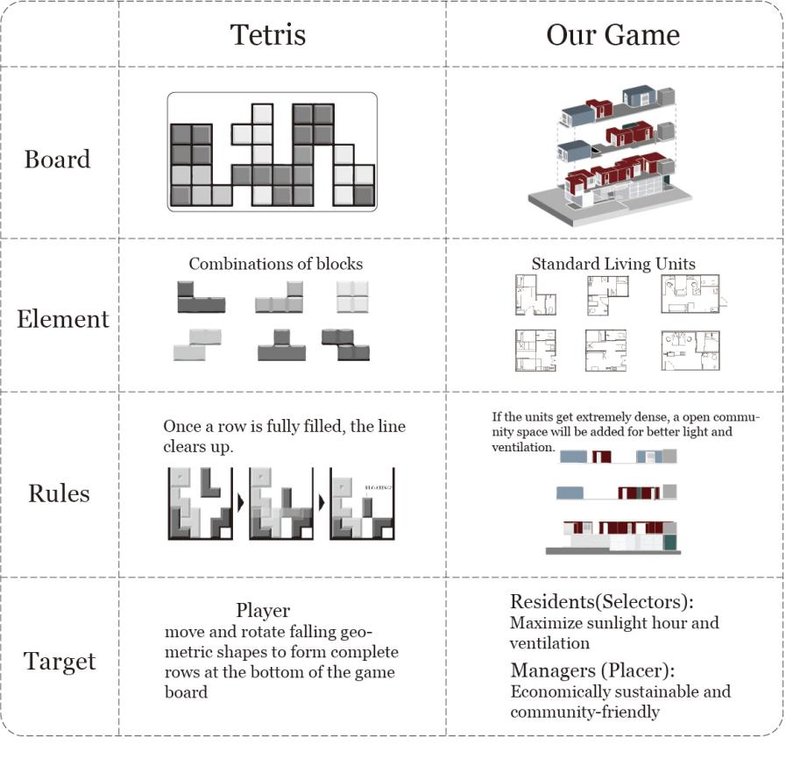
Fig.4 Tetris Inspiration
From the above, three optimization objectives of the overall design can be determined: interior sunlight hour, sunlight improved hour and electricity consumption. However, it is extremely to test one by one manually. To achieve higher optimization efficiency and quickly search for the relatively best layout, we use Evolutionary algorithm to speed up the batch processing. Evolutionary algorithm has strong benefits in flexibly tackling a wide variety of problems of our site. The calculation process is progressively updating the existing outcomes by allowing random mutation to produce better results.

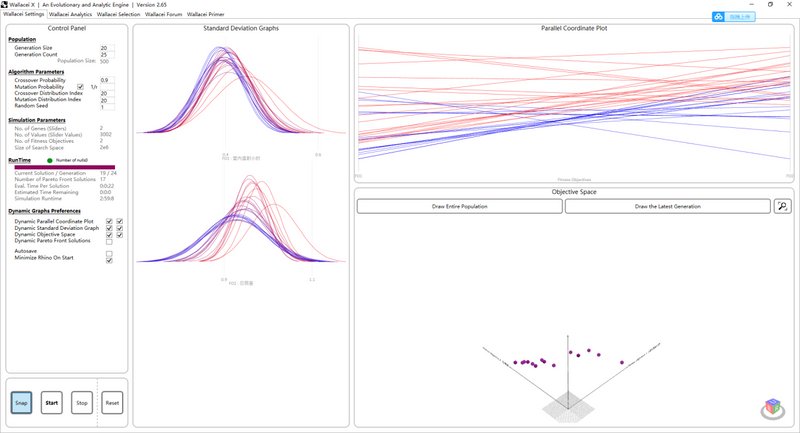
Fig 5 Evolutionary Algorithm Screenshot
20 Pareto solutions from 50 generation were extracted for comparison and selection. After comprehensively considering site factors and deepening difficulties, the 23-15 generation is selected
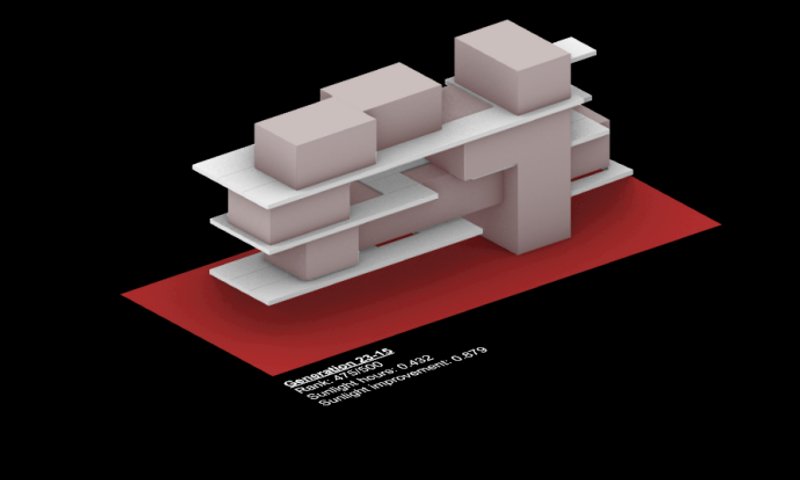
Fig 6 Generation 23-15
Design Outcome
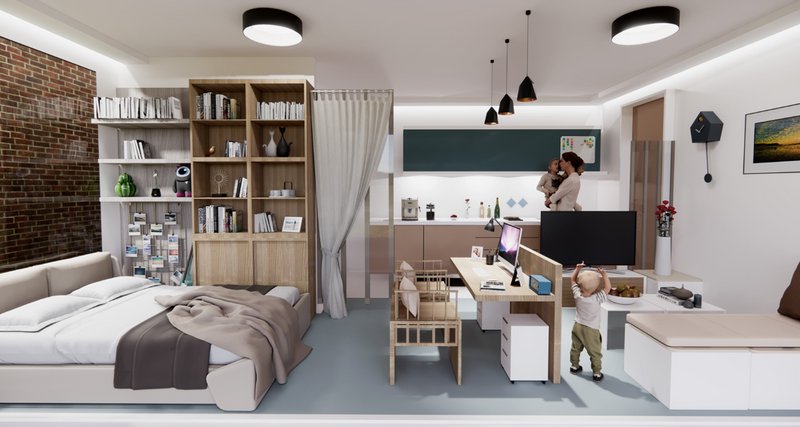
From inside to outside, the scheme re-organizes the living function in limited space. Through parametric algorithm and in-depth development, different levels are spatially connected. Rooms within room helps control internal microclimate; open roof with photovoltaic panels is introduced to the top floor, and light shafts and other devices are placed to promote natural ventilation and lighting effect. The ground floor is lightened up with timber decoration for a cozy atmosphere and a sense of belonging.
The design also intends to re-energize the homeless community and empower vulnerable groups. The ground floor is open to the public. We re-defined the requirement of reception area and combined a neighborhood cafe and check-in space for opportunities of cultural interaction and psychological therapy. The cafe can be operated by the residents for personal income and apartment public fund to achieve economic sustainability. The bookstore can be flexibly adapted to a community workshop for skill-training and enquiry.
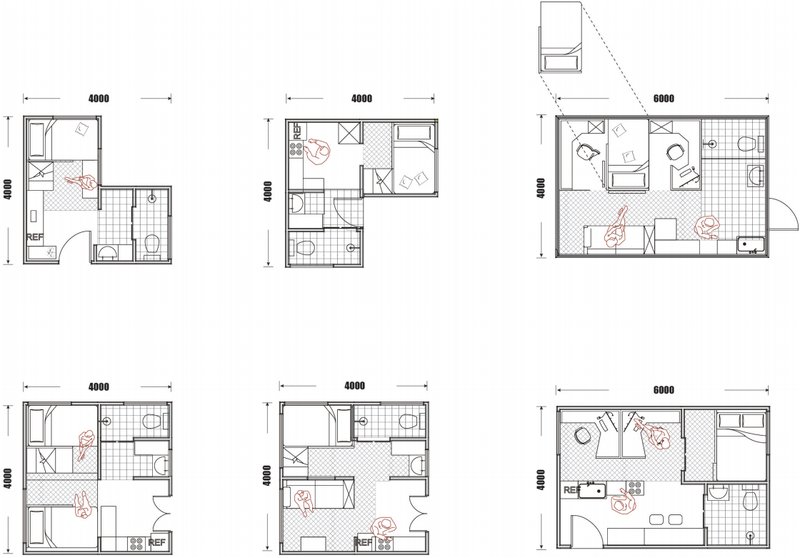
Fig 7 Living Modules
The design takes the 2m * 2m small unit as prototype, optimizes the group combination through algorithm, and forms six different living modules (Fig. 7). Additionally, public shared space such as laundry, open balcony, gym and reading area is weaved in to form a three-dimensional community. Not only to fulfil the basic living functions, the scheme also provides opportunities for immigrants interactions and culture exchange.
The street side elevation echoes the view of the modern urban context. We selected the rectangular element from the neighboring buildings and depict that on the site to maintain street facade continuity.
Statistics research reflects the increasing trend of homeless population and diverse reasons of why these people become homeless. Thus a single building form cannot meet their needs in the future. We used modular units to form residential modules to meet the requirements of prefabricated design, and the building structure adopts steel structure to facilitate installation and reduce construction time and budgets. In addition, the self-service check-in system convenient the residents to customize their starter homes (Fig.8 ). We designed five sets of flexible furniture to fulfil different spatial demand (Fig. 9).
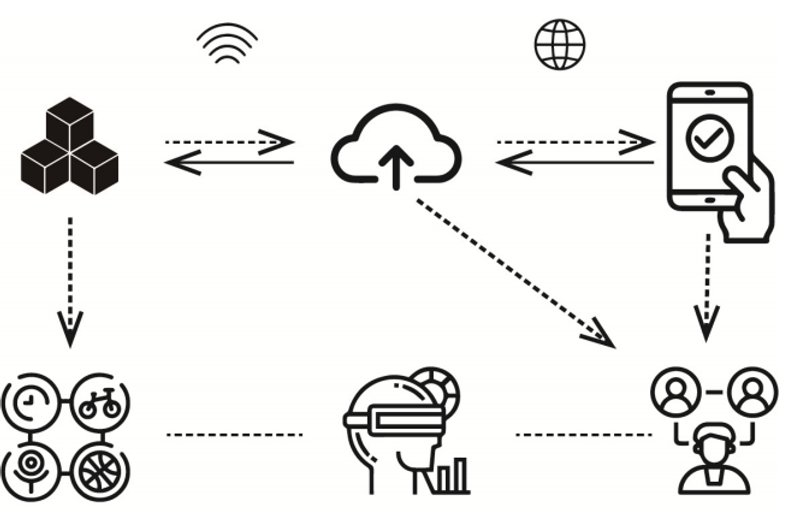
Fig. 8 Self-service online check-in
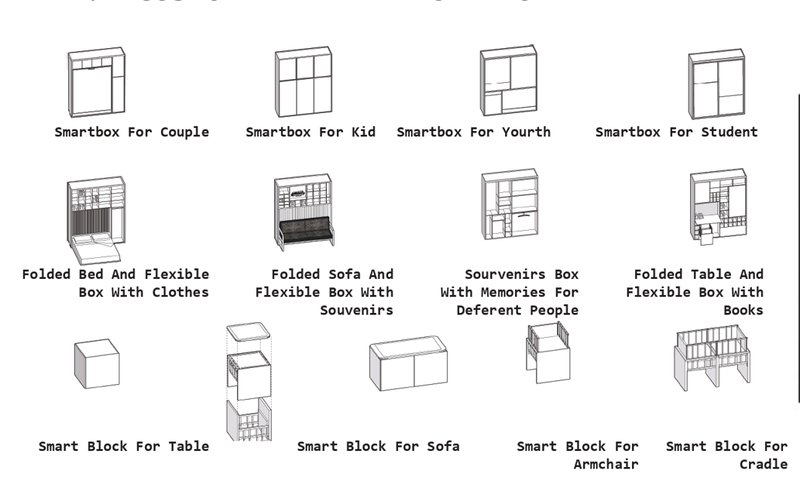
Fig. 9 Flexible Furniture
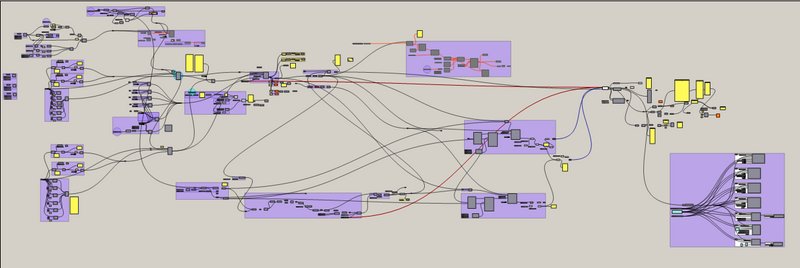
We have reserved a certain space inside the building in order to achieve greater flexibility and future growth. At the same time, based on parametric design, the complete battery pack on GH platform can quickly generate solutions suitable for different sites by extracting the site context.
Reflections
Affected by the time limit of urban development, the left-over space has similar characteristics, such as narrow and irregular in-between plots, plots limited by terrain etc. Space performance is also characteristics for its restricted spatial performance of daylight and ventilation. Therefore, it is urgent to propose a template for these plots. Under the background of the diverse needs brought by the homeless groups, the current traditional design methods is incapable in solving such complex design problems and this project reflects the potential parametric design in helping quickly solving the issues.