
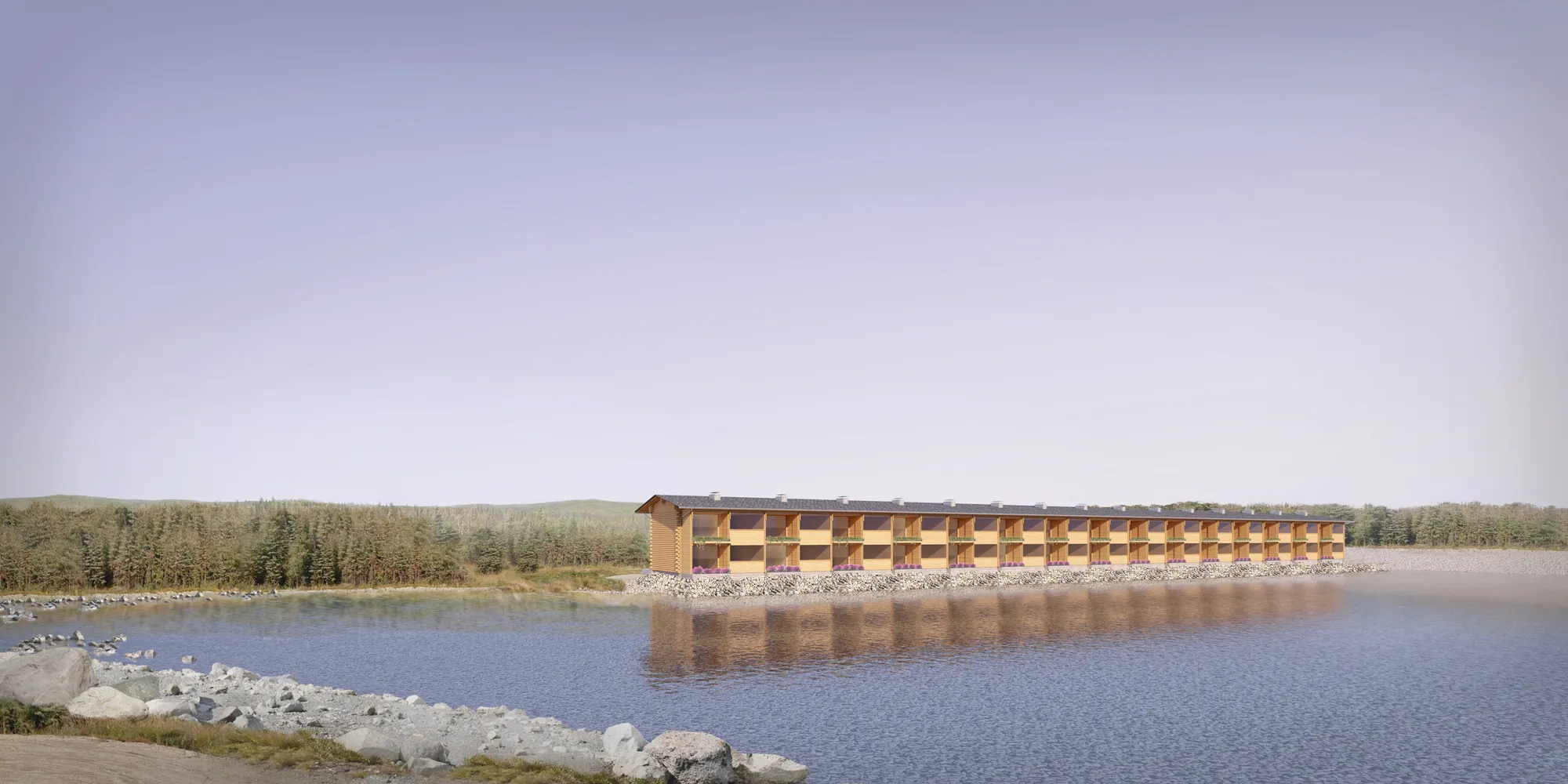
DISEMBARKED
A Green Retreat in Fairbanks, Alaska.

“The cabin in the forest, on the banks of a quiet lake or buried in the wilderness back of beyond, is an expression of man’s desire to escape the exactions of civilization and secure rest and seclusion by a return to the primitive.”
~ From the epigraph of William A. Bruette’s 1934 book, Log Camps & Cabins.
History
The abundance of gold in the area attracted pioneers to embark on a journey in search for gold, establishing what is now called Fairbanks. They arrived in boats and brought with them a burst of energy, as one would when embarking on a journey.
To extract the gold, they worked with traditional hand-tools, as well as machinery, and flowing water, often creating tunnel mines, like a primitive cave collecting pools of water (e.g., Clipper Mine, Fairbanks). Enduring primitive conditions was common and consequently energy would soon deplete.
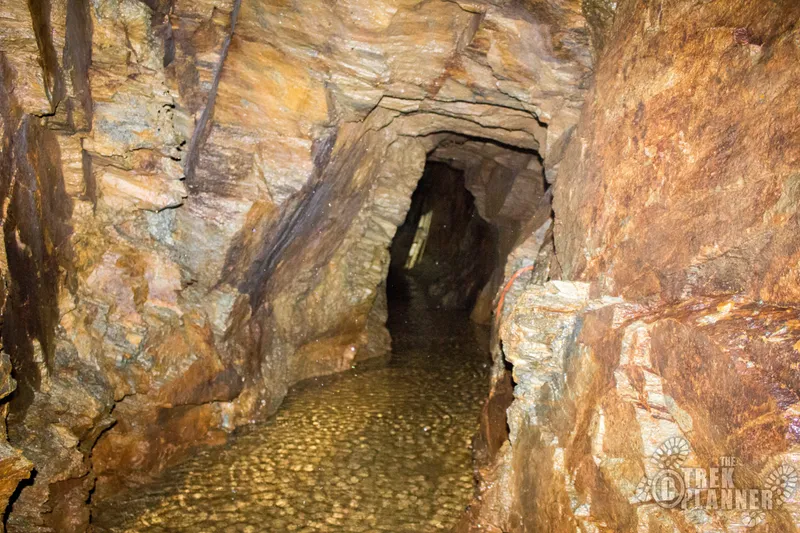 See The Trek Planner for more information.
The hyperactivity of the miners exhausted the obtainable gold and they eventually disembarked and discarded the remains of the place (such as Chatanika Gold Dredge #3 - a restful structure, still perched beside a lake and almost behaving like a shipwreck).
 Chatanika Gold Dredge #3. Aaron Bender, 2019.
In a similar yet paradoxical manner, in duality with gold mining, this project looks to attract retreaters in search for a place of serenity, instead of work, and to disconnect and rejuvenate from activity, rather than expend it. It seeks to offer a place of rest, much like the current state of Chatanika Gold Dredge, yet celebrated as a retreat, whilst integrated with the unique history of Fairbanks.

Place
A place is a place because of the difference to another place. The project’s desire was to tap into and promote the uniqueness of the appointed place. Thus, poses the questions, what are the existing entities that trace the character of this unique place? And how can these entities be promoted to synthesise as one, encouraging the character to flourish? These are two of the most important questions to come back to when responding to the uniqueness of the place.
The proposal highlights the importance of water as a present matter, as it was for the miners when extracting gold. Unlike the environmental impacts of gold mining (contaminating drinking water, harming untouched parts of nature, and destroying biodiversity etc.), the proposal opts to foster these characteristics of the place.
Building Materials
The intensity of being immersed in nature, required for rejuvenation, is heightened when there is a clear sense of one’s physical proximity to a place. Hence, the building materials are sourced, and reused if possible, from the place. The complex includes Larch (Tamarack) for all logs (sawn accordingly to be used as solid timber or laminated flooring), hewn White Fairbanks Quartzite for the masonry walls, floors, and foundation, slate shingles for roofing, bronze finishing for balustrades and drinking fountains, and stainless steel for general finishes, such as gutters and kitchenette surfaces.
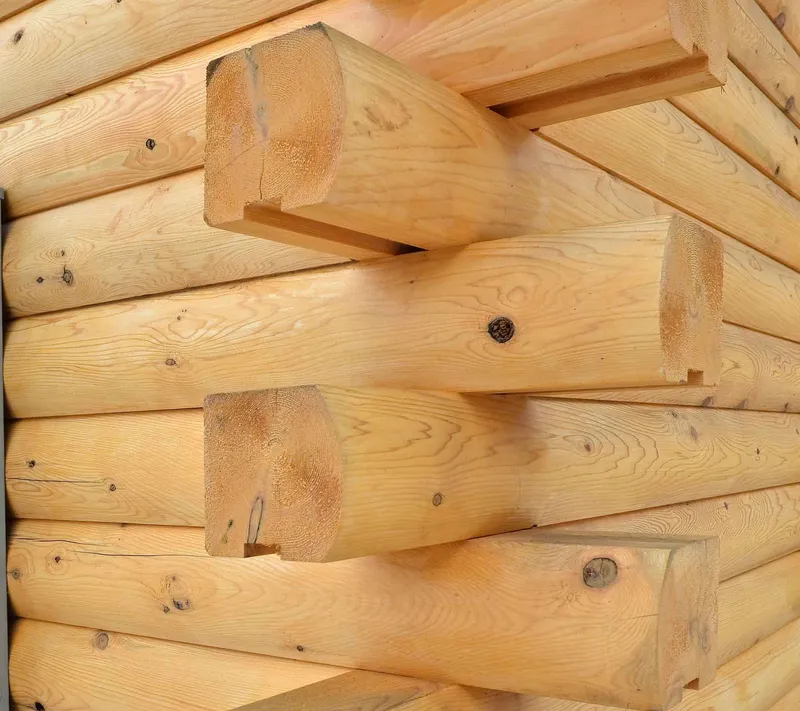

The place is further respected by fostering craftsmanship in the treatment of these traditional, perhaps primitive, building materials (treated with care in response to valuing a long-life span) and aims to expose the structure, as ornament is intrinsic to the structure.
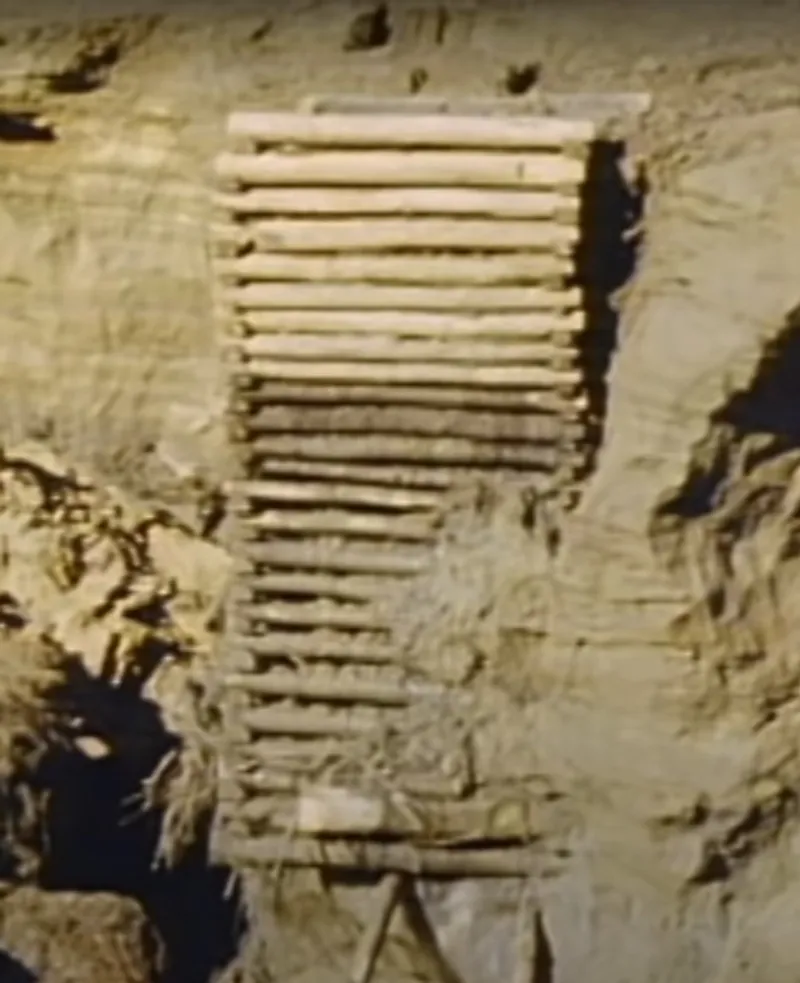 An example of Cribbing - ornament is intrinsic to structure.
Sourcing locally, where materials are overwhelmingly in abundance, reduces the expenses of transportation (costs, emitted carbon, time, and labour).
Design considerations
The layout of each unit provides privacy to neighbouring retreaters.
Fire strategy includes exits on both floors of the spa and stair locations according to US building regulations for the cottage. The greenhouse is only accessible on the ground floor and, as it is a shelter for hydroponics, fire sprinklers can be installed.
Living room spills out into the balcony as an extension of the interior.
Cave motif inspires the use of stone foundation walls, elevating from the site (lowest is accommodation, highest is wellbeing) until the ground floor of the thermal bath is enclosed by a stone wall.
Accommodation fireplace and sofa evokes a campfire circle – reinforcing the primal characteristic of place.
Building Operations
Keys for each unit are kept in the reception of the spa.
Limited access to electricity, gadgets, urban infrastructure - reinforcing the notion of "retreat".
Construction
Traditional construction techniques avoids disrupting nature with heavy machinery. See sheets for construction techniques.
Sustainability
Open plan volumes (greenhouse) and the use of removable partitions (lodge) allows the complex to adapt over its lifetime as a retreat. Although the project looks to provide a long lifespan, like the discarded gold dredges of the gold rush, all three volumes can be dismantled due to their local construction techniques and without too much harm on the environment as the building’s materials can be reused locally. Additionally, the spa can continue to flourish as a natural hot springs site when dismantled of timber.
The complex aims towards Passivhaus standards, though constrained in reaching its full potential by other priorities provided in the brief. Log cabin construction of the lodge, as well as additional insulation unconventionally continued along the roof to prevent heat escaping (log cabin’s roofs are not insulated), and using heat pumps provided by geothermal energy helps maintain a comfortable temperature throughout the year. The greenhouse is not heated and does not need to be maintained (in terms of temperature).
Ground source heat pump technology – also conserves permafrost as it takes heat out of ground. If permafrost is in the area, it must not be thawed. However, as the site is surrounded by birch, aspen trees, and white spruce trees, the area is likely to be permafrost-free.
Off-grid
To survive off-grid is to meet the requirements of the bare necessities, the essentials for survival; water, food, shelter, and fire. The retreat complex must provide a sufficiency of these requirements as well as respecting the history, location and construction of the site and the three crucial facets prone to disrupt nature as given in the brief.
Water as a present matter
The hot springs provides drinkable water, before serving anything else, and any excess water will sustain the thermal baths. As the baths are replaced with fresher water, attention must be brought to the outflow of the replaced water and fostered further. An additional stream connecting the hot springs outflow (remaining to be without additional chemicals) to Sheep Creek, a tributary of Goldstream Creek (an important historical site in Fairbanks North Star), continuing the water cycle and biodiversity in the area as well as offering an additional scenic trail to the Sheep Creek / Ester Dome trail, for the individuals. Slight modifications to the terrain limit and direct the flow from the complex to the existing Sheep Creek (see the proposed site map).
Visuals
In terms of hierarchy for what is presented in the visuals, the project’s place is of utmost priority. Showing a connected community was considered, however, given the ephemeral and isolated nature of a “retreat”, a connected community in this project is simply not feasible.
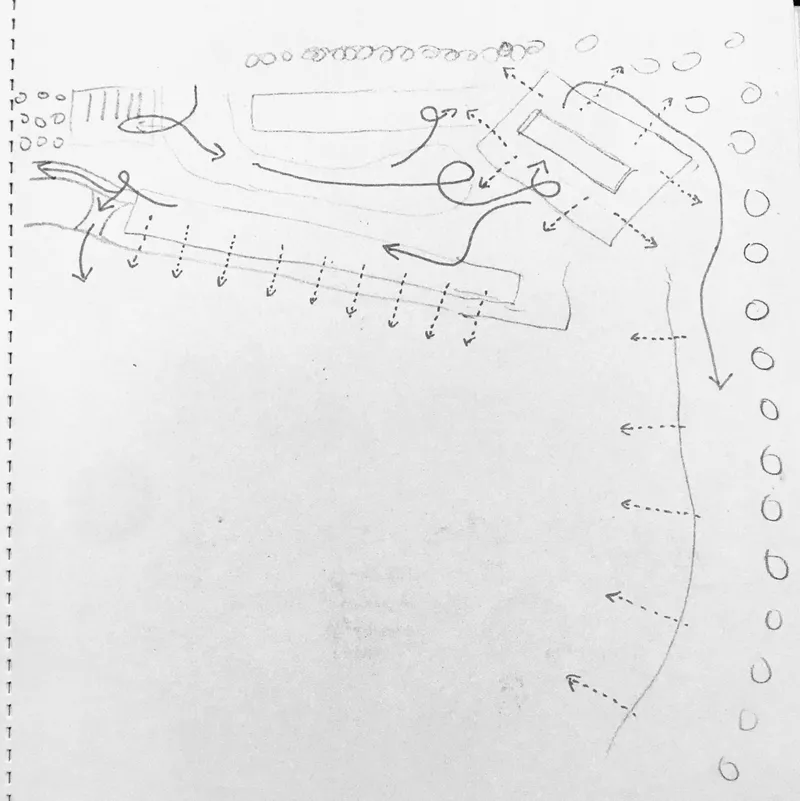
Circulation & Views
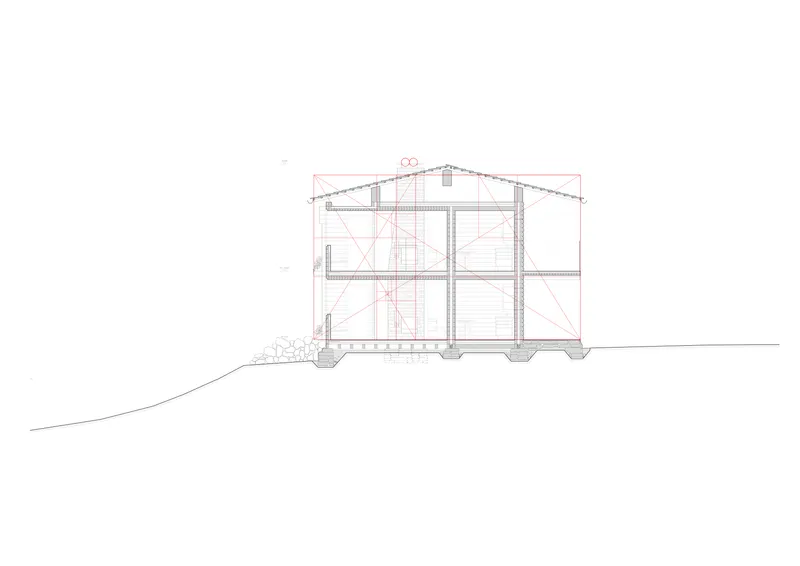
Proportions & Regulations




Popular Articles
Popular articles from the community

AL-JANNAH: Sustainable Architecture and Permaculture for Afghan Widows
AL-JANNAH uses sustainable architecture and permaculture to create resilient oasis of housing, learning, work and renewal for Afghan widows.

Co-life: Sustainable Architecture for Age-Friendly Community Living
Co-life reimagines sustainable architecture for seniors through courtyards, rammed earth, shared gardens, and spaces designed for belonging.

Conexión: Biophilic Design Reimagines High-Rise Living in Hong Kong
Conexión reimagines high-rise living in Hong Kong through biophilic design, green facades, shared spaces, daylight, water and nature within.

Riyadh For All: Intergenerational Urban Design for Active Aging in Rabat
Riyadh For All reimagines urban design in Rabat with intergenerational co-living, adaptive courtyards, and Moroccan cultural exchange today.

Similar Reads
You might also enjoy these articles
The Rhythm of Seasons
A Farmers' Market Connecting Nature and the City

More Than a Building-Designing a Living System
More Than a Building-Designing a Living System
Base Beyond
DESERT COMPOUND ARID: TOURISM OF ABSENCE AND ABUNDANCE

Explore Architectural Rendering Competitions
Discover active competitions in this discipline




Challenge to reimagine the Iron Throne


Photograph architecture without architects


Illustrate the lost glory of Angkor Wat - Render Challenge


Design challenge to reuse E-waste
Comments (0)
Please login or sign up to add comments
No comments yet. Be the first to comment!