Eagle Eye Tower – Redefining Sustainable Skyscraper Architecture with Mass Timber
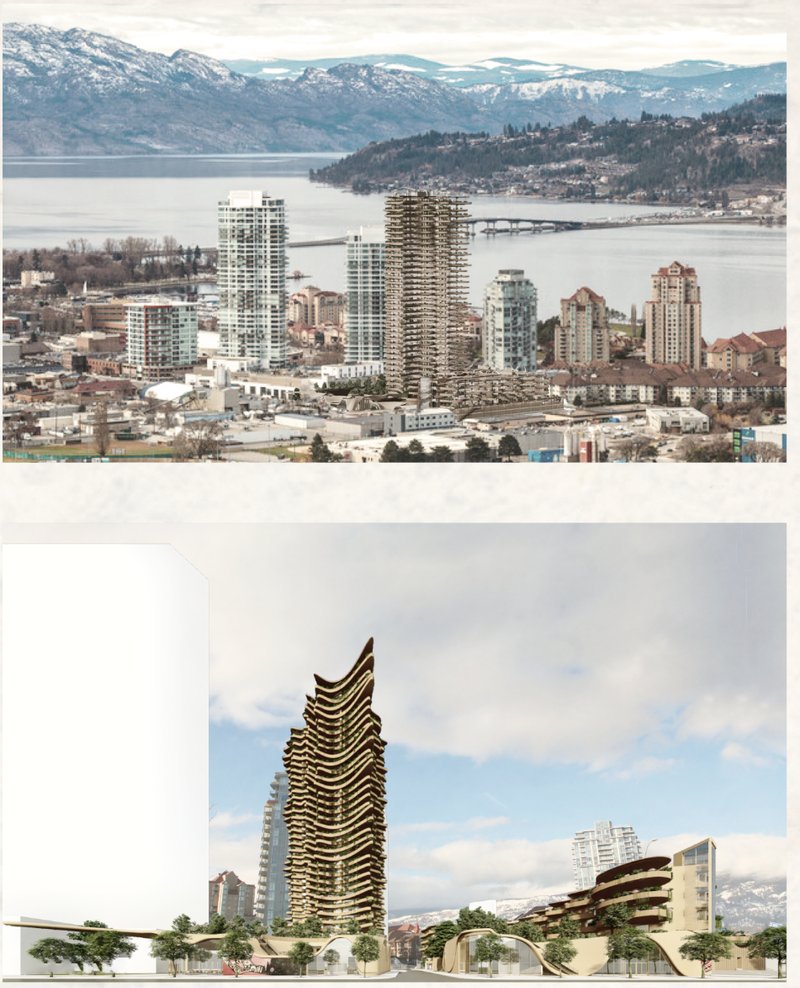
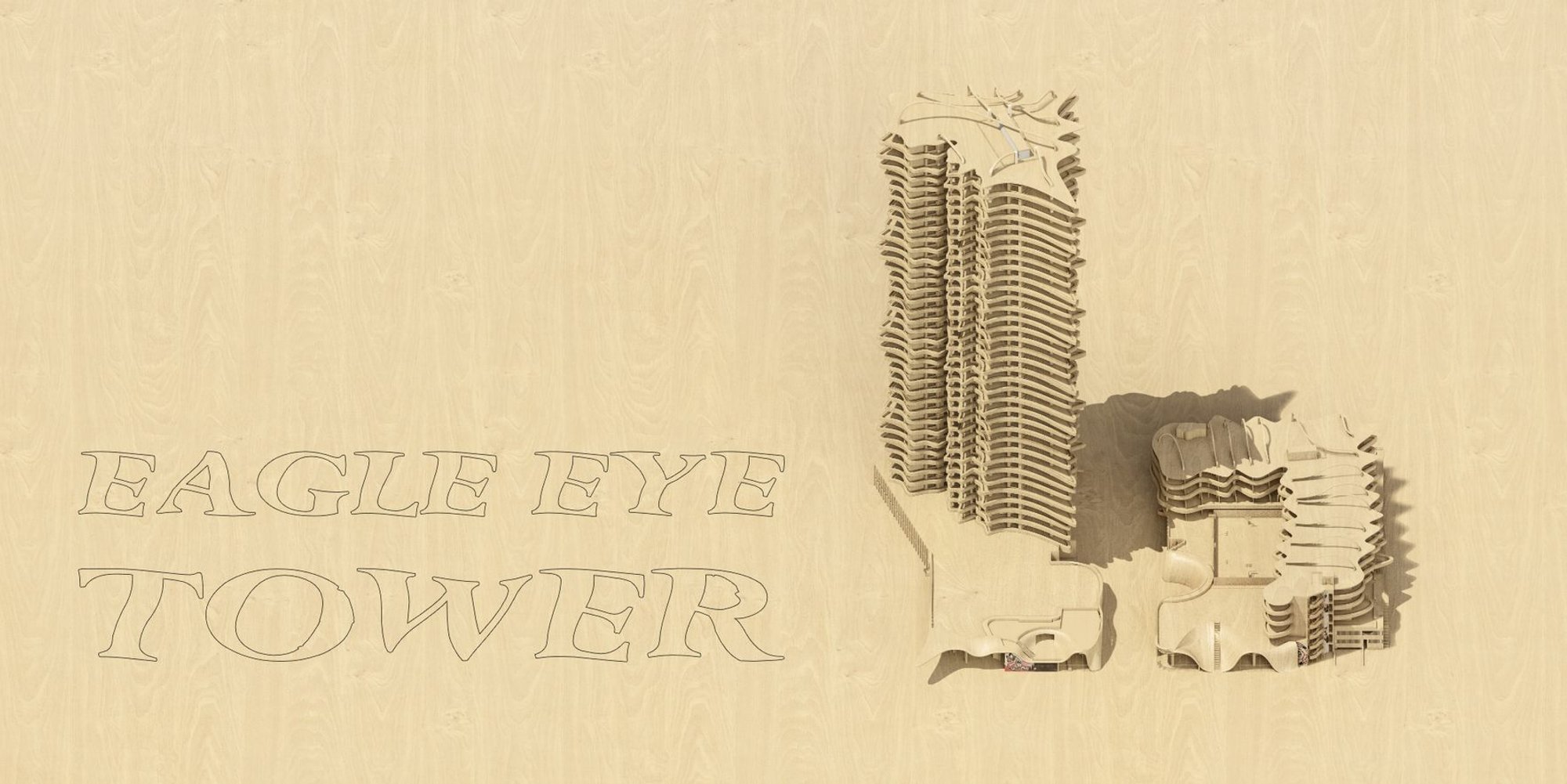
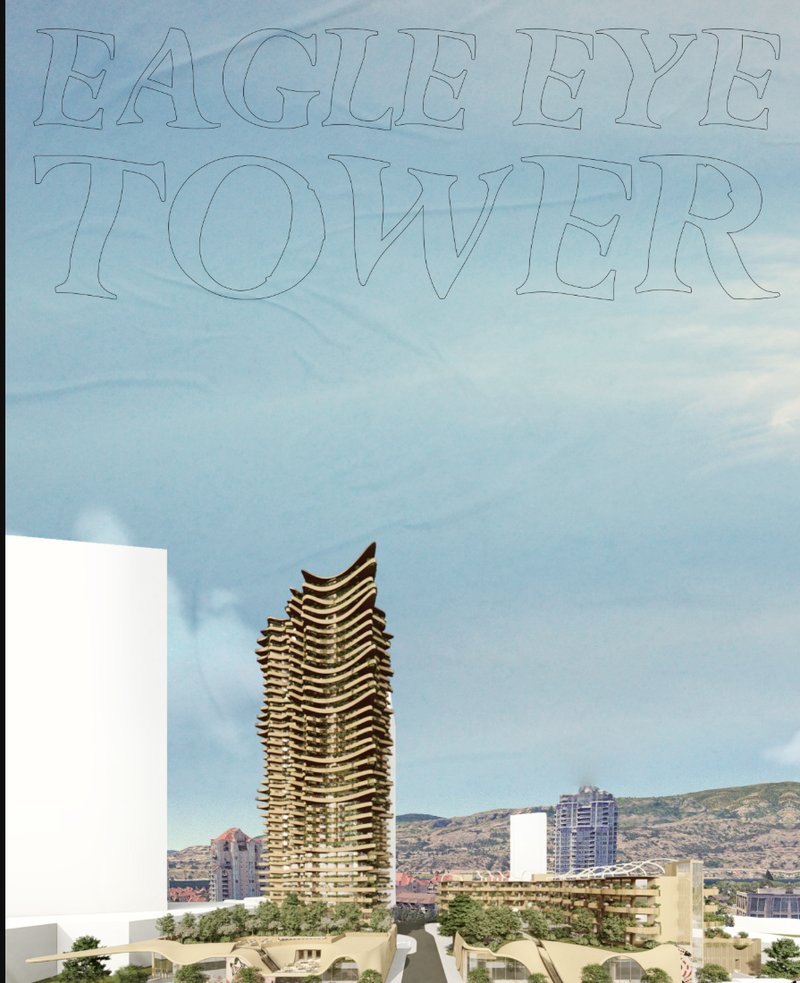
Eagle Eye Tower: A record-breaking timber skyscraper rooted in nature, culture, and sustainability, redefining the skyline of Kelowna.


Eagle Eye Tower is a visionary landmark in the realm of sustainable skyscraper architecture, redefining the possibilities of vertical urbanism through the innovative use of mass timber. As cities grapple with growing populations, climate challenges, and architectural homogenization, this project responds with a uniquely regional, eco-conscious approach that honors both the environment and local cultural narratives. Located in Kelowna, British Columbia, a city rapidly transforming into a modern urban hub, Eagle Eye Tower embraces west coast aesthetics and indigenous principles of harmony with the land. Designed by Dylan Baliski and shortlisted in the CityScraper competition, the project sets a precedent for the future of tall buildings.
Addressing the Problem: Unsustainable Resource Extraction
Globally, the construction industry contributes to over 39% of annual carbon emissions, with traditional materials like concrete and steel requiring massive energy input and finite raw resources. Their production emits significant greenhouse gases while causing extensive biodiversity loss through land degradation and mining operations. Eagle Eye Tower directly addresses this issue by adopting mass timber, a renewable, carbon-sequestering material that has been historically used across cultures for centuries.
Modern extraction and transportation of concrete, iron, and steel account for more than half of the world’s CO₂ emissions related to material use. As urban development accelerates, the need to shift toward sustainable practices becomes critical. With mass timber, particularly cross-laminated timber (CLT), buildings can achieve structural integrity comparable to concrete but with drastically lower environmental impact. Moreover, when sourced from responsibly managed forests, timber becomes a renewable loop rather than a finite extraction process.
Beyond environmental degradation, poor air quality from emissions also leads to a rise in respiratory and cardiovascular diseases. By minimizing these impacts through material choice, projects like Eagle Eye Tower can improve public health while addressing global climate goals.
The Solution: Mass Timber for High-Rise Architecture
Eagle Eye Tower stands as a beacon for the future of vertical development, rising 130 meters—surpassing the current tallest timber skyscraper, Ascent MKE, by an impressive 43 meters. Utilizing advanced hybrid structural systems such as “post and beam” and “post and plate,” the tower optimizes space, reduces material waste, and accelerates construction timelines.
Key advantages of this construction method include:
- Drastically reduced embodied carbon emissions
- Factory prefabrication for cost-effective and error-minimized assembly
- Enhanced structural fire resistance through timber’s self-charring properties
- Faster erection speeds with minimized labor-intensive processes
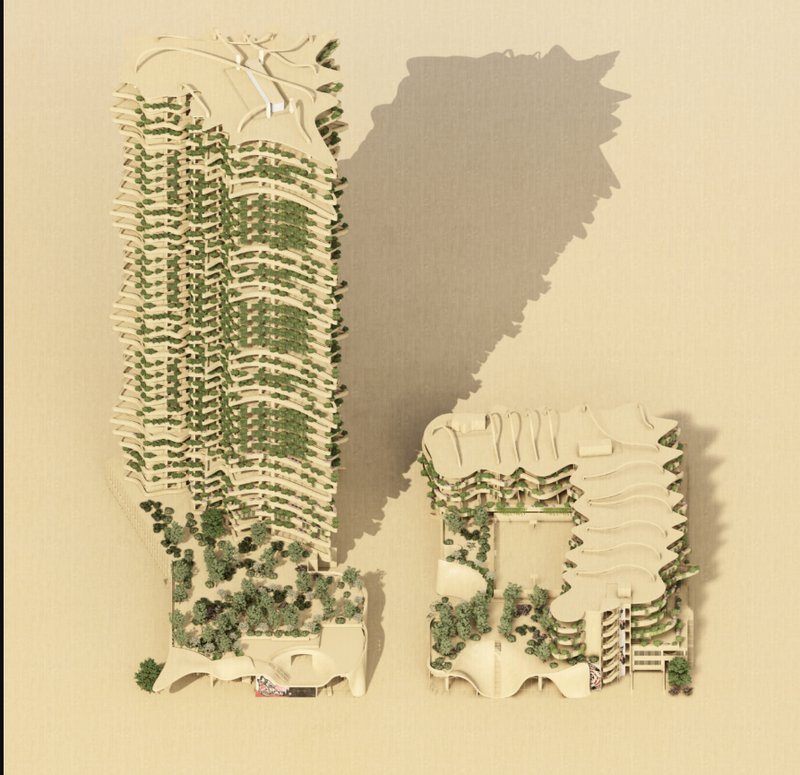
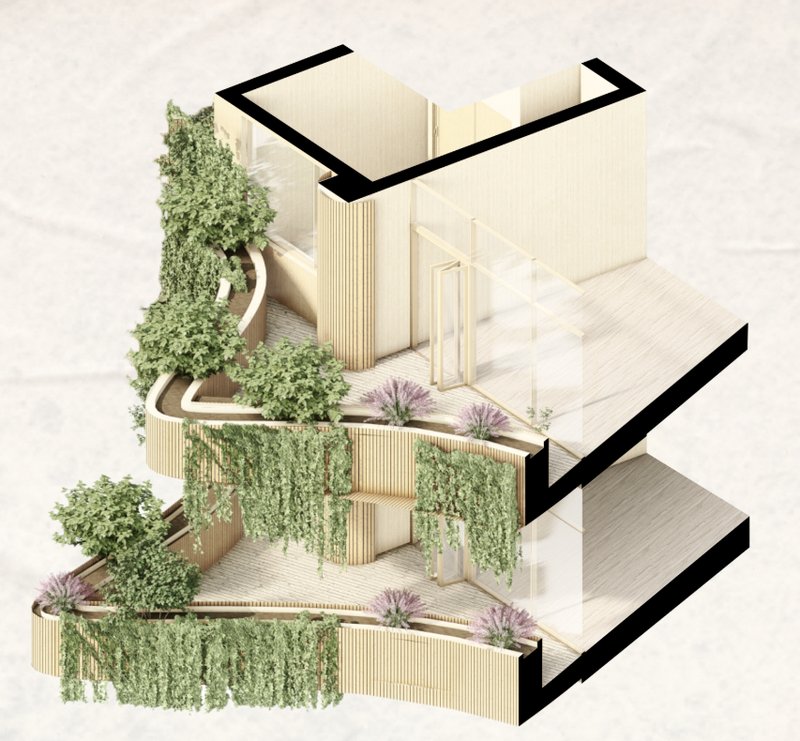
Prefabricated CLT panels are precisely cut using CNC technology based on 3D BIM models, ensuring exact fits, efficient routing for MEP systems, and minimal site disturbance. The tower’s vertical gardens and integrated foliage contribute to natural insulation, carbon capture, and improved indoor-outdoor air quality.
Design Philosophy: West Coast Identity and Indigenous Inspiration
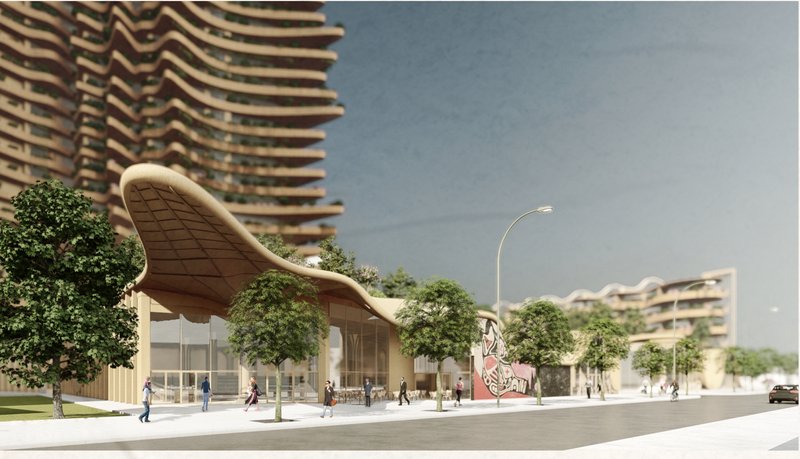
The architecture pays homage to British Columbia’s emerging west coast identity—an aesthetic that blends biophilia, local materials, and indigenous design motifs. While Canada lacks a unified architectural style due to its multicultural makeup and relatively recent formation, the west coast narrative is steadily forming, characterized by timber construction, forest integration, and fluid, organic forms.
Murals throughout the building feature culturally symbolic art created by local indigenous artists: the wolf, representing loyalty and wisdom; the salmon, symbolizing renewal and prosperity; and eagle feathers, denoting strength and forward motion. These motifs are not merely decorative—they form an integral layer of storytelling that bridges community heritage with modern sustainability.
The tower’s sculptural form, inspired by waves and canoes from the Okanagan Lake, offers dynamic shadows and passive shading. Hanging vegetation across curved balconies offers seasonal responsiveness—shielding sun in summer and allowing heat gain in winter. The tower becomes a living, breathing entity rooted in place and culture.
Functional and Social Impact
More than a structure, Eagle Eye Tower functions as a vertical ecosystem and micro-neighborhood. Its multi-programmatic layout fosters daily interaction, local commerce, and social wellbeing, featuring:
- Grocery stores, cafes, and restaurants that support localized food economies
- A wide range of residential units, including affordable housing aimed at students and university faculty
- Wellness amenities like gyms, dance studios, and recreational courts
- Rainwater harvesting, greywater recycling, and energy-efficient HVAC systems integrated within its infrastructure
Importantly, the tower builds upon an existing single-story garage rather than demolishing it. This strategy embodies the principle of adaptive reuse, avoiding the environmental and economic toll of demolition. As sustainability experts emphasize, "the greenest building is the one that already exists."
The use of Murphy beds, space-saving furniture, and shared communal zones enhances livability without sacrificing environmental performance. It encourages compact, community-oriented living, particularly vital in rapidly urbanizing areas like Kelowna.
Eagle Eye Tower is more than a record-breaking timber skyscraper—it is a manifesto for a new generation of sustainable skyscraper architecture. It proposes that tall buildings can be climate-resilient, culturally rooted, and community-driven. By embracing renewable materials, respecting existing urban footprints, and integrating indigenous knowledge systems, this project redefines the modern high-rise.
It challenges architects, city planners, and developers to think beyond efficiency and height—to consider identity, ecology, and legacy. Eagle Eye Tower sets the bar for future urban development that is as emotionally resonant as it is environmentally sound.
Project Credits
- Designer: Dylan Baliski
- Competition: Shortlisted entry, CityScraper
- Location: Kelowna, British Columbia, Canada