
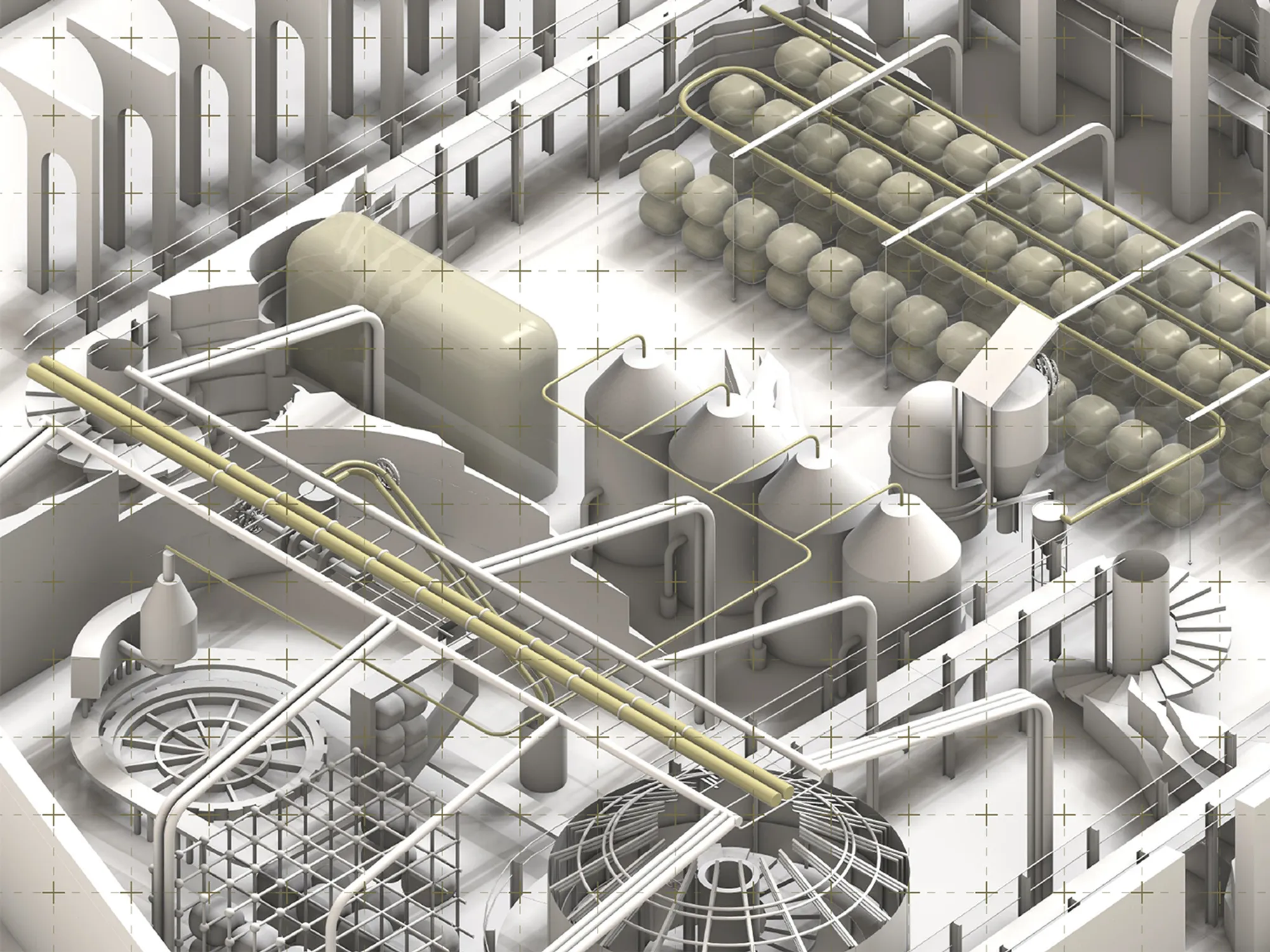
Feast of flight factory
A new ecological order with sustainable food resources-insects

Food poverty in London
The research is based on identifying current problems related to political and social issues in London. The analysis reveals that a significant problem in London is the number of people characterized as hungry or existentially threatened. Between 2022 and 2023 alone, 770,000 people first registered for soup kitchens. The food poverty rate in the UK is among the highest in Europe, despite being the sixth richest country globally. Millions struggle to access the food they need. Additionally, a notable concern among the younger population in London is environmental awareness.
Sustainable production of proteins
The Western world's food system is deemed unsustainable, and UNESCO predicts global hunger by 2050 if current consumption patterns persist. The proposed solution to address hunger in London in a sustainable and environmentally friendly way involves establishing insect farms. Insect farms cultivate a specific type of fly, the Black Soldier Fly, which feeds on organic waste. They can produce an equal amount of protein per square meter as 1500 square meters of soy, a primary protein source, along with fish oil. Insects are considered a promising alternative to animal-derived proteins due to their high protein content, healthy fats, calcium, iron, and zinc. Unlike plants, they provide complete animal proteins. Insect production releases fewer greenhouse gas emissions and requires fewer natural resources (e.g., water, land, energy) than conventional sources of meat protein.
New ecological order and way of consumption
The expansion of cities and global ecological threats, combined with poverty issues pushing residents to the existential crises, necessitate new approaches to ecosystem survival and adaptation to future conditions. The proposed concept revolves around creating a new ecological order with sustainable food sources, specifically insects. These would be accessible to all existentially threatened residents through soap kitchens operating within insect farms. The menu would feature dishes prepared using insect protein, and considering London's multicultural environment, traditional dishes from around the world, typically consumed on special occasions like festives, would be offered. The facility includes terrariums featuring various insect species used for global human consumption in certain parts of the world, as well as stands for tasting insect specialties, aiming to break down prejudices about this type of diet.
Concept of space
This multifunctional space simultaneously produces protein, addresses hunger and poverty, contributes to solving the serious hunger problem in London, and forms a closed cycle of organic matter circulation using leftover organic material to feed insects. The space also serves an educational purpose by aiming to overcome people's biases through the process of tasting and observing insect cultivation. Visitors have the opportunity to go through the entire protein extraction process, including storage for organic waste, an area for cultivation, sorting and cleaning space, composting process, where leftovers are transformed into nutritious substances, and the production and extraction process. This entire production walkthrough is an attraction for visitors.
Form finding
This space is envisioned as a closed structure, with characteristic openings designed to carefully frame parts of the production or cultivation of insects. Although it initially appears inaccessible, the scenes viewed through the openings prompt the visitor to explore the space hidden behind the walls. The interior space is conceived to have a constant circulation of matter, as well as different functions that operate simultaneously. Visitors can freely move through certain parts of the production area, where observation of the cultivation process is facilitated, and for those interested, a tour of the entire production is available. The form of the internal walls is inspired by the natural terrain created in the original habitats of these insects, with thickening created by them. The intertwining of the functions of tasting areas and cultivation itself aims to bring the entire process closer to and depict it for visitors. The positioning of the walls and open spaces dictates circulation throughout the entire space. The educational space evokes the ambiance of the entire structure.
The menu
"In Kahn’s mind, needs and desires were to different things. Needs are basic requirements, including food, shelter and clothing, which make biological survival possible. Any civil society, according to Kahn, ought to provide for needs as a matter of course. Desire, on the other hand, is a realm of dreams required for psychological survival."
For Kahn, the architect’s special obligation to society is to interpret institutions in such a way that they become settings to human inspiration once more." Nathaniel Coleman, Utopias and Architecture, Fairy tales and golden dust, Needs and desires
Although part of the space's purpose is the nourishment of the existentially threatened, the concept's aim is to provide a better experience than mere satisfaction of basic needs. This is achieved by specially crafting the menu to include dishes that carry symbolism and evoke positive feelings in people belonging to different cultures. The choice of dishes as national symbols is inspired by London's multicultural background and the large number of minorities living within it. This allows all visitors to better acquaint themselves with different cultures through their cuisines, and all dishes are prepared using proteins obtained as part of the insect factory, meaning that all dishes are nutritionally rich and nourishing.

Popular Articles
Popular articles from the community


Conexión: Biophilic Design Reimagines High-Rise Living in Hong Kong
Conexión reimagines high-rise living in Hong Kong through biophilic design, green facades, shared spaces, daylight, water and nature within.

Play: Fragments of Their World
Familiar architecture becomes modular playground design, creating safe spaces where displaced children can learn, connect, imagine and play.

The Ocean Hive: Sustainable Architecture for a Self-Sufficient Civilization at Sea
The Ocean Hive imagines sustainable architecture at sea, where modular habitats, algae, wave power and ocean waste sustain a growing colony.

Riyadh For All: Intergenerational Urban Design for Active Aging in Rabat
Riyadh For All reimagines urban design in Rabat with intergenerational co-living, adaptive courtyards, and Moroccan cultural exchange today.
Similar Reads
You might also enjoy these articles
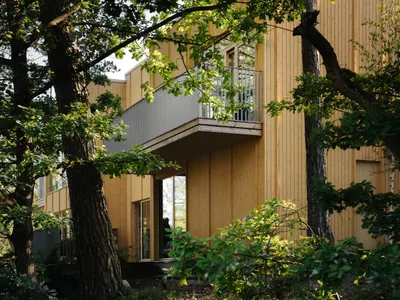
Sustainable Architecture Design: Embracing Nature and Modernity at Villa Solsidan
The article explores Villa Solsidan by AndrénFogelström, showcasing its sustainable architecture design and integration with the natural surroundings in Saltsjöbaden, Sweden.

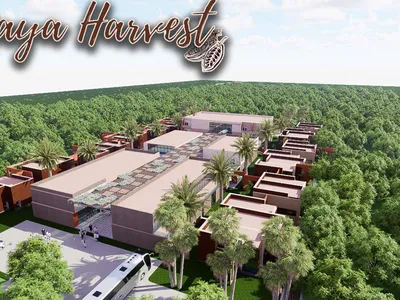
Maya Harvest: A Cacao Resort Village Rooted in Mayan Tradition and Local Craft
Situated within a Tabasco cacao plantation, this shortlisted resort proposal merges vernacular materials with hands-on cultural immersion.
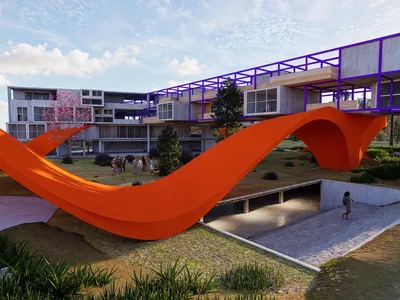
Harmonia: A River-Shaped Community That Grows Over Decades in Boa Vista
Curved pathways and modular grid structures along the Branco River create a phased settlement designed to evolve from 2030 to 2050.
The Architecture of Bathing: A Mughal Hammam Reimagined Across the Yamuna
Charlotte May's honorable mention entry for The Black Taj reinterprets Agra's bathing rituals through red sandstone, water, and framed views of the Taj Mah

Explore Future of food Competitions
Discover active competitions in this discipline




Challenge to reimagine the Iron Throne


Photograph architecture without architects


Illustrate the lost glory of Angkor Wat - Render Challenge


Design challenge to reuse E-waste
Comments (0)
Please login or sign up to add comments
No comments yet. Be the first to comment!