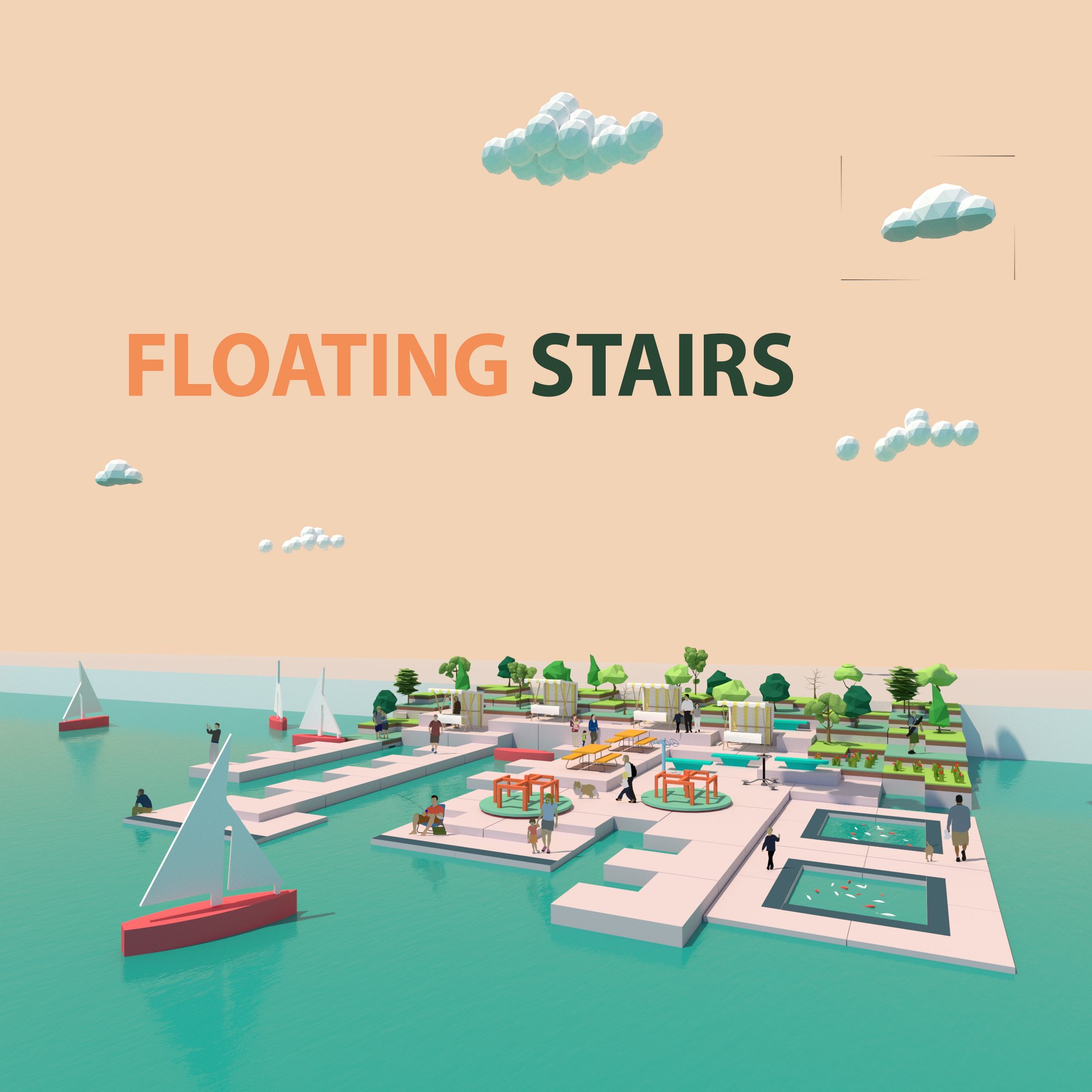
FLOATING STAIRS
A floating modular system inspired by the foldable feature of stairs

Our design, “Floating Stairs”, is inspired by the foldable feature of stairs. We designed a floating modular system that rises and falls at the water level.
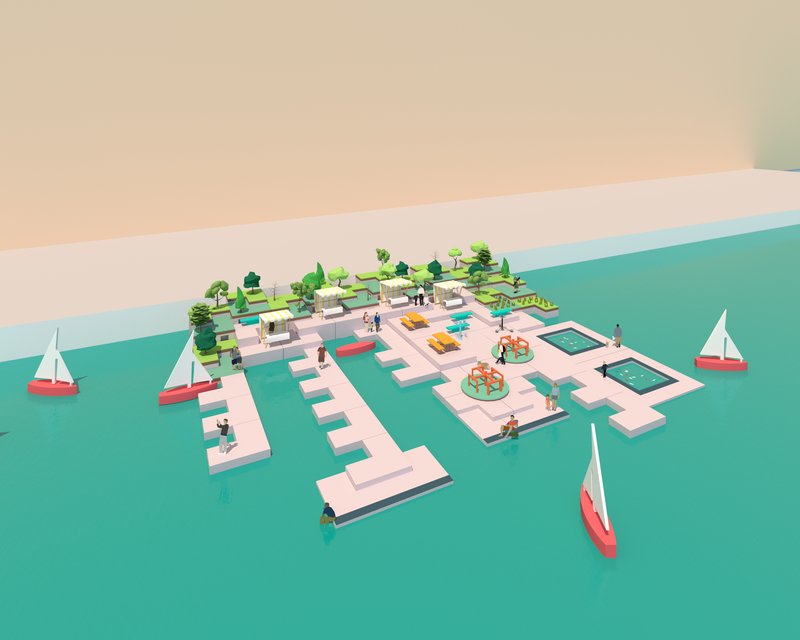 The "Floating Stairs"
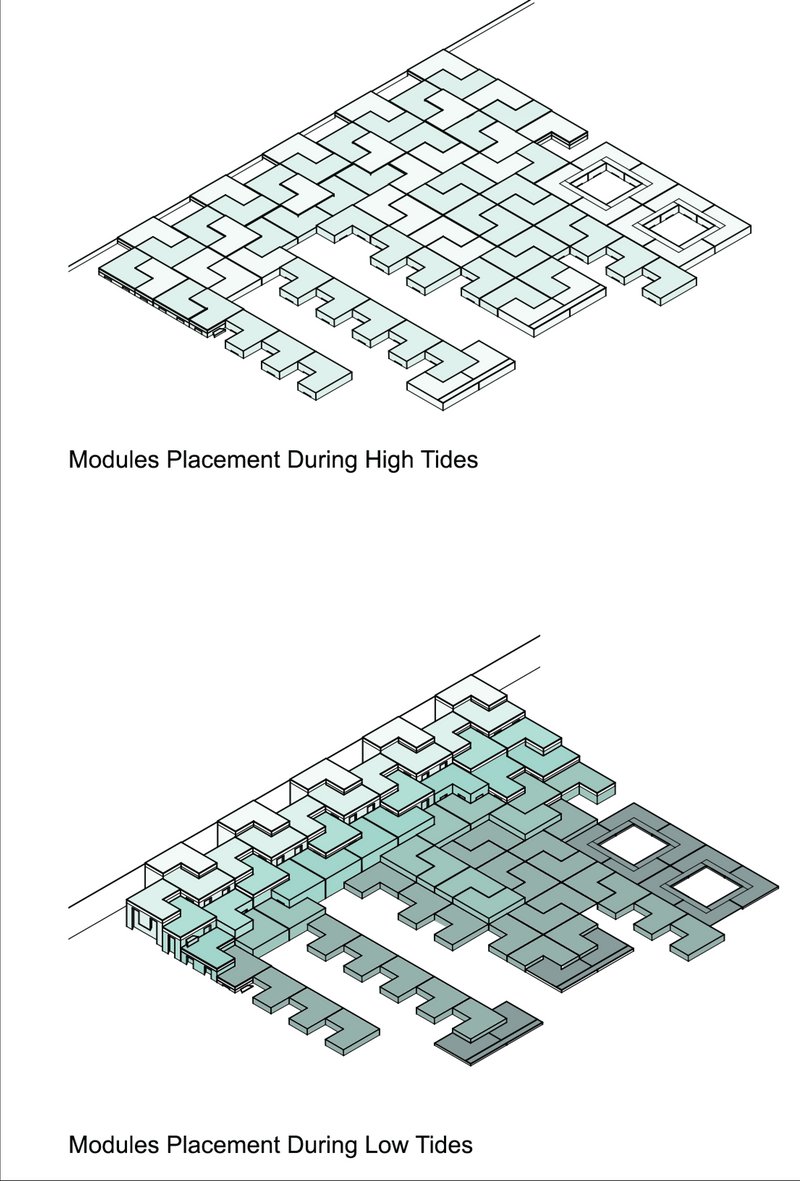 Modules can adapt to rising and falling tides
We decided to adopt a 3000mm*1500mm*1500mm L-shape modular unit so that the units can form a more integrated and varied interface.
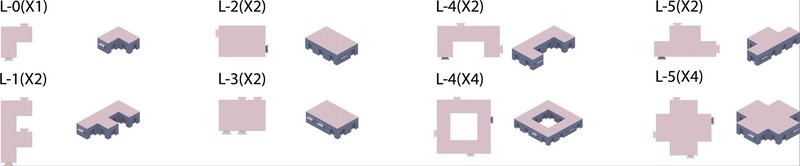 Module combination methods
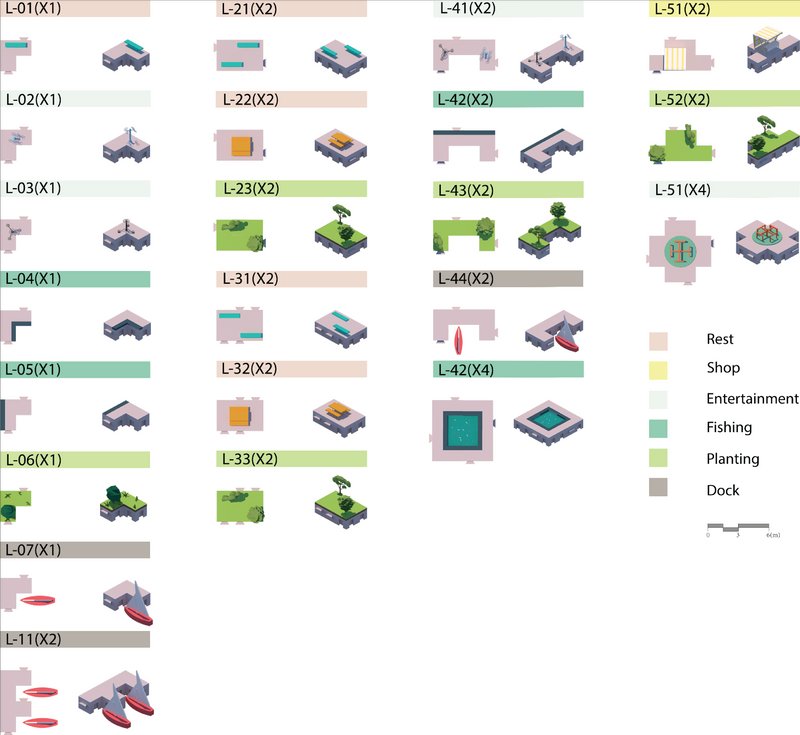 Function list and features
The floating module consists of two parts: a pontoon and a shell of the platform for citizens’ recreation.
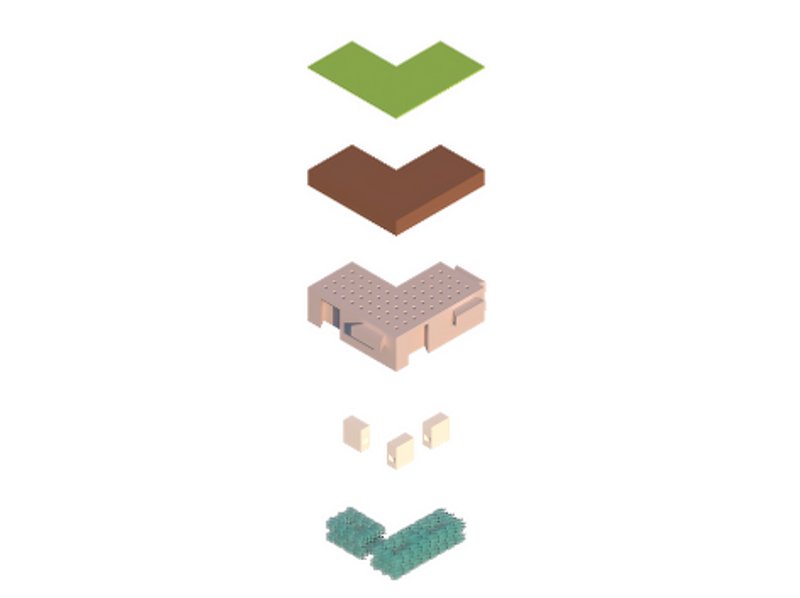 Exploded view of the module
The pontoon is made up of a stack of recycled 2-litre plastic bottles with 100mm of diameter and 300mm of height. The bottles are prepared by squeezing them and filling them with 12 grams of powdered dry ice, then capped and heat-sealed with recycled plastic. As the dry ice turns from a solid into gas it pressurizes the bottle with carbon dioxide. Then silica gel is used to fix the bottles as a pontoon of diameter of 100mm and height of 300mm.
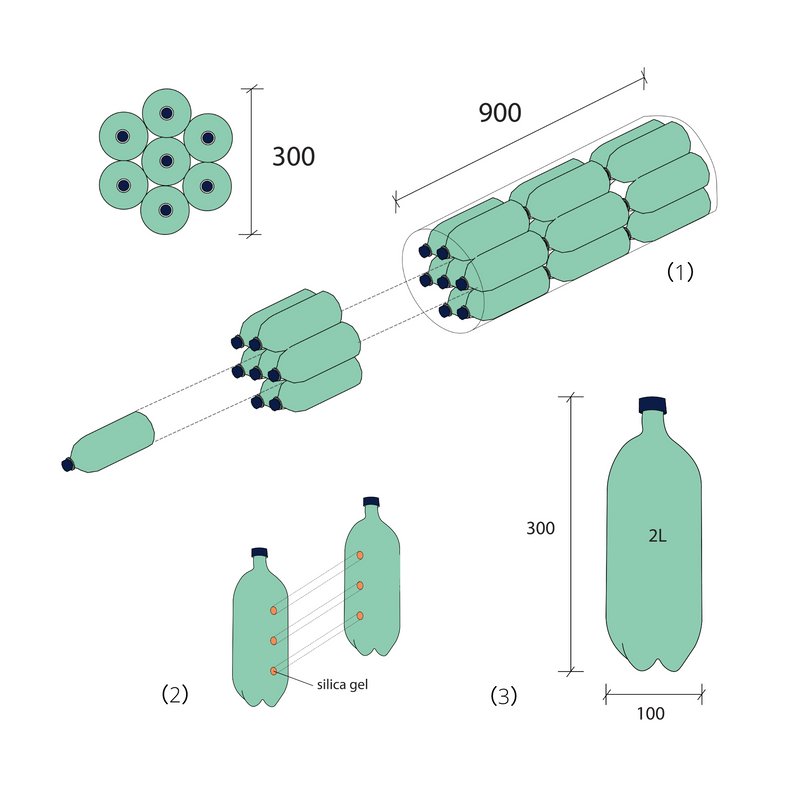 (1) Pontoon made up by bottles
 (2) Bottles fixed by silica gel
(3) The ideal size of the bottle
Floatable composite material is used for the platform, containing abandoned materials such as coal ash, calcium carbide slag, steel slag, etc. The dovetail joint plays the role of connection between the modules and control of the height.
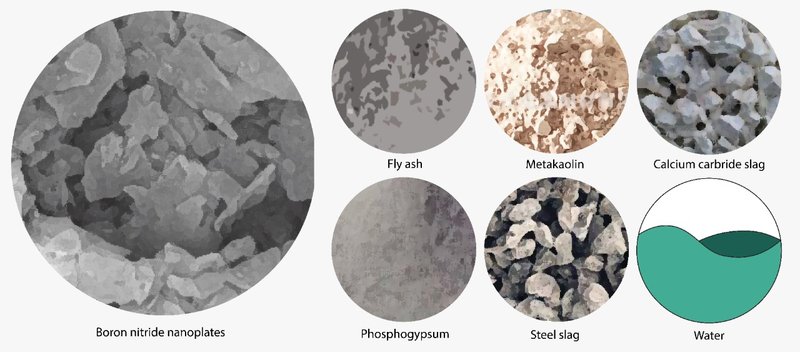 Composite Materials
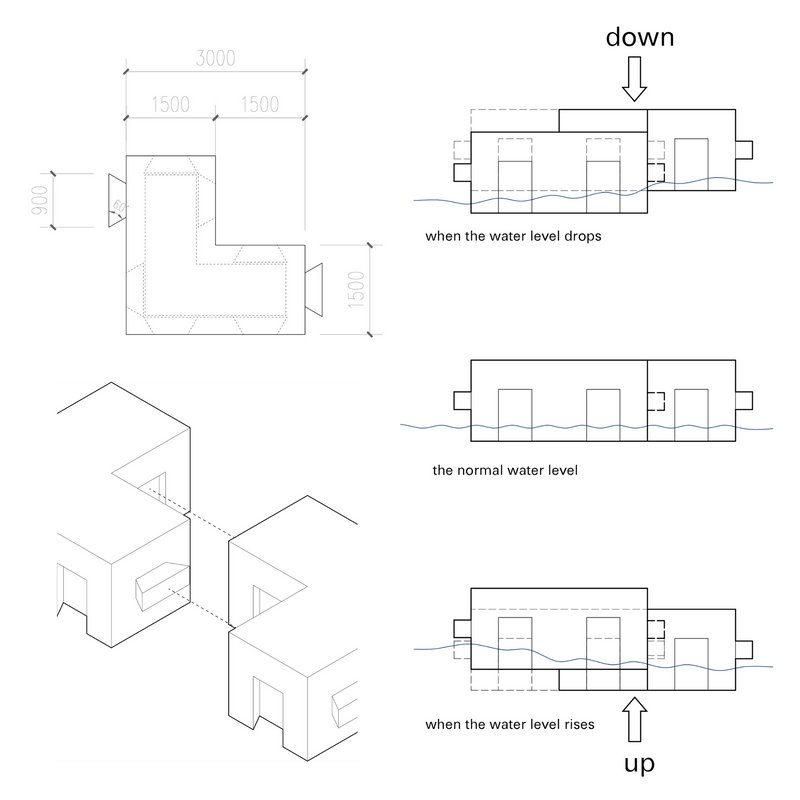 The Dovetail connection
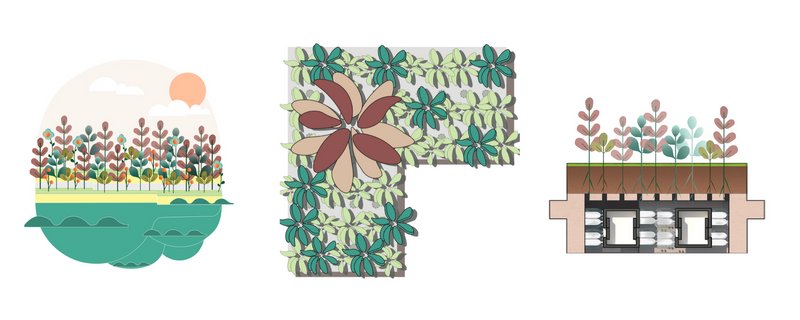 Planting
 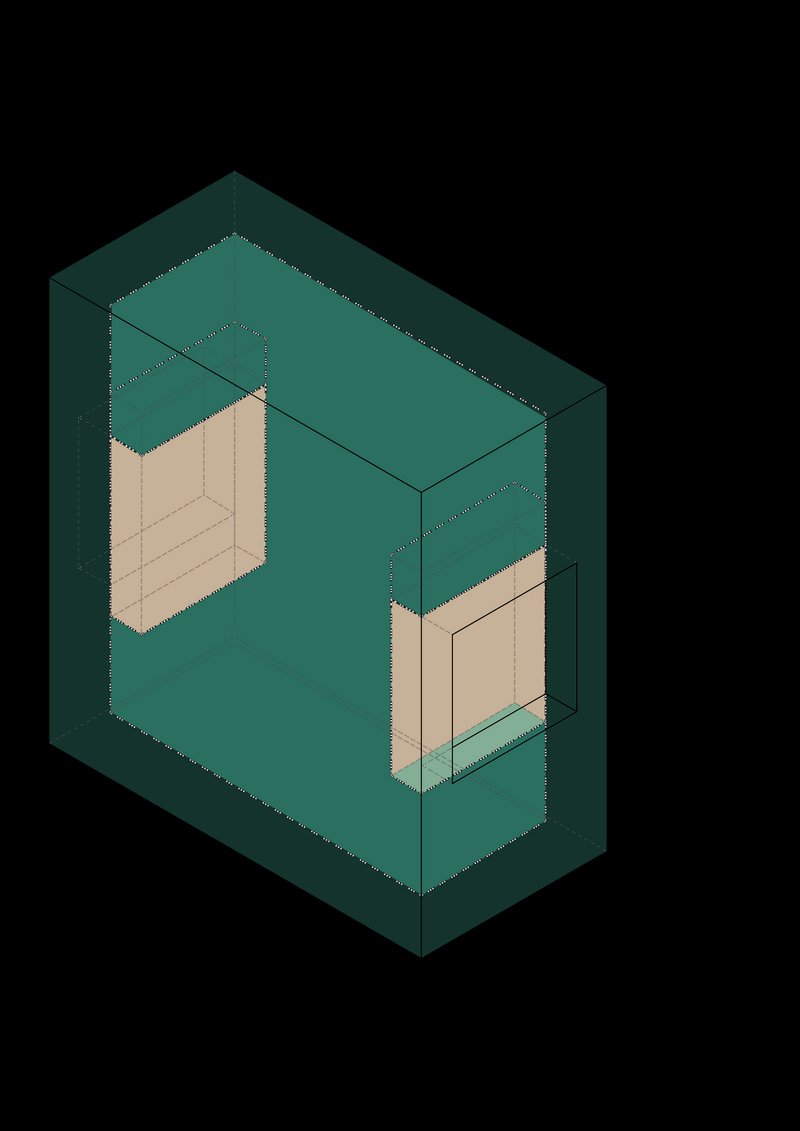 Waste collecting device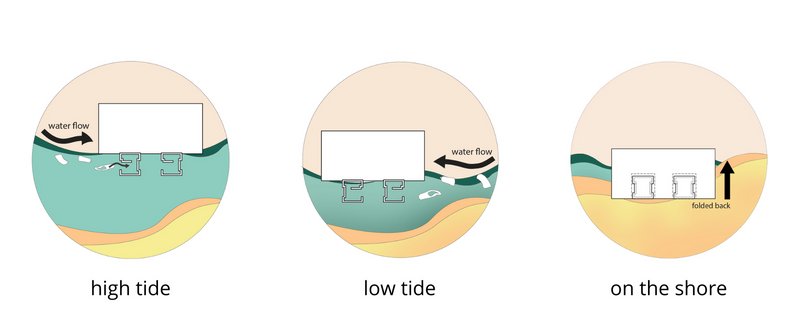
Our design follows the principles of sustainability in the following aspects:
1.Environment friendly: Our modules are mainly built with waste materials such as plastic bottles and slag. The garbage collecting device filters the floating garbage on the water and therefore purifies the urban waterway. Planting improves the ecological environment and is conducive to the living fish.
2.Mobility and Flexibility: Each module can adapt to rising and falling tides. Besides, the modules can be easily relocated and reassembled to fit various new needs and specific sites.
3.Revitalization of the city’s idle land: The floating modular system transforms the idle city embankment into a recreation park, bringing people in the city closer to nature.
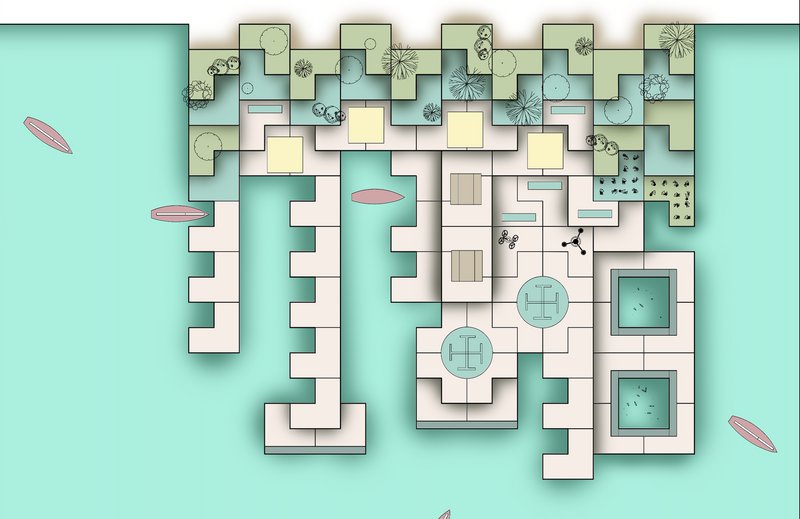 Site Plan