

Forest Housing
Location should be the inspiration.

We live in extraordinary times of change and challenge. Environmental catastrophes in different parts of the world bear witness to a climate warmed by increasing carbon dioxide emissions. Our homes are the places where we feel safe, they shelter us, they are where we bring up our children, host our friends, and where our creativity can be expressed and celebrated.
Architects, builders, and sustainability advocates are all abuzz over a new building material they say could substantially reduce greenhouse gas (GHG) emissions in the building sector. The material is known as Timber wood. The modern timber house has its roots in a rich architectural heritage. Trees have been used to build structures since prehistory, but especially after some fire disasters, the wood came to be seen as unsafe and unstable relative to concrete and steel. However, a new way of using wood has put the material back in the spotlight. The hype is focused on structural timber. In a nutshell, it involves sticking pieces of softwood — generally conifers like pine, spruce, or fir, together to form larger pieces.
The beauty, strength, and versatility of timber are in addressing the combined challenges of climate change and housing needs. It demonstrates, how innovative designers and engineers can be in developing solutions using a material that predates our existence on the planet. Timber enables us to build the most energy-efficient of homes to help us minimize the use of fossil fuels and, consequently, our emissions. This naturally renewable material, not only has one of the lowest carbon footprints of any construction material but it is also made of the carbon that trees absorb from the atmosphere as they grow: we can build with carbon, capturing and storing it in the fabric of our homes.
Timber frame is the gold standard of construction methods, not only highly adaptable and cost-effective but also sustainable. Timber delivers high quality, reduces overall build costs, and shortens the building program. Timber frame homes can be built on average eight weeks faster when compared with traditional construction methods. The thermal efficiency of timber frames is legendary, providing homes that are naturally warm in winter and cool in summer, allowing residents to enjoy significantly lower heating bills. As technology improves, the timber frame just keeps getting better. Advances in computer-designed manufacturing processes are continuously improving the quality of timber frame products, offering high precision joints and better airtightness. The way our homes perform is important for our health and comfort. Well-designed and constructed houses have the potential to make us healthier and happier.
In this project, in addition to using wood as a sustainable material, the goal was to make the new building more adaptable to the location. The inspiration for this project came from the location itself. Through the use of greenery, the building is intended to coexist in harmony with the nearby forest. This object tends to adapt to nature as much as possible.
The design of the wood module started from the modular housing grid (nx60 cm), from which the cube shapes were created. The corners of the cube have been removed to create space for balconies, where windows are placed. This allows the module to be placed in buildings such as rowhouses, skyscrapers, atrium houses, etc.)
First, the timber skeleton is built and then the modules are placed in it, to create the "Forest Housing".




Popular Articles
Popular articles from the community


The Ocean Hive: Sustainable Architecture for a Self-Sufficient Civilization at Sea
The Ocean Hive imagines sustainable architecture at sea, where modular habitats, algae, wave power and ocean waste sustain a growing colony.

Co-life: Sustainable Architecture for Age-Friendly Community Living
Co-life reimagines sustainable architecture for seniors through courtyards, rammed earth, shared gardens, and spaces designed for belonging.

The Earth Pod: 3D Printed Homes for Resilient Refugee Communities
The Earth Pod reimagines refugee housing through 3D printed homes made from clay, combining resilience, self-sufficiency, and rapid shelter.

Co-Life: Senior Housing Design That Reconnects Older Adults With the City
Co-Life reimagines senior housing design through healing gardens, shared streets, workshops, and a sustainable community across generations.

Similar Reads
You might also enjoy these articles

Day and Night Park: A Time-Based Urban Newsstand in Beijing
A temporary urban newsstand in Beijing blending travel, light, and reading through poetic colors, compact form, and community-focused design.

Modernist Patio Renovation in El Masnou, Barcelona by Oliver Segura Arquitectura + Cebrià Arquitectura
Modernist patio renovation blending tradition and innovation with a movable pool, leveled floors, and Catalan materials in El Masnou.

Alto Residencial Coop: Cooperative Housing Development in Santiago de Compostela by Carbajo Barrios Arquitectos
A linear cooperative housing complex blending white volumes and perforated metal façades, enhancing community living, natural light, privacy, and urban integration.
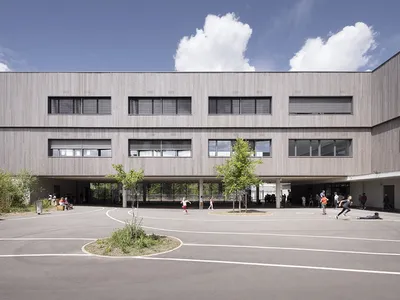
Vil Genis School by BPA ARCHITECTURE – Massy, France
Vil Genis School in Massy, France, features sustainable design, south-facing classrooms, community integration, accessible spaces, and modern educational architecture.


Explore Green Architecture Competitions
Discover active competitions in this discipline




Challenge to reimagine the Iron Throne


Photograph architecture without architects


Illustrate the lost glory of Angkor Wat - Render Challenge


Design challenge to reuse E-waste
Comments (0)
Please login or sign up to add comments
No comments yet. Be the first to comment!