
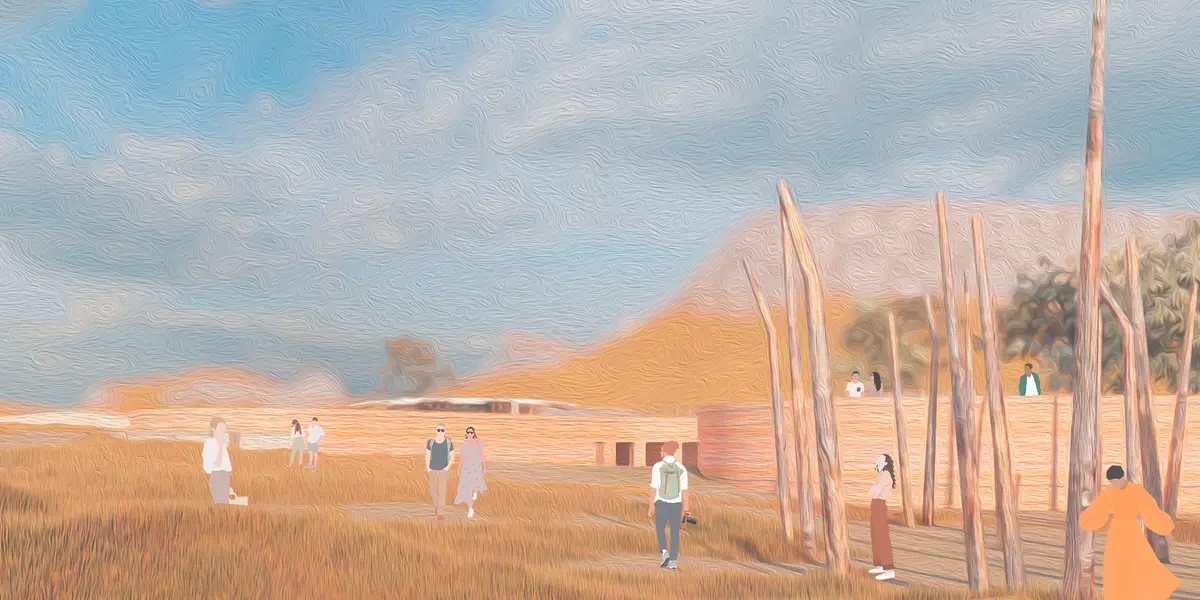
Forest Interpretation Centre
Wollemi National Park, Australia

"The provocative interpretation should affect those individuals who destroy the common heritage. It is important to realize that "if you destroy something beautiful, you thereby destroy yourself" (Tilden 1977)
The theme of the project is the Forest Interpretation Center as an institution aimed at promoting and disseminating knowledge about heritage, in this case natural heritage, which is the "forest".
The complex is located in Australia's Wollemi National Park, 200 kilometers northwest of Sydney. There are several camping centers in the vicinity, the closest of which is 5 kilometers away from the planned facility. The target audience is tourists visiting the national park and nearby campgrounds. The proposed building complex is accessible by foot, bicycle, or bus service from nearby encampments.
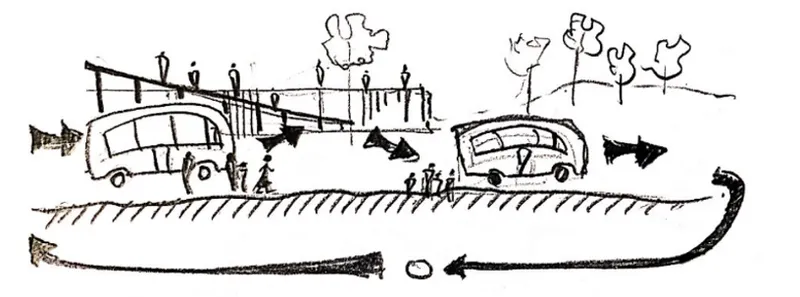
Topics covered at the Center are intended to raise awareness of current ecosystem processes (e. g. fire, deforestation, drought, "overtourism" in protected areas) with a particular focus on Australia's national parks. Another task is to make people aware of what these changes are and what effects they may have in the future.
The building is constructed using the "rammed earth" technique with earth rammed into formwork with the addition of sand, clay, gravel and cement in appropriate proportions found on the site. Additionally, wood and straw sourced from the local area are used, so the materials are mostly from the site. The body of the building has been integrated with the surroundings, respecting the current context and inscribed in the existing terrain.
A complementary element of the whole assumption are the ramps circling the plot, changing the height above the ground level, which are directed to the most attractive views and allow you to fully experience all the privileges of the site.
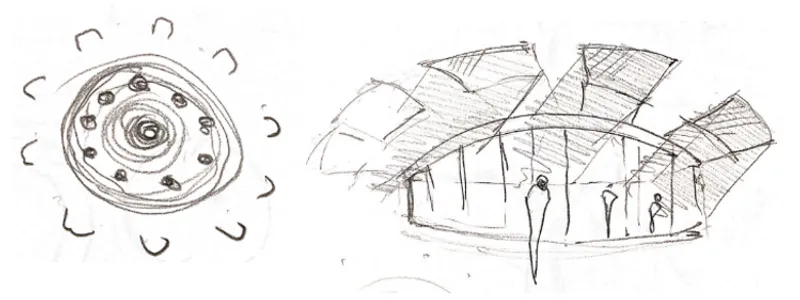
The shape of the building is reminiscent of a tributary of the nearby Capertee River. Winding through the grass, the barely visible silhouette of the building is meant to blend in with the surroundings, creating a unified whole. The idea was to create a block imitating the existing landscape and referring to the local nature.
The starting point was a meandering form, intended to resemble the twisted legless body of a snake, inspired by an endemic species found in the area.
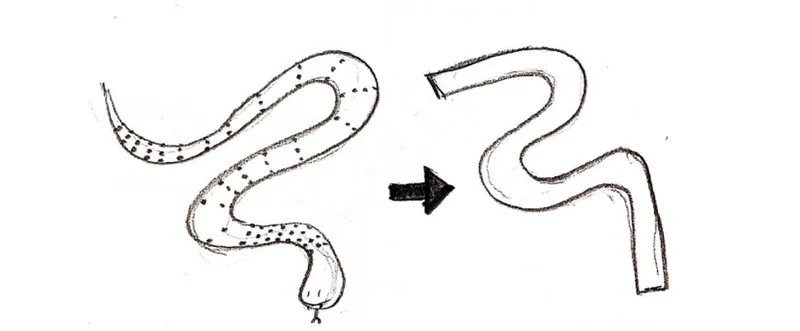
The mass of the building partially emerges from the ground, already making its presence felt more strongly; the angular finial of the building resembles a rock cliff, carrying over on a smaller scale the characteristic elements of the nearby mountains.

An important factor was the consideration of view axes defined by nearby mountain ridge and tree clusters. They outline the shape of the building, as well as the scenic route located on it. The complex was completed with a nature trail meandering between the surrounding flora. It has been specifically targeted to get the best views. The complex is complemented by a pavilion intended for a seasonal restaurant and a public toilet.
In the designed building are distributed 7 zones of different character. In the entrance area located in the western "curve" a representative hall and reception with a checkroom were located.
To convey the character of the forest at the very entrance, upon entering the facility one encounters darkness, gradually dissipating towards the exit. This is to give the impression of a forest of dense treetops, overshadowing the hot sun and providing a place to relax.
The skylight windows, flush with the ceiling height and protruding beyond the building outline, not only let in light rays, but also allow you to enjoy views of the nearby landscape and serve as ventilation.
The air draught generated by them introduces a pleasant fresh breeze into the building and also plays a part in shaping the display.
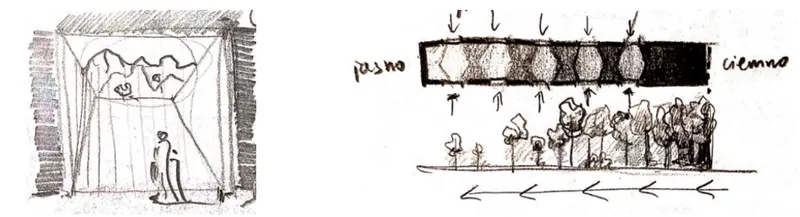
The permanent exhibition consists of semi-transparent fabric sheets hung in three successive segments, referring to the forest states.
"Healthy" forest consists of sheets long from the ceiling to the ground, which overlapping each other give the effect of thickening of the forest, this treatment is designed to cause curiosity and slight disorientation of the viewer. The sheets in the next section are torn and overburnt, signifying a forest struggling with fires, a reference to the large fires consuming these areas of Australia in 2020. The last segment contains cut pieces of canvas lying on the ground resembling felled and fallen trees, reminiscent of progressive deforestation. All these treatments are meant to symbolically show what the forest as we know it can become.
Light is an integral part of the experience of this place, it is supposed to affect the mood and sensations of those who come here. The mosaic of light and dark patches crossing the path of the visit differentiates the dynamics and expressivity of the subsequent zones. Occurring rhythmic, elongated windows cut into the solid wall formation let in bright, piercing sheaves of light that naturally illuminate the volume.
"The middle "bend" is a workshop zone, where various educational and artistic activities and lectures are held. Here are placed adapted for use (such as seating) the remains of trees such as branches, twigs and trunks.
On the way to the next stages of the exhibition you can rest here or go to the meditation zone, which by its shape and location limits external stimuli, allowing you to calm down and contemplate the surrounding nature.
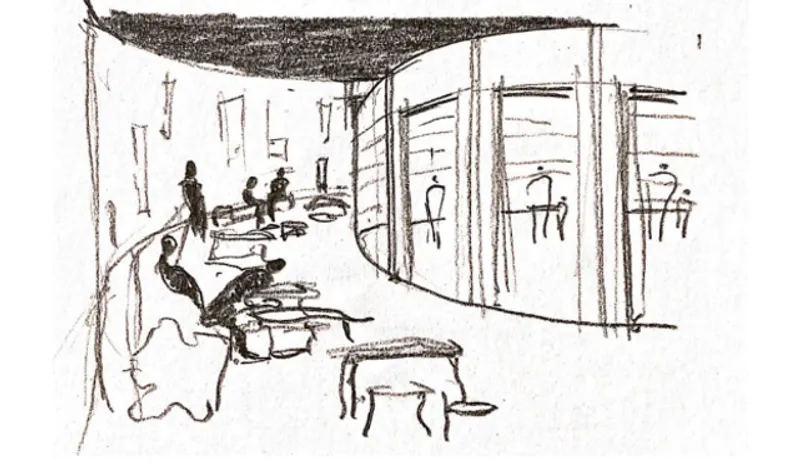
In the last part, two large pass-through windows were designed, from which you can admire the local landscape. In one, the existing greenery was exposed, and in the other, withered tree branches and wooden logs driven into the ground. The contrast used, referring to changes observed in nature, is supposed to influence the imagination of the viewer and be another aspect possible to interpret.

At level +1, a public viewing terrace has been designed on the roof of the building. It was connected to a system of hiking trails in the form of wooden platforms of varying elevation, surrounding the trees found on the plot. The applied treatment allowed for a closer contact between the observer and the greenery, and exposed the best views.

In addition, the entire complex was complemented by features such as a seasonal restaurant and a complex of public restrooms. The premises include a back room and an open area for dining. The form of the pavilion was inspired by an Aboriginal symbol signifying a group of people sitting together to emphasize the dimension of community emerging here. Sheets of fabric attached to wooden stakes that bend under their own weight provide additional shade from the summer heat.
This paper presents a concept for an object whose function and form complement each other. With its meandering mass and diverse yet functional exhibition space, the building provides a multifaceted experience of its surroundings.
The facility creates zones where the viewer can get a feel for the forest, understand how it works, and appreciate its value. Referring to the quote in the introduction, the building is an attempt to make its audience aware of the important role of flora in people's lives, which is taken for granted on a daily basis. Make it clear that forests need protection to safeguard life on earth.
In addition, the building implements sustainable strategies by using natural construction and finishing materials sourced from the surrounding area. It also fits in with the Australian landscape by recessing the building into the terrain and the earthy color scheme of the facade.

Popular Articles
Popular articles from the community

Extended Shell: Retrofitting Kolkata's Balconies as Living Urban Thresholds
A modular retrofit system recovers the social and environmental intelligence of Kolkata's historic verandas for contemporary Park Street residents.

Opera on the Sea: Driftwood Logic Shapes a Timber Opera House on Estonia's Coast
Trevor Orgill's opera house translates the entangled drift of floating timber into a civic building where wood, water, and music converge.

Faces of the Soviet Avant-Garde: Turning Moscow's Street Names into an Open-Air Museum
A network of sculptural installations across a Moscow residential district transforms forgotten architect names into spatial encounters with cultural memor

Manzana Morphosis: Stretching Barcelona's Grid into a Living Landscape for 2050
A radical reworking of the Eixample manzana turns density into a tool for generous public space, vertical ecology, and environmental performance.

Similar Reads
You might also enjoy these articles
The Rhythm of Seasons
A Farmers' Market Connecting Nature and the City

More Than a Building-Designing a Living System
More Than a Building-Designing a Living System
Base Beyond
DESERT COMPOUND ARID: TOURISM OF ABSENCE AND ABUNDANCE


Comments (0)
Please login or sign up to add comments
No comments yet. Be the first to comment!