

Forest Retreat House by Kariouk Architects: Sustainable Family Living in Ontario
Forest Retreat House by Kariouk Architects blends sustainable design, handcrafted materials, and family-centered spaces, preserving Ontario’s forests and natural habitat beautifully.


Nestled in the serene landscapes of Caledon, Ontario, the Forest Retreat House by Kariouk Architects is a remarkable family getaway designed to harmonize with nature while offering modern comfort. Completed in 2021, this expansive 10,300 ft² residence caters to a large, multi-generational family seeking immersive experiences in the Canadian wilderness.
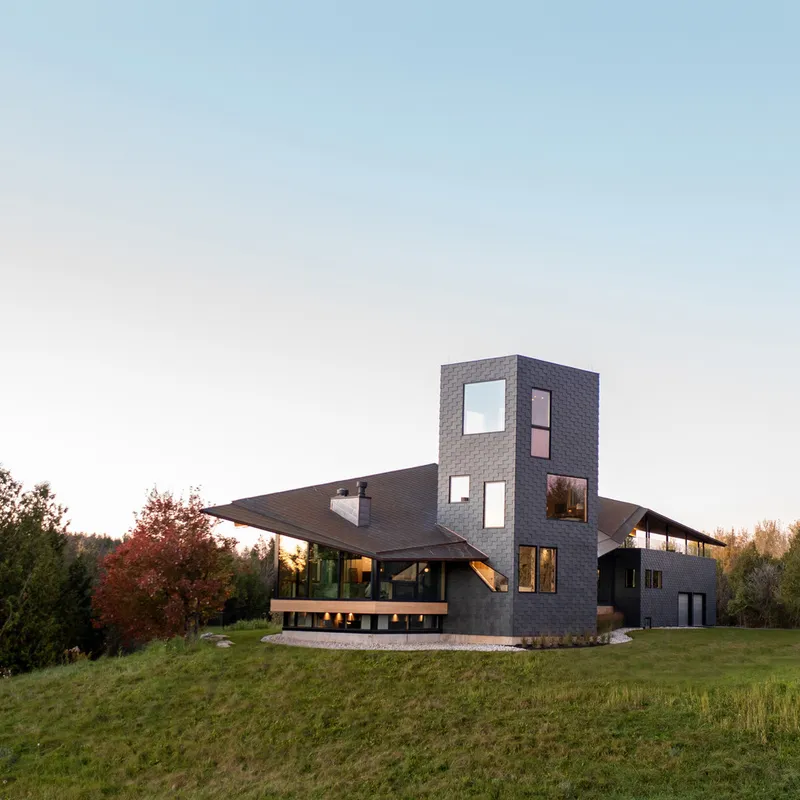
A Family-Centric Canadian Homestead
The clients, living abroad, envisioned a Canadian retreat where their children could connect with the Ontario forest landscape during summer and winter holidays. Designed for extended stays, the home accommodates teenagers, extended family, and even large dogs, promoting outdoor activities like hiking, snowshoeing, and exploring the surrounding natural environment. The residence celebrates the Canadian identity, emphasizing the historical connection between people and the land.
Preserving Nature and Habitat
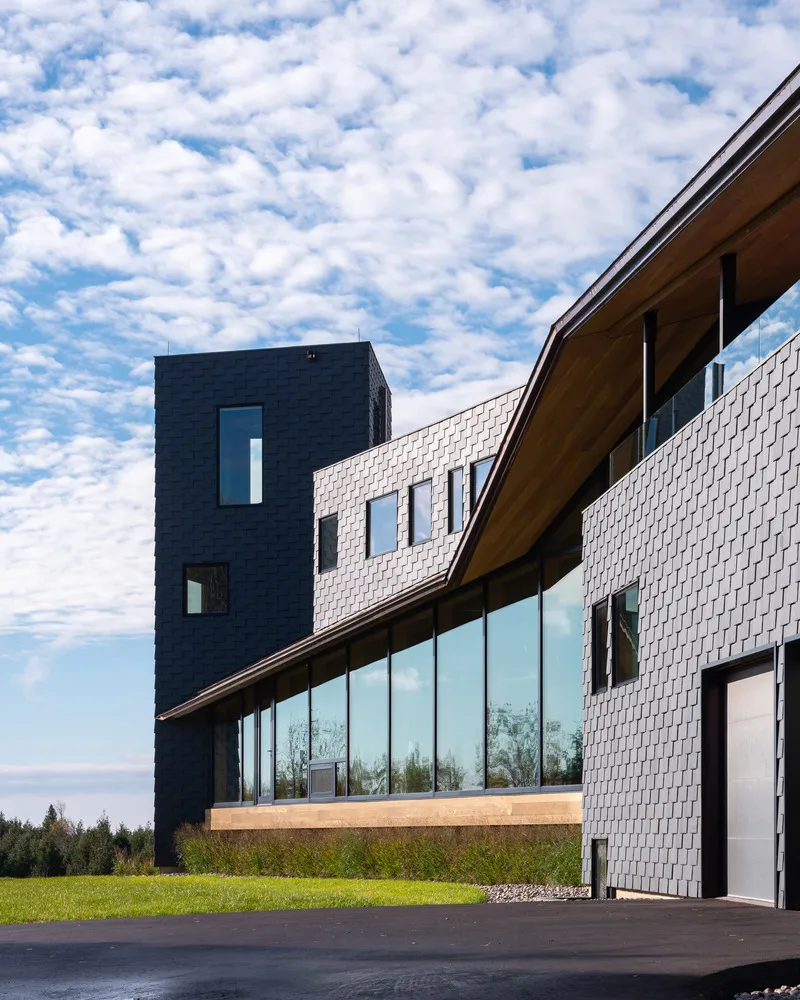
One of the most significant contributions of the Forest Retreat House is its commitment to environmental preservation. The home was built on a previously cleared hilltop, overlooking a wildflower meadow, wetlands, and 100 acres of forested land, minimizing tree removal and protecting natural habitats for local wildlife. This careful site adaptation ensures the property remains a sanctuary for birds, small mammals, and native flora.
Architecture That Embraces Warmth and Openness
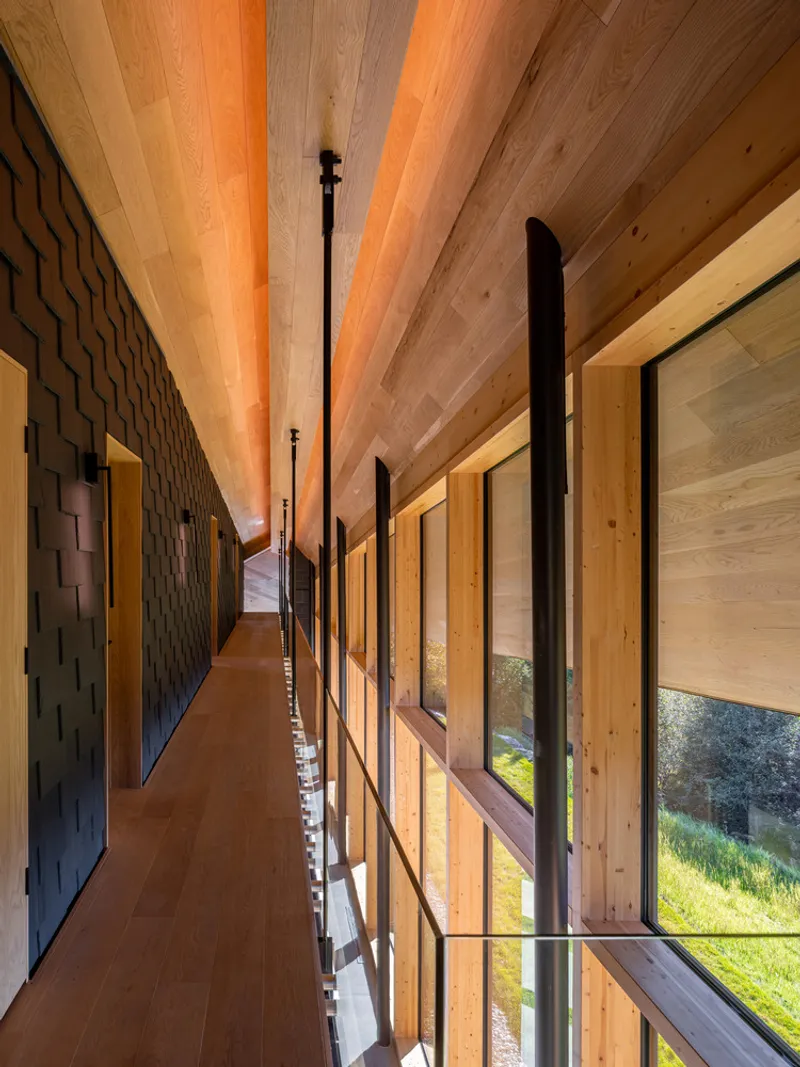
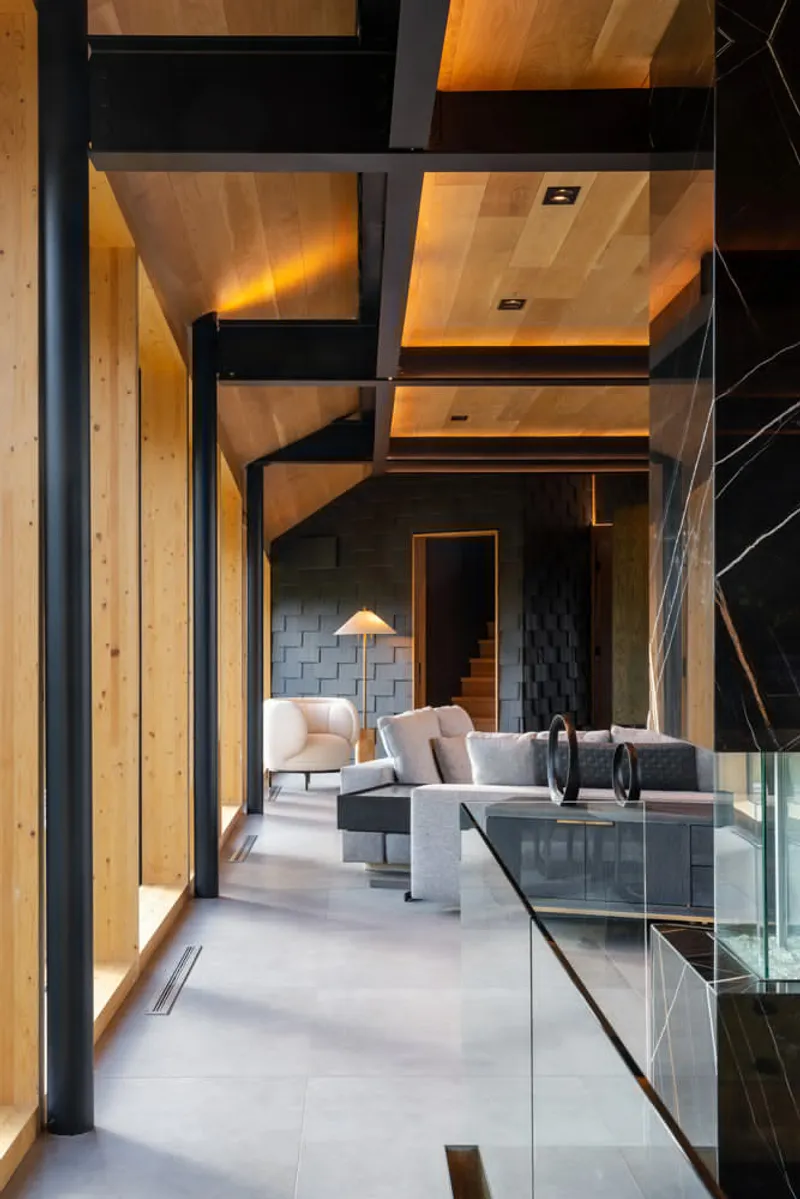
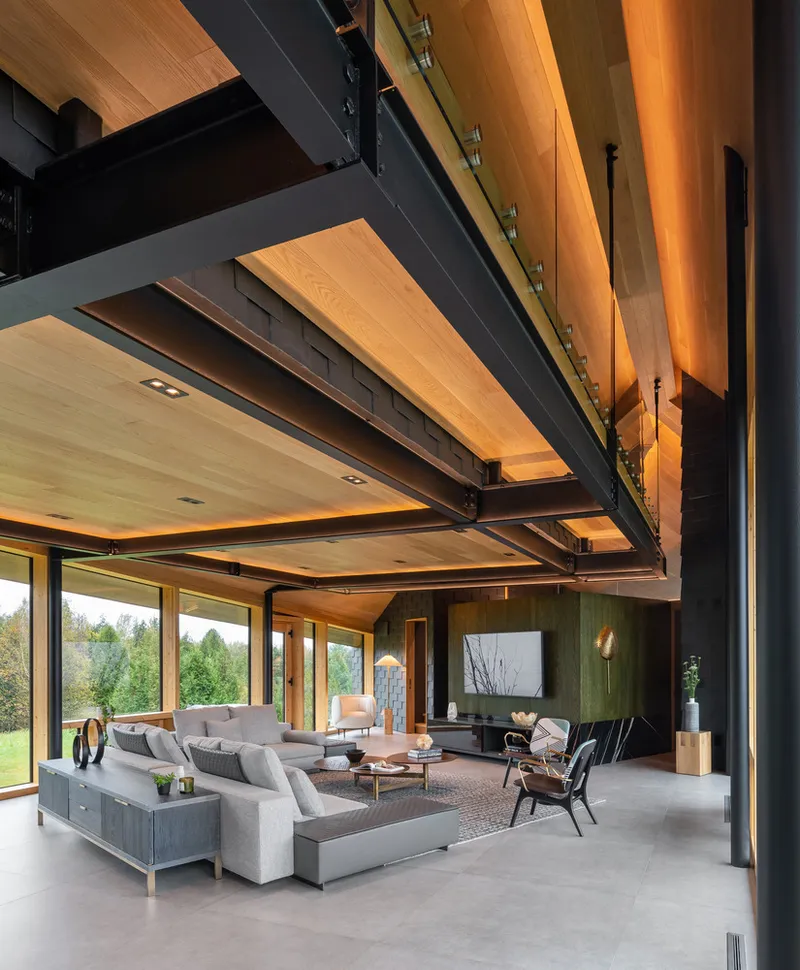
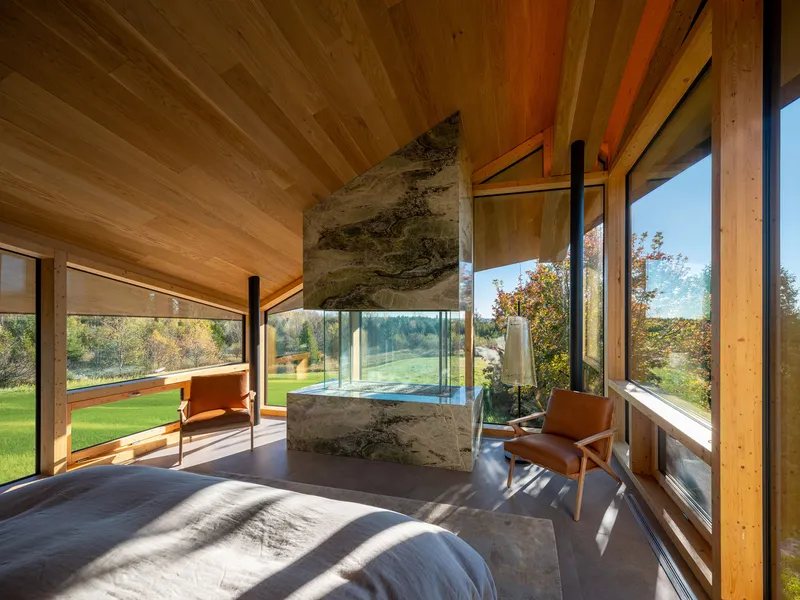
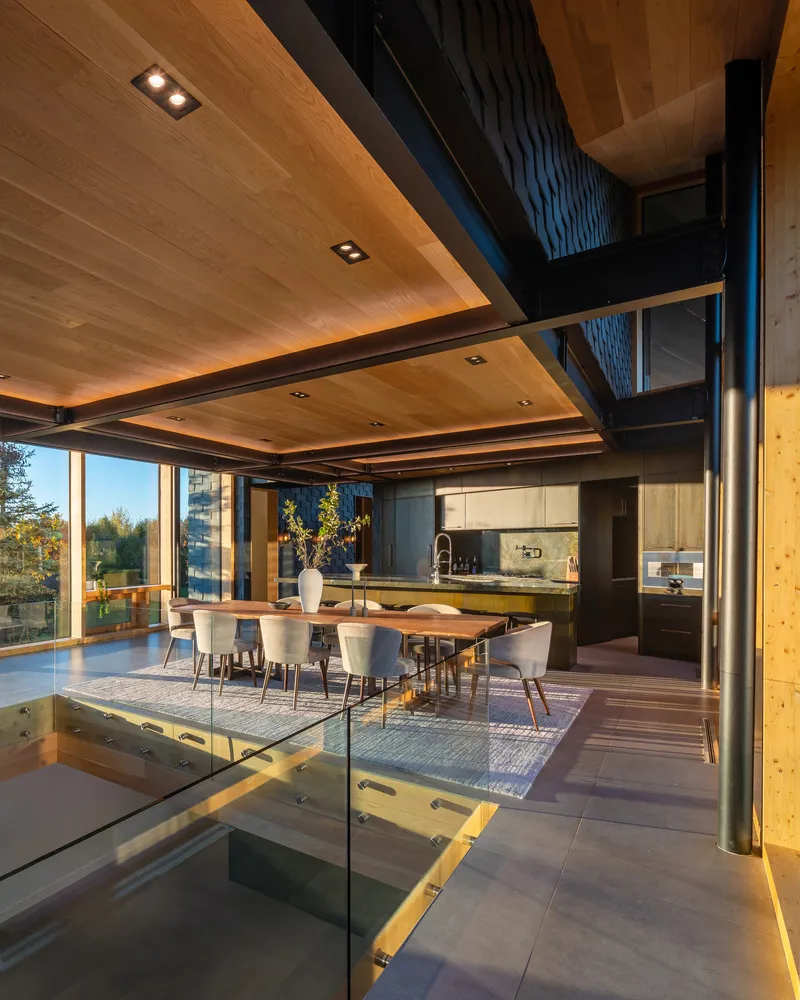
Departing from traditional box-like modernist forms, the design emphasizes continuous, open-plan spaces. Bedrooms and bathrooms are the only enclosed areas, fostering family closeness throughout the home. The main floor hosts the parents’ suite and shared family areas, while the children’s bedrooms occupy a suspended slate-clad volume, 12 meters above the main floor, connected via a catwalk.
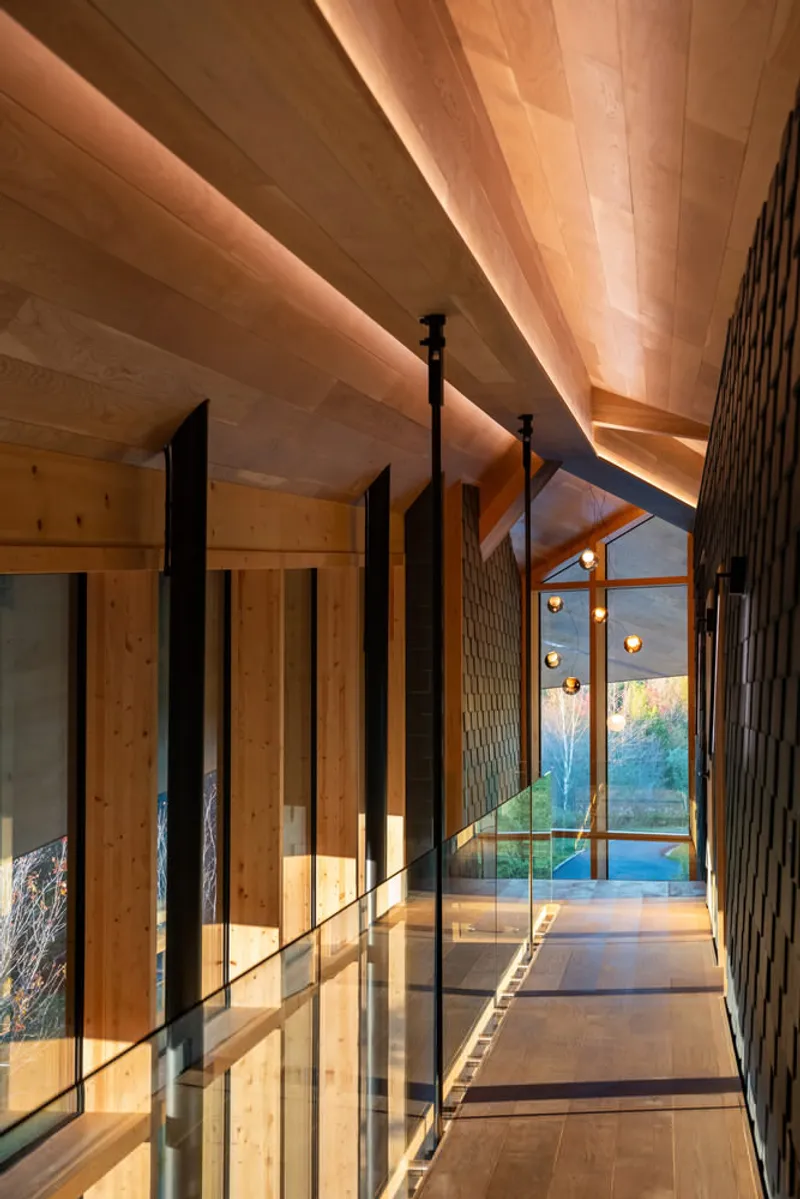
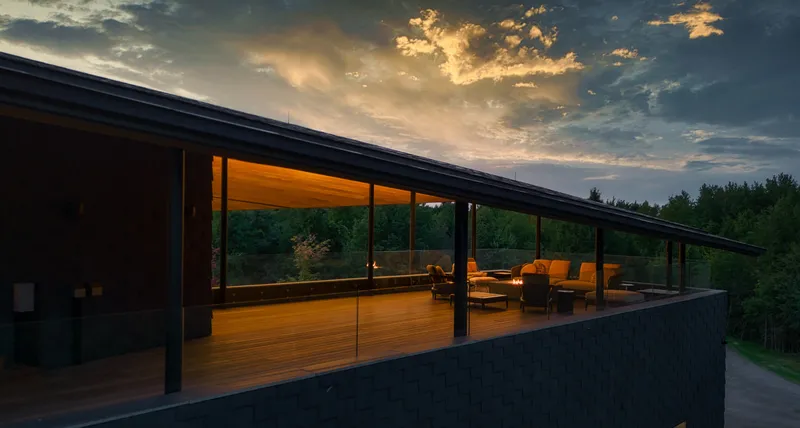
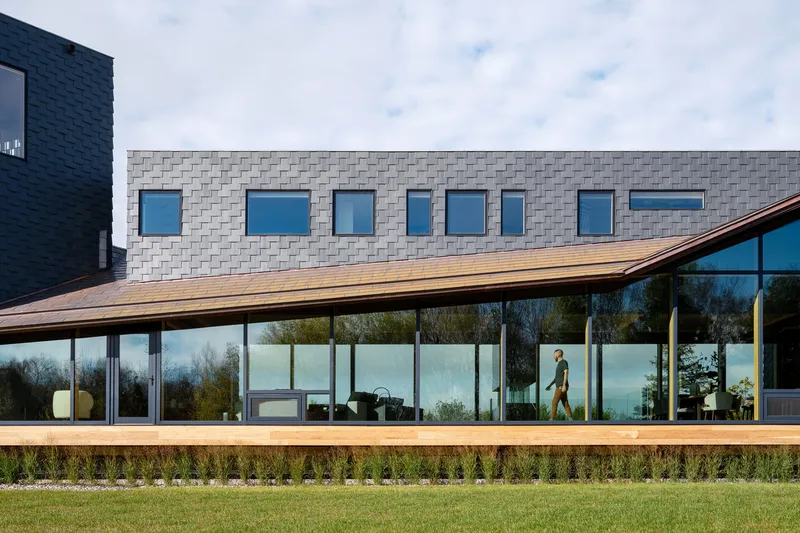
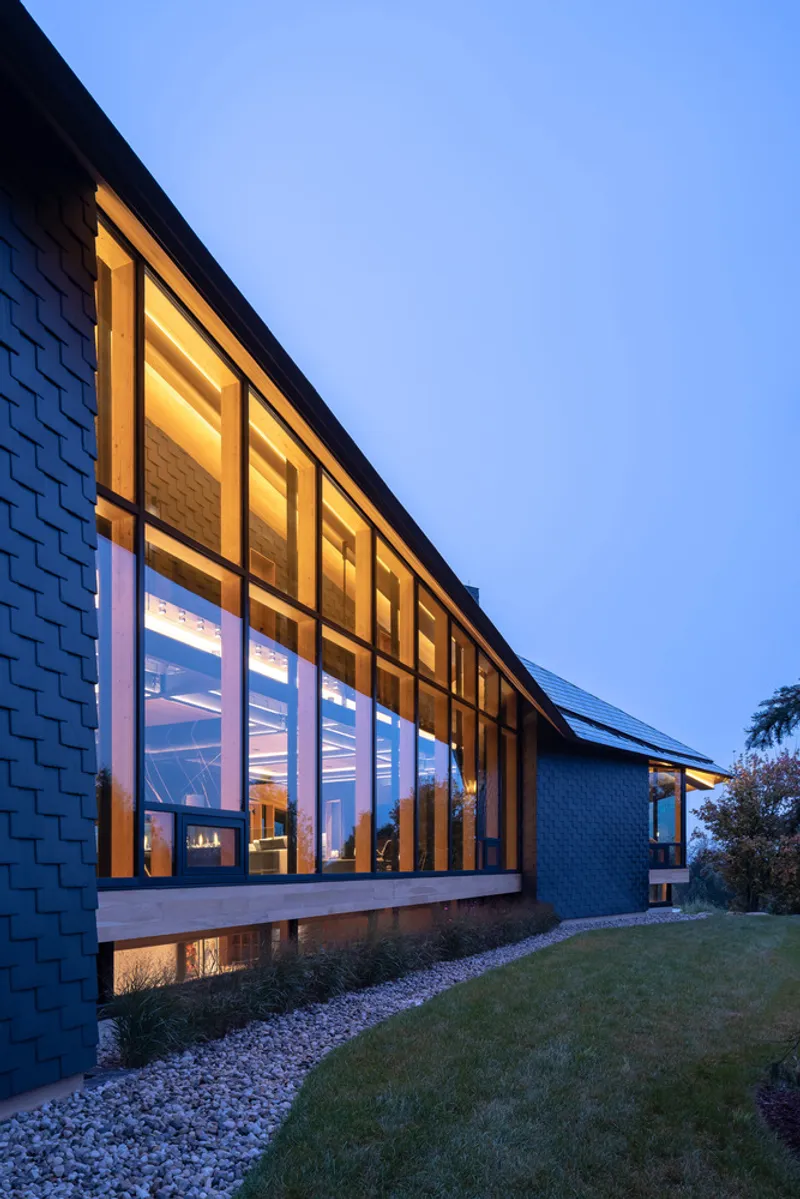
The home’s most striking feature is its copper-clad, tent-like roof, stretching 60 meters along the site’s topography. Engineered to appear light despite its length, the roof rises above the garage like a bird’s wing, creating a sheltered terrace and choreographing circulation through the interior. An oak-clad ridge beam guides movement while framing views toward the surrounding forest.
Craftsmanship and Material Authenticity
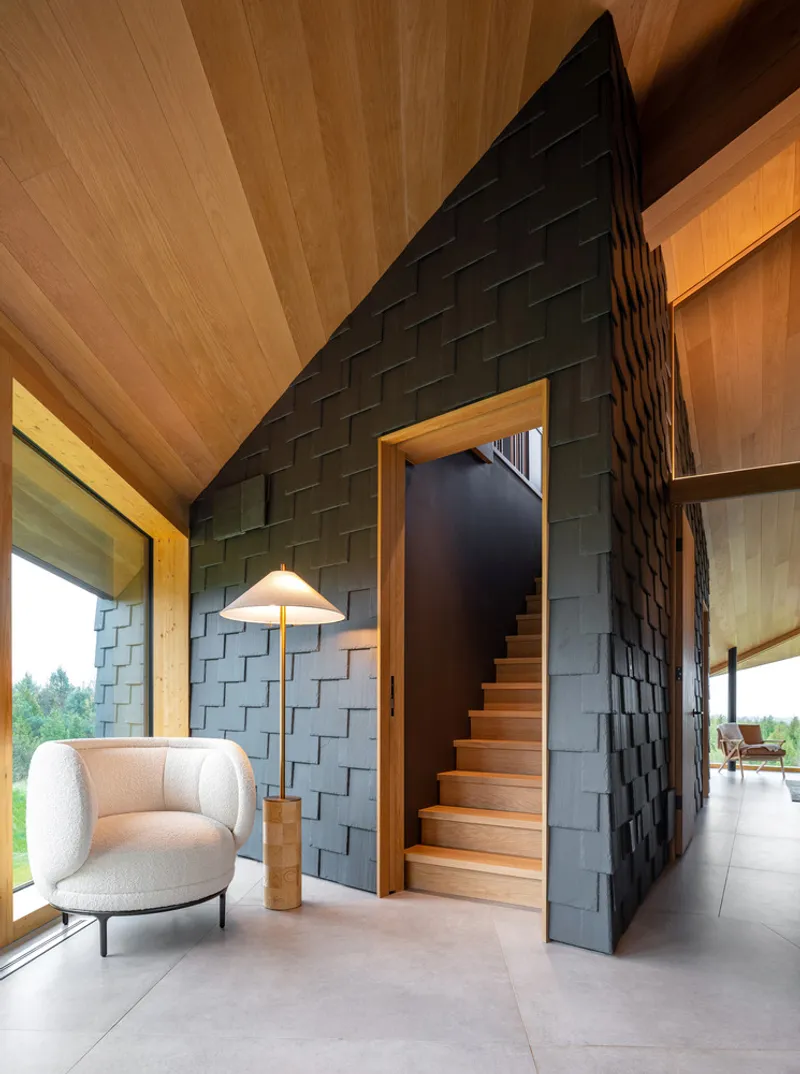
The Forest Retreat House highlights the “mark of the hand” through meticulous craftsmanship. Exposed steel fittings were fabricated by local tradespeople, and custom wood panels echo traditional slate roofing patterns, applied innovatively to walls and ceilings. The project balances modern construction methods with tangible, human-centered details, resulting in a home that exudes warmth, authenticity, and timelessness.
Sustainable Design for Longevity
Sustainability drives both the design and material selection. By preserving the natural habitat and using durable, locally sourced materials like Canadian slate and white oak, the home reduces its carbon footprint and ensures longevity. Many materials, including custom panels and steel fittings, are reusable in future renovations or if the home is ever deconstructed.
Energy efficiency is integral to the home’s design. Triple-pane glass walls, deep roof overhangs, and superior insulation minimize heat loss and passive solar gain. A geothermal heat pump provides low-carbon heating and cooling, complemented by high-efficiency fixtures and a sustainable septic system. These features create a comfortable, energy-conscious home that harmonizes with its environment.
A Retreat for Generations
The Forest Retreat House embodies a modern approach to family living in a natural setting, blending sustainable construction, handcrafted materials, and thoughtful spatial planning. It serves as a model for contemporary rural architecture, demonstrating how luxury, environmental stewardship, and family-centered design can coexist beautifully in the Canadian wilderness.
All photographs are works of
Scott Norsworthy


Popular Articles
Popular articles from the community


U.GA Architects Wraps an Oval Rooftop Pool in Curved Board-Formed Concrete on Busan's Jeollidan-gil
In Busan's Jeonpo-dong, a 454 m² mixed-use block stacks a neighborhood facility, guest rooms and an oval rooftop pool inside spiraling concrete walls.

longwave studio Reorganizes a 112 m² Tainan Apartment Around the Daily Routines of a Family and Two Cats
In Tainan, Taiwan, birch plywood, rust-red furniture and a freestanding plaster wall link arrival, storage, work and family life in one apartment.

Jaramillo Van Sluys Arquitectura and Urbanismo Turn a Demolished Registry Lot in Quito into an Orchard Plaza
In Quito's Centro Histórico, a 2,800 m² plaza exposes the San Agustín convent wall and redraws its lost Augustinian orchard in volcanic stone.

David Macias Steps a Doorless Stone and Plaster House Down a Tropical Colombian Hillside
In the humid hills of Colombia, Threshold House replaces the front door with an open void and terraces its 850 m² down the slope instead of fighting it.

Similar Reads
You might also enjoy these articles

Gil Mello Arquitetura Tilts a Single Roof Toward the Waterfalls on a Plateau Above Aiuruoca, Brazil
In Aiuruoca, Minas Gerais, a 200 m² house of local labor and reclaimed poles pairs a low valley veranda with a tall mountain one.
U.GA Architects Wraps an Oval Rooftop Pool in Curved Board-Formed Concrete on Busan's Jeollidan-gil
In Busan's Jeonpo-dong, a 454 m² mixed-use block stacks a neighborhood facility, guest rooms and an oval rooftop pool inside spiraling concrete walls.

Felipe Hess Arquitetos Turns a Blind Stone Wall to the Street and Opens a Brazilian House onto a Courtyard and Canal
A canal-front house in Brazil hides behind painted stone and planting, then opens to an olive-tree courtyard, a reed-ceilinged porch and a curving pool.
David Macias Steps a Doorless Stone and Plaster House Down a Tropical Colombian Hillside
In the humid hills of Colombia, Threshold House replaces the front door with an open void and terraces its 850 m² down the slope instead of fighting it.

Explore Architecture Competitions
Discover active competitions in this discipline

Challenge to reimagine the Iron Throne

Photograph architecture without architects

Illustrate the lost glory of Angkor Wat - Render Challenge

Design challenge to reuse E-waste
Comments (0)
Please login or sign up to add comments
No comments yet. Be the first to comment!