Form Follows: Function, Flexibility, Climate
A climate-responsive school integrating bioclimatic architecture, flexible learning spaces, and protective urban design to create a safe, adaptive environment.


Climate-Responsive Architecture Shaping Childhood Environments
In contemporary urban contexts, architecture must respond not only to space and function but also to environmental and climatic imperatives. The project Form Follows: Function — Flexibility — Climate by Julien Picard embodies this shift by merging bioclimatic architecture with educational design. Awarded an Honorable Mention in the Form Follows Climate 2020 competition, the proposal reimagines early childhood spaces as adaptive, protective, and environmentally intelligent environments.
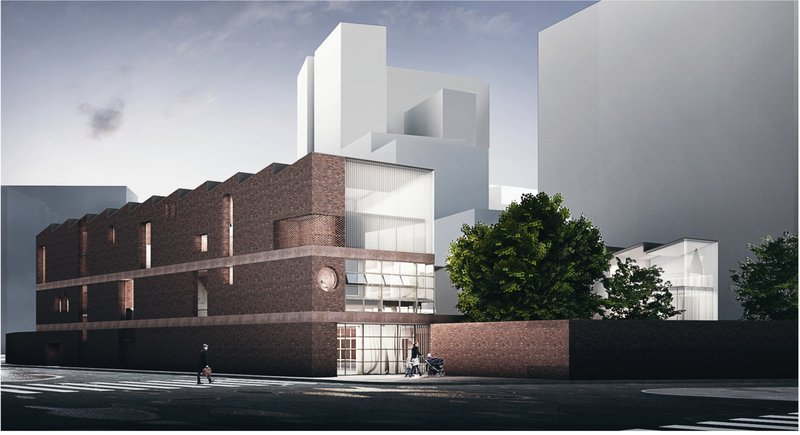
Located within a dense urban fabric surrounded by high-rise buildings and heavy traffic, the school becomes a refuge for children aged 0–7. The architecture plays with scale, sunlight, materials, and thermal performance to create a micro‑climate that nurtures learning while shielding young users from the realities of the city.
Through function-driven planning, flexible interior layouts, and climate-responsive systems, the project demonstrates how sustainable architecture can transform educational spaces into resilient urban sanctuaries.
Urban Context and Concept Strategy
The design begins by acknowledging the constraints of its location: a narrow, irregular site hemmed in by busy roads and tall buildings. Instead of resisting these constraints, the project uses them to shape form, light exposure, and spatial zoning.
Key Pragmatic Constraints
- Ground coverage: limited to 25% to preserve generous outdoor areas.
- Height maximum: restricted to 12m to maintain a child-friendly scale.
- Surrounding noise: mitigated through the placement of two low-rise building rows acting as acoustic buffers.
- Access and safety: the layout directs circulation away from traffic-heavy edges.
Climate Constraints and Response
- Situated in a hot temperate climate, the project avoids overheating through smart orientation.
- East–west building alignment allows morning and evening daylight without excessive heat gain.
- Courtyards receive soft, controlled sunlight, enabling children to play comfortably throughout the day.
The result is a school that feels protected and calm, transforming its city-framed plot into an inward-facing learning landscape.
Program and Spatial Composition
The school consists of two simple yet dynamic volumes divided into age-appropriate zones:
- Crèche (0–3 years)
- Nursery school (3–6 years)
- Primary school (6–7 years)
- Gathering and community areas for parents and visitors
This separation ensures that each age group benefits from acoustically, thermally, and socially tailored spaces.
Outdoor Playground Strategy
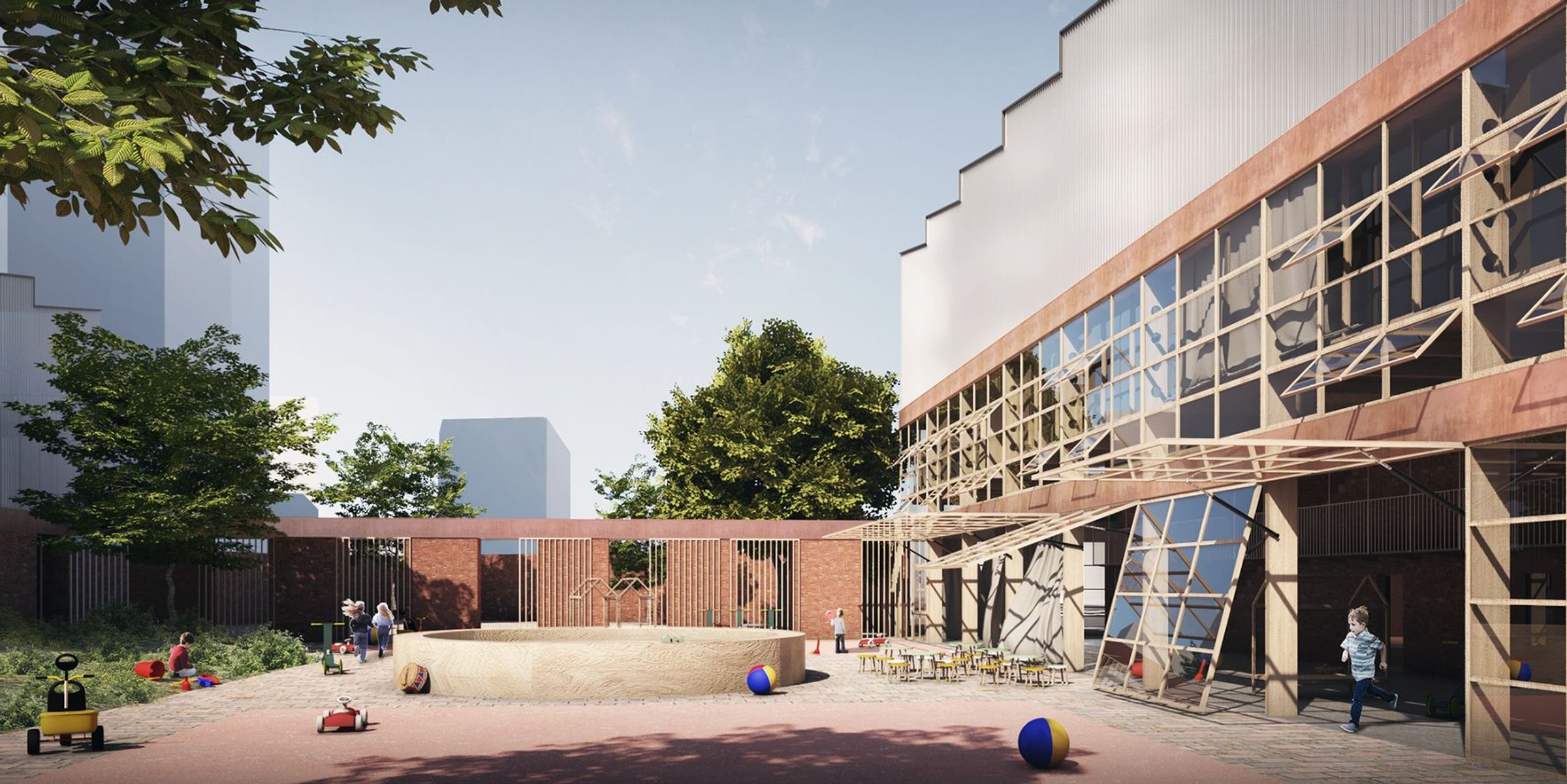
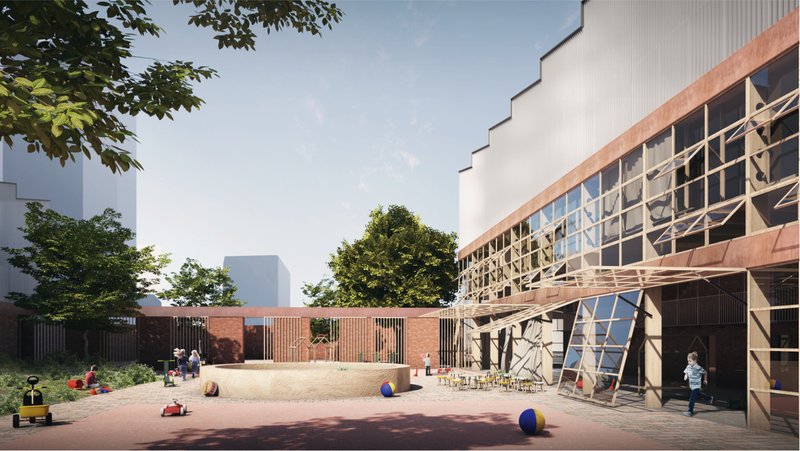
By locating the play areas between the two building volumes, the design:
- Allows continuous sunlight throughout the day
- Keeps children far from noisy roadways
- Creates a secure, enclosed courtyard atmosphere
This central playground becomes the heart of the project—visible, safe, and thermally comfortable.
Functional Layout: Designing From the Inside Out
Ground Floor Logic
The ground floor is organized around two zones:
- Services, staff facilities, and storage consolidated to the perimeter for efficiency
- Children’s activity zones occupying the brightest, most spacious central areas
Large open rooms accommodate play, learning, athletics, and group events, with visual access to the outdoors ensuring continuous connection to nature.
Flexibility: Adapting to Daily Rhythms
One of the project’s defining strengths is its functional flexibility. Spaces transform seamlessly to support a range of activities:
Modes of Use
- Sports events — enabled by movable furniture.
- Silent activities (reading, sleeping) — enhanced through acoustic curtains.
- Group activities — facilitated by retractable partitions that create micro‑classrooms.
- Celebrations or end-of-year events — supported by open, rearrangeable layouts.
This adaptability ensures the architecture grows with the children’s needs and supports varied pedagogical methods.
Exploded Axonometric Insight
The axonometric drawing reveals the modular nature of the building layers, demonstrating how structural elements, shading, and circulation work together to maximize daylight and minimize heat gain.
Climate: Bioclimatic Architecture at the Core
To maintain comfort year-round, the project integrates passive design strategies, reducing the need for mechanical systems. These include:
1. Brick Solar Wall
A thermal inertia-based wall absorbs and slowly releases heat, stabilizing indoor temperatures.
2. Solar Panels
Roof-mounted panels provide renewable energy, ensuring winter energy security.
3. Double Glass Skin (Winter)
Creates a greenhouse effect, trapping warm air and heating interior spaces naturally.
4. Double Glass Skin (Summer)
Enables natural ventilation through stack effect, drawing cool air inside.
5. Atrium and Thermal Chimney
Ensures warm air rises and evacuates in summer while preserving heat in winter.
Together, these elements form a high-performance envelope that significantly reduces the school’s carbon footprint.
Atmosphere and Materiality
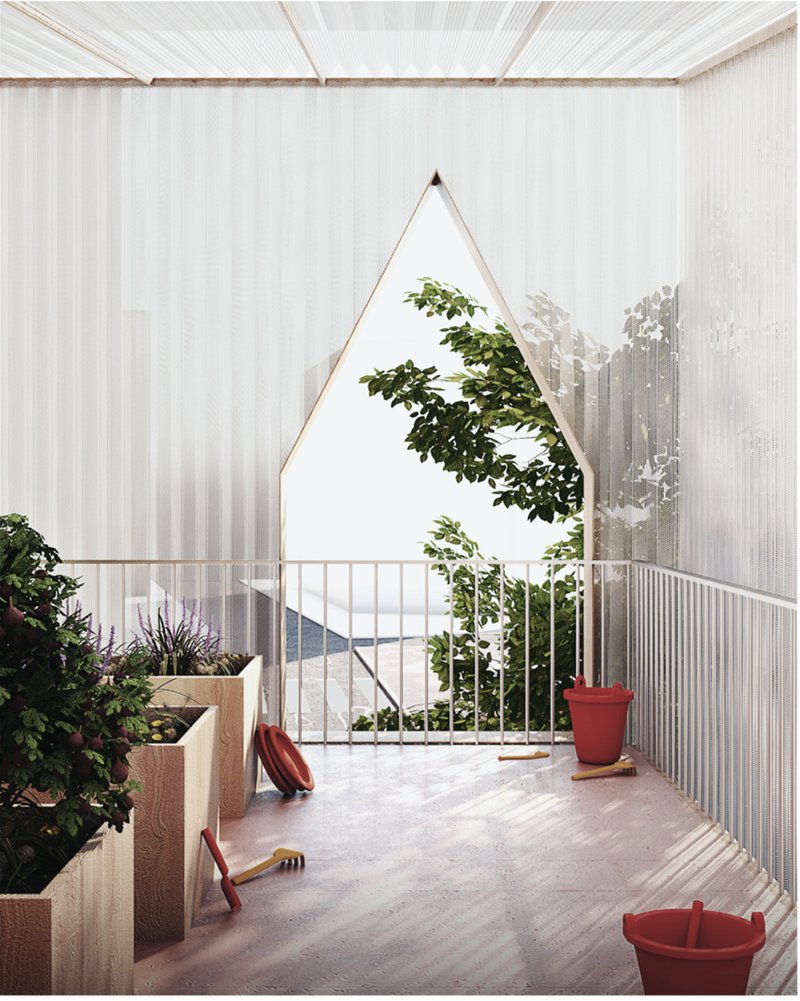
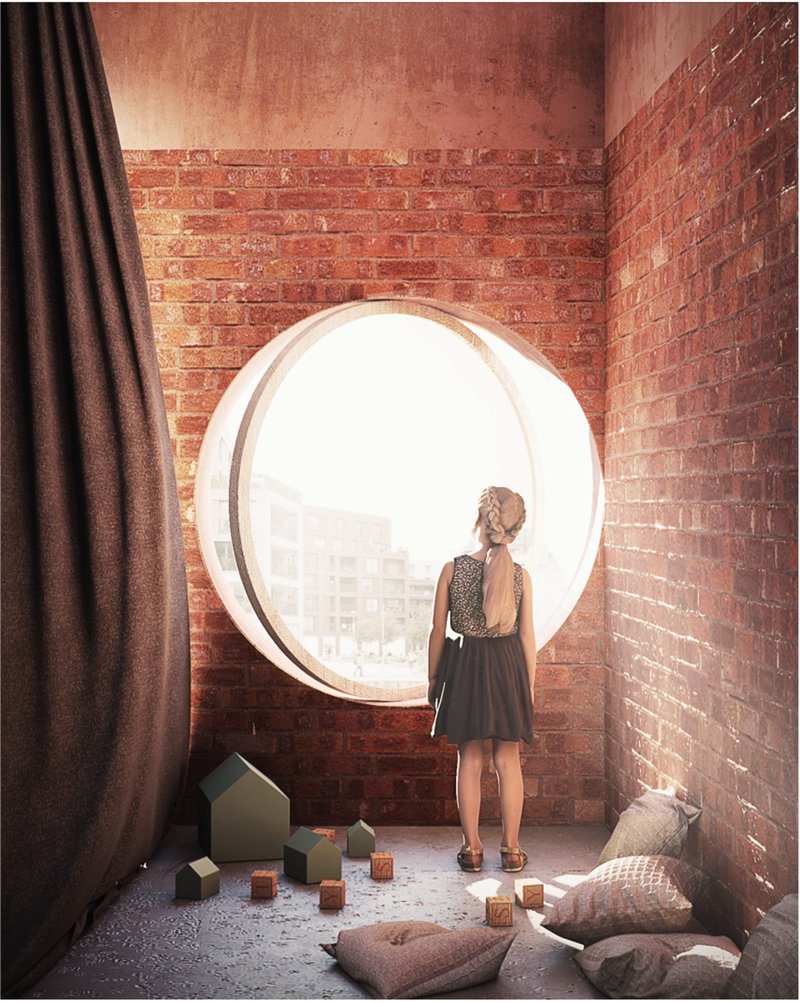
Warm, tactile materials define the interior atmosphere. Brick walls, timber structures, and filtered light create a sensory-rich environment.
Children experience spaces that feel soft and protective yet bright and stimulating:
- Activity nooks near solar walls offer cozy learning corners.
- Shared vegetable gardens and greenhouse areas encourage daily interaction with nature.
- Shaded exterior corridors cushion the transition between indoor and outdoor spaces.
The school becomes a sensory landscape carefully crafted to inspire exploration.
A Model for Sustainable Educational Architecture
Julien Picard’s Form Follows: Function — Flexibility — Climate stands as a compelling example of sustainable educational architecture. By addressing climate, site constraints, mental well‑being, and flexible teaching methods, the project creates a new benchmark for designing schools in dense urban environments.
Through its intelligent massing, bioclimatic strategies, and child-centered approach, the project not only protects its young users but empowers them—offering a safe, adaptive, and emotionally enriching world within the city.