

From jeopardy to safety: Creating a modular living space for refugees
Results for ‘Shifting Horizons’ - Housing competition out now


Every 2 seconds, one person in the world is put in a situation, where they would have to find refuge outside their country due to conflicts or fear of persecution. These numbers have only been increasing over the years, ever since the 1960s, when the refugee crisis started in South Africa.
Most of the refugees from countries in the Asian continent try to take refuge in Europe and if they did not already have a ‘housing crisis, they would not have to bear the additional load that comes with ‘refugee housing crises’.
UNHCR is responsible for handling the global refugee crisis and sets up camps in places where needed. But even with 89% of their staff employed on the field, the situation is out of hand.
With more than half of the refugee population under 18 and with no support, UN peacekeepers help manage camps that are set up temporarily on vacant grounds, airports, and other public spaces. But these camps are temporary and most of these people are in search of a permanent solution for provisions and even nationalization.
Housing for refugees is mostly in camps, set up by the UN, but refugees who seek citizenship have very few options to do so. The few that exist, come with challenges of their own. To accommodate refugees within city limits, commercial or free spaces are to be converted to residential plots. This increases the density in the area, putting a strain on the land, resources, and infrastructure of the region. It ultimately creates tension between refugees and residents.
Since the influx of these refugees is estimated to increase throughout the years, there will be a soon need for permanent housing that will require answering real questions of migrant issues.
This displaced population who are losing years away from their homes, at the same time completely detached ties from their origin may impair their connection with any economy in the future. With some degree of efficient housing, this vulnerable population can be brought back into the economy while giving them the required dignity to live on.
How do we negotiate urban environments to accommodate the placeless?
What if we could use compact and affordable housing technologies to house refugees inflowing into the city to give them a transient shelter until the chaos is stabilized? What if we could make use of sustainable technologies that can help us achieve efficient habitats that can be economically and socially sustainable in the long run?
Brief: The challenge of the competition was to create a community of tiny homes that can be inhabited by refugees from different regions around the world.
A point to be kept in mind is that these spaces will be occupied by people with diverse ethnicities and backgrounds, so the design must generate a neutral living space. Although architecture and design cannot nullify the prejudices that refugees will face as they go through their everyday life, the community they live in must be a safe and secure haven for them, to live in with comfort.
Isolation, post-trauma depression, home-sickness are just some of the issues that refugees struggle with as they make the move from their homeland to a new place. Social interaction and communal gatherings can help alleviate this feeling of loneliness and foster unity among these people.
The jury for the competition consisted of esteemed designers, professionals, and academicians from around the world. The Lead Jurors for the competitions were as follows:
Jana Stachova, Partner, Boq Architekti, Czech Republic
Karel Petermans, Architect, ZAmpone Architectuur, Brussel
Some of the Best competition projects are as follows:
Winning Project: Sojourners Asylum
By: Taha Khanijazani, Anahita Niknejad, Mohadeseh Hamidi and Mehdi Khakzand
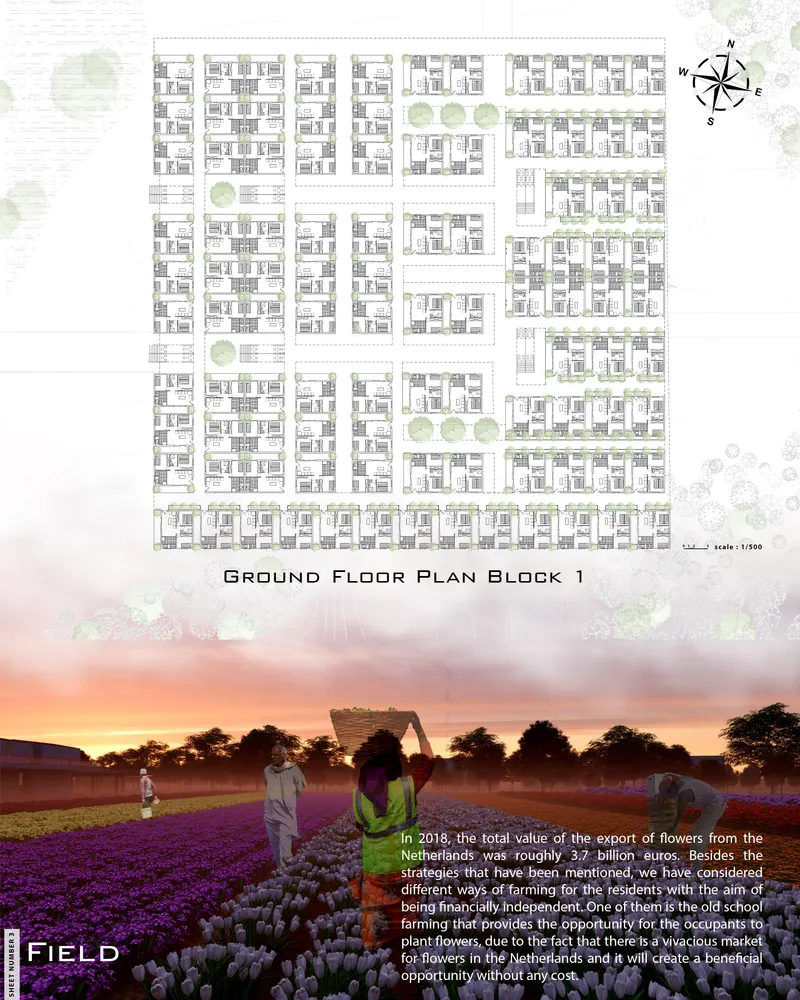
Fig: 1 Ground Floor Plan
Description: Our design emphasizes self-sufficiency and sustainability to create a socially interactive atmosphere where no one would feel any signs of homesickness. We considered all criteria needed for a person who has left everything behind and created a place where it feels like home.
--------------------
People’s Choice: Shifting Horizons
By: Evan Williams and Aaron Lewis
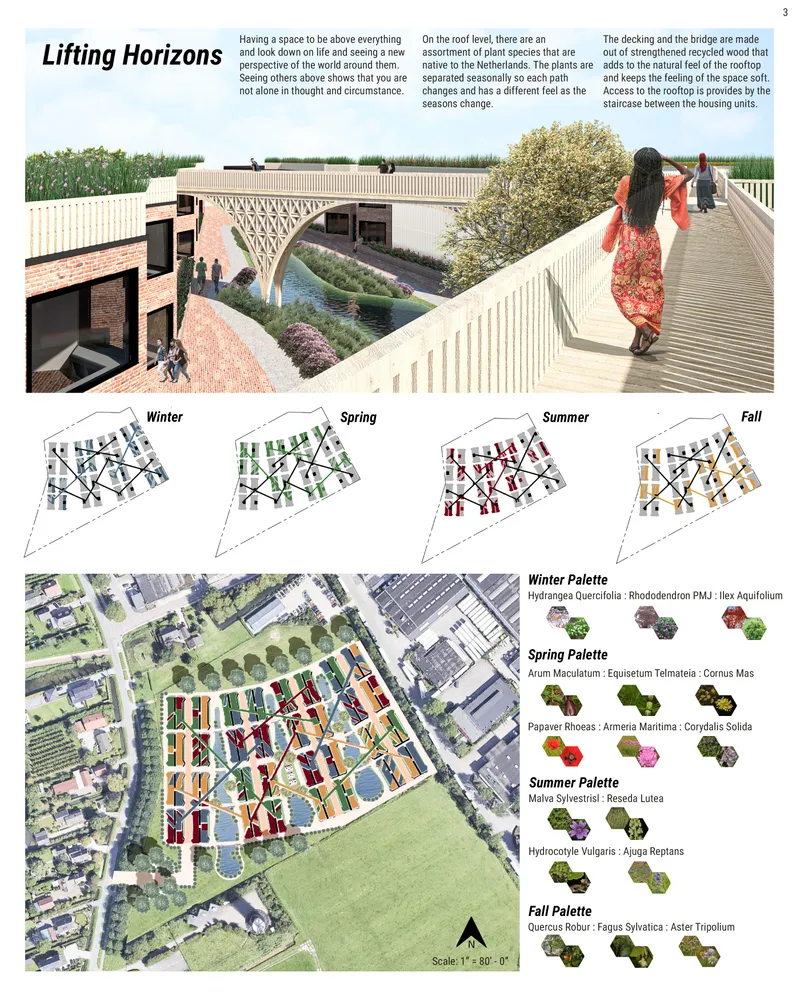
Fig: 2 Site plan and site image
Description: In a world of iniquity, violence, and scarcity, there is, unfortunately, a reality of refugees in the world. There are millions of refugees in the world that dozens of countries take in order to preserve their right to live. The goal here is to Shift the Horizons of these individuals in 3 ways: by Nesting Horizons, Lifting Horizons, and by Connecting Horizons.
-----------------
Editor’s Choice: Shifting Horizons
By: Constantin Boloban and Роман Петльований
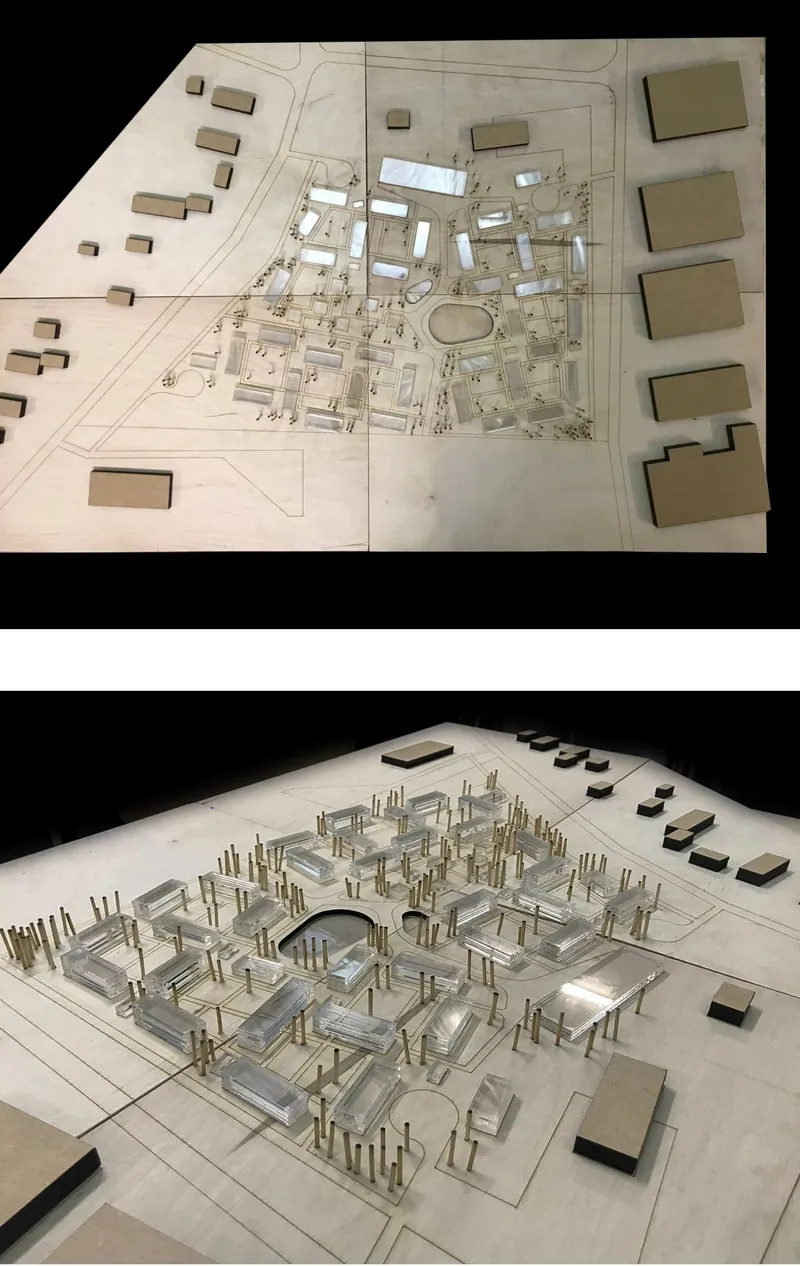
Fig: 3 Site Plan
Description: SHIFTING HORIZONS - a project of a new district in Utrecht meant to give people of different nationalities, religions, and cultures, who are in need of temporary homes, a feeling of safety and community. We wanted to design a space that will give residents an opportunity to fit in a new society while being sustainable.
------------------------
Follow us on social media: Facebook | Instagram | LinkedIn | Twitter | Youtube
References (3)


Popular Articles
Popular articles from the community


graciastudio Turns a Viewless Tijuana Lot Inward Around a Courtyard of Concrete, Timber and Trees
In Tijuana, Jorge Gracia's GA2 House stacks a timber-clad private floor over exposed concrete and replaces a missing view with a planted interior patio.


Aquadapt: An Underwater Habitat That Rewrites Its Rooms by the Hour
Curved modules ring the seabed while one shell shifts from breakfast room to cinema, farm and football pitch as residents' needs change.

Singing Woman: An Opera House That Performs Before the Curtain Rises
Ovidiu Cristian Pavel's conceptual opera house translates Estonia's choral identity into a sculpted waterfront landmark facing the Baltic Sea.

Juan García Correa, John González and Claudia Rueda Sink a Circular Amphitheater into a Manizales Engineering Building
On the La Nubia campus in Manizales, Colombia, the S1 Building folds labs and offices into a hillside of ramped lawns that double as a campus route.

Similar Reads
You might also enjoy these articles
Aquadapt: An Underwater Habitat That Rewrites Its Rooms by the Hour
Curved modules ring the seabed while one shell shifts from breakfast room to cinema, farm and football pitch as residents' needs change.

Play: Fragments of Their World: Remembered Architecture Rebuilt as a Modular Playground for Refugee Camps
Tom Gardner abstracts domes, arches and towers from the homelands of displaced families into a kit of child-scaled play parts for camp settlements.
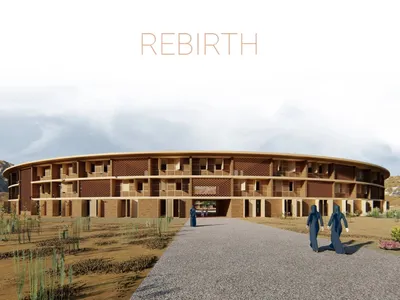
REBIRTH: A Circular Settlement Where Afghan Widows and Their Children Rebuild Life Together
A shortlisted Resile entry turns the circle into a protective ring of timber and brick, gathering homes, classrooms and gardens around a shared landscape.
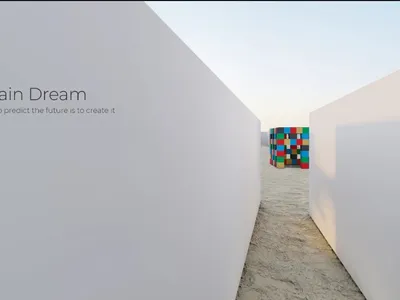
The Main Dream: A Recycled Plastic Kit That Lets Refugee Children Build Their Own Playground
Thirty-centimetre interlocking cubes that connect on three axes turn play into construction, letting children author the spaces they occupy.

Comments (0)
Please login or sign up to add comments
No comments yet. Be the first to comment!