
Garden Pavilion by BYRÓ Architekti: A Minimalist Urban Retreat in Prague
The Garden Pavilion by BYRÓ architekti is a compact, sustainable wooden retreat in Prague, seamlessly connecting interior and garden with folding panels.


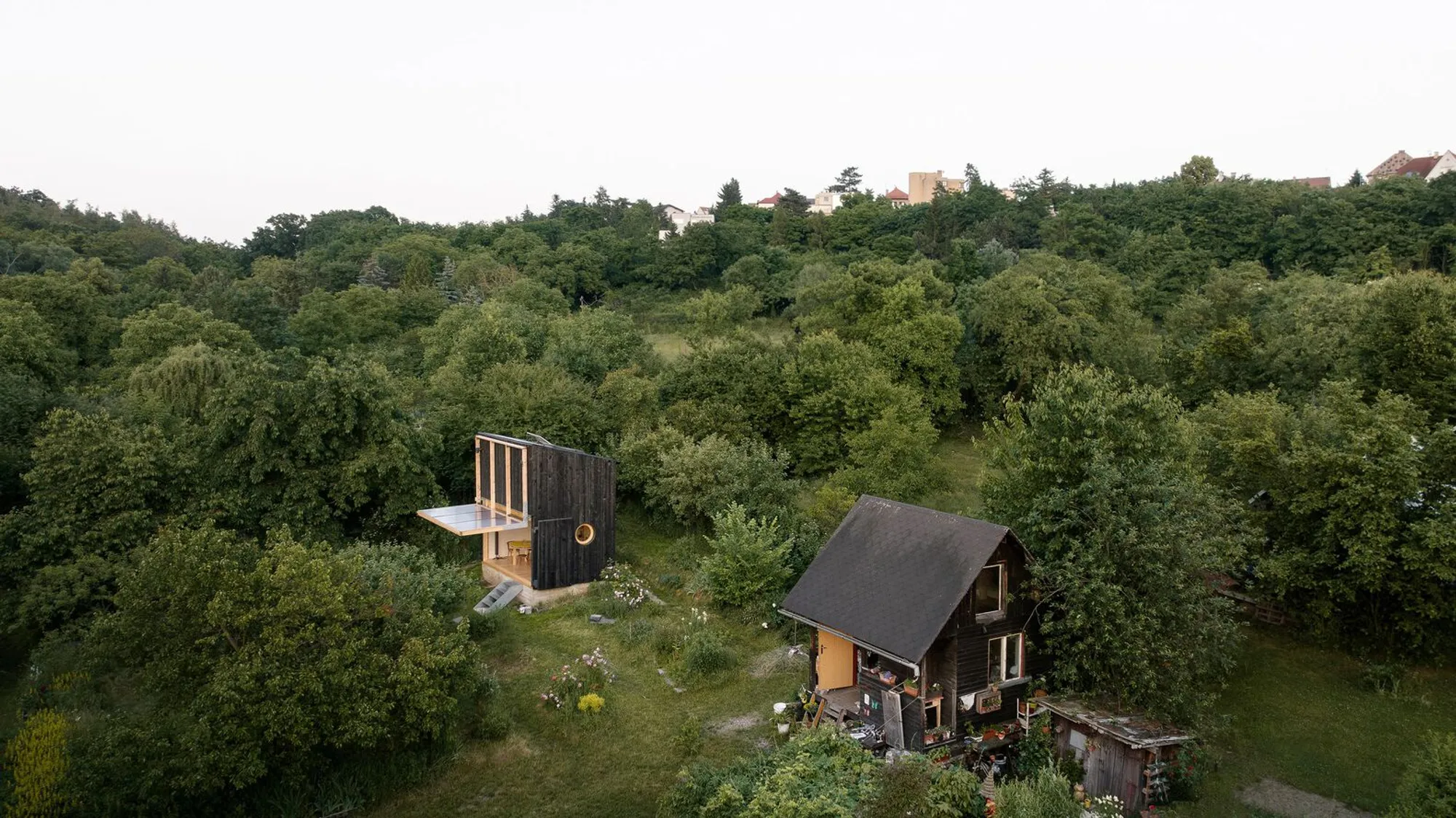
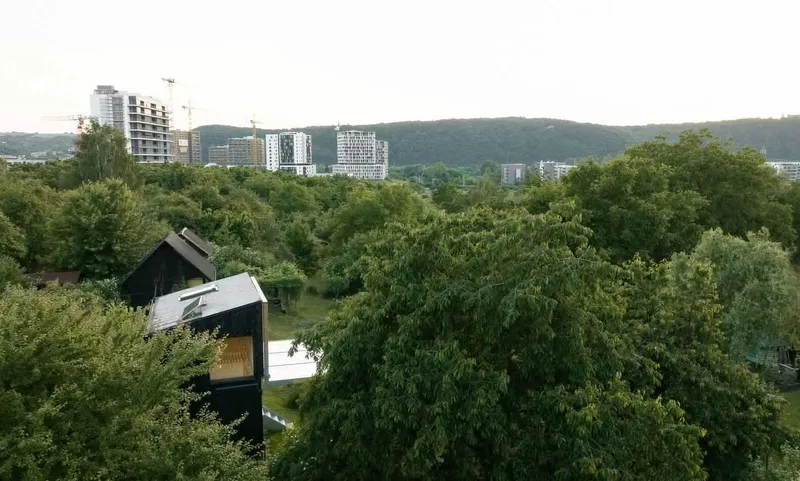
Nestled in a lush, mature garden in the heart of Prague, the Garden Pavilion by BYRÓ architekti (2023) exemplifies compact, sustainable, and thoughtful residential architecture. Located just a ten-minute walk from the clients’ apartment, this small-scale pavilion transforms a previously dilapidated cottage into a multifunctional garden retreat, balancing openness, light, and urban greenery.
Concept and Design Approach
The clients’ brief was paradoxical yet precise: create a new structure that preserves the openness of the garden, provides modest shelter during adverse weather, accommodates occasional summer overnight stays, and serves as a winter storage space for plants. BYRÓ architekti embraced these challenges, designing a pavilion that blurs the boundaries between interior and exterior while remaining sensitive to its surroundings.
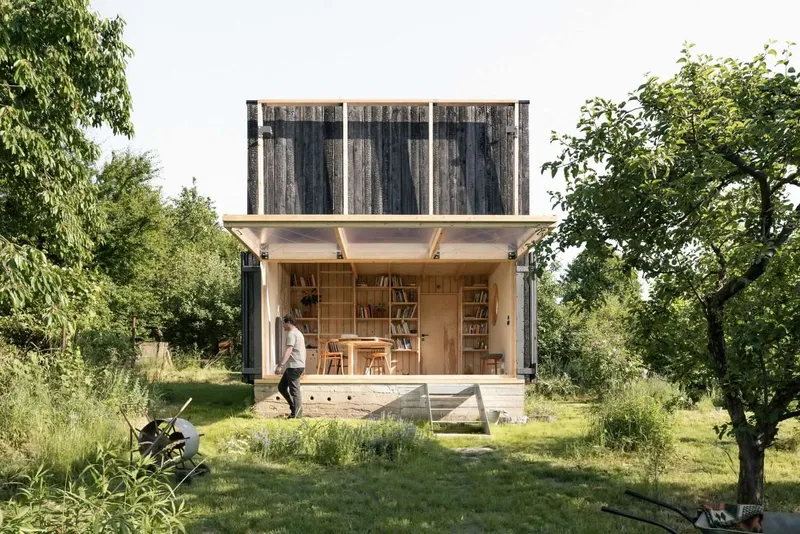
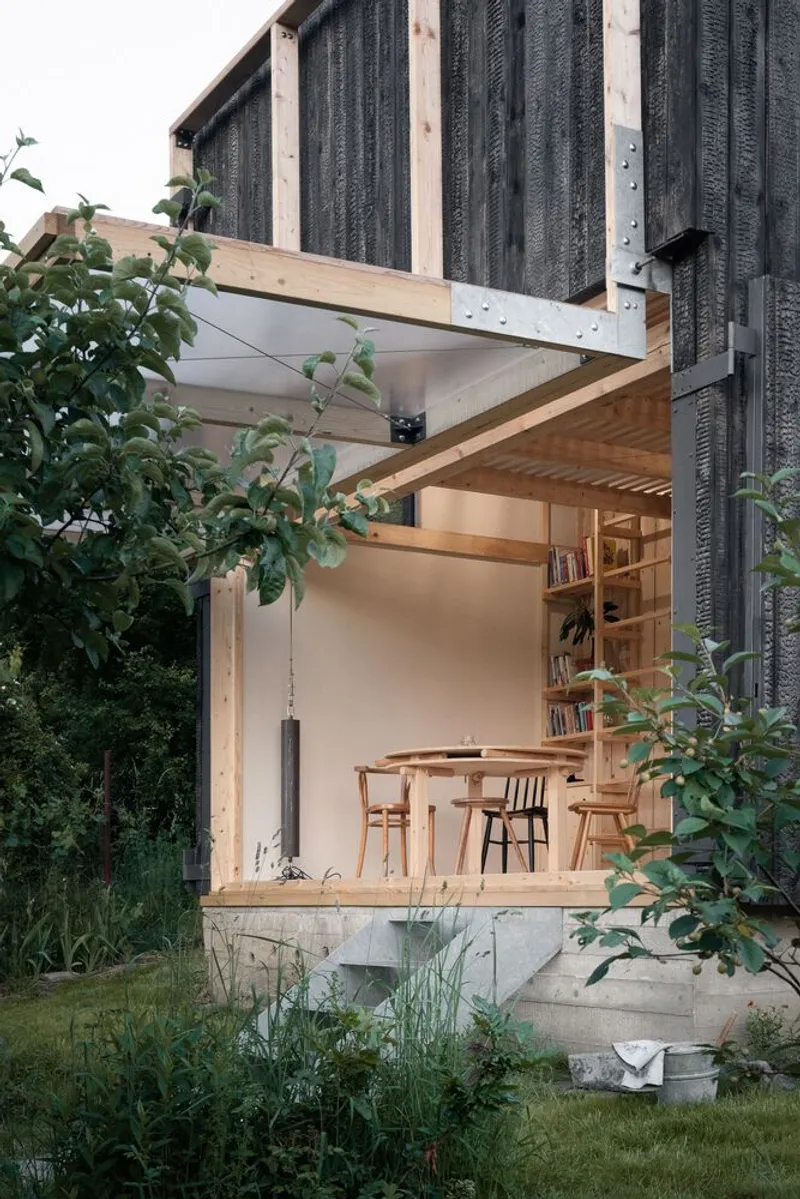
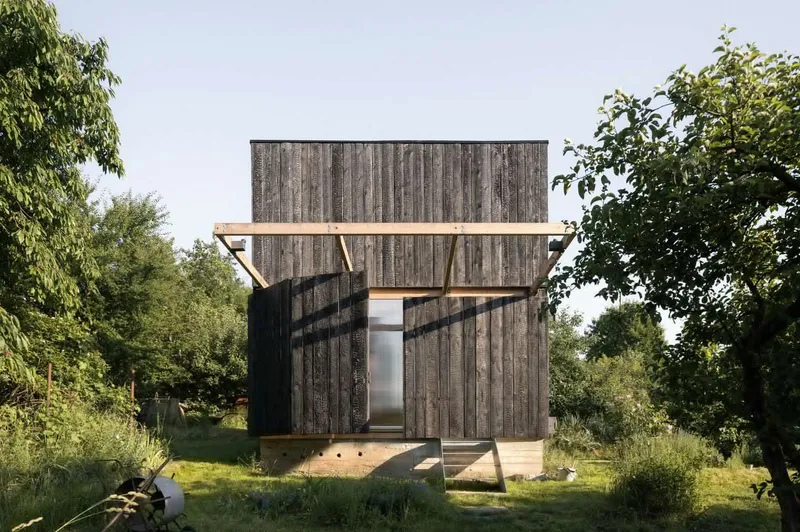
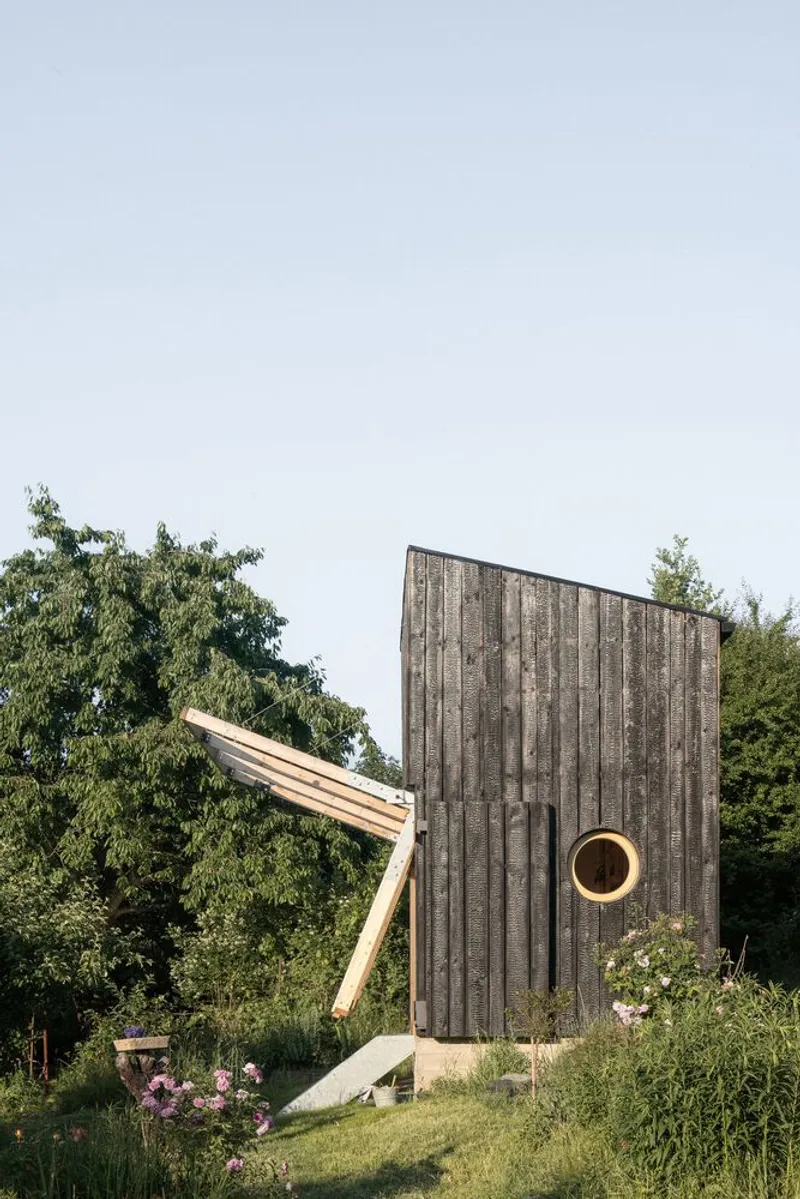
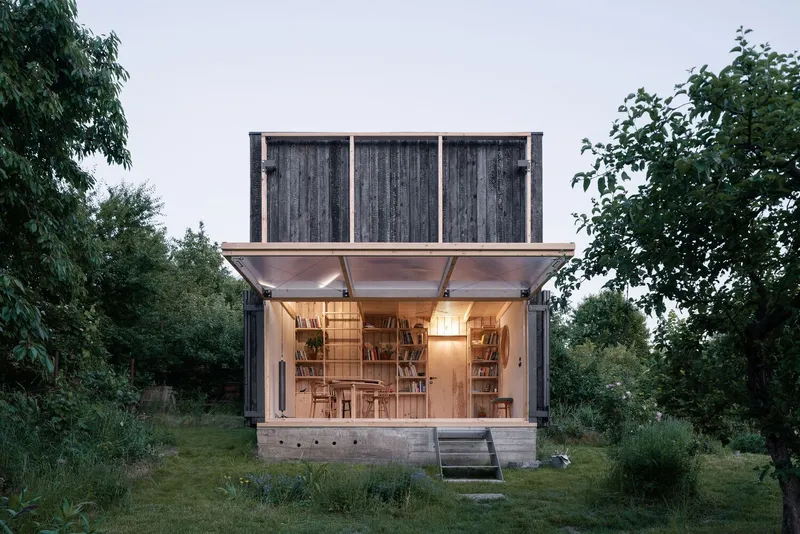
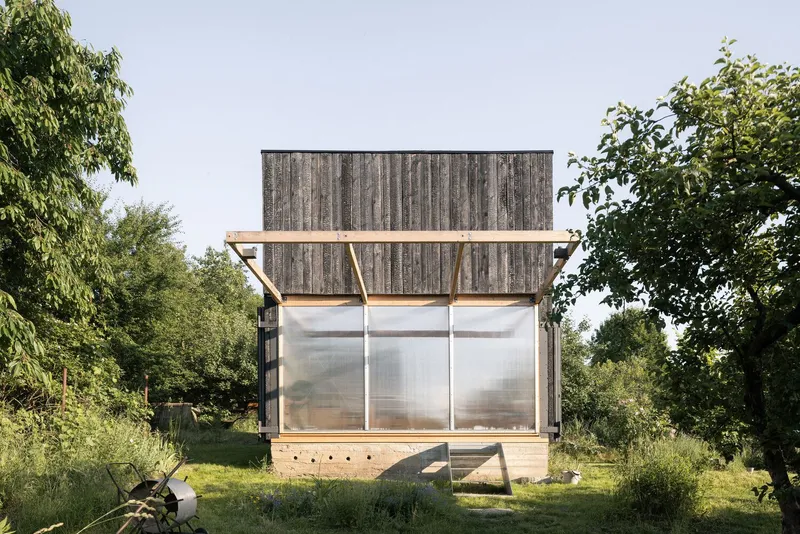
The pavilion introduces a dynamic folding polycarbonate panel that allows an entire side of the building to open completely. This mechanism, operated via steel cables, pulleys, and counterweights, enables seamless interaction with the garden. When opened, the panel extends over the outdoor area, functioning as a sheltered roof during rain and reinforcing the pavilion’s role as a true garden loggia, an architectural homage to traditional open-air spaces.
Integration with the Garden Context
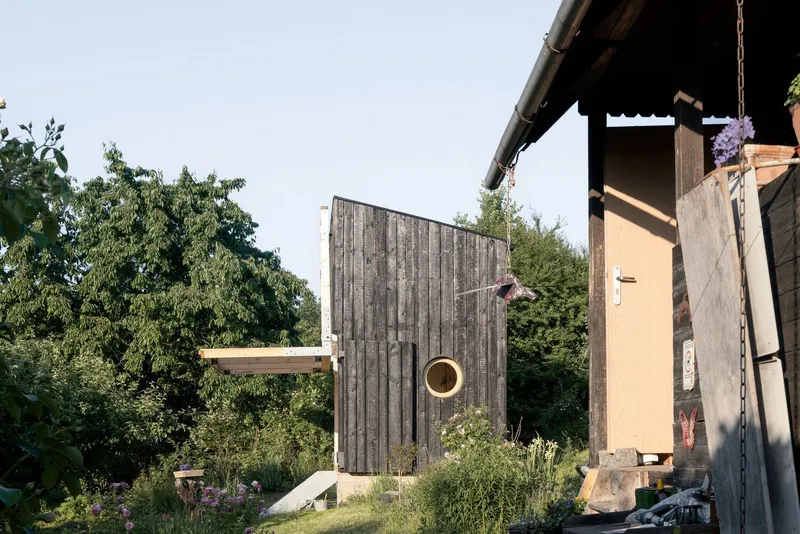
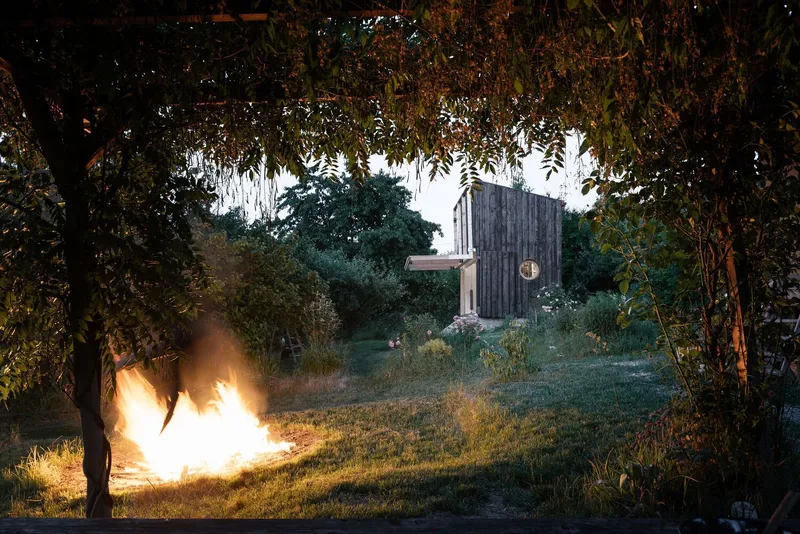
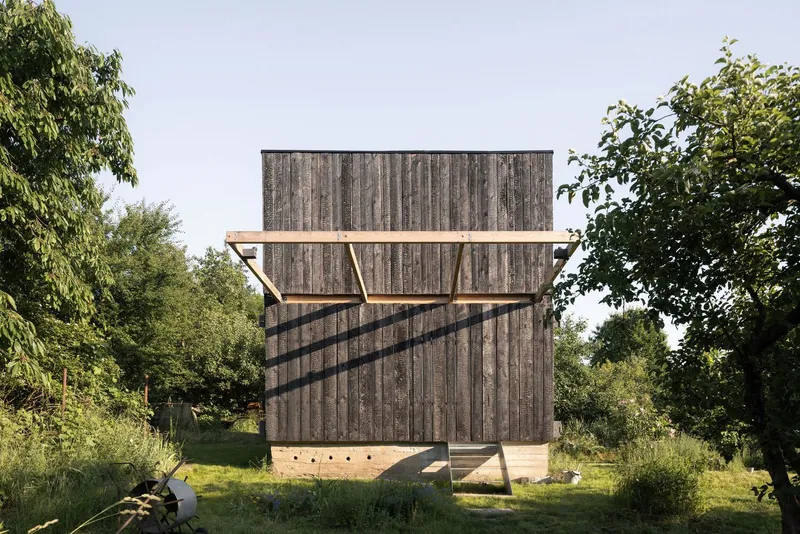
Situated on the original wooden cottage foundations near the Vltava River, the pavilion respects the character of nearby garden structures. Traditional cottages in this garden colony are typically dark, windowless, and slightly irregular in form. BYRÓ architekti mirrored this aesthetic using shou-sugi-ban burnt wood, creating a naturally textured facade that harmonizes with the surrounding greenery. When the shutters are closed, the pavilion blends seamlessly with the quiet, romantic charm of its neighborhood.
Architecture and Materials
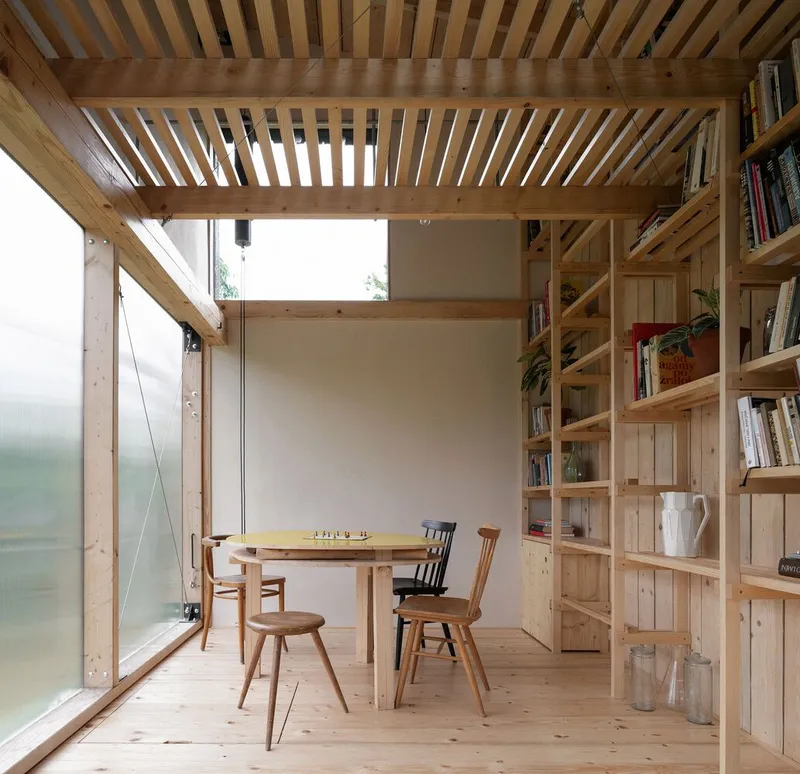
Constructed using a two-by-four wooden frame system, the interior walls are plastered, with the rear wall lined in wood featuring an integrated bookshelf and ladder to a lofted upper level. Wooden slats in the library and loft allow natural light to filter softly, creating a warm and subtle interior atmosphere. Strategically positioned windows on three sides, combined with the polycarbonate panel, provide dynamic lighting throughout the day, ensuring even the compact 3 x 5 m floor plan (with a height just under 5 m) feels airy and open.
Sustainable and Off-Grid Living
The pavilion operates independently from municipal utilities, relying on a single photovoltaic panel that meets its basic energy needs, including lighting. This off-grid approach aligns with the clients’ desire for a minimal, sustainable, and low-maintenance garden retreat.
Experience and Functionality
The Garden Pavilion is more than a building; it is an experience. Its compact design, multifunctional spaces, and flexible openings allow users to fully immerse themselves in nature while maintaining comfort during varying weather conditions. Whether used for summer stays, winter plant storage, or quiet reading and contemplation, the pavilion demonstrates how small-scale residential architecture can seamlessly merge utility, beauty, and sustainability.
All photographs are works of
Alex Shoots Buildings




Popular Articles
Popular articles from the community


The Earth Pod: 3D Printed Homes for Resilient Refugee Communities
The Earth Pod reimagines refugee housing through 3D printed homes made from clay, combining resilience, self-sufficiency, and rapid shelter.

Co-Life: Senior Housing Design That Reconnects Older Adults With the City
Co-Life reimagines senior housing design through healing gardens, shared streets, workshops, and a sustainable community across generations.

Co-life: Sustainable Architecture for Age-Friendly Community Living
Co-life reimagines sustainable architecture for seniors through courtyards, rammed earth, shared gardens, and spaces designed for belonging.

Play: Fragments of Their World
Familiar architecture becomes modular playground design, creating safe spaces where displaced children can learn, connect, imagine and play.


Similar Reads
You might also enjoy these articles


FAMM Arquitectura Organizes Ten Villas Around Courtyards and Jungle in Nosara, Costa Rica
El Molino pairs two elongated volumes with deep overhangs and timber louvers to build a compact coastal community five minutes from the beach.

Oscar Niemeyer's Ibirapuera Park Pavilions Define São Paulo's Cultural Identity in Concrete and Curve
A constellation of modernist volumes set within São Paulo's most important urban park, conceived for the city's 400th anniversary in 1954.

How Henri Picq's 1889 Paris Pavilion Traveled 11,000 Kilometers to Become Santiago's Artequín Museum
A prefabricated iron and glass pavilion built for the Paris Universal Exposition found a second life as a children's art museum in Chile.

Sanjay Puri Architects Wraps a Jaipur Office Tower in Capsule-Shaped Green Buffers
A nine-level climate-responsive workplace near Jaipur Airport uses stacked planter terraces and aluminium screens to fight 40°C heat.


Explore Residential Building Competitions
Discover active competitions in this discipline


Challenge to design mud housing for contemporary communities


Challenge to reimagine the Iron Throne


Photograph architecture without architects


Illustrate the lost glory of Angkor Wat - Render Challenge
Comments (0)
Please login or sign up to add comments
No comments yet. Be the first to comment!