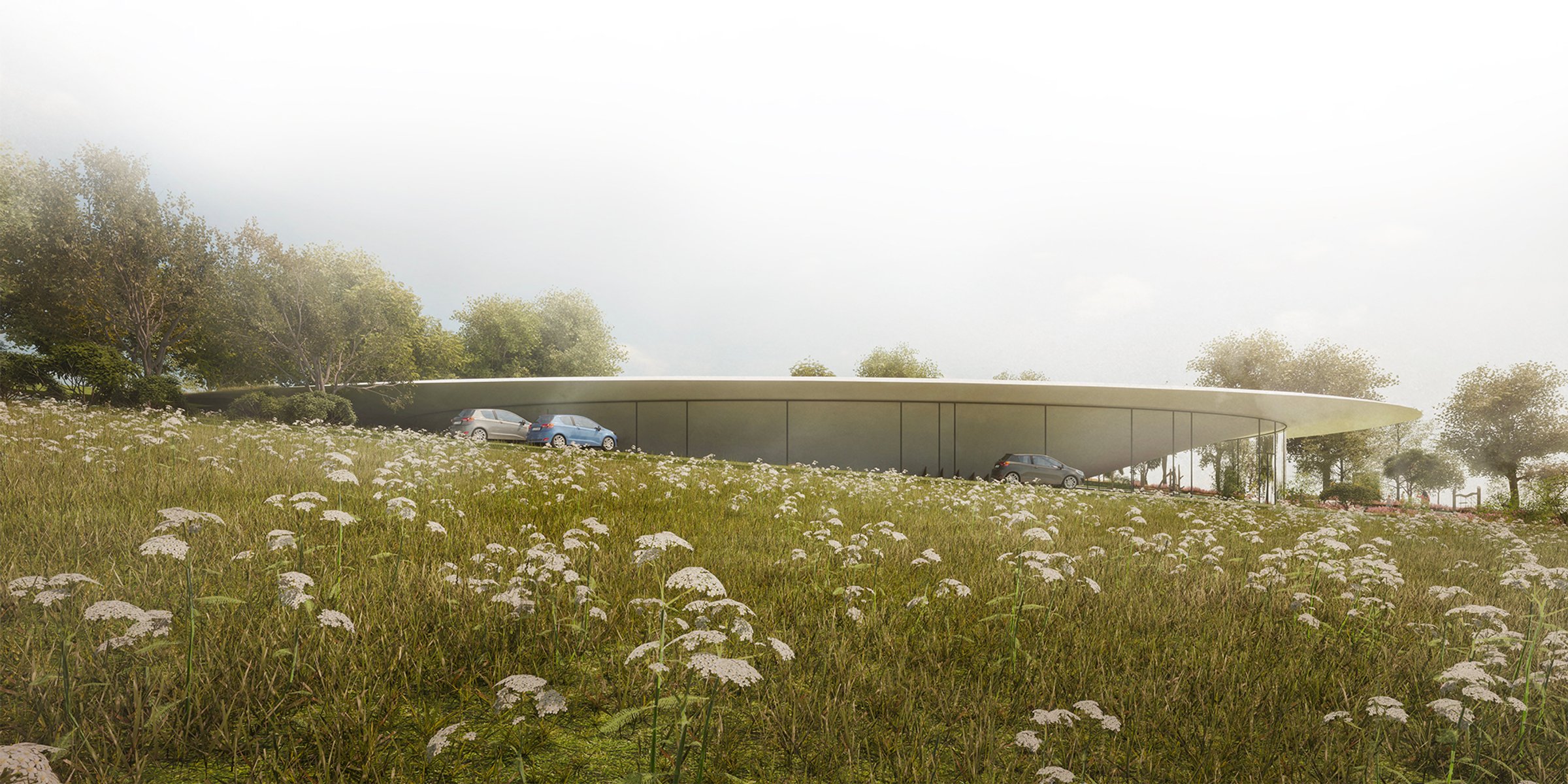
Georges Nigremount School.
Progect of kindergarden in Geuret, France.

Today our team decided to participate in the competition with the task to design a nature-centric kindergarten. Why did we choose this contest? It hooked us with the opportunity to go beyond the generally accepted concepts and return to childhood. To remember the pleasant moments of our life. What we wanted at the age of 5-6 years…
This is the age when children are most clearly active, exploring the world and getting to know themselves. The key factor that we would like to convey to the viewer is the study of the surrounding world through the relationship and contact with nature.
In our opinion, this situation wasn’t easy for a kindergarten, because of a significant height difference. It`s a certain complexity and at the same time an advantage, as level makes it possible to link architecture with the natural landscape. We tried to synchronize these two points in an original way. Meanwhile not complicating the form. The kindergarten dictates a clear structure of the premises. This is both the complexity and the peculiarity of the design task: beautiful, simple and original.
After analyzing the city and its features, we identified several points that influenced the shaping of the kindergarten:
- Gere is a small town in France, where the population is decreasing every year, due to the lack of meta attraction.
- Agra events are often held in the city
- There is a large lake, which is a 7-minute walk from our site, where triathlons are often held.
- There is a school and a university in the neighborhood.
Due to the combination of these items, we realized that the city needs something attractive, catching the eyes. This object could become a favorite place for children and their parents.
Of course, the question arose: what will be the shape of the building? Why that?
At the first stages, there were a lot of ideas. We didn’t immediately understand which way we should move. A clear solution was made to make the most of the land, while fitting into certain dimensions in height and the environment.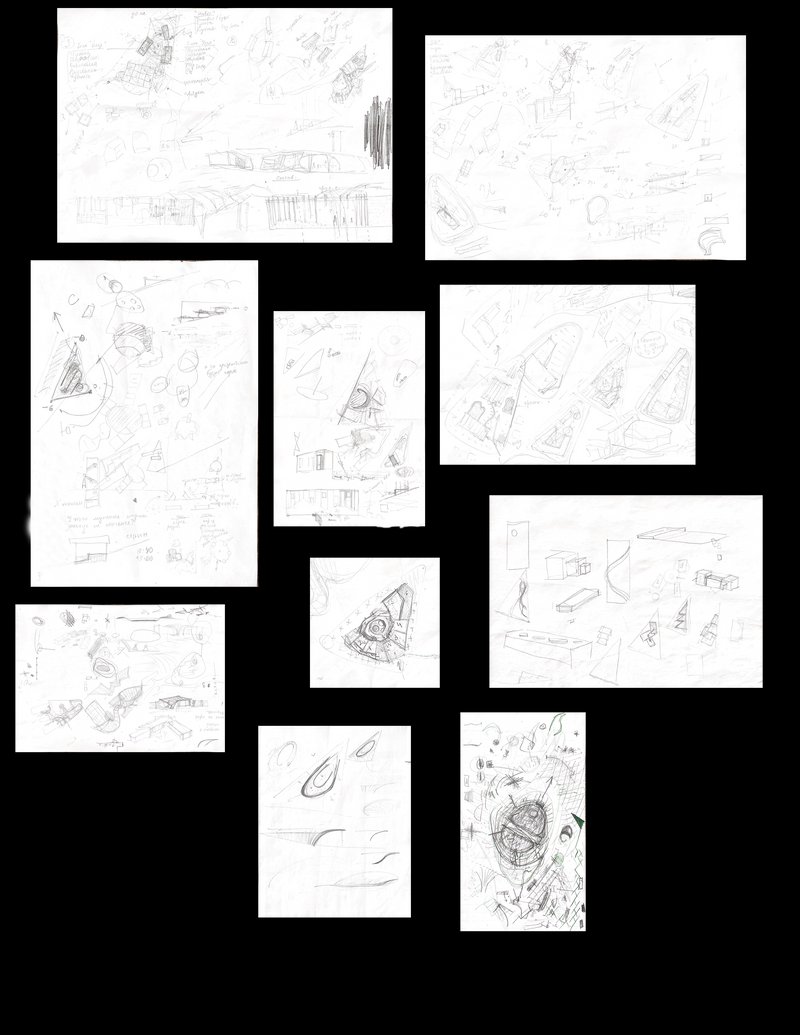
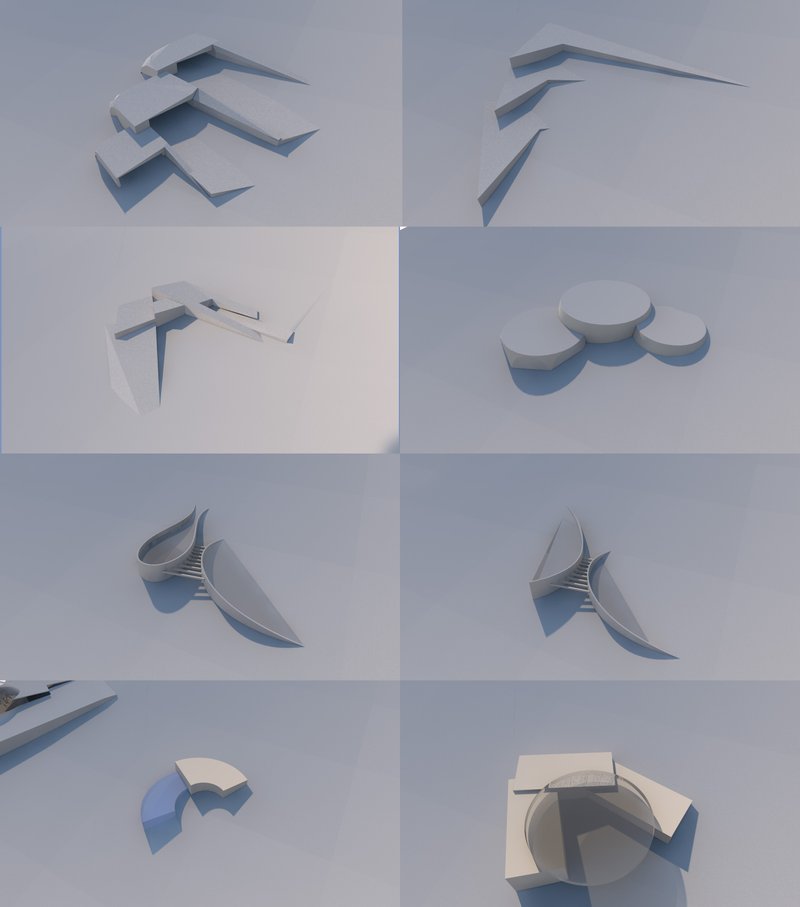
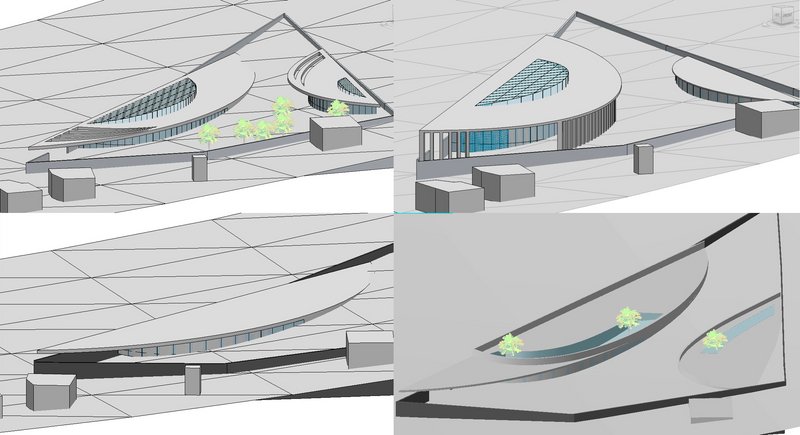
Initially, we wanted to make several small detached buildings with different functions that would be connected by a common corridor. The main disadvantage was that getting from one end to the other would take a very long time. Also, it would require the installation of a large number of stairs, due to height differences. Which is a threat to the safety of children aged 5-6 years, since they are 90% in the active phase.
Therefore, we settled on the option where the building should have one level. In this case part of the object will be located underground, part above. Without leaving the idea of having many separate objects (reducing them to 3 in number), we are placing them in certain places. Сhildren are coming to kindergarten and passing rooms in the direction of the movement of the sun. The connecting part was the place for eating - the center of the system. Since this is the place where children return several times a day (breakfast, lunch, dinner). Let's give an example of movement in this case: the child comes to school and has breakfast; then child went into the first building, where from 10-11 am he’s engaged in the development of creative skills with a teacher; then at 12-14 pm the child is in the play area, where he is active and communicates as much as possible; child can to rest (quiet hour) and as the last evening phase of the sun, the child goes to plant growing.
Why did we refuse this idea? There are too many moments where you have to change the space to the street and back. We came to the conclusion: the simpler the more comfortable.
We settled on the concept, which was given the name "plate", which remotely repeats the shape of the site. It was important that the object was unified and at the same time the children had the opportunity to learn about the world around them. It was also a prerequisite to leave natural lighting, so part of the object is glazed, which allows the sun to penetrate into the play area and illuminate at any time.
We wanted to keep this "ring" of gradual passage of stages, shifts of classes throughout the day. This was reflected in the long, elongated perimeter space - a ring where children can run freely and travel along the corridor. From hallway, access to bathrooms, technical rooms and a hall is possible.
There are 2 ways to get into the hall. It’s used as a dining room and a creative room, watching presentations, cartoons and much more in the cool time. In the warmer months, there is an opportunity to interact with the amphitheater - another universal space for children, which has a canopy. This doesn’t allow children to be in direct sunlight. The combination of rooms will make the space more versatile and suitable for a particular occupation.
An important moment is that children have the opportunity to participate in the cultivation of seasonal vegetables and eat them. Children will receive theoretical knowledge about agricultural crops, as well as consolidate them in practice: together with tutors caring for plants. Throughout almost the whole year, it will be possible to grow various fruits. Now it’s possible to feed children with natural products, and also partially solves the problem with the shortage of greenhouses in the city.
The shape of the building resembles a "drop" that fell into the water. Each circle that departs from it – is a stage in the child's life. Taken together, it’s a difficult path. As in the fairy tales of Nigremon, there is also an introduction, the main part, the conclusion…