

Guaecá House by Estúdio Rossi Arquitetos: A Harmonious Coastal House Design in São Paulo
Guaecá House is a coastal house design that merges tradition, materiality, and nature along São Paulo's lush shoreline.


A Coastal Home Rooted in Memory and Landscape
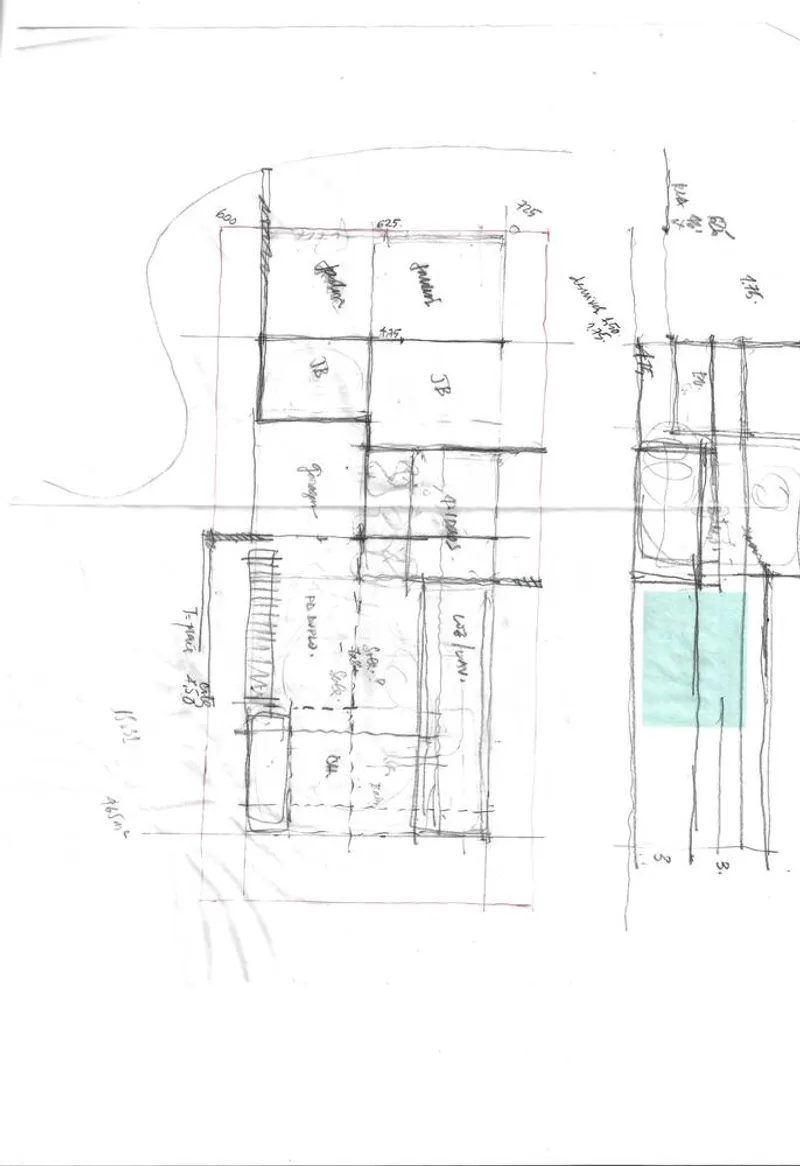
Guaecá House by Estúdio Rossi Arquitetos stands as a striking example of coastal house design that balances architectural sensitivity, environmental integration, and historical preservation. Located on the coast of São Paulo, Brazil, this 465 m² residence was conceived on the site of one of the region’s earliest homes—a humble blue structure close to the sea. In designing the new residence, the architects chose to honor the memory of the old house while addressing the contemporary needs of its inhabitants through a careful blend of tradition and innovation.

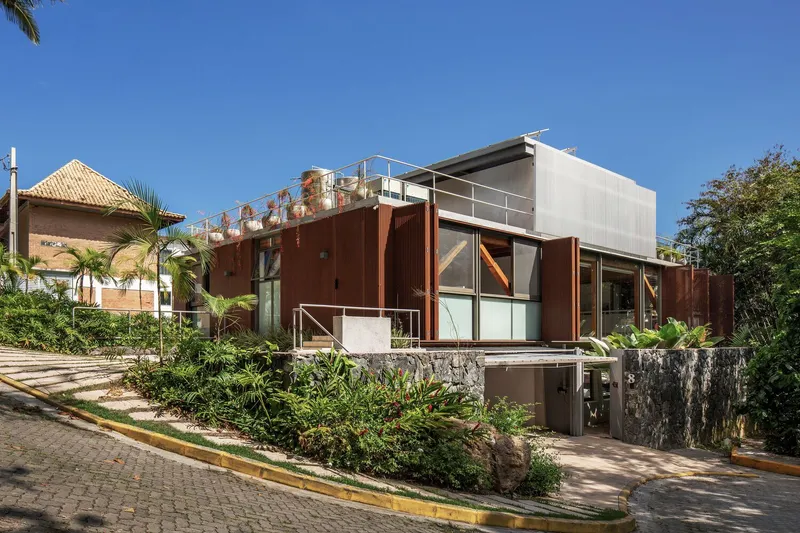

Subtle Tribute to the Past in a Contemporary Language
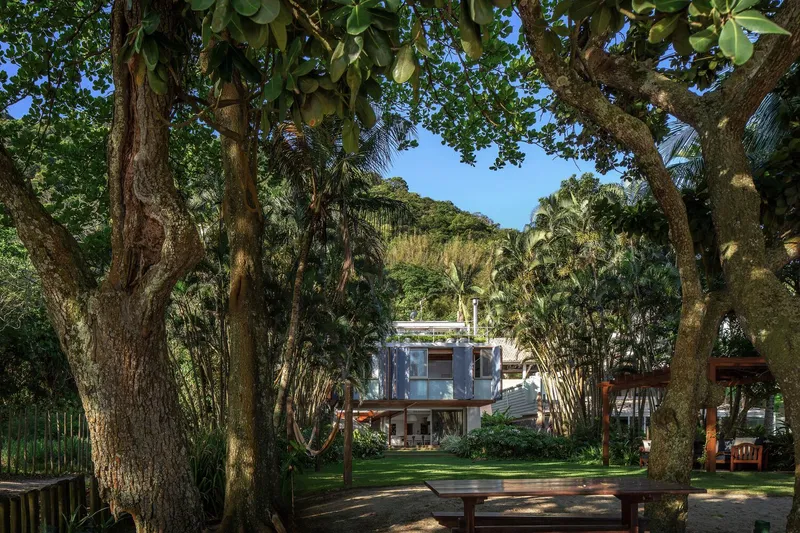
The architectural strategy of Guaecá House delicately incorporates elements of the original blue house without imitation. The volume remains discreet and respectful, while the color blue reappears subtly, evoking the memory of the former structure. This respectful nod to history is woven into a contemporary expression, using a clean geometric form that integrates with the lush coastal environment.
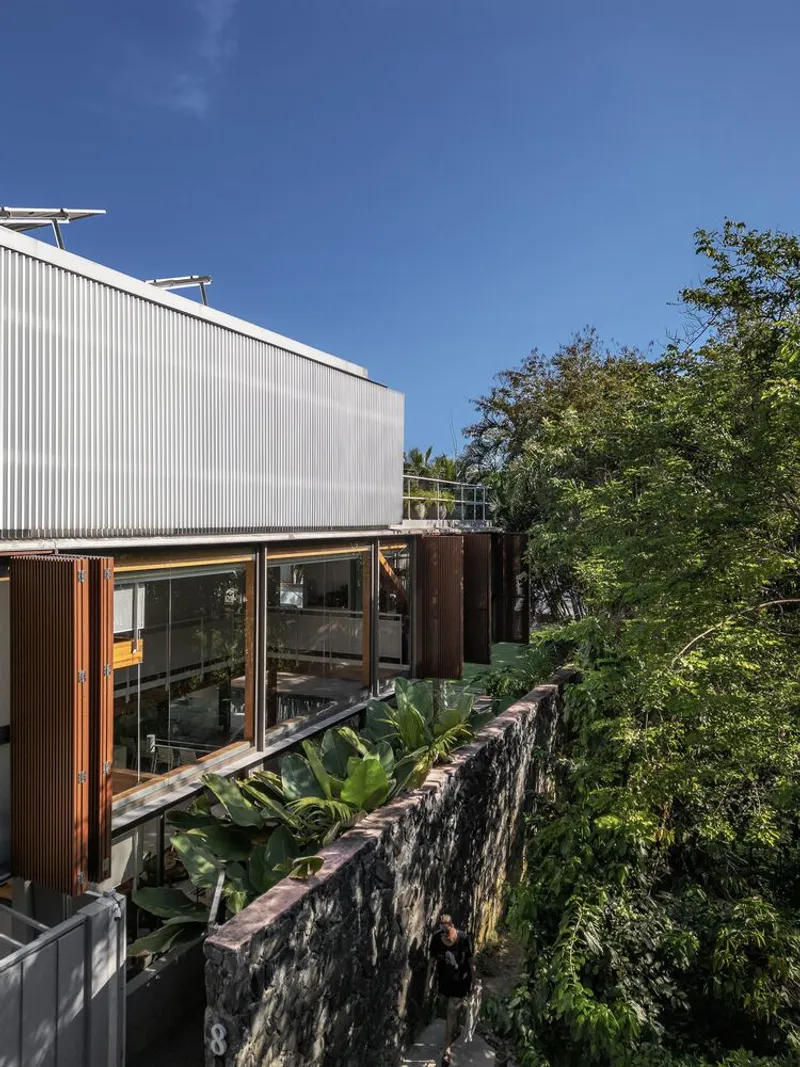
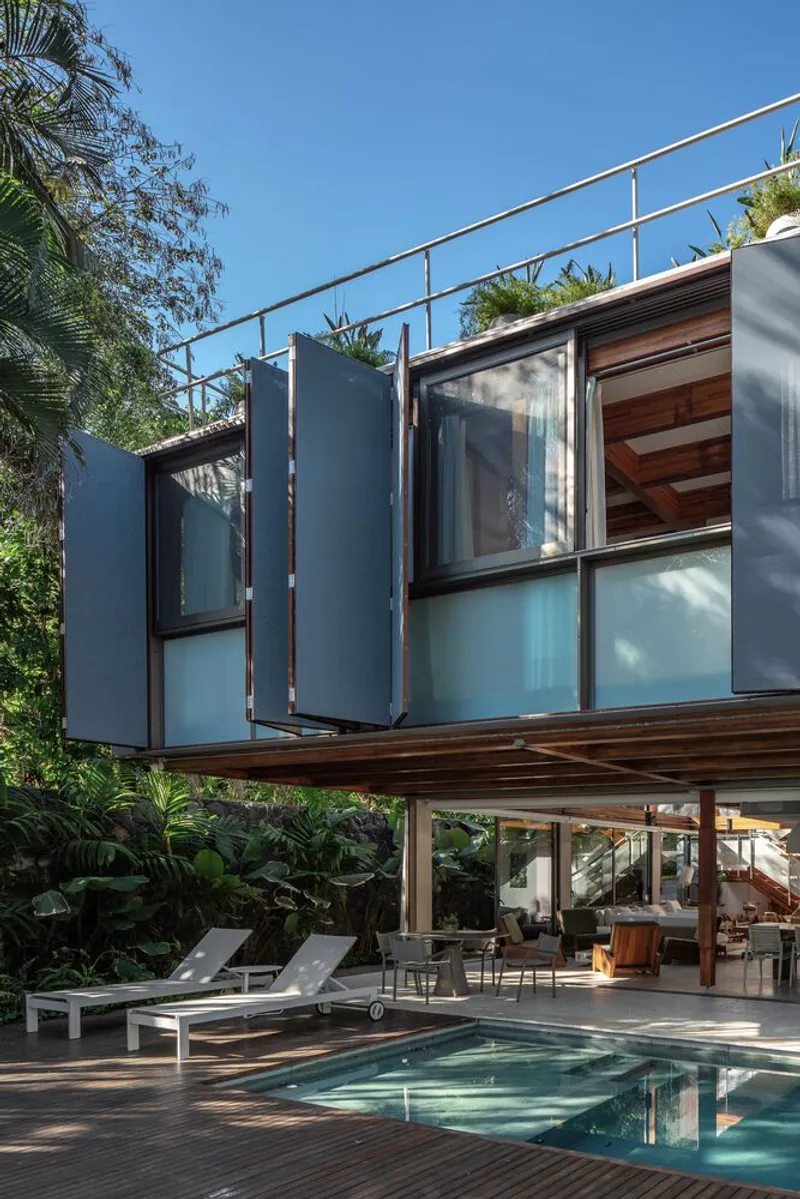
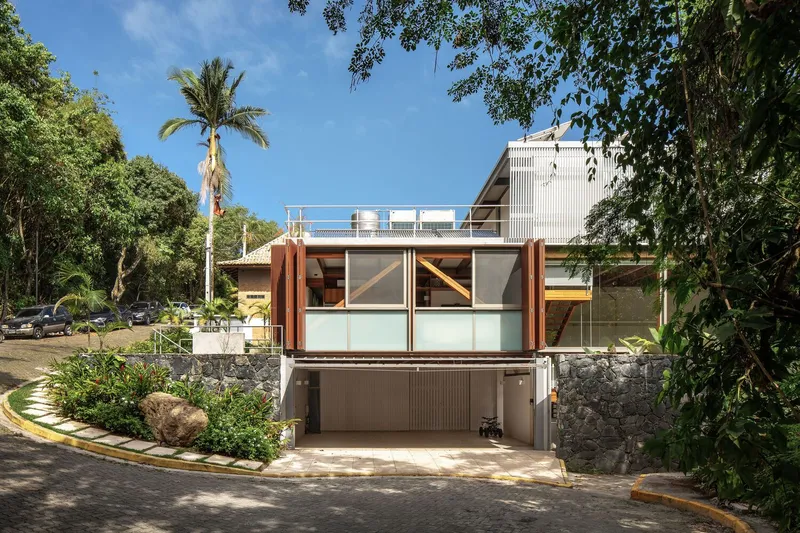
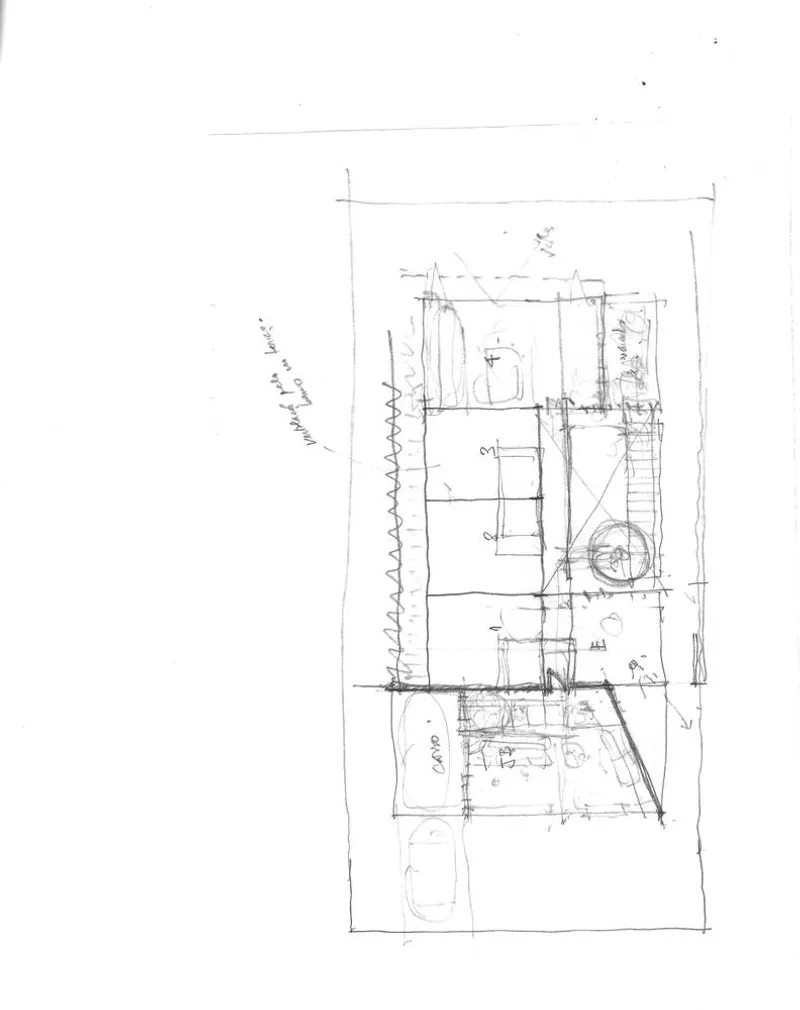
The layout was designed to follow the site's natural topography, organizing the house into three levels. Each level features independent access points, which not only reduce the impact of construction on the terrain but also help the structure settle naturally into its surroundings. The architectural gesture results in a design that is both functional and deeply connected to place.
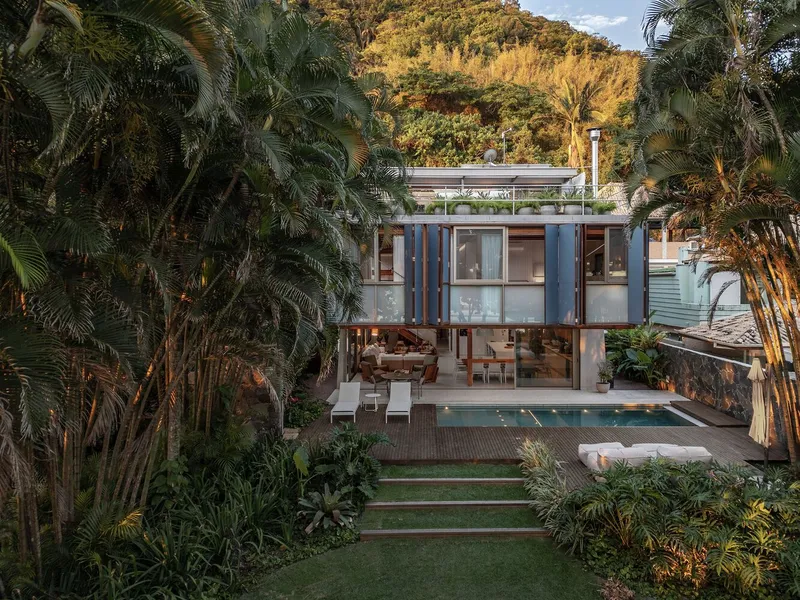

Balancing Solidity and Lightness Through Material Choices
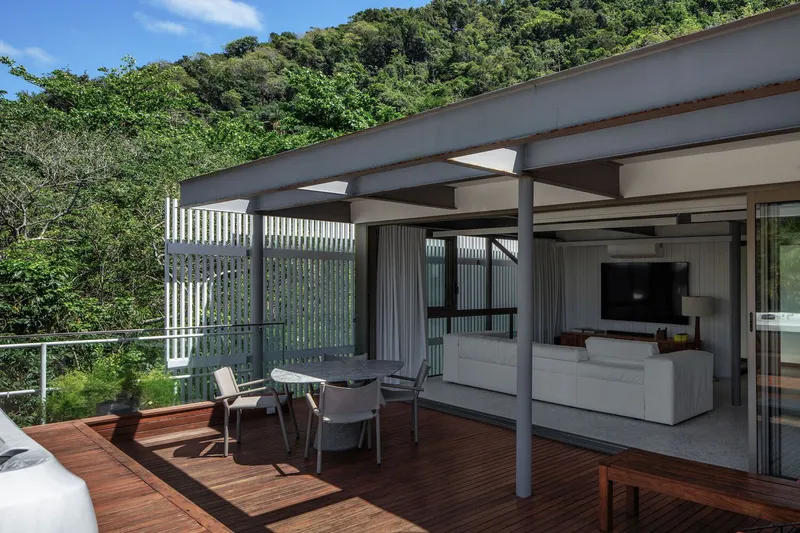
A defining feature of this coastal house design is its structural composition, which juxtaposes the solidity of concrete with the lightness of engineered wood. The ground floor is constructed with exposed concrete, anchoring the home to the land both visually and physically. In contrast, the upper levels are built using glued laminated timber, developed in collaboration with ITA Engenharia em Madeira. This choice offers spatial openness, prefabricated precision, and a warm, tactile quality.

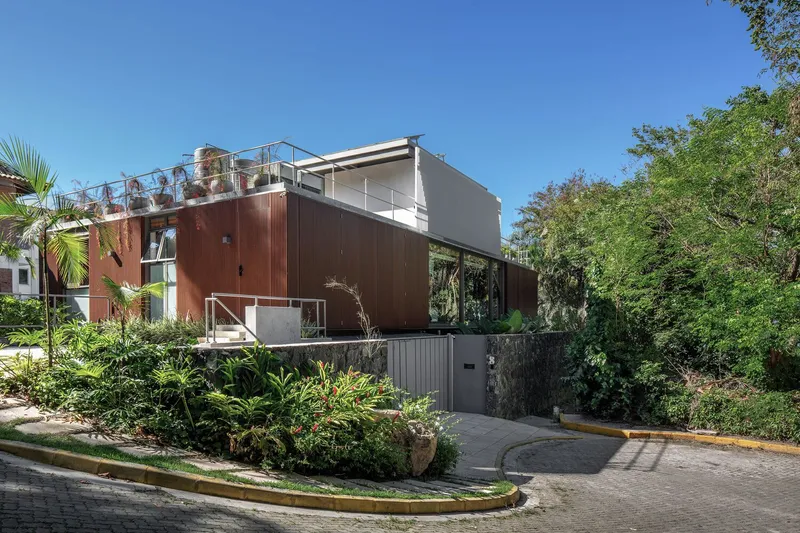
The timber structure enables large spans and open interiors, enhancing the home's visual and sensory lightness. The combination of prefabricated elements and natural finishes contributes to both technical performance and a welcoming atmosphere, reflecting the architectural intention to harmonize built form with its coastal forest context.
Interior and Exterior in Constant Dialogue
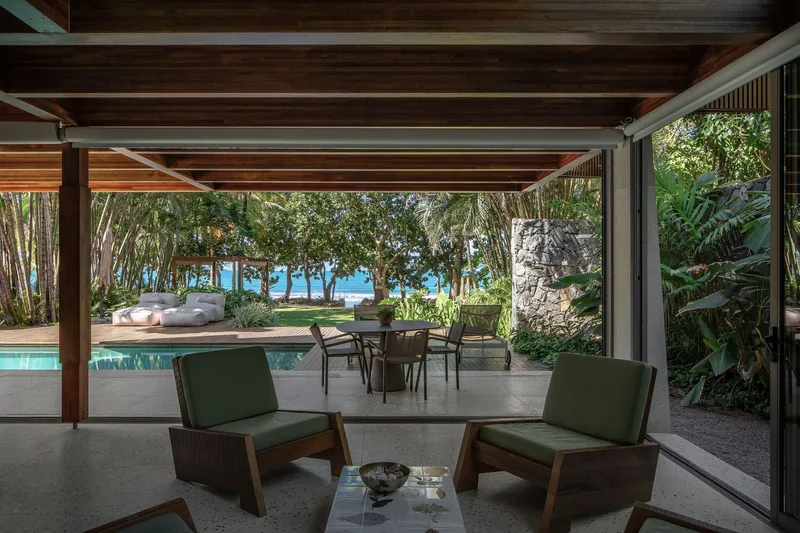
The project amplifies the relationship between architecture and nature through its expansive openings and transparent elements. On the lower level, large glass panels open directly toward the beach, seamlessly connecting indoor living spaces to the ocean and garden. This unobstructed flow not only creates a strong visual connection with nature but also allows natural light and breezes to enter freely.

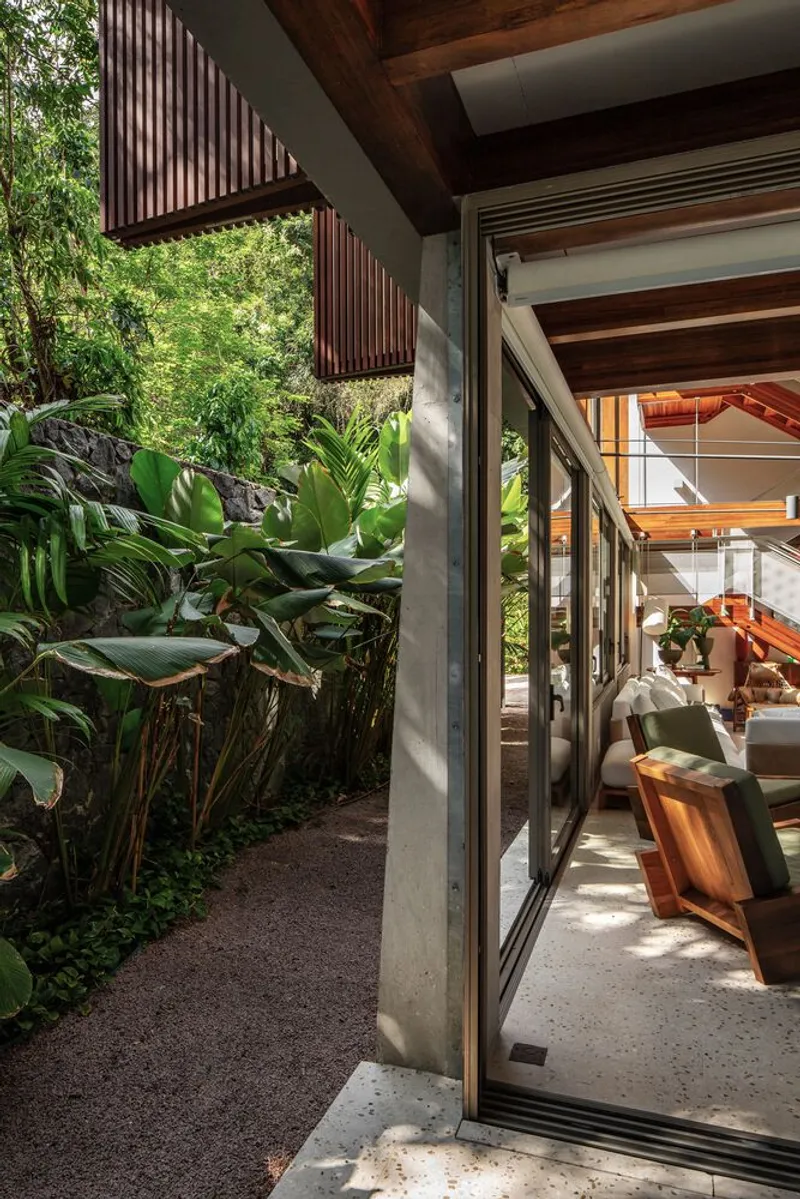
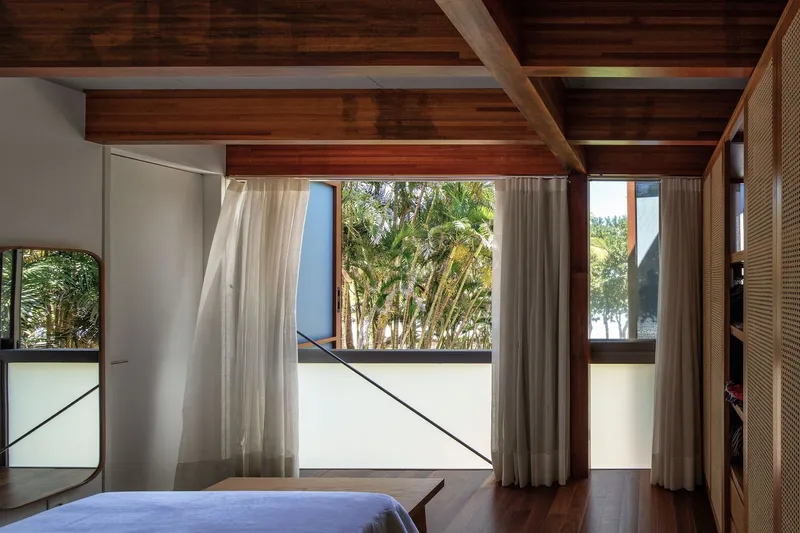
On the upper level, the design deepens this dialogue by incorporating movable wooden brises. These adjustable screens offer residents privacy and thermal comfort while filtering light and preserving views of the Atlantic Forest’s native vegetation. These thoughtful features contribute to the project’s energy efficiency and immersive experience of the landscape.

A Home That Resonates with Local Culture and Ecology
Guaecá House is more than a residence; it is a spatial expression of local identity and ecological awareness. During the project's documentation, a spontaneous remark from a local resident captured the home’s essence: its quiet presence, nestled into the forest, felt like it belonged to the region.
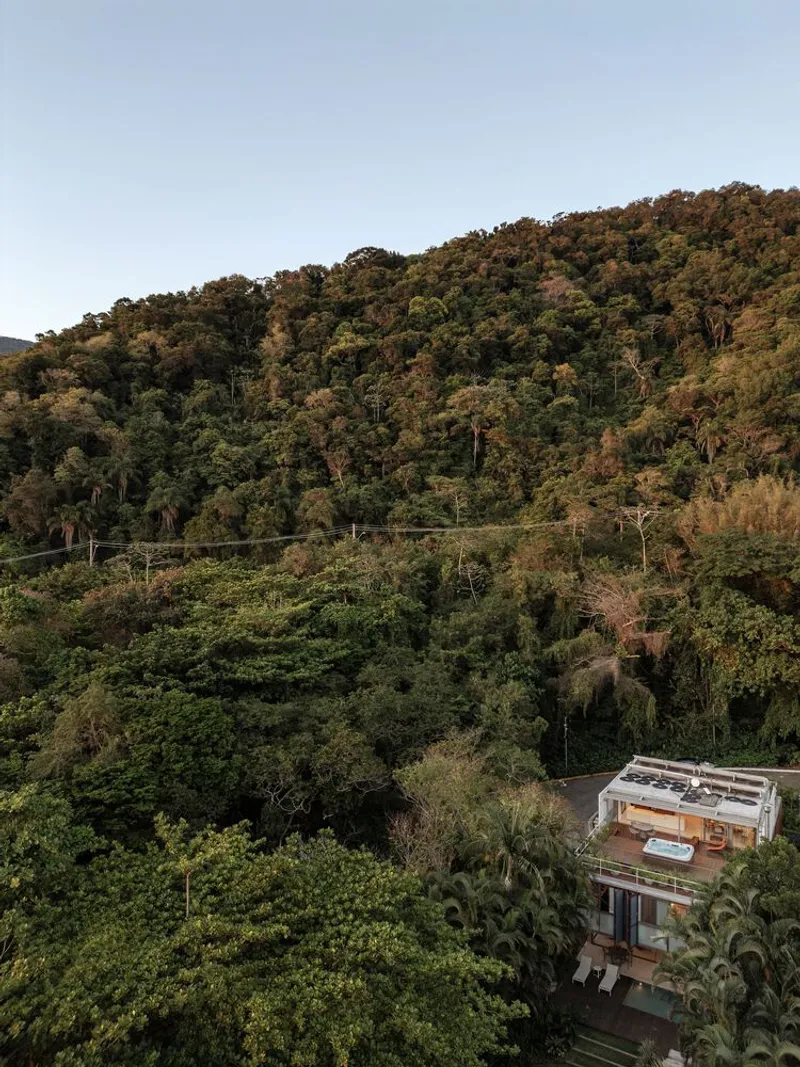
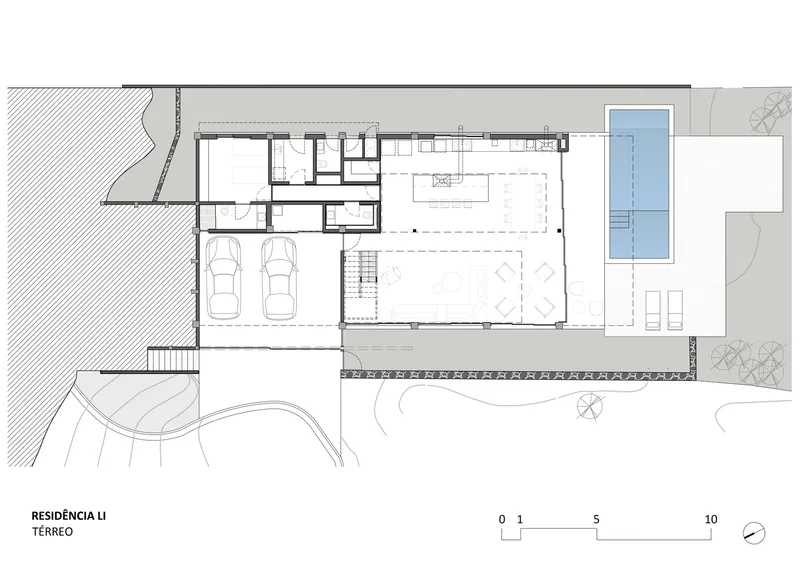
This sentiment is at the core of the design. Estúdio Rossi Arquitetos crafted a home that honors its environment and history without imposing on it. From its restrained form and material palette to its fluid interiors and filtered views, every element reinforces a sense of continuity between the past and present, architecture and nature.

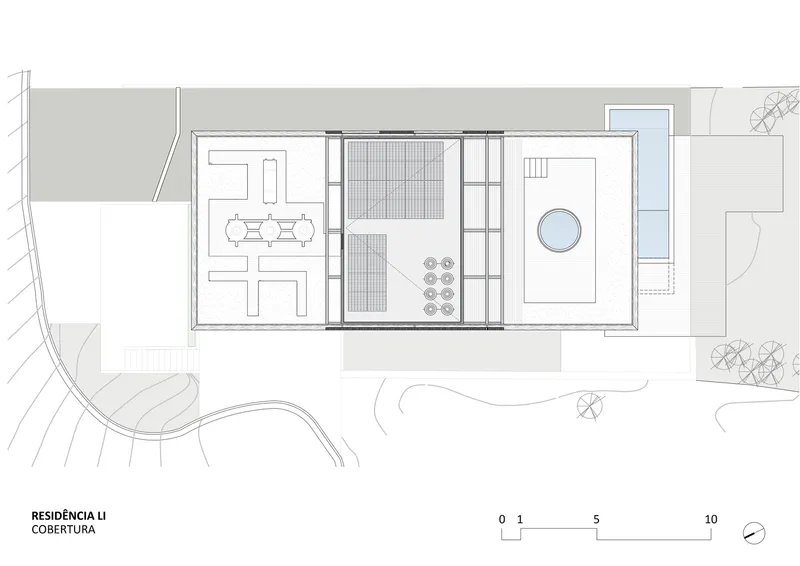
A Coastal House Design That Blends Memory, Nature, and Innovation
Guaecá House is an exemplary case of coastal house design where tradition, materiality, and landscape converge. Through its balanced use of structure, sensitive site response, and connection to both cultural and environmental context, the project offers a refined architectural narrative—one that invites reflection and embraces the timeless dialogue between memory and place.
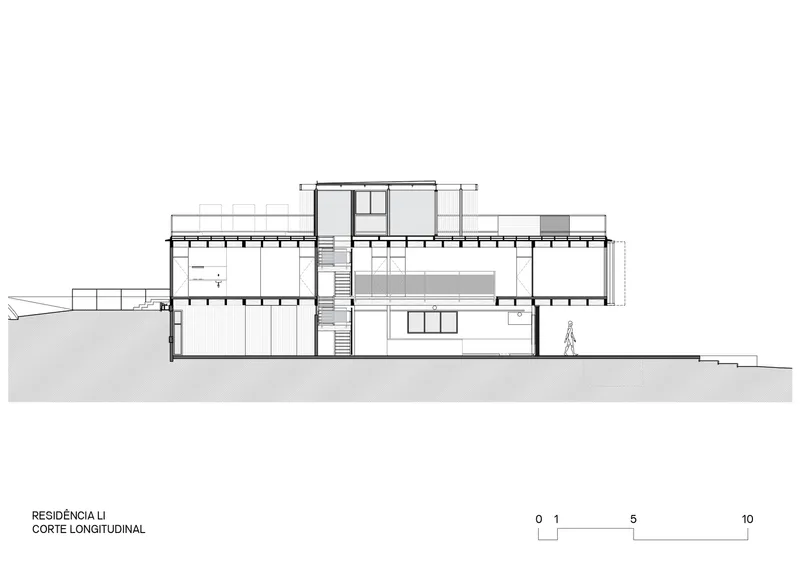
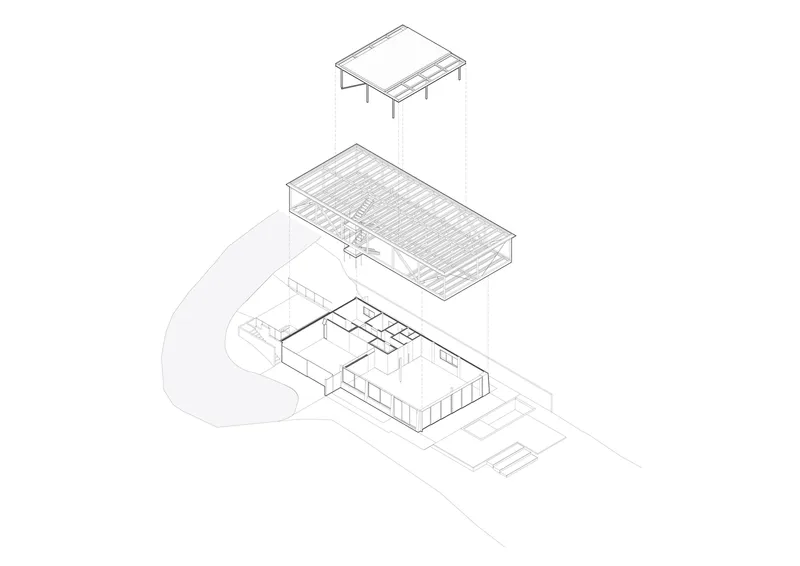
All photographs are works of André Scarpa, Adriano Pacelli


Popular Articles
Popular articles from the community


Juan García Correa, John González and Claudia Rueda Sink a Circular Amphitheater into a Manizales Engineering Building
On the La Nubia campus in Manizales, Colombia, the S1 Building folds labs and offices into a hillside of ramped lawns that double as a campus route.

Jaramillo Van Sluys Arquitectura and Urbanismo Turn a Demolished Registry Lot in Quito into an Orchard Plaza
In Quito's Centro Histórico, a 2,800 m² plaza exposes the San Agustín convent wall and redraws its lost Augustinian orchard in volcanic stone.

GROUP A Strips a 1969 Rotterdam Harbor Headquarters to Its Frame and Wraps It in Timber Louvers
In Rotterdam's M4H harbor district, Ferro Offices reuses a 1969 frame, adds one timber storey and reaches BREEAM-NL Outstanding.

Architekt Andreas Gruber Scatters 23 Dark Timber Chalets Across a South Tyrolean Forest Edge
In Molini di Tures, Amonti Chalets breaks a resort into a hamlet of gabled timber houses, with parking, storage and services pushed into the slope.

Similar Reads
You might also enjoy these articles

Gil Mello Arquitetura Tilts a Single Roof Toward the Waterfalls on a Plateau Above Aiuruoca, Brazil
In Aiuruoca, Minas Gerais, a 200 m² house of local labor and reclaimed poles pairs a low valley veranda with a tall mountain one.

U.GA Architects Wraps an Oval Rooftop Pool in Curved Board-Formed Concrete on Busan's Jeollidan-gil
In Busan's Jeonpo-dong, a 454 m² mixed-use block stacks a neighborhood facility, guest rooms and an oval rooftop pool inside spiraling concrete walls.

Felipe Hess Arquitetos Turns a Blind Stone Wall to the Street and Opens a Brazilian House onto a Courtyard and Canal
A canal-front house in Brazil hides behind painted stone and planting, then opens to an olive-tree courtyard, a reed-ceilinged porch and a curving pool.

David Macias Steps a Doorless Stone and Plaster House Down a Tropical Colombian Hillside
In the humid hills of Colombia, Threshold House replaces the front door with an open void and terraces its 850 m² down the slope instead of fighting it.

Explore Architecture Competitions
Discover active competitions in this discipline

Challenge to reimagine the Iron Throne

Photograph architecture without architects

Illustrate the lost glory of Angkor Wat - Render Challenge

Design challenge to reuse E-waste
Comments (0)
Please login or sign up to add comments
No comments yet. Be the first to comment!