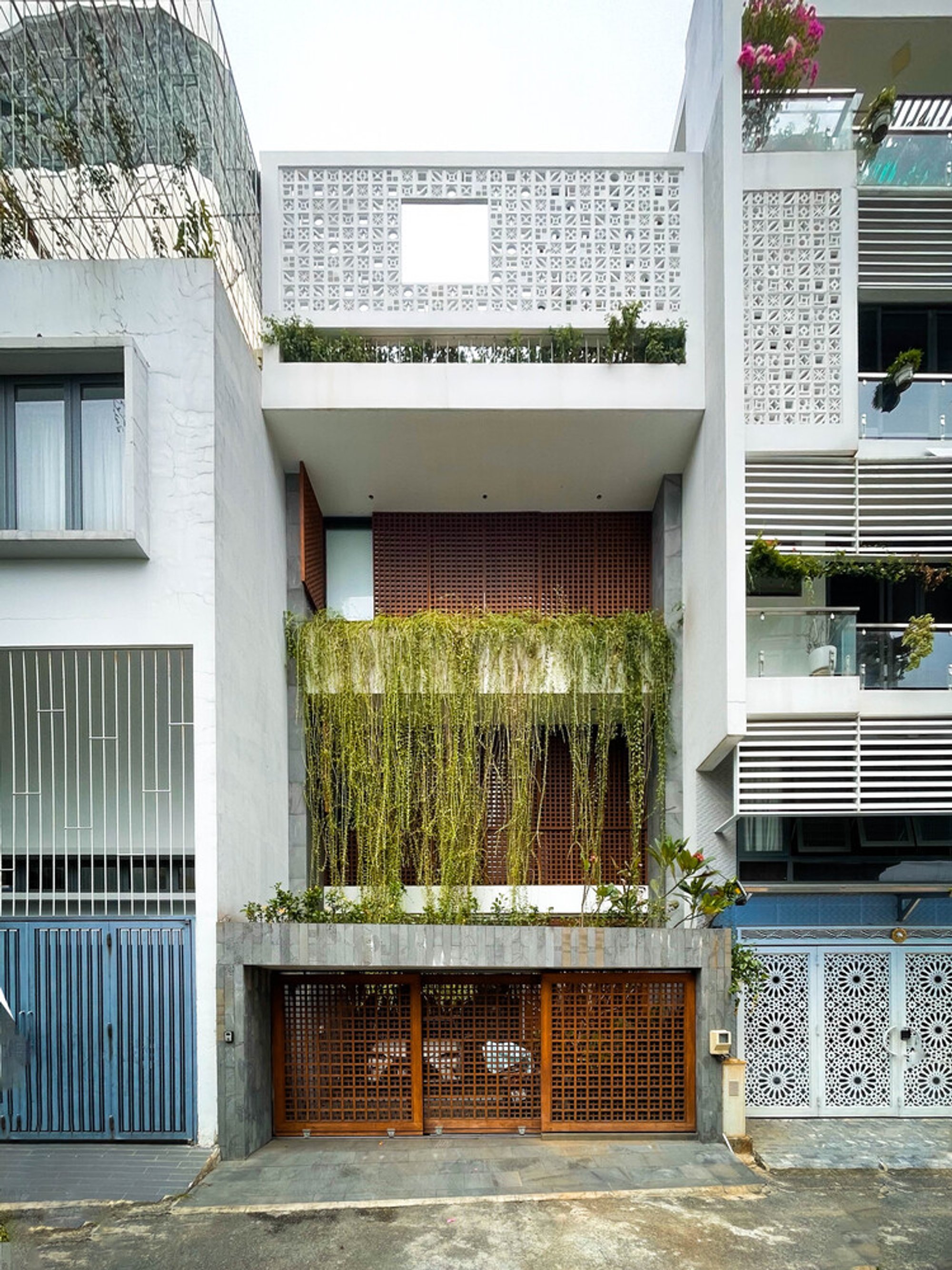
Heat-Resistant House Design in Tropical Climates: The Fabric House
Discover how the Fabric House uses innovative heat-resistant design and greenery to create sustainable, comfortable living in tropical climates.


In tropical climates, architectural design must balance aesthetics, functionality, and sustainability to combat extreme heat and humidity. The Fabric House, located in Ho Chi Minh City, Vietnam, exemplifies this balance with innovative heat-resistant solutions. Designed by Lam Nin Architects and 90odesign, this project showcases a seamless integration of local materials, greenery, and modern techniques to create a comfortable and sustainable living space.
The Challenge: Designing for Tropical Monsoon Climates
1. Understanding the Climate
Ho Chi Minh City experiences a tropical monsoon climate characterized by:
- High Humidity: Humid air increases discomfort indoors.
- Direct Sunlight: A west-facing facade amplifies heat gain during peak hours.
- Seasonal Rains: Heavy rainfall demands effective drainage and durable materials.
2. The Heat Problem
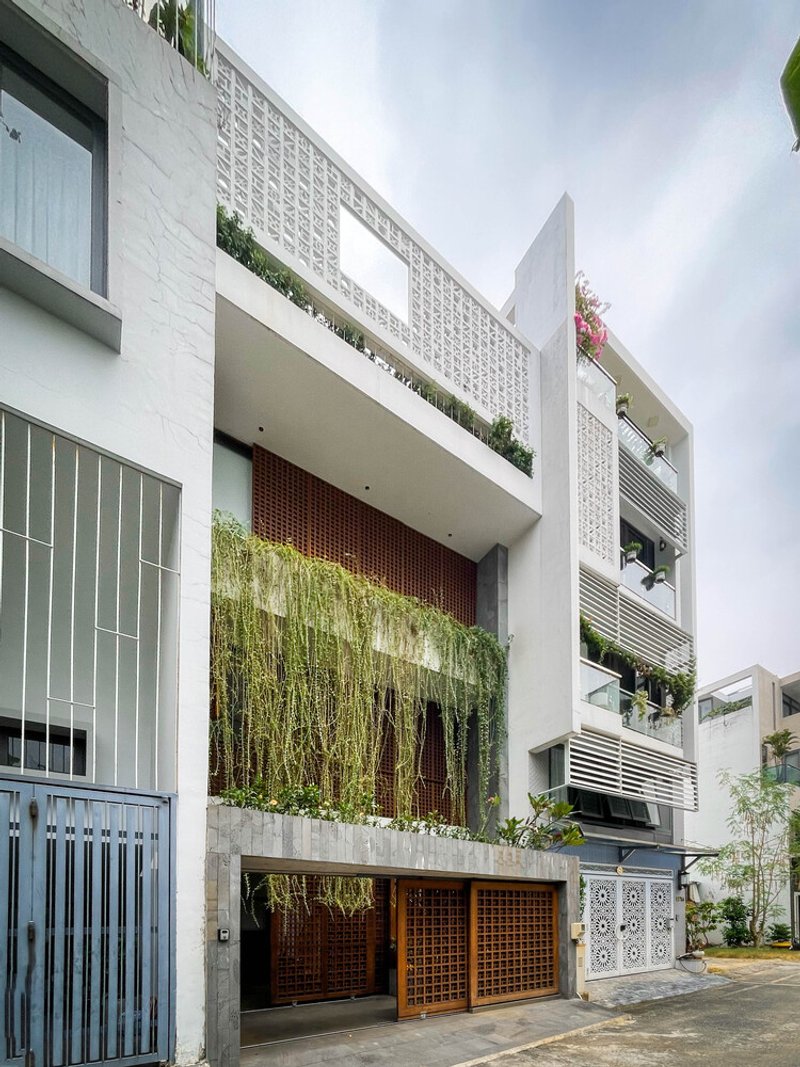
Facing straight west, the house endures prolonged sunlight exposure, making temperature regulation a critical design challenge.
Innovative Heat-Resistant Design Strategies
The architects employed a multi-layered approach to mitigate heat and maximize ventilation:
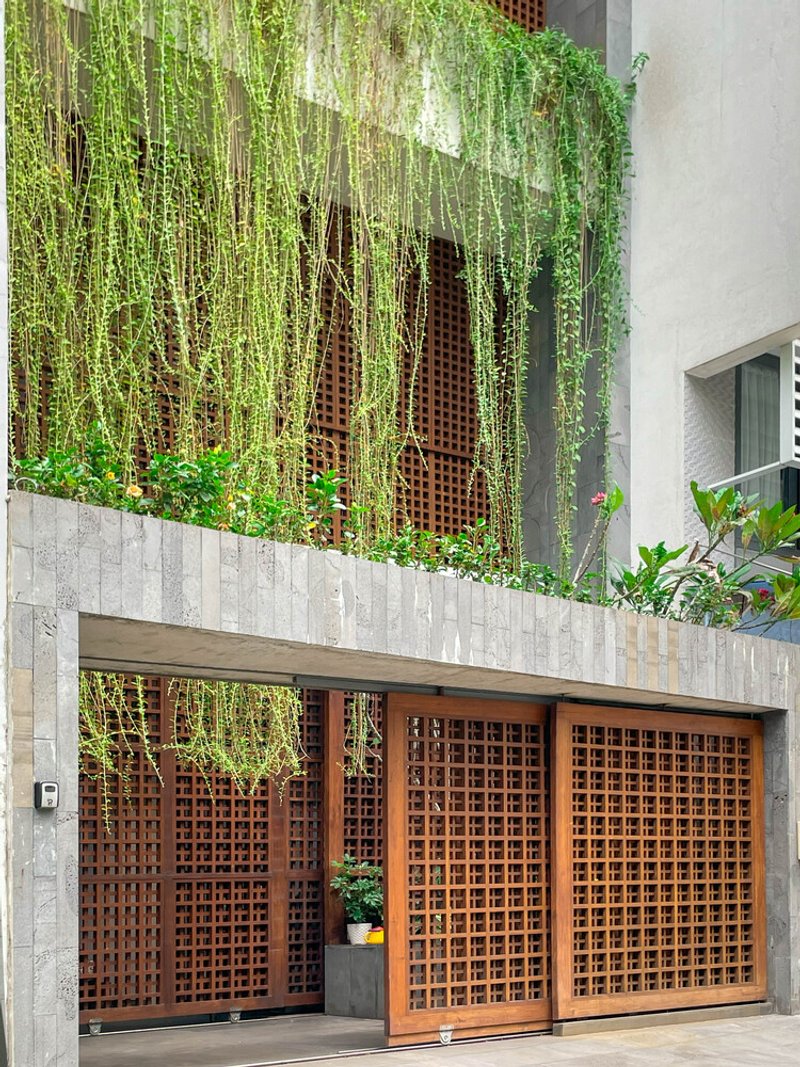
1. Inverted Funnel Shape
The house's unique structure features upper floors that extend approximately 2.5 meters over the lower ones. This inverted funnel design:
- Reduces direct sunlight on the facade.
- Creates natural shading for the lower levels.
- Enhances the building's aesthetic while providing functional benefits.
2. Layered Heat Resistance
The design integrates two key layers to regulate heat effectively:
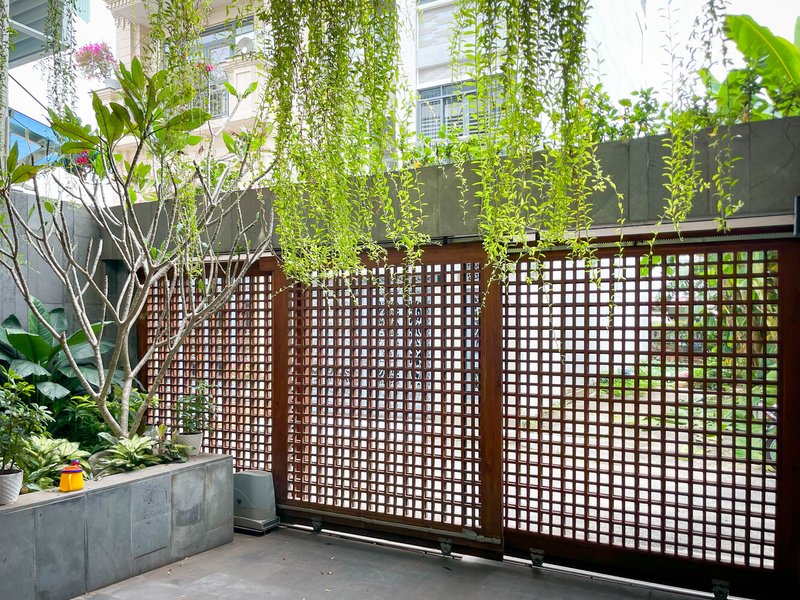
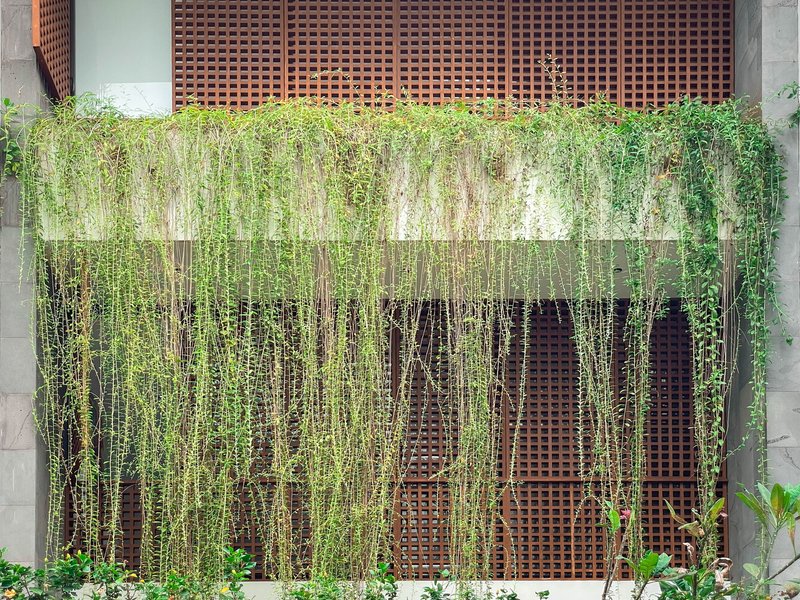
a. The Green Layer
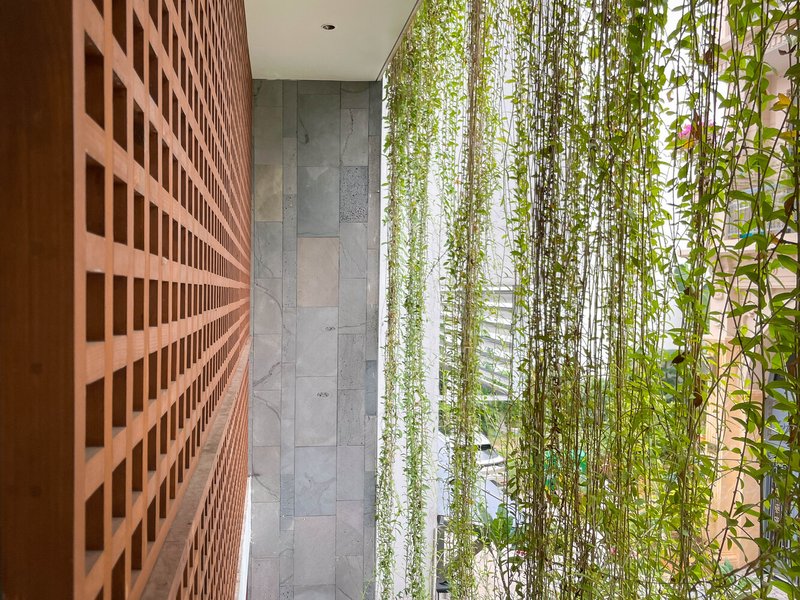
A cascading array of plants with broad leaves forms the house’s first line of defense:
- Heat Filtration: The plants filter direct sunlight, reducing indoor heat gain.
- Natural Cooling: Transpiration from plants cools the surrounding air.
- Visual Appeal: Adds a lush, natural aesthetic to the facade.
b. The Fabric Layer
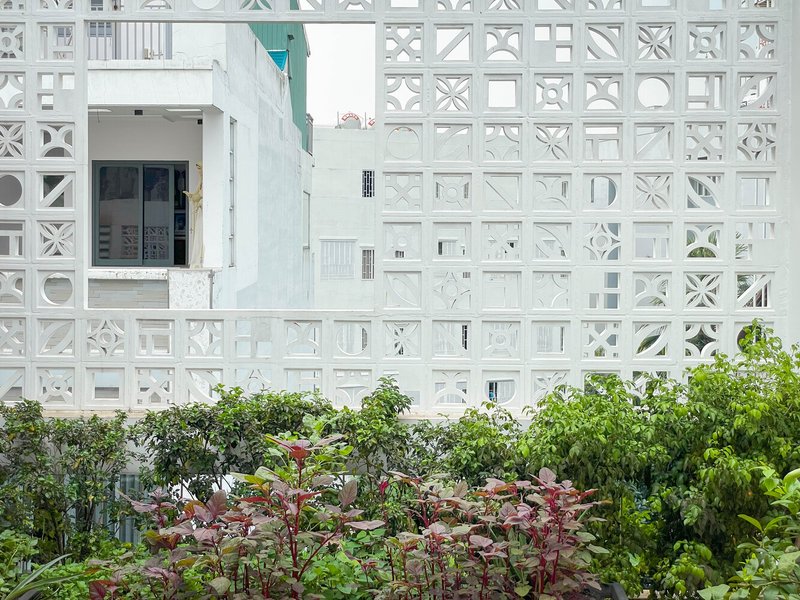
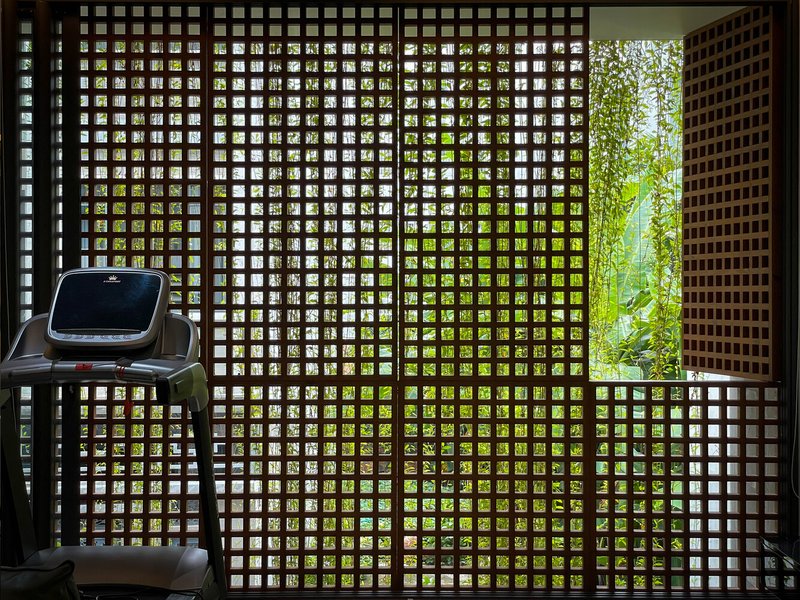
A secondary layer of wooden slats arranged in a square grid reduces sunlight penetration:
- 50% Light Reduction: Minimizes harsh sunlight without blocking airflow.
- Enhanced Ventilation: Encourages cold air circulation to maintain a cooler indoor temperature.
Sustainable Material Choices
The use of local and eco-friendly materials underscores the house's sustainability:
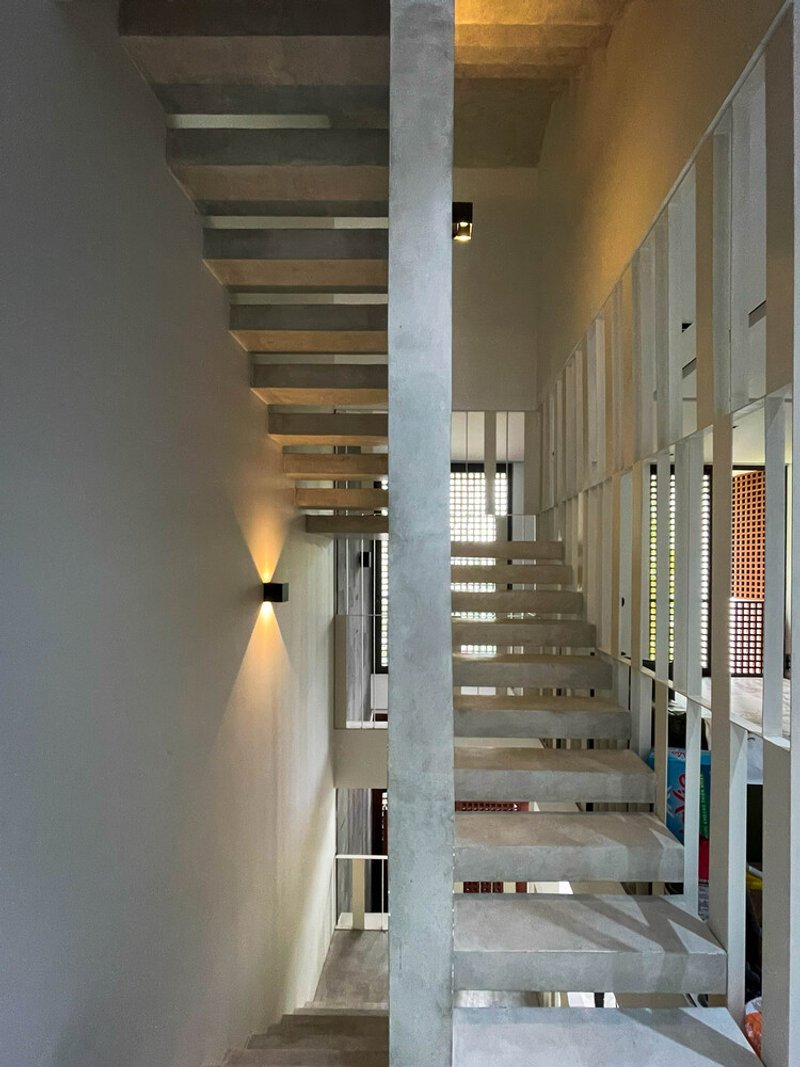
- Sandstone: Provides durability and heat resistance, suitable for tropical environments.
- Natural Wood: Used for slats and interior accents, adding warmth and texture.
- Hanging Plants: Adapted to the local climate, these require minimal maintenance.
Interior Design for Comfort and Sustainability
1. Maximizing Natural Light
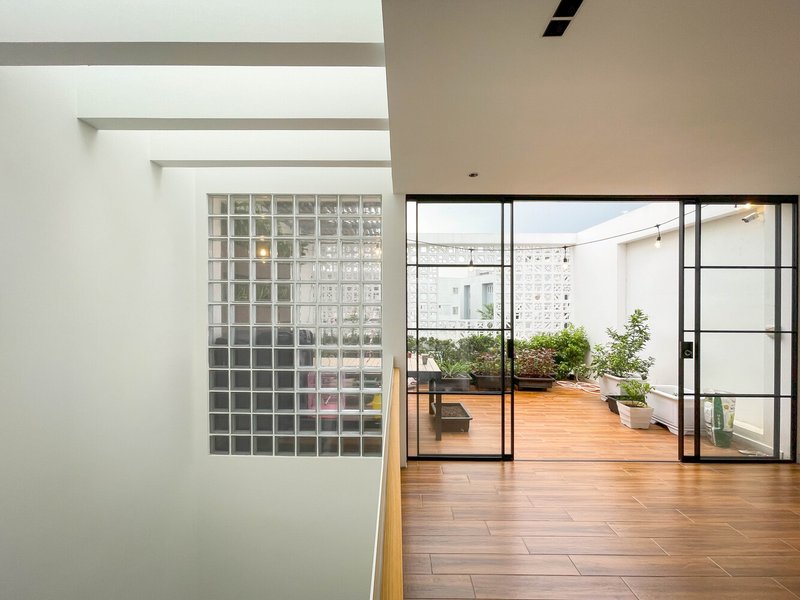
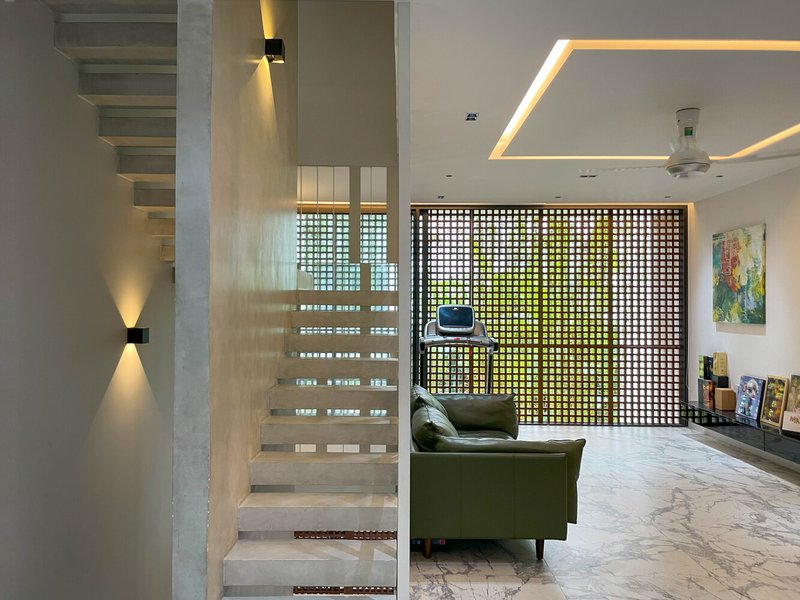
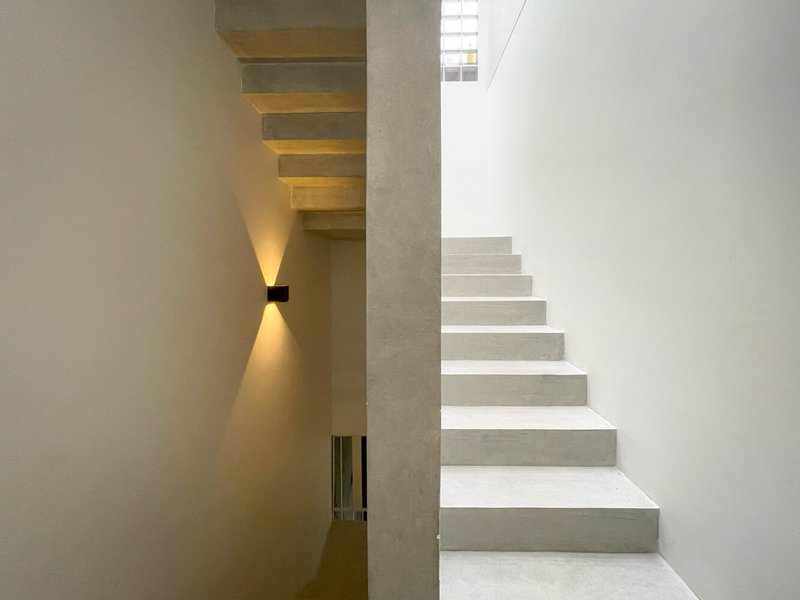
The interior design emphasizes indirect lighting, reducing the need for artificial light and improving energy efficiency. Large windows are strategically placed to align with the green and fabric layers, creating a dappled light effect.
2. Natural Ventilation
The building's layout promotes cross-ventilation, a critical feature for maintaining indoor air quality and comfort in humid climates.
Architectural Highlights
1. Functional Aesthetic
The inverted funnel shape and layered facade merge form and function, creating a visually striking yet practical structure.
2. Adaptability
The house is designed to adapt to varying weather conditions, providing comfort all year round.
3. Connection to Nature
By integrating greenery and natural materials, the house fosters a sense of harmony with its tropical surroundings.
Setting a Benchmark in Heat-Resistant House Design
The Fabric House by Lam Nin Architects and 90odesign demonstrates how architecture can address environmental challenges while offering comfort and aesthetic appeal. By prioritizing heat-resistant strategies, sustainable materials, and innovative design, the project serves as a blueprint for building in tropical climates.
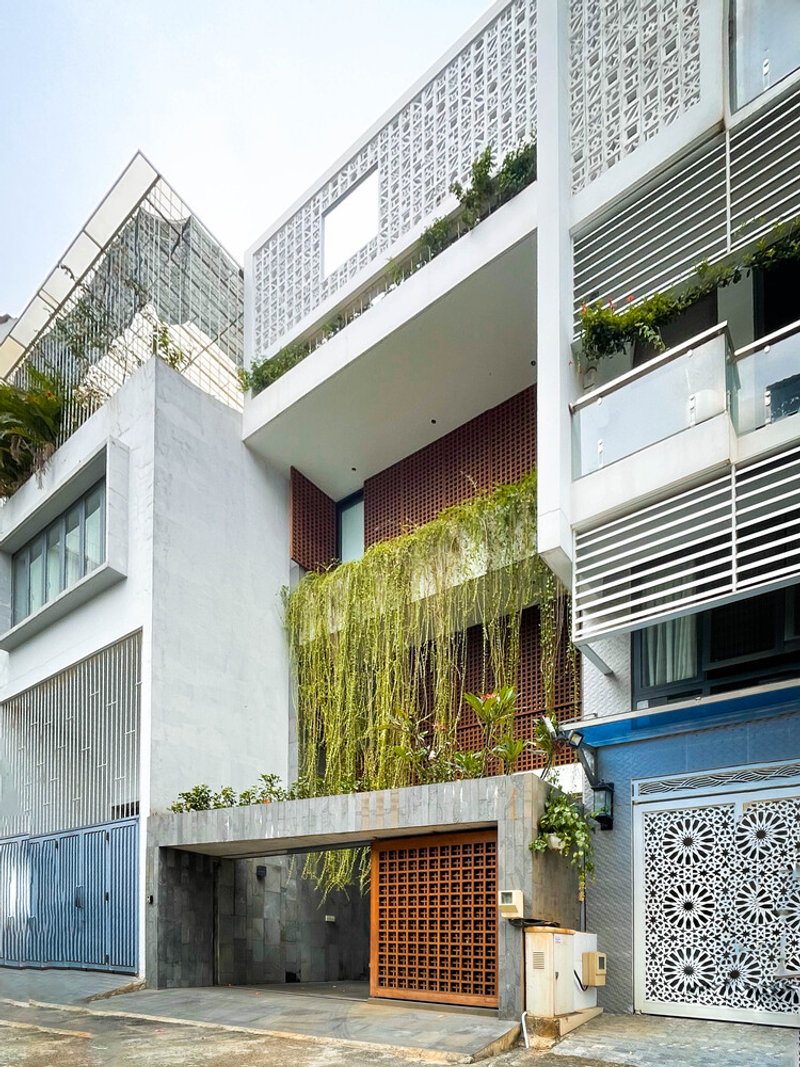
All Photographs are work ofDat Buom