

Irrawaddy Flower Garden Classroom Buildings by Simple Architecture – Sustainable Education Architecture in Thailand
Sustainable bamboo-and-adobe classrooms in Mae Sot by Simple Architecture blend local craftsmanship, recycled materials, and community collaboration to empower education.


Introduction: Architecture Empowering Education
The Irrawaddy Flower Garden Classroom Buildings by Simple Architecture stand as a powerful symbol of education, sustainability, and cross-cultural collaboration. Designed for Burmese migrant children in Mae Sot, Thailand, this architectural project redefines how design can serve as an agent of empowerment in underserved communities.
Built under the guidance of Help Without Frontiers Thailand, the school provides education for 185 students from nursery to Grade 8. The classrooms were created to address a critical shortage of learning spaces while ensuring environmental sensitivity, cultural respect, and long-term durability.
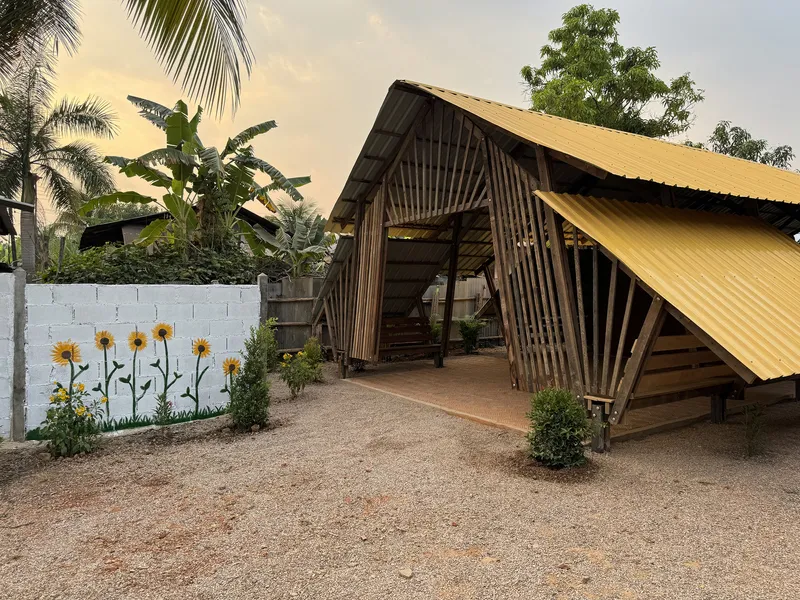
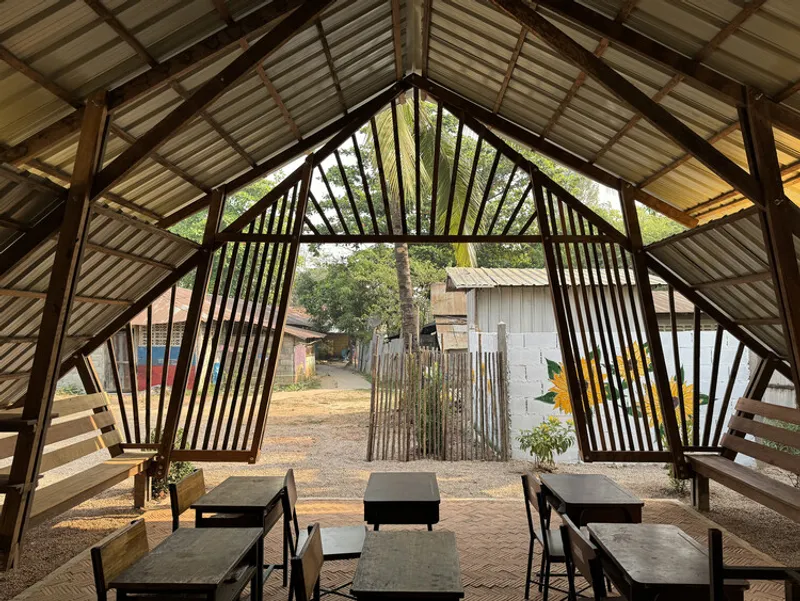
First Classroom Project: A Vision for Change
In 2024, the first phase of the project began with the construction of two classrooms. With limited financial resources but abundant creativity, Simple Architecture collaborated with architecture students, young professionals, and local craftsmen. The project was completed in just five weeks—a testament to the power of teamwork and thoughtful design.
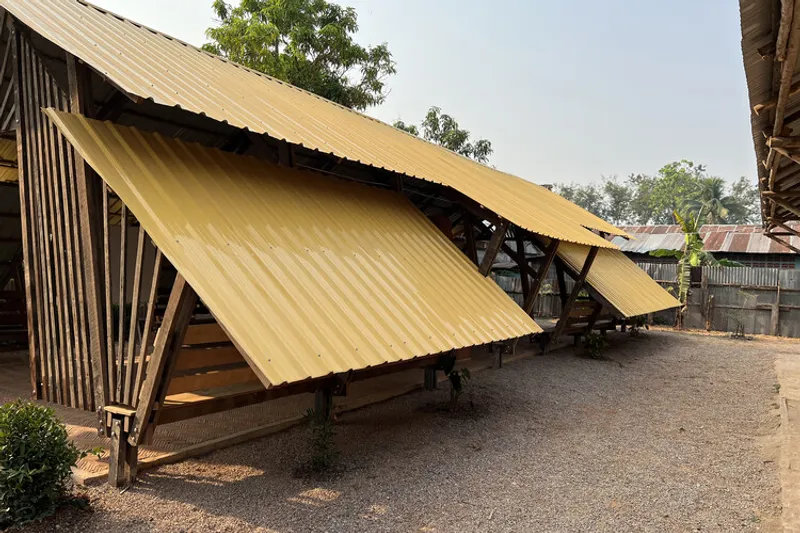
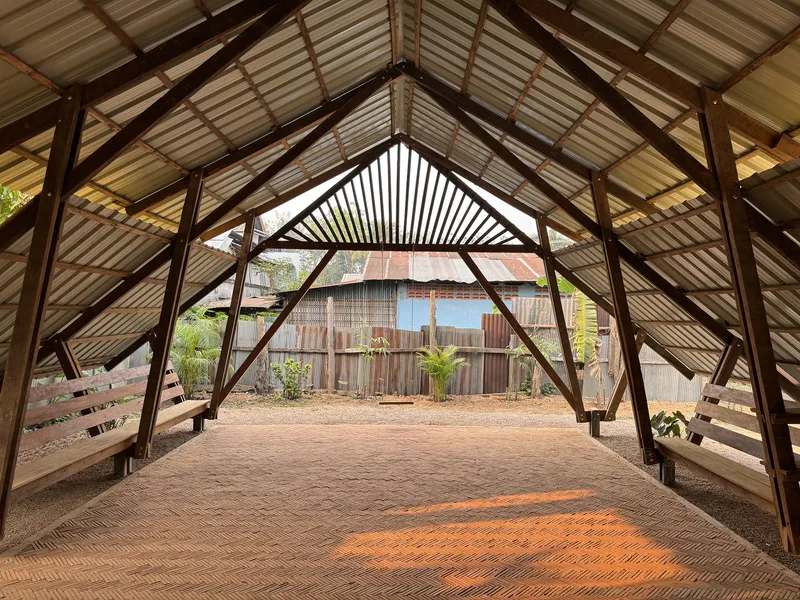
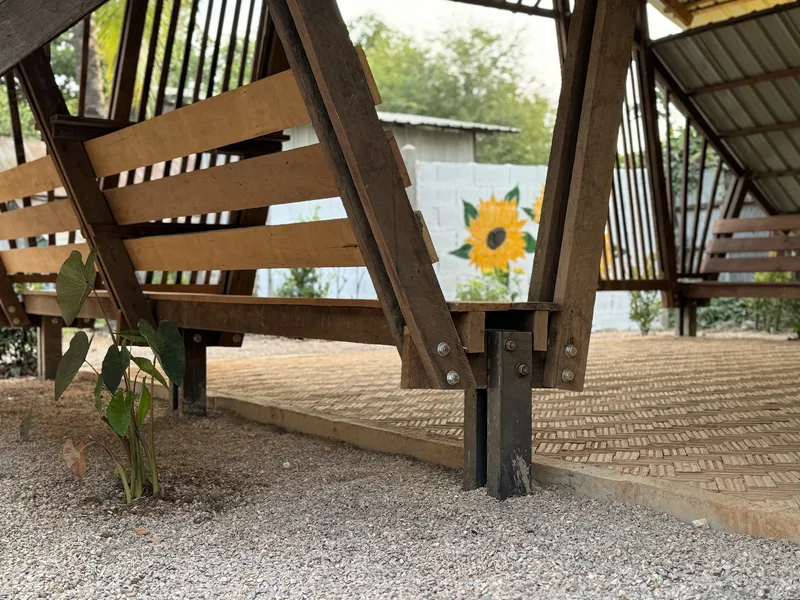
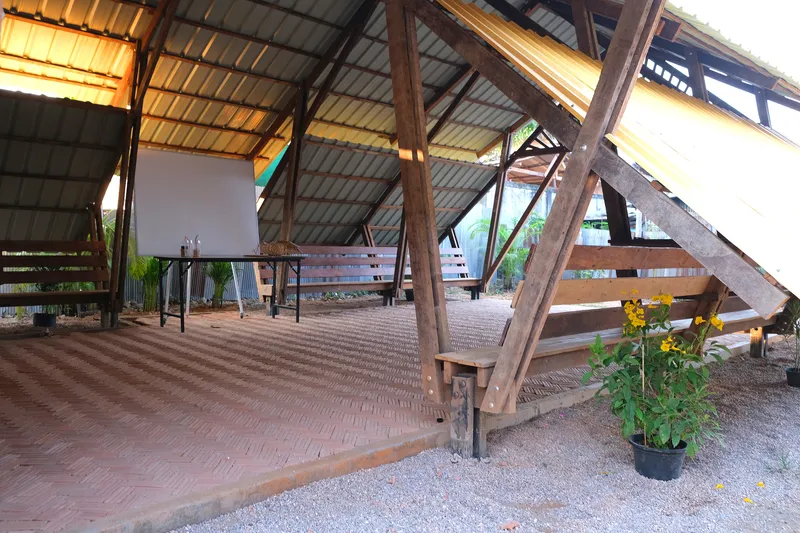
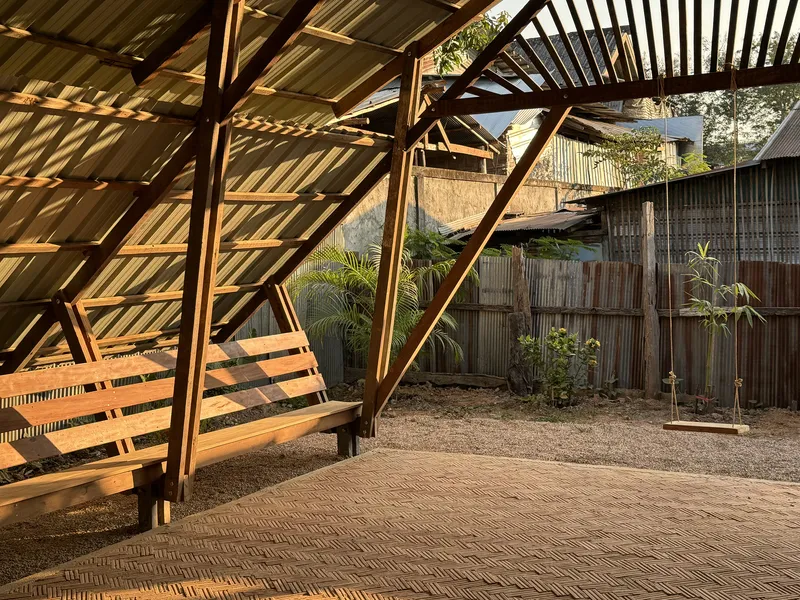
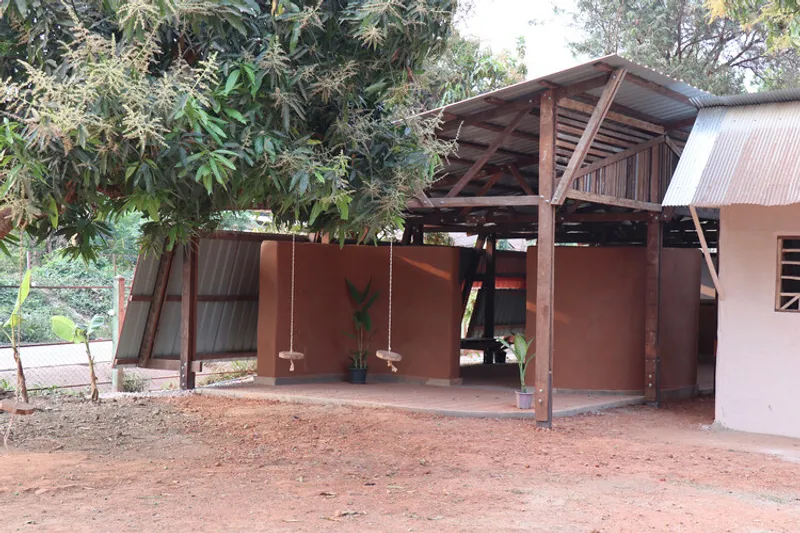
Three distinct A-frame modules formed the core structure, supporting the metal roof while defining the spatial character of the classrooms. The clever use of space between trusses allowed for low benches—creating interactive areas for students. The bamboo-embedded partition wall served both as a sound barrier and a multifunctional shelving unit, merging functionality with beauty.
This approach not only optimized space but also encouraged students to interact with the structure, turning architecture itself into a learning tool.
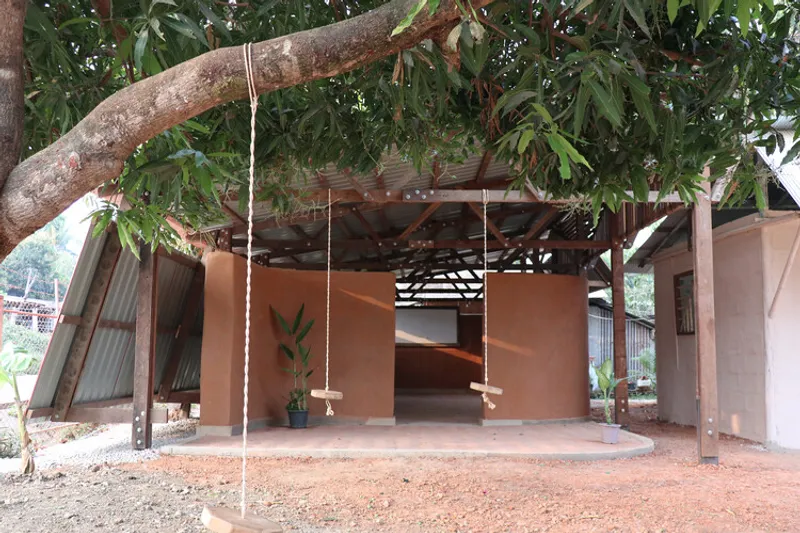
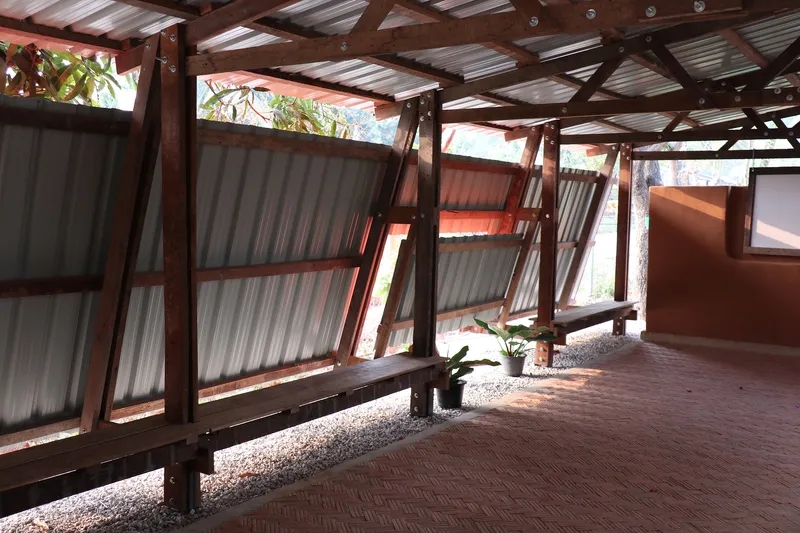
Second Classroom Project: Expanding Horizons
A year later, the second phase introduced a larger classroom designed for the school’s non-formal education program. This new structure accommodates up to fifty students and includes a welcoming reception area at the entrance.
Built within a narrow, challenging site between a fence and a canal, the design team showcased adaptability and precision. Despite spatial constraints, the five-meter-wide classroom provides an open, breathable interior that promotes collaboration and learning.
Like the first project, construction was completed in just five weeks, emphasizing efficiency and community engagement.
Design Philosophy: Contextual and Sustainable
The design reflects a deep understanding of local climate, materials, and culture. Before construction began, the architects conducted thorough site observations—studying how students interacted with existing spaces. These insights guided every design decision, ensuring that the buildings respond naturally to the users' needs and environment.
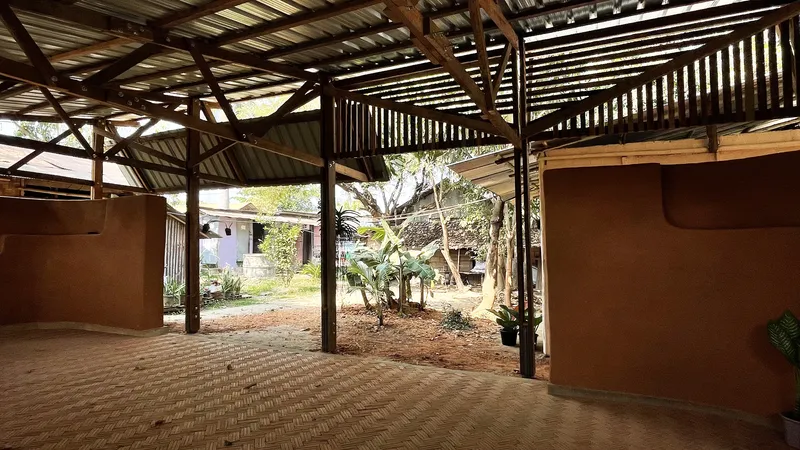
Locally produced adobe bricks and recycled teak wood became the main materials, reinforcing sustainability. Each piece of reclaimed wood—often irregular in size—was meticulously adapted on-site. This flexibility not only reduced waste but also gave each classroom its unique handmade character.
The use of local craftsmanship and materials minimized the carbon footprint while fostering knowledge exchange between designers and builders—bridging modern design with traditional wisdom.
Community Collaboration and Learning Through Building
More than just classrooms, the Irrawaddy Flower Garden School embodies a model for participatory architecture. Local laborers, students, and international architects worked side-by-side, transforming the building process into an educational experience in itself.
This collaboration nurtured mutual respect, skill-sharing, and empowerment—demonstrating how design can directly impact social development.
A Model for Future Educational Architecture
The Irrawaddy Flower Garden projects prove that sustainable design doesn’t rely on expensive materials or high technology—it depends on contextual thinking, empathy, and innovation. By merging local craftsmanship with modern architectural principles, Simple Architecture has created spaces that inspire learning while respecting the planet.
These classrooms are not only functional shelters—they are living examples of how architecture can strengthen communities, foster education, and build a hopeful future for generations of students.

All the photographs are works of Jan Glasmeier, Leo Huang, Jonathan Wiedemann, Old Doors, New Ways, Isabell, Oliver Giebels


Popular Articles
Popular articles from the community


Singing Woman: An Opera House That Performs Before the Curtain Rises
Ovidiu Cristian Pavel's conceptual opera house translates Estonia's choral identity into a sculpted waterfront landmark facing the Baltic Sea.

Extended Shell: Retrofitting Kolkata's Balconies as Living Urban Thresholds
A modular retrofit system recovers the social and environmental intelligence of Kolkata's historic verandas for contemporary Park Street residents.

Opera on the Sea: Driftwood Logic Shapes a Timber Opera House on Estonia's Coast
Trevor Orgill's opera house translates the entangled drift of floating timber into a civic building where wood, water, and music converge.
Tsunami Convergenics: Turning Catastrophic Ocean Forces into Underwater Housing Infrastructure
A speculative underwater settlement off the coast of Onagawa, Japan, treats tsunamis and typhoons as energy sources rather than threats.

Similar Reads
You might also enjoy these articles


Hodi-Mandai Geram
Project Function: Preservation and revitalization of the Intangible heritage and socio-spatial identity of the Hodi by Housing, Cultural Memory Center, Sacred Grove, landscape, local tourism economy


Olio Towers: A Mid-Rise for Performers That Fuses Housing, Rehearsal, and Stage
Located blocks from Houston's Theater District, this modular tower stacks living units around a central performance atrium.

Oasis: Modular Green Housing Carved into Dhaka's Urban Fabric
A shortlisted Plugin Housing entry reclaims unauthorized settlements in Dhaka with stepped concrete volumes, green roofs, and ventilation-driven design.

Black Hole: A Floating Megastructure for the Post-Physical Era
Emiliano Mazzarotto envisions a spherical, self-scaling arena where e-sports, digital hotels, and holographic stadiums replace traditional public space.

Explore Educational Building Competitions
Discover active competitions in this discipline

Challenge to design public laboratory

Challenge to reimagine the Iron Throne

Photograph architecture without architects

Illustrate the lost glory of Angkor Wat - Render Challenge
Comments (0)
Please login or sign up to add comments
No comments yet. Be the first to comment!