

Land for all
A place to learn, grow, and celebrate the earth together

The Land for All project arose out of the need to review and affirm the right for land as a basic human right. I found inspiration in the work of the Brazilian movement MST (Movimento dos Trabalhadores Rurais Sem Terra), where I admired how MST workers didn’t see land as property, but as a place to nourish and sustain their communities. The idea that land belongs to everyone, regardless of class, origin or property status, was what moved me the most. In this context, Land for All is conceived as an architectural and social gesture: a space that symbolically and practically shows that the earth is a source of life, knowledge, food and community.
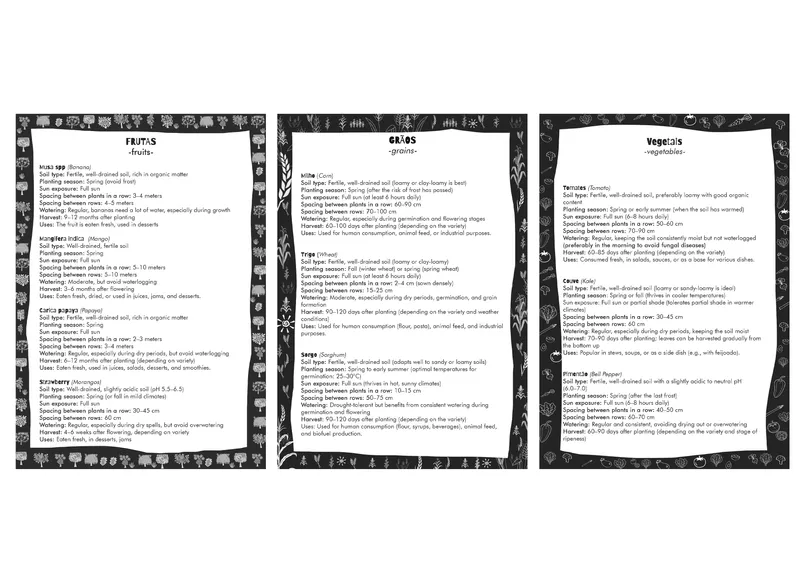
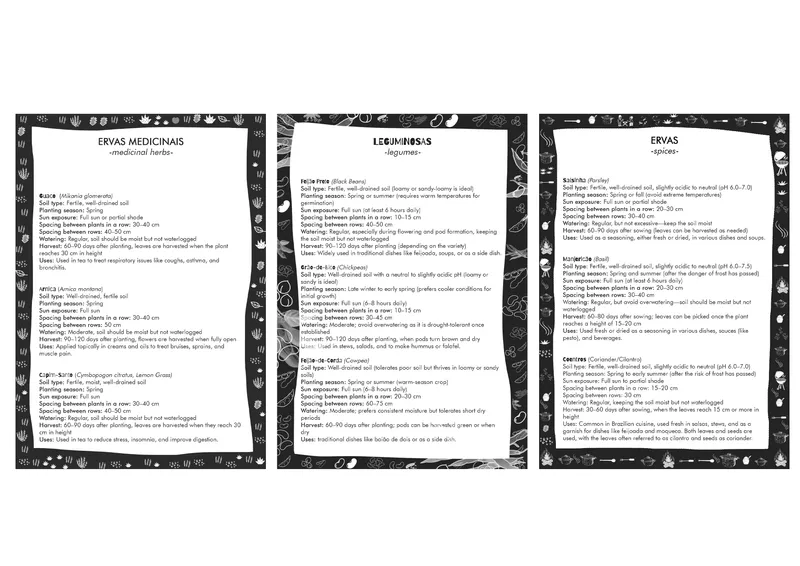
The process of education is based on practical work with the land, where people are taught how to grow the basic foods needed for daily life and later they can plant them in their own space. Everyone in the group can plant a different species and thus the network of exchange. Part of the land is organized into terraced growing beds, shaped as modular units. Each module includes a balanced combination of legumes, vegetables, grains, and fruits designed to meet the basic nutritional needs of a household and to be easily replicated at home. Touching the ground also has a meditative role, which has been confirmed by numerous scientific studies that link contact with the ground to stress reduction, increased focus and a sense of belonging. So it is not only the physical work with the earth, but the earth itself is a teacher.
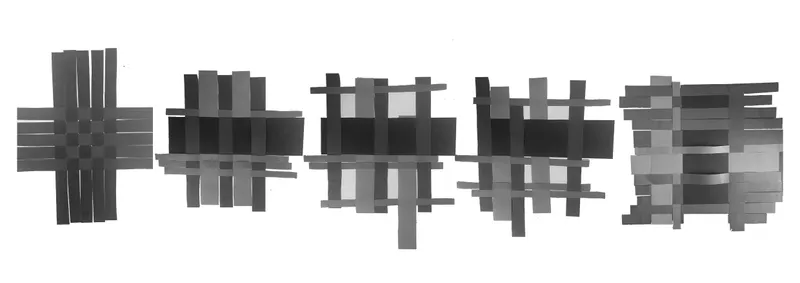
The spatial organization of functions emerged from an understanding of weaving techniques. Functions are divided into five main categories of varying widths, with wider strips assigned to categories of greater spatial and programmatic importance. These functional strips are then interlaced using a fundamental bamboo weaving technique, creating a coherent structure where each category maintains its individuality while contributing to an integrated and dynamic whole. This approach allows the architecture to reflect both the logic of the program and the aesthetic rhythm of woven patterns, emphasizing harmony between function, scale, and material.
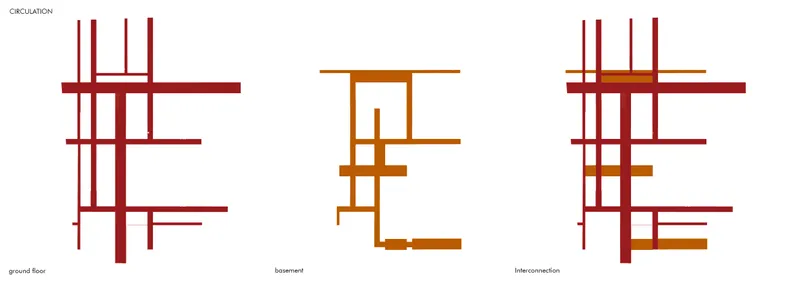
The project program also includes classic classrooms located on the ground floor, where theoretical workshops and educational programs take place. In contrast, the underground spaces offer more tactile and sensorial learning experiences. Underground seed library is a place where visitors can borrow, exchange, and learn about seeds. The program also includes sculpting workshops focused on traditional techniques, where participants create clay pots and cooking vessels that are later used in the communal kitchen. There is also a room dedicated to medicinal plants, where participants learn how to make natural remedies, teas, and plant-based cosmetics. Herbs are grown around the kitchen area, which are used in daily food preparation. When there are no cooking workshops, the kitchen functions as a communal cooking space all year round for visitors, volunteers and all those who care about the garden and space. In this way, the center becomes the cultural and common heart of the community, a place to gather around food and celebrate the land. Symbols of grounding and returning to the earth form the foundation of the project’s architectural concept. For this reason, the main rooms are embedded in the ground, while the roofs rise above it, establishing both a physical and symbolic dialogue between the subterranean and the surface. This approach was also informed by an analysis of Brazilian indigenous architecture. Not with the aim of designing spaces for indigenous people, but because they best understand climate, and ecological rhythms of Brazil.
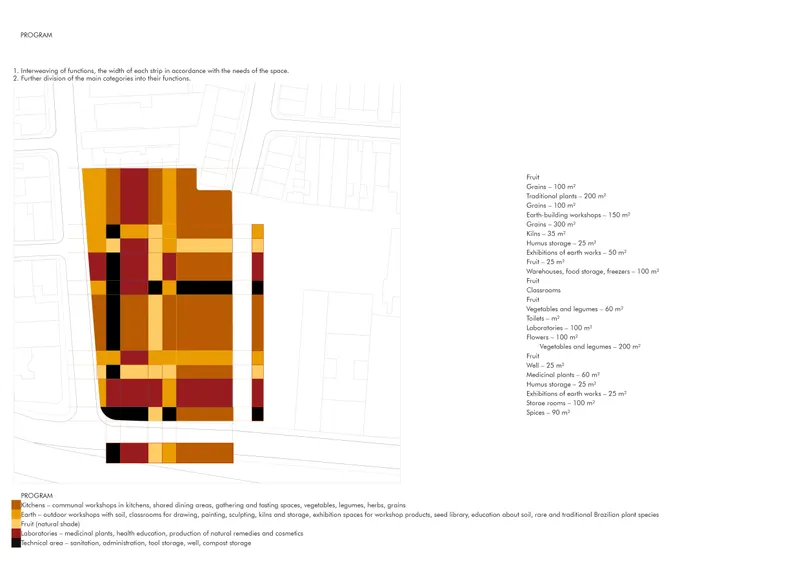
Bamboo is a key material in this project, chosen for its local availability and ecological value. A drip irrigation system made from bamboo runs across the entire composition, naturally watering the plants while visually aligning with the concept of weaving. Early in the process, I explored traditional bamboo weaving techniques, which became both a functional and symbolic part of the design. The whole project appears interwoven. With layers above and below ground overlapping and connecting. The only vertical elements in the composition are the wells that collect rainwater. Looking at my project, only plants, the bamboo drip irrigation system, and roofs made of bamboo and glass are visible.
The project naturally tends to expand beyond the defined site boundaries, much like a woven fabric that becomes more open and relaxed at its edges. This is reflected in the lightweight bamboo stairs and railings that softly extend beyond the core area, blending seamlessly with bamboo groves planted along the site perimeter. The project’s form is designed to be flexible and expandable, with these bamboo elements providing access to vertical water systems while integrating aesthetically with the landscape. The bamboo is grown specifically to support the drip irrigation system, which requires periodic replacement, making sustainability and adaptability key aspects of the design. Between these stairways is open ground that can be used for informal gatherings, discussions, small tribunes, or simply as quiet observation points. Their use is intentionally undefined, allowing visitors to shape them according to their needs.
The senses contribute to the perception of the project and its space. It starts with touch, feeling of the hand in contact with soil and clay. Then comes taste, through trying the food grown and prepared on site. Smell is everywhere - from flowers, soil, fruits and vegetables, the scent of clay, to the strong aromas of herbs and traditional cooking, often prepared on stoves that release a lot of smoke. Even sound is present through the quiet, constant rhythm of the bamboo drip irrigation system. All these sensations, combined with the feeling of community, both with nature and with other people attending the program, create a deep feeling of connection, including a connection to Brazil itself, as many of the activities are rooted in local tradition.
The graphics of the project drawings take inspiration from cordel literature, traditional Brazilian printed booklets often hung on strings, telling stories through illustrations. This motif reflects the spirit of storytelling. The project itself tells a story through its design, using architectural elements, materials, and spatial organization to create a dialogue between people and land, forming an ongoing narrative that invites everyone to connect.

Popular Articles
Popular articles from the community


The Amber Palace Opera: A Geological Fiction Surfaces on Tallinn's Baltic Waterfront
Pierre Brillard reimagines a Baltic legend as a public landscape, opera house, and waterfront promenade rooted in Tallinn's coastal identity.

Tsunami Convergenics: Turning Catastrophic Ocean Forces into Underwater Housing Infrastructure
A speculative underwater settlement off the coast of Onagawa, Japan, treats tsunamis and typhoons as energy sources rather than threats.
Temporary Home for Dogs: A Reversed Zoo Rethinks Animal Shelter Architecture
In Bucharest, a sinuous corridor and freed landscape flip the logic of containment, designing a shelter that works to make itself unnecessary.

Manzana Morphosis: Stretching Barcelona's Grid into a Living Landscape for 2050
A radical reworking of the Eixample manzana turns density into a tool for generous public space, vertical ecology, and environmental performance.

Similar Reads
You might also enjoy these articles
The Rhythm of Seasons
A Farmers' Market Connecting Nature and the City

More Than a Building-Designing a Living System
More Than a Building-Designing a Living System
Base Beyond
DESERT COMPOUND ARID: TOURISM OF ABSENCE AND ABUNDANCE

Explore Land Art Competitions
Discover active competitions in this discipline


Challenge to reimagine the Iron Throne

Photograph architecture without architects

Illustrate the lost glory of Angkor Wat - Render Challenge

Design challenge to reuse E-waste
Comments (0)
Please login or sign up to add comments
No comments yet. Be the first to comment!