

Link School of Business by Perkins&Will: A Benchmark in Sustainable Business School Architecture
A green, light-filled academic campus in São Paulo redefines sustainable business school architecture with innovation and ecological design.


Innovation, Nature, and Education Intertwined in São Paulo
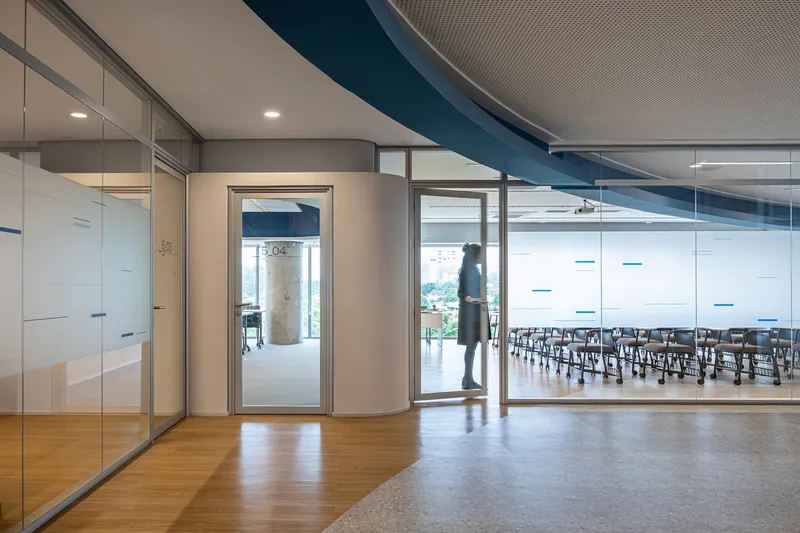
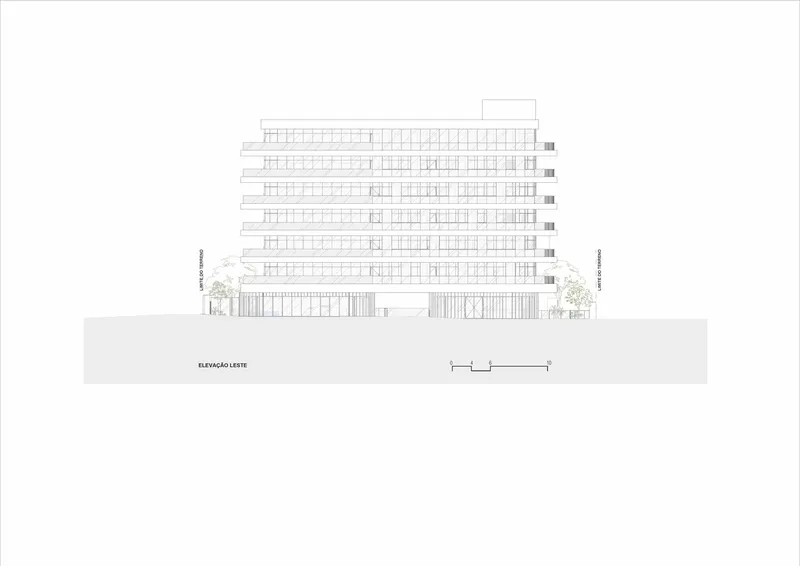
Located in the heart of São Paulo’s Jardim Paulista, the Link School of Business designed by Perkins&Will is a pioneering model in sustainable business school architecture. Completed in 2024, this 9,600-square-meter academic building is not just a space for education, but a living framework for innovation, sustainability, and spatial experience. Overlooking the iconic Ibirapuera Park, the new campus transforms the learning environment into one that fosters well-being, connectivity, and ecological responsibility.

A Vision Rooted in Memory and Growth
The client’s vision was deeply emotional—crafting a new headquarters that would not only accommodate future growth but also reconnect with the school's roots. The new facility is just steps away from the original campus, and this proximity guided the design strategy. Perkins&Will embraced this sentiment, creating a building that honors memory while projecting a bold future for business and technology education in Brazil.

Garden Architecture and Symbiosis with Nature
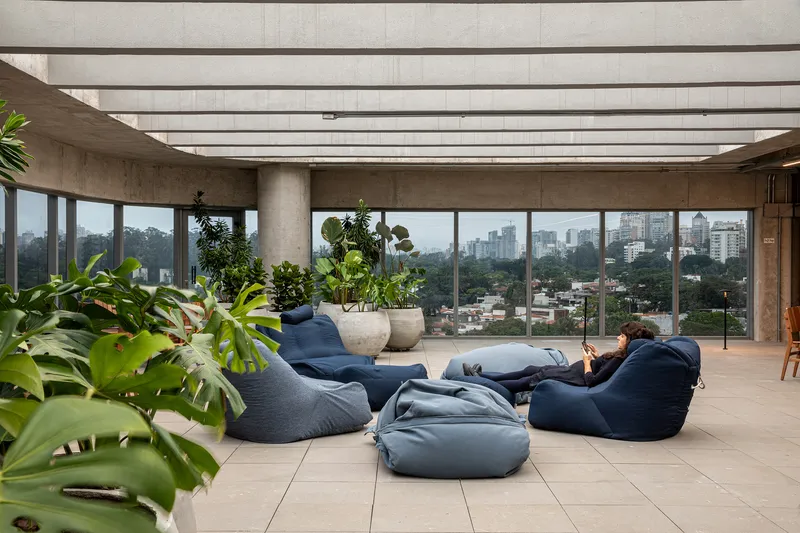
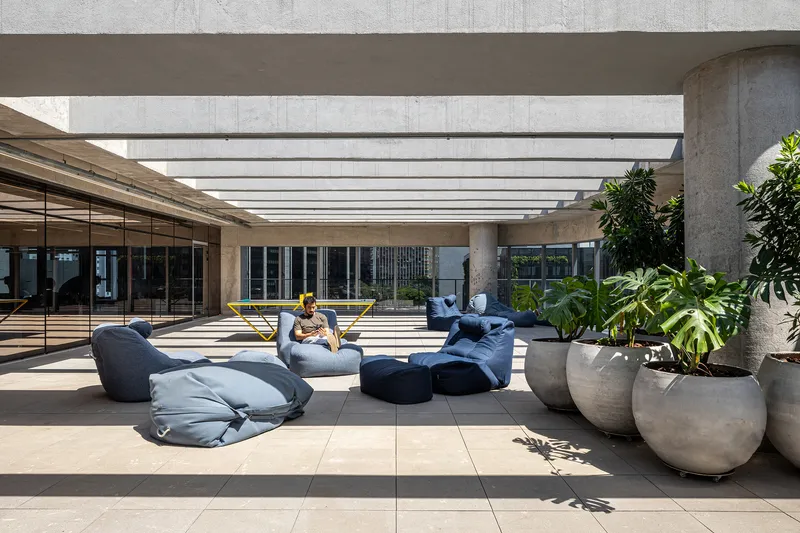
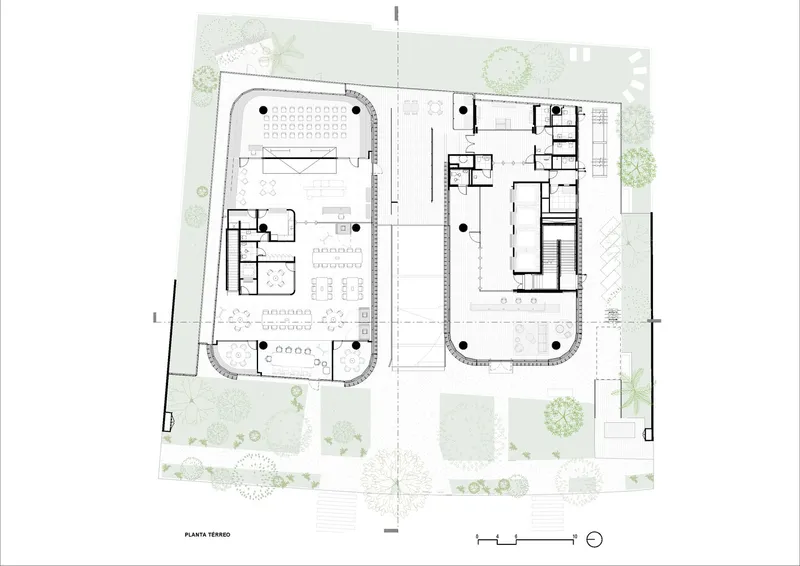
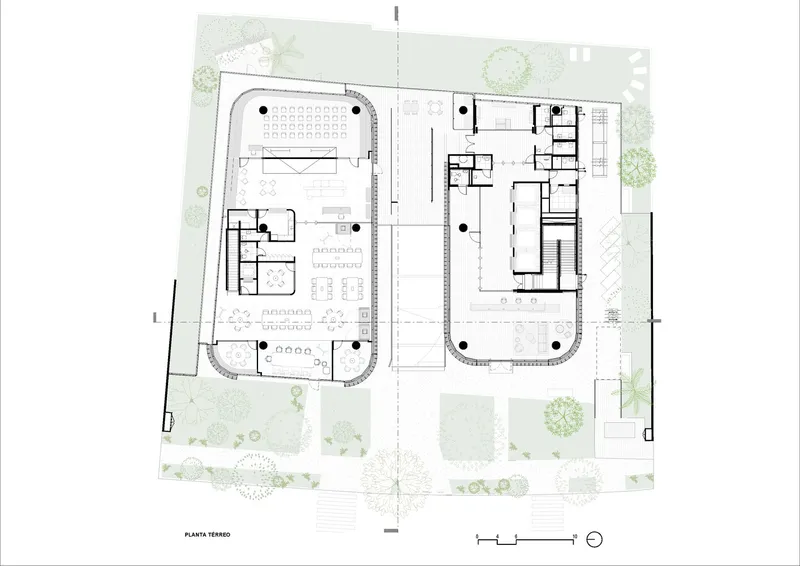
A defining feature of the Link School of Business is its strong connection to nature. The eight-story structure is wrapped in lush vegetation and garden-balconies, enabling a continuous visual and spatial dialogue between the interior spaces and the surrounding environment. These green terraces act as transitional zones, softening the boundary between built form and nature while improving natural ventilation, daylight access, and user comfort.


Functionality with a Sustainable Core
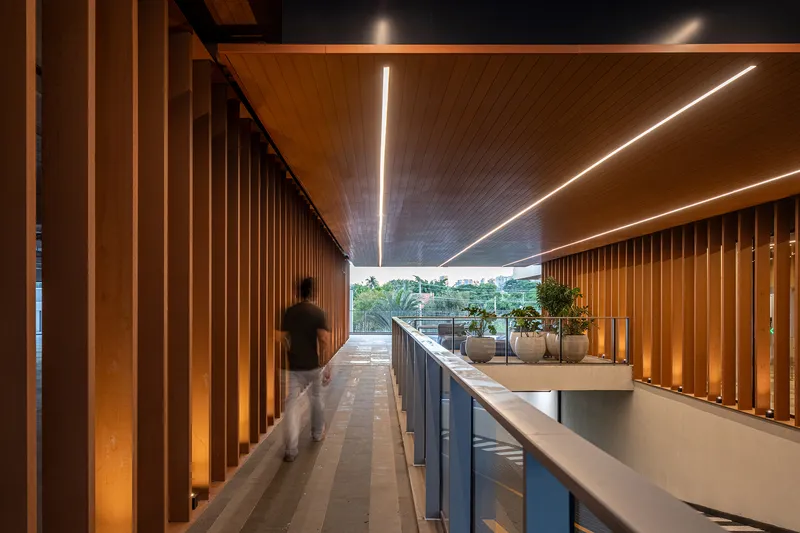
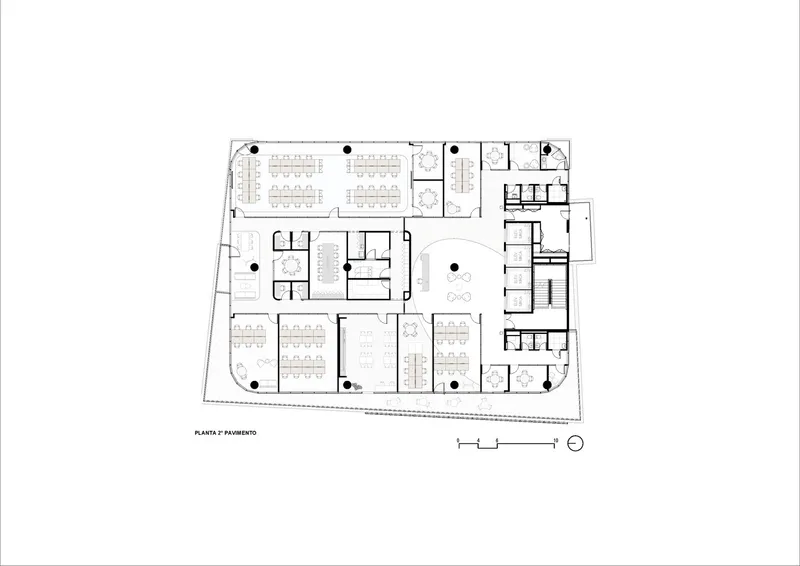
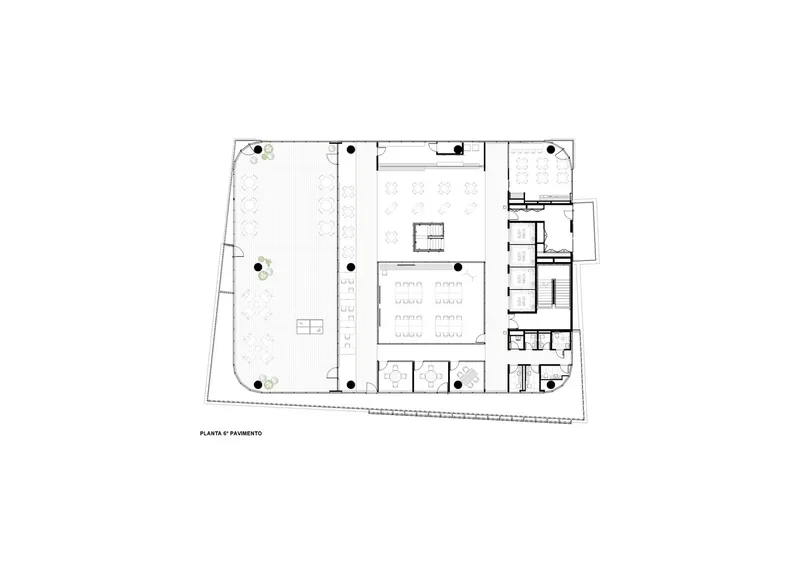
Classrooms, labs, administrative offices, and collaborative spaces are organized along the perimeter of the building to maximize natural light and views. A central vertical axis connects all floors, functioning as more than a circulation path—it invites occupation and interaction. The rooftop is transformed into an open-air terrace and café, adding recreational and social functions to the academic program.
Honest Materials and Light as Architecture
The interiors reflect the school’s pragmatic and innovative ethos. Exposed concrete pillars, expansive glass panels, and acoustic vinyl flooring define an aesthetic of material honesty and performance. The design team emphasized lighting as a spatial tool—scenic and diffuse in public areas, while combining natural and artificial lighting in classrooms for optimal concentration and comfort.

Adaptive Design and Execution
The project's complexity was compounded by a tight construction timeline, with design and execution occurring in parallel. This required meticulous coordination and a structured design approach to ensure timely delivery of critical educational spaces before the academic year began. The Perkins&Will team responded with clarity and adaptability, delivering a high-performing space within demanding parameters.

Sustainability Recognized and Certified
Sustainability is not merely a feature but a foundational principle of the project. The building is certified with both EDGE Post-Construction and LEED Gold, recognizing its excellence in resource efficiency, environmental stewardship, and healthy indoor conditions. These certifications affirm the school's leadership in environmental, social, and governance standards, positioning it as a model for educational facilities worldwide.

Redefining the Future of Educational Architecture
The Link School of Business is a compelling case study in sustainable business school architecture, seamlessly integrating design innovation, natural systems, and educational functionality. Through its sensitive material palette, lush integration with nature, and ambitious sustainability goals, Perkins&Will has delivered a transformative learning environment that reflects the values of a new generation of business leaders.

All Photographs are works of Pedro Mascaro




Popular Articles
Popular articles from the community


The Ocean Hive: Sustainable Architecture for a Self-Sufficient Civilization at Sea
The Ocean Hive imagines sustainable architecture at sea, where modular habitats, algae, wave power and ocean waste sustain a growing colony.
AL-JANNAH: Sustainable Architecture and Permaculture for Afghan Widows
AL-JANNAH uses sustainable architecture and permaculture to create resilient oasis of housing, learning, work and renewal for Afghan widows.

Hill & Cross Opera: Sculptural Opera House Architecture Shaped by Tallinn’s Landscape and Identity
Hill & Cross Opera reimagines opera house architecture in Tallinn through its sculptural hill, civic plaza, glass wave and a luminous cross.

Riyadh For All: Intergenerational Urban Design for Active Aging in Rabat
Riyadh For All reimagines urban design in Rabat with intergenerational co-living, adaptive courtyards, and Moroccan cultural exchange today.


Similar Reads
You might also enjoy these articles

FAMM Arquitectura Organizes Ten Villas Around Courtyards and Jungle in Nosara, Costa Rica
El Molino pairs two elongated volumes with deep overhangs and timber louvers to build a compact coastal community five minutes from the beach.
Oscar Niemeyer's Ibirapuera Park Pavilions Define São Paulo's Cultural Identity in Concrete and Curve
A constellation of modernist volumes set within São Paulo's most important urban park, conceived for the city's 400th anniversary in 1954.
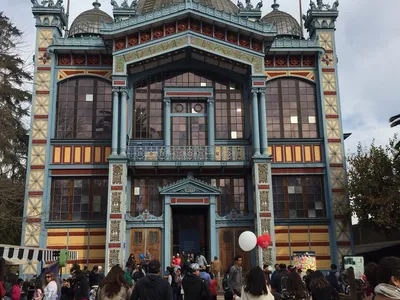
How Henri Picq's 1889 Paris Pavilion Traveled 11,000 Kilometers to Become Santiago's Artequín Museum
A prefabricated iron and glass pavilion built for the Paris Universal Exposition found a second life as a children's art museum in Chile.
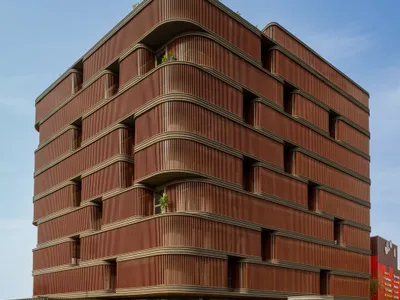
Sanjay Puri Architects Wraps a Jaipur Office Tower in Capsule-Shaped Green Buffers
A nine-level climate-responsive workplace near Jaipur Airport uses stacked planter terraces and aluminium screens to fight 40°C heat.


Explore Educational Building Competitions
Discover active competitions in this discipline



Challenge to design public laboratory


Challenge to reimagine the Iron Throne


Photograph architecture without architects


Illustrate the lost glory of Angkor Wat - Render Challenge
Comments (0)
Please login or sign up to add comments
No comments yet. Be the first to comment!