
Destudio Strips a Valencia Penthouse Back to Its Curve and Lets the City Pour In
Ático Curvo reimagines a 225-square-meter penthouse above the old Turia riverbed with double-height ceilings, a sculptural iron staircase, and terraces tha


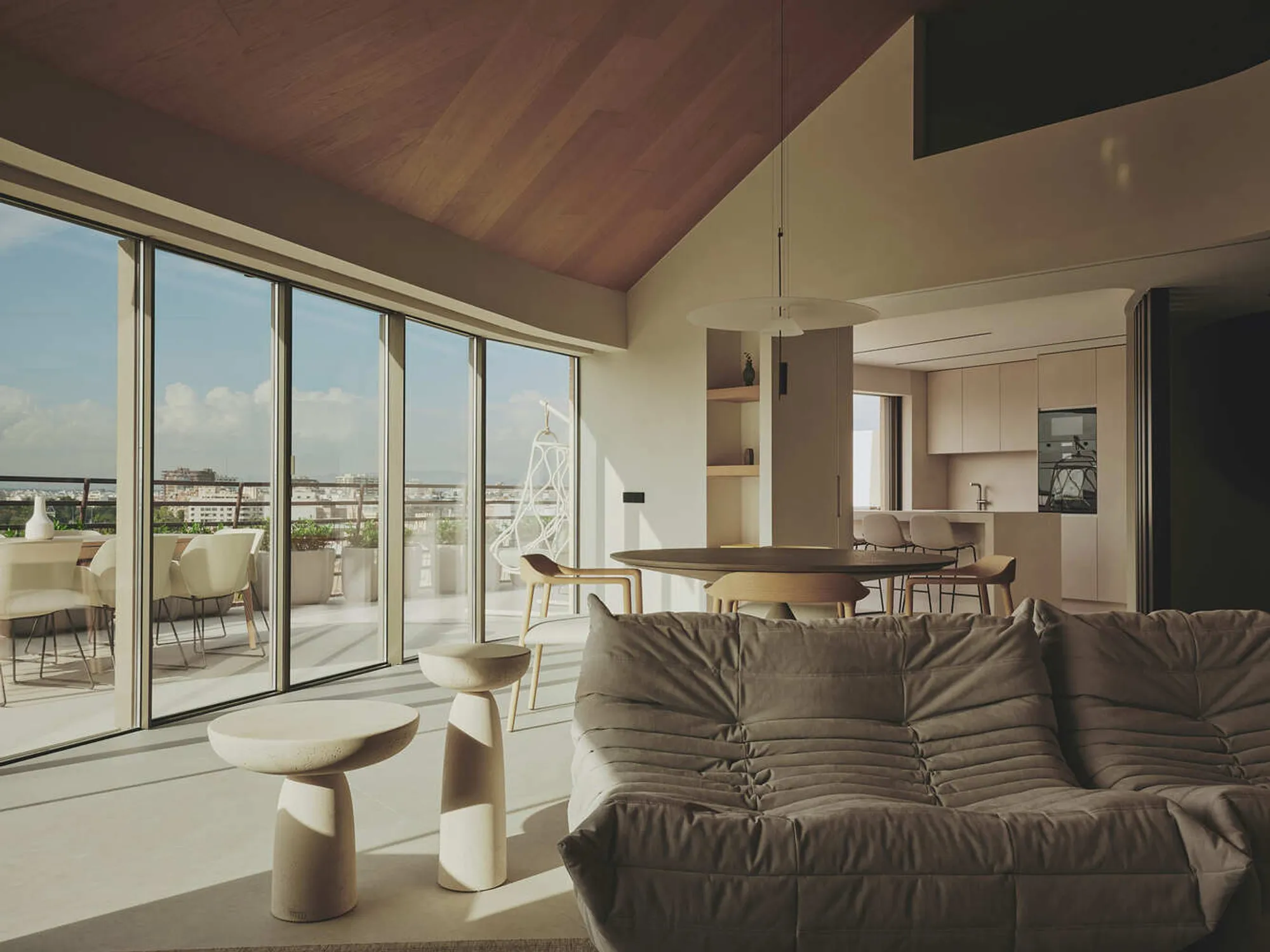
Most penthouse renovations are exercises in addition: more marble, more fixtures, more surfaces competing for attention. Destudio took the opposite path with Ático Curvo, a 225-square-meter duplex perched above the old Turia riverbed in central Valencia. The studio's first move was demolition, not decoration. An overbuilt mezzanine that had compressed the main living volume was torn out entirely, revealing the full sweep of the building's sloping roofline and letting the curved glass facade breathe for the first time. What remains is a penthouse that reads less like a luxury apartment and more like a landscape observation platform dressed in timber, mortar, and cast iron.
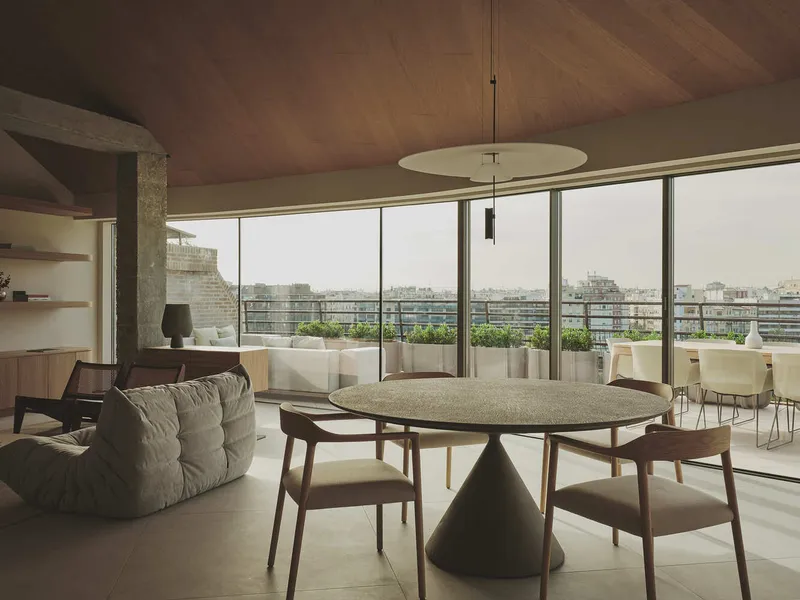
The building itself has a circular envelope, a plan geometry that most interiors fight against with right-angled furniture and straight partition walls. Destudio chose instead to amplify the curve, stripping unnecessary partitions and lining the perimeter with bespoke storage that never blocks the panoramic glazing. The result is a home where the cityscape is not a backdrop but a co-author of every room's atmosphere, from the kitchen island to the sunken rooftop bath.
Double Height, Single Gesture
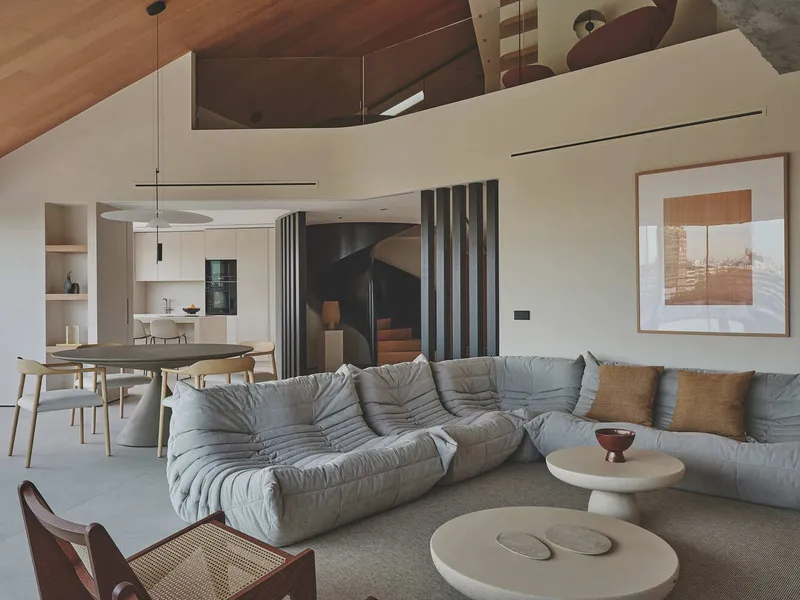
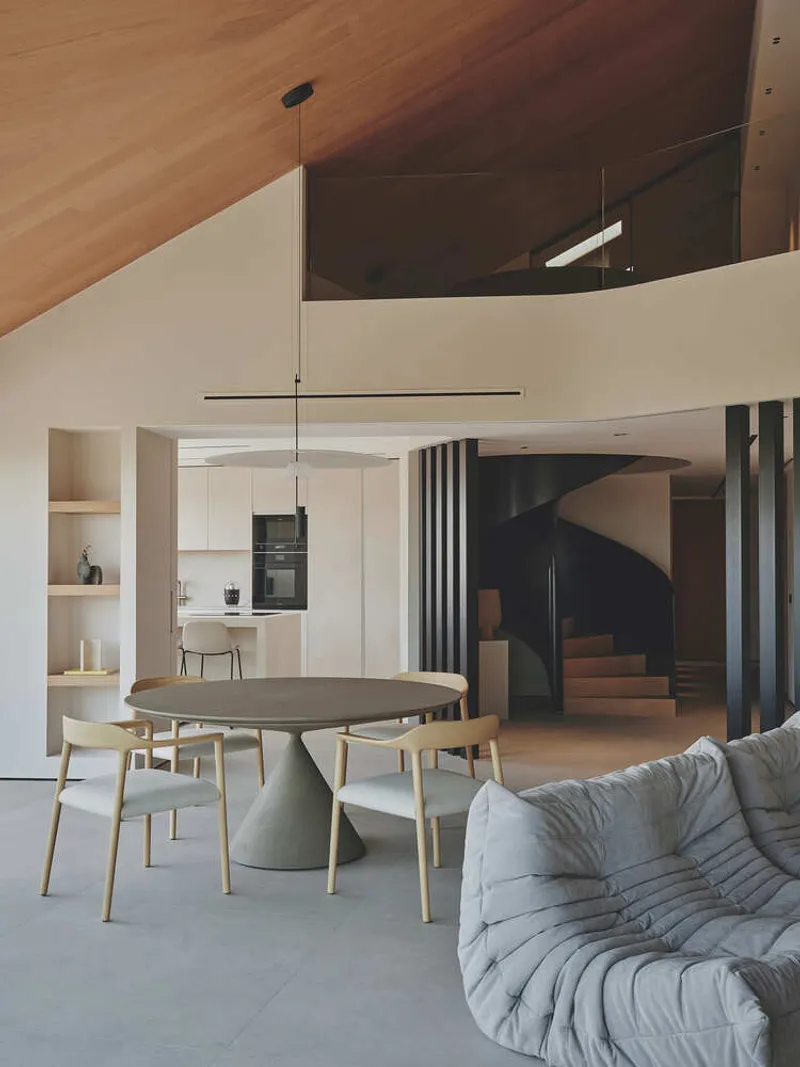
Removing the mezzanine was the renovation's most consequential decision. The freed volume turns what was a standard living and dining zone into a near-civic scaled room, its double-height ceiling lined in natural wood that follows the roof's slope all the way to the glazing line. A vertical timber slat partition marks the boundary between the dining area and the spiral staircase without closing either space off, filtering light and glimpses between them.
The effect is immediate when you enter: the eye is pulled upward by the timber ceiling, outward by the full-height glass, and down again by the low, deliberately horizontal furniture. It is a room that insists you look at Valencia before you look at anything else.
The Iron Spine
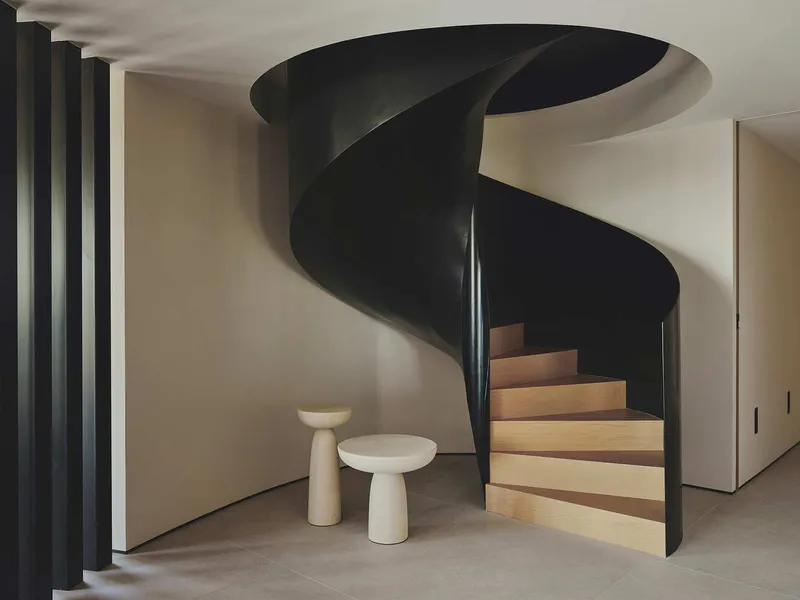
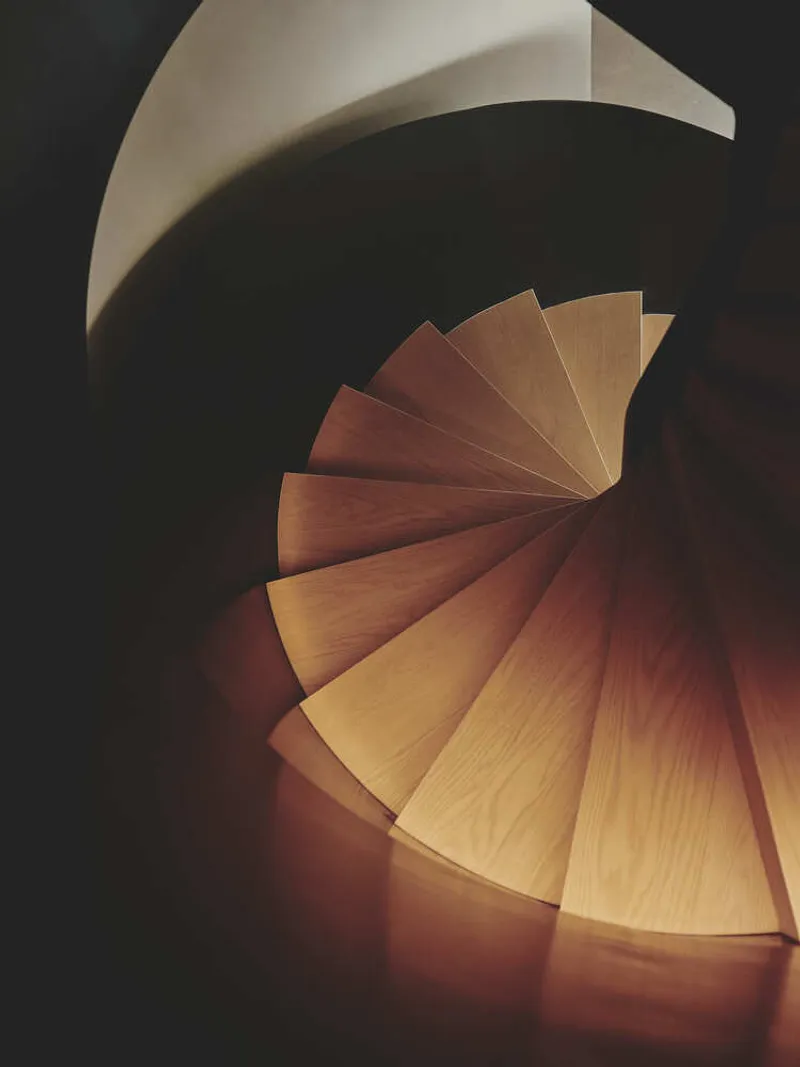
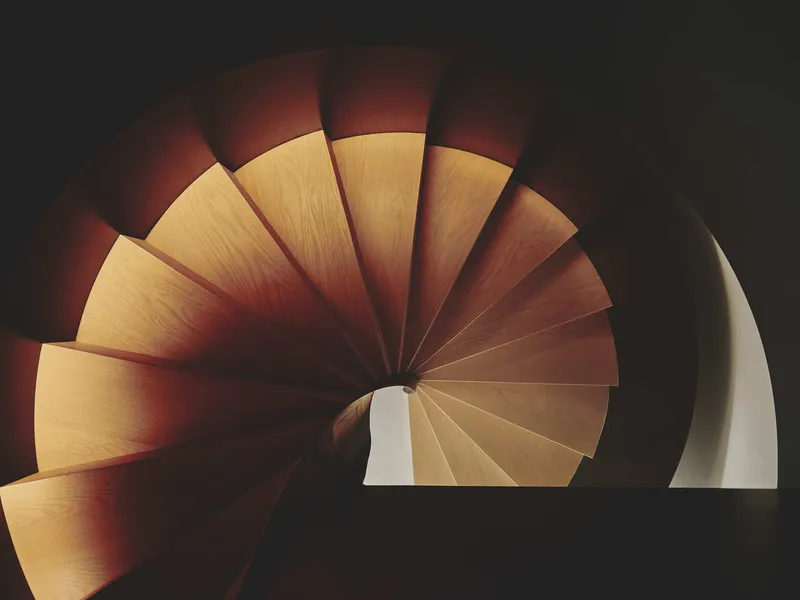
Connecting the main floor entrance hall to the upper level study, reading room, and guest bedroom, a spiral staircase in black cast iron serves as both circulation and sculpture. Large curved iron panels form the stair's enclosure, their dark mass contrasting sharply with the pale mortar walls and light porcelain floors around them. Natural wood treads soften the ascent, each one radiating from a central core like the spokes of a wheel.
Seen from above, the staircase reveals its geometry most clearly: timber treads glow under overhead light, fanning outward in a tight spiral that echoes the building's own circular plan. It is the one element in the penthouse that openly competes with the view, and it earns the right to do so through material discipline rather than ornamental excess.
Living Along the Facade
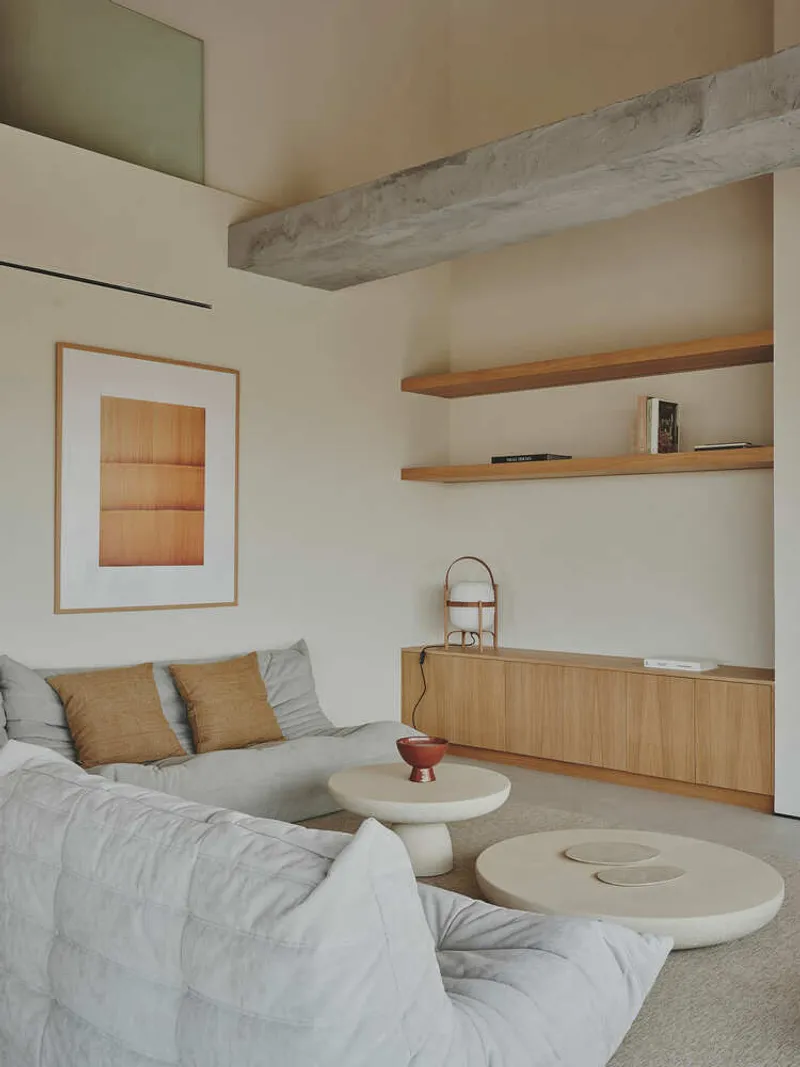
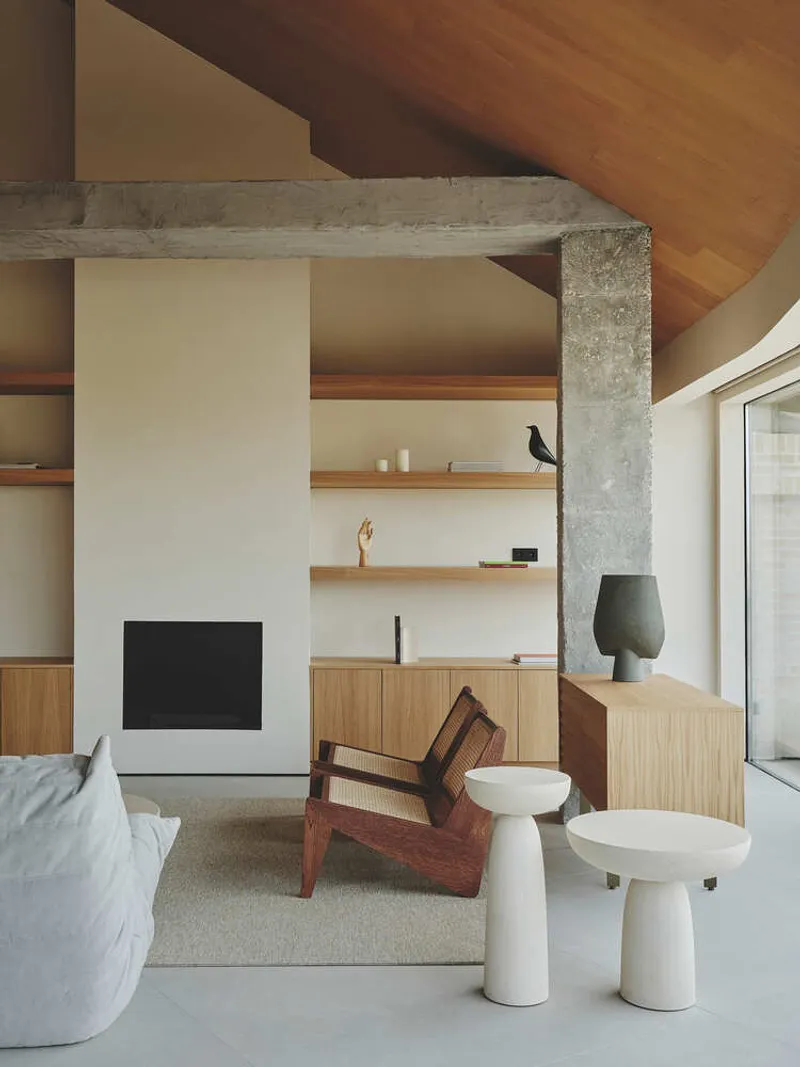
Kitchen, living room, and master bedroom are all arranged along the curved glass facade, a layout strategy that ensures every primary space benefits from the panoramic condition. Exposed concrete beams span the living room, left raw to anchor the warm timber ceiling and provide a structural rhythm that grounds the open plan. Shelving is tucked beneath the beams, its timber finish matching the ceiling and keeping the vertical surfaces quiet.
Walls finished in soft-toned clay mortar act as a neutral continuum, curving gently with the building's envelope. The palette across the entire main level stays within a narrow band of whites, warm grays, and natural oak, a restraint that prevents the interiors from competing with the constantly shifting light coming off the old riverbed gardens below.
The Kitchen as Threshold
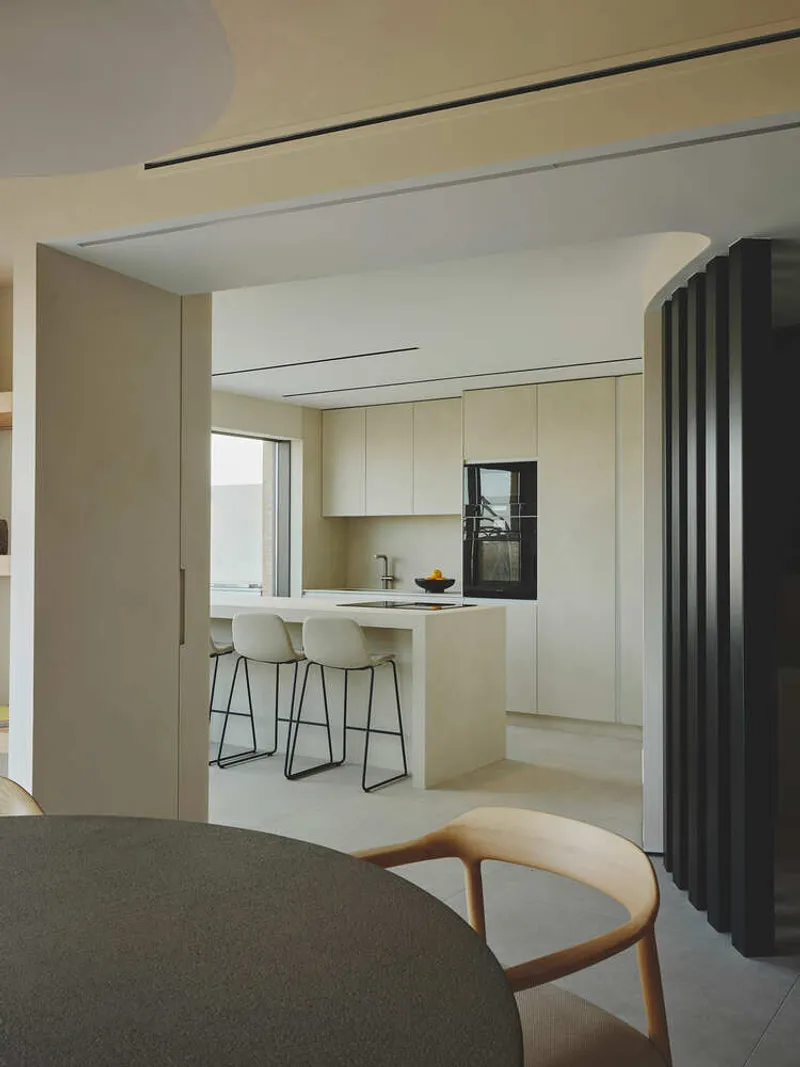
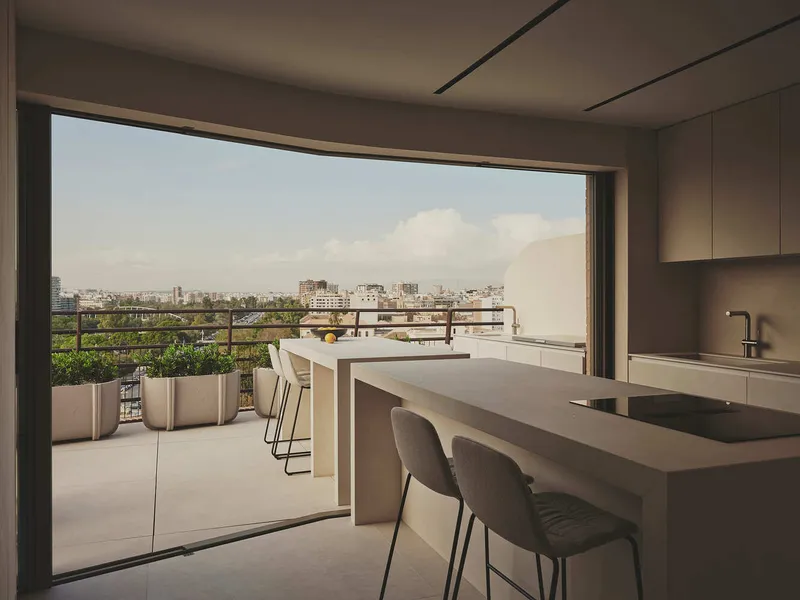
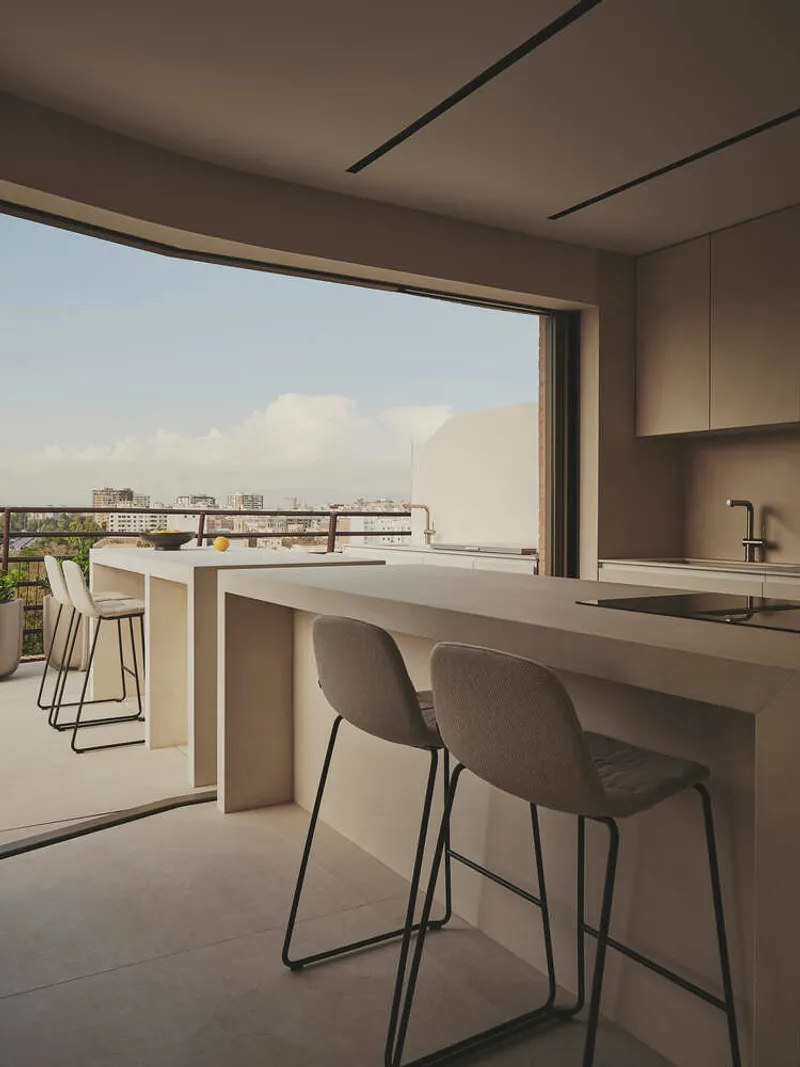
In many open-plan apartments the kitchen is an island surrounded by living space. Here it is a hinge between inside and outside. The pale wood island faces a wide opening onto the planted terrace, and a concealed window connects the indoor kitchen directly to an exterior cooking station. At dusk, the counter and its bar stools frame the low-rise city skyline like a letterbox view, collapsing the distinction between preparing dinner and watching the sun set.
The material choice reinforces the threshold idea: the same light porcelain tile runs continuously from the interior floor to the terrace edge, and the cabinetry's oakwood tone reappears in the outdoor planters, making the glass wall feel like a weather barrier rather than a spatial boundary.
Terrace as Mirror Program
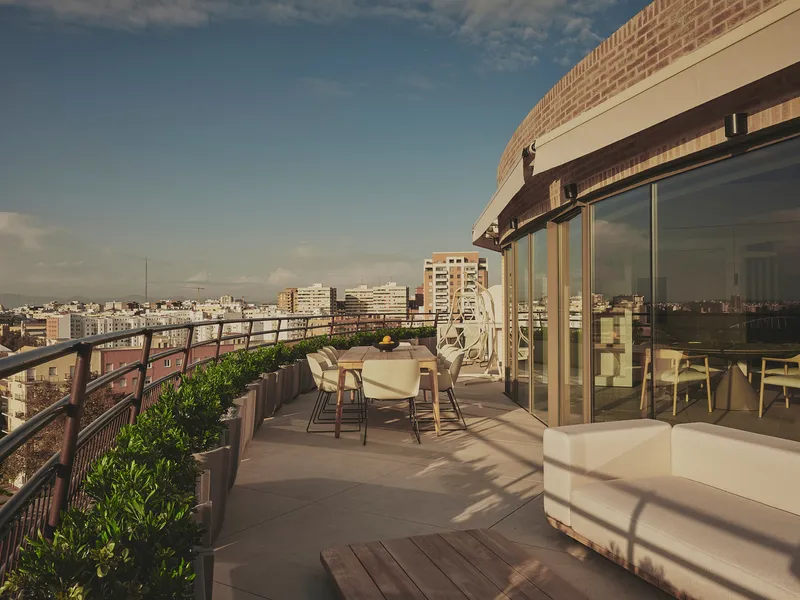
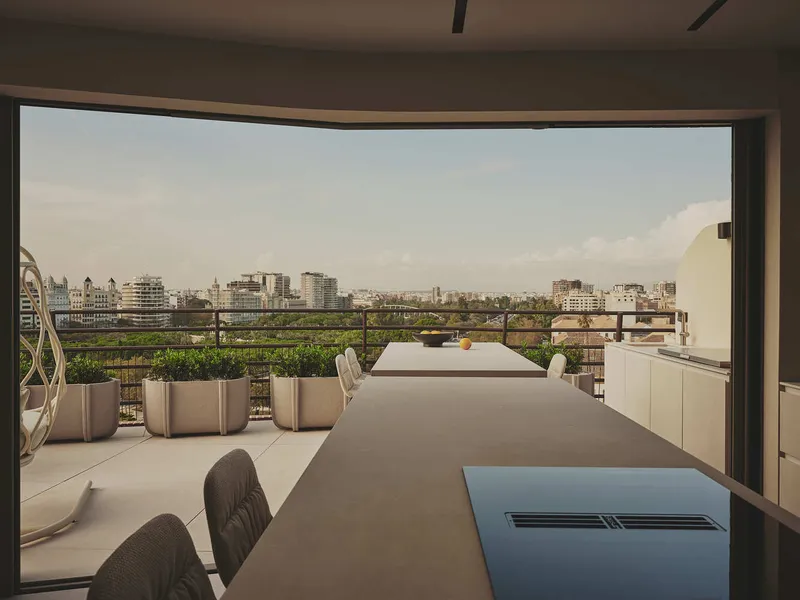
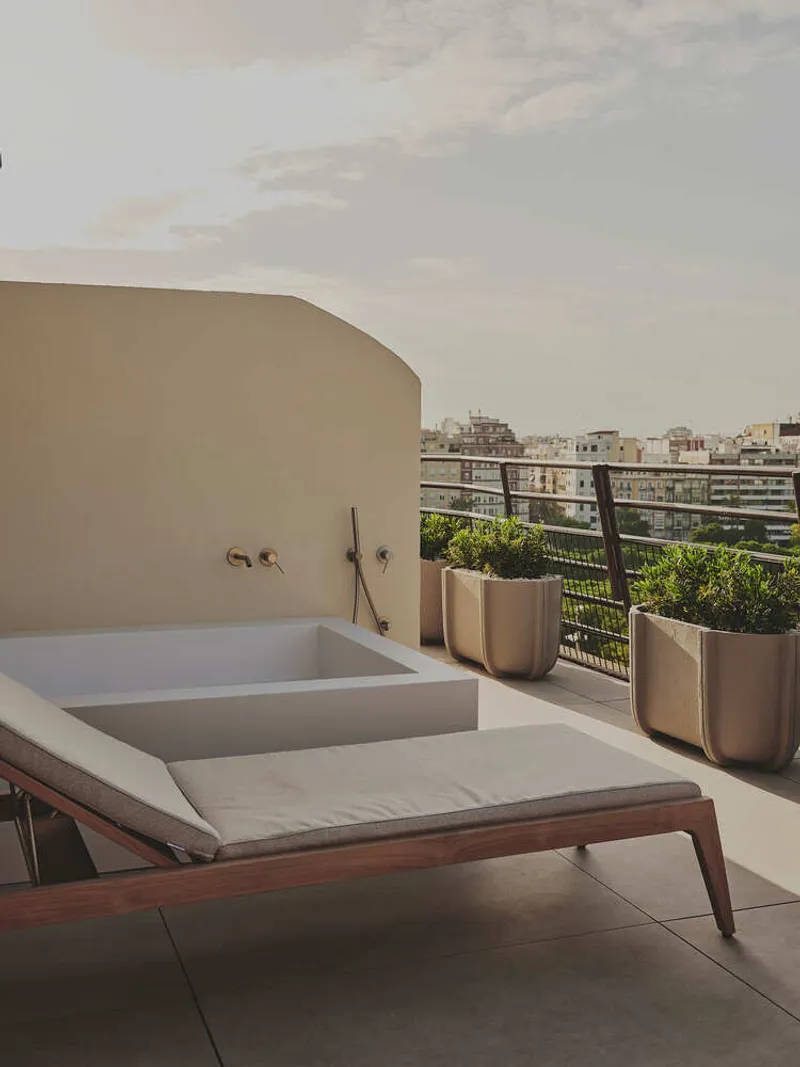
The most ambitious idea in Ático Curvo is not inside the penthouse at all. Destudio conceived the rooftop terrace as a full duplication of the interior program: outdoor dining mirrors the kitchen and living area, a solarium extends the bedroom's rest function, and a sunken tub set against a curved stucco wall reimagines the master bath under open sky. Metal planters and a curved brick parapet define the terrace's edges without blocking the 360-degree views over Valencia.
At sunset, when the Turia gardens and the city skyline shift to warm tones, the terrace becomes the penthouse's most compelling room. Its success lies in Destudio's refusal to treat it as leftover outdoor space. Every zone is purposeful, furnished, and oriented toward a specific slice of the panorama.
Private Rooms and Quiet Details
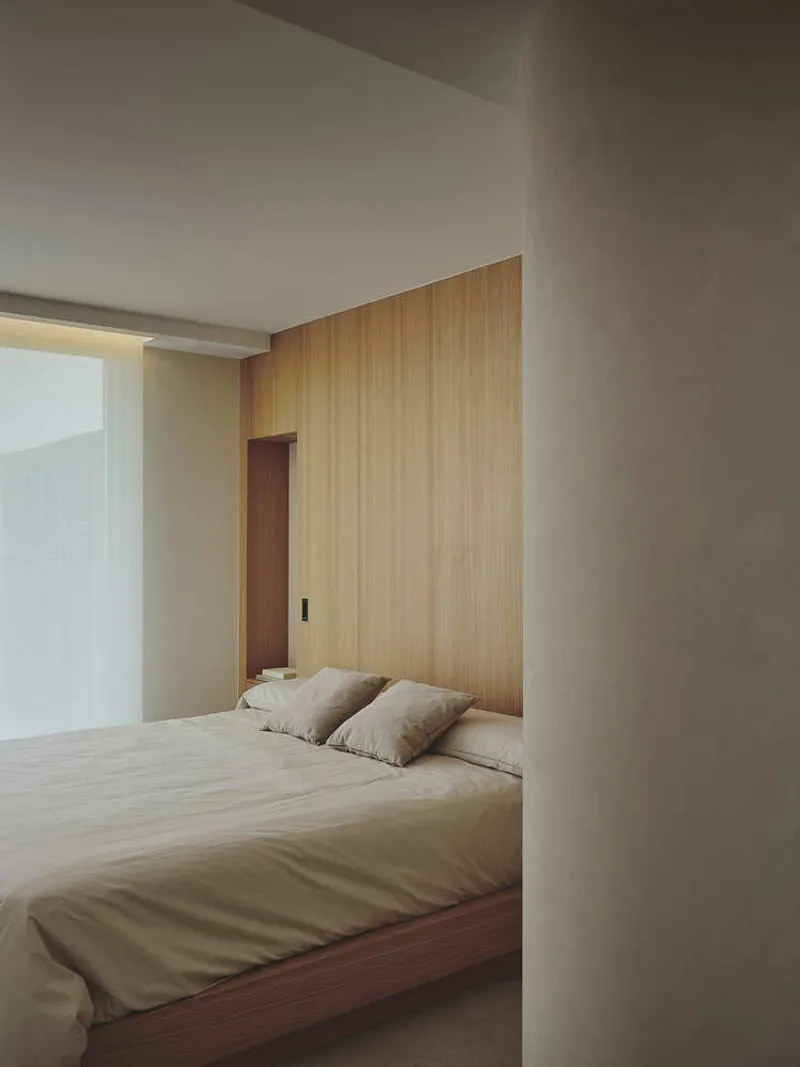
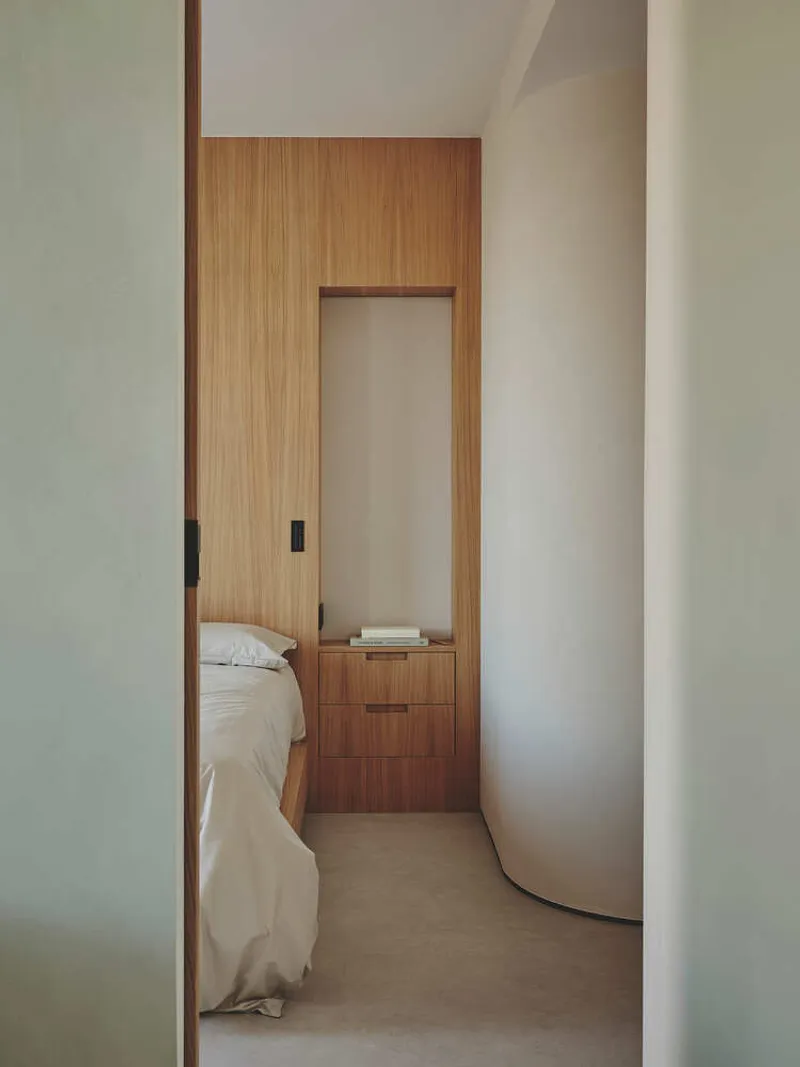
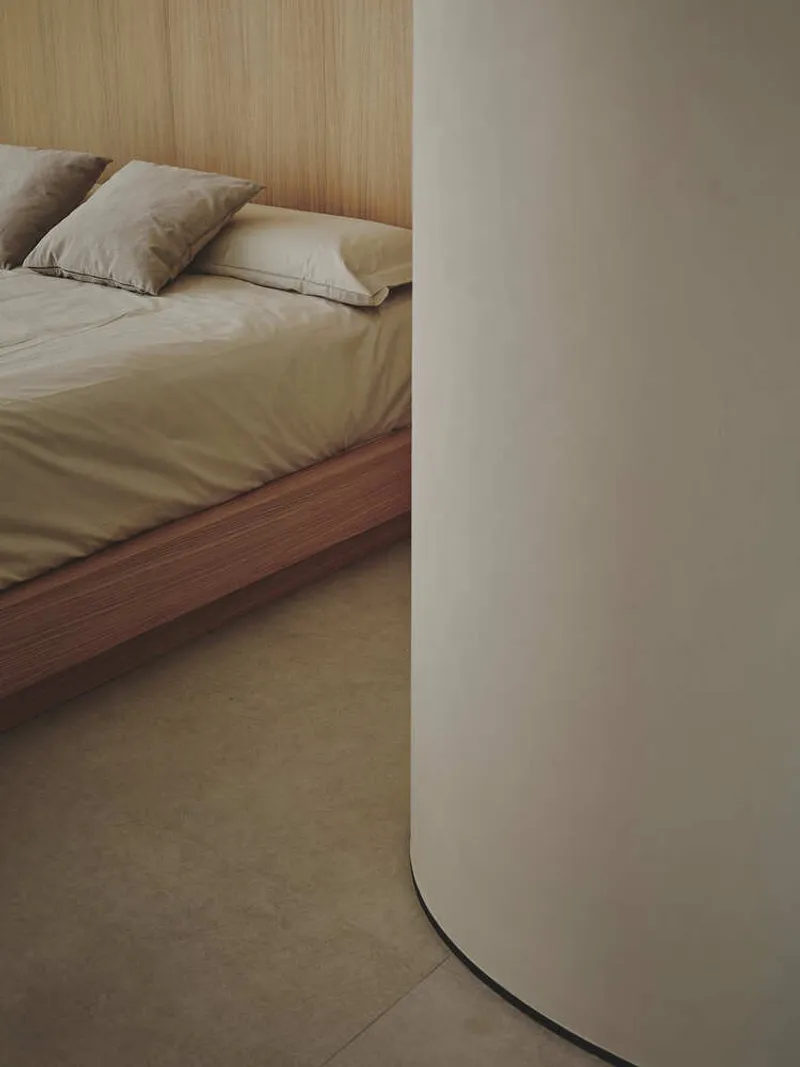
All four bedrooms sit on the lower level, shielded from the social spaces above. Timber-clad headboard walls, platform beds, and curved white partitions at each threshold give the sleeping areas a softer, more enclosed character than the expansive living zones. Sliding timber doors and built-in storage niches keep the hallway tight and uncluttered, compressing the circulation path so the bedrooms themselves feel generous by contrast.
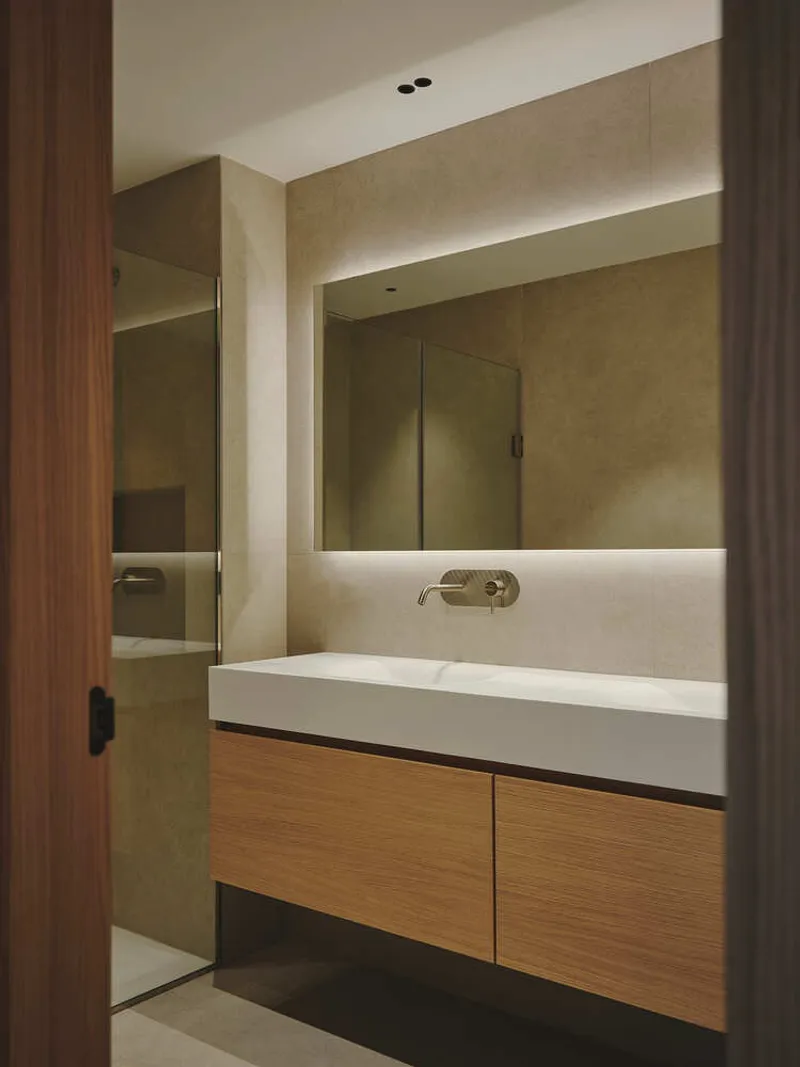
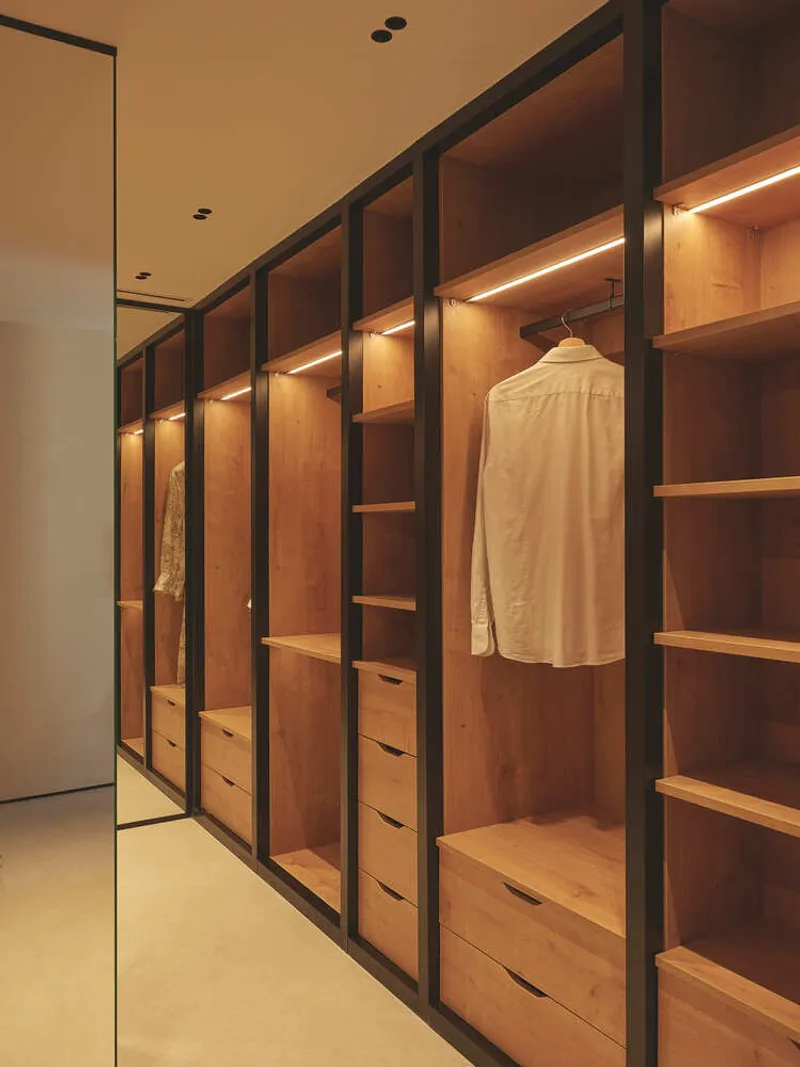
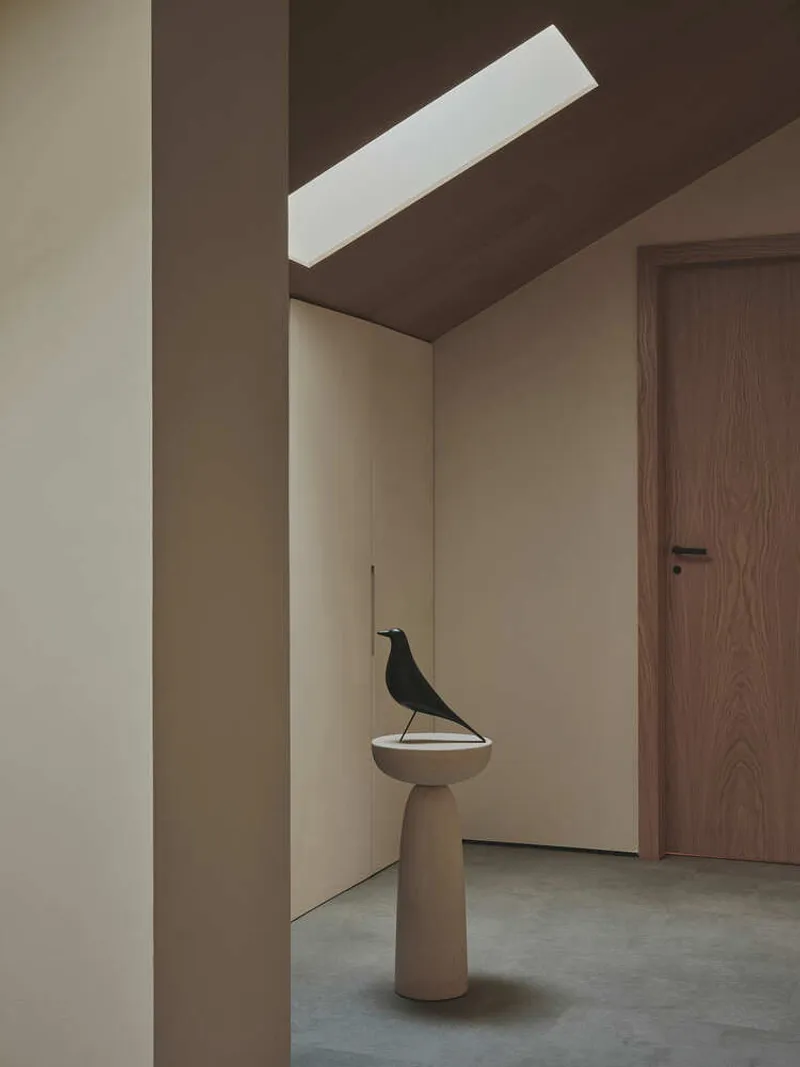
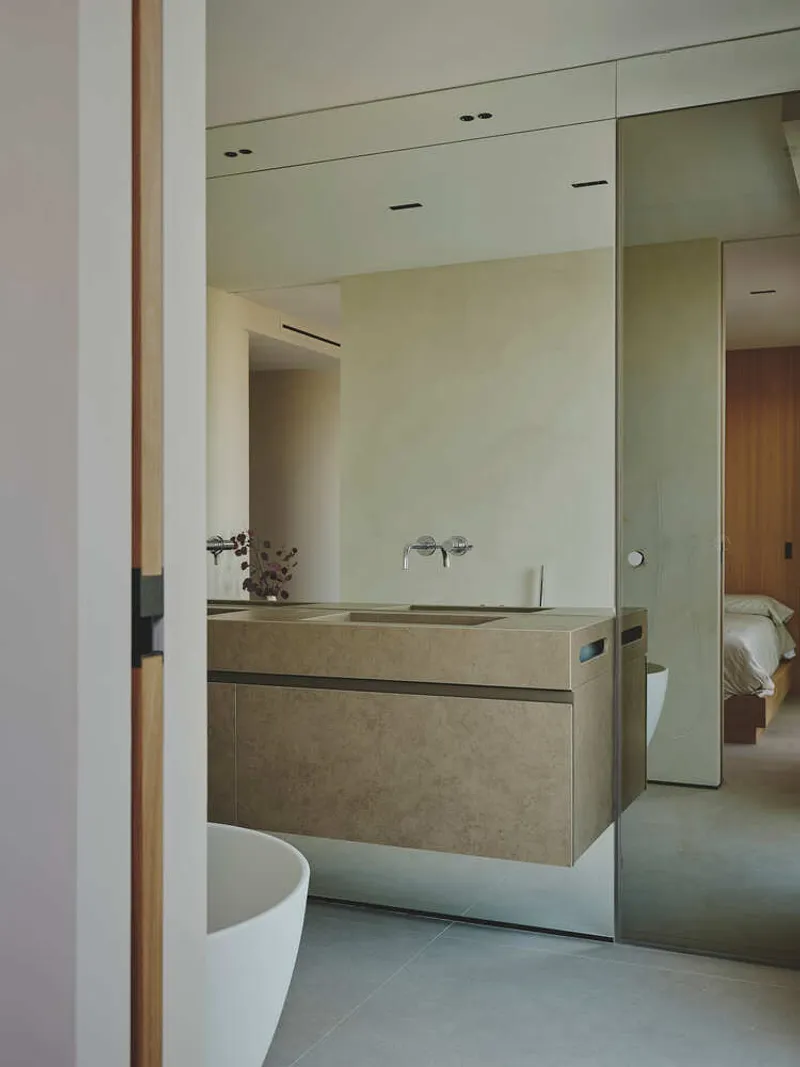
Bathrooms use stone-effect floating vanities and backlit mirrors under cove lighting, maintaining the palette discipline established in the public rooms. The walk-in closet, with its black-framed oak shelving and LED strip lighting, is one of the few moments where the iron-and-timber duality of the staircase reappears at a domestic scale. Even the entry hall signals the project's ambitions: a sculptural pedestal sits beneath a linear skylight, turning the act of arriving home into a curated moment.
Upper Level: Study and Retreat
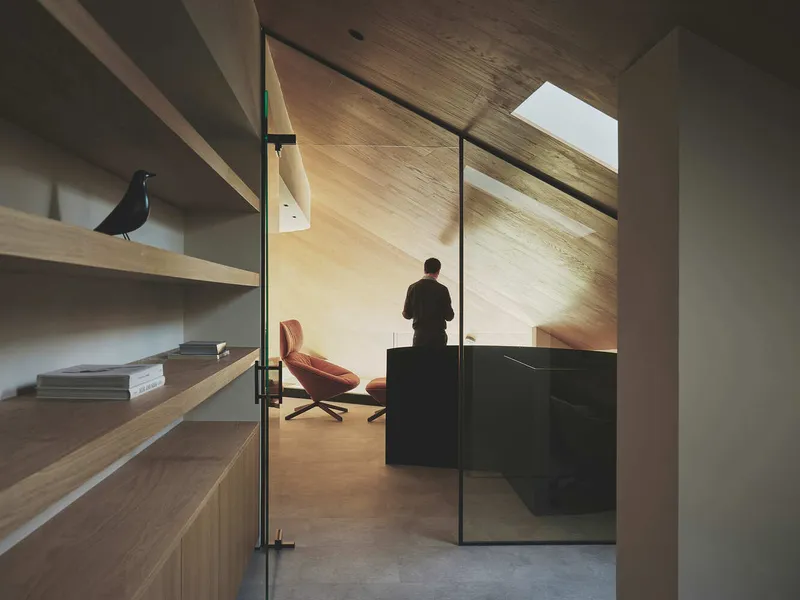
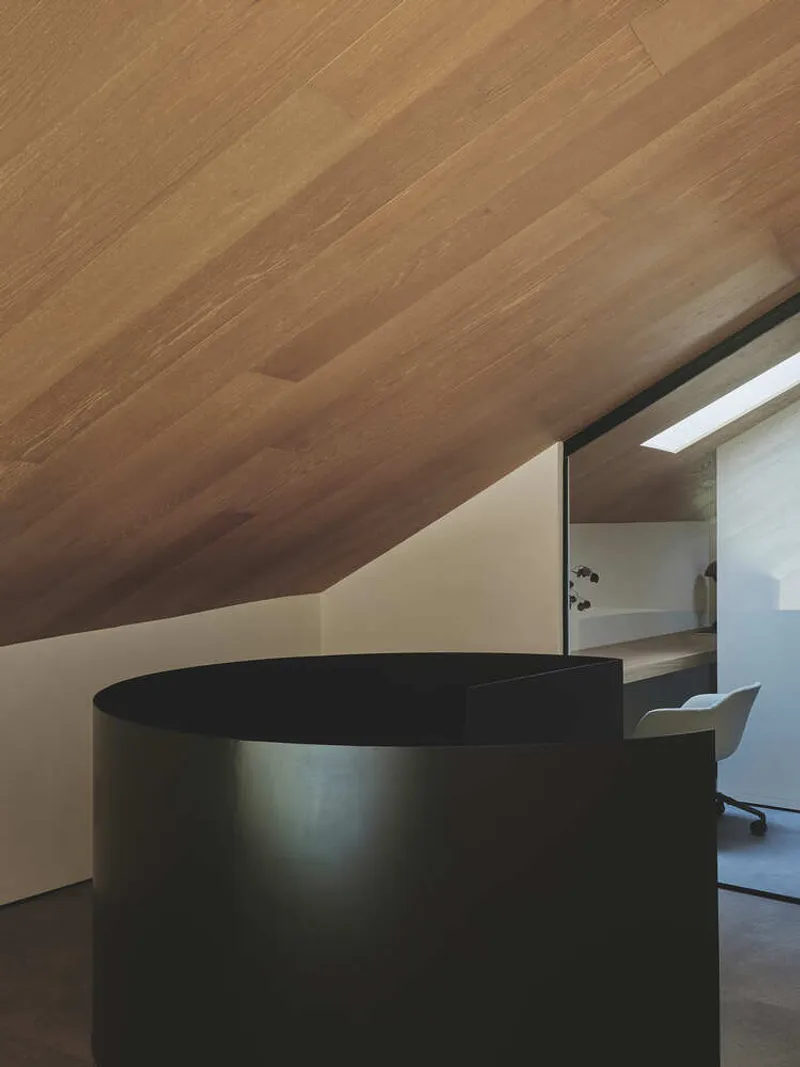
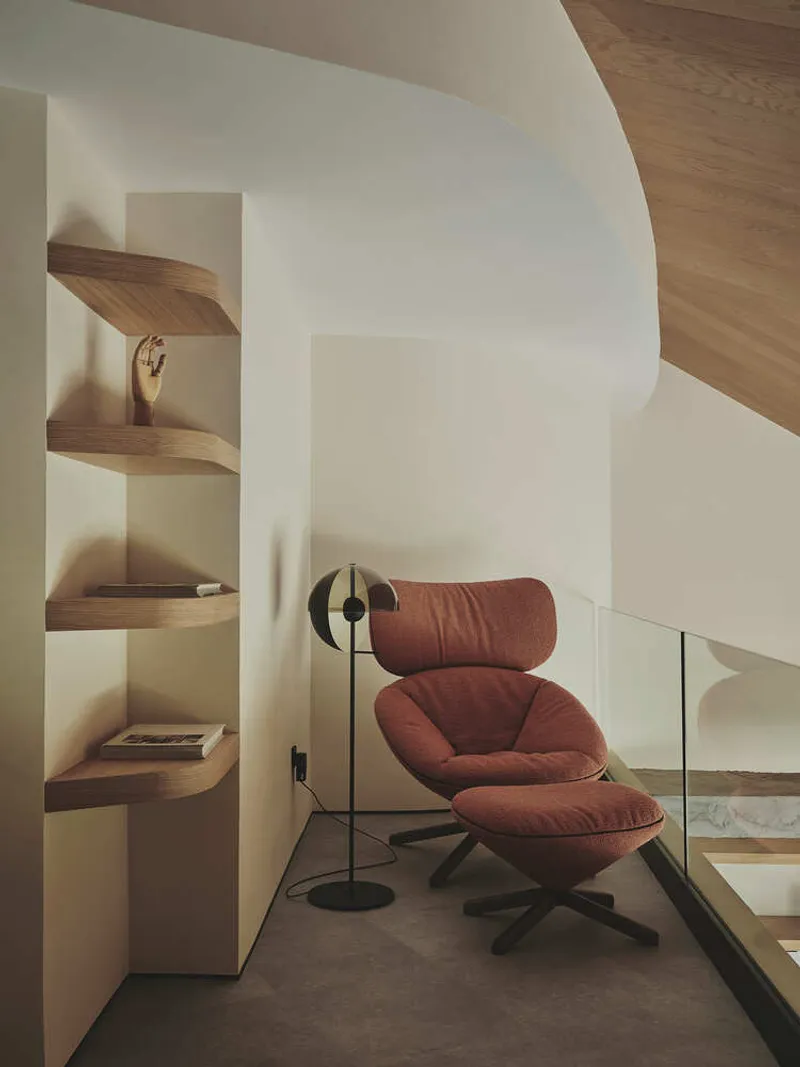
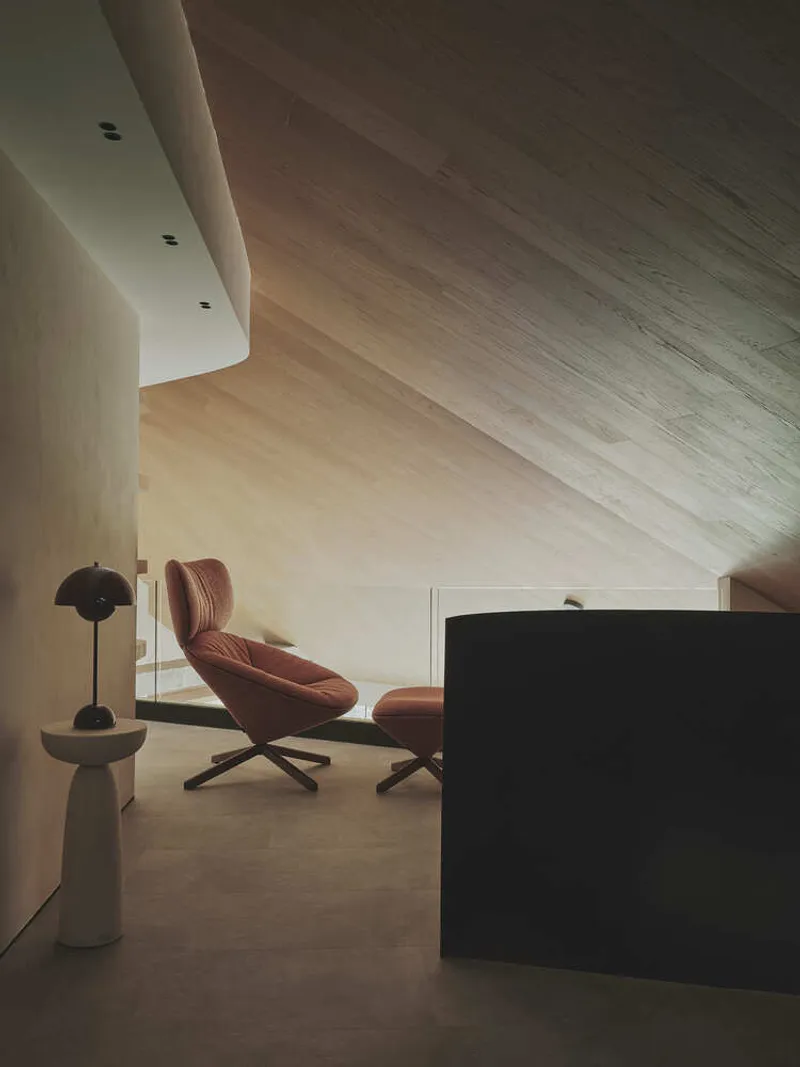
The upper floor, reached via the spiral staircase, houses a study, a reading room, and a guest bedroom tucked beneath the sloping timber ceiling. A glass partition separates the workspace from the stair landing, letting borrowed light penetrate deep into the plan while maintaining acoustic privacy. The curved black reception desk picks up the iron palette of the staircase, grounding the room against the warm wood overhead.
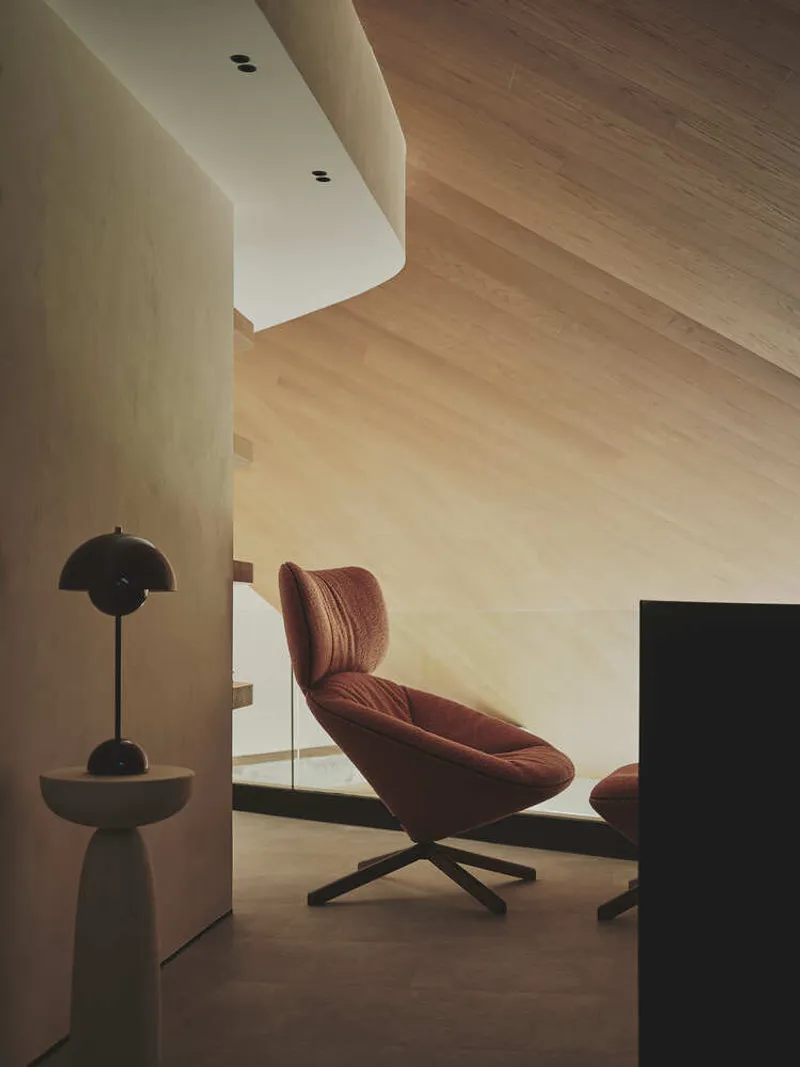
In the reading nook, a rust-colored lounge chair sits against a curved white wall lined with timber corner shelves. It is a deliberately small, low-ceilinged space, the polar opposite of the double-height living room below. The contrast is intentional: Destudio uses compression and release throughout the penthouse to give each room a distinct emotional register, even within a stripped-back material vocabulary.
Material Logic
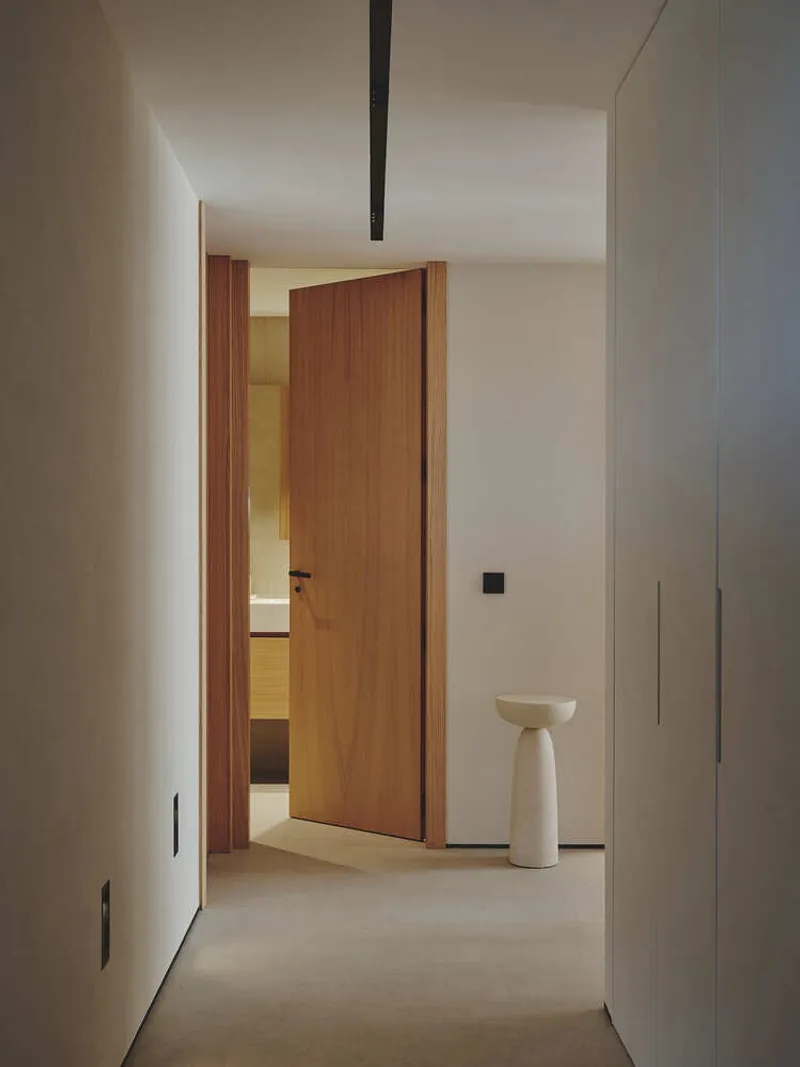
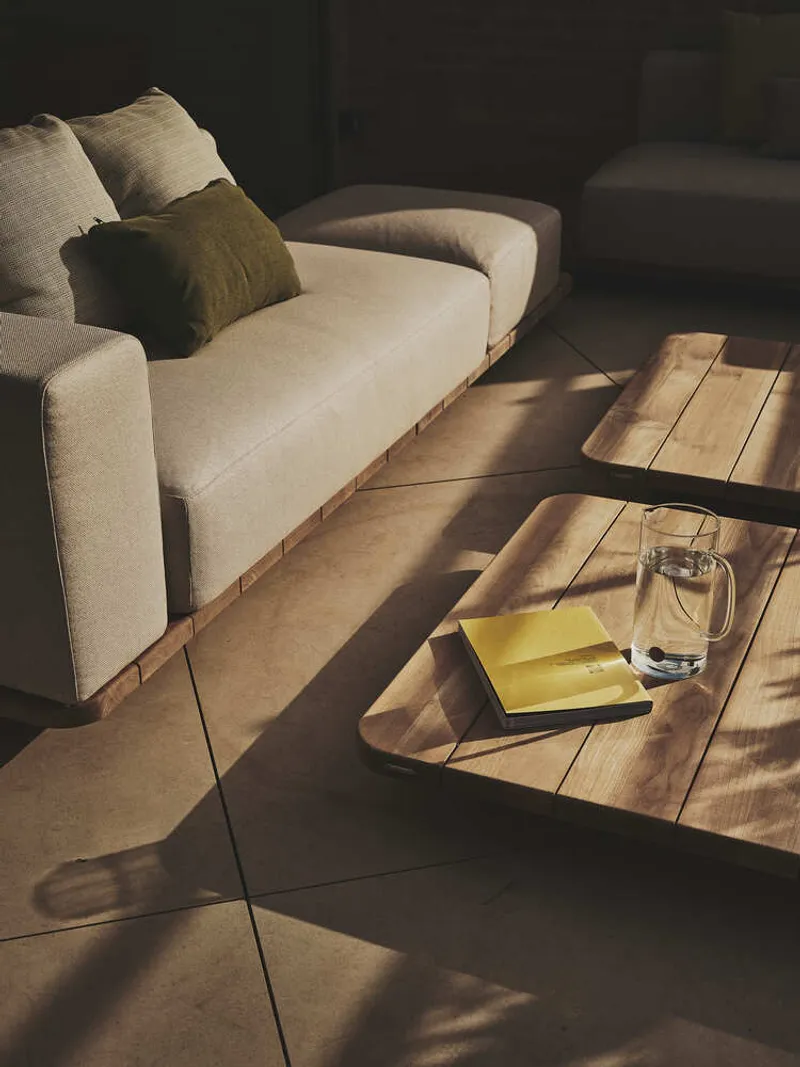
Ático Curvo operates with a tight kit of parts: light porcelain tiles on floors, clay mortar on walls, natural wood on ceilings and joinery, and black cast iron for the staircase. Locally sourced where possible, these materials share a tonal warmth that unifies every room without making them feel identical. The porcelain reflects sharp afternoon shadows, the mortar absorbs them, and the timber mediates between the two, a simple system that generates variety through surface behavior rather than color change.
Curved white columns and rounded wall returns appear wherever the building's envelope geometry meets a partition, softening junctions that would otherwise require awkward trim details. It is a small move repeated consistently, and it does more to express the penthouse's circular identity than any decorative gesture could.
Plans and Drawings
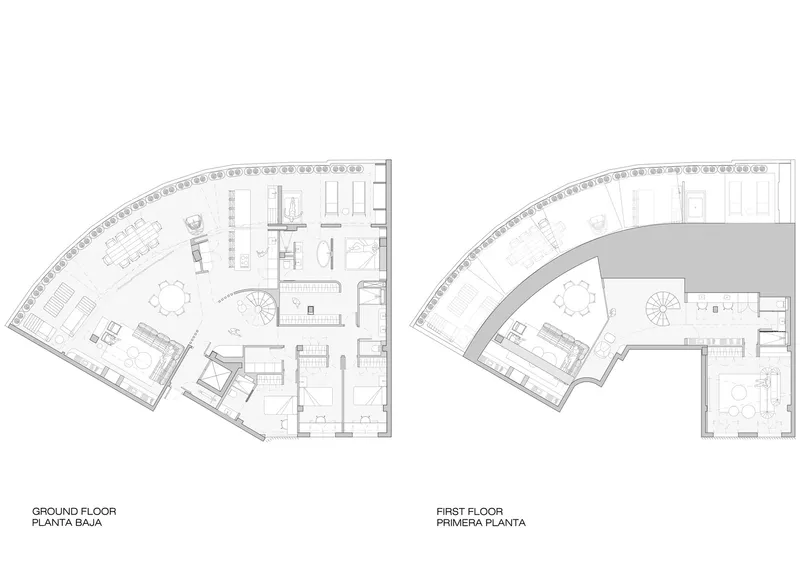
The floor plans confirm the wedge-shaped footprint and the centripetal logic of the layout. The spiral stair sits near the plan's narrowest point, acting as a pivot between the social rooms along the wide facade and the private bedrooms inboard. On the upper level, the tapering geometry pushes the guest bedroom and reading room into progressively more intimate proportions, a natural gradient from public to private that the building's unusual shape makes possible without any corridor gymnastics.
Why This Project Matters
Luxury renovation at the penthouse scale often defaults to spectacle: imported stone, bespoke metalwork, technology concealed behind every surface. Ático Curvo offers a counter-argument. By demolishing the mezzanine and stripping partitions, Destudio made the building's existing geometry the protagonist. The curved glass envelope, the sloping roofline, the panoramic relationship with the Turia gardens: these were always present but had been subdivided into obscurity. The renovation's value lies in what it removed, not what it added.
The terrace strategy pushes the idea further. Duplicating the interior program outdoors is a commitment to living with the climate rather than behind glass, and it doubles the penthouse's functional area without adding a single square meter of enclosed space. For architects working on rooftop conversions in Mediterranean cities, the lesson is clear: the most potent luxury is not a rare material but an unobstructed relationship with the sky and the city below it.
Ático Curvo by Destudio, Valencia, Spain. 225 m². Photography by David Zarzoso.
About the Studio
Share Your Own Work on uni.xyz
If projects like this are the kind of work you want to make, uni.xyz is a place to publish your own, find collaborators, and enter design competitions.



Popular Articles
Popular articles from the community


The Musturak Paradise: Senior Living Architecture for a Connected Future in Temara, Morocco
The Musturak Paradise reimagines senior living architecture in Temara via private homes, social spaces, culture, community, and shared care.

Co-Life: Senior Housing Design That Reconnects Older Adults With the City
Co-Life reimagines senior housing design through healing gardens, shared streets, workshops, and a sustainable community across generations.

Lunar Spiral: Space Architecture Shaped by the Mathematics of the Universe
Lunar Spiral reimagines space architecture through Fibonacci geometry, lunar regolith, levitating habitats, and self-sustaining Moon living.

Conexión: Biophilic Design Reimagines High-Rise Living in Hong Kong
Conexión reimagines high-rise living in Hong Kong through biophilic design, green facades, shared spaces, daylight, water and nature within.

Similar Reads
You might also enjoy these articles

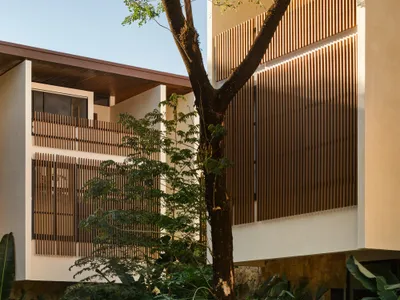
FAMM Arquitectura Organizes Ten Villas Around Courtyards and Jungle in Nosara, Costa Rica
El Molino pairs two elongated volumes with deep overhangs and timber louvers to build a compact coastal community five minutes from the beach.
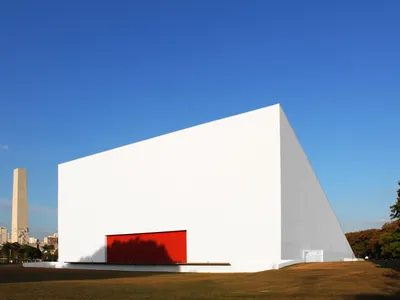
Oscar Niemeyer's Ibirapuera Park Pavilions Define São Paulo's Cultural Identity in Concrete and Curve
A constellation of modernist volumes set within São Paulo's most important urban park, conceived for the city's 400th anniversary in 1954.
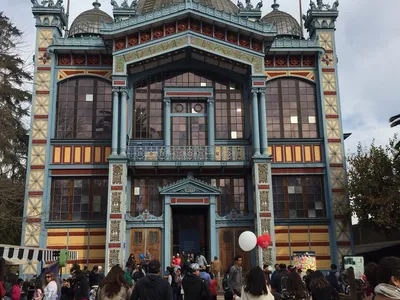
How Henri Picq's 1889 Paris Pavilion Traveled 11,000 Kilometers to Become Santiago's Artequín Museum
A prefabricated iron and glass pavilion built for the Paris Universal Exposition found a second life as a children's art museum in Chile.
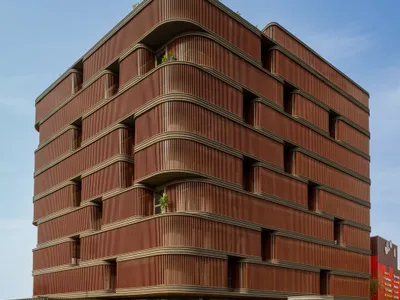
Sanjay Puri Architects Wraps a Jaipur Office Tower in Capsule-Shaped Green Buffers
A nine-level climate-responsive workplace near Jaipur Airport uses stacked planter terraces and aluminium screens to fight 40°C heat.


Explore Penthouse Competitions
Discover active competitions in this discipline



Challenge to reimagine the Iron Throne


Photograph architecture without architects


Illustrate the lost glory of Angkor Wat - Render Challenge


Design challenge to reuse E-waste
Comments (0)
Please login or sign up to add comments
No comments yet. Be the first to comment!