
Machine Made Landscapes: Reclaiming Post-Industrial Terrain through Landscape Architecture
Reimagining abandoned quarries through landscape architecture, transforming post-industrial voids into ecological, cultural and urban assets.


Across many rapidly growing metropolitan regions, the scars of industrial extraction remain embedded in the landscape. These abandoned terrains often exist as neglected voids within expanding urban fabrics, disconnected from everyday life and overlooked for their spatial and ecological potential. The project Machine Made Landscapes by Karan Anand explores how landscape architecture can reinterpret these post industrial sites and transform them into productive urban ecosystems.
Situated at the Betthalasuru White Rocks Quarry on the outskirts of Bengaluru, the proposal investigates the transformation of a closed limestone quarry into a public ecological landscape. Through careful planning and spatial intervention, the project demonstrates how landscape architecture can restore environmental value while creating new public experiences within a previously exploited terrain.

Context: Post Industrial Landscapes in Bengaluru
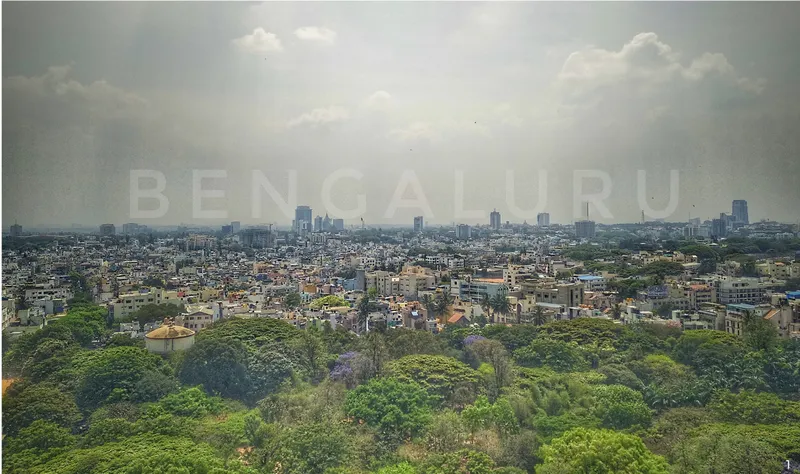
Bengaluru is a city defined by rapid growth and constant spatial expansion. As development spreads outward, fragments of former industrial activity remain embedded within the urban edge. Among the most visible examples are abandoned quarries that once supplied construction materials during earlier phases of development.
The Betthalasuru White Rocks Quarry, which ceased operations in 2008, represents one such landscape. Spread across roughly 152 acres, the quarry sits along the corridor connecting the city to Kempegowda International Airport. The Bangalore Masterplan 2031 designates the land for recreational use, yet the site remains largely underutilized despite its immense spatial potential.
Quarry landscapes are often viewed as damaged or unusable terrains. However, their dramatic topography, exposed geology and water bodies formed by excavation provide opportunities for innovative landscape architecture strategies. This project approaches the quarry not as a problem but as an opportunity to rethink the relationship between city and land.
Concept: Understanding Machine Made Landscapes
The project begins with the idea that landscapes shaped by machines and industrial activity are part of contemporary urban identity. Mining operations dramatically reshape landforms, creating cliffs, plateaus, reservoirs and artificial valleys. Instead of erasing these traces, Machine Made Landscapes uses them as the foundation of the design strategy.
The thesis operates through three interconnected systems:
The Man represents human ambition and responsibility toward the land.
The Earth represents the altered landform created through quarrying and extraction.
The Sky represents the observer that remains constant while the land continues to evolve.
By connecting these systems, the project reinterprets the quarry as a dynamic environment where ecological restoration, cultural engagement and spatial exploration coexist.
Strategic Landscape Masterplan
The masterplan organizes the quarry into a sequence of landscapes that respond to the site's existing geology and hydrology. Rather than imposing rigid urban blocks, the design works with the natural formations created by mining activity.
Key spatial zones structure the experience of the quarry park.
The Woodland
Areas of afforestation introduce dense planting that stabilizes slopes and regenerates ecological systems. These woodland zones also create shaded spaces for walking trails and quiet recreational activities.
Wetland Park
Existing water bodies formed by excavation are transformed into a network of wetlands. These wetlands serve as ecological habitats while also functioning as natural filtration systems that improve water quality across the site.
Rocky Creek and Landscape Trails
A system of trails and pathways moves across the quarry, allowing visitors to experience the geological layers and dramatic topography of the landscape. The trails connect key viewpoints and ecological zones throughout the site.
Sunken Court
Natural depressions within the quarry become gathering spaces for social and cultural events. The dramatic rock formations surrounding these spaces create powerful spatial experiences that highlight the geological character of the quarry.
Observatories and Lookout Points
Strategically placed viewing points provide panoramic perspectives of Bengaluru and the surrounding landscape. These moments encourage visitors to engage with both the quarry terrain and the expanding city beyond.
The Urban Interface
One of the most critical aspects of the project is the transition between the metropolitan city and the quarry landscape. The design introduces an entry plaza that mediates this threshold while responding to the rugged materiality of the rock formations.
Planting strategies establish a gradual transition between urban infrastructure and natural terrain. Carefully selected species such as Cassia Fistula, Bougainvillea and Terminalia Bellirica create seasonal variation and enhance biodiversity across the site.
The entry plaza also acts as a social space where visitors gather before moving deeper into the quarry landscape. Its design reflects the geometry and material qualities of the rock formations, creating a strong visual identity for the park.
Urban Sponge Landscape
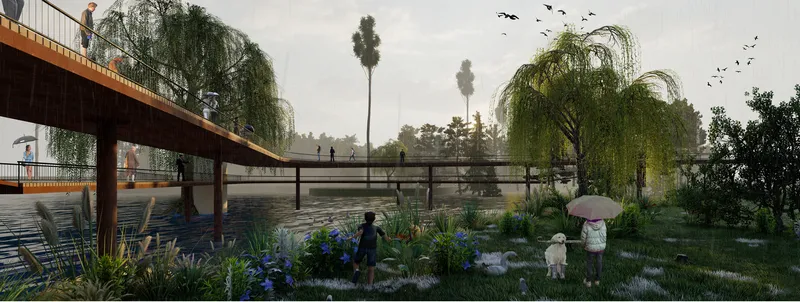
The quarry's existing topography offers a unique opportunity for water management. The design introduces the concept of an urban sponge landscape that captures, filters and stores rainwater during intense monsoon seasons.
Terraced reservoirs collect runoff from surrounding slopes while aquatic vegetation and reed beds naturally purify the water. Hydrophilic plants stabilize the soil and encourage biodiversity within the wetland zones.
This system performs several important ecological functions including flood mitigation, groundwater recharge and habitat creation. By integrating water infrastructure into the landscape design, the quarry becomes a climate responsive system for the surrounding city.
The Tree Museum
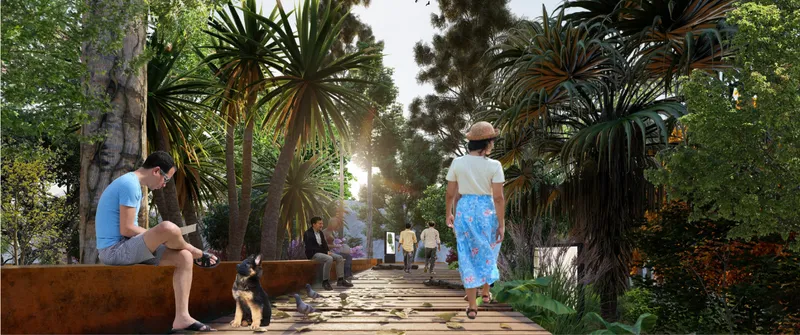
Another important component of the project is the Tree Museum, which explores ecological succession within the quarry environment. The museum is not a conventional building but a living landscape where vegetation gradually reclaims the terrain.
Shrub gardens, experimental planting zones and botanical trails introduce diverse plant species into the quarry ecosystem. Exotic and native trees are distributed strategically across the site to create seasonal variation and educational opportunities for visitors.
Interpretive spaces allow visitors to learn about ecological restoration and the role of vegetation in stabilizing disturbed landscapes.
Earth and Space Observatory
Embedded within the quarry cliffs is the Earth and Space Observatory, one of the most distinctive architectural interventions in the project. The structure is carved directly into the rock, creating a dramatic spatial sequence that connects the geological past with cosmic observation.
Visitors enter through a tunnel carved into the quarry wall that leads to an underground chamber. From here a vertical shaft opens toward the sky, allowing visitors to observe celestial events while experiencing the depth and scale of the quarry.
The observatory symbolizes the relationship between earth, sky and human curiosity, reinforcing the conceptual framework of the project.
Landscape as Urban Memory
Machine Made Landscapes demonstrates that post industrial sites can become valuable cultural and ecological assets when approached through landscape architecture. Instead of erasing traces of industrial activity, the project reframes them as part of the evolving story of the city.
The proposal by Karan Anand suggests that abandoned quarries can become powerful public landscapes that support biodiversity, recreation and cultural engagement. By working with the terrain rather than against it, the design transforms an exploited landscape into a resilient urban environment.
Through ecological restoration, spatial design and cultural programming, Machine Made Landscapes offers a vision in which the scars of extraction become the foundation for future urban life.


Popular Articles
Popular articles from the community


Co-life: Sustainable Architecture for Age-Friendly Community Living
Co-life reimagines sustainable architecture for seniors through courtyards, rammed earth, shared gardens, and spaces designed for belonging.

ALGAL REALM: A Bio-Integrated Lunar Habitat Design for Life Beyond Earth
ALGAL REALM reimagines lunar habitat design with algae-powered life support, 3D-printed regolith, and vertical living for a lunar future.

Conexión: Biophilic Design Reimagines High-Rise Living in Hong Kong
Conexión reimagines high-rise living in Hong Kong through biophilic design, green facades, shared spaces, daylight, water and nature within.

Lunar Spiral: Space Architecture Shaped by the Mathematics of the Universe
Lunar Spiral reimagines space architecture through Fibonacci geometry, lunar regolith, levitating habitats, and self-sustaining Moon living.

Similar Reads
You might also enjoy these articles

Eco Chapel: A Green Architecture Pavilion Designed in Symbiosis with the Forest
Eco Chapel uses green architecture to weave prayer, learning and reuse into a forest pavilion shaped by modular hexagonal canopies for life.
Kaffeebühnen: Coffee Shop Architecture Designed as a Civic Stage Between Vienna’s City and Park
Kaffeebühnen turns coffee shop architecture into a civic stage, linking Vienna’s park edge, urban life, warm timber yards, and coffee craft.
Healing Façade: Sustainable Architecture for Reforestation, Community, and Sacred Ecology in Ethiopia
Healing Façade reimagines sustainable architecture as a living wall that restores soil, catches water and renews Ethiopia's forest churches.


Urban Forest: A Vertical Ecosystem for 5,000 Workers in Singapore's Changi Business Park
Radially stacked pods and layered green decks turn a 7-acre plot into 47 acres of ecological workspace projected for 2040.

Comments (0)
Please login or sign up to add comments
No comments yet. Be the first to comment!