
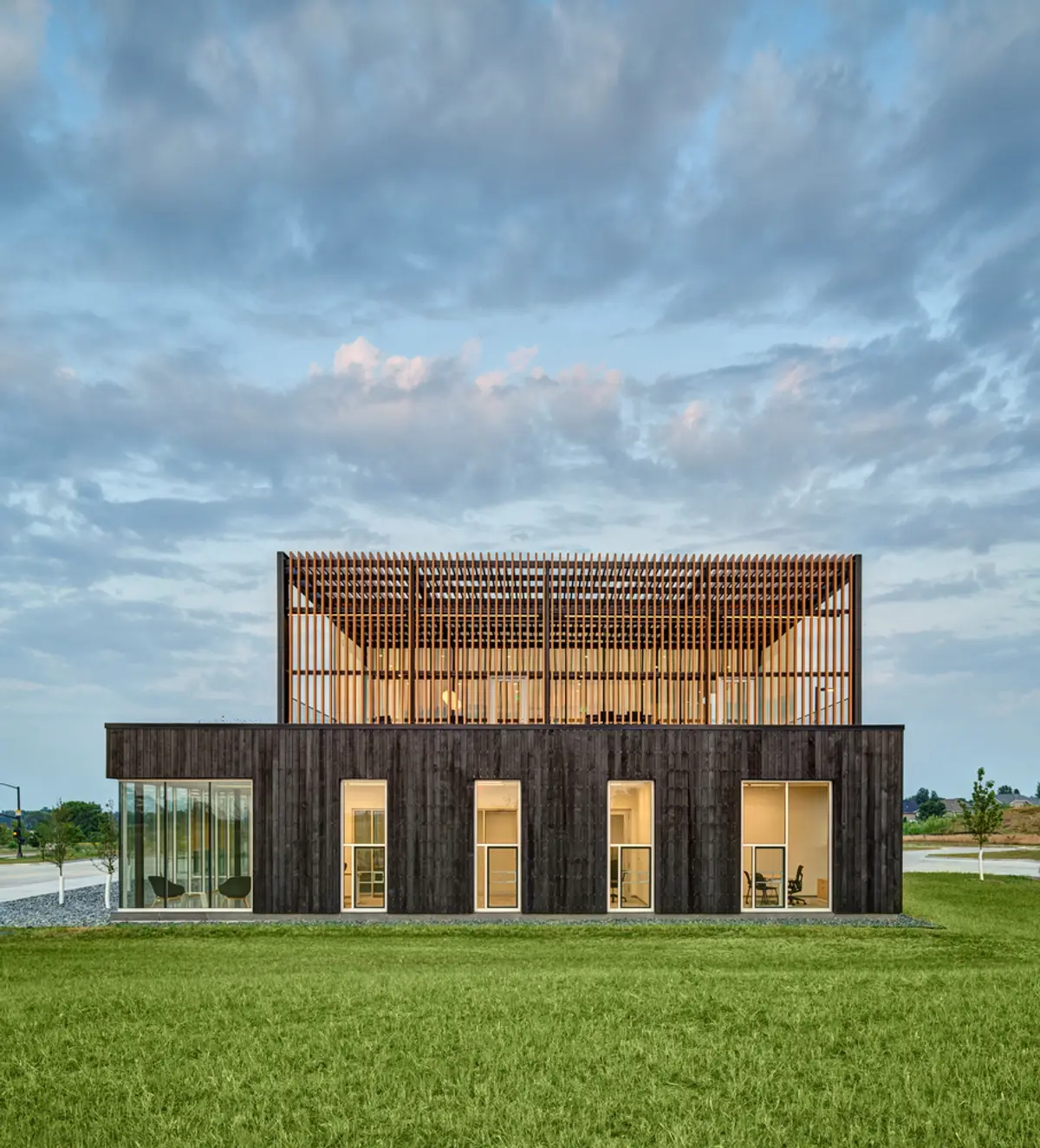
Marion Fire Station No. 1 by OPN Architects: A Wellness-Oriented Civic Landmark
A biophilic, sustainable fire station enhancing firefighter wellness, community connection, and training through transparent design and resilient materials.


Located in the growing community of Marion, Iowa, Marion Fire Station No. 1, designed by OPN Architects, redefines emergency response architecture through a thoughtful integration of biophilic design, wellness-focused spatial planning, and civic transparency. Completed in 2021, the two-story, 21,214-square-foot facility serves not only as a state-of-the-art fire station but also as a model of sustainable and human-centric design for public infrastructure.
Civic Identity with Community Transparency
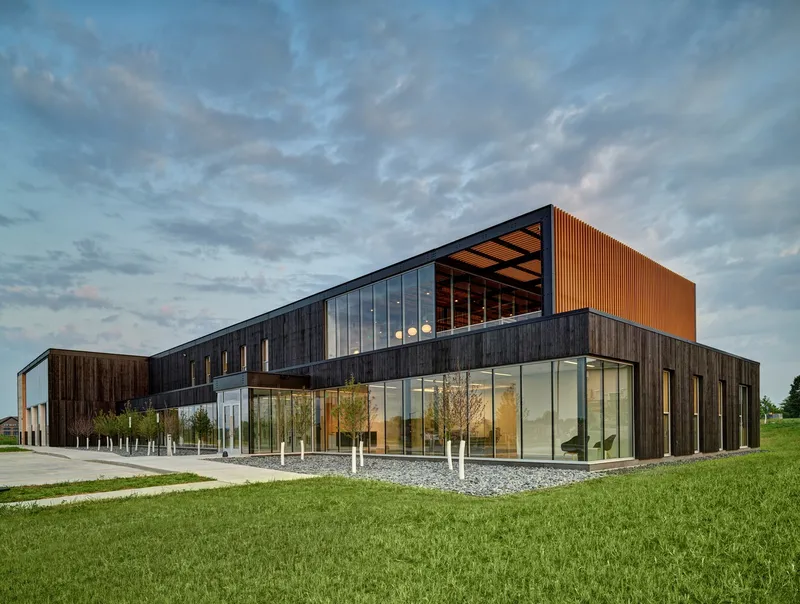
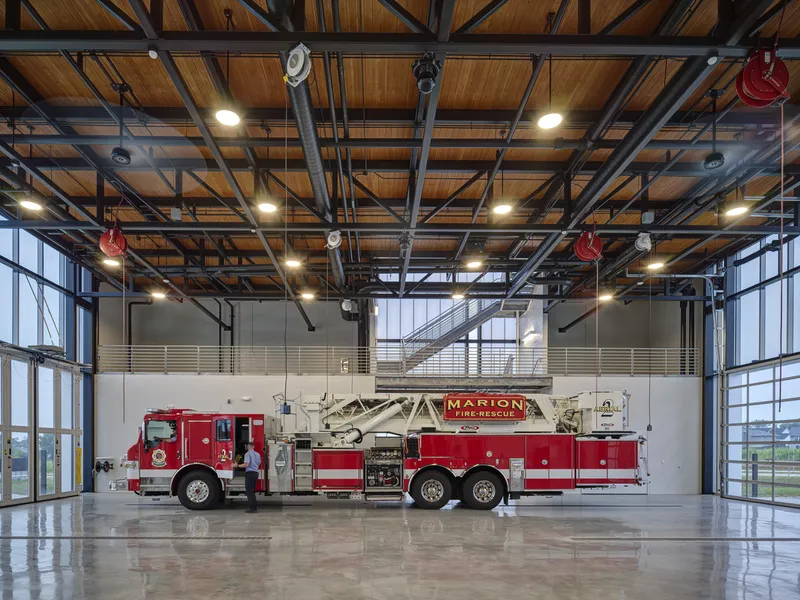
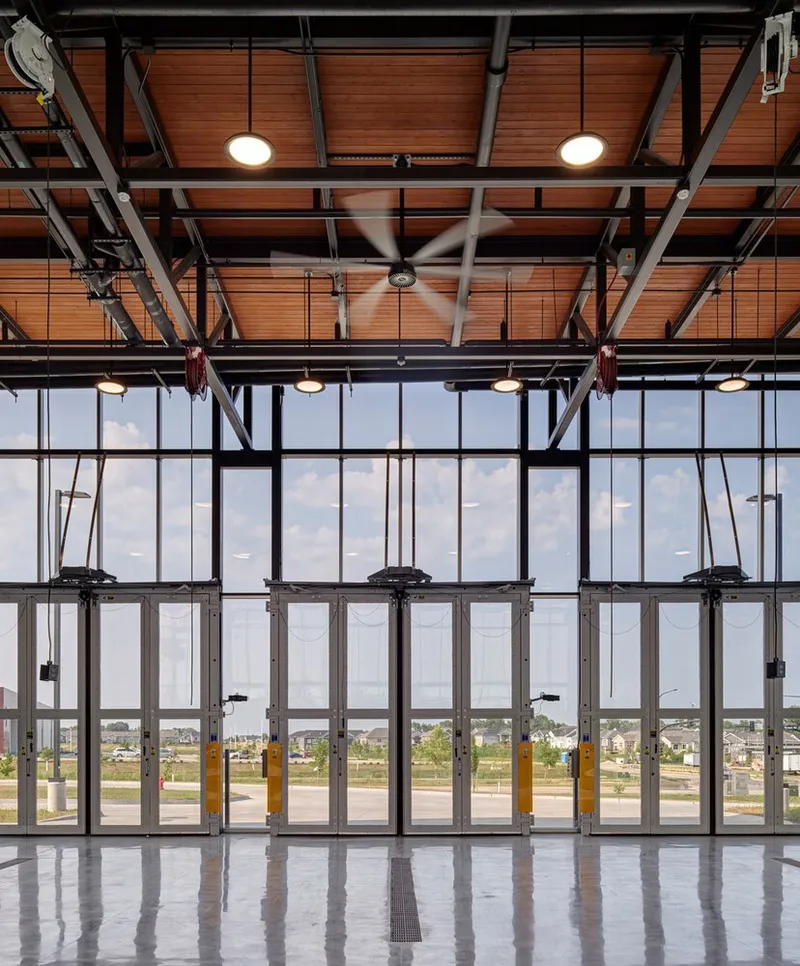
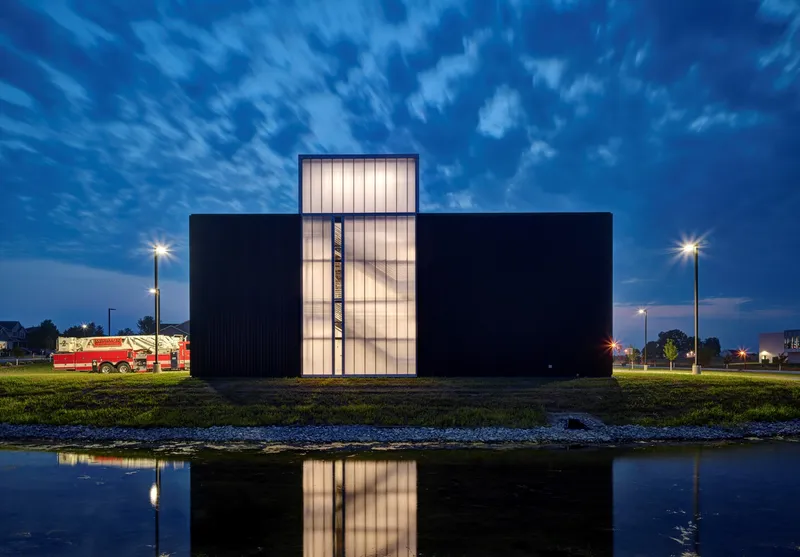
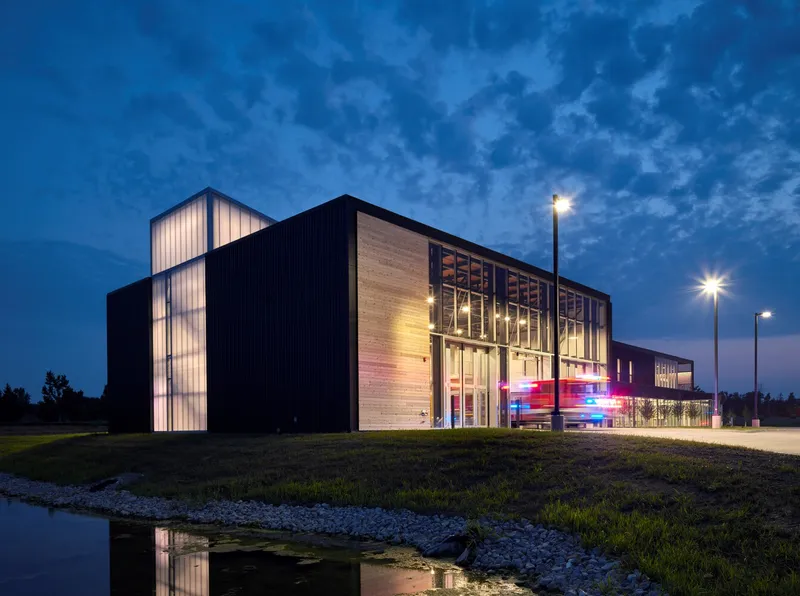
At the heart of the design is a bold yet welcoming architectural expression. The station’s massing is anchored by a two-story apparatus bay featuring full-height glass doors on both its north and south façades. These glazed elevations flood the interior with daylight, enhance visibility, and create a symbolic connection between firefighters and the community they serve.
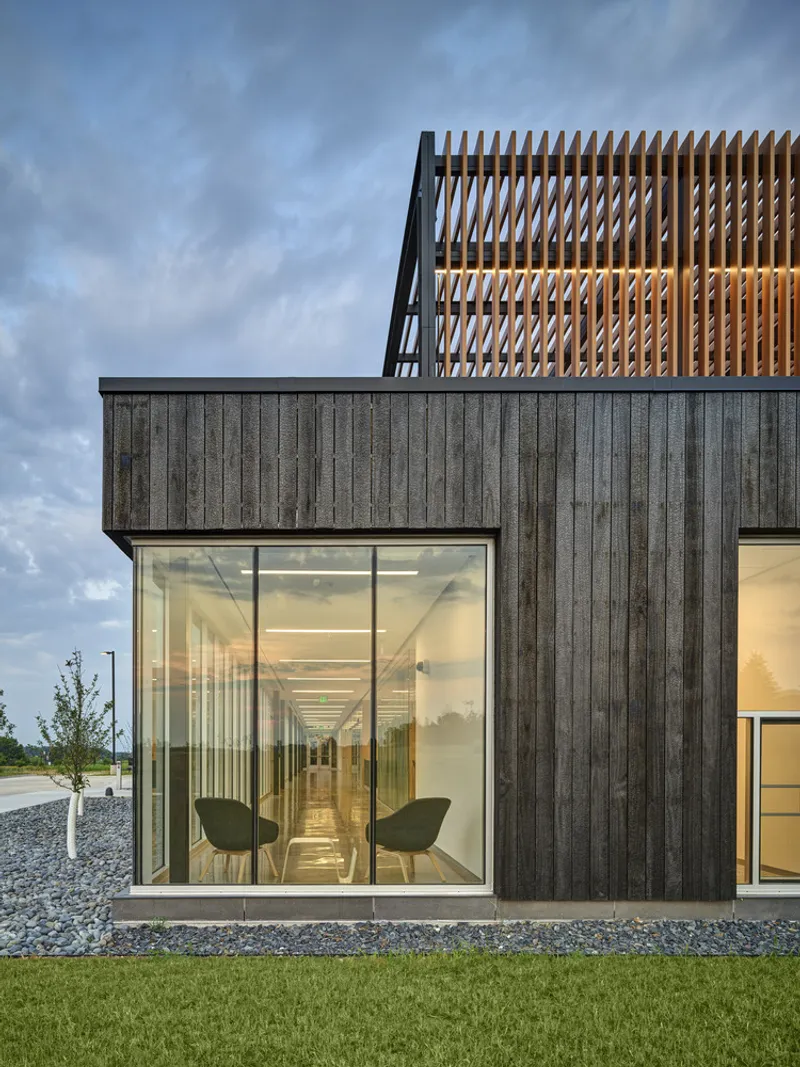
The use of charred Accoya wood siding (Shou Sugi Ban) across the east-facing living and office volumes introduces material warmth and texture while contrasting with the smooth transparency of the glass. This material strategy not only enhances visual depth but also communicates durability and permanence, reflecting the station’s civic importance.
Sustainable Design & Biophilic Integration
Biophilic design strategies permeate every corner of the fire station, prioritizing the health, well-being, and performance of its occupants. Green roofs envelop the living and sleeping quarters, reinforcing the building’s connection to nature and improving insulation. Meanwhile, ipe wood terraces—sheltered by a trellised roof and wall—offer outdoor respite spaces for the firefighters.
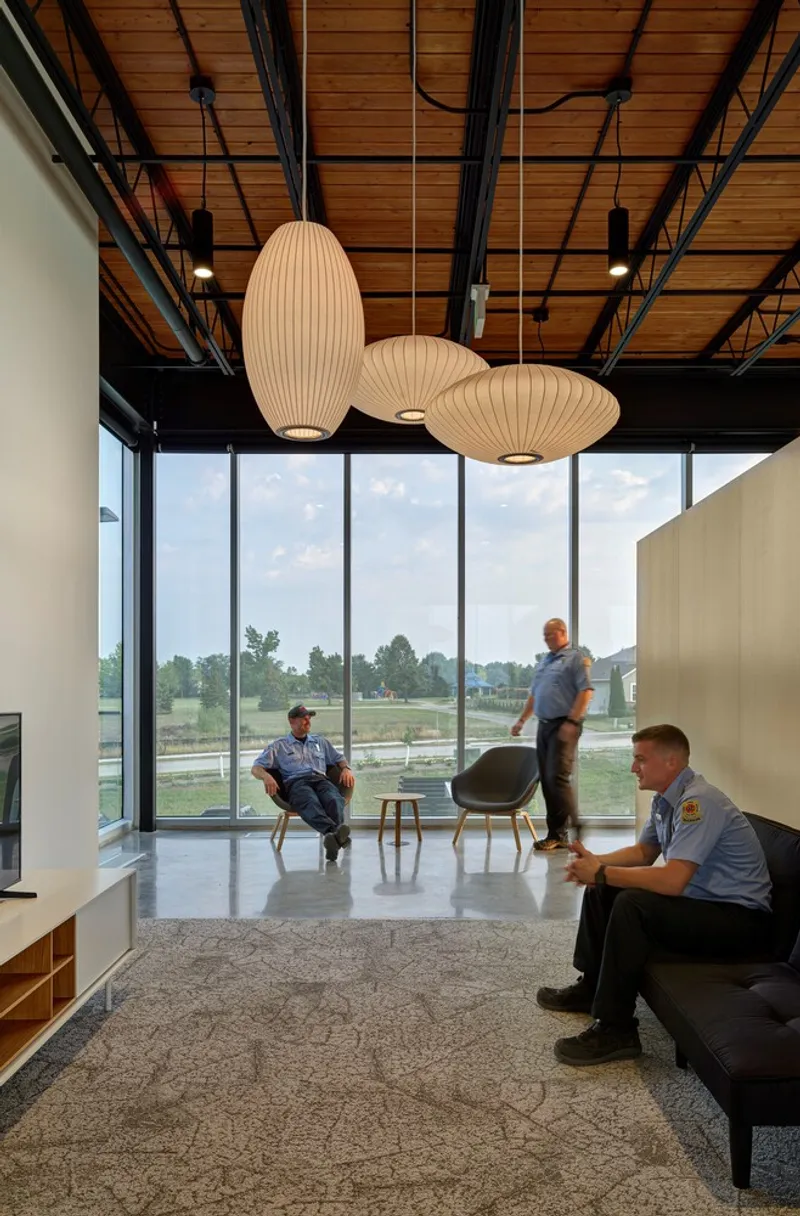
Inside, exposed wood ceilings, natural daylighting, and a calming material palette support stress reduction and cognitive function. The station’s circadian rhythm lighting system works in harmony with the body’s natural clock, aiding in restful sleep and gentle waking. Escalating alarm systems are specifically designed to reduce physiological and psychological stress during emergency calls.
Functional Programming & Health-Focused Layout
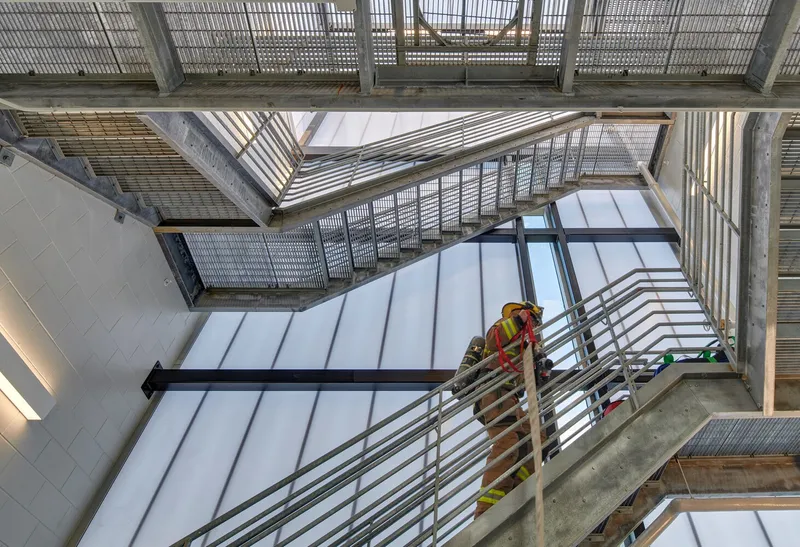
Spatial sequencing plays a critical role in protecting the health of first responders. A designated decontamination zone separates the apparatus bay from administrative and residential areas, minimizing exposure to carcinogens from fire scenes. On the opposing side, the hose-drying tower doubles as a vertical training facility, enabling simulation of rescue scenarios in a controlled environment.
The training-centric philosophy continues outdoors, where a retention pond provides a unique opportunity for ice rescue training, extending the station's functionality beyond emergency response into real-world skill development.
A Home Away From Home
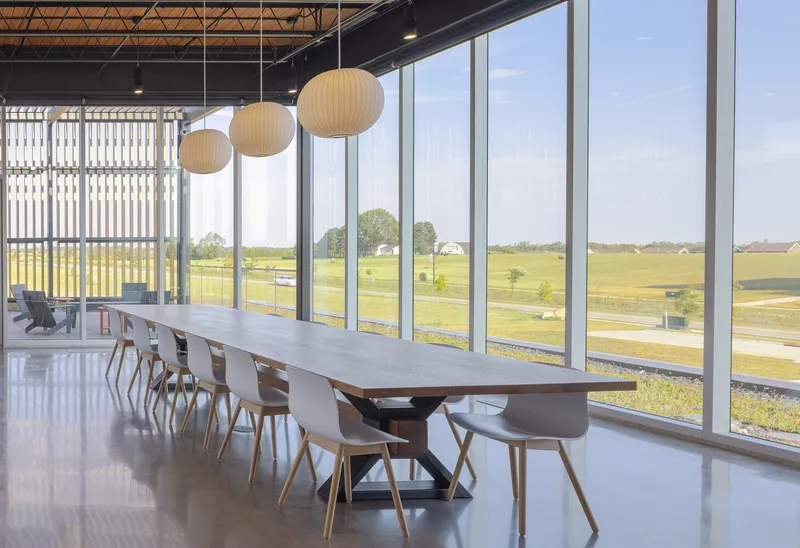
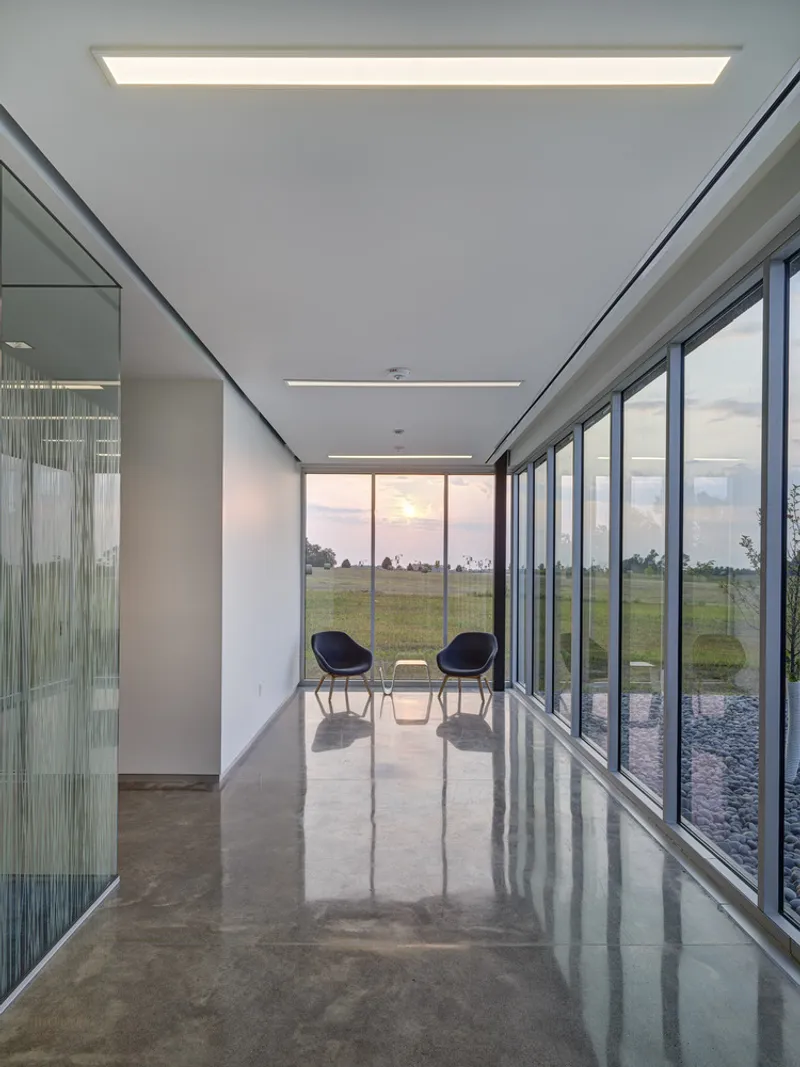
Recognizing the demanding and unpredictable nature of firefighting, the design of the living quarters emphasizes comfort and communal connection. Expansive glazing, warm wood finishes, and natural materials create a homelike atmosphere. The station features a commercial-grade kitchen, a large family-style dining area, and recreational spaces with gaming and entertainment zones, fostering a sense of camaraderie and offering essential spaces for rest and recovery.
A welcoming public lobby—illuminated by natural light and strategically placed between a tree grove and the department’s history wall—serves as both a circulation core and a storytelling hub, showcasing the department’s heritage and deep-rooted pride.
A Civic Beacon Rooted in Resilience and Wellness
Marion Fire Station No. 1 stands as a testament to the power of architecture to uplift public service infrastructure. It is not only a high-performing emergency facility but also a forward-thinking wellness environment. By integrating sustainable materials, biophilic strategies, and community-focused design, OPN Architects has created a resilient civic landmark that reflects the evolving needs of both firefighters and the community.
All Photographs are works of Cameron Campbell,


Popular Articles
Popular articles from the community


LT2A and OPEN Architectes Thread a Brick and Glass High School Through a Wooded Belgian Campus
In Braine-l'Alleud, a 3,000 m² wing for Collège Cardinal Mercier pairs pale brick with a glazed colonnade, deferring to a small chapel and a dense wood.

GROUP A Strips a 1969 Rotterdam Harbor Headquarters to Its Frame and Wraps It in Timber Louvers
In Rotterdam's M4H harbor district, Ferro Offices reuses a 1969 frame, adds one timber storey and reaches BREEAM-NL Outstanding.

U.GA Architects Wraps an Oval Rooftop Pool in Curved Board-Formed Concrete on Busan's Jeollidan-gil
In Busan's Jeonpo-dong, a 454 m² mixed-use block stacks a neighborhood facility, guest rooms and an oval rooftop pool inside spiraling concrete walls.

Architekt Andreas Gruber Scatters 23 Dark Timber Chalets Across a South Tyrolean Forest Edge
In Molini di Tures, Amonti Chalets breaks a resort into a hamlet of gabled timber houses, with parking, storage and services pushed into the slope.

Similar Reads
You might also enjoy these articles


Hodi-Mandai Geram
Project Function: Preservation and revitalization of the Intangible heritage and socio-spatial identity of the Hodi by Housing, Cultural Memory Center, Sacred Grove, landscape, local tourism economy


Olio Towers: A Mid-Rise for Performers That Fuses Housing, Rehearsal, and Stage
Located blocks from Houston's Theater District, this modular tower stacks living units around a central performance atrium.

Oasis: Modular Green Housing Carved into Dhaka's Urban Fabric
A shortlisted Plugin Housing entry reclaims unauthorized settlements in Dhaka with stepped concrete volumes, green roofs, and ventilation-driven design.

Black Hole: A Floating Megastructure for the Post-Physical Era
Emiliano Mazzarotto envisions a spherical, self-scaling arena where e-sports, digital hotels, and holographic stadiums replace traditional public space.

Explore Public Health Competitions
Discover active competitions in this discipline

Challenge to reimagine the Iron Throne

Photograph architecture without architects

Illustrate the lost glory of Angkor Wat - Render Challenge

Design challenge to reuse E-waste
Comments (0)
Please login or sign up to add comments
No comments yet. Be the first to comment!