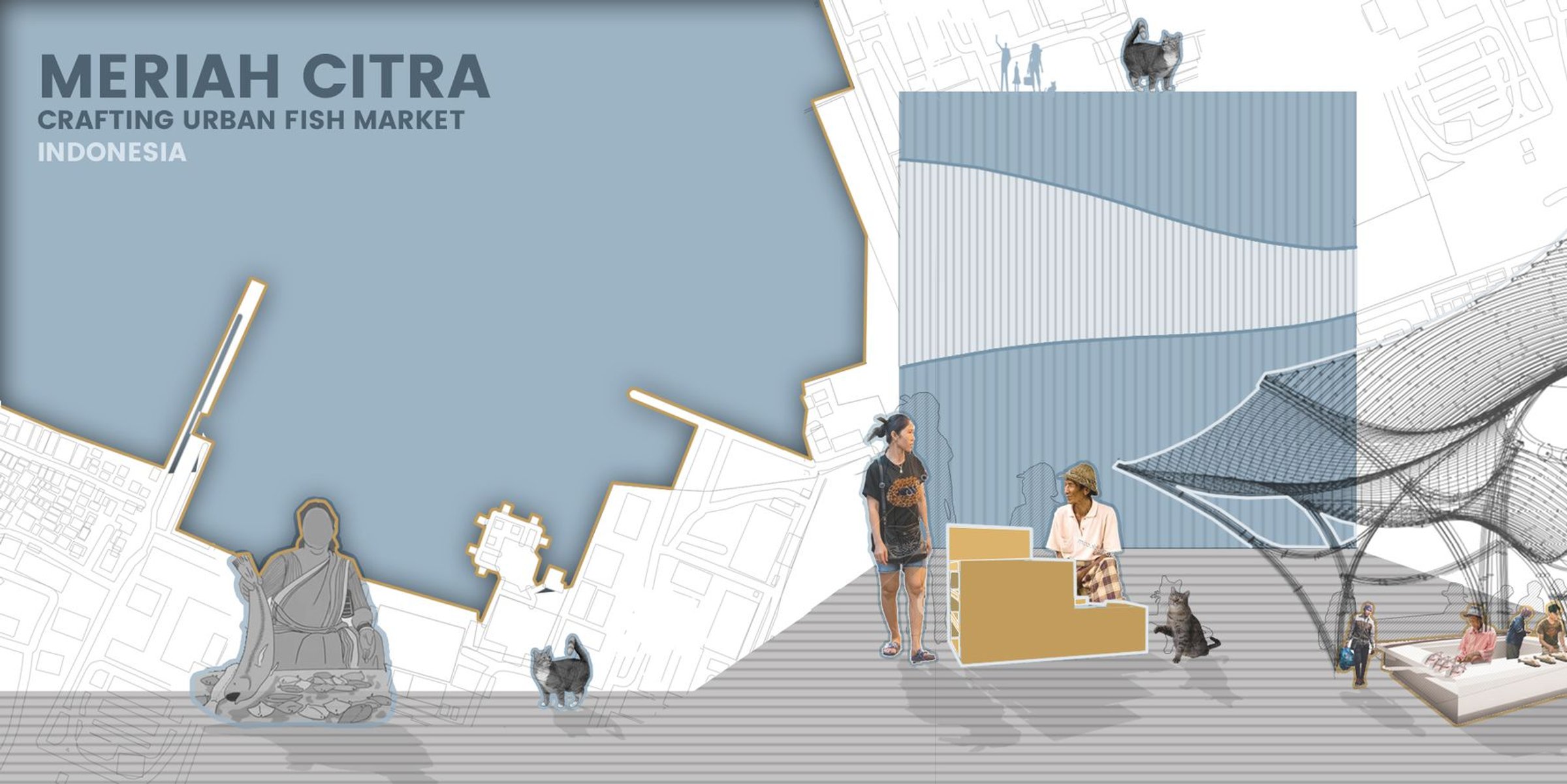
MERIAH CITRA: Crafting Urban Fish Markets
MERIAH CITRA: A sustainable urban fish market design blending culture, commerce, and modern functionality.


In the bustling urban landscape of Jakarta, Indonesia, a unique architectural project named MERIAH CITRA aims to redefine the traditional fish market experience. Created by Tejas Shinde, Isha Keni, and Praniti Bhoir, this innovative design harmonizes culture, commerce, and sustainability. The project transcends a mere marketplace, embodying the essence of maritime commerce while embracing modern principles of design and functionality. This article explores the intricate details of the MERIAH CITRA project, focusing on its sustainable architecture, design methodology, and impact on the local community.
Embracing Culture and Modernity
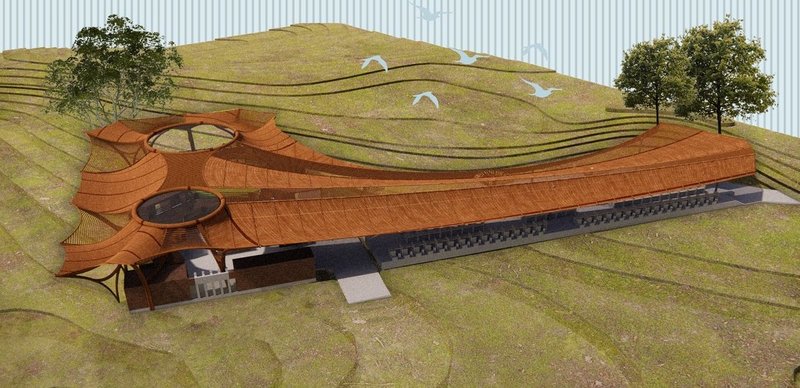
The allure of the ocean's bounty, vibrant marine life hues, and rich sea aromas beckon us to a fish market. MERIAH CITRA goes beyond a transactional space, offering an immersive experience that harmonizes culture and commerce. The design emphasizes the freshness, hygiene, and aesthetic appeal of the fish, inviting visitors to engage deeply with the space.
Design and Functionality
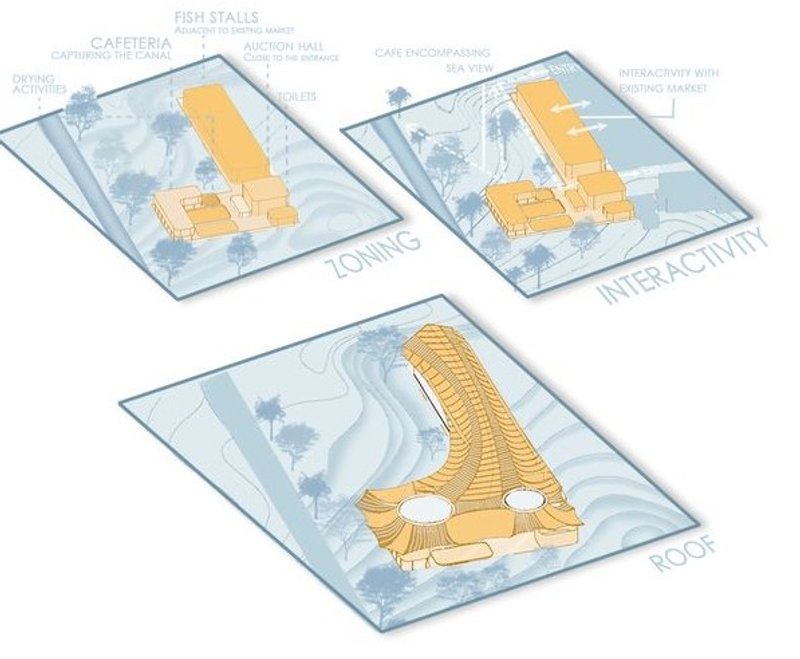
MERIAH CITRA is designed to optimize layout and spatial organization, ensuring operational efficiency. The integration of sustainable practices, such as using bamboo and bricks with lower embodied carbon, promotes environmental consciousness. The design seamlessly connects with neighboring structures, fostering a sense of community.
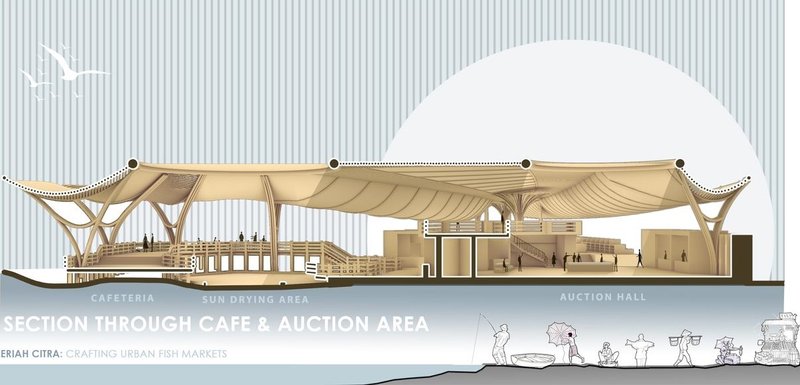
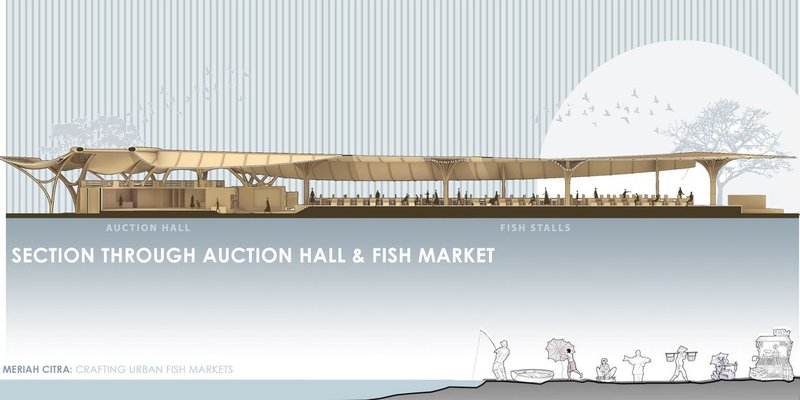
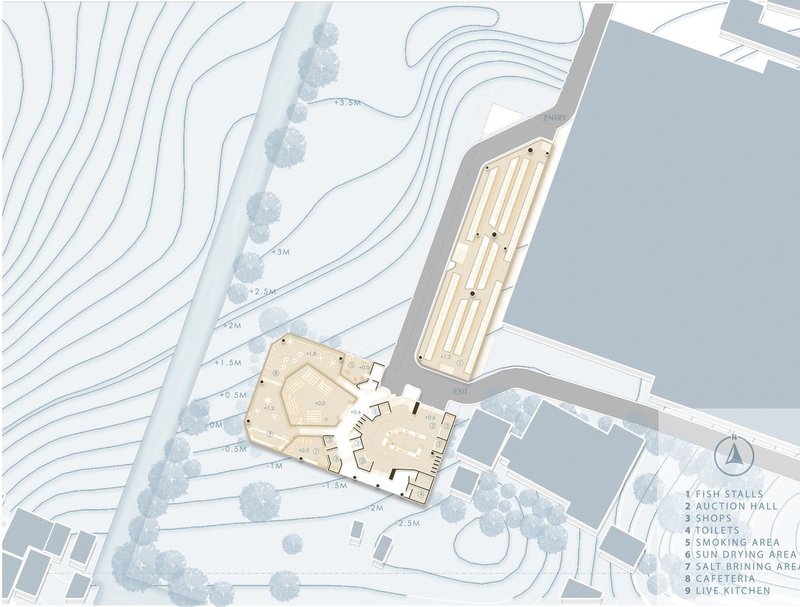
The fish market comprises various zones, each serving a specific function. Fish stalls are strategically placed near the existing market for better communication with neighboring vendors. Behind these stalls lies a large auction hall, featuring a mezzanine to accommodate a larger group of patrons. Adjacent to the auction hall is a cafe, designed at a higher level to offer views of the sea, providing relaxation for both patrons and vendors.
Sustainable Architecture
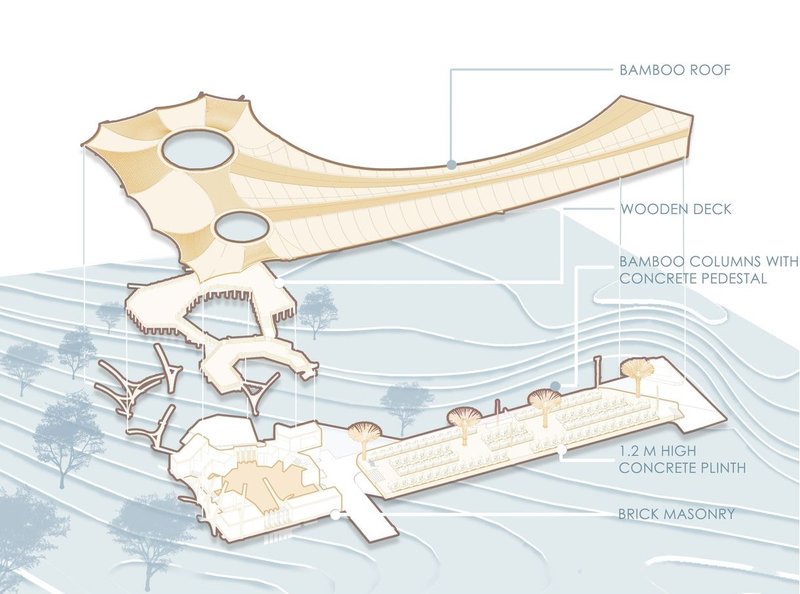
One of the standout features of MERIAH CITRA is its commitment to sustainability. The use of bamboo for roofs and columns highlights its strength, flexibility, and cost-effectiveness. Bamboo’s carbon sequestration properties make it an eco-friendly choice. To combat dampness, concrete footings are used for the columns.
The concrete plinths ensure hygiene, water resistance, and strength, making them ideal for the fish market environment. Brick walls, inspired by traditional building systems, respect the cultural roots while keeping the auction hall hygienic due to their porous nature, which absorbs moisture.
Traditional Fish Preservation Techniques
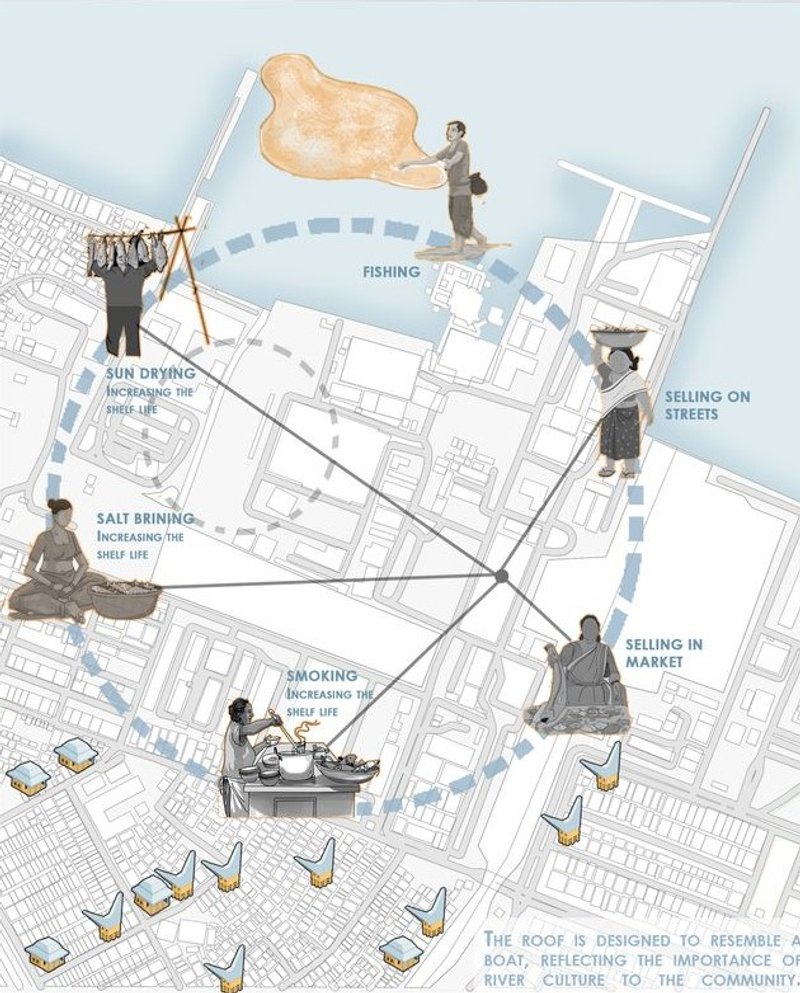
MERIAH CITRA celebrates traditional fish preservation methods, including sun-drying, smoking, and salt brining. These techniques are showcased in dedicated lanes within the market, educating visitors and preserving cultural practices. The sun-drying area and the auction hall are open to the sky, allowing natural light penetration, further enhancing the authenticity of the experience.
Site Study and Context
The design process began with a thorough understanding of the project brief, objectives, and constraints. Comprehensive research on traditional Indonesian and modern fish markets informed the functions and area statements. A detailed site study considered climate, views, access points, and neighboring structures, ensuring the design was contextually appropriate.
Visualization and Concept Development
Integrating research findings into design possibilities involved sketches, diagrams, and mood boards to visualize potential directions. The design proposal underwent assessments for economic feasibility, environmental stability, and the relationship between spaces and elements. The finalized design accommodates fish-selling activities and preservation techniques, providing leisure elements for visitors and vendors.
Materials and Construction
The architectural elements of MERIAH CITRA are meticulously chosen to balance functionality and aesthetics. The bamboo roof, wooden deck, and brick masonry elements are not only environmentally friendly but also enhance the visual appeal of the market. The bamboo columns with concrete pedestals ensure structural integrity and longevity.
Impact on the Community
MERIAH CITRA aims to transform the fish market into a vibrant community hub. By integrating traditional practices with modern design, it creates a space that educates visitors and supports local vendors. The project’s focus on sustainability and cultural preservation ensures its relevance and positive impact on the community over time.
MERIAH CITRA: Crafting Urban Fish Markets exemplifies how sustainable architecture can redefine traditional spaces. By harmonizing culture, commerce, and sustainability, the project offers an immersive experience that goes beyond mere functionality. With its thoughtful design, use of eco-friendly materials, and celebration of traditional practices, MERIAH CITRA sets a benchmark for future urban fish markets. This innovative approach not only meets the demands of the seafood industry but also enriches the community, making it a true architectural marvel.