
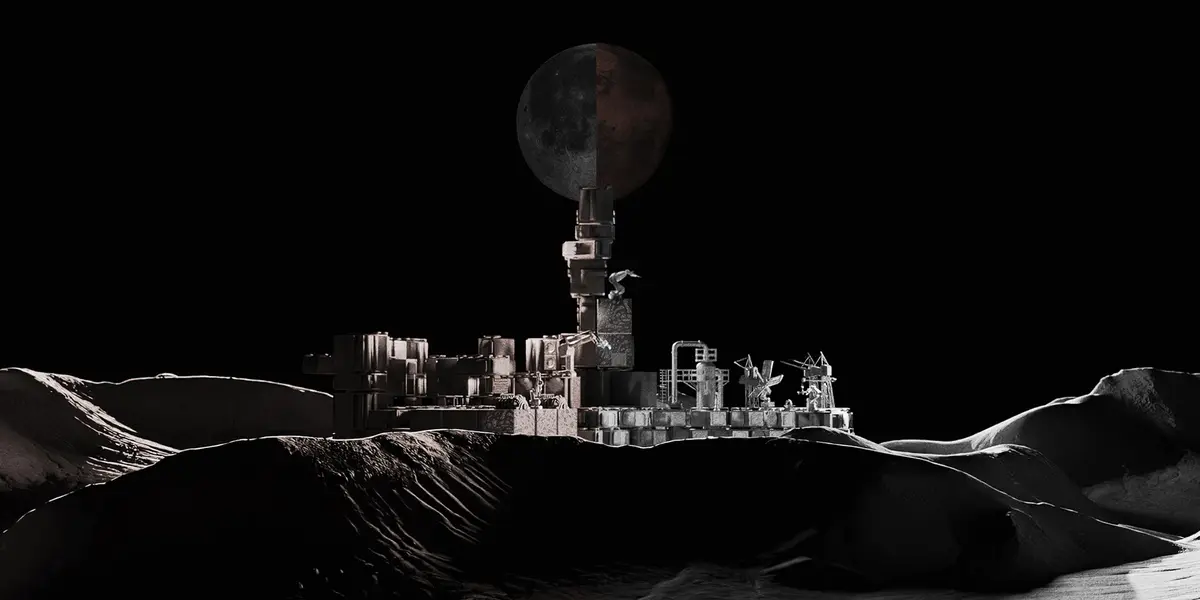
Modular Moon Base: Revolutionizing Space Architecture with MODU MOVE
MODU MOVE's innovative modular space architecture for adaptable, resilient, and expandable lunar and Martian habitats.


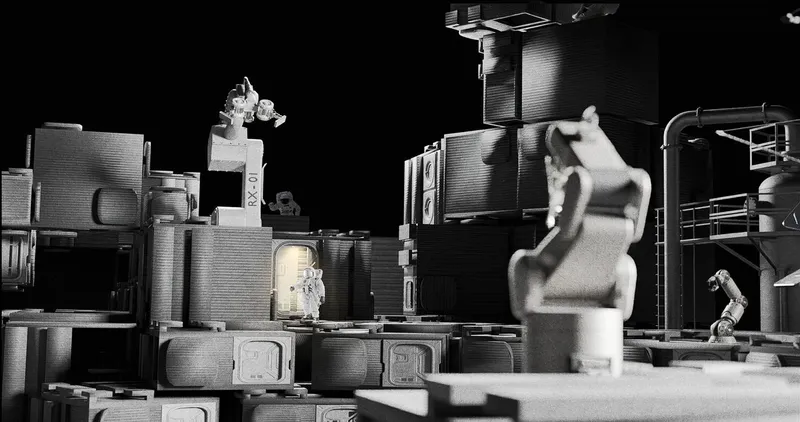
The exploration and colonization of space have always been at the forefront of human innovation. As part of this ongoing endeavor, the MODU MOVE project, created by Kaimin Wang, stands as a groundbreaking solution to the challenges posed by lunar and Martian environments. Winner of the Moon Base 2124 competition, MODU MOVE addresses the needs of the Artemis program and future Martian settlers through its innovative modular design, which emphasizes adaptability, resilience, and endless expansion potential. This article delves into the intricacies of this architectural marvel, highlighting its design, construction technologies, and the profound impact it promises to have on space colonization.
Addressing the Challenges of Space
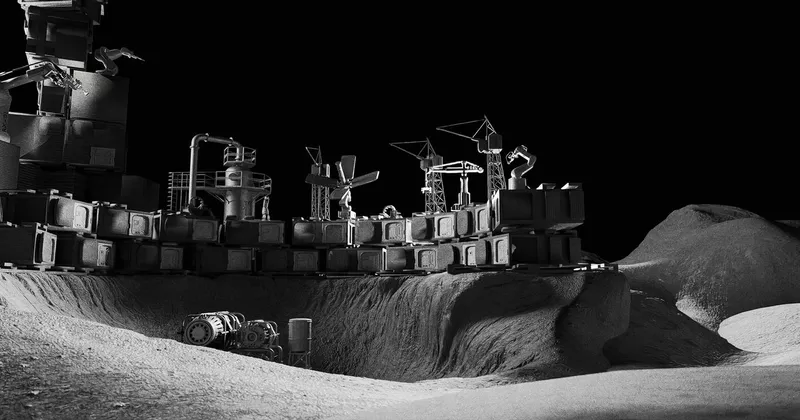
The MODU MOVE project is specifically designed to tackle the extreme conditions of Mars and the Moon, such as severe weather, localized damage to space stations, and meteorite impacts. These environments require habitats that can withstand harsh conditions and respond flexibly to unforeseen circumstances. The modular habitat design of MODU MOVE offers an innovative solution by enabling on-site response and self-reconfiguration, ensuring the structure's resilience and adaptability for long-term space colonization.
Location and Initial Steps
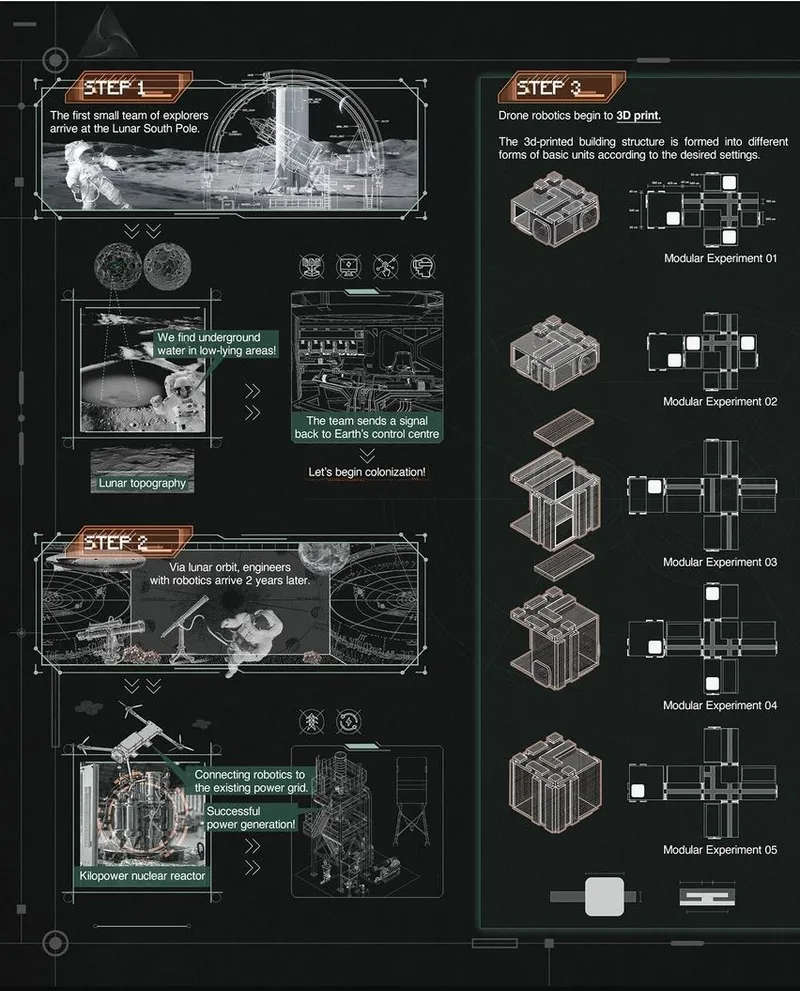
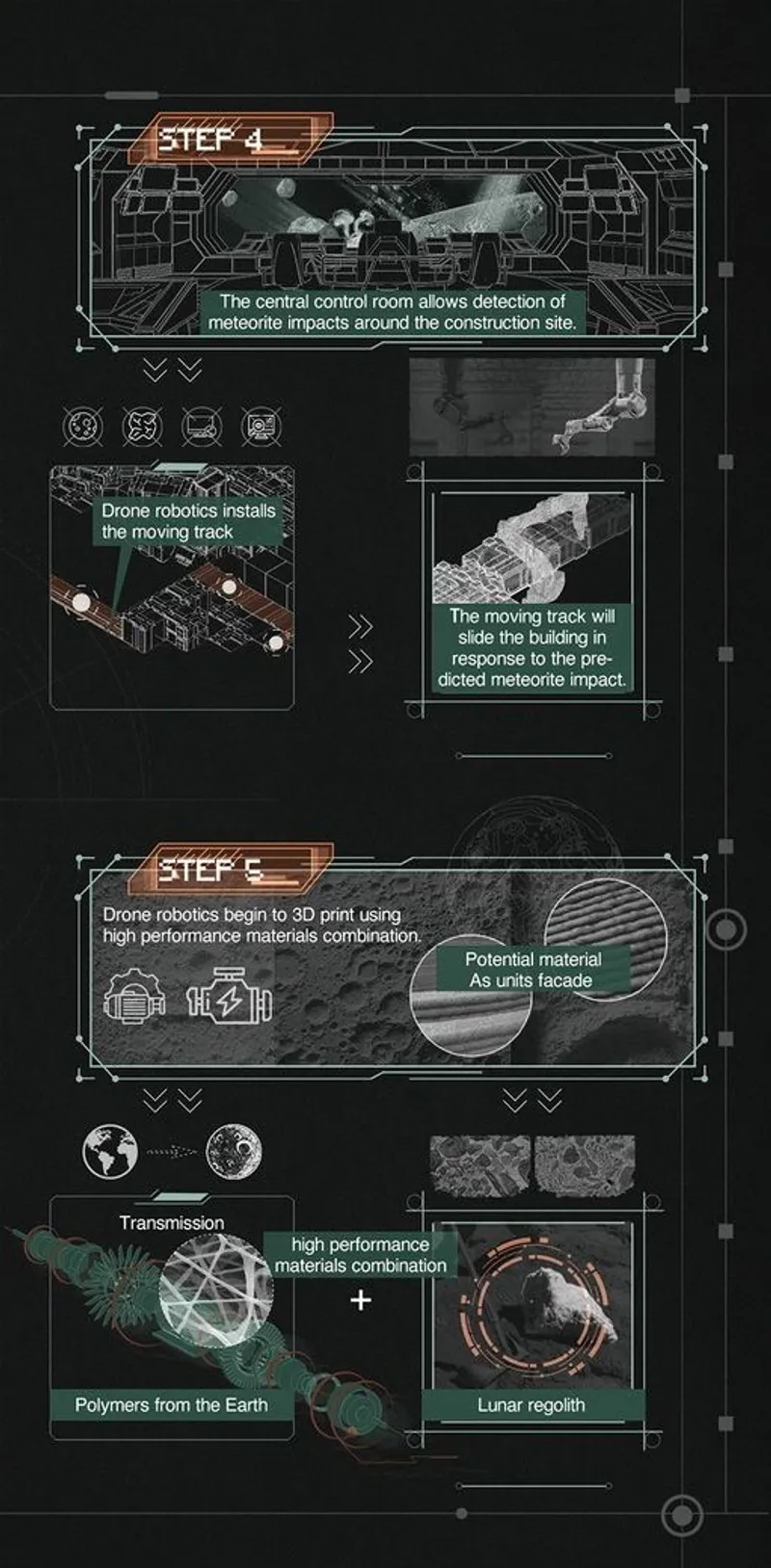
The project begins with a small team of explorers arriving at the Lunar South Pole, an ideal location for solar power generation due to its almost perpetual sunlight. Additionally, the low-lying areas of the pole are believed to contain ice, a crucial resource for sustaining human life. Upon arrival, the team sends a signal back to Earth's Control Centre to commence the colonization process. Drone robotics are then deployed to 3D print the building structures, forming basic units according to the desired settings.
Automated Construction and Modular Design
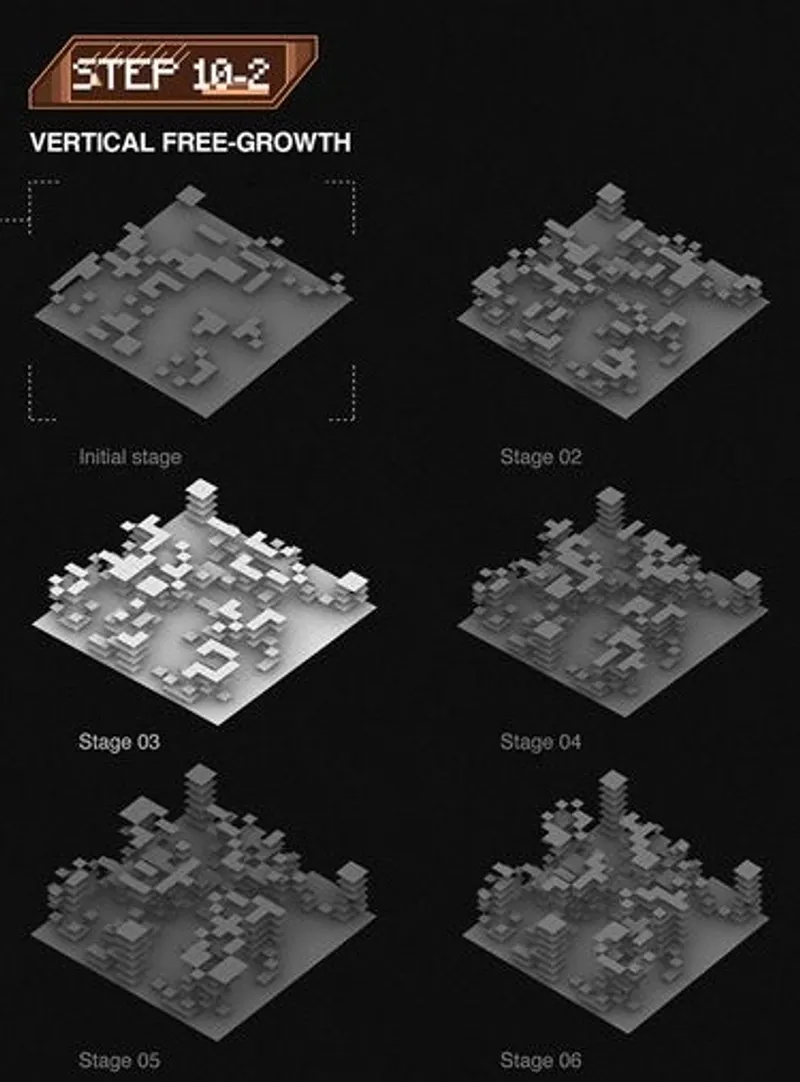
Kaimin Wang's design utilizes an automated construction method based on the principles of cellular automata. This approach involves robotic arms and drones assembling different cells into an initial habitat pattern. The modular units can be continuously replicated based on cellular automaton theory and the spatial requirements of the habitat. This automated process not only ensures the efficient construction of the habitat but also allows for endless expansion and reconfiguration as needed.
3D Printing and Local Materials
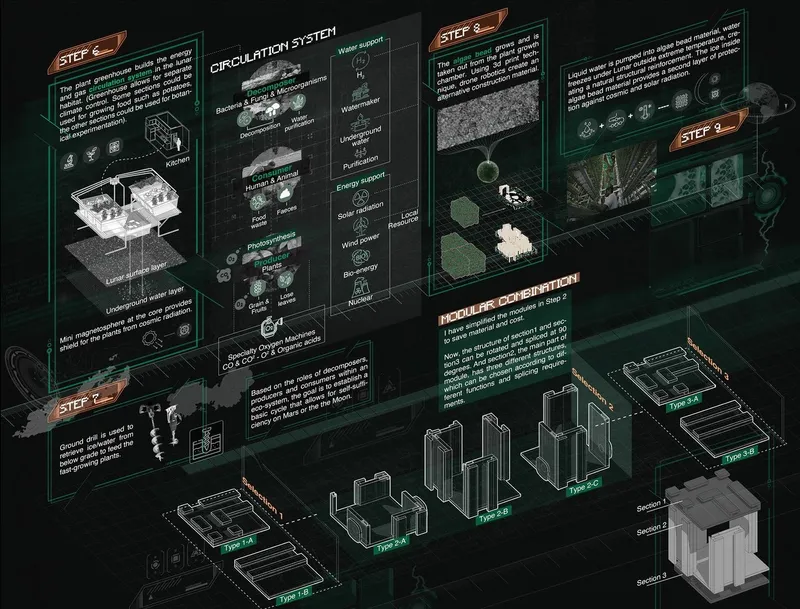
A key aspect of MODU MOVE's design is the use of 3D printing technology to fabricate construction materials in situ, utilizing local Martian and lunar rock formations. This approach significantly reduces the economic costs associated with transporting materials from Earth. During the testing phase, the model was divided into two parts: the head and the body, excluding the bottom track, to save costs and minimize wear and tear. This process resulted in two heads and three bodies, increasing the module possibilities.
The Role of Conway's Game of Life
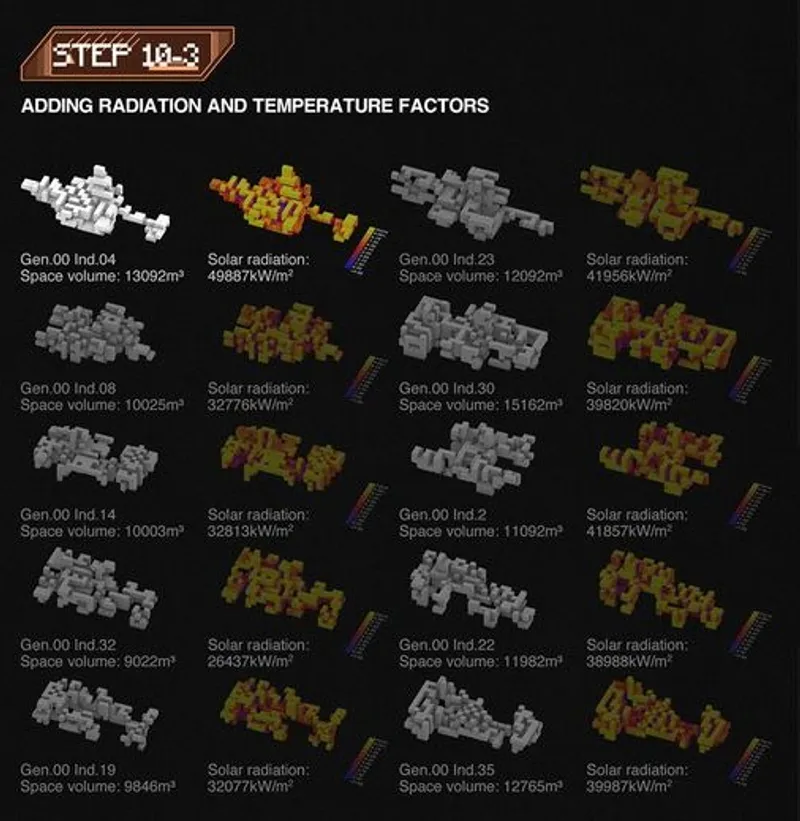
The design incorporates Conway's Game of Life as a computer algorithm for combining different modular units. This algorithm considers local radiation, temperature factors, and site-specific topography to optimize the building's functionality. The Game of Life, a cellular automaton devised by mathematician John Horton Conway, simulates the evolution of the habitat's form based on initial conditions and rules set by the user. This innovative approach ensures the habitat can adapt and evolve over time, meeting the needs of its inhabitants.

Experimental Modules and Life Support Systems
In addition to the 3D-printed functional blocks, MODU MOVE includes experimental modules made from seaweed beads. These modules, used in public spaces, act as "glass" and release oxygen, thanks to the hardened sodium chloride solution encapsulating freshwater algae. The algae's gelatinous texture reflects external radiation, making it the only module that functions as a "window." Such experimental modules enhance the habitat's functionality and comfort, increasing the likelihood of future Mars colonists enjoying a more comfortable life.
Energy Systems and Sustainability
The designed life support system is self-sufficient, minimizing human dependence on Earth. Initially, the robots are connected to NASA's Kilo-powered nuclear reactor via lunar orbit, providing a reliable energy source. As the colony expands, solar power, groundwater, wind, and bioenergy will supplement nuclear energy, creating a robust and sustainable energy system. The habitat's self-cycling system will include raising animals and plants, forming a small biosphere that maximizes the roles of producers, consumers, and decomposers in a virtuous cycle.
Flexibility and Future Expansion
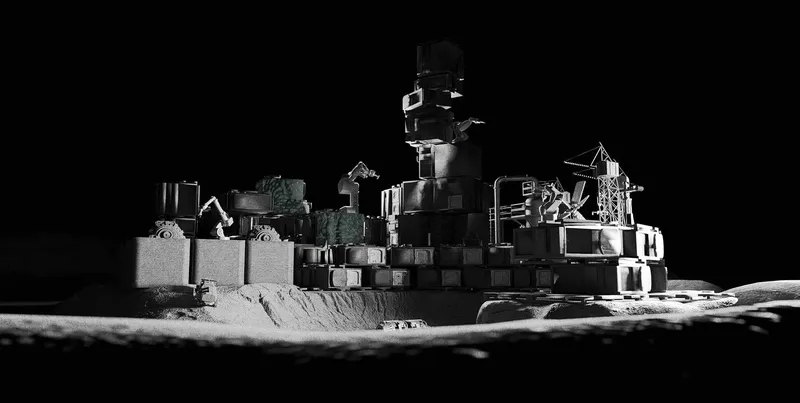
MODU MOVE's modular design ensures that the entire habitat can be expanded indefinitely, potentially becoming a residence, experimental site, city, or even a planetary civilization. Each module will have independent life-support systems, such as oxygen supply, ventilation, and constant temperature control. This design ensures that even if one module is damaged, the others remain unaffected, maintaining the colony's functionality.
User Experience and Functional Variety
The flexibility of MODU MOVE's modular units allows for various functional experiences for its inhabitants. For instance, a plant greenhouse would enable people to participate in growing and experiencing plants, while fitness and theater modules offer a range of services. This variety not only enhances the living experience but also provides opportunities for leisure and recreation, essential for long-term space missions.
The MODU MOVE project represents a significant leap forward in modular space architecture. By addressing the unique challenges of the lunar and Martian environments, it offers a flexible, resilient, and expandable solution for space colonization. Through its innovative use of automated construction, 3D printing, and modular design, MODU MOVE sets the stage for a new era of human habitation beyond Earth. As we continue to explore the final frontier, such pioneering designs will undoubtedly play a crucial role in shaping our future in space.


Popular Articles
Popular articles from the community


Conexión: Biophilic Design Reimagines High-Rise Living in Hong Kong
Conexión reimagines high-rise living in Hong Kong through biophilic design, green facades, shared spaces, daylight, water and nature within.

Co-Life: Senior Housing Design That Reconnects Older Adults With the City
Co-Life reimagines senior housing design through healing gardens, shared streets, workshops, and a sustainable community across generations.

Co-life: Sustainable Architecture for Age-Friendly Community Living
Co-life reimagines sustainable architecture for seniors through courtyards, rammed earth, shared gardens, and spaces designed for belonging.

Lunar Spiral: Space Architecture Shaped by the Mathematics of the Universe
Lunar Spiral reimagines space architecture through Fibonacci geometry, lunar regolith, levitating habitats, and self-sustaining Moon living.

Similar Reads
You might also enjoy these articles

Day and Night Park: A Time-Based Urban Newsstand in Beijing
A temporary urban newsstand in Beijing blending travel, light, and reading through poetic colors, compact form, and community-focused design.

Modernist Patio Renovation in El Masnou, Barcelona by Oliver Segura Arquitectura + Cebrià Arquitectura
Modernist patio renovation blending tradition and innovation with a movable pool, leveled floors, and Catalan materials in El Masnou.

Alto Residencial Coop: Cooperative Housing Development in Santiago de Compostela by Carbajo Barrios Arquitectos
A linear cooperative housing complex blending white volumes and perforated metal façades, enhancing community living, natural light, privacy, and urban integration.
Vil Genis School by BPA ARCHITECTURE – Massy, France
Vil Genis School in Massy, France, features sustainable design, south-facing classrooms, community integration, accessible spaces, and modern educational architecture.

Explore Modular Competitions
Discover active competitions in this discipline

Challenge to reimagine the Iron Throne

Photograph architecture without architects

Illustrate the lost glory of Angkor Wat - Render Challenge

Design challenge to reuse E-waste
Comments (0)
Please login or sign up to add comments
No comments yet. Be the first to comment!