Modular School Architecture as a Tool for Urban Renewal: The Cluster Strategy
A modular school architecture that transforms industrial ruins into dynamic, daylight-filled clusters for future-focused learning.


Shortlisted entry of the Learn Better competition by Carolina Migliaccio and Fulvia Petriello.
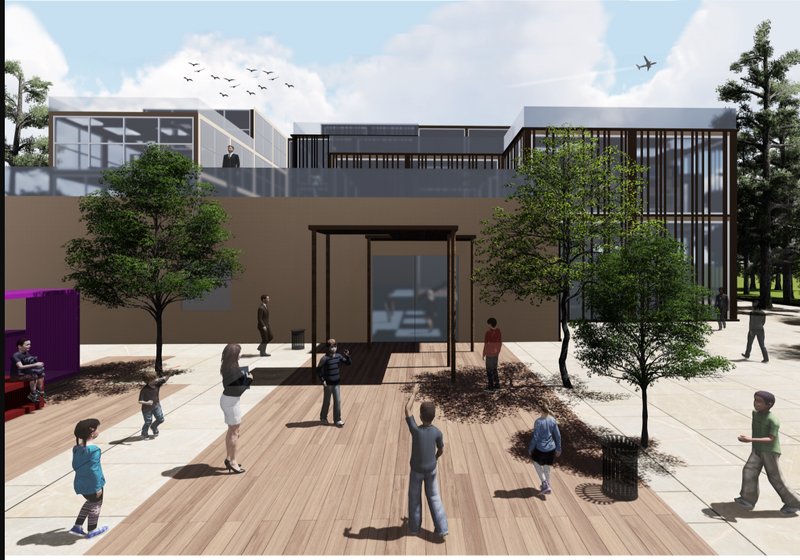
This project"The Cluster Strategy" exemplifies how modular school architecture can become a transformative instrument in revitalizing post-industrial urban sites. Set in Tarhoviklit, a former industrial zone, the design integrates adaptive reuse strategies and a child-centered spatial approach to generate an educational hub that is both community-centric and environmentally responsive.
Context and Design Genesis
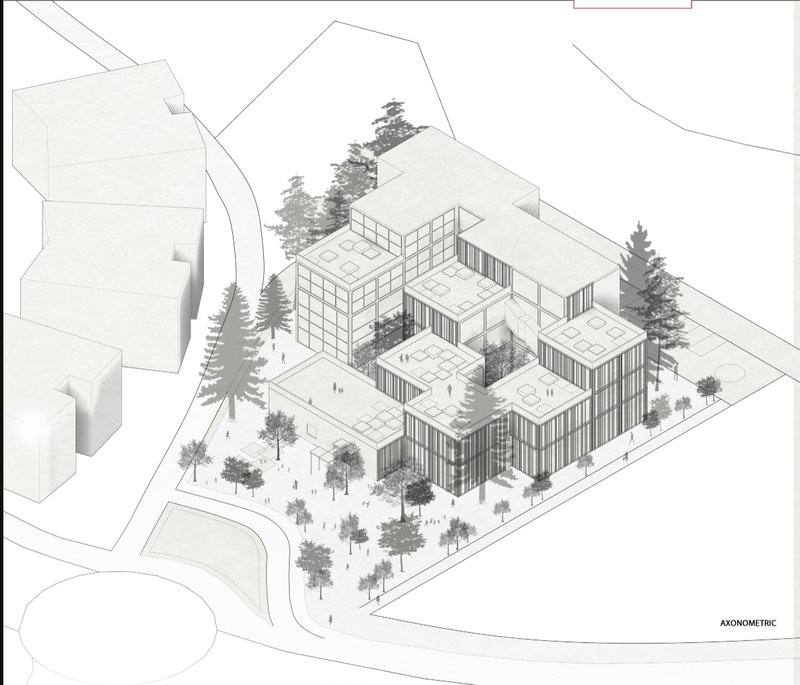
Between 2006 and 2018, Tarhoviklit underwent a phased transition—from abandoned silos and oil infrastructure to residential development and new roads. The architects leveraged this evolving urban narrative by identifying the location and form of the former silos and translating them into architectural modules. These transformed "cubes" form the foundation of the proposal and are arranged using a cluster system that balances flexibility with functional specificity.
The Cluster Strategy
At the core of the project lies the idea of enclosing diverse school functions within a grid of modular units—10x10 meter cubes—strategically positioned based on solar orientation and spatial hierarchy. These modules vary in height and visibility depending on the activity housed within.
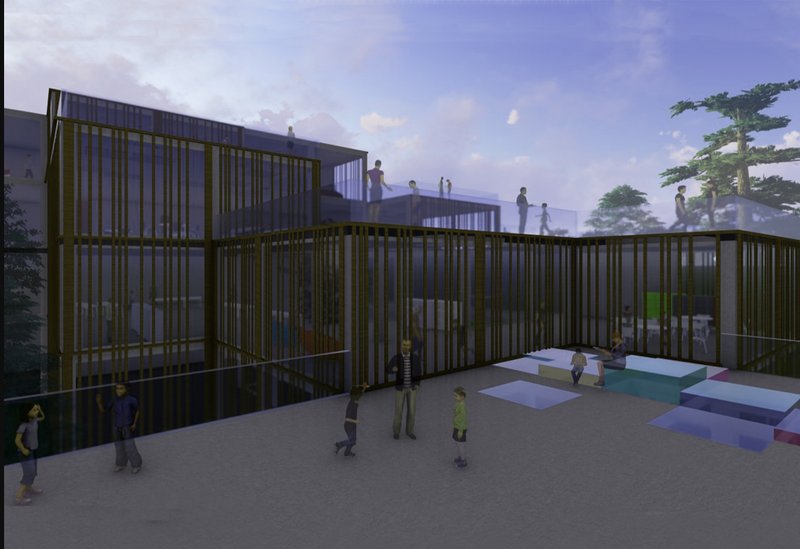
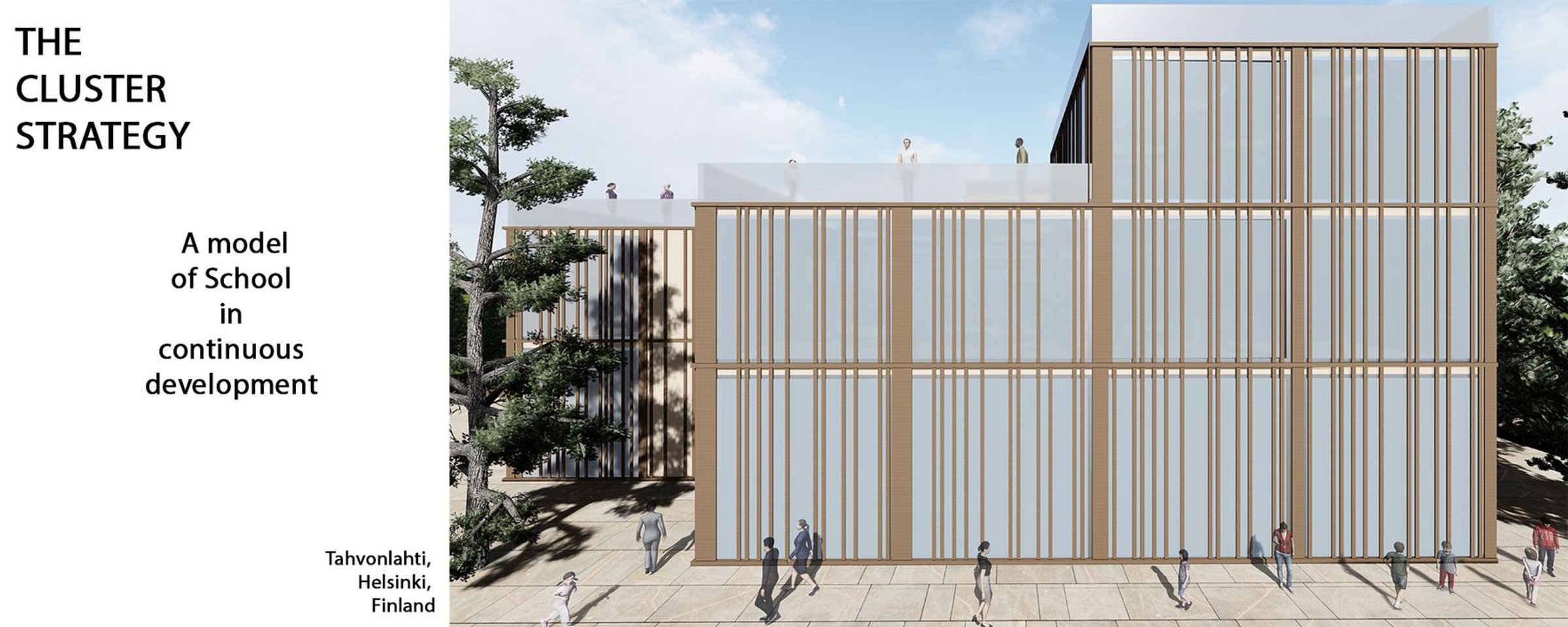
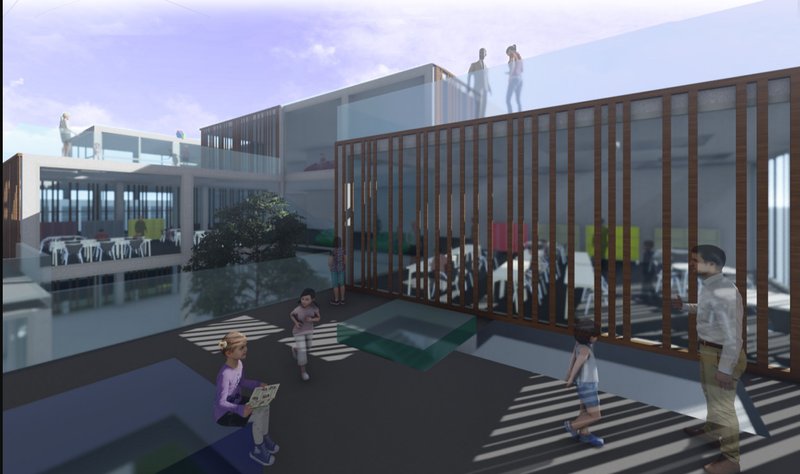
Public functions such as the library, theater, and lunchroom are placed on the lower levels and near patios, while quieter or focused activities like classrooms, break rooms, and the art and music studios are distributed in upper levels and enclosed areas. The façade incorporates a brise-soleil system on the sun-facing side, and skylights on the terraces bring ample daylight into internal zones.
Two patios—framed by public spaces—serve as interactive social anchors within the plan. One patio is near the lunchroom and music room, fostering vibrancy, while the other supports reading and relaxation with a library and classrooms overlooking it. The cluster system ensures each unit receives optimal daylight, cross-ventilation, and views, aligning with passive design principles.
Functional Layout
- Underground Level: Features a gym, kitchen, services, and patios designed to support wellness and functionality.
- Ground Floor: Hosts the hall, classrooms, lunchroom, computer lab, and a large theater, integrating daily education with digital and cultural enrichment.
- First Floor: Includes a music room, break spaces, and upper-level classrooms around the theater and patios.
- Second & Third Floors: House a library, reading room, art room, and painting studios, supporting project-based and exploratory learning methods.
Architectural Impact
The design is not only pedagogically innovative but also contextually sensitive. By repurposing the spatial footprint of industrial ruins, the school becomes a tool of urban memory and healing. Its modularity allows future extensions or reconfigurations without disturbing the overall spatial logic, making it a resilient solution for dynamic educational needs.
The cluster approach in this modular school architecture project showcases how learning environments can be scaled sustainably while rooted in their sociocultural and environmental contexts.